Converge AI Takes Utah's Industry-University Collaboration to USU
USU research in physics, agriculture, biotechnology and computing met industry questions about AI deployment, reliability and talent at the third Converge AI forum.


USU research in physics, agriculture, biotechnology and computing met industry questions about AI deployment, reliability and talent at the third Converge AI forum.
Logan, Utah — November 11, 2026
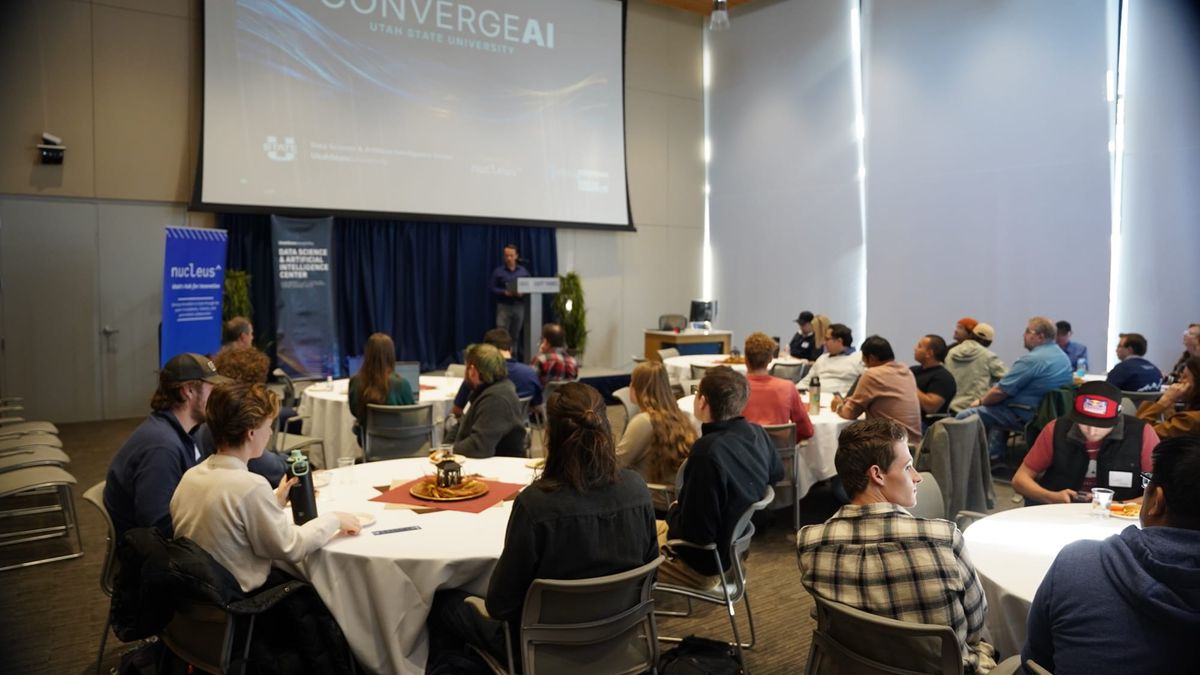
Utah's effort to connect its artificial intelligence industry with university research has moved from Ogden to Orem and now Logan. Through its Converge AI forum series, the Nucleus Institute is bringing AI companies to campuses across the state to discuss the problems they are trying to solve and the research underway at Utah's public universities. The first gathering took place at Weber State University on October 22. A second followed at Utah Valley University on November 5, where company presentations and faculty discussions explored practical AI adoption, human-centered learning and the importance of evaluating results. On November 10, the series reached Utah State University, where the conversation extended into engineering, agriculture, water, aerospace, biomedical research and computing. At USU, a recurring question connected those disciplines: What does it take to move an AI model from a promising research result into a tool that people can trust? Researchers described incomplete data, physical constraints and uncertainty, while companies identified problems involving deployment, evaluation and human expertise. Held in Perry Pavilion at Huntsman Hall, the gathering combined short presentations with networking and a student poster session. It was the third stop in a series supporting Governor Spencer Cox's Pro-Human AI Initiative. Jackie Borget of the Nucleus Institute described the forums as a way for companies to explain their needs and for researchers and students to show what is happening on campus. Research connected to real decisions USU physics professor Maria J. Rodriguez offered an example of how fundamental science can lead to questions with practical consequences. Her group studies difficult physical systems using physics-informed neural networks, methods that incorporate governing equations and other physical knowledge into a model's training. Rodriguez described work on equations associated with black holes and the need to produce precise models when data are limited and decisions are consequential. The mathematical challenges can resemble those found in other systems. Rodriguez described collaborations involving satellite and ionospheric modeling, along with work with Idaho National Laboratory teams on battery charging and cycling. Each requires models suited to its own physical problem, but the work offers a route for applying research methods across disciplines. Rodriguez said the group was interested in developing connections in health and technology. She also directed attendees to students presenting physics-informed neural-network research. Her presentation identified Warren Novascone, Kurt Woodward and Matthew Pontius, placing students within the research itself rather than only in the audience for a discussion about AI's future. That distinction ran through the afternoon. The opportunity for collaboration was often a concrete technical question, not simply an invitation to adopt more AI.
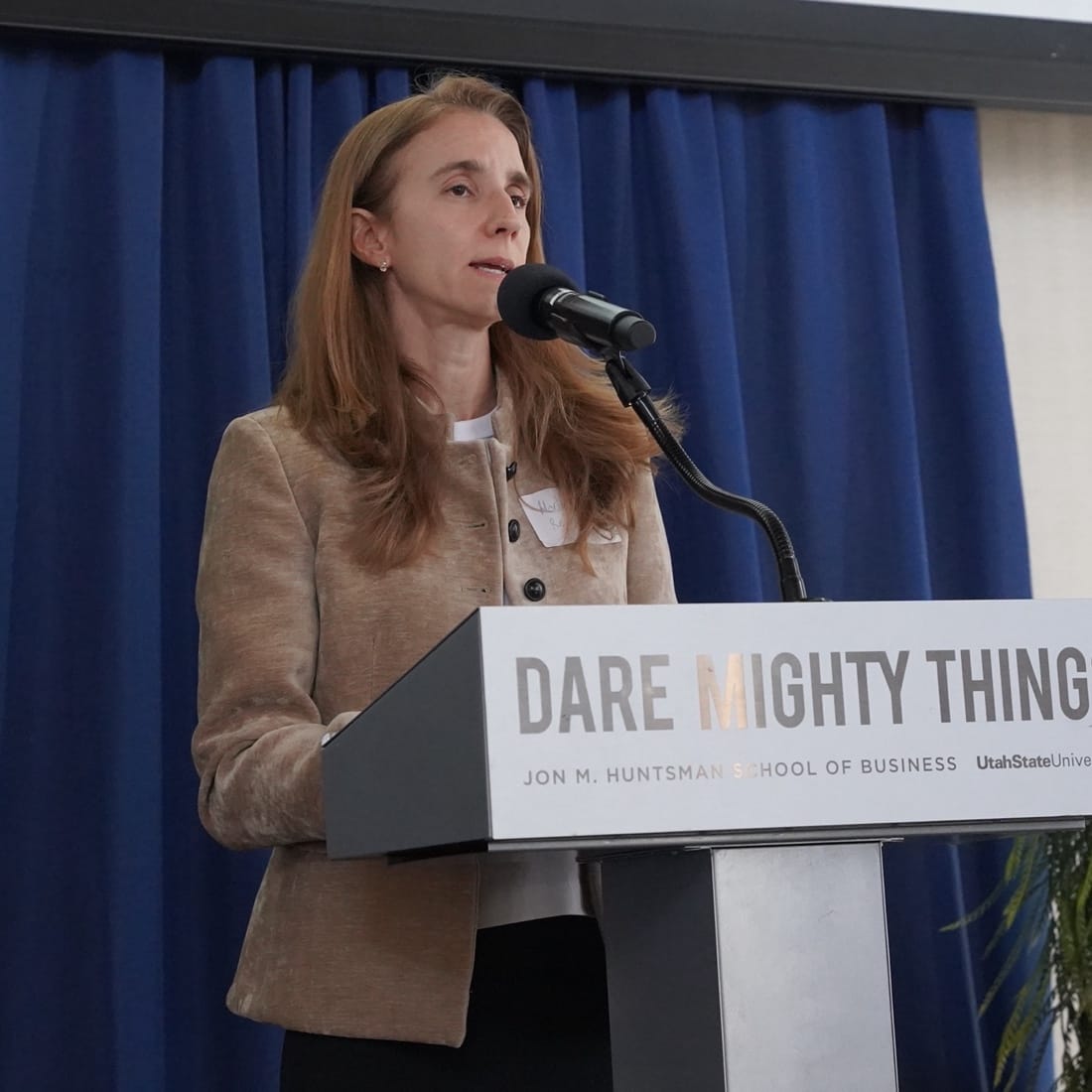
From a model to hardware in the field For Hyde Park-based Viridian Labs, the challenge is getting algorithms onto equipment with limited power, space and computing resources. The company described hardware, firmware and software intended to deploy AI models in settings such as small satellites, drones and robotics. Its LACE hardware uses field-programmable gate arrays, or FPGAs, chips whose logic can be configured for particular tasks. Its SNOW ANGEL toolchain is designed to help translate models into implementations for that hardware. The company's presentation focused on closing the gap between developing a model and operating it away from a conventional computing environment. As it develops the platform, Viridian invited researchers to discuss which algorithms they want to deploy and where those systems would need to run. Pete Roming, director of Space Dynamics Laboratory's Civil & Commercial Space division, described why those constraints matter in space. Spacecraft must operate within limits on size, weight, power and cost. They also cannot always wait for instructions from Earth. Roming outlined needs involving coordinated spacecraft, distributed computing and onboard analysis that could reduce how much data must be transmitted to the ground. One example was imagery obscured by clouds. A system capable of distinguishing useful observations from unusable images could help avoid transmitting data that scientists do not need. Roming also sought collaborators in calibration, mission operations and project management, where better analysis could direct human attention to emerging problems.
Seeing more in crops, water and infrastructure
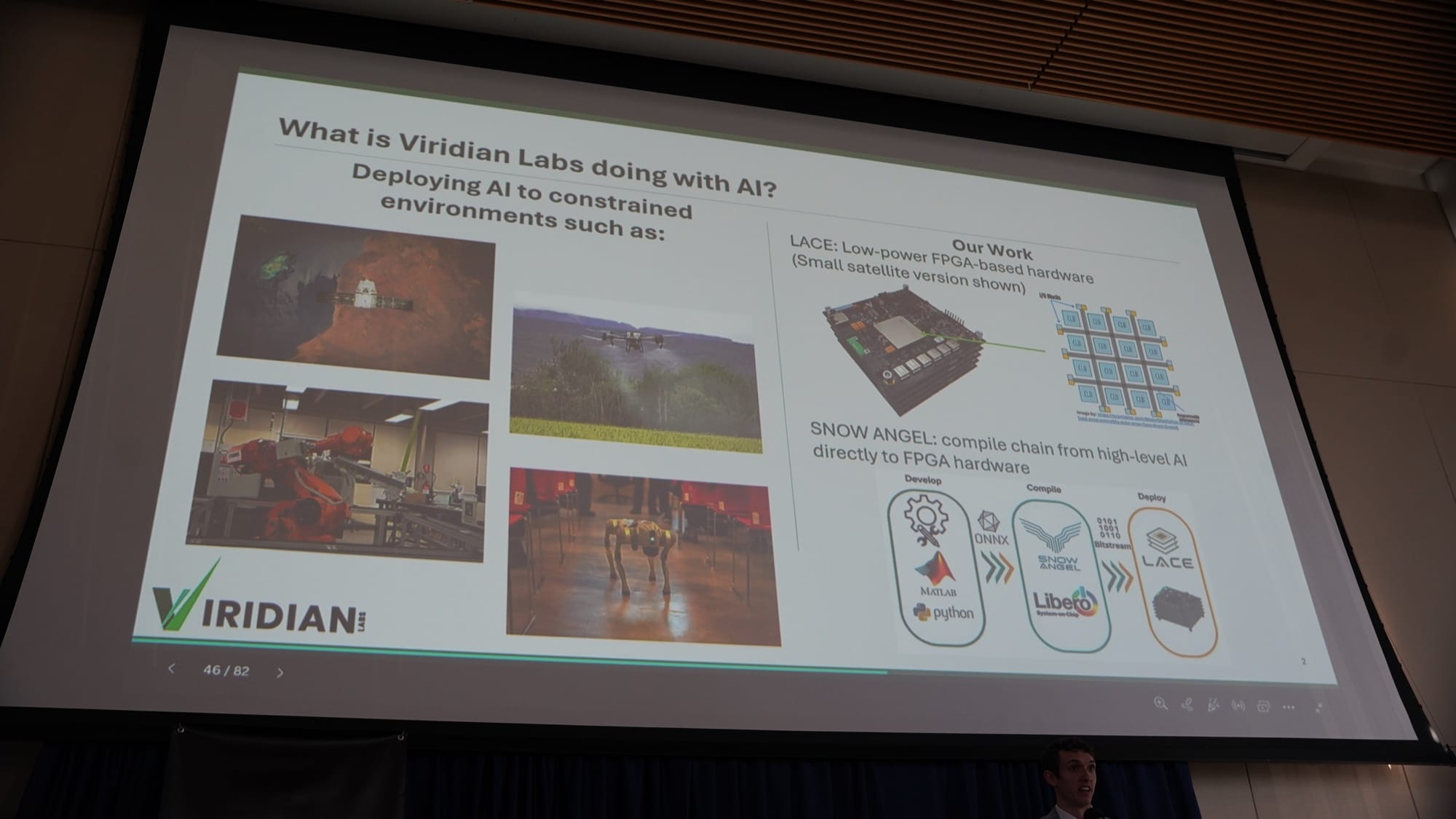
Sierra Young, a USU researcher at the Utah Water Research Laboratory, described how sensing and machine learning can inform agricultural decisions without relying entirely on slow or destructive laboratory tests. Her work includes hyperspectral imaging, which captures information across many wavelengths rather than only the colors visible to the eye. She described research using those measurements to estimate cannabinoid concentrations in industrial hemp and nutrient concentrations in hydroponic lettuce. The longer-term goal in controlled growing environments is to connect measurements with decisions, potentially allowing a system to adjust nutrient solutions in response to plant conditions. That is a different step from demonstrating that a model can estimate a concentration, and Young presented it as a direction for further work. She also discussed research on dust deposited on vegetation, where a sensor's signal may reflect several overlapping sources of stress. Separating those influences is important if a model is to support a useful management decision rather than merely detect a difference. Other projects involve weed detection, early disease detection and robotic field scouting. Young described work integrating computer vision with agricultural systems that could identify pests and help coordinate vehicle paths. Her broader research also applies imaging to streamflow, water quality and other environmental measurements.
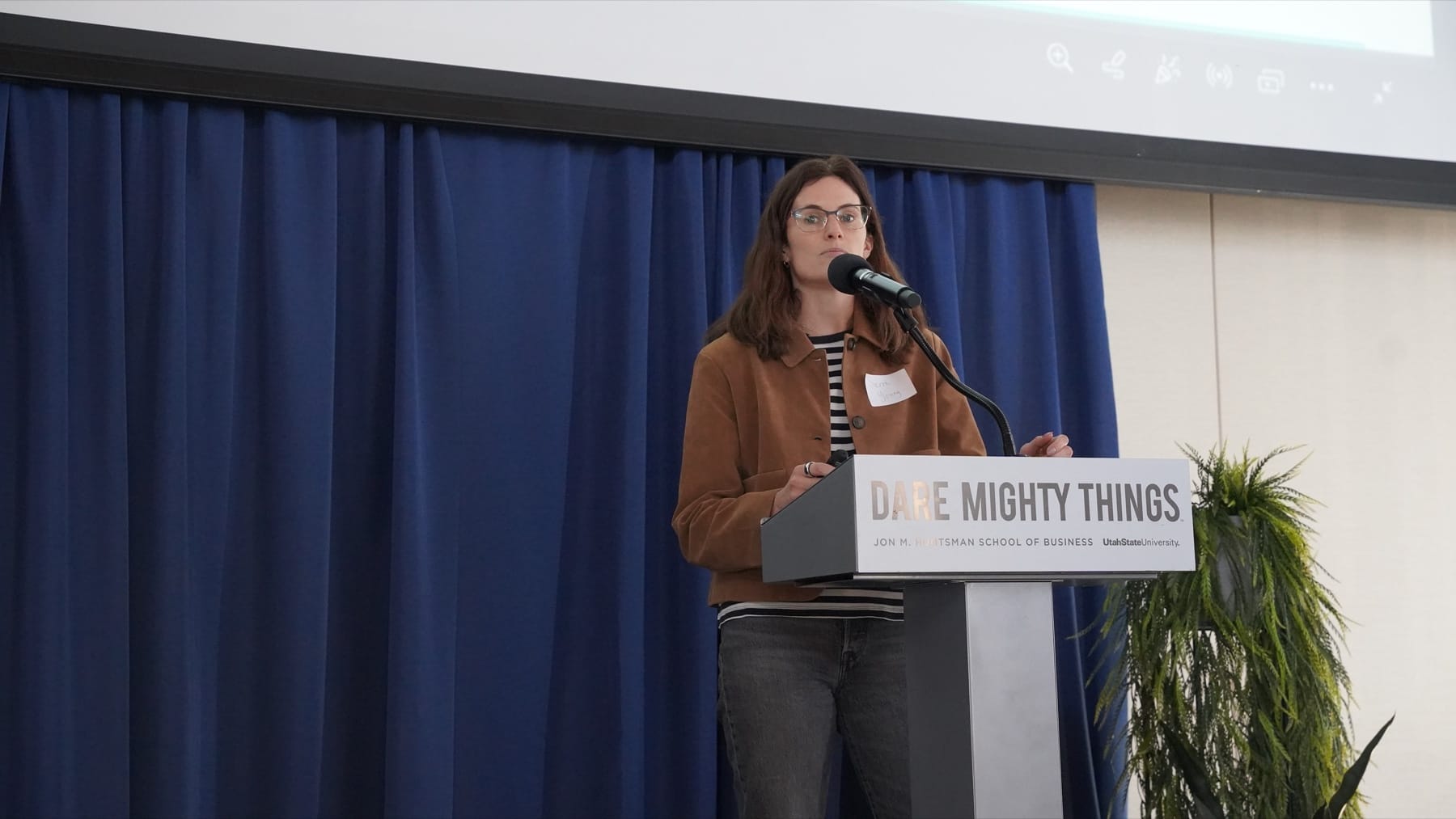
Mechanical and aerospace engineering researcher Som Dutta described a different data problem: gaps in the observations needed to model the Great Salt Lake. He discussed using machine learning with data from the U.S. Geological Survey to help address missing information relevant to future lake conditions. Dutta also outlined research on hybrid-rocket thrust control. He characterized that work as theoretical and described discussions with Viridian about possible future hardware implementation, a specific example of the research-to-deployment connections the forum seeks to encourage. For civil and environmental engineering researcher Mohsen Zaker Esteghamati, the problem was interpreting the condition of physical infrastructure. He described work on digital twins, virtual representations intended to help engineers assess assets and plan maintenance. Detecting damage in an image is only part of that task. His group's approach combines information about visible defects with information about the structural components on which they occur. The engineering question is not simply whether a flaw exists, but whether it affects performance and deserves attention. Both presentations returned to uncertainty. A confident prediction can still be wrong, and the cost of an error changes when a model informs a safety-critical decision.
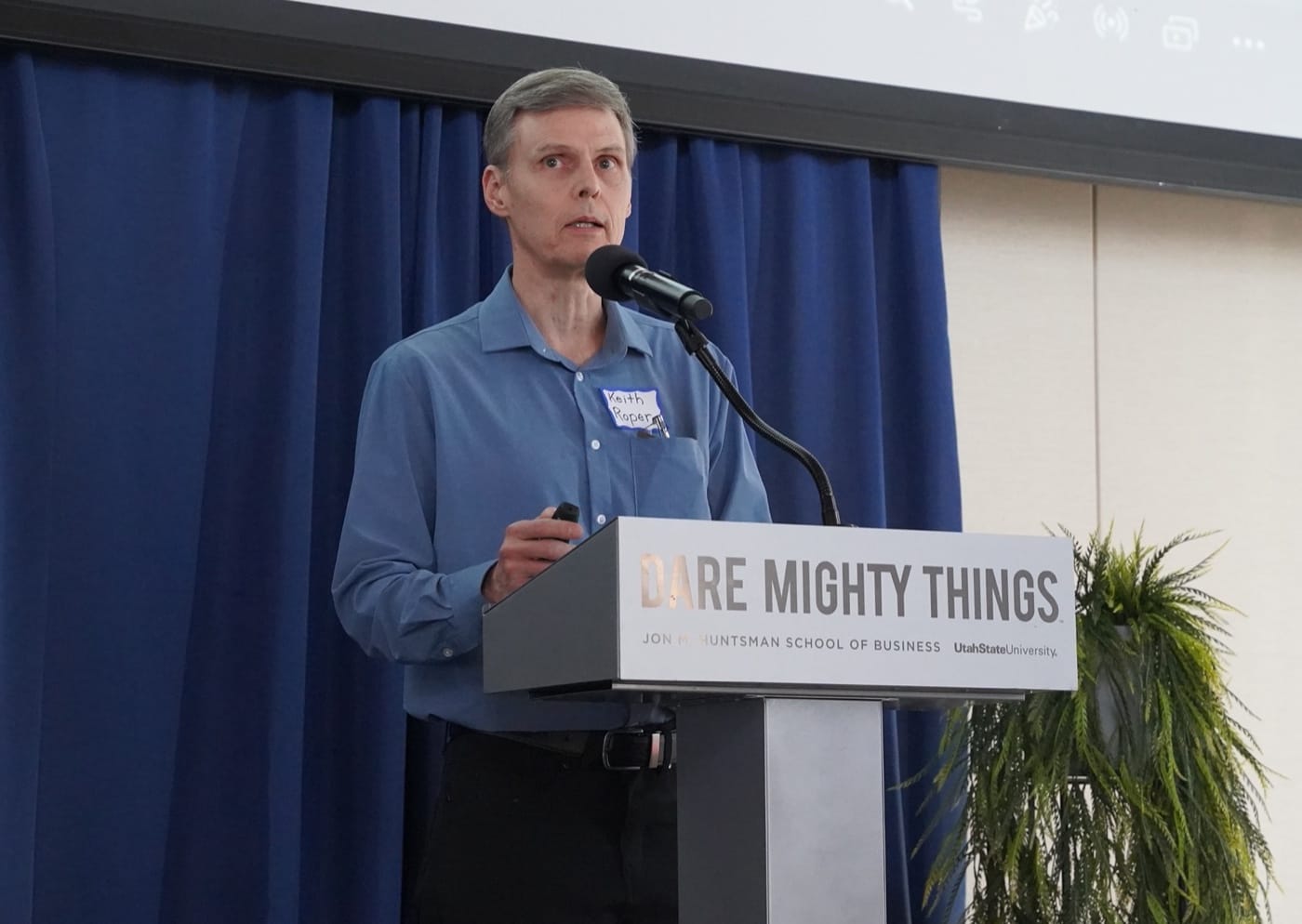
Biotechnology with limits still to resolve Keith Roper, a professor in USU's Department of Biological and Chemical Engineering, described three applications of machine learning in biological and biomedical research. The first concerned gene-vector packaging, a manufacturing challenge in producing vehicles used to deliver genetic material. Roper described neural-network work examining biological sequences alongside experiments intended to increase the availability of complete genetic material for packaging. The result was not a simple success story. An intervention increased the availability of complete genomes, he said, but packaging did not improve as much as expected. That left further research to do. The distinction matters: producing more of one ingredient does not necessarily solve the larger biological process. His second example involved identifying tuberculosis bacteria in microscopy images. Clusters, debris and other features can make the organisms difficult to distinguish. The workflow he described combined image processing, extracted features and a machine-learning classifier to improve identification. The results concerned an experimental image-classification workflow. Establishing performance as a clinical diagnostic test would require separate validation. The third example involved contrast sensitivity, the ability to distinguish differences in light and dark. Roper described physics-informed modeling intended to help separate neurological, ocular and retinal contributions to reduced sensitivity. The aim is to understand which mechanisms contribute to the loss and improve how researchers distinguish them.
Inspection that asks the next question A USU School of Computing presentation extended the reliability discussion to industrial inspection. Traditional anomaly detection can flag whether an image or sensor reading looks normal. A skilled inspector often has to do more: locate a defect, interpret specifications and operating procedures, and decide whether another measurement is needed. The presentation outlined agentic AI as an approach to connecting those steps, using models that can reason about a task and call tools rather than only produce a classification. For manufacturers, the practical issue is whether such a system can support dependable decisions under changing real-world conditions. Identifying an anomaly is not the same as establishing its cause or determining what should happen next. Students, experience and commercialization USU Provost Chris Corcoran connected the technical discussions to the university's educational mission. He described a goal that every student have a "meaningful, mentored, experiential learning opportunity" that advances their career goals.
Corcoran acknowledged students' concerns about AI and employment. His response was to emphasize opportunities to work with faculty and industry on problems that require judgment and experience. Kevin Moon, director of USU's Data Science and AI Center, described a university research community spanning the development, application and ethics of AI. The student poster session gave that argument a practical setting. Faculty presentations repeatedly pointed attendees toward student projects, including work in physics-informed modeling and infrastructure assessment. The students were contributing research that industry participants could examine and discuss. Justin Ball, co-founder and chief technology officer of Logan-based Atomic Jolt, offered an employer's perspective. The educational-software company uses AI to support its engineering work, he said, while retaining the organizational knowledge of its team. Ball said the company had hired five USU interns during the year. His stated objective was to "empower the people at our company, not replace the people at our company." Other industry presentations addressed coaching, succession planning and organizational alignment. OCM discussed combining AI tools with human coaches and mentors, while Grodivo described its approach to analyzing how people work together. Their presentations emphasized preserving knowledge and supporting employees as organizations change. For the Nucleus Institute, convening those groups is one part of a broader effort to connect university expertise, commercialization and industry needs. Whether a conversation becomes a research project, a product or a student opportunity depends on work that continues after the forum. The series will continue in 2027, with Nucleus planning additional Converge AI gatherings at Southern Utah University, Utah Tech University and the University of Utah, according to Borget. The aim is to extend those connections across Utah's public higher education system, bringing companies' practical challenges into contact with researchers and students who may help address them.
Check for upcoming Converge AI events in 2027 at nucleusutah.org.
 Isabella Pedroza
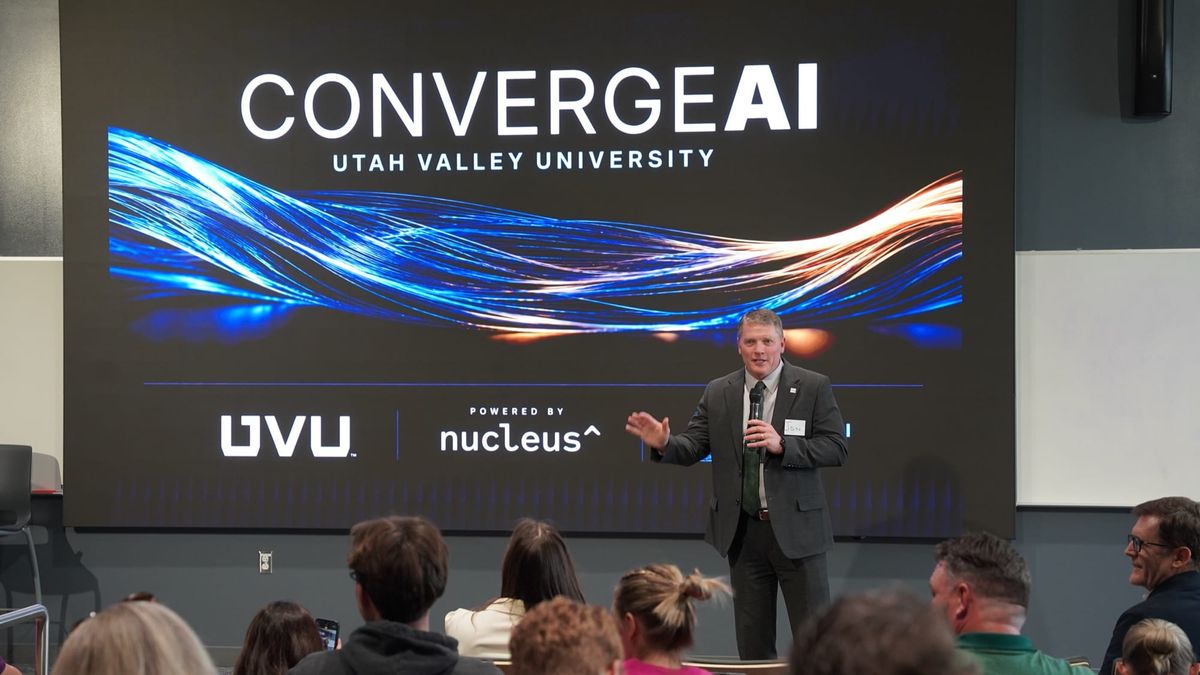
Earlier in the series: TechBuzz's report from the November 5 UVU gathering.
 Mark Tullis
Series background: TechBuzz's advance announcement of the inaugural Weber State forum.