Vector Expands Nammo Agreement to Advance Integrated Drone Capabilities
Bluffdale-based Vector and Nammo Defense Systems are expanding their partnership to integrate munitions with unmanned aircraft, building on Vector’s recent military procurement progress and investments in domestic drone manufacturing and supply-chain capacity.
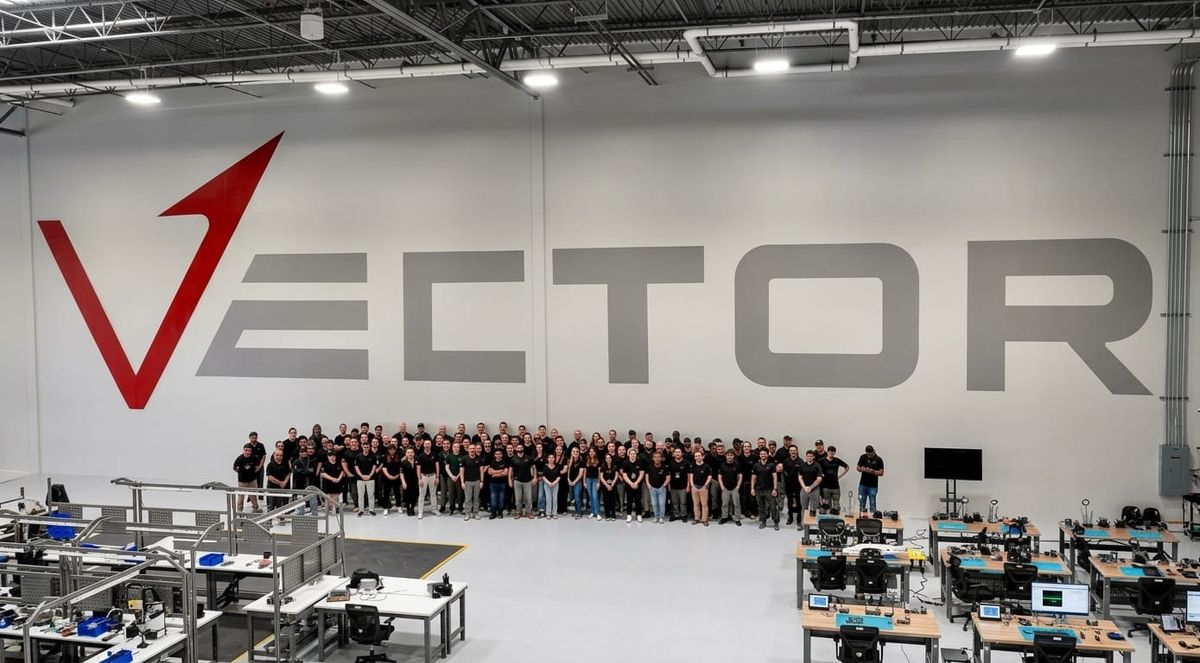
Vector employees gather at the company's headquarters in Bluffdale, Utah, where the defense technology company designs and manufactures unmanned systems. Vector is expanding its manufacturing capabilities and defense partnerships as demand grows for American-made unmanned aircraft systems. Photo: Vector.
Vector employees gather at the company's headquarters in Bluffdale, Utah, where the defense technology company designs and manufactures unmanned systems. Vector is expanding its manufacturing capabilities and defense partnerships as demand grows for American-made unmanned aircraft systems. Photo: Vector.
Vector (Bluffdale, Utah) and Nammo Defense Systems Inc. are expanding their partnership to integrate allied-manufactured munitions with American-made unmanned systems, building on Vector’s recent military procurement progress and domestic manufacturing expansion.
Bluffdale, Utah — October 12, 2026
Vector, a Bluffdale-based defense technology company, and Nammo Defense Systems Inc. have expanded their teaming agreement to accelerate the integration, production and delivery of unmanned systems equipped with kinetic capabilities for American and allied military forces.
The agreement builds on Vector’s recent progress in the U.S. military market. In September, the company was selected for orders of up to 5,000 unmanned systems through the U.S. Department of War’s Drone Dominance Program. Vector also was selected for orders of its High Voltage Electronic Safe Arm Device (HV-ESAD), a component designed to support the integration of munitions with unmanned aircraft.
The companies first announced their collaboration earlier this year, combining Nammo’s expertise in ammunition and energetics with Vector’s portfolio of unmanned systems. The expanded agreement strengthens cooperation around American-made aircraft, allied-manufactured munitions and supply chains designed to comply with the National Defense Authorization Act (NDAA).
The companies say the expanded collaboration is intended to address demand for small unmanned aircraft systems that can be manufactured at scale and equipped with integrated kinetic capabilities. Vector contributes its unmanned platforms, manufacturing infrastructure and systems-integration expertise, while Nammo brings experience in ammunition, energetics and defense manufacturing.
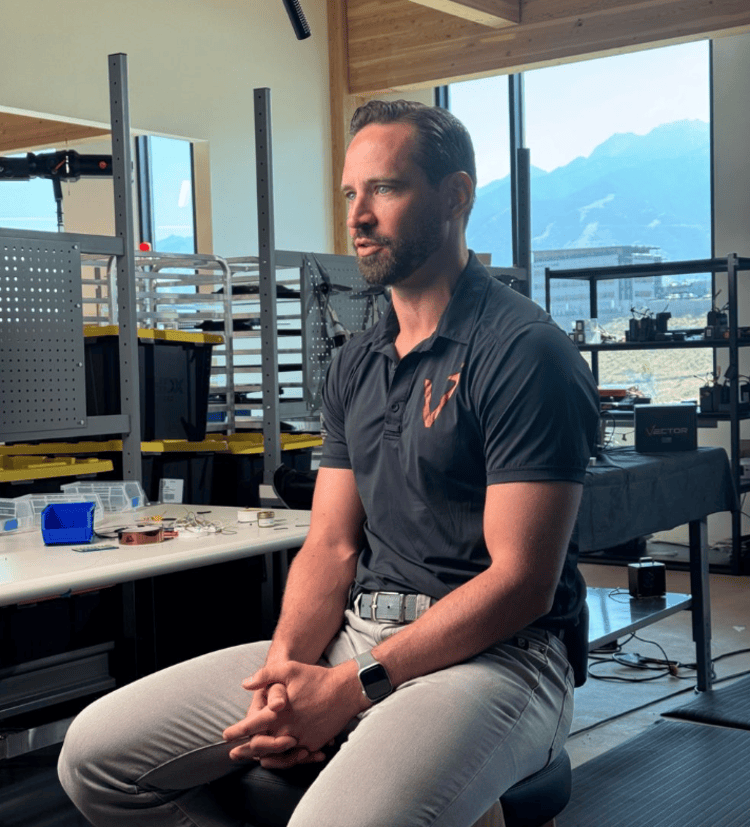
“The battlefield is demanding unmanned systems that can do more than simply carry a payload. They need to be designed, integrated, tested, and produced around the realities of how warfighters will employ them,” said Andy Yakulis, CEO and co-founder of Vector.
Andy Yakulis, CEO and Co-Founder, Vector
“Our expanded teaming agreement with Nammo brings together two highly complementary capabilities to accelerate that process. We are focused on giving American and allied warfighters access to reliable, kinetically integrated systems that can be produced at scale and continuously improved based on real-world requirements.”
Integrating the aircraft and its payload
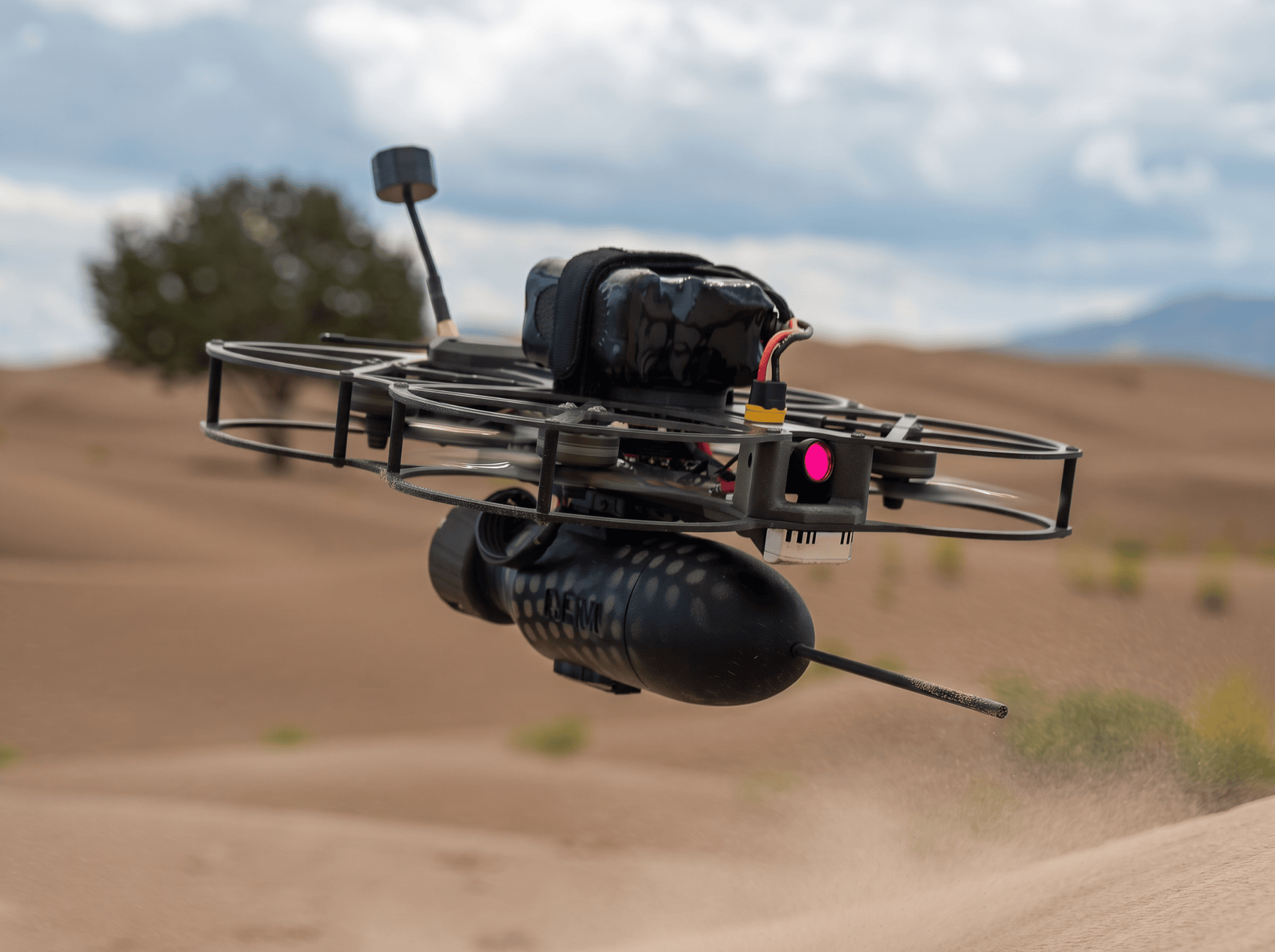
A central component of the collaboration is Vector’s HV-ESAD, which provides an interface between an unmanned aircraft and a compatible kinetic payload. The companies say they have advanced the integration of multiple Nammo munitions with the device, establishing a foundation for incorporating different compatible munition configurations across Vector’s unmanned systems.
Vector’s expanded teaming agreement with Nammo Defense Systems aims to integrate allied-manufactured munitions with American-made unmanned systems for U.S. and allied military forces. Photo: Vector.
The work is intended to support a repeatable integration framework that can accommodate evolving requirements while maintaining a common manufacturing and production approach. The companies are combining Vector’s experience in designing and producing attritable unmanned systems—platforms intended to be affordable enough for use in high-risk operations—with Nammo’s expertise in munitions, energetics and defense production.
The announcement describes an expanded teaming arrangement, not a separately disclosed procurement award. The companies have not announced a contract value, production quantities or a delivery schedule for systems produced under the expanded agreement.
“This expanded agreement will benefit warfighters defending freedom globally,” said Andy Schreiner, president and general manager of Nammo Defense Systems Inc.
“By combining Nammo’s proven expertise in munitions, energetics, and advanced manufacturing with Vector’s unmanned systems capabilities, we are bringing together complementary strengths to accelerate the development and production of integrated solutions that can evolve with warfighter requirements.”
A broader push to scale Utah drone manufacturing
The agreement follows a series of moves by Vector to expand its position in the defense market.
In September 2025, Vector announced a $61 million Series A financing intended to scale production of its Hammer drone platform. In March 2026, the company secured a $20 million loan from J.P. Morgan to expand domestic drone manufacturing, strengthen U.S.-based supply chains and increase inventory.
Vector also introduced the Hammer F1, a foldable quadcopter designed to combine reconnaissance and kinetic capabilities in a compact platform. Its modular design reflects the company's broader approach to adapting unmanned aircraft to different operational requirements.
The company has pursued partnerships beyond its domestic manufacturing base as well. In March, Vector and Saudi Arabia's SR2 Defense Systems signed a memorandum of understanding to explore localized manufacturing, assembly and sustainment of Vector's attritable defense systems in Saudi Arabia. Vector also partnered with Wrap Technologies to explore drone-enabled non-lethal response and counter-unmanned aircraft capabilities.
The Nammo agreement differs from those collaborations in its emphasis on the integration of munitions and the systems needed to support their use. Together with Vector's recent procurement progress, it illustrates the company's effort to build an integrated defense business around aircraft production, payload compatibility, supply-chain compliance and delivery at scale.
The expanded agreement also reflects a broader defense-industry emphasis on increasing production capacity and reducing reliance on vulnerable supply chains. By combining U.S. manufacturing with components from an allied defense manufacturer, the companies aim to develop systems that can serve American and partner-nation requirements.
For Vector, the next test will be translating its expanding partnerships and procurement opportunities into repeatable production and deliveries. The Nammo agreement establishes a framework for further integration work, but the companies have not disclosed the commercial terms or production commitments associated with the expansion.