Vector Wins Order for Up to 5,000 Drones in U.S. Drone Dominance Program
Vector (Bluffdale, UT) has been selected for orders of up to 5,000 drones through the U.S. Drone Dominance Program, following a year of fundraising, manufacturing expansion and increasingly significant military contracts.
Vector, the Bluffdale-based defense technology company that has spent the past year expanding its drone manufacturing capacity, has been selected to receive orders for up to 5,000 unmanned systems through the U.S. Department of War’s Drone Dominance Program.
The award follows Vector’s advancement through a highly competitive Phase II evaluation in which 49 companies were invited to compete in the program’s qualifier. Nineteen companies, including Vector, advanced to the Gauntlet II competition at Fort Carson, Colorado, in August.
The competition evaluated drones on their primary find-fix-finish mission, either at 15km stand-off ranges (Deep Strike) or in confined environments (Close Quarters Battle), with a subset of testing repeated at night. Drones were also assessed on the capabilities for controlled kinetic engagement and electronic warfare (EW) performance, with drones flown against counter-UAS systems.
The Drone Dominance Program is a roughly $1 billion, four-phase effort to purchase low-cost small drones at scale. It is designed to identify U.S. companies capable of producing low-cost, production-ready small unmanned aircraft at scale. The program’s Phase II process required qualifying companies to demonstrate not only the performance of their systems, but their ability to manufacture them: companies advancing to Gauntlet II had to fulfill a paid order for 120 drones with lethality payloads in approximately five weeks.
Vector said it was selected as a top-performing company in the Close Quarters Battle category and will receive orders of up to 5,000 systems as part of a planned 60,000-drone allocation across the program’s confined-environment and deep-strike mission areas.
The company was also selected for orders of its high-voltage electronic safe-and-arm device, or HV-ESAD, a component designed to allow drone platforms to safely integrate and arm different munitions.
For Vector, the award represents the latest step in a manufacturing strategy the company has been building for more than a year.
Building for scale
Founded in 2024, Vector raised $61 million in a Series A financing announced in September 2025, with the funding intended to scale production of its Hammer drone. At the time, the company said its Utah manufacturing operation was being designed to support production in the tens of thousands of units.
A month later, Vector announced a multi-year, multimillion-dollar contract with U.S. Special Operations Command, giving the company an early military customer for its “Modern Warfare as a Service” model, which combines unmanned systems with training, integration and continuing technology upgrades.
In March 2026, Vector added another piece to that strategy, securing a $20 million loan from J.P. Morgan to expand domestic drone manufacturing, strengthen U.S.-based supply chains and increase production of its small unmanned aircraft systems.
That financing was intended to expand Vector’s Utah facility, strengthen domestic supply chains and increase inventory to meet growing demand for low-cost, attritable drones. The company has since continued expanding its manufacturing reach, including a partnership with Saudi Arabia’s SR2 Defense Systems to explore localized manufacturing, assembly and sustainment of Vector’s attritable defense systems.
Taken together, the investments and partnerships provide context for Vector’s latest award: The company has spent the past year building the capital, manufacturing capacity and supply-chain infrastructure needed to move from demonstrating drone technology to producing it in large quantities.
From 120 drones to thousands
The Drone Dominance competition puts Vector’s manufacturing claims to a more concrete test.
The program invited 49 companies to its Phase II qualifier at Camp Grayling, Michigan, where approximately 79 different drones were evaluated across Long Range Strike and Tactical Assault in Close Quarters missions. Nineteen companies advanced to Gauntlet II.
Before reaching that final competition, advancing companies had to produce and deliver 120 drones in approximately five weeks. The program describes the production test as a way to identify systems that are not only mature and mission-capable, but ready for production.
After Gauntlet II, the program planned to place orders for 60,000 drones among the top-performing companies. The Phase II solicitation called for the highest-performing vendors to receive orders of at least 4,000 systems.
Vector’s new order of up to 5,000 systems therefore moves the company from demonstrating that it can produce hundreds of drones on a compressed schedule toward fulfilling a requirement measured in thousands.
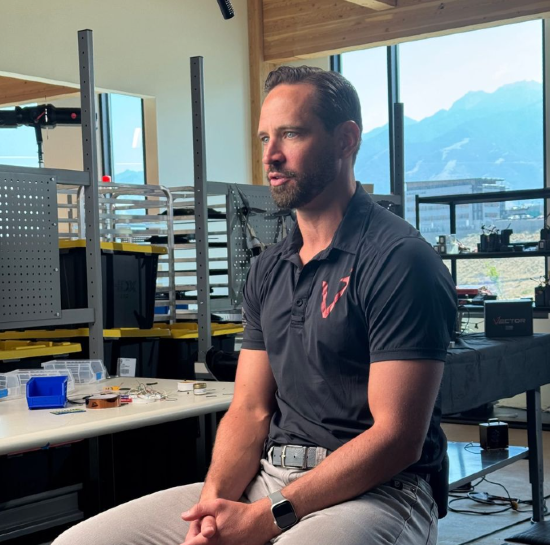
Andy Yakulis, Co-founder and CEO, Vector
“We’re thrilled to be selected but the next stage matters even more,” said Andy Yakulis, Vector’s co-founder and CEO. “We’ve built Vector to meet the demand for UAS at scale, investing in the supply chain, manufacturing, and industrial capacity required to support the Department of War and the American warfighter the right way. We’re ready to deliver at scale. We’re ready to run.”
Utah manufacturing at the center
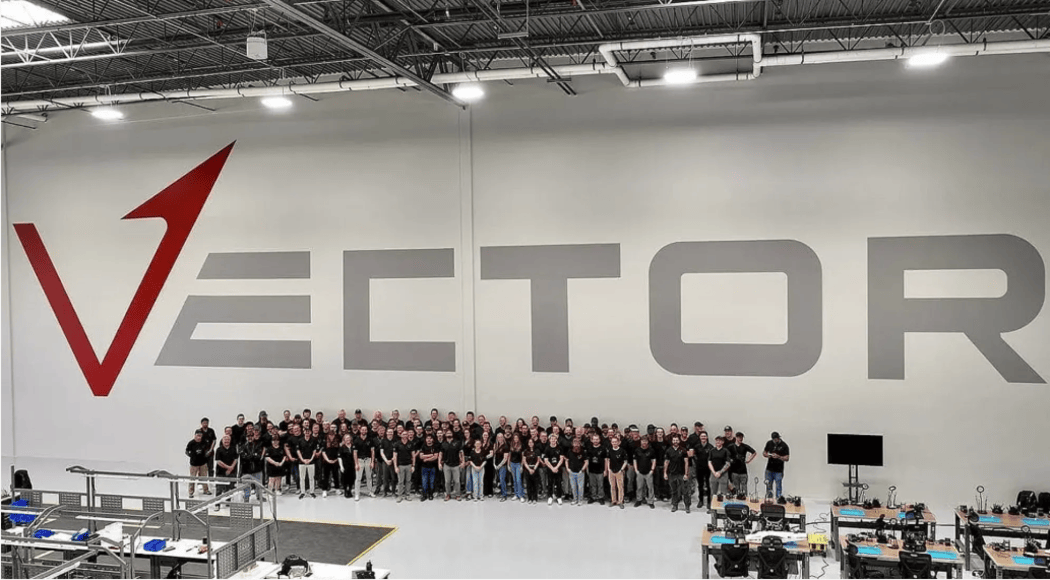
Vector’s Bluffdale operation is increasingly important to that strategy.
When TechBuzz reported on Vector’s $61 million Series A last year, the company employed approximately 150 people and described its Hammer platform as capable of being produced in quantities reaching tens of thousands.
The company subsequently used its J.P. Morgan financing to expand domestic production and strengthen its supply chain, positioning the Utah operation to support larger government orders.
Vector says its platforms are designed and manufactured in the United States, with an emphasis on compliant component availability, repeatable assembly and scalable production.
The company now faces the practical test of turning that manufacturing infrastructure into thousands of delivered systems.
“This next stage matters even more,” Yakulis said. “We’re ready to deliver at scale.”
The Drone Dominance Program is structured as a four-phase effort to progressively increase U.S. production of low-cost unmanned systems while reducing the number of vendors selected as the program advances. Phase I called for 30,000 systems, followed by 60,000 in Phase II, 100,000 in Phase III and 150,000 in Phase IV, with planned average unit costs declining from about $5,000 in the earlier phases to $2,300 in Phase IV. Each phase combines competitive testing with production orders, with the stated goal of establishing multiple U.S. vendors capable of producing secure-supply-chain unmanned systems at scale.
Vector’s Phase II award puts the company inside that larger transition from competition to sustained production. After entering the program with 49 companies, advancing to the 19-company Gauntlet II field and emerging among the 10 companies selected for Phase II orders, Vector now faces the more practical challenge of manufacturing thousands of systems. For the company, the award provides one of the clearest indications yet that the manufacturing capacity, domestic supply chain and production infrastructure it has been building in Utah and Texas are moving from an investment thesis into actual federal demand.
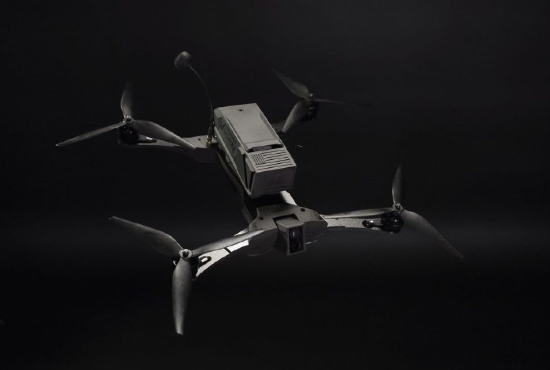
Vector's drone arsenal includes the Vector Hammer, a 10” long-range, multi-use quadcopter capable of fiber optic control, deep sensing and deep strike.
The company currently fields several drone platforms tailored to different missions:
Hammer (10-inch propeller drone): Designed for outdoor, longer-range operations, capable of carrying munitions integrated by the military. Its fiber-optic cable control makes it immune to jamming.
Mace (5-inch propeller drone): Smaller and optimized for operations in confined areas, such as urban or forested environments, where agility and rapid maneuvering are essential.
3.5-inch propeller indoor drone: Specialized for internal clearance of buildings, allowing operators to conduct reconnaissance or tactical operations in enclosed spaces.