Bark Redesigns Its Kid-Safe Smartwatch on Samsung's Galaxy Watch8, With Testing Rooted in Kaysville
Bark's monitoring AI has flagged 16 school shooting threats and caught predators grooming students on school devices. The company's redesigned Bark Watch, now built on the Samsung Galaxy Watch8, is tested out of its Kaysville, Utah warehouse.
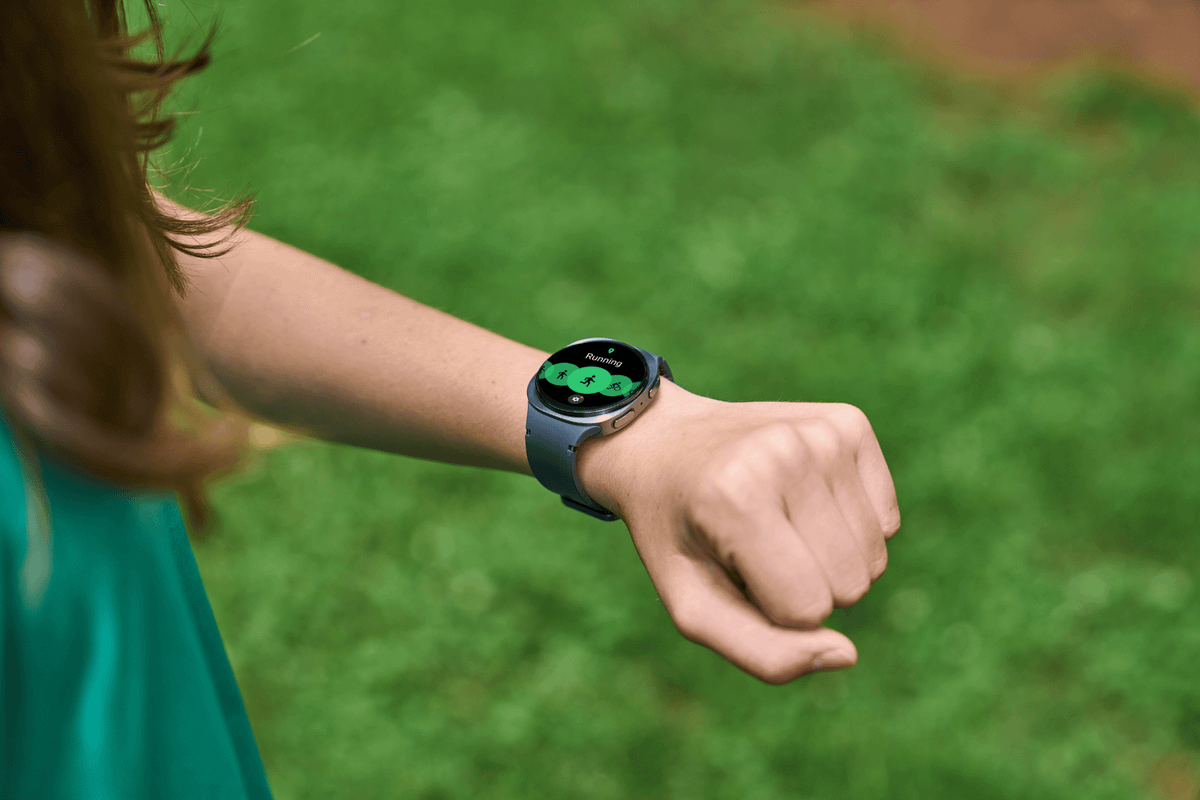
Bark's Kid Phone Watch based on the Samsung Galaxy Watch8. Photo: Bark
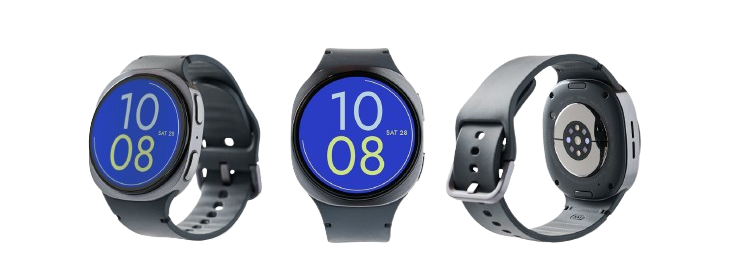
Bark's Kid Phone Watch based on the Samsung Galaxy Watch8. Photo: Bark
Kaysville, Utah — September 10, 2026
When school administrators around the country connect school-issued laptops and tablets to Bark's monitoring software, the company's AI doesn't just catch cyberbullying and inappropriate content. It has surfaced at least 16 credible school shooting threats to law enforcement — and helped catch adults, in some cases teachers, who were grooming students through the very technology schools handed them.
"It's just wild," said Titania Jordan, Bark's Chief Marketing Officer and Chief Parent Officer, in an interview with TechBuzz. "It's a really heavy thing, you know? But we're grateful."
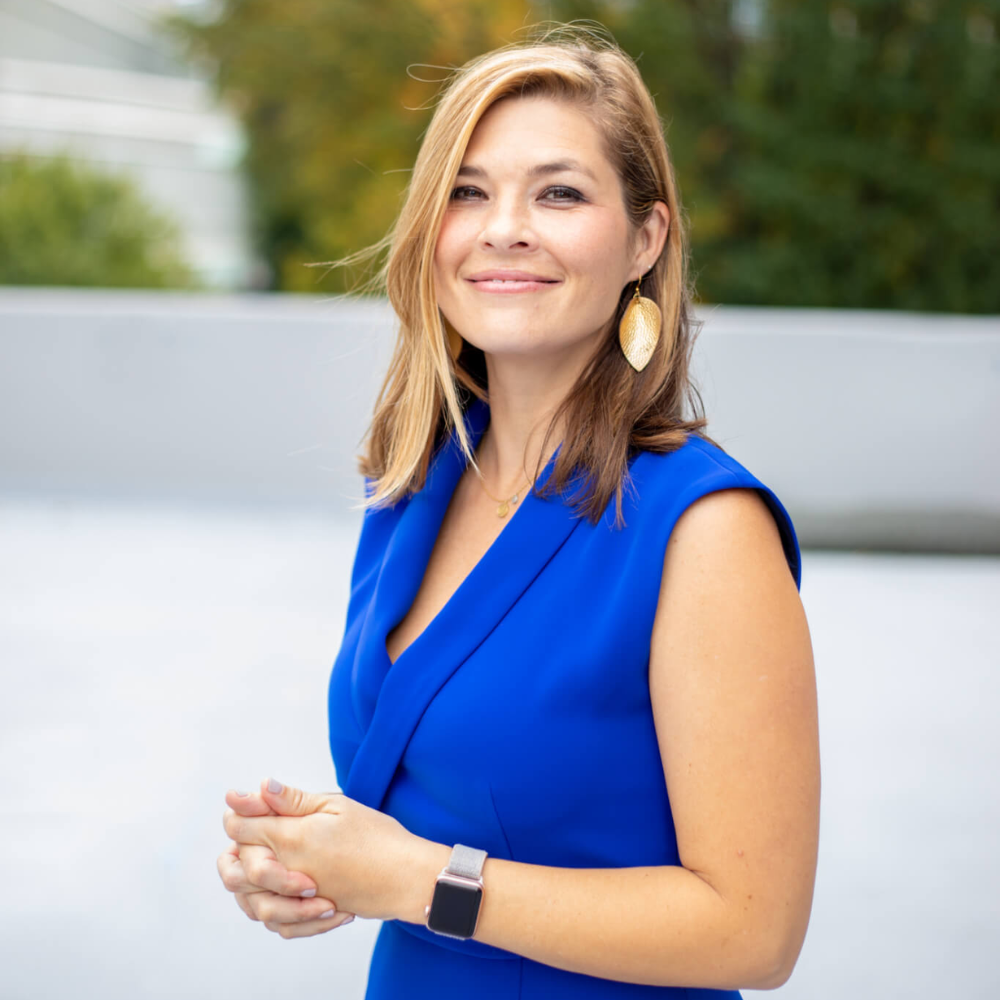
Titania Jordan, Chief Marketing Officer and Chief Parent Officer, Bark
That detection work is happening at real scale: Bark's 2025 annual report says the company processed 11.1 billion activities on family accounts last year across text, email, YouTube and more than 30 other apps and platforms. Worth noting the shooting-threat figure and a separate national statistic are measuring different things — the K-12 School Shooting Database counted 233 shootings on K-12 school grounds in 2025 — so Bark's 16 flagged threats represent incidents intercepted before they happened, not a count of shootings that occurred.
It's also the backbone of a company whose more visible product — a kids phone and kids watch — just got a significant hardware update, one with deep Utah roots.
Built and Tested in Kaysville
Founded in 2014, Bark Technologies builds Bark Parental Controls, its monitoring software used by families and schools, along with its kids phone and kids watch.
The company was founded in Atlanta, Georgia, where Jordan — employee number eight — still lives and works. But the company's roughly 100 full-time employees are largely remote, with the largest concentration clustered around Bark's warehouse in Kaysville, Utah.
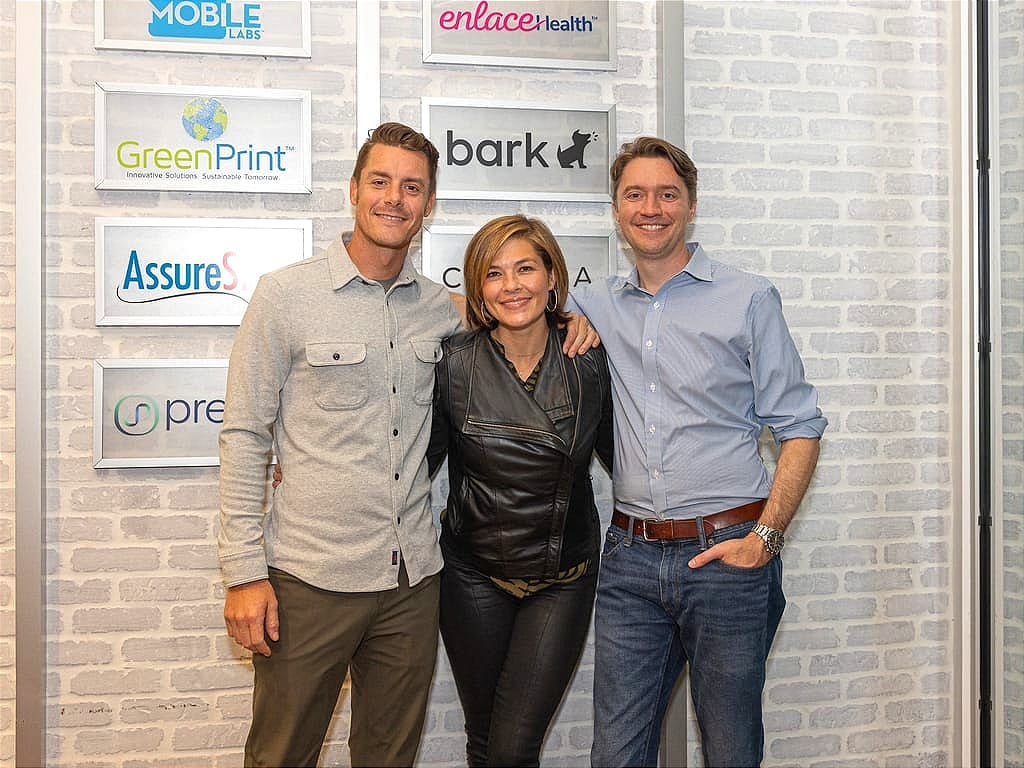
Bark Executives Brandon Hilkert (CTO), Titania Jordan (CMO), and Brian Bason (CEO). Photo: Bark
That's not incidental to the product. Jordan said Bark's chief technology officer, Brandon Hilkert, personally drives around triangulating GPS signal accuracy to make sure the watch's location tracking holds up, testing driven in part by the fact that his own children use the device. Given the warehouse's location, Jordan said, "if it's going to be optimized for anywhere, it's definitely going to be Utah."
What's New in the Watch
The redesigned Bark Watch moves off its previous hardware platform onto the Samsung Galaxy Watch8, a shift the company made this summer after parents pushed for features the earlier device lacked.
The most requested addition, Jordan said, was talk-to-text. Many kids get a smartwatch before they can read or type fluently; the new watch lets a child press a button, speak, and have that speech rendered as a text message to a parent. The reverse also works: text-to-speech playback reads incoming messages aloud for kids who need extra reading support.
Other additions include:
Dual-frequency GPS (L1 + L5) for more precise, reliable location tracking, plus Fall Detection and Emergency SOS
Standalone LTE calling and group texting, independent of a paired phone
Samsung Health integration — step count, heart rate, fitness tracking and activity goals
Armor Aluminum construction with IP68 and MIL-STD-810H durability ratings
Eight interchangeable band styles and Bluetooth headphone support
What the watch deliberately omits is as notable as what it includes: no web browser, no social media, no games. "They have plenty of other screens in their life for that," Jordan said.
A Camera That Won't Save What It Shouldn't
Bark’s kids phone, a separate product from the watch, includes a detection model that flags nudity in photos or videos before they're taken. If a child attempts to capture an image the system identifies as child sexual abuse material, Jordan said, it simply won't save to the device. Parents can also remotely disable their child's phone camera from their own device. This is useful, Jordan said, for situations like sleepovers.
"I can't say the same for other smartphones," Jordan told TechBuzz. "I haven't seen anything like what we do."
Positioning Against Apple — and Everyone Else
Jordan was blunt about where Bark sits relative to the broader kid-safe device market, which now includes competitors like Gabb and Gizmo. She described friendly, collegial relationships across that field — "we're all working towards a common goal" — while drawing a sharper line against Apple's parental controls, which she called inconsistent and easy to circumvent.
Bark's pitch is flexibility that grows with a child: parents can start with a locked-down device — calls to a short list of trusted contacts only — and loosen restrictions over time, then walk them back if something isn't working. Jordan contrasted that with Apple's app-approval model, where a downloaded app can be deleted by a parent but re-downloaded by a child without permission.
"Any parent who chooses any safer smartphone for a kid over an Apple device, you're winning," Jordan said. "You don't have to use Bark. Just please don't pick an Apple for your kid's first device."
More information about Bark's parental controls can be found here.
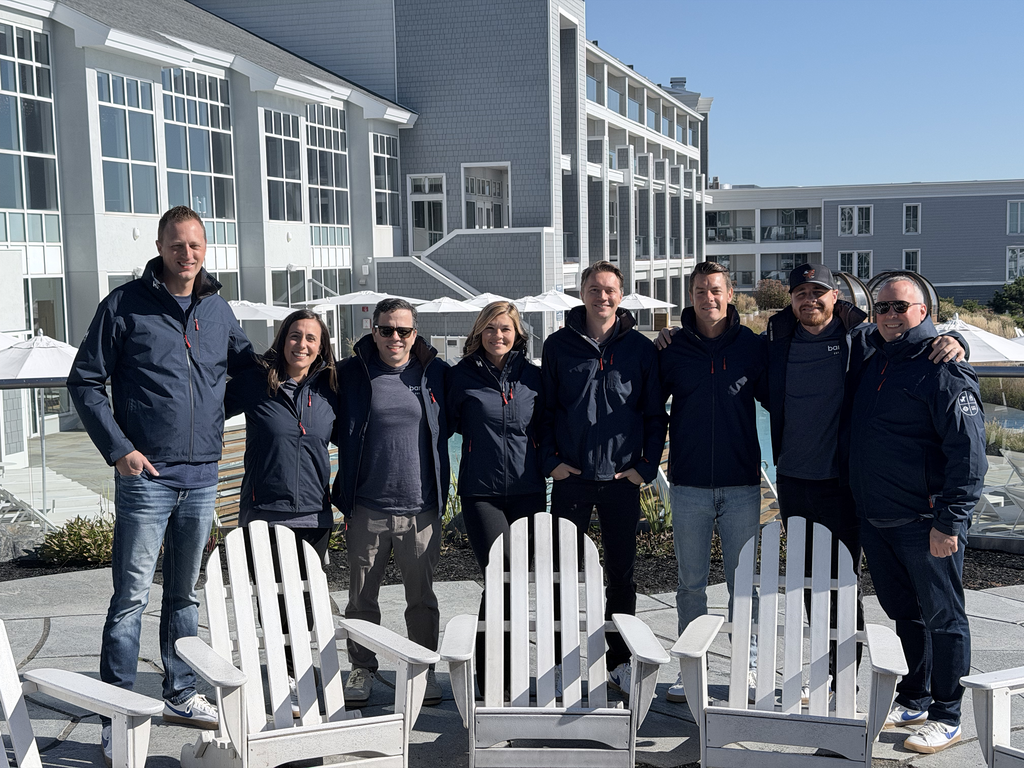
Bark's executive team, 2025. Photo: Bark
The Personal Stakes
Jordan's own son missed the window to use Bark as a young child. The company, she said, wasn't far enough along yet. He now interns at Bark, and Jordan said he regularly surfaces dangers he and his friends encounter on platforms like Discord and Roblox, information she says she'd otherwise have no visibility into.
That's consistent with what Bark's own data shows across its user base: predator alerts, which flag sexual conversations involving a known age gap, were triggered for 4% of tween accounts and 7% of teen accounts in 2025, according to the company's 2025 annual report. Discord ranked among the top five apps flagged both for risky contacts and for grooming specifically, alongside Snapchat, Roblox, Instagram, TikTok, GroupMe and Reddit.
"There was not enough awareness nor protections in place," Jordan said of the generation of kids, including her own, who grew up without tools like Bark. "So our kids were the guinea pigs. But on the flip side, they can be the ones to help make this next generation safer."
TechBuzz sat down with Titania Jordan, Bark's Chief Marketing Officer and Chief Parent Officer and co-author of Parenting in a Tech World. Jordan hosts Tech Connect and previously hosted Atlanta Tech Edge on NBC affiliate WXIA. She has appeared as a tech expert on the TODAY Show, Good Morning America, CBS This Morning, Fox News and CNBC, and has contributed to the Wall Street Journal, Forbes and USA Today.
Share this article
The link has been copied!
Your link has expired. Please request a new one.
Your link has expired. Please request a new one.
Your link has expired. Please request a new one.
Great! You've successfully signed up.
Great! You've successfully signed up.
Welcome back! You've successfully signed in.
Success! You now have access to additional content.