Citizen Portal Uses AI to Make Local Government Easier to Follow
Citizen Portal uses AI to make government meetings searchable and support local news. At UVU, Paul Allen and Thomas Dyches outlined tools for residents, publishers and businesses following public decisions.
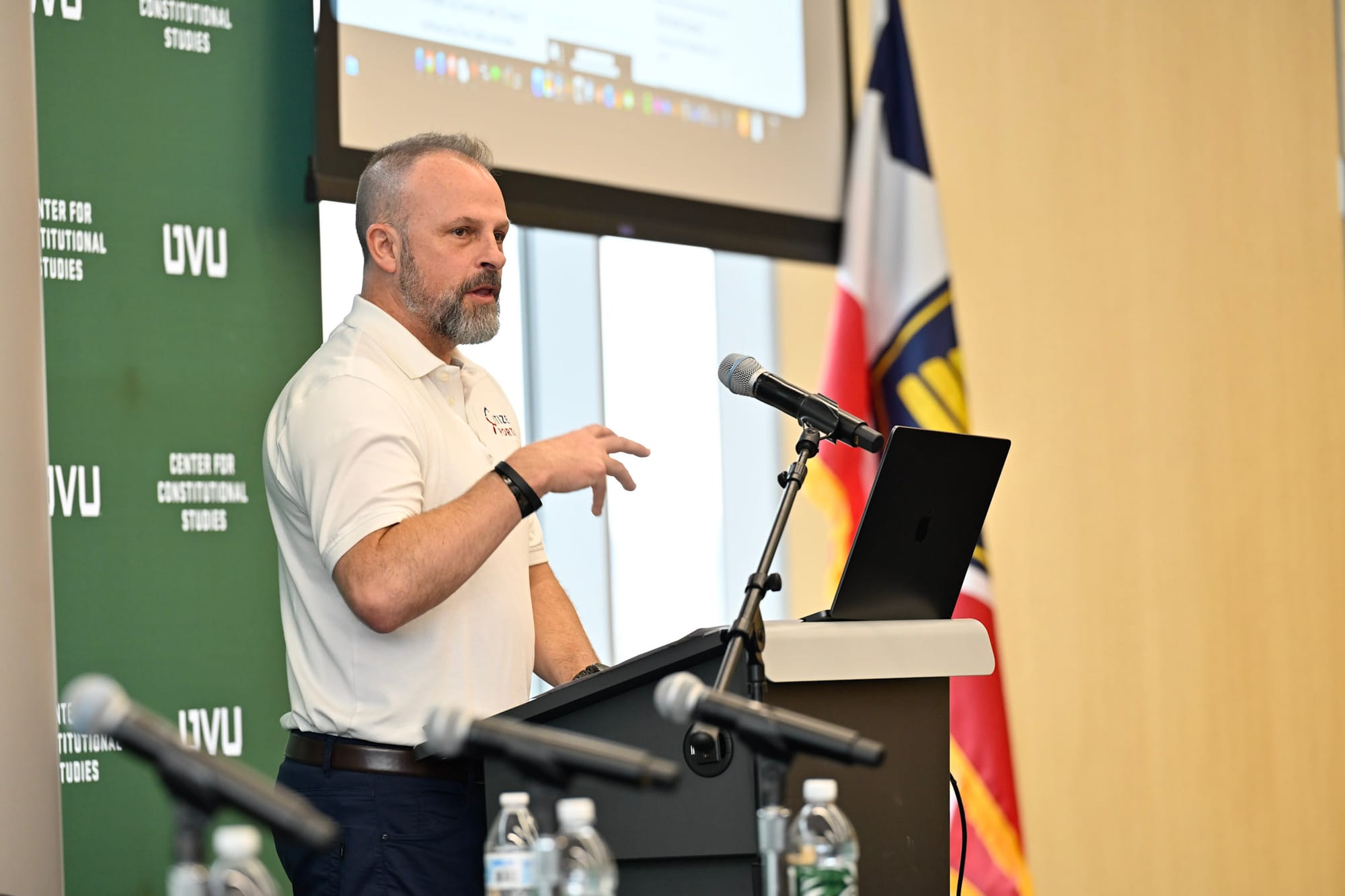
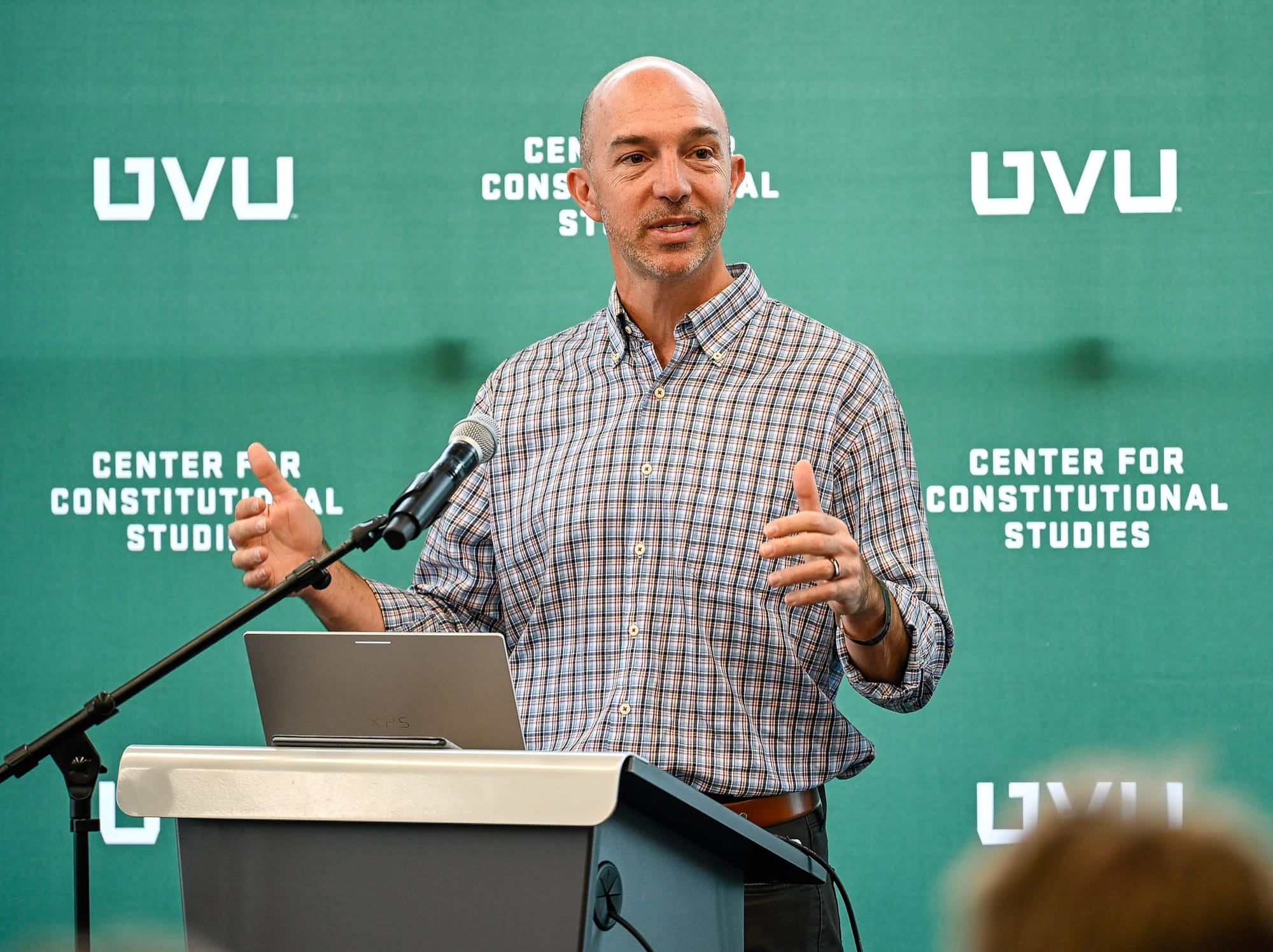
Citizen Portal Founder Paul Allen at UVU's AI & the Future of Freedom conference, October 21-22, 2026, in Orem, Utah. Photo: Hank McIntire, UVU
Citizen Portal Founder Paul Allen at UVU's AI & the Future of Freedom conference, October 21-22, 2026, in Orem, Utah. Photo: Hank McIntire, UVU
Orem, Utah - October 23, 2026
At UVU, Paul Allen and Thomas Dyches described a platform connecting public meeting records with AI-assisted local news, civic participation and business intelligence.
Citizen Portal is expanding its government-meeting database into local news, giving community editors tools to turn lengthy public proceedings into coverage linked to the original records.
Founder Paul Allen, an Ancestry.com co-founder, and general manager Thomas Dyches outlined the effort October 22 at Utah Valley University during Freedom Tech Demo Day, the second day of the AI & the Future of Freedom conference. Dyches presented in the Civic & Constitutional Tech session.
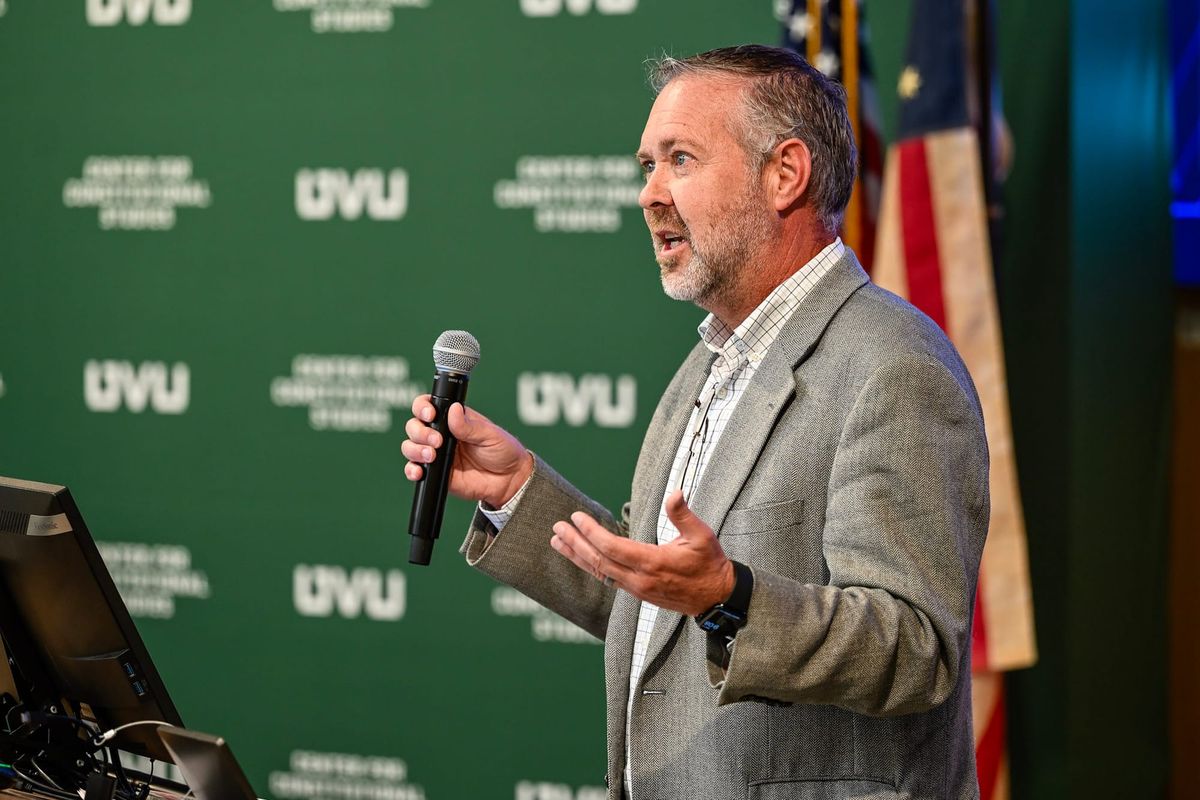
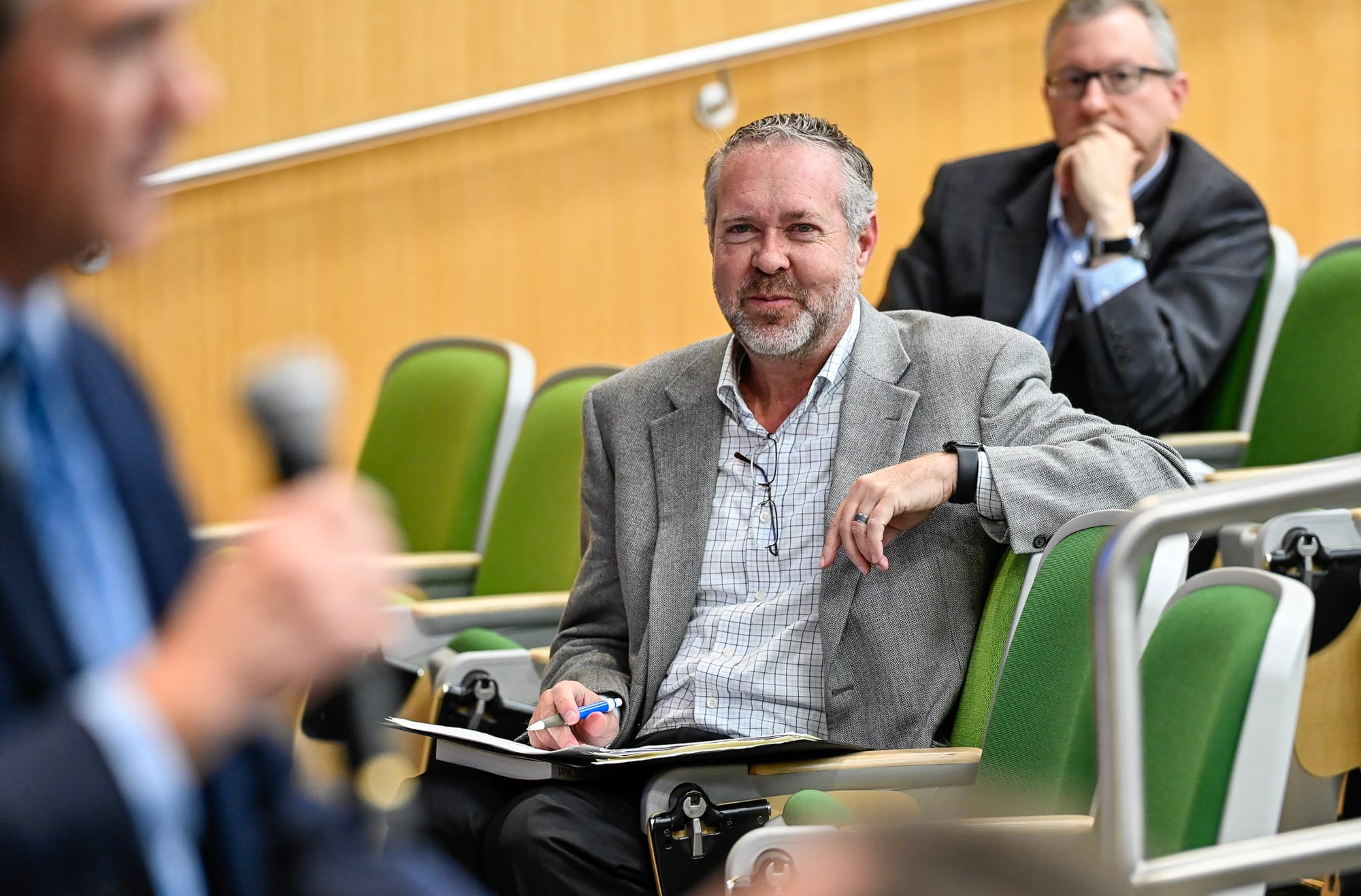
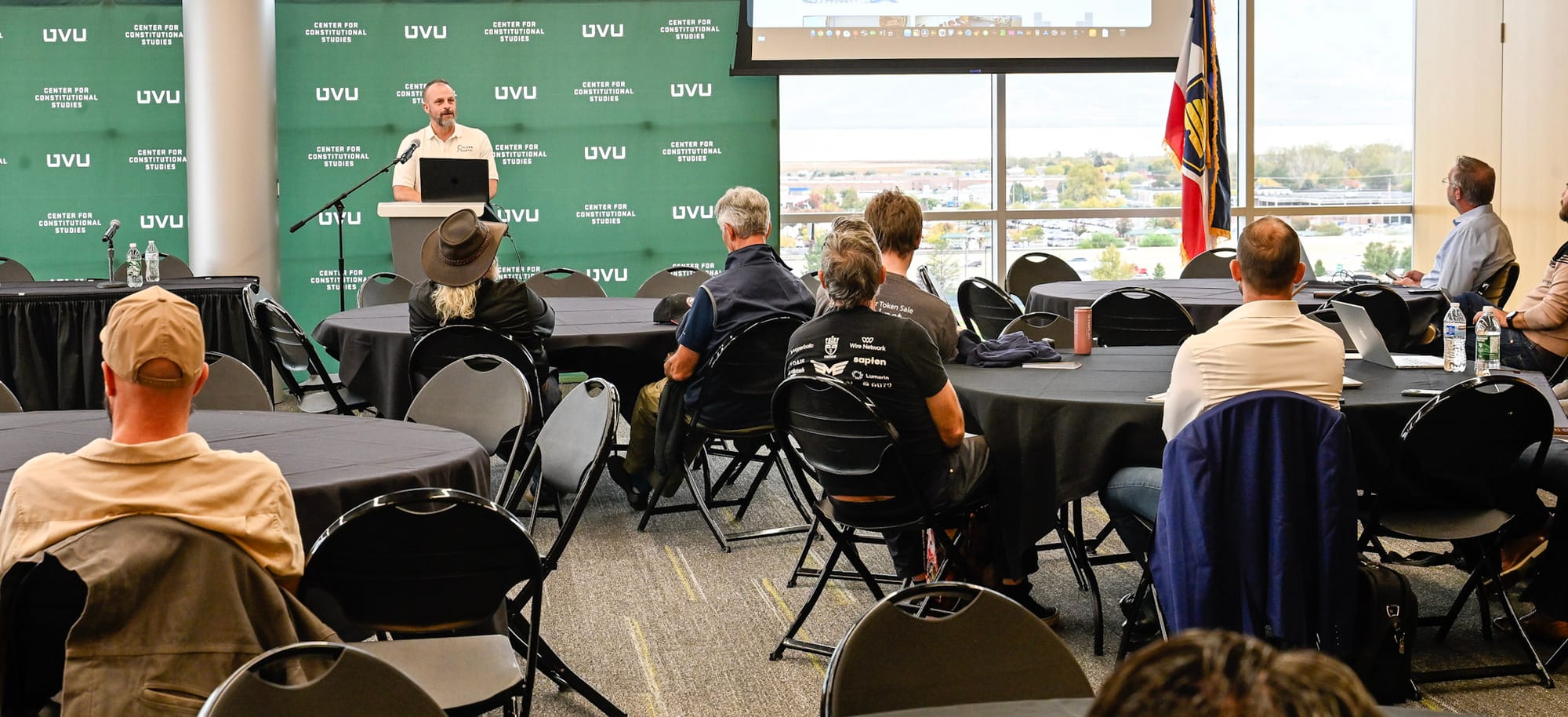
Citizen Portal General Manager Thomas Dyches at the second day, Tech Demo Day of the AI & the Future of Freedom conference at UVU, on October 22, 2026. Orem, Utah. Photo: Hank McIntire, UVU
The company uses AI to transcribe and summarize government meetings, then organizes the information so users can locate discussions relevant to their communities or businesses.
Dyches said the company had cataloged more than 2 million meetings and was on pace to transcribe 625,000 hours of government proceedings in 2026. Its coverage includes city councils, county commissions and school boards.
“We’ve always been, in my view, first the database, and then we have the website on top of it,” he said.
From a Summary to the Source
An Alpine, Utah, council discussion about Flock Safety license-plate cameras illustrated how the platform works.
Dyches showed a summary of the discussion alongside its source material. A reader could search the transcript for ALPR, referring to automatic license-plate readers, and jump to the corresponding portion of the recording rather than watch the entire meeting.
The redesigned website also includes a “hot topics” feature that maps discussions across communities. Examples in the demonstration included license-plate cameras, police drones and AI use in city government.
The maps offer a way to find where an issue is being discussed. The transcripts and recordings provide the detail: what officials considered, what participants said and how the discussion unfolded.
Dyches acknowledged that government proceedings can be tedious. Their importance, he argued, becomes clearer when decisions affect residents’ property rights, public services and daily lives. Citizen Portal’s approach is to make the relevant passages easier to find while preserving a path back to the public record.
Citizen Portal Founder Paul Allen at UVU's AI & the Future of Freedom conference, October 21, 2026, in Orem, Utah. Photo: Hank McIntire, UVU
A Local-News Expansion
The company is now using that database to support local publications. Dyches said several had launched in the week before the conference, including publications serving Cleveland and Baton Rouge.
He demonstrated another serving Sanpete County, Utah, where he grew up. Its coverage included county commission business and municipal power issues in Mount Pleasant.
The model combines AI tools with local human editors whose names appear on the publications and who take responsibility for the coverage, Dyches said. He described it as a way for people to establish publications in communities where limited reporting resources leave government activity uncovered.
The company was developing training to help those editors cover government responsibly, he said.
“It’s a responsibility. It’s not a blog. This is a newspaper,” Dyches said.
The expansion builds on the same source-linked approach used in the meeting database. Instead of asking residents to work through hours of proceedings, the publications can surface individual issues and direct readers to the underlying records.
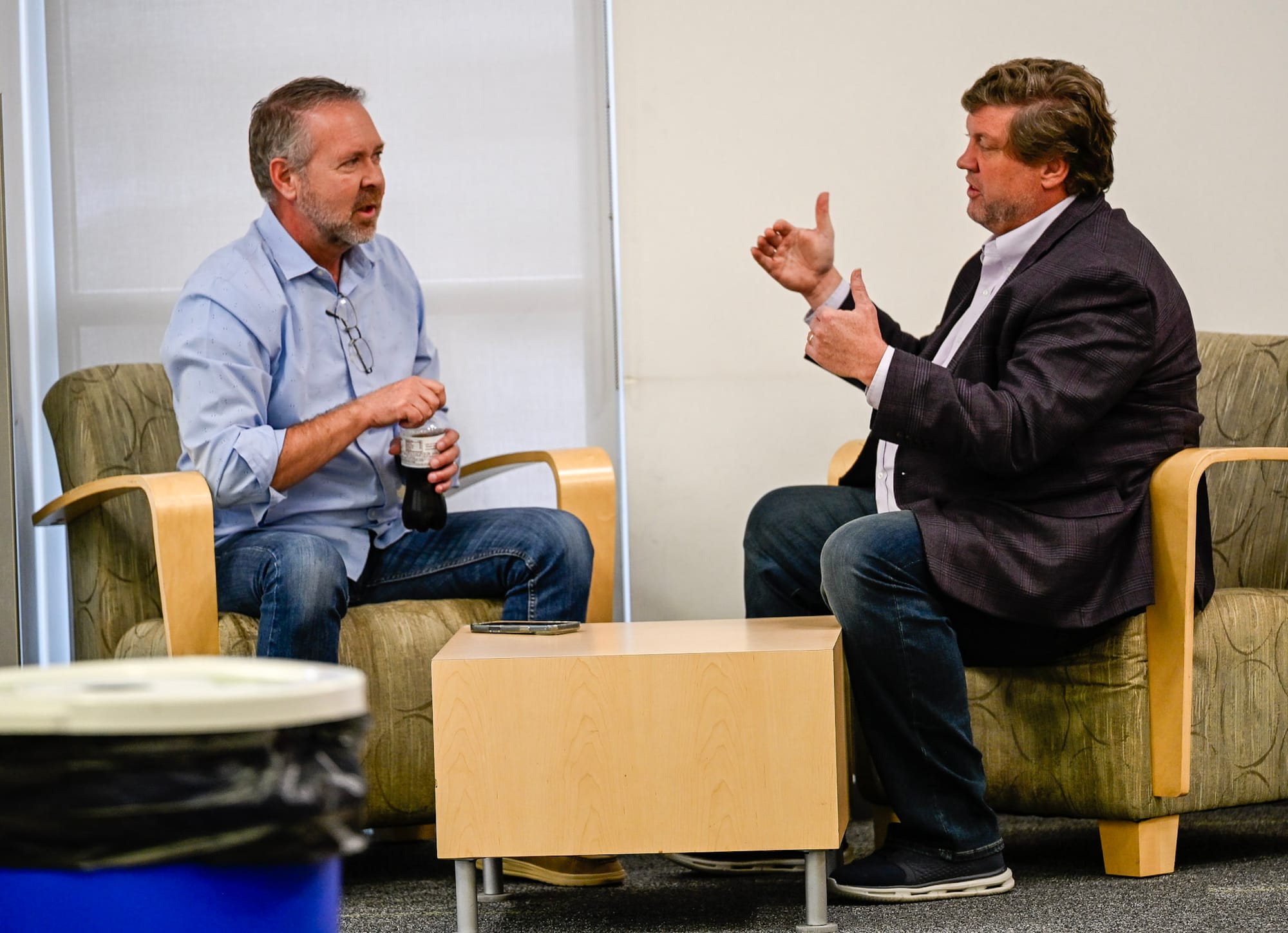
Paul Allen talking with Travis Oliphant engaged in a conversation outside the main presentation room at AI & the Future of Freedom Tech Demo Day, October 21-22, 2026,at UVU in Orem, Utah. Photo: Hank McIntire, UVU
Connecting Information With Action
Citizen Portal is also developing ways for readers to act on what they learn.
Dyches demonstrated a representative-contact feature associated with CivIQ. A user could describe a concern, receive an AI-generated draft, revise the wording and send a message through a congressional communications system, he said.
Allen and Dyches also described collaboration with Polco, whose co-founder and CEO, Nick Mastronardi, presented in the same session. The companies are working to connect records of government activity with data about community conditions and public-policy outcomes.
Dyches described their respective roles as showing what government is doing and helping residents understand how it affects them. The collaboration’s stated aim is to make those different kinds of information useful together, rather than leave residents to assemble the connections themselves.
Nick Mastronardi, co-founder and CEO of Polco, presents at UVU’s Freedom Tech Demo Day on October 22, 2026. Polco showed the audience how he combines resident feedback with community data to help local governments evaluate public services and make informed policy and budget decisions. Paul Allen called Mastronardi "a great American treasure for what he has done in the past ten years." Photo: Hank McIntire, UVU
A Business Audience for Public Records
The same information has commercial uses. Dyches estimated that 2,000 companies had signed up for Citizen Portal memberships since the end of July. He did not specify how many were paid memberships.
Businesses use government information to monitor regulatory developments, public spending and procurement opportunities, he said. A discussion about a proposed project can precede the formal request for proposals, giving companies a reason to follow the deliberations rather than wait for a contract notice.
A healthcare-focused demonstration showed how meeting information could be organized around a company’s business profile. Users could review relevant discussions, add items to watch lists, assign them to a legal team or include them in diligence reports.
Dyches also said Citizen Portal works with governments that want residents to follow their activities. He described one public agency embedding the company’s meeting coverage on its own website.
“We’re not antagonists of government,” he said.
For Allen, the broader purpose is to make public information useful to more people. In opening remarks at UVU on October 21, he argued that AI’s benefits should be widely distributed rather than concentrated among a small number of organizations or individuals.
“We all, as citizens of the United States, have a right to know what’s going on,” Allen said. “What are they spending money on? What policies exist? What’s working? What’s not working?”
Citizen Portal General Manager Thomas Dyches addressing the audience at AI & the Future of Freedom conference, October 22, 2026, Clarke Building, UVU, Orem, Utah. Photo: Hank McIntire, UVU
Share this article
The link has been copied!
Your link has expired. Please request a new one.
Your link has expired. Please request a new one.
Your link has expired. Please request a new one.
Great! You've successfully signed up.
Great! You've successfully signed up.
Welcome back! You've successfully signed in.
Success! You now have access to additional content.