Too Small to Ship? This Kaysville Company Disagrees
MoShipCo, a Kaysville-based fulfillment company, built its business on refusing the "you're too small" model of big 3PLs. CEO Ryan Page explains how a no-minimum, no-contract approach let one brand survive going viral overnight.
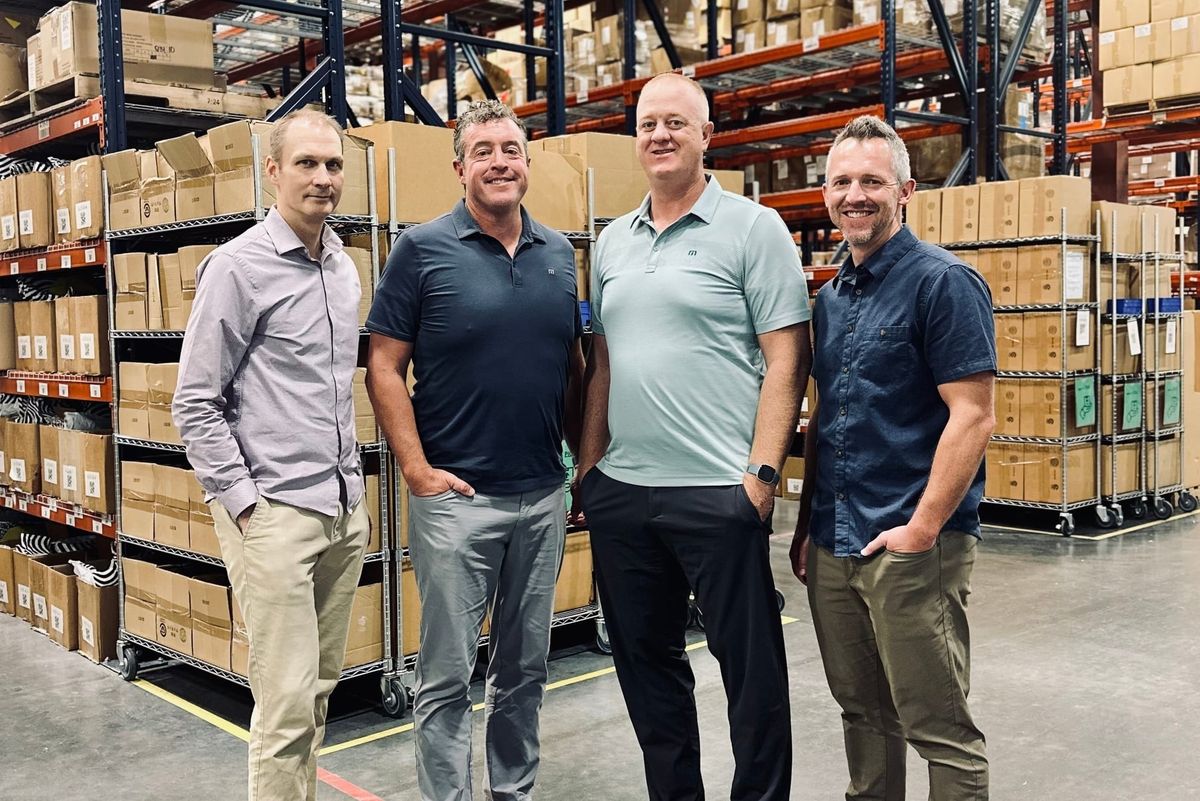
MoShipCo's executives: Jon Roane, Ryan Page, Luke Adams, and Matt Page. Page and his partners built the company's no-minimum, no-contract model after their own experience as a frustrated client of a large fulfillment network. Photo: Ryan Page, MoShipCo
MoShipCo's executives: Jon Roane, Ryan Page, Luke Adams, and Matt Page. Page and his partners built the company's no-minimum, no-contract model after their own experience as a frustrated client of a large fulfillment network. Photo: Ryan Page, MoShipCo
Kaysville, UT — September 8 2026
The order came in on a Sunday night, and by the following week, a Kaysville warehouse crew that normally handled a few hundred packages a week for the client was moving somewhere between 6,000 and 9,000 orders a day.
A brand had gone viral on TikTok. Almost overnight, MoShipCo — the Kaysville-based fulfillment company handling its shipping — was asked to do six months' worth of that brand's business in seven days.
"We had thirty people working on just her clients," said Ryan Page, MoShipCo's co-founder and CEO told TechBuzz. The client ultimately ran out of inventory before the demand did. But if she'd still been packing orders herself, Page says, the moment would have come and gone without her.
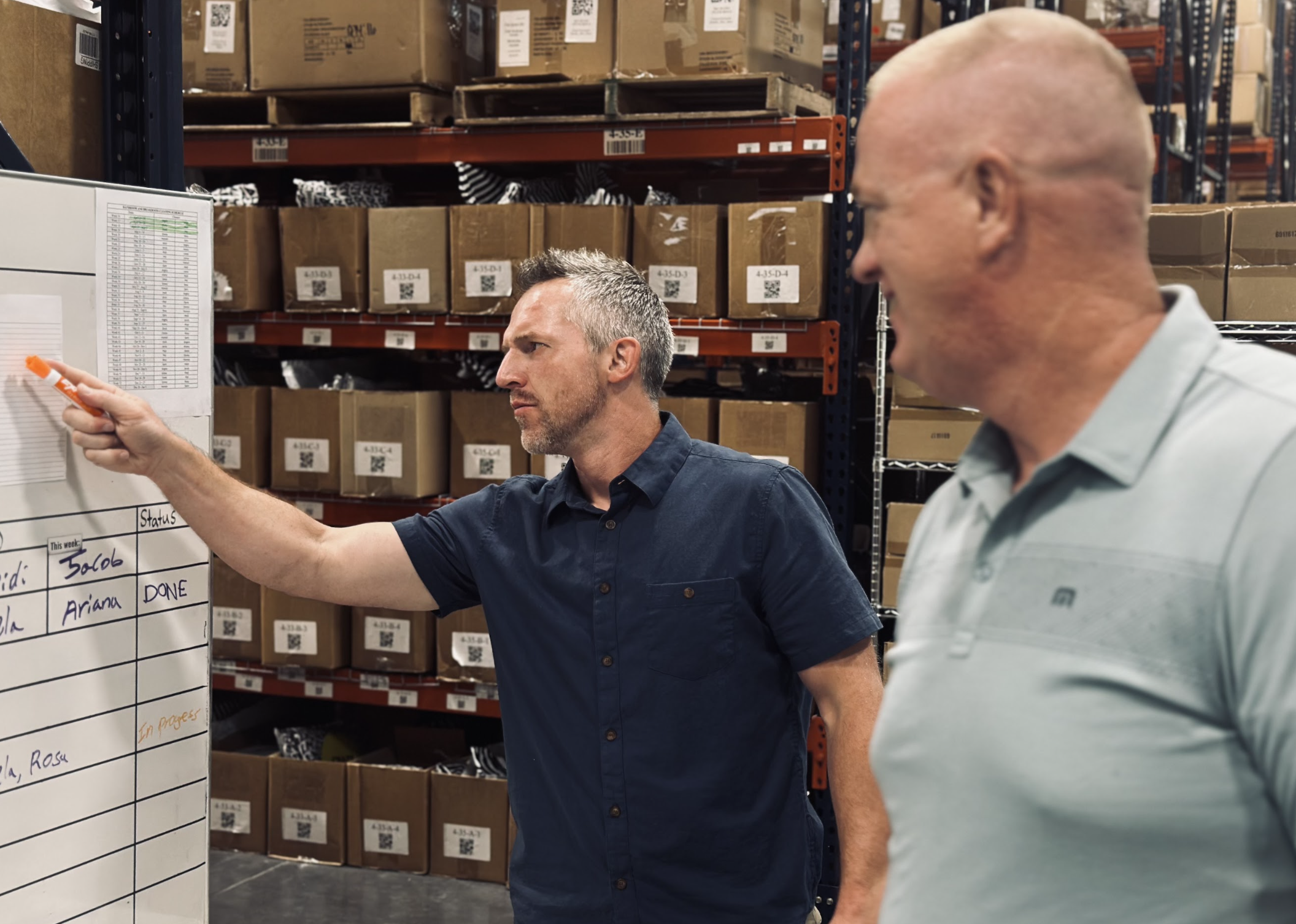
Matt Page walks through weekly staffing assignments with Luke Adams on MoShipCo's warehouse floor in Kaysville. The company built its "no minimum, no contract" model around staying hands-on with clients, no matter how small the order volume. Photo: Ryan Page, MoShipCo
"If she would have stayed in her garage; she would have missed that opportunity to scale," Page said. "It would have never happened."
That's the pitch MoShipCo has built itself around: don't wait until you're "big enough" to hand off fulfillment, because the growth moment that would make you big enough might not wait for you.
The problem with being too small
Page says the phrase founders hear from larger third-party logistics companies rarely sounds like a flat rejection. It sounds like a form that goes unanswered, or an onboarding call built around volume they don't have yet.
"ShipBob is the name a lot of founders use for that class of partner," reads a company blog post Page wrote in August, describing large 3PL networks generally rather than any single company. "Big, capable, and built for volume that looks like enterprise... If your order file is still lumpy, seasonal, or sitting just under their floor, you are expensive for them to serve well."
It's not that those bigger networks are doing anything wrong, Page says — they're built for scale where labor, systems and warehouse space are shared across high, predictable volume. A brand doing 150 orders a month with a founder still packing boxes on weekends is a different operating model entirely, and one that a lot of larger 3PLs simply aren't staffed to serve.
MoShipCo's answer is structural: no minimum order counts, no storage floors, no long-term contracts, and — Page says — a named point of contact who's still answering the phone three months in.
"We're not going to put a cap on someone coming in," Page said. "We can improve our systems... we've been very accommodating for these brands."
Technology does a lot of that work behind the scenes. When a new client comes on board, MoShipCo integrates their e-commerce site with the warehouse — along with any other retailer connections the brand has — a process Page said now takes minutes rather than weeks.
"Our technology enables us to do this very quickly, in minutes," Page said. "And we don't charge to do that work." Setup also includes receiving a client's inventory and getting it shelved in the warehouse, he said — all of it free, in contrast to the $50,000 setup fee plus months of invoices that Page says he was charged at his first 3PL.
"We view this as a privilege of doing business," Page said. "We want to earn our money as we move forward and grow together — not by nickel and diming our customers or trying to profit off the initial setup."
That philosophy extends past onboarding. Page said MoShipCo leans on AI and technology more broadly to hold down costs across the operation. "Technology is a big part of our success, and we are always looking for any edge we can to improve our accuracy, decrease costs and improve our speed," he said.
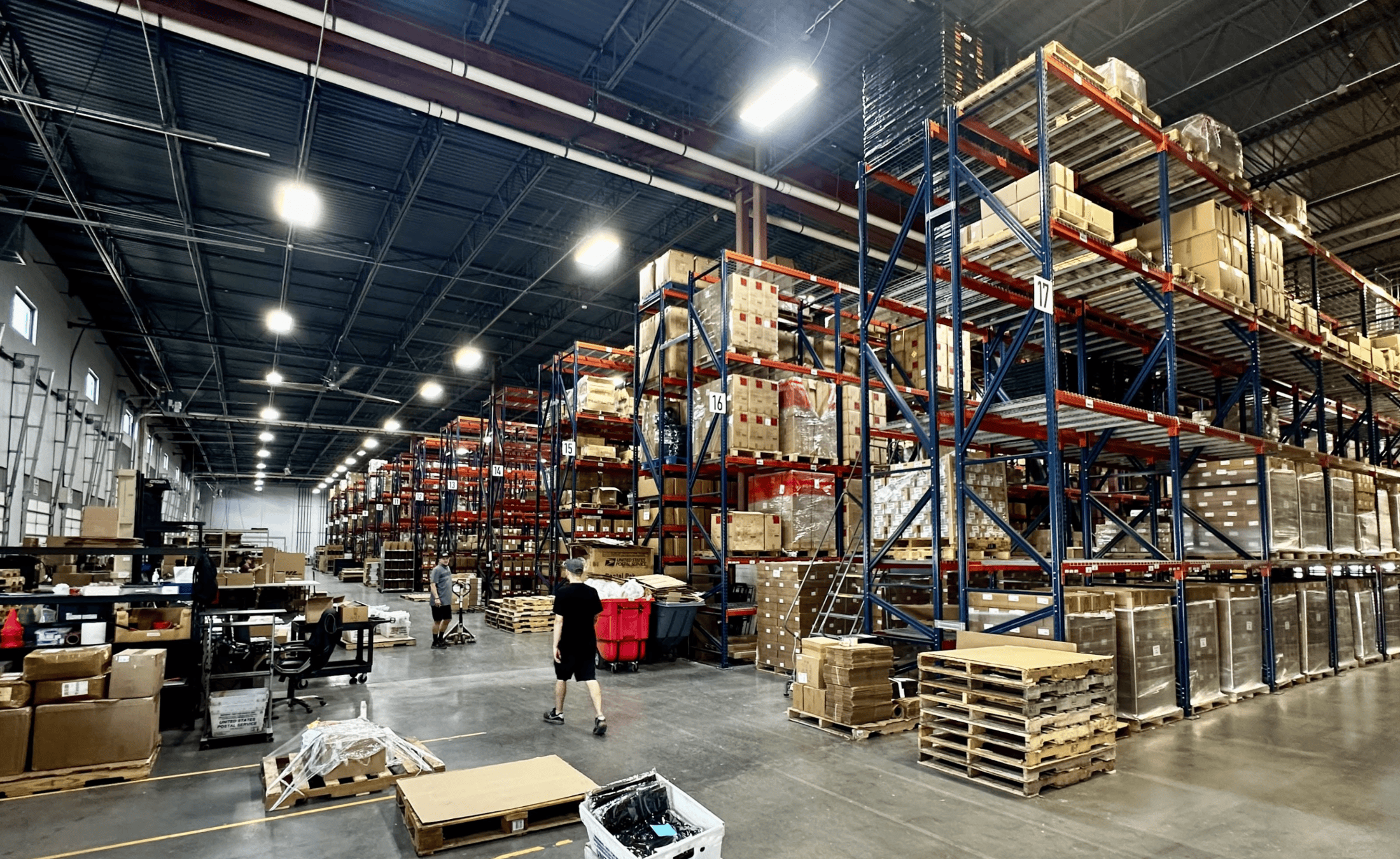
Inside MoShipCo's 80K + square foot warehouse in West Kaysville. Photo: Ryan Page, MoShipCo
Built from a bad experience
Page's conviction on this point comes from firsthand experience. Before MoShipCo, he and his business partners ran a supplement brand called Progenex, and used a large third-party fulfillment company to ship their product. That 3PL also handled fulfillment for companies like Nestlé, Starbucks and Weber Grills, Page said — and Progenex often felt like an afterthought by comparison.
"They fell asleep at the wheel," Page said. "Getting stuff received, getting it sent out the door, really hurt us as a small brand." He recalled one integration fee alone running $50,000 that stretched 45 pages long.
"I swear we got billed every time somebody looked at a box," he said.
When Page and his partners eventually built MoShipCo, also known as Momentum Shipping Company, he said the model came directly from what they hated as a client: opaque billing, slow onboarding, and being made to feel like a "nuisance" account relative to bigger clients.
"We looked at all the things we hated about the big guys," Page said.
The bet that gave them room to grow
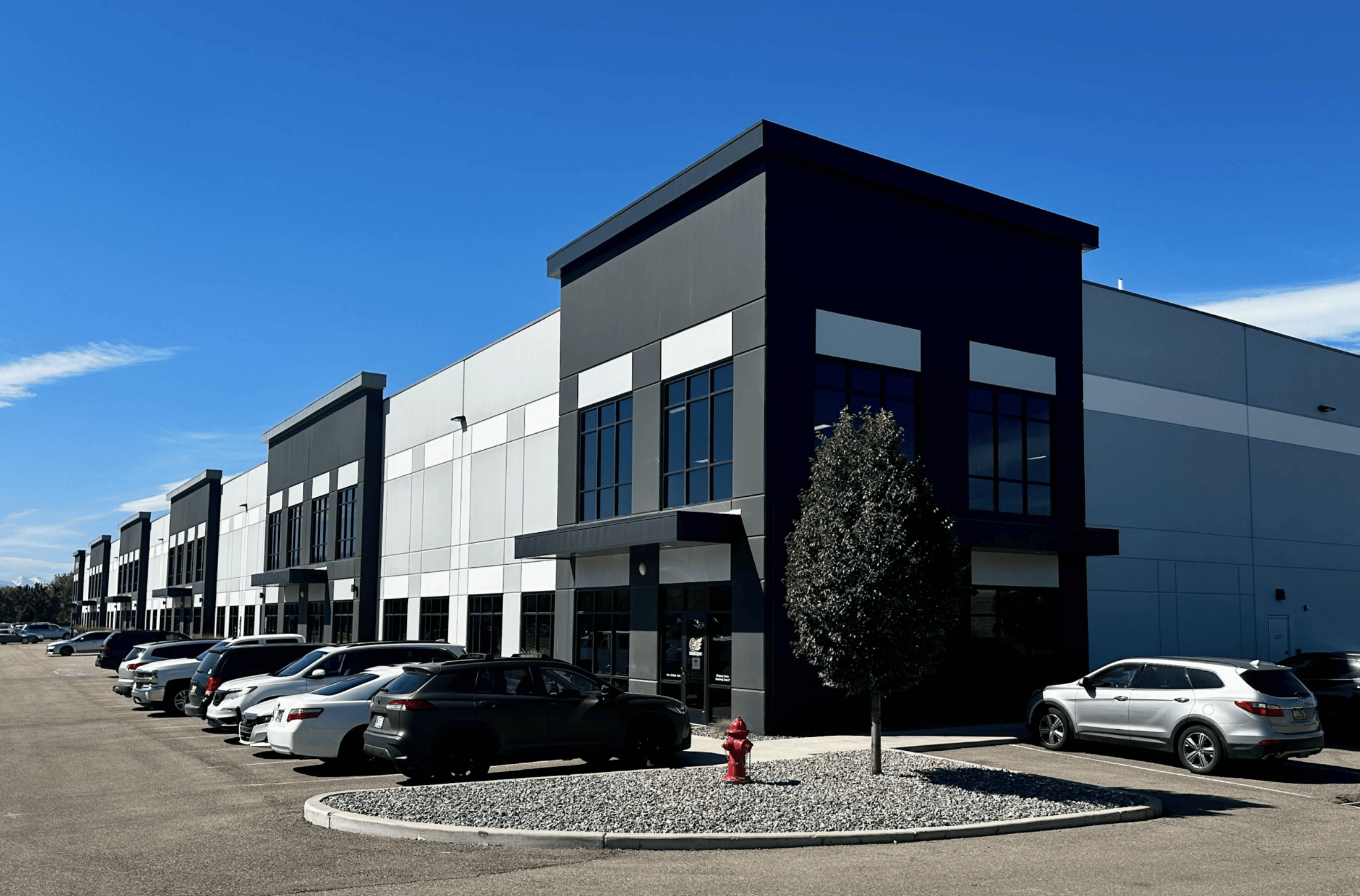
MoShipCo's ability to absorb a moment like the TikTok spike didn't happen by accident. It traces back to a real estate gamble Page made in Kaysville just before the COVID-19 pandemic hit.
MoShipCo started in North Salt Lake in February 2014, but within a few years had outgrown the space. Page found a newly built commercial property in Kaysville with loading docks, a rarity in Davis County, he said, where much of the available premium commercial space lacks the docks a shipping operation needs. He signed a personal guarantee on an 50,000-square-foot lease just before COVID-19 disrupted global shipping.
"You talk about pressure," Page said. "I'm sitting there personally guaranteeing a pretty expensive lease... thinking now my home's not safe."
In the short term, the timing was brutal. Clients bringing product in from Asia saw shipping timelines collapse just as MoShipCo took on new fixed costs. But the extra space, and the systems built to fill it, are part of why the company could scale to meet a client's overnight demand years later.
An unconventional warehouse workforce
Kaysville isn't where most people would expect to find a fulfillment warehouse. It's a "bedroom community," Page said — mostly single-family homes, light on commercial development. "We just barely got a Taco Bell," he joked.
But Page says that's turned into an advantage on staffing. Rather than relying on temp agencies — a source of frustration during MoShipCo's early years in North Salt Lake, he said — the company built shifts around stay-at-home parents, some of whom work modified hours between roughly 9 a.m. and 3 p.m. while their kids are in school. During busier stretches, MoShipCo also pulls from the student population at Davis and Farmington area high schools.
"These were sharp, very competent and capable kids," Page said, noting some MoShipCo student employees have gone on to medical school or already hold business degrees.
The stakes of accuracy in fulfillment work are high, Page said: a shipping mistake can cost far more than the modest fee MoShipCo earns from the order itself.
"If we do everything right, we might make a dollar on a shipment," Page said. "But if we screw up, it's going to cost us ten to fifteen. We've got to replace the shipment."
Range of clients
MoShipCo's clients range from Utah-based consumer product brands, national baby brands, supplement companies and over 50 other direct-to-consumer businesses.
The client list also includes companies entering the U.S. market from overseas. For example, a prominent Australian motorcycle apparel brand uses MoShipCo as its de facto U.S. distribution arm, letting the company market to American customers without a domestic footprint.
Page also described a prominent Utah consumer brand that initially turned down MoShipCo's help, believing itself too small — until a single weekend of hand-packing orders in a backyard changed their minds. By the following Monday, the brand had moved its inventory to MoShipCo's facility.
The bigger picture
For Page, the pitch to founders is less about a single feature than about where their attention belongs.
"You're not going to compete in this world based on shipping and fulfillment," Page said. "You're going to leave a lot of money on the table, and it's going to distract you from growing your brand."
Page has a theory about why MoShipCo ended up in Kaysville in the first place. He once read that companies tend to relocate their headquarters within five miles of the CEO's house — and sure enough, his is about a mile from the warehouse floor.