Utah’s Nuclear Ecosystem Takes Next Step With Proposed Training and Research Campus in Brigham City
Utah State University, Hi Tech Solutions, and Brigham City advance plans for 20,000-square-feet of facilities designed to train workers, support nuclear research and build the workforce for Utah’s emerging nuclear industry.
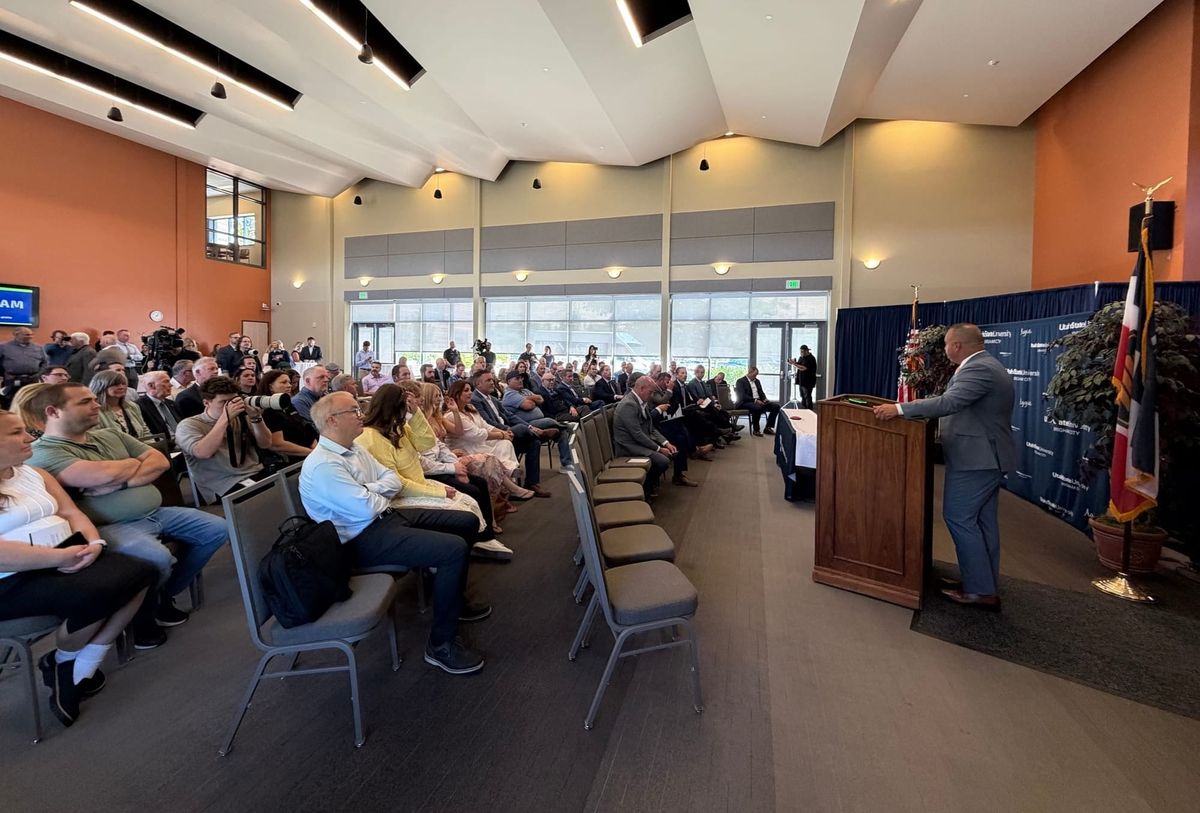
Brigham City Mayor DJ Bott addresses attendees during the announcement of plans for a proposed Center for Energy Research & Technology (CERT) Campus, a nuclear training and research facility being developed through a partnership between Hi Tech Solutions, Utah State University and Brigham City. Photo: Chris Coombs
Brigham City Mayor DJ Bott addresses attendees during the announcement of plans for a proposed Center for Energy Research & Technology (CERT) Campus, a nuclear training and research facility being developed through a partnership between Hi Tech Solutions, Utah State University and Brigham City. Photo: Chris Coombs
Brigham City, UT — August 24, 2026
Utah’s effort to establish a nuclear energy ecosystem is moving into a new phase, with Hi Tech Solutions, Utah State University and Brigham City signing an agreement to evaluate and advance plans for a proposed nuclear training and research campus.
The proposed Center for Energy Research & Technology Campus, or CERT Campus, would be located adjacent to the Utah State University Brigham City campus and would focus on technical training, certification and applied research involving nuclear energy, advanced energy systems, defense technologies and related supply chains.
The CERT concept has been developing for more than a year as part of Utah’s broader effort to build a nuclear-energy ecosystem in Northern Utah. The Utah Office of Energy Development identified the planned Brigham City CERT campus in a March 2026 response to a U.S. Department of Energy request for information, describing it as an industry-led, multimillion-dollar regional nuclear training center being developed with Utah universities, technical colleges and trade schools.
Brigham City also identified CERT as a partner in its broader nuclear-energy initiative, while the American Nuclear Society reported on the planned training center in November 2025. The new agreement between Hi Tech Solutions, Utah State University and Brigham City now moves the concept into a more formal planning phase.
The initiative gives a more concrete shape to the workforce-development component of the broader nuclear ecosystem announced in Brigham City last November by the state, Hi Tech Solutions and Holtec International.
The initiative calls for four to 10 small modular reactors around Brigham City, along with manufacturing and workforce-development infrastructure. The proposed CERT Campus would provide an institutional framework for much of that workforce effort.
A proposed $100 million development
The initial phase of the CERT campus is expected to include approximately 20,000 square feet of facilities, with construction anticipated to begin in 2028, pending funding and final approvals.
Under the MOU, USU will provide academic leadership, curriculum development, faculty expertise, research capabilities and administration of credentialing and degree programs, while providing a long-term ground lease for the designated property. Brigham City will support site master planning, infrastructure coordination, regional economic development and local permitting. Hi Tech Solutions will serve as the master developer, responsible for financing and developing the campus and coordinating sub-development, while providing industry expertise, equipment, technology resources and internship and employment pathways.
Initial construction is expected to be staged at up to $100 million.
The campus is expected to employ approximately 20 full-time employees by 2029, with employment growing as additional facilities and programs are developed.
The larger economic impact could extend well beyond those direct jobs.
According to the partners, hundreds of nuclear professionals could travel to Brigham City each year for training, continuing education, research and industry collaboration. That activity could generate additional demand for local hotels, restaurants and businesses while reinforcing the city's position along Northern Utah's defense and aerospace corridor.
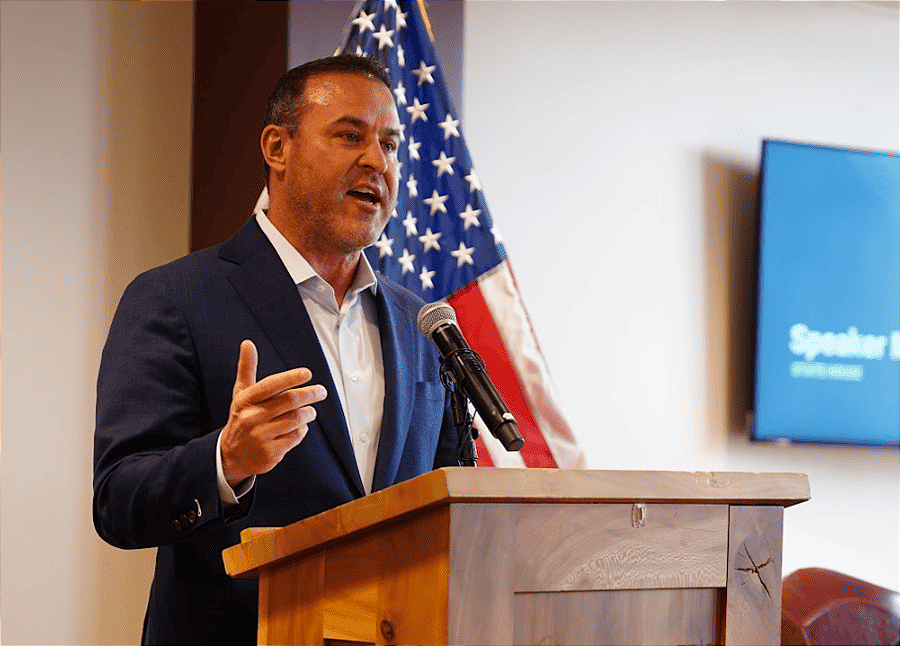
Utah House Speaker Mike Schultz, speaking at the nuclear energy MOU event in Brigham City, November 17, 2025. Photo: Mark Tullis, TechBuzz
“This partnership brings industry, education and local leaders together to give Utahns the hands-on training and skills they need for good-paying careers in a growing field,” said Utah House Speaker Mike Schultz. “It’s exactly the kind of collaboration that turns opportunity into a stronger workforce and a stronger economy.”
Utah Senate President J. Stuart Adams similarly framed the initiative as part of a broader effort to build the workforce and infrastructure required to support growing energy demand.
Stuart Adams, Utah Senate President, Republican Senator, address the audience at the nuclear energy MOU announcement, Brigham City, November 17, 2025. Photo: Mark Tullis, TechBuzz
“Meeting America’s growing energy demands and competing on the world stage will require bold investments in innovation, infrastructure and a highly skilled workforce,” Adams said.
From nuclear reactors to the workforce behind them
The workforce issue has been a central part of Utah's nuclear strategy from the beginning.
When Utah, Hi Tech Solutions and Holtec announced their nuclear partnership in November 2025, the companies described an ecosystem that would combine reactor deployment, manufacturing and workforce development rather than simply build power plants. Holtec said the initiative would include manufacturing centers and workforce training tied specifically to the delivery and operation of the planned nuclear fleet.
The Brigham City concept subsequently emerged as a potential hub for that strategy.
Hi Tech Solutions, which has experience servicing more than 80% of the U.S. nuclear reactor fleet, has positioned workforce development as a central part of its Utah expansion. The company has also acquired Reactor Services Inc. and Nuclear Repair Services, expanding its capabilities in engineering, precision manufacturing and field services.
The proposed CERT Campus would extend that strategy into higher education and applied research. The campus is expected to include industry-sponsored simulation laboratories, equipment testing and validation capabilities, creating a bridge between classroom training, applied research and commercial nuclear operations.
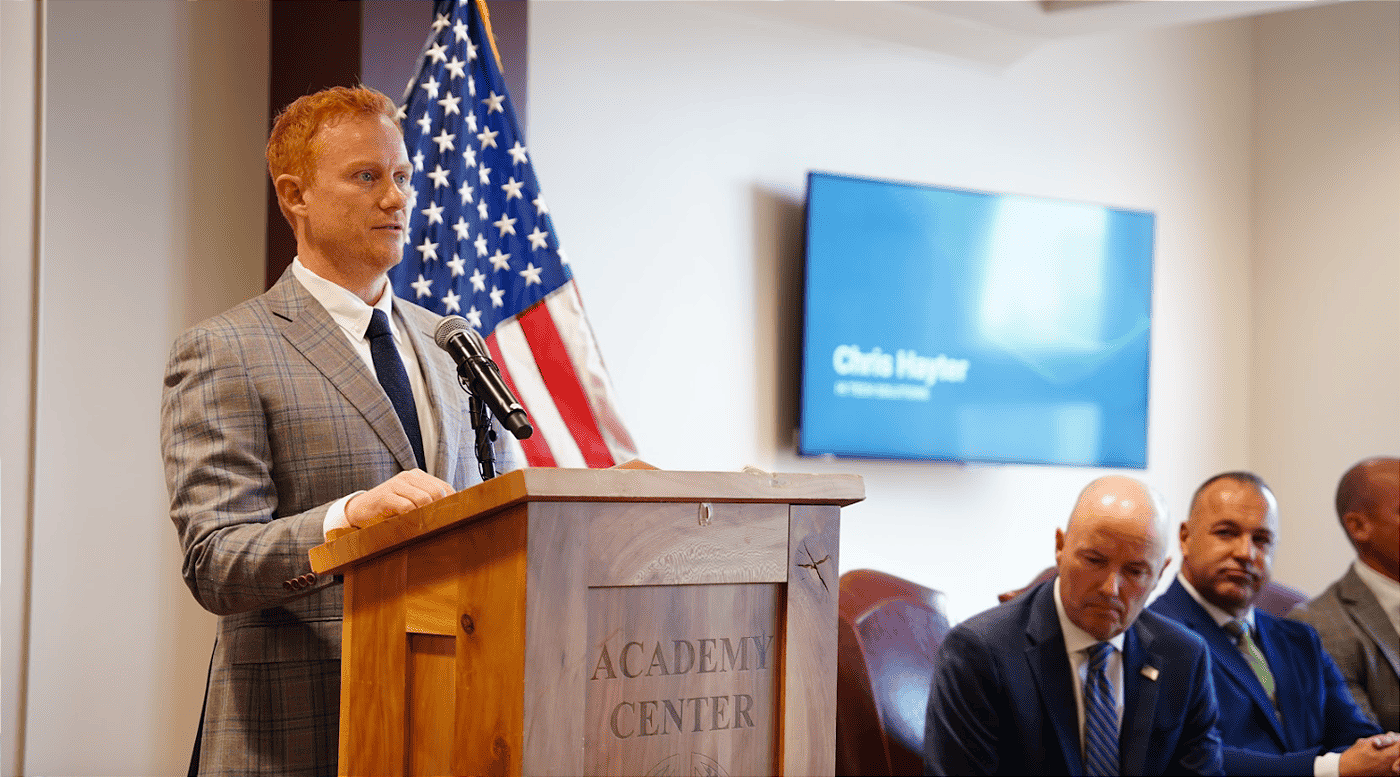
“We lack both on the trade side and the skilled workforce side, and we lack from the engineering and education side in our industry,” said Chris Hayter, co-founder and chief operations officer of Hi Tech Solutions.
“The CERT Campus would expand hands-on training, certification, and applied research in nuclear operations, maintenance, safety, engineering, and advanced manufacturing.”
Chris Hayter, Co-founder and COO of Hi Tech Solutions, of Eden Utah, speaking at the nuclear energy MOU event on November 17, 2025 in Brigham City, Utah. Governor Spencer Cox and Mayor DJ Bott of Brigham City also pictured. Photo: Mark Tullis, TechBuzz
The proposed programs could include credentialing, apprenticeships and technical training for students, skilled tradespeople and transitioning military service members.
Areas under consideration include nuclear operations, engineering support, safety, maintenance, advanced manufacturing, fuel handling and commercial nuclear services.
USU brings research and education into the ecosystem
The partnership also gives Utah State University a more prominent role in the state's developing nuclear industry.
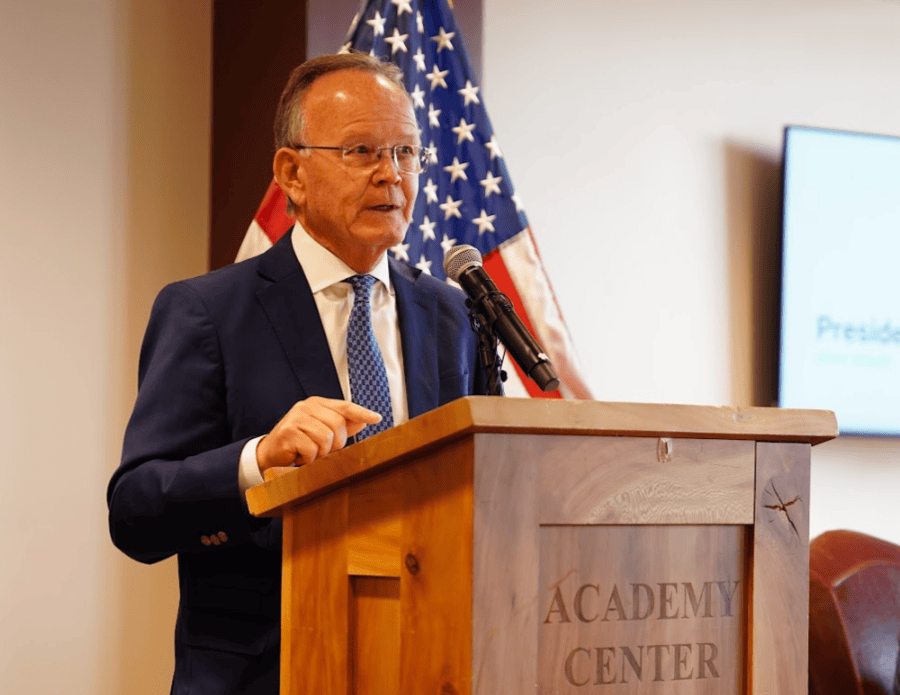
“This partnership reflects Utah State’s land-grant mission and our responsibility to help meet the evolving needs of our state,” said President Brad Mortensen of Utah State University. “Working alongside Brigham City and Hi Tech Solutions, we have an opportunity to explore new approaches to technical training and research that prepare students for high-demand careers, support economic growth, and strengthen Utah’s leadership in energy and national defense.”
Brad Mortensen, President of Utah State University. Photo: Utah State University
The MOU calls for the partners to evaluate curriculum and certification programs, applied research opportunities, workforce demand, campus design, industry partnerships and funding sources.
The parties also expect to coordinate with regional employers, nuclear companies, national laboratories, defense-related institutions, private-sector participants and state and federal agencies.
The campus is envisioned as a collection of facilities rather than a single-purpose building. Different facilities could have different ownership and operating arrangements.
Hi Tech Solutions and affiliated partners would operate commercial-facing portions, while USU would participate in research, testing, training and academic programming. Some facilities could generate revenue and be jointly operated, while others could be primarily academic or research facilities.
Brigham City would support site planning, infrastructure coordination, local permitting and regional economic-development efforts.
Part of a larger Utah nuclear strategy
The Brigham City initiative is emerging alongside other Utah nuclear projects, including Valar Atomics' reactor development in Emery County, as state officials promote nuclear power through Gov. Spencer Cox's Operation Gigawatt initiative, an initiative aimed at doubling Utah's energy production.
The original Brigham City announcement on November 17, 2025 called for a nuclear ecosystem combining advanced manufacturing, workforce development and Holtec's SMR-300 technology. Public descriptions of the project have envisioned multiple reactors as part of a longer-term buildout, along with a manufacturing facility and training center.
The broader initiative calls for four to 10 small modular reactors around Brigham City, along with manufacturing and workforce-development infrastructure.
The strategy is no longer confined to Brigham City.
In May, Fulcrum Point Holdings and Blue Castle Holdings announced a joint venture to advance the long-planned Blue Castle nuclear project in Green River, with Holtec's SMR-300 selected as the proposed reactor technology. The Green River project represents another potential node in the state's emerging nuclear network.
Hi Tech Solutions and Fulcrum Point are also pursuing other Utah energy opportunities, including the Green River project.
The CERT Campus would support Hi Tech Solutions and Fulcrum Point Holding’s Green River and Brigham City projects by helping build the workforce and industry capacity needed to advance Utah’s growing nuclear energy ecosystem. It would also enhance collaboration with other advanced energy partners like Rodatherm Energy Corporation.
The CERT Campus could also serve a workforce function that extends beyond a single reactor site or even Brigham City. As nuclear projects move from concept toward licensing, construction and eventual operation, the industry will require technicians, engineers, skilled tradespeople, safety professionals, maintenance workers and other specialized personnel.
Still a proposal
Despite the ambitious plans, the CERT Campus remains in the planning stage.
The newly signed MOU calls for the partners to evaluate and advance the concept. Funding has not been finalized, construction has not been approved and the final mix of academic, research and commercial facilities has yet to be determined.
That distinction is significant as Utah attempts to build an entirely new nuclear industry.
The broader Brigham City project itself faces the technical, regulatory and financial challenges inherent in developing new nuclear infrastructure. Industry officials have described the initiative as a long-term effort involving manufacturing, workforce development and eventual deployment of small modular reactors rather than a near-term power-generation project.
Should the project move forward, which all indications suggest will happen, perhaps as early as 2028, Brigham City would have not only a potential nuclear manufacturing and power-generation hub, but also a dedicated institution for developing the people and technical capabilities required to operate it.
That workforce infrastructure could ultimately prove as important to Utah's nuclear ambitions as the reactors themselves.
Share this article
The link has been copied!
Your link has expired. Please request a new one.
Your link has expired. Please request a new one.
Your link has expired. Please request a new one.
Great! You've successfully signed up.
Great! You've successfully signed up.
Welcome back! You've successfully signed in.
Success! You now have access to additional content.