Utah Moves Electric Aviation From Plan to Flight With BETA's ALIA CX300 Demo
BETA Technologies flew its all-electric ALIA CX300 at Salt Lake City International Airport as UDOT, 47G, Alpine Air and FAA officials described how Utah's uFLY program is gathering data to bring electric aviation to market.
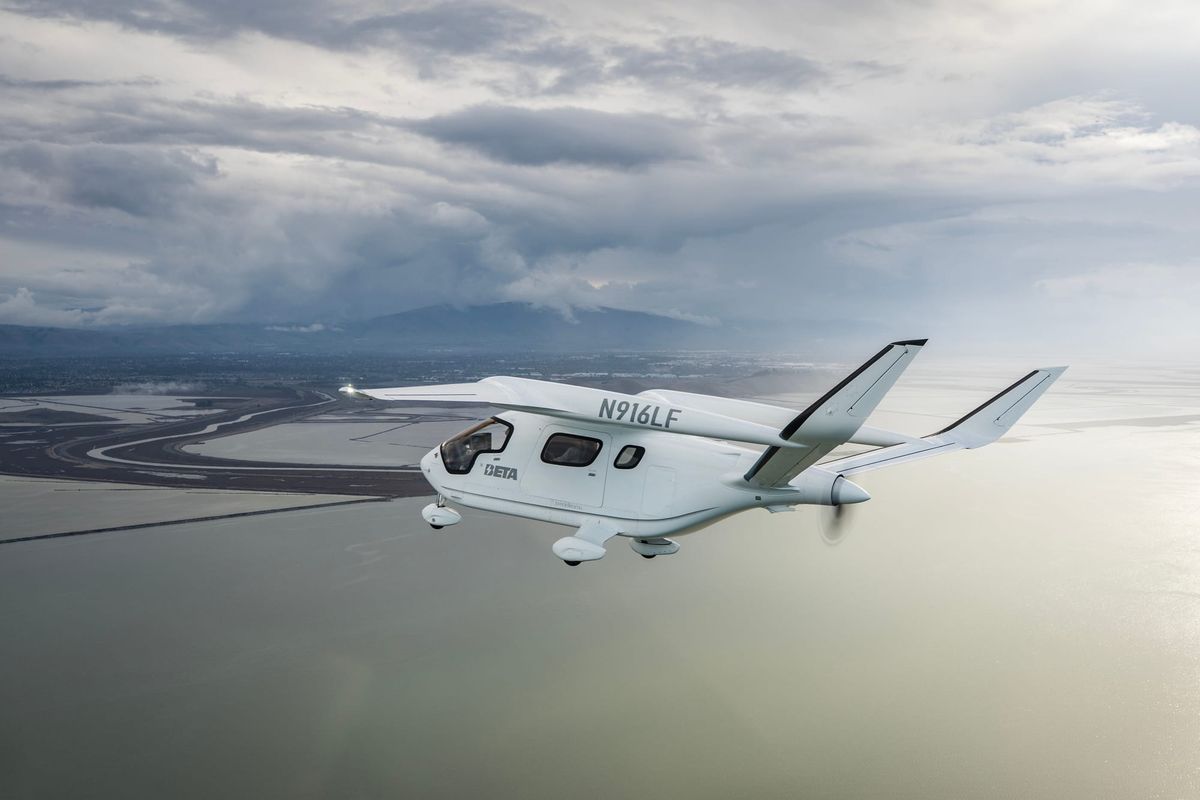
BETA Technologies' all-electric ALIA CX300 in flight. The conventional-takeoff aircraft has demonstrated a range of 336 nautical miles. Photo: BETA Technologies
BETA Technologies' all-electric ALIA CX300 in flight. The conventional-takeoff aircraft has demonstrated a range of 336 nautical miles. Photo: BETA Technologies
Salt Lake City, Utah – October 7, 2026
Utah's push toward electric aviation took a visible step forward Wednesday when BETA Technologies flew its all-electric ALIA CX300 at the Utah Department of Transportation (UDOT) hangar at Salt Lake City International Airport.
The demonstration is the latest real-world operation under uFLY, UDOT's multi-state initiative to safely accelerate advanced aviation in Utah. UDOT partnered with BETA and 47G, Utah's aerospace and advanced air mobility organization. Speakers included state leaders, executives from BETA, 47G and Alpine Air, and an FAA official.
Why the FAA is watching Utah
UDOT is one of eight participants nationwide in the FAA's eVTOL Integration Pilot Program (eIPP). Jose Fierro of the FAA's Advanced Aviation Technologies office, who is based in San Francisco, said the agency wants data from a wide range of aircraft and operations to inform its regulatory framework and speed the safe inclusion of advanced air mobility in national airspace.
Fierro said Utah's proposal stood out because it brings electric, hybrid and autonomous aircraft, along with cargo, passenger, medical, first-response and wildfire missions. He said UDOT's was the only project in the nation to offer autonomous helicopters and wildfire response.
"I know this is only the beginning, and I can't wait to see where you take us next," said Fierro.
"Aerospace is not a single entity"
Blaine Newton, Chief Information Officer of BETA said Utah's mix of mountains, a lake and long distances makes it an ideal proving ground. He pictured trips such as Logan to Salt Lake City, or a commute across Utah Lake to Provo.
"Aerospace is not a single entity; it is a community that comes together to make something happen," Newton said.
Newton said electric aviation is moving faster than many expect, pointing to the pace of regulation, infrastructure funding and customer learning. "This is not 10 years off," he said. He also predicted electric aircraft will carry athletes to the 2034 Winter Games in Salt Lake City.
He said the ALIA CX300 is a first step toward larger aircraft, including 30-seat and larger models as battery technology improves. He also thanked the state for appropriating money for infrastructure ahead of demand.
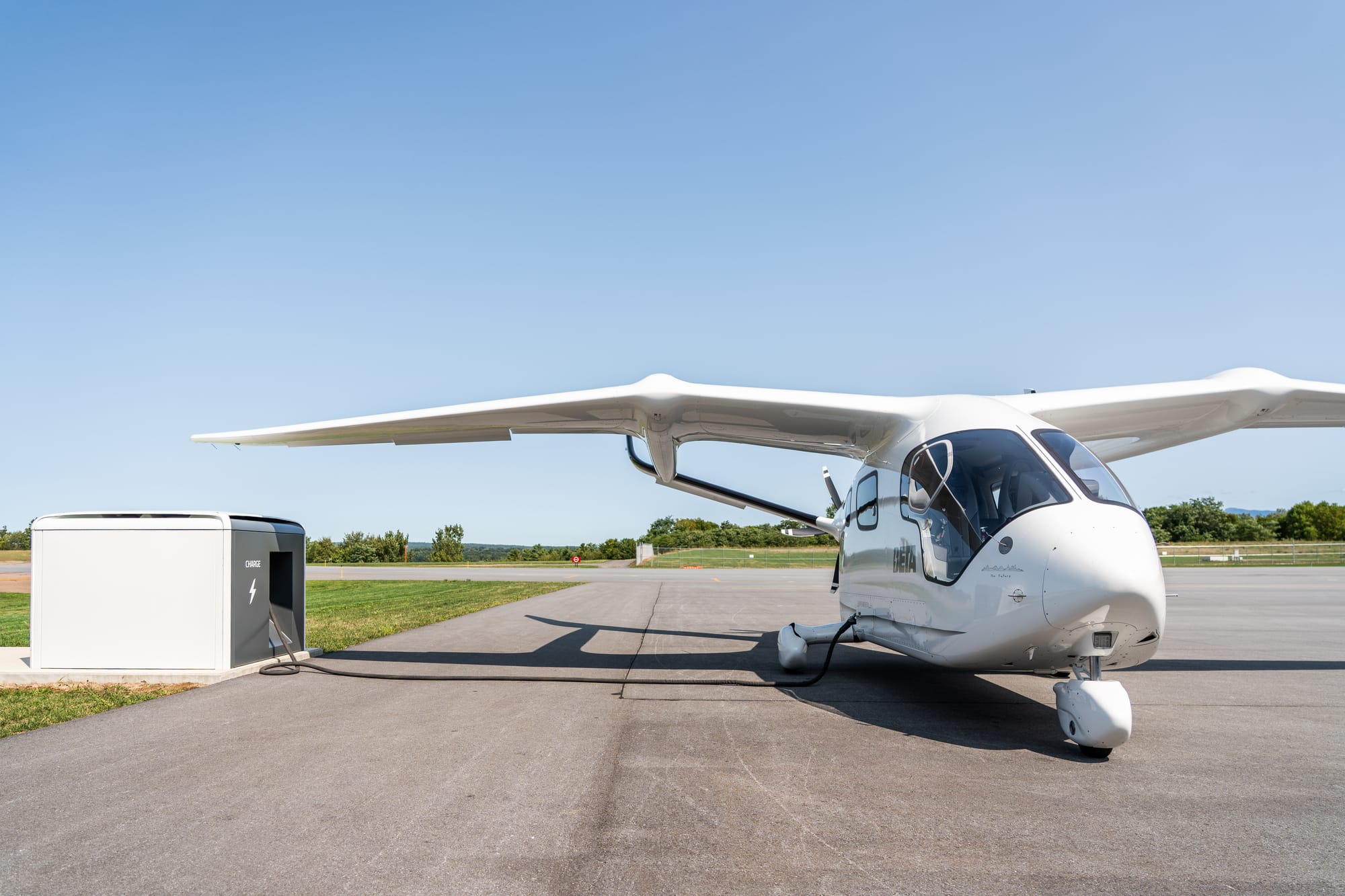
BETA says the CX300 has demonstrated a maximum range of 336 nautical miles and can carry cargo and critical medical supplies. The aircraft is designed to operate from existing airports. The company has charging capability in place across Utah and a high-speed Charge Cube under construction at Salt Lake City International Airport.
An industry with deep Utah roots
Aaron Starks, President and CEO of 47G, said many people who fly over Utah think of national parks, not aerospace. He said the industry accounts for about 19.1% of the state's economy. He said BETA flew an ALIA to six airports around the state in March 2025, drawing people together around the aircraft.
Starks said part of the aircraft is made in Utah: fuselage and skin from Albany Engineered Composites, about a mile from the event, shipped to Vermont for final assembly. He urged cities, counties and other jurisdictions to start planning infrastructure now. "You can't be what you can't see," he said, explaining why demonstrations matter.
Michael Dancy, president and CEO of Alpine Air, said his company has flown cargo, mail and checks to rural communities in Utah, Montana and the Dakotas for roughly 50 years. He said he and partners bought Alpine in 2014.
Dancy said practicality will decide whether electric aircraft take off. "If it doesn't work for our customers, it doesn't work for us," he said. He said larger electric aircraft could link rural areas, so people can live far from city centers and still reach work, pointing to Eagle Mountain's single road in and out as an example.
What UDOT says
UDOT Commissioner Carlos Braceras said in a news release that the department wants Utah to help lead the way. "Through uFLY, companies like BETA can test this technology in real-world conditions and help us understand how it can safely integrate into the transportation systems Utahns rely on every day," he said.
Senate President J. Stuart Adams said in the release that testing these technologies in Utah gives the state a chance to lead the next generation of transportation and strengthen its aerospace industry.
BETA founder and CEO Kyle Clark said that BETA designed the aircraft to serve communities more efficiently and at lower cost, and that Utah gives the company a chance to gain the operating experience needed for reliable commercial service.