Alto Cirra Wants to Put Autonomous Aircraft to Work in Utah’s Clouds
Alto Cirra (Salt Lake City, UT) is preparing to test autonomous drone-based cloud seeding in the Wasatch Back this winter, combining aircraft, meteorology, sensing and mission data to pursue more targeted, measurable Utah water-resilience operations.
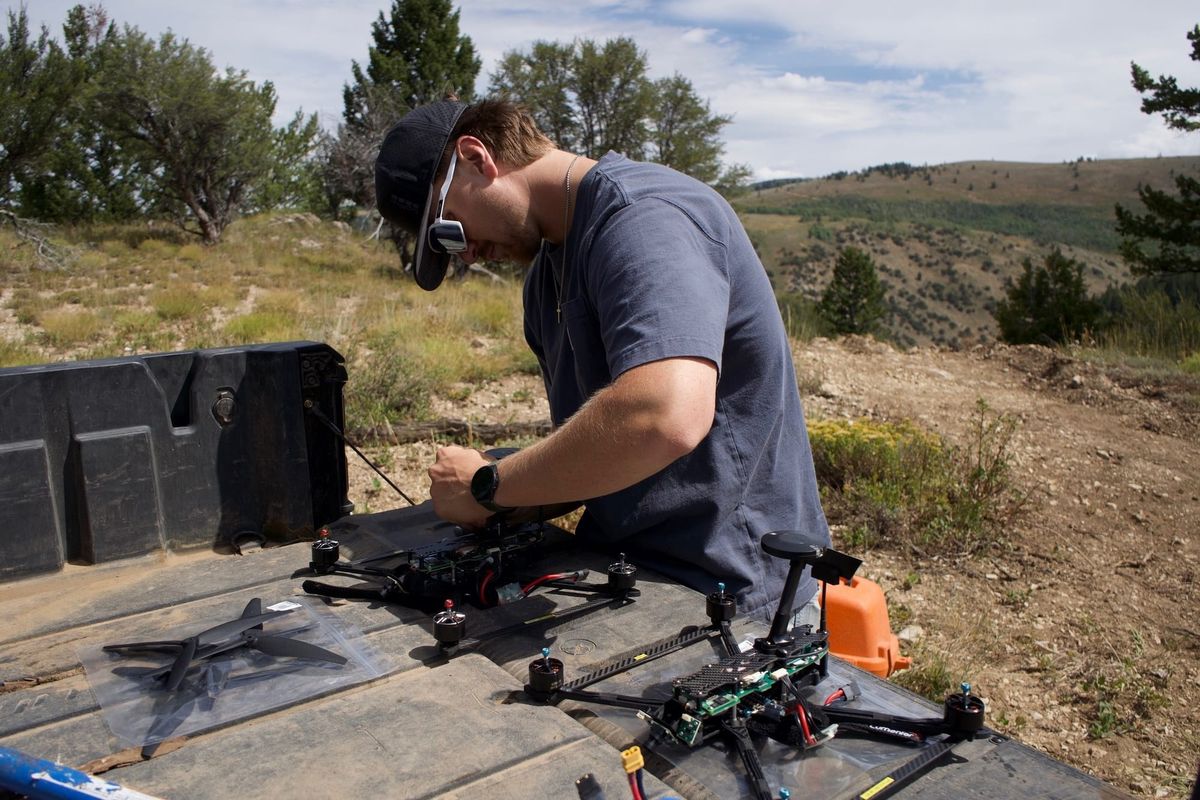
Andrew Verda, Co-Founder and CEO of Alto Cirra, prepares the company’s autonomous aircraft during a field test in Utah. The Salt Lake City startup is developing drone technology for high-altitude atmospheric operations, including cloud-seeding missions planned for the Wasatch Back this winter. Photo: Alto Cirra.
Andrew Verda, Co-Founder and CEO of Alto Cirra, prepares the company’s autonomous aircraft during a field test in Utah. The Salt Lake City startup is developing drone technology for high-altitude atmospheric operations, including cloud-seeding missions planned for the Wasatch Back this winter. Photo: Alto Cirra.
Salt Lake City, Utah — September 25, 2026
Salt Lake City startup will use autonomous drones to test a more targeted approach to cloud seeding in the Wasatch Back this winter
For Andrew Verda, the idea for Alto Cirra began with a bad ski day.
Verda, a longtime Utah skier and former executive in the state's drone and robotics industry, was skiing at Snowbird last winter with members of Protect Our Winters' Science Alliance. The snow was poor, the temperatures were unusually warm, and a storm that was expected to arrive hadn't delivered. During that conversation, Verda wondered aloud why technology couldn't somehow make storms more productive. One of the scientists gave him an answer he wasn't expecting.
Cloud seeding.
"I was like, 'Cloud seeding? That's a conspiracy theory, right?'" Verda recalled, in a conversation with TechBuzz.
It wasn't.
Utah has operated cloud-seeding programs for decades, and the practice is based on a relatively straightforward premise: introduce an ice-nucleating material into an existing cloud under the right atmospheric conditions to encourage additional precipitation. In Utah, that material is typically silver iodide, whose crystalline structure can provide a surface around which ice crystals form in clouds containing supercooled liquid water—water that remains liquid below the normal freezing point. As those ice particles grow, they can eventually become large enough to fall as snow.
Andrew Verda, Co-Founder and CEO, Alto Cirra
The challenge is not simply getting silver iodide into a cloud. Meteorologists have to identify clouds containing the right combination of temperature, moisture and supercooled liquid water, then determine where and when seeding could have an effect.
That is where Verda came up with the hypothesis that autonomous aircraft could offer more precise targeting than conventional ground generators or crewed aircraft. He wondered: if cloud seeding was already established technology, could modern autonomous aircraft make it more precise?
That question became the basis for Alto Cirra, a Salt Lake City startup co-founded by Andrew Verda and Ethan Friedman, developing autonomous aircraft and software for atmospheric operations. The company's first application is drone-based cloud seeding, with a focus on water resilience in the Mountain West.
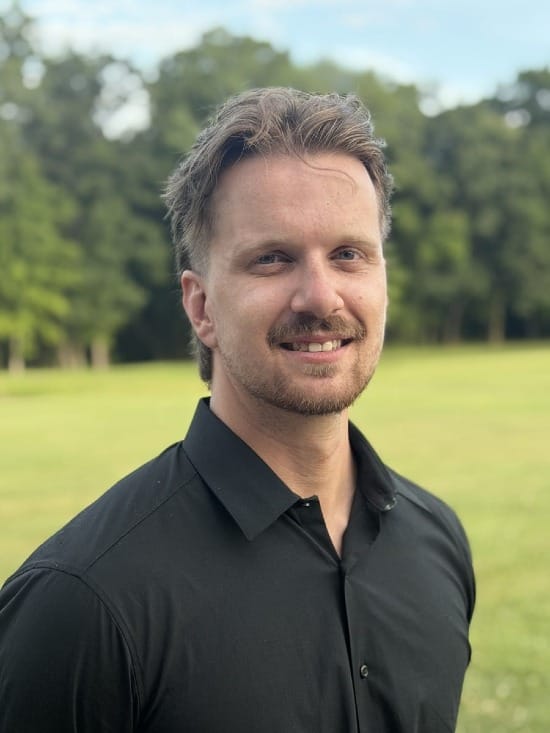
Ethan Friedman, Co-Founder of Alto Cirra, observing an Alto Cirra drone gain altitude during one of the company's numerous summer flights on a private ranch in Utah near Monte Cristo, August, 2026.
The company says it is preparing to operate around the Park City-area ski and action-sports facilities among the locations it hopes to study. The company is approaching the project as a pilot: prove the aircraft, prove the operational model and, perhaps most importantly, generate measurable evidence about what happens when the aircraft seeds a storm.
That last part matters because measuring cloud-seeding effectiveness remains one of the field's hardest problems.
Utah's Division of Water Resources is confronting the same challenge through SNOWSCAPE 2026, a research program involving the National Center for Atmospheric Research, the University of Utah and Utah State University (Utah Climate Center). The program is collecting high-resolution atmospheric and snowpack data during seeded and non-seeded storms to improve models of cloud-seeding effects.
Alto Cirra wants to bring another piece of technology into that equation.
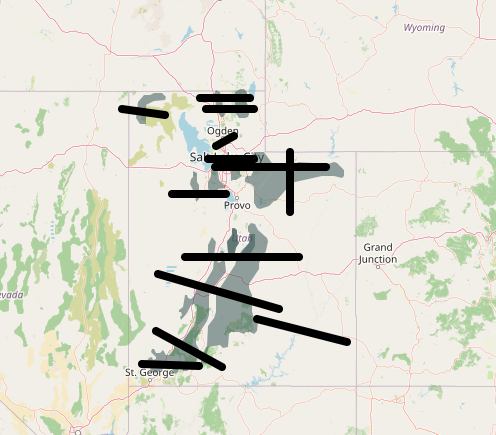
Utah State University’s Utah Climate Center uses selected cross sections across Utah mountain ranges to examine forecast vertical profiles of temperature and supercooled liquid water (SLW), two key atmospheric variables used by meteorologists when evaluating cloud-seeding conditions. Graphic: Utah State University's Utah Climate Center.
The drone is only part of the system
Verda came to Alto Cirra after working in Utah's drone and robotics industry, including with Palladyne AI, formerly Sarcos Robotics, previously covered by TechBuzz.
Alto Cirra's current aircraft strategy is a bridge to a larger platform.
The company is initially adapting a 36-inch X-Class quadcopter supplied through its relationship with Pennsylvania-based PSA UAS.
PSA's aircraft were developed for demanding defense applications. According to Verda, the platform was designed to withstand extreme forces and operate in difficult environments. Alto Cirra is adapting that technology for a very different mission: flying into winter storms at high altitude.
The environment is challenging.
The aircraft can encounter icing, extreme temperatures conducive to supercooled liquid water, and winds that can reach 60 mph or more. Rather than treating the aircraft as a remotely piloted machine, Alto Cirra is building the system around autonomous flight and onboard sensing.
Sensors continually feed data into the aircraft's flight system. The aircraft can make rapid adjustments as atmospheric conditions change, while safety procedures—including return-to-home behavior and an automatic parachute system—are designed to operate independently of an internet connection or an operator's intervention.
The aircraft are designed to remain operational even if they lose their internet connection. While Alto Cirra uses cloud-based software to support mission operations, the drones also carry the onboard computing and autonomy needed to continue flying and responding to incoming data without a live connection to the cloud.
“All of our drones are autonomous; they have AI built into their flight platforms,” Verda explained. “They’re able to operate on the edge of the drone as well as through our cloud-based software. So if it loses internet or anything, it doesn’t drop out of the sky. It doesn’t forget how to fly or know what to do. It’s still able to make decisions based on what’s coming in.”
The aircraft also have autonomous safety procedures, including return-to-home behavior when conditions become too volatile. If an aircraft loses power or otherwise begins an uncontrolled descent, Verda said, a falling-motion sensor can trigger an onboard parachute system.
The company's longer-term aircraft is a fixed-wing VTOL platform that Alto Cirra is developing for atmospheric operations. VTOL capability would allow the aircraft to launch and land vertically while using fixed wings for more efficient flight once airborne.
Verda's objective is not simply to build another drone. It is to build an aircraft-and-software system capable of determining where a storm should be seeded, flying into that area, adapting to conditions in real time and recording enough data to evaluate the result.
Finding the right cloud
Cloud seeding does not mean creating precipitation from a clear sky.
Utah's Division of Water Resources describes cloud seeding as introducing favorable nuclei into an existing precipitating cloud to promote droplet growth and ice nucleation. The state operates its cloud-seeding program during the winter months and emphasizes that clouds must already be present and have the appropriate characteristics.
Alto Cirra's system therefore begins before the drone ever leaves the ground.
The company's meteorology team analyzes a storm's trajectory, temperature, humidity, pressure, wind and transport direction, among other variables. The goal is to identify areas where supercooled liquid water is present—the ingredient that can potentially respond to silver iodide, the ice-nucleating agent used by the company.
Alto Cirra's meteorology operation is led by Tahlia Crabtree, a New Zealand-based meteorologist and former head meteorologist at Rainmaker Technology Corporation of El Segundo, CA. Crabtree comes with extensive experience in cloud seeding and drone-deployed cloud seeding operations. "Tahlia is super talented. She brings a huge benefit to the team," Verda said. In Utah all permitted cloud seed operators must have a certified meteorologist on their team.
The company's internal forecasting tools combine atmospheric data with models developed by its meteorology and technology teams. The system is intended to identify where the appropriate atmospheric conditions are likely to exist and where that storm is expected to travel.
That distinction is important.
A drone doesn't simply fly toward the biggest-looking cloud.
It needs to enter a cloud with the right characteristics, at the right location and at the right time.
Utah also requires cloud-seeding operators to obtain permits and licenses. State requirements include an operations plan, target-area maps, insurance and public notice, and operators must establish suspension criteria. Those criteria can include high snowpack water equivalents, severe weather warnings, avalanche risks and requests from local sponsors.
For Alto Cirra, that means the company's winter operation will be constrained not only by its own technology but by the same atmospheric and safety requirements governing Utah's broader cloud-seeding program.
Targeting the Wasatch Back
Alto Cirra expects to operate its aircraft from locations roughly 10 to 15 miles from the areas it intends to influence, depending on storm speed, direction and atmospheric conditions.
The aircraft would climb into the storm, locate the appropriate portion of the cloud and follow a prescribed seeding pattern.
The company expects to have as many as five aircraft available during a mission but anticipates that two may be sufficient for many operations. The aircraft can carry multiple seeding flares, allowing operators to adjust the duration and pattern of a mission.
The larger goal is precision. Verda sees a difference between trying to increase precipitation over a broad mountain range and trying to understand whether a particular area can receive a measurable benefit from a targeted operation.
Woodward Park City provides an interesting test case because of its relatively small footprint. Alto Cirra plans to examine whether it can concentrate its seeding operation sufficiently to study differences between the target area and surrounding terrain.
The company says it also has relationships with private landowners who are interested in participating in the pilot. For the first season, Alto Cirra isn't charging those customers. Verda describes the coming winter as a proof-of-system phase rather than a mature commercial operation. The business model comes later.
Who pays for more snow?
Cloud seeding sits at an unusual intersection of public infrastructure and private economics. Utah's state program is focused on water supply and watershed management. At the same time, ski resorts have an obvious commercial interest in snow. Alto Cirra sees both markets.
A watershed customer is ultimately buying additional water supply. A resort is buying an attempt to improve snow conditions within its operating area. Private landowners can have agricultural, recreational or water-related reasons for participating.
The company expects future contracts to combine retainers or contracted mission blocks with hourly operational fees.
Verda said Alto Cirra expects to charge slightly more than $3,000 per flight hour, while arguing that its economics can compare favorably with crewed aircraft because an autonomous drone does not require a pilot onboard and can fly directly to a target area rather than carrying an aircraft and crew through a longer flight profile.
The commercial proposition, however, depends on something more fundamental than cost. The company has to demonstrate that its intervention produces a measurable effect.
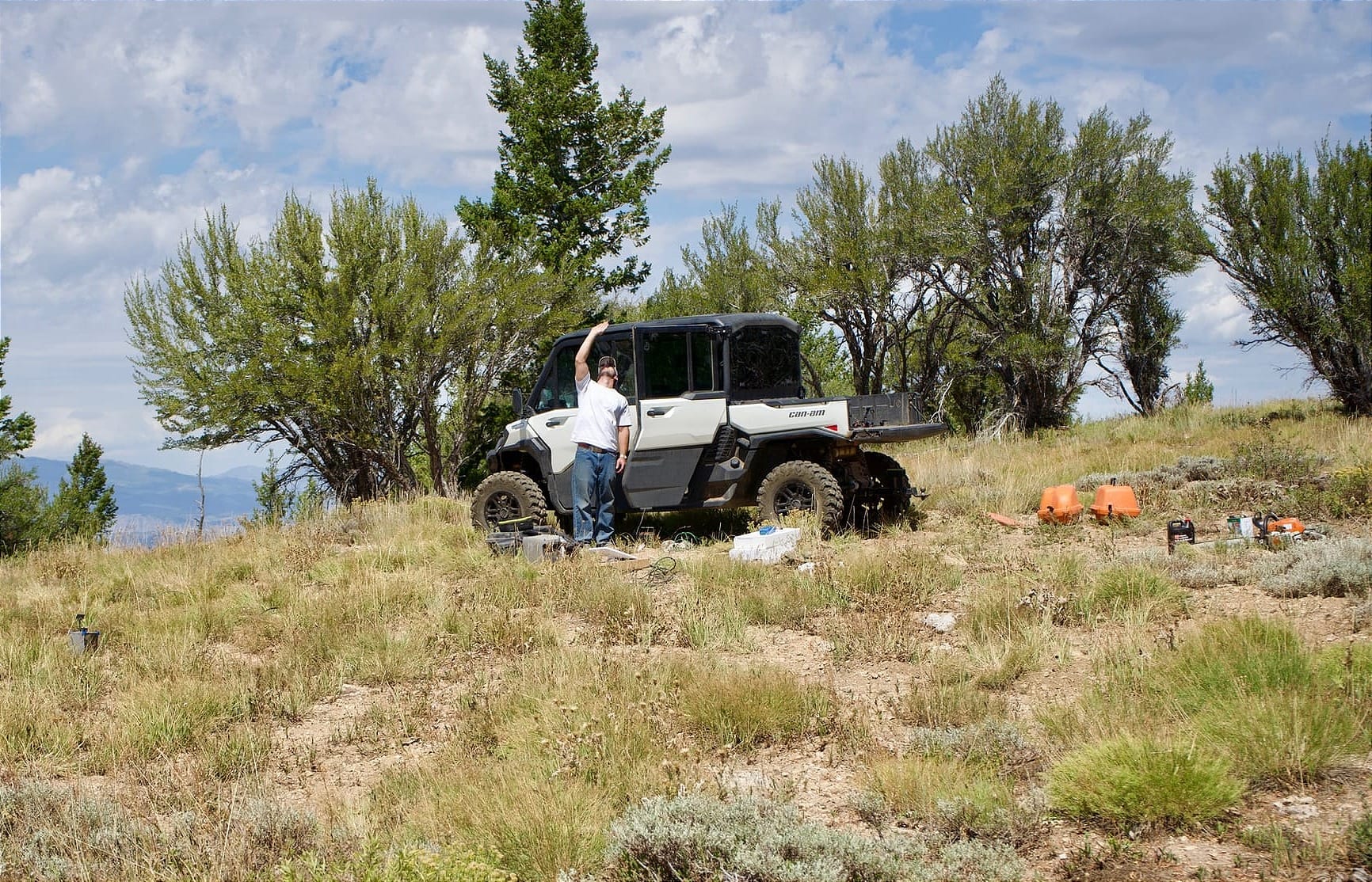
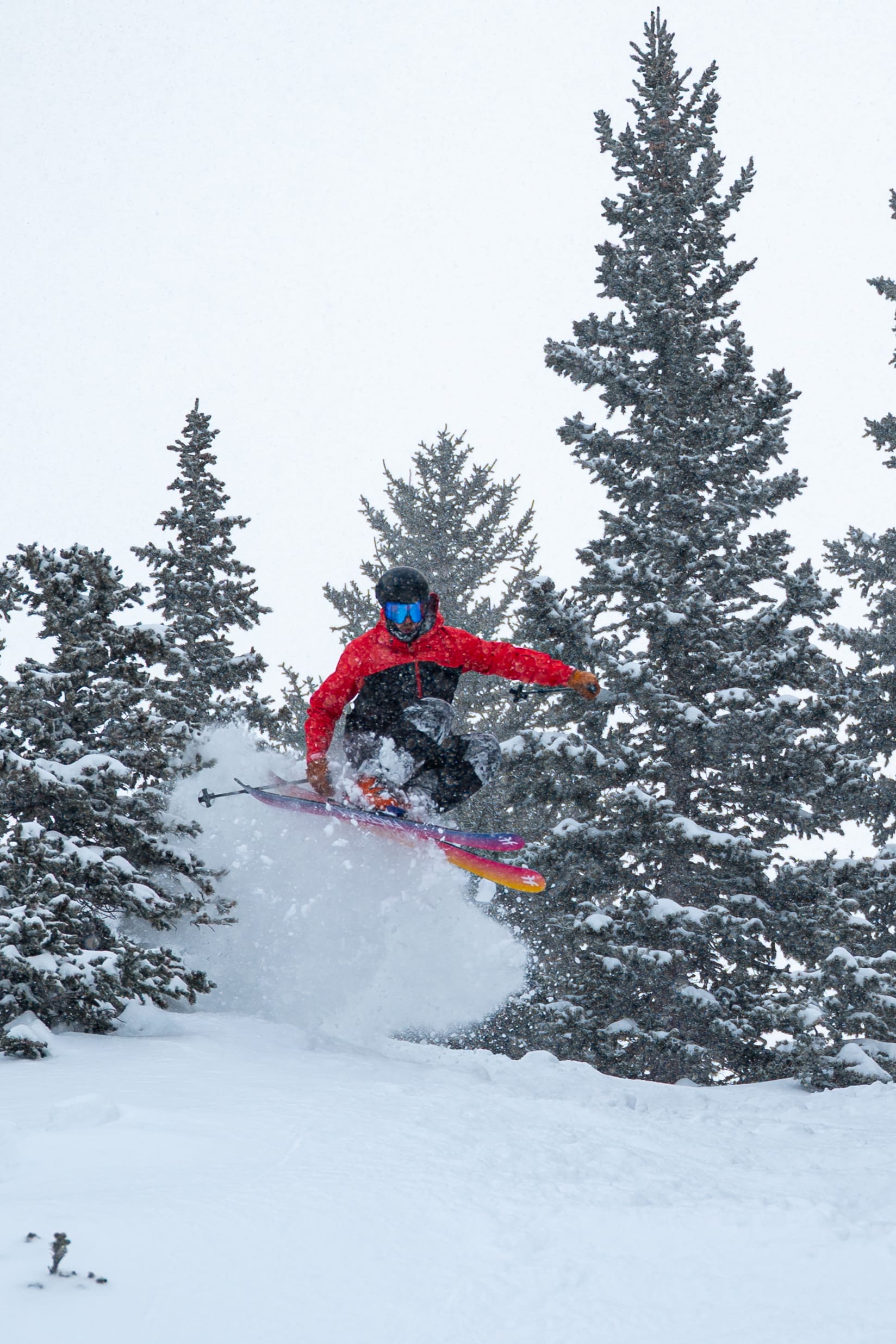
Andrew Verda, Co-Founder and CEO of Alto Cirra, gaining altitude at Snowbird, 2026.
The measurement problem
This is where Alto Cirra's winter pilot becomes more interesting than simply another drone demonstration.
Measuring the effect of cloud seeding is one of the field's longstanding challenges. A storm would have produced some amount of snow without intervention, making it difficult to determine how much additional precipitation resulted from seeding.
Traditional approaches have often relied on comparing measurements from SNOTEL stations in seeded and control basins. SNOWSCAPE is designed to capture much more information about what happens inside the mountain atmosphere and across the snowpack, giving researchers more detailed data with which to evaluate the physical effects of seeding.
Researchers will use the field data to calibrate two modeling systems—one focused on atmospheric weather-modification effects and another on hydrology. Those models will then simulate three winter seasons to estimate how cloud seeding could affect snowpack and ultimately streamflow.
The timing is significant for Alto Cirra. The Salt Lake City startup is preparing its own first winter of drone-based cloud-seeding operations in the Wasatch Back, with plans to use X-band radar and atmospheric data to look for measurable precipitation responses.
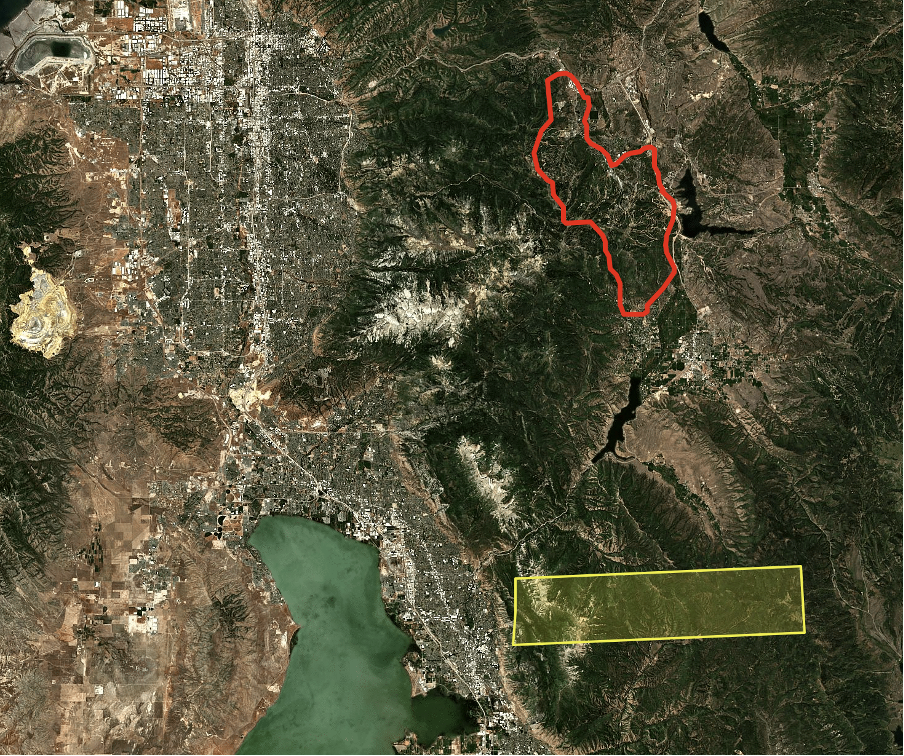
Alto Cirra’s planned Wasatch Back cloud-seeding operations area, with the red outline marking the primary target region and the yellow box indicating an additional area included in the company’s mission planning. The Salt Lake Valley and Great Salt Lake are visible to the west. Image: Alto Cirra
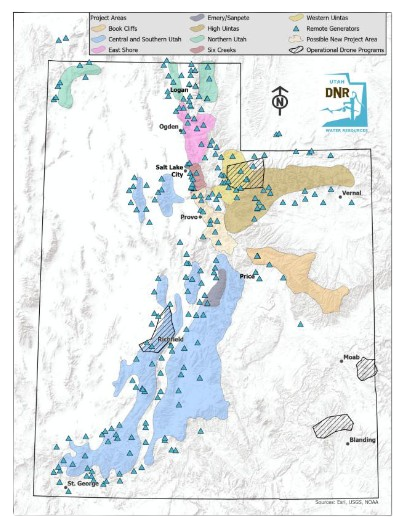
Utah is also exploring drone-based cloud seeding as part of its broader program, citing the potential for drones to fly directly into clouds and release seeding material at more precise locations and temperatures.
In other words, Alto Cirra's experiment is arriving at a moment when Utah is asking a larger question of its own: how precisely can the state measure what happens when humans intervene in a winter storm?
From defense drones to atmospheric infrastructure
Alto Cirra's Utah connection extends beyond its headquarters.
The company is part of Convoi's accelerator and has relationships with 47G, Utah's aerospace and defense ecosystem.
Alto Cirra is also drawing on the experience of Production Systems Automation (PSA Systems), a Pennsylvania engineering and manufacturing company with a dedicated unmanned-aircraft operation known as PSA UAS. The PSA UAS team develops application-specific small unmanned aircraft, including custom airframes, embedded systems, circuit boards and autopilot systems.
Verda said Alto Cirra is working with PSA to adapt its existing UAS technology for atmospheric operations. The relationship gives Alto Cirra access to an established aircraft-development and manufacturing operation rather than requiring the startup to develop every piece of the aircraft from scratch.
The partnership also connects Alto Cirra to a deeper UAS engineering team. PSA UAS identifies more than a decade of experience developing small unmanned aircraft, including work involving custom airframes, autonomous systems and PX4 autopilot technology.
Michael McHale, who leads PSA Systems and has invested in Alto Cirra, is serving as Alto Cirra's president. PSA has experience in industrial automation and unmanned aircraft systems, and Alto Cirra is adapting some of that technology for atmospheric missions.
Verda's plan is eventually to bring more of that manufacturing activity to Utah.
The company is currently working out of an early-stage operating environment that is associated with 47G while evaluating warehouse locations in the Salt Lake area. Its longer-term plan is to move aircraft manufacturing from Pennsylvania to Utah, bring some engineering personnel with it and build its field operations and meteorology teams around the Salt Lake headquarters.
That is part of what makes Alto Cirra relevant to Utah's technology ecosystem beyond the cloud-seeding application itself.
The company is combining autonomous systems, aerospace engineering, atmospheric science, sensing, data analysis and an emerging commercial market around water infrastructure.
And cloud seeding may only be the first application.
0:00
/0:06
Andrew Verda demonstrating a mountain launch of an Alto Cirra cloud seeding drone, 2026. Video: Alto Cirra
Proving the idea this winter
Verda is already thinking beyond Utah. Alto Cirra has ambitions for multi-state operations and international markets where water scarcity is a significant concern. But the company first has to demonstrate that its technology works under real winter conditions in the Wasatch.
That means getting the aircraft permitted. It means finding the right storms. It means safely operating in wind, icing and changing atmospheric conditions. And it means measuring what happens after the silver iodide is released.
Verda is unusually direct about that last requirement. "The biggest thing we want to do is prove precipitation," he said.
The company also wants to demonstrate that it can become more precise—targeting a particular area rather than simply seeding a large geographic region—and develop enough operational experience to expand during the 2027–28 winter season.
That makes this coming high-stakes winter less about the number of drones Alto Cirra can put into the sky than about what the company can learn from putting them there.
Utah has been seeding clouds for decades. The technology itself is not new. What is changing is the possibility of putting autonomous aircraft, atmospheric sensing and increasingly sophisticated forecasting tools directly into the clouds.
Alto Cirra is betting that combination can make an old technology more measurable and more targeted.
The Wasatch Back will be its first real test.
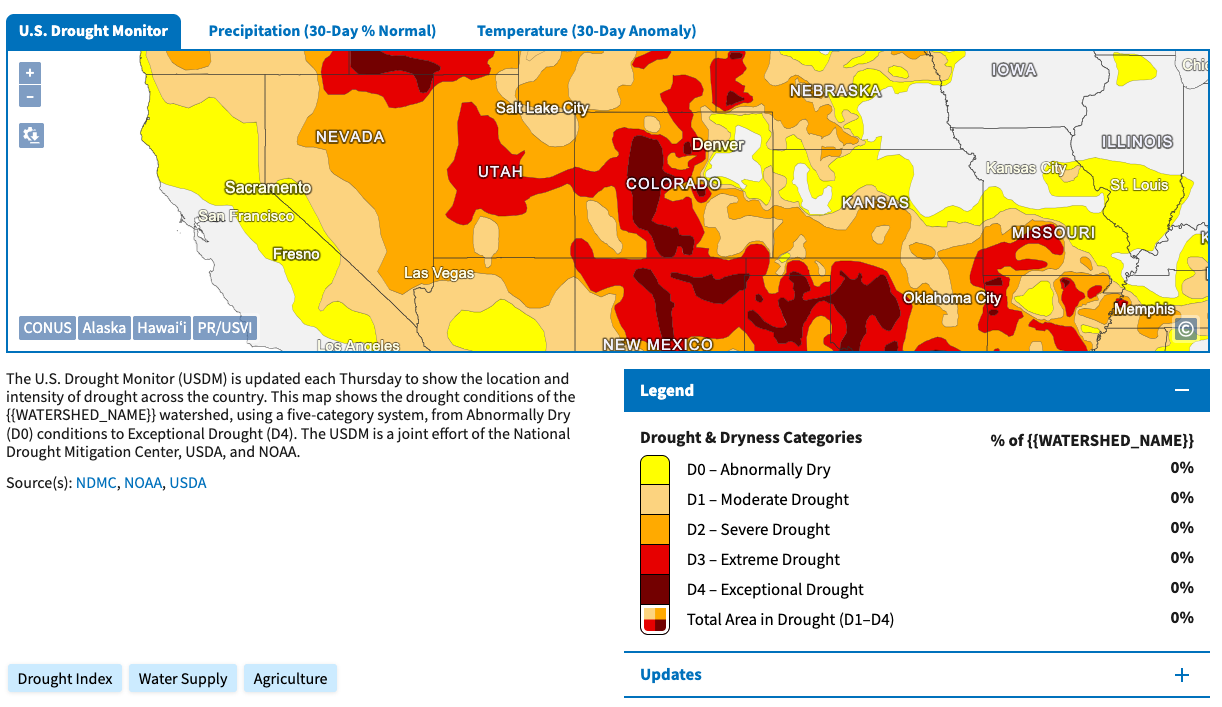
If Alto Cirra can demonstrate a repeatable connection between what its aircraft measure and do inside a storm and what ultimately happens on the ground, the implications could extend well beyond a ski resort's snowmaking concerns. The same question matters to watershed managers throughout the Colorado River Basin, where snowpack, runoff and reservoir storage are closely linked—and where prolonged drought has put increasing pressure on the region's water supply. The larger test for Alto Cirra, then, may be whether a small autonomous aircraft can produce measurements precise enough to connect atmospheric intervention with water that can actually be measured downstream.
Colorado River Basin drought conditions: The U.S. Drought Monitor tracks drought severity across the basin using five categories, from D0 (abnormally dry) through D4 (exceptional drought). The basin includes portions of seven U.S. states and supplies water to more than 40 million people.
For now, however, Alto Cirra has a much simpler job. Find the right storm. Get the aircraft into it. And measure what happens next.