Opiniion Builds Its Next Chapter on AI After a Decade of Growth in Utah
The Utah-based software company now serves approximately 2.5 million apartment units nationwide. Its evolution from resident feedback and reputation management to AI-powered resident intelligence is opening a new chapter for the growing company.
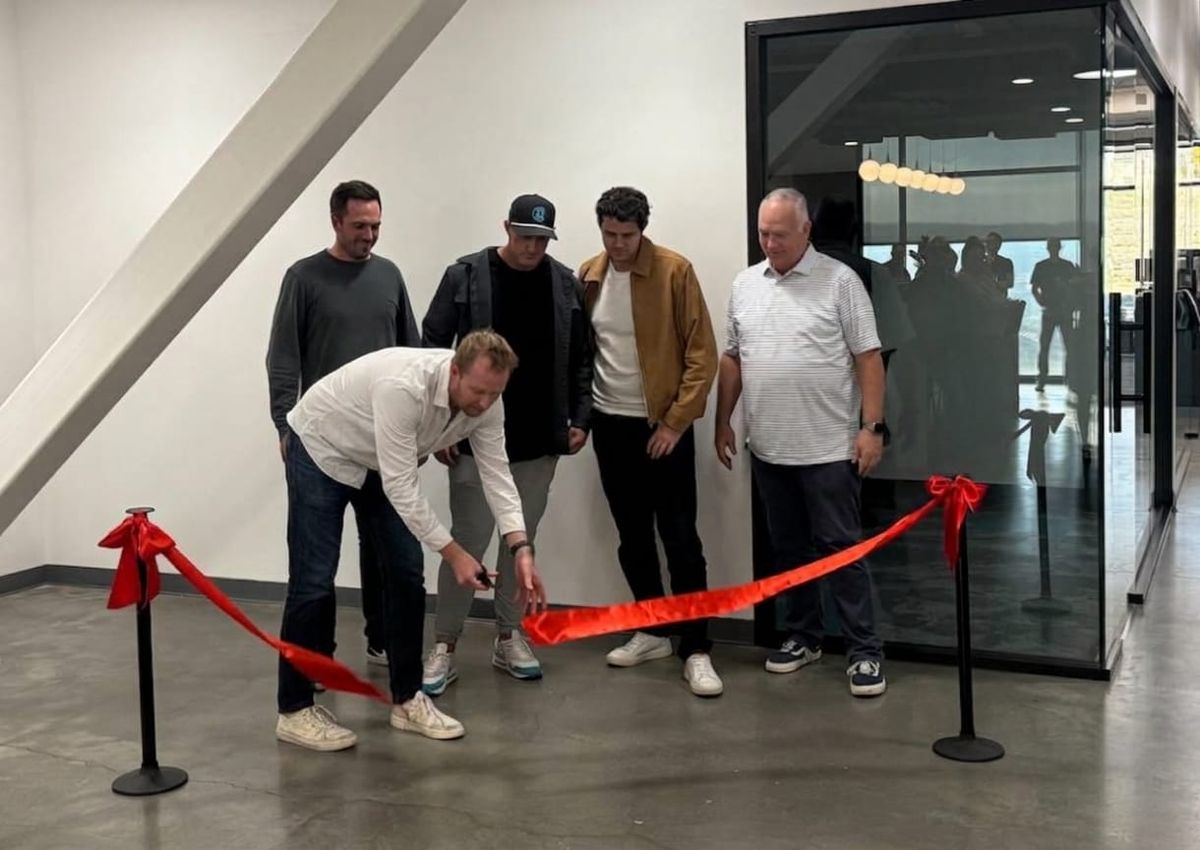
Opiniion CEO Devin Shurtleff (center, wearing a black cap) joins company executives and team members for the ribbon cutting at the company’s new Lehi headquarters. The ceremony marked a milestone in the Utah-based company’s growth and the opening of its new home in northern Utah County. Photo, Isabella Pedroza, Nucleus Institute - TechBuzz
Opiniion CEO Devin Shurtleff (center, wearing a black cap) joins company executives and team members for the ribbon cutting at the company’s new Lehi headquarters. The ceremony marked a milestone in the Utah-based company’s growth and the opening of its new home in northern Utah County. Photo, Isabella Pedroza, Nucleus Institute - TechBuzz
Lehi, Utah — November 9, 2026
A Utah technology company that began by helping apartment operators understand what their residents thought of them has grown into a national software business serving approximately 9,000 properties and 2.5 million rental units. Now, as Opiniion marks a decade of growth with a new headquarters in Lehi, CEO Devin Shurtleff sees artificial intelligence creating an opportunity to fundamentally change how multifamily housing operators understand and manage the resident experience.
Founded by college roommates, Opiniion built its initial business around a relatively straightforward proposition: Give apartment residents an easy way to provide feedback about their experiences, then help property managers use that information to improve operations and online reputations.
The company has since expanded its platform, acquired complementary technology, and established relationships with some of the largest property management organizations in the country. Its next phase centers on turning the substantial volume of information it collects into actionable intelligence, increasingly through AI.
For Shurtleff, the company's opportunity begins with a distinction between what property management software records and what residents actually experience.
TechBuzz News Editor-in-Chief Mark Tullis (left) speaks with Opiniion CEO Devin Shurtleff at the company’s new headquarters in Lehi. The conversation explored Opiniion’s growth, its evolution in the multifamily housing technology market, and how the company is using AI to expand its resident intelligence platform. Photo, Isabella Pedroza, Nucleus Institute - TechBuzz
Beyond the system of record
The multifamily housing industry relies on property management systems such as Yardi, RealPage, MRI, AppFolio, and Entrada. These platforms manage the operational infrastructure of apartment communities, including resident records, payments, accounting, maintenance requests, and leasing activity.
Shurtleff described these platforms as systems of record. Opiniion, by contrast, considers itself a "system of meaning."
The distinction becomes apparent when looking at something as routine as a maintenance request.
A resident submits a maintenance ticket, a technician responds, and the work is marked complete within 24 hours. From the property management system's perspective, the technician has performed well. The ticket was resolved within the expected timeframe.
But that doesn't necessarily mean the resident had a good experience.
Opiniion follows up with the resident approximately 15 minutes after the maintenance ticket closes, asking about the interaction. The resident might report that the technician was unpleasant, failed to fix the problem, or otherwise provided a disappointing experience.
"The experience you provided wasn't great," Shurtleff explained to TechBuzz at the ribbon-cutting of the company's new Lehi HQ, describing how the feedback can reveal coaching opportunities for maintenance teams.
Conversely, a resident might praise a technician for being helpful, professional, and efficient. That positive feedback can also be shared with management.
The difference is significant. A property manager can measure how quickly maintenance requests are completed, but that metric alone doesn't reveal whether residents are satisfied with the service.
Opiniion CEO Devin Shurtleff at the company’s new headquarters in Lehi. Photo, Isabella Pedroza, Nucleus Institute - TechBuzz
Opiniion connects those operational events with the human experience behind them. The company integrates with property management platforms through application programming interfaces (APIs), allowing it to access relevant records and respond to events throughout the resident lifecycle. It operates alongside those systems rather than attempting to replace them.
That integration strategy also explains why Opiniion works with multiple software providers rather than competing directly with them.
"We try to be PMS agnostic," Shurtleff said, referring to property management systems. "We work well with everyone, and we try to be a good partner for them."
The relationships can also generate business referrals in both directions.
Making feedback more representative
Opiniion's original insight was that conventional online reviews don't necessarily provide an accurate picture of resident satisfaction. People who have a bad experience are often more motivated to post a public review than those who have a good one. As a result, online ratings can disproportionately reflect negative experiences.
Opiniion takes a different approach by actively soliciting feedback through text messaging and other direct interactions. The timing is important. Rather than waiting for residents to decide whether they want to leave a review, the company reaches out shortly after an interaction occurs. For maintenance requests, that means sending a text approximately 15 minutes after a ticket closes. The goal is to capture the experience while it is still fresh.
Shurtleff said the feedback collected through the platform is approximately 80% positive and 20% negative. That distribution provides property managers with a broader perspective than they might obtain from public review sites alone. It also gives them an opportunity to identify problems before dissatisfaction becomes a public complaint or contributes to a resident's decision not to renew a lease.
The company's strategy is to make providing feedback simple enough that residents will participate even when they have nothing to complain about.
"How rare is it when you have a good experience that you want to leave a good review?" Shurtleff asked. "You mostly want to be heard."
Opiniion's feedback collection is also designed to extend beyond individual transactions. The company conducts quarterly resident satisfaction measurements, similar to the employee net promoter score surveys businesses use to assess workforce sentiment. That allows property operators to hear from residents who might not have submitted a maintenance request or interacted with management recently.
TechBuzz News Editor-in-Chief Mark Tullis interviewing Opiniion CEO Devin Shurtleff at the company’s new headquarters in Lehi after the ribbon-cutting of the company's new location. Photo, Isabella Pedroza, Nucleus Institute - TechBuzz
A growing national business
Opiniion's growth reflects the demand for more sophisticated ways to understand resident experiences across large property portfolios. Shurtleff said the company now serves approximately 9,000 properties encompassing 2.5 million individual rental units. That represents roughly one in eight apartment units in the United States, according to the company's estimate.
It also works with approximately half of the National Multifamily Housing Council's top 50 property management companies, including major national operators such as Cushman & Wakefield, Asset Living, and Greystar.
The company reported approximately 45% growth in the year preceding the interview, excluding acquisitions. Including its acquisition of Rentgrata, Shurtleff put growth at approximately 130%.
Opiniion offers two primary pricing models: a per-property subscription and a per-unit subscription. Per-unit pricing ranges from approximately $1 to $2.50 per unit per month, depending on the package and capabilities selected.
The company primarily sells to two groups: property owners and property management companies. Those aren't always the same organization. An investment group might own an apartment community while contracting with a separate company to manage it.
For owners, Opiniion can provide an independent view of how well the management company is performing.
"If you go ask the management company, 'Hey, how are you guys doing?' They're going to say, 'Oh, we're doing great,'" Shurtleff said. "The residents, they'll tell you how the management company is doing."
That information can help owners identify operational weaknesses across their portfolios and evaluate whether management teams are delivering the experience they expect.
Shurtleff said customer retention is approximately 90%. He noted that much of the company's customer loss results from asset transfers, when properties are sold and move to different ownership or management organizations.
Opiniion has dedicated teams to help customers onboard newly acquired properties and integrate them into the platform. The company also positions itself as a premium offering. Shurtleff acknowledged that its pricing can be approximately twice that of competitors, but said its approach to gathering feedback produces three to four times the results.
He attributes that difference to the company's emphasis on direct resident communication rather than simply providing analytics and reporting tools.
The primary reception areas at Opiniion’s new Lehi headquarters. Photo, Isabella Pedroza, Nucleus Institute - TechBuzz
Rentgrata expands the resident lifecycle
An important step in expanding the platform came through Opiniion's acquisition of Rentgrata in 2025 which extended Opiniion's reach beyond the experience of people already living in an apartment community. Rentgrata's platform connects prospective renters with current residents, giving people considering a move an opportunity to hear directly from those who know the property firsthand.
The deal also reflected a broader shift in Opiniion's ambitions. Before the acquisition, Opiniion's primary focus was the resident experience from the initial apartment tour through move-out. Rentgrata added capabilities for engaging prospective renters before they even visit a property.
One of its products allows prospective tenants to communicate with current residents through an apartment community's website. Someone considering a move can ask an actual resident about living conditions, management, amenities, and other aspects of the community.
The conversations generate information that can help property operators understand what influences prospective renters' decisions.
Opiniion also acquired Rentgrata's lead-nurturing capabilities, which help maintain engagement with potential renters throughout the leasing process. The acquisition gives Opiniion a more comprehensive view of the renter lifecycle, extending from the initial consideration of an apartment community through the eventual move-out.
Shurtleff said integrating the software and transitioning customers took approximately a year, with some remaining transitions expected to be completed by the end of 2026. The additional conversational data also creates new opportunities for AI analysis, allowing operators to examine not just the experiences of current residents but the questions, concerns, and motivations of people who ultimately decide whether to move into a property.
AI changes the product—and the company
Artificial intelligence is becoming central to Opiniion's product development and internal operations.
One of its newer offerings, Ari, stands for Actionable Resident Insights. The product provides a conversational interface through which property managers can query their own resident data, using an experience similar to interacting with ChatGPT or Claude. Rather than navigating multiple dashboards and reports, a property manager can ask questions about resident feedback and use the platform to identify patterns and potential problems.
Shurtleff sees this as an early step toward a more sophisticated platform built around AI agents.
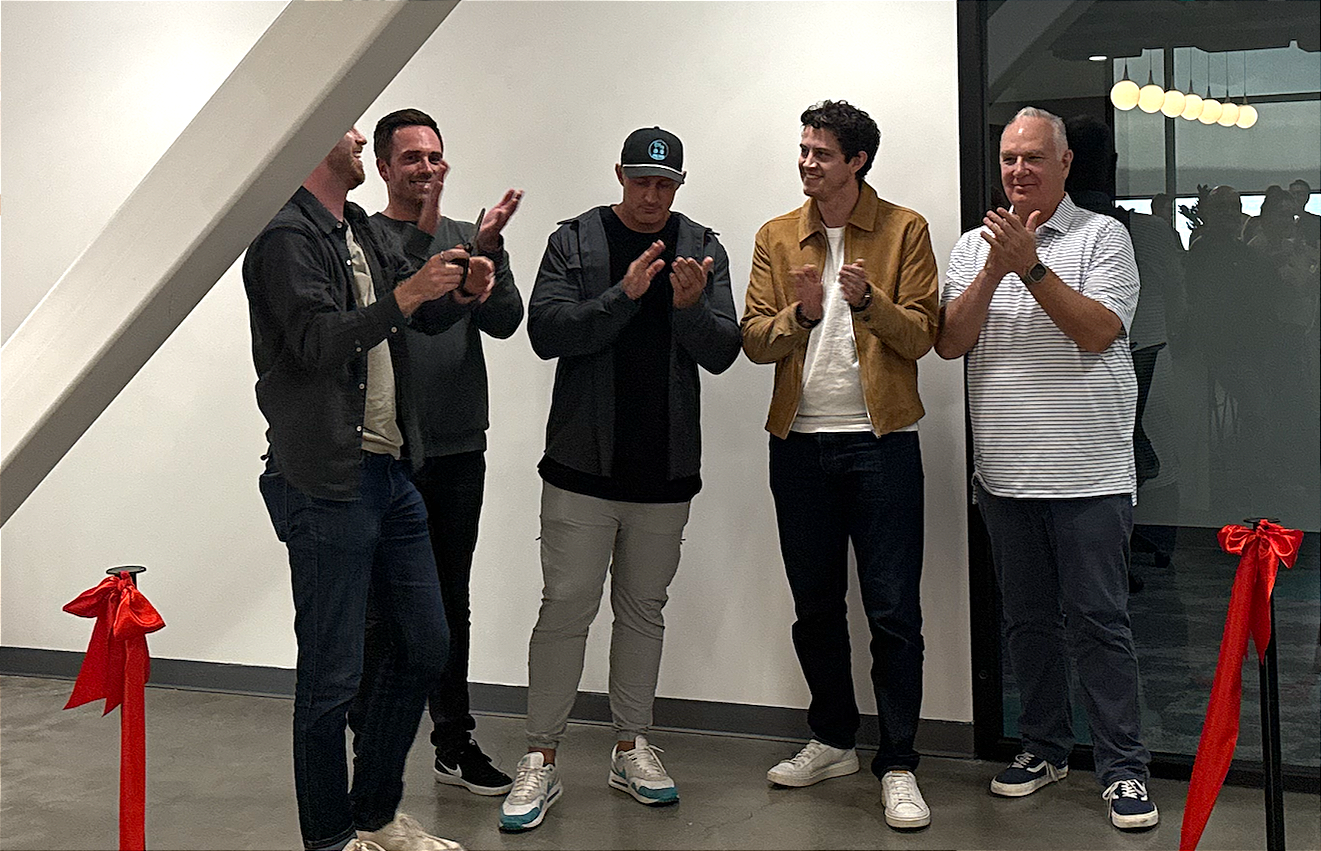
Opiniion CEO Devin Shurtleff and company executives celebrating the ribbon cutting at the company’s new Lehi headquarters. Photo, Isabella Pedroza, Nucleus Institute - TechBuzz
Historically, Opiniion has used relatively structured campaigns to collect feedback. Residents receive a text message and proceed through a predefined series of questions. The company is now developing agents that can make those interactions more dynamic, adapting conversations based on residents' responses and continuing to gather information beyond what a static survey might capture.
Internally, the company has also made AI adoption an organizational priority. In March 2026, Shurtleff challenged every employee to automate at least one aspect of their job by the end of the month. He described three stages of AI adoption: analysis, or using AI to produce reports and interpret information; augmentation, or helping employees perform existing tasks more effectively; and automation, in which AI takes over work previously performed manually. The challenge resulted in 100% employee participation, according to Shurtleff. He said the exercise changed how employees approached their work, particularly in departments that had been slower to adopt AI.
The company subsequently revised its projected year-end headcount from approximately 125 employees to approximately 100, reflecting productivity improvements and changing staffing requirements. Engineering has been among the earliest adopters. Shurtleff said more than 90% of the company's code is now written with AI assistance, supported by engineering guidelines and testing frameworks.
The company provides employees with access to both Claude and ChatGPT and has established an AI and innovation team to evaluate emerging tools, support adoption, and develop internal applications. Shurtleff said Opiniion has increased its AI spending substantially, with token costs tripling during the year. However, he said the company is not currently prioritizing cost reduction over experimentation and innovation.
"We're not trying to optimize for cost," he said. "We're trying to optimize for speed and innovation."
He believes competition among AI providers will eventually drive costs down, making increasingly sophisticated capabilities accessible to businesses like Opiniion.
One of the reception areas at Opiniion’s new Lehi headquarters features the company’s illuminated logo, incorporating a stylized mountain range inspired by the Wasatch Mountains of northern Utah County. The design reflects the mountain views visible through the office’s east-facing windows, connecting the company’s brand to its Utah home. Photo, Isabella Pedroza, Nucleus Institute - TechBuzz
Building the next chapter in Utah
Despite its national reach, Opiniion has maintained a relatively low profile within Utah's technology community. Shurtleff acknowledged that the company needs to become more visible, particularly as it competes for talent.
The company has also recruited people from the property management industry who bring firsthand experience with the problems its software is designed to solve.
Shurtleff believes the company's growth and national footprint justify a more prominent place in Utah's technology ecosystem.
"We have a really stable business. We have great customers that love us," he said. "We have a big footprint. We just haven't shared our story enough."
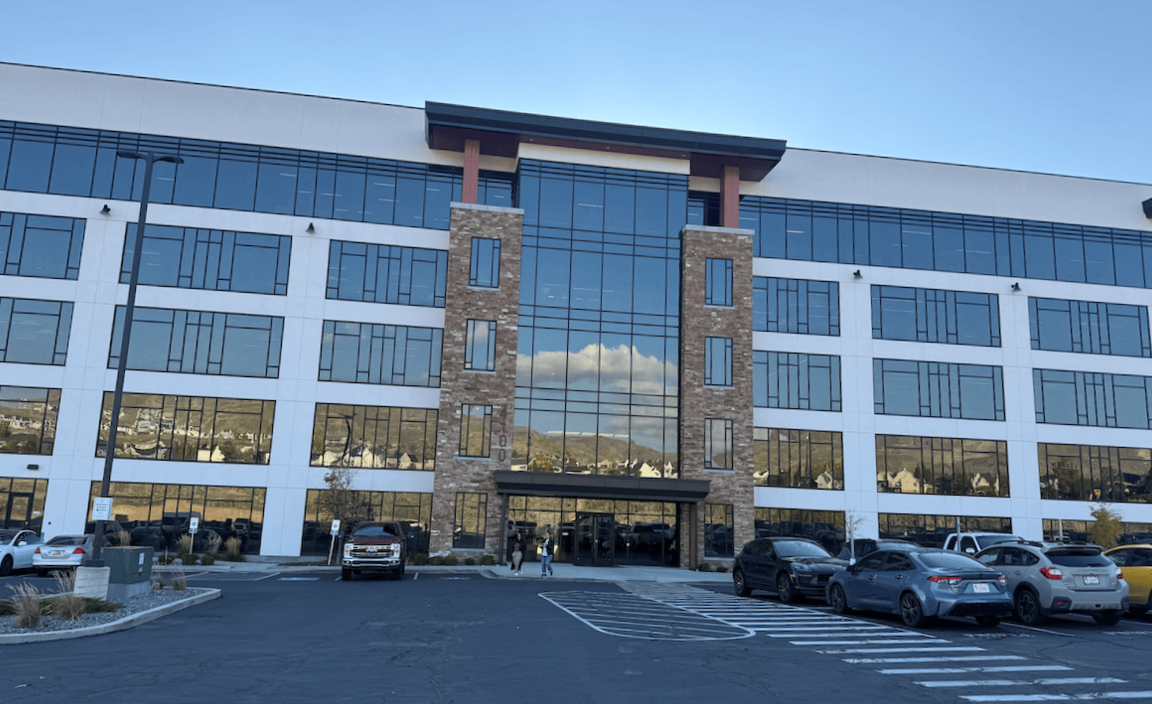
The new headquarters in Lehi, just north of the Adobe campus and next to Entrata, represents a milestone in the company's development and provides room for its next phase of growth.
For a company that spent its first decade building a business around listening to residents, its next challenge is turning what it hears into something more valuable: intelligence that helps property owners and managers make better decisions.
Shurtleff believes AI will accelerate that transition, but the underlying proposition remains much the same as it was when Opiniion began: Understanding what people actually experience can be more valuable than simply measuring what a business records.