PassiveLogic Prepares for Commercial Scale, Eyes Data Centers and Contractor Distribution
With $125 million raised, its autonomy platform advancing and a new distribution model taking shape, PassiveLogic (Sandy, UT) is preparing to expand its footprint in the building automation market.
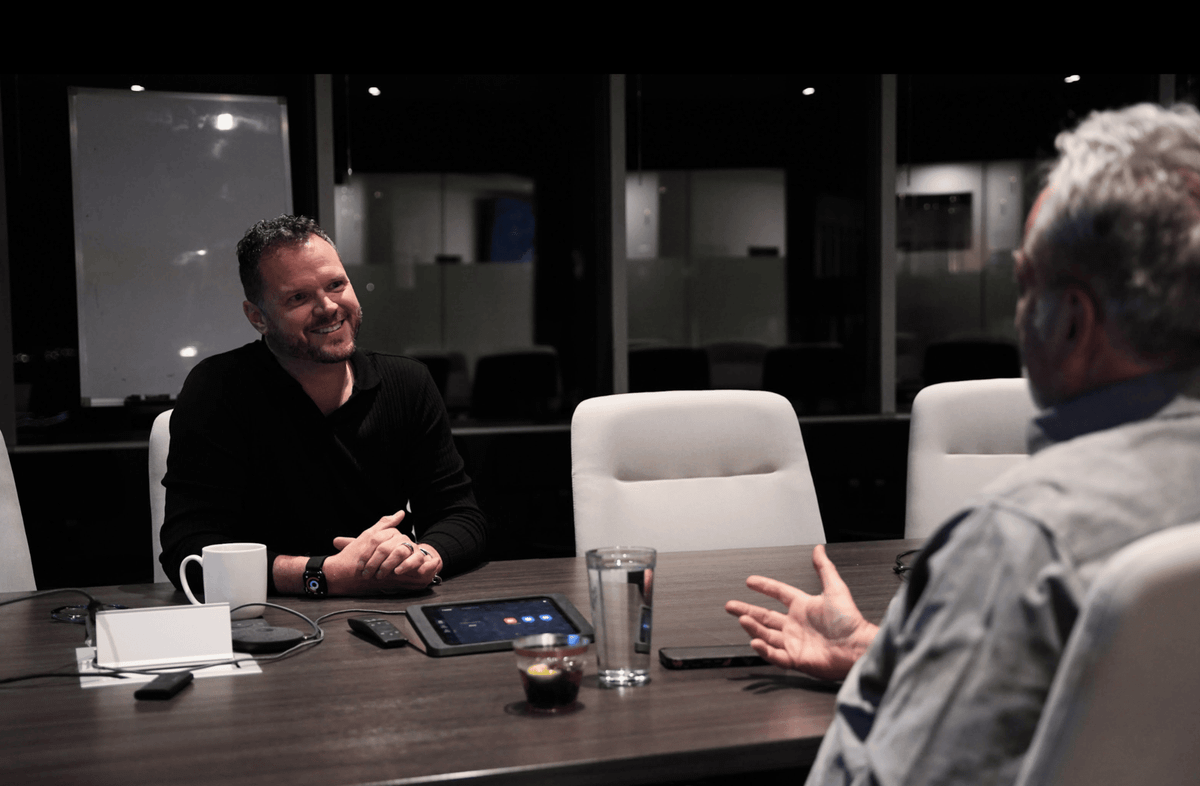
Joel Harvill, CFO, PassiveLogic in an interview with TechBuzz, October 29, 2026, PassiveLogic's HQ in Sandy, Utah. Photo: Sami Howa, PassiveLogic
Joel Harvill, CFO, PassiveLogic in an interview with TechBuzz, October 29, 2026, PassiveLogic's HQ in Sandy, Utah. Photo: Sami Howa, PassiveLogic
Sandy, Utah — October 29, 2026
With $125 million raised, its autonomy platform advancing and a new distribution model taking shape, the Utah company is preparing to expand its footprint in the building automation market.
PassiveLogic is entering a new phase of growth, moving beyond the controlled deployment of its autonomous building technology toward broader commercialization, expanded contractor distribution and potentially new applications in data centers.
The Sandy, Utah-based company has spent years developing a physics-based artificial intelligence platform designed to give buildings the ability to understand, manage and optimize their own mechanical systems. Its technology combines digital twins, building sensors and autonomous controls to model how a building operates and make adjustments without relying on conventional, manually programmed control systems.
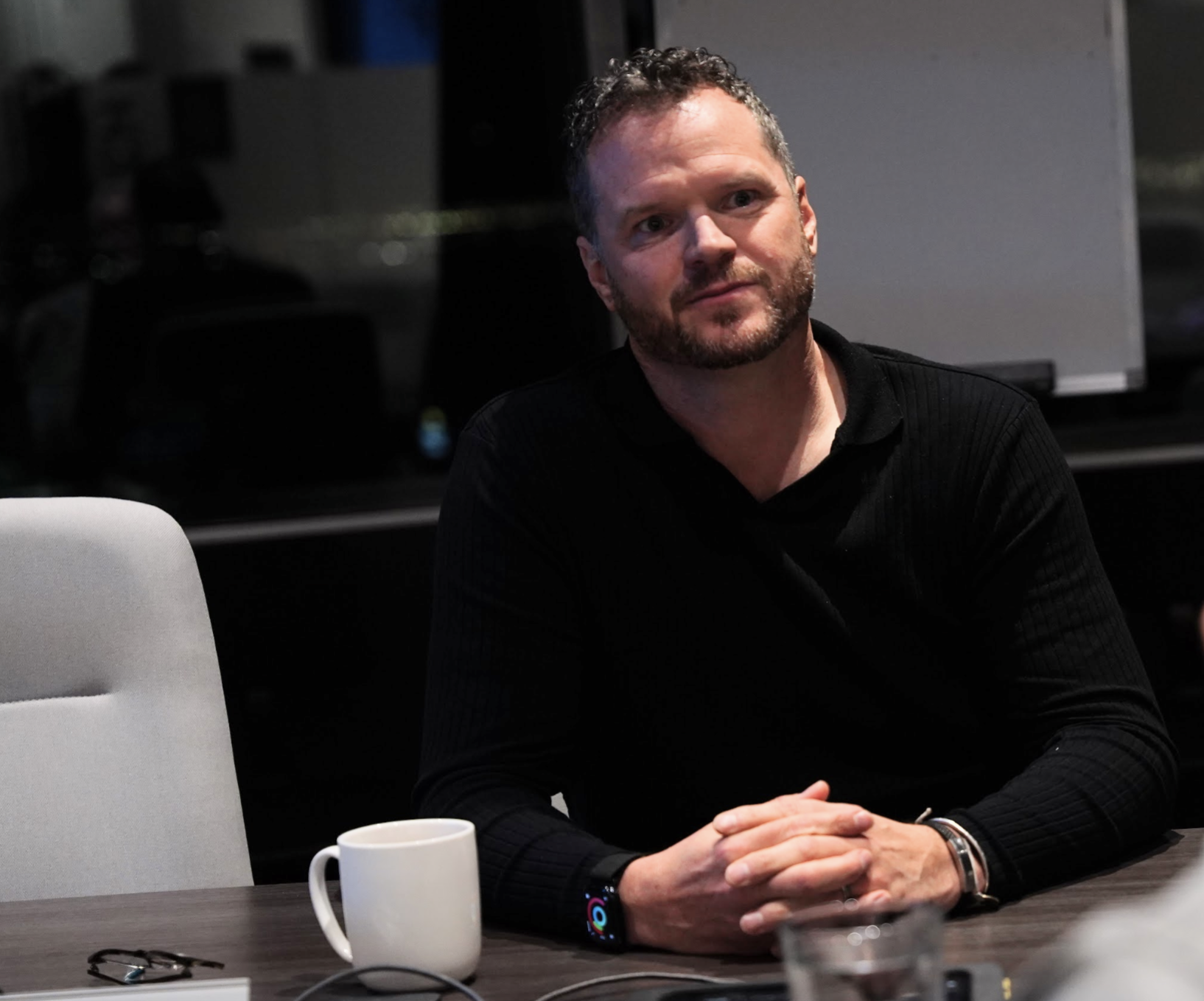
Joel Harvill, CFO, PassiveLogic in an interview with TechBuzz, October 29, 2026, PassiveLogic's HQ in Sandy, Utah. Photo: Sami Howa, PassiveLogic
Now, the company is preparing to take that technology to a much larger market.
"We're going from essentially a very controlled state of growth to now going into more of a hypergrowth," said Joel Harvill, PassiveLogic's new CFO, whose previous experience includes Waymo and Rivian. Harvill sat down with TechBuzz for an interview during the company's open house in conjunction to Hard Tech Week, which took place October 26-30.
Harvill said this transition brings a different set of challenges. In addition to continuing to advance its technology, PassiveLogic must manage inventory, international sourcing, working capital and the operational demands of deploying hardware across a growing customer base.
The company has raised approximately $125 million to date, including a $70 million Series C financing completed in January 2025. But Harvill says the next stage requires thinking about capital differently as the company moves from developing and deploying its technology directly to establishing a distribution model capable of supporting much broader adoption.
Scaling a Hardware Business Requires More Than Sales Growth
For software companies, rapid customer growth can often be accommodated without a corresponding increase in physical inventory. Companies selling hardware face a different equation.
PassiveLogic's commercialization strategy requires equipment to be manufactured, sourced and positioned ahead of deployments. As sales increase, the amount of cash tied up in inventory can grow substantially, sometimes before the company receives payment for the products it has sold.
Harvill described the challenge as one of the frequently overlooked realities of scaling a technology business.
"You'll have companies that have record sales and are running out of money," he said.
His example illustrates the problem. If a company triples its sales while maintaining 90 days of inventory, it must substantially increase the amount of cash committed to inventory. The business may be growing rapidly and generating more revenue, yet its available cash can decline as money moves into products waiting to be deployed.
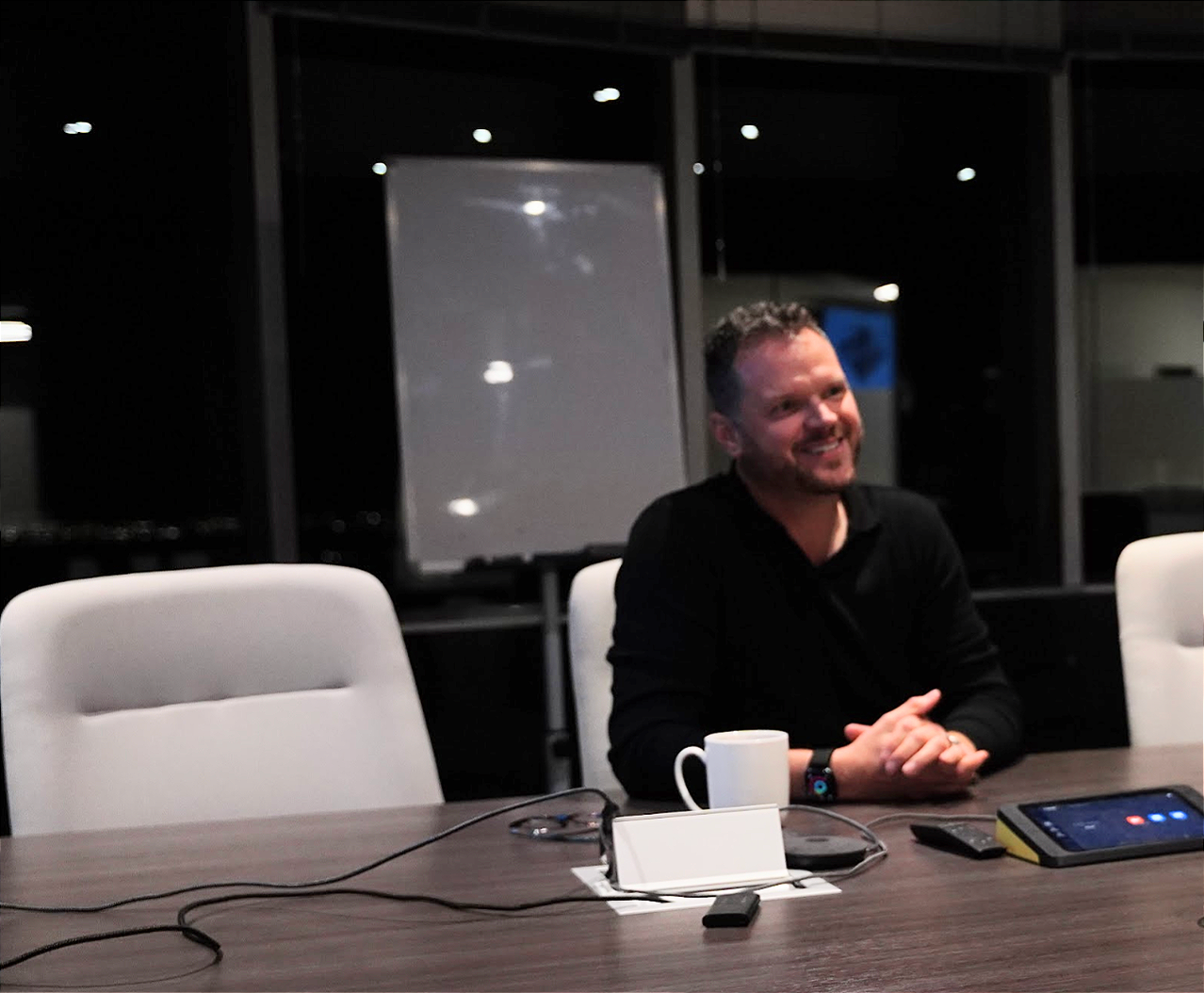
Joel Harvill, CFO, PassiveLogic in an interview with TechBuzz, October 29, 2026, PassiveLogic's HQ in Sandy, Utah. Photo: Sami Howa, PassiveLogic
For PassiveLogic, international sourcing and supply-chain reliability are becoming increasingly important considerations. Harvill said the supply-chain team recently raised concerns about potential vulnerabilities, prompting management to consider accelerating inventory purchases to ensure sufficient product availability as commercialization expands. The issue was already being considered for discussion at an upcoming board meeting.
"It would be horrible to go into a heavy commercialization and not have product," he said. The challenge is particularly important for a company whose technology is integrated into the physical infrastructure of buildings. A shortage of components could delay installations, disrupt customer relationships and undermine the momentum of a growing business.
Managing that transition will be among Harvill's central responsibilities as PassiveLogic moves toward a larger commercial footprint.
A New Distribution Model Could Accelerate Adoption
One of the most significant developments discussed in the interview is PassiveLogic's plan to expand its indirect sales channel in 2027.
Today, the company conducts much of its business directly with building owners and large real estate operators, including Prologis. That approach gives PassiveLogic considerable control over installations and allows its engineering and support teams to receive direct feedback from customers.
The company wants to preserve that advantage while eventually reaching a much larger market through established contractors and other distribution partners. Harvill described the future model as a transition toward becoming more of an original equipment manufacturer, or OEM.
Under that arrangement, PassiveLogic would provide its technology and equipment while contractors would handle installation and potentially ongoing service. Building owners could continue working with contractors they already know rather than relying on Passive Logic to manage every deployment.
The company already has contracts for indirect business in place, according to Harvill. However, management wants to ensure the technology is sufficiently mature before opening the channel more broadly.
"By doing direct we get direct feedback," he said.
That feedback allows PassiveLogic to identify problems, refine its hardware and software, and understand the edge cases that emerge when its technology encounters different types of buildings and operating conditions.
Moving to an indirect model introduces some distance between the company and the end customer. If a contractor encounters a problem, PassiveLogic may not receive the same immediate feedback it gets from a direct deployment.
The company therefore wants to establish a sufficient level of reliability across different building types and equipment configurations before allowing partners to deploy the technology more independently. The strategy could substantially expand the company's reach. Rather than building an installation organization large enough to serve every potential customer, PassiveLogic could leverage contractors who already have relationships with building owners and experience working within the commercial HVAC industry.
For a company seeking to deploy its technology across thousands of buildings, that distribution model could become an important driver of growth.
Advancing Toward Greater Building Autonomy
The expansion of PassiveLogic's commercial operations is occurring alongside continued progress in its autonomy platform. The company reached Level 3 autonomy in July 2026 and is working toward Level 3.5, with Level 4 targeted for 2027.
The progression reflects a deliberate effort to increase the complexity of what the system can independently manage.
At the current stage, the technology focuses on understanding and controlling building systems within a relatively defined environment. As the platform advances, it will incorporate additional information, including external temperatures and occupancy patterns, allowing it to anticipate changing conditions and make more informed decisions.
Joel Harvill, CFO, PassiveLogic in an interview with TechBuzz, October 29, 2026, PassiveLogic's HQ in Sandy, Utah. Photo: Sami Howa, PassiveLogic
Harvill compared the process to his experience at Waymo, where autonomous driving systems advance by mastering increasingly complex operating environments.
"You start with a certain level of complexity, certain level of speed, and then you get to a level of mastery," he said. "Okay, now we can push this a little bit further."
He said PassiveLogic currently has 16 Ph.D.s working across physics, automation and related disciplines, reflecting the technical depth required to develop its approach.
One example of the technology's capabilities came from a large conference room that had historically struggled with temperature control when heavily occupied. During an event with approximately 150 people in the room, the space remained comfortable enough that the building's management team contacted PassiveLogic to determine whether its technology had made a difference.
It had.
Traditional building controls typically respond after sensors detect that the temperature has changed. PassiveLogic's system was able to identify the developing conditions earlier and deploy cooling before the room became uncomfortable.
The experience demonstrated a tangible improvement even at Level 3 autonomy.
The next stages will incorporate deeper machine learning and additional information about the building's environment, giving the system more opportunities to anticipate conditions rather than simply respond to them.
Harvill said Level 3.4 is where the company expects to see particularly significant advances in machine learning, with Level 4 representing a larger step toward autonomy.
The Energy Savings Opportunity at Scale
Beyond improving comfort and building operations, PassiveLogic's larger opportunity is tied to the amount of electricity consumed by commercial buildings.
Harvill said the United States has approximately 5.9 million commercial buildings, of which his company's analysis identifies roughly 2 million as strong candidates for its technology. The potential energy savings become particularly compelling when considered across thousands of buildings.
According to Harvill, PassiveLogic's modeling indicates that deployments across approximately 30,000 to 35,000 buildings could generate energy savings equivalent to the annual electricity production of Hoover Dam.
The comparison offers a useful way to understand the potential impact of distributed energy efficiency. Rather than relying exclusively on new electricity generation to accommodate growing demand, improving the efficiency of existing buildings could free up substantial amounts of energy capacity.
Harvill said the company believes adoption could eventually reach a scale at which its technology offsets the equivalent energy consumption of at least three hyperscale data centers within five years. Those projections depend on adoption rates and the energy savings achieved across individual buildings, but they illustrate the company's ambition to become a meaningful contributor to the broader energy infrastructure.
The opportunity also extends beyond the environmental benefits of reduced electricity consumption.
Harvill pointed to the labor-intensive nature of the commercial building automation industry as another important market driver. Installing and maintaining building systems often requires significant amounts of specialized labor. He estimated that equipment itself represents only about 30% of a typical installation's cost, with labor accounting for the remaining 70%.
By creating a more intelligent and automated system, PassiveLogic believes it can help contractors accomplish more work with existing crews. That could make the technology attractive even to customers whose primary motivation is not energy efficiency.
Data Centers Emerge as a Potential New Market
The growing electricity demands of data centers have created another potential opportunity for PassiveLogic. Harvill confirmed that the company is exploring the market and has begun building a team specifically focused on the opportunity.
Data centers are particularly interesting because their operating environments are more predictable than those of many conventional commercial buildings. A typical office building must account for changing occupancy, outside temperatures, doors opening and closing, and other variables that affect heating and cooling requirements.
Data centers have a more consistent operating profile, with cooling requirements driven largely by the heat generated by computing equipment. That makes them potentially attractive applications for PassiveLogic's physics-based AI and digital-twin technology.
Harvill said the company is discussing the opportunity with strategic investors involved in the OEM sector, who are interested in what PassiveLogic could bring to the market. He was careful to distinguish the opportunity from the company's immediate priorities.
"We need to make sure that we do exactly what we said we're going to do," he said, referring to the company's existing business before expanding too aggressively into new markets.
He also described a related concept that could connect building efficiency with the electricity demands of data centers. Rather than focusing exclusively on reducing energy consumption within data centers, utilities could potentially work with data center operators to improve efficiency across other buildings and free up electricity capacity for computing infrastructure.
Under that model, energy savings generated across commercial buildings could become part of a broader strategy for managing electricity demand. Harvill characterized the concept as a form of "electron trading," with utilities potentially serving as the intermediary.
It remains an emerging idea rather than an established PassiveLogic business line, but it illustrates how the company's technology could become relevant to a much broader energy ecosystem.
The Digital Twin as a Platform for the Future
While energy efficiency and building automation provide the immediate commercial opportunity, Harvill believes the company's digital-twin technology could ultimately become valuable well beyond HVAC systems.
PassiveLogic creates a digital representation of a building that captures its physical layout, mechanical equipment, zones, airflow and other operating characteristics.
That model gives building owners and operators a much more comprehensive understanding of their properties.
For example, a real estate investment trust managing hundreds of buildings could use the platform to track equipment age, forecast capital expenditures, monitor maintenance and evaluate whether completed repairs actually improved system performance.
The company's scanning technology also allows contractors to capture images of equipment using an iPhone 16 or newer and incorporate that information into the building's digital model.
That creates a persistent record of the building as it changes over time.
The same information could help contractors diagnose problems remotely before sending technicians to a job site. Instead of dispatching a service truck simply to investigate an issue, a contractor could examine the building's data, identify likely failure points and arrive with the appropriate equipment and replacement parts.
Harvill compared the platform to a Bloomberg terminal for buildings.
The implications could extend even further as robotics and other autonomous technologies become more common in commercial properties.
He described a future in which a building's digital twin could provide a spatial operating environment for autonomous robots, helping them understand where they can operate, which areas are restricted and how they should navigate a facility.
A robot entering a Prologis warehouse, for example, could potentially use the building's existing digital model much like a person uses Google Maps to understand its surroundings.
PassiveLogic would not necessarily control what the robot does, but its digital twin could provide the spatial information and operating boundaries needed for it to function safely within the building.
The company envisions the digital model remaining synchronized with the physical building as walls, equipment and other features change.
That could make the platform increasingly valuable as additional applications are developed around the same underlying model.
Joel Harvill, CFO, PassiveLogic in an interview with TechBuzz, October 29, 2026, PassiveLogic's HQ in Sandy, Utah. Photo: Sami Howa, PassiveLogic
Building the Infrastructure for Intelligent Buildings
For PassiveLogic, the immediate challenge is turning its technology into a commercially scalable business. The company's next milestones include advancing its autonomy platform, expanding its indirect distribution channel and preparing for the operational demands of much broader deployment.
Data centers represent a potential new market, while the company's digital-twin technology could eventually support applications that extend well beyond conventional building automation.
Harvill said the company's appeal lies partly in the opportunity to modernize an industry that has historically relied on relatively isolated systems and manually programmed controls.
"Buildings," he said, are the world's largest asset class, yet they remain largely disconnected from the information and systems operating around them.
"This building has no idea anything outside of its glass," he said.
PassiveLogic's ambition is to change that, giving buildings the ability to understand their environments, coordinate their systems and operate with increasing autonomy.
The technology is advancing. The commercial model is evolving. The next test is whether the company can translate those developments into adoption at scale.