Utah’s First Hard Tech Week Opens the Door for Companies to Host Events Across the State
Utah’s first Hard Tech Week, October 26-30, 2026, will showcase aerospace, defense and hard-tech innovation through demos, tours, networking and events hosted by companies across the state.
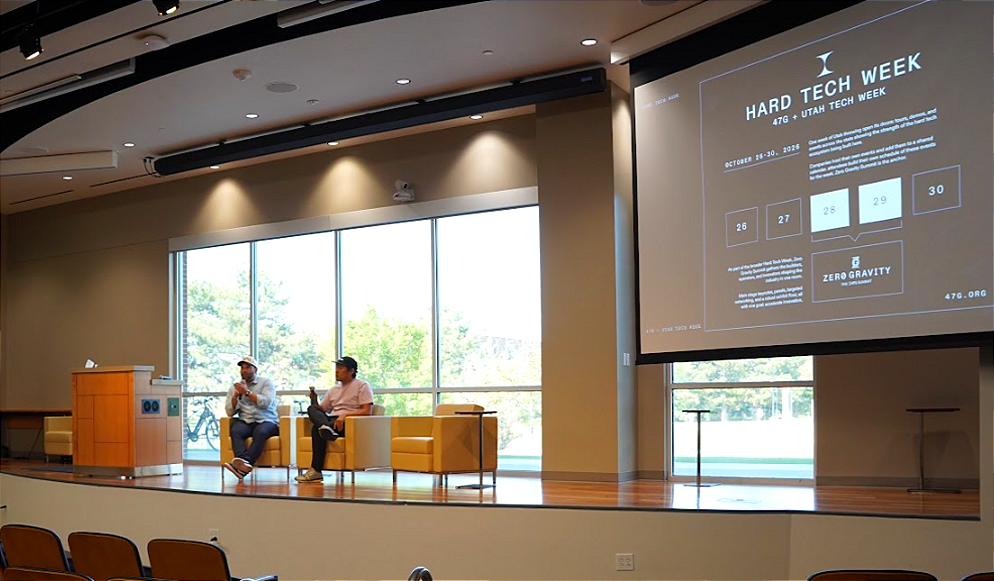
John Moore, VP Marketing and Brand, 47G; Trent Mano, Co-Founder, Utah Tech Week and Convoi Ventures; Kylee Groves, Manager, Events and Experience, 47G. at the Utah Hard Tech Briefing, University of Utah's Robert H. and Katherine B. Garff Building. Photo: Mark Tullis, TechBuzz
John Moore, VP Marketing and Brand, 47G; Trent Mano, Co-Founder, Utah Tech Week and Convoi Ventures; Kylee Groves, Manager, Events and Experience, 47G. at the Utah Hard Tech Briefing, University of Utah's Robert H. and Katherine B. Garff Building. Photo: Mark Tullis, TechBuzz
Salt Lake City, Utah — August 26, 2026
Utah’s aerospace, defense and hard-tech community is getting its own week.
Hard Tech Week, scheduled for Oct. 26-30, will bring together companies, investors, founders and others working across Utah’s aerospace, defense and broader hard-tech ecosystem for a week of facility tours, demonstrations, networking events, educational sessions and other industry gatherings.
Organizers from 47G and Utah Tech Week held an informal working session at the University of Utah today to explain how companies and organizations can participate — including by hosting their own events.
The message was straightforward:
Hard Tech Week is designed to be a choose-your-own-adventure experience, and organizers want the community to help build the schedule.
“It’s free to host, free to attend,” said Trent Mano, co-founder of Utah Tech Week and managing partner of pre-seed venture fund Convoi Ventures. “Anyone can put on their own event.”
The week is an outgrowth of Utah Tech Week, which has become a major annual gathering for Utah’s technology and startup community, previously covered by TechBuzz here, here, and here. Organizers said the idea behind Hard Tech Week emerged from the most recent Utah Tech Week, when participants recognized an opportunity to put a more concentrated spotlight on Utah’s hardware and hard-tech ecosystem.
Utah already has significant activity in aerospace, defense, advanced manufacturing and related technologies, organizers said. Hard Tech Week is intended to showcase that activity to audiences in Utah and beyond.
A week built around the community
The schedule will have one major exception to the otherwise open format.
Monday, Tuesday and Friday — Oct. 26, 27 and 30 — will be available for community-hosted events throughout the day.
Wednesday and Thursday, Oct. 28-29, will center on the Zero Gravity Summit, the flagship event organized by 47G. The summit’s daytime programming is expected to run until roughly 3 or 4 p.m. each day, leaving the evenings open for community events such as dinners, networking gatherings and happy hours.
Organizers said they intentionally do not want community events competing directly with the summit during its daytime programming.
A Monday evening kickoff party also is planned, although organizers said additional details will be announced later.
Beyond those limited windows, there are few restrictions on when an event can take place. Organizers said even late-night events are possible.
The geographic focus is expected to be centered around Salt Lake City, although events anywhere in Utah can be listed. Organizers specifically mentioned activity in Ogden, Utah County and the broader Wasatch Front, noting the concentration of aerospace and defense companies around Hill Air Force Base and other communities.
“We’re not going to tell people they can’t” host an event outside Salt Lake City, Mano noted. But he acknowledged that most attendees are likely to be concentrated around Salt Lake City during the week.
John Moore, vice president of marketing and brand at 47G, and Trent Mano, co-founder of Utah Tech Week and Convoi Ventures, discuss plans for Utah’s inaugural Hard Tech Week during an August 26 host briefing at the University of Utah. Photo: Mark Tullis, TechBuzz
What qualifies as a Hard Tech Week event?
The requirements for getting an event onto the official calendar are relatively simple.
An event must:
Take place in Utah during October 26-30.
Focus on aerospace, defense, hard tech or an adjacent part of that ecosystem.
Serve companies, founders, investors or others interested in the ecosystem.
Avoid the daytime Zero Gravity Summit programming on October 28-29 and the Monday evening kickoff.
Organizers encouraged companies to consider educational panels, networking events, dinners, happy hours, demonstrations and tours of facilities or headquarters. Because hard tech is particularly tangible, they said they would like to see attendees get an opportunity to see and experience what Utah companies are building.
The organizers also emphasized that event hosts are responsible for their own events. Hard Tech Week will provide the shared calendar and broader platform, but individual hosts are responsible for planning, promoting and executing their events.
That also means organizers are encouraging hosts to differentiate their events.
With multiple events potentially taking place simultaneously, speakers, topics, formats and target audiences can help an event stand out.
“It’s the same thing with your event,” Mano said, comparing event planning to competing in the startup market. “How are we going to be different from everyone else?”
Venues and partnerships available
Potential hosts do not necessarily need to have their own event space.
Organizers said 47G has partners — including law firms, accounting firms and other companies with downtown offices — that have expressed interest in making space available for Hard Tech Week events.
The group plans to maintain a growing list of potential venues and partners that can help organizations looking for a place to host.
Partnerships can also help with the cost of an event, venues and programming, organizers said. Hosts interested in collaborating with other companies are encouraged to connect with the Hard Tech Week team.
Another option will be to host programming from a booth at the Zero Gravity Summit. Organizers said exhibitors can hold activities, panels or demonstrations from their booths after the summit’s main-stage programming ends for the day.
John Moore, VP of Marketing and Brand at 47G, and Trent Mano, Co-Founder of Utah Tech Week and Convoi Ventures, walked the audience through plan for Utah’s inaugural Hard Tech Week, August 26, 2026, University of Utah. Photo: Mark Tullis, TechBuzz
Get events on the calendar early
Organizers are encouraging potential hosts to begin planning now.
Today's session marked roughly two months before the start of Hard Tech Week. Organizers said attendees typically begin planning their schedules four to six weeks in advance, making September a target for getting events listed.
Hosts do not need every detail finalized before listing an event. At minimum, organizers said they should have a title, location and rough program so prospective attendees understand what the event will offer.
Events will be listed through the Hard Tech Week calendar on Luma. Organizers can create a Luma event or link to an event hosted on another platform, such as Eventbrite. Ideally, the goal is to give attendees one central place to discover what is happening throughout the week.
The organizers expect the Zero Gravity Summit alone to draw approximately 3,200 people. They estimate Hard Tech Week as a whole could attract roughly 5,000 participants.
That audience could extend well beyond Utah. Mano noted that the previous Utah Tech Week attracted approximately 120 venture capital firms from outside the state, many coming through word-of-mouth recommendations from other investors.
For Utah’s hard-tech community, the organizers see Hard Tech Week as an opportunity to bring many of the state’s companies and technologies into a single spotlight.
“This is a big part of us,” Mano said, “seeing, like, what can we pull all the companies out of the corners of things and give them the main week.”
For organizations considering hosting an event, the invitation is open — and organizers say now is the time to start planning.
47G is offering a discount until August 31, 2026. Use code "EARLYBIRD26" on the registration page checkout.
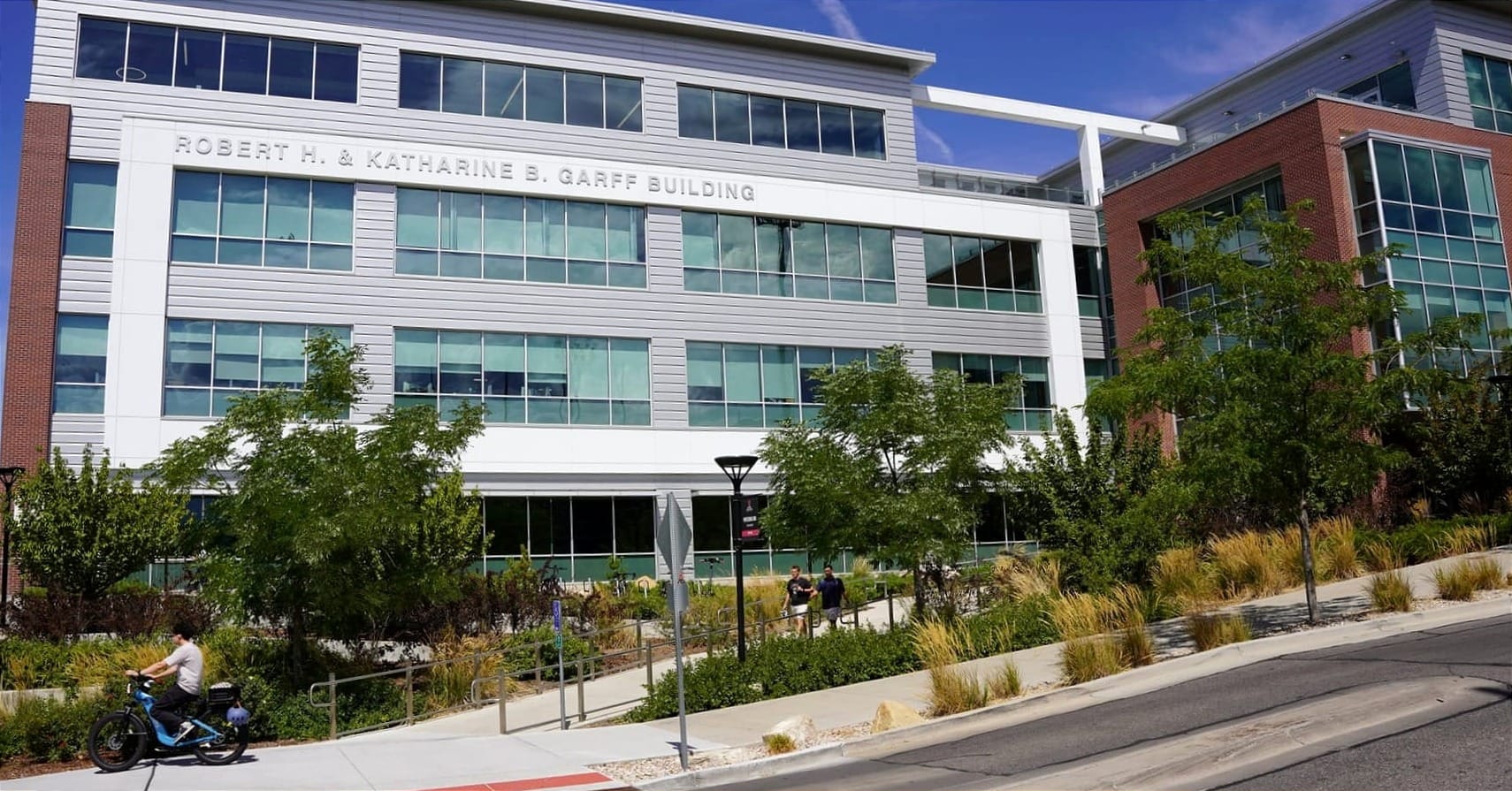
The University of Utah's Robert H. and Katherine B. Garff Building, the location to the August 26, Hard Tech Week Briefing. Photo: Mark Tullis, TechBuzz
Share this article
The link has been copied!
Your link has expired. Please request a new one.
Your link has expired. Please request a new one.
Your link has expired. Please request a new one.
Great! You've successfully signed up.
Great! You've successfully signed up.
Welcome back! You've successfully signed in.
Success! You now have access to additional content.