Utah Biomedical Engineering Conference Connects Student Research With Industry
The student-led Utah Biomedical Engineering Conference connects emerging researchers with industry, while highlighting work on personalized brain stimulation and the challenges of turning biomedical discoveries into clinical applications.
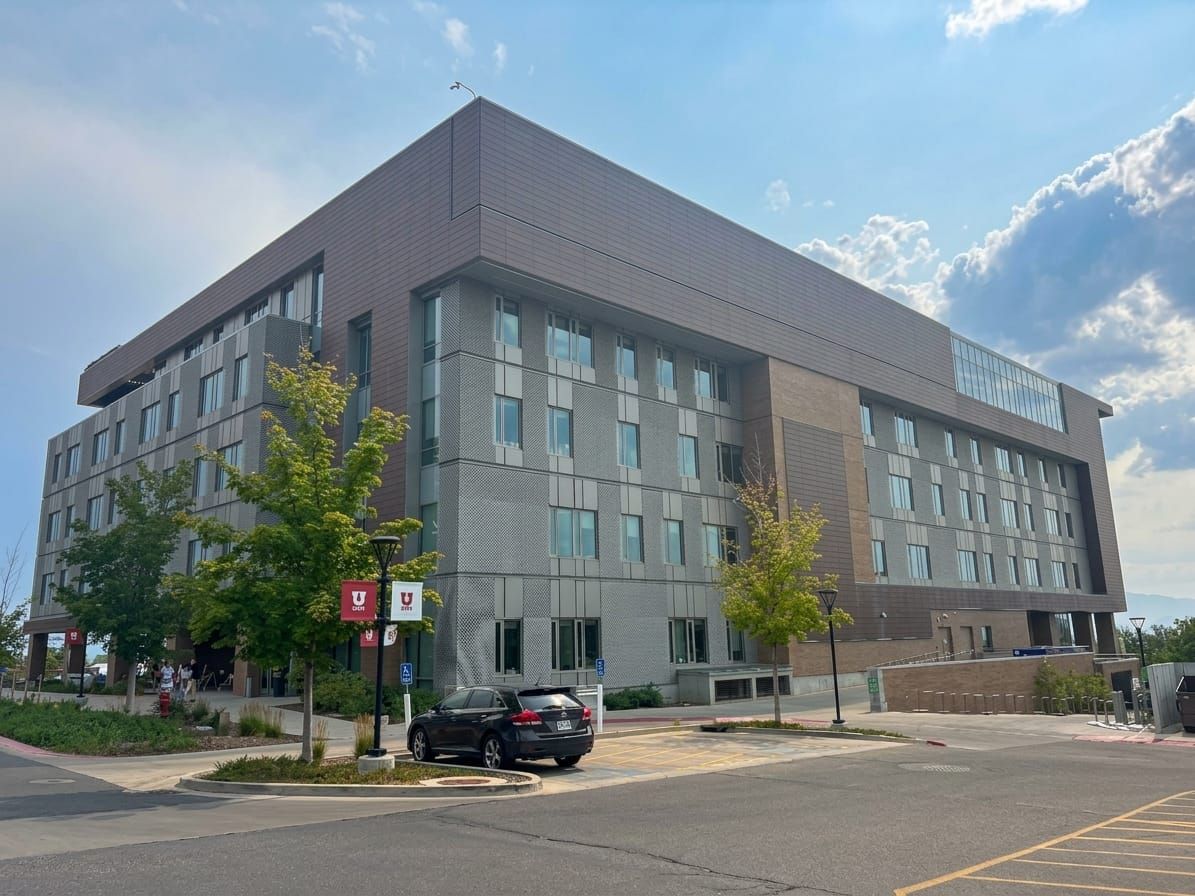
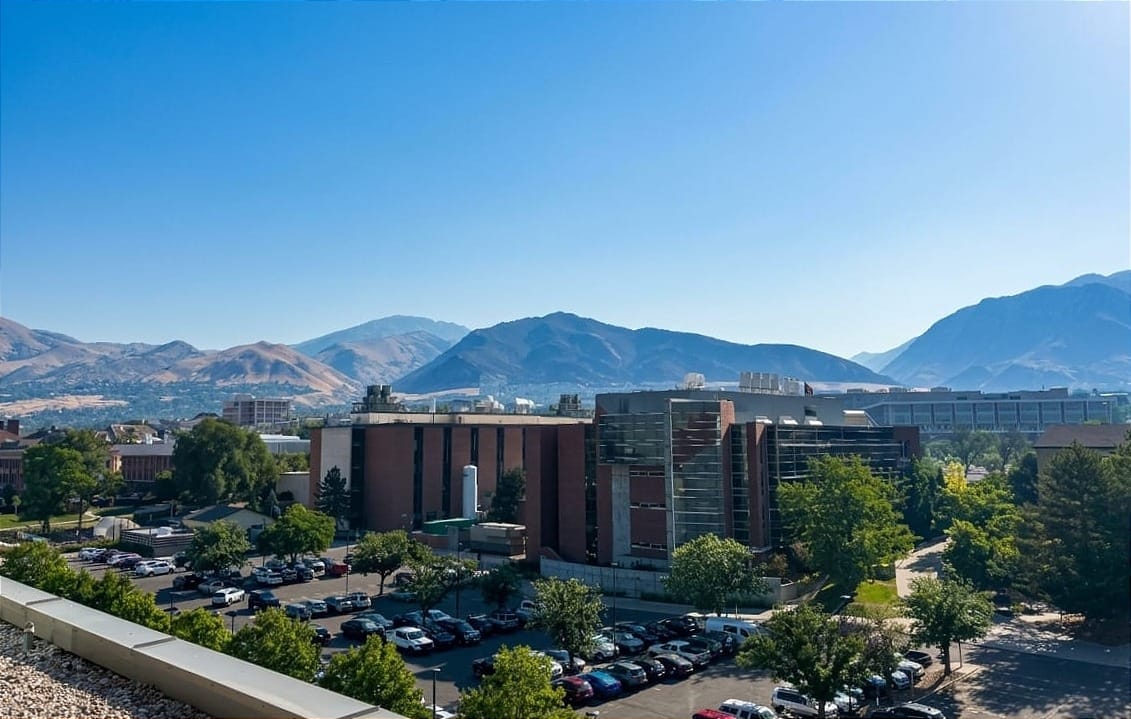
S.J. Quinney College of Law at the University of Utah, location for the 2026 Utah Biomedical Engineering Conference, October 2, 2026. Photo: Satwik Chavakula, TechBuzz
S.J. Quinney College of Law at the University of Utah, location for the 2026 Utah Biomedical Engineering Conference, October 2, 2026. Photo: Satwik Chavakula, TechBuzz
Salt Lake City, Utah — October 5, 2026
Biomedical engineering research can take years to develop, but getting its findings into the hands of people who can use them requires another skill: explaining why the work matters.
The Utah Biomedical Engineering Conference (UBEC) brought students, researchers and industry representatives together Friday, October 2, 2026, at the S.J. Quinney College of Law at the University of Utah for its 21st annual conference. The student-led event gives researchers an opportunity to present their work, build professional relationships and practice communicating complex scientific ideas to people outside their specialties.
Adam Losser, a graduate research assistant in the U of U's Biomedical Engineering department and co-chair of the 2026 conference, said one of UBEC's primary goals is helping students become more comfortable presenting their research and connecting it to problems industry is trying to solve.
“Research can’t be impactful if nobody knows about it, right?” Losser said. “For researchers to understand what industry actually needs, what problems there are to be solved, they need to talk to industry.”
For some students, the conference provides an early opportunity to explain their research to an audience beyond their laboratory.
Losser said students sometimes struggle to articulate their work during their first presentations, even when they understand the underlying research. Presenting their findings helps them develop communication skills that will matter as they pursue careers in research, healthcare and industry.
Adam Losser, Graduate Research Assistant, Biomedical Engineering Department, University of Utah and Co-chair of the 2026 Utah Biomedical Engineering Conference
UBEC's student-led structure also gives its organizers practical experience. Rather than simply participating in an event, student committee members take responsibility for planning and executing it, developing leadership and organizational skills along the way.
“It develops leadership and organizational skills that aren't necessarily taught in a classroom or research lab,” Losser said.
The conference also brings together researchers working in different specialties, including medical devices, biomechanics, imaging, biomaterials and neural engineering. That breadth can help students understand how their work relates to other fields and give companies opportunities to encounter research relevant to their businesses.
This year's conference included 79 poster presentations and 37 podium presentations, according to the updated draft's figures. Participating organizations represented medical devices, healthcare, diagnostics, therapeutics, research and investment.
Researching a more personalized approach to brain stimulation
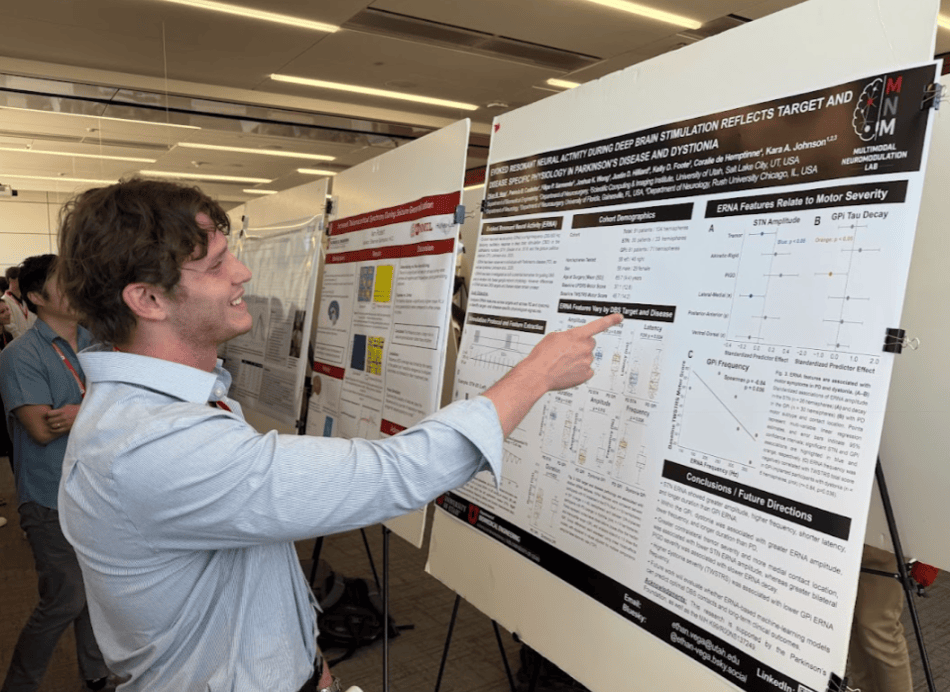
One of the poster presenters was Ethan Vega, a U of U doctoral student conducting research under Dr. Kara Johnson in the Department of Biomedical Engineering. Vega is investigating whether a neural signal could help clinicians personalize deep brain stimulation (DBS), a treatment that delivers electrical stimulation to specific brain regions to help manage symptoms associated with neurological disorders, including Parkinson's disease and dystonia.
Ethan Vega, 2nd Year Doctoral Student and Graduate Student Researcher, University of Utah, presenting at the 2026 Utah Biomedical Engineering Conference, SJ Quinney College of Law, University of Utah, October 2, 2026. Photo: Isabella Pedroza, Nucleus-TechBuzz
Finding the most effective electrode location and stimulation settings can require repeated adjustments over multiple clinical visits. Because symptoms and treatment responses vary among patients, identifying the right combination of settings can be challenging.
Vega's research focuses on evoked resonant neural activity (ERNA), an oscillating neural response that can be recorded following stimulation. His work examines whether characteristics of that signal differ between two brain regions involved in DBS treatment—the subthalamic nucleus (STN) and globus pallidus interna (GPi)—and between people with Parkinson's disease and dystonia.
His poster reported differences in ERNA across brain regions and diseases. In Parkinson's disease, ERNA in the STN was stronger, lasted longer and oscillated faster than in the GPi. In dystonia, ERNA in the GPi was stronger but oscillated more slowly. Statistical modeling also identified associations between ERNA characteristics, motor-symptom severity and electrode location in the Parkinson's disease data.
Together, the findings provide preliminary evidence that ERNA may carry information about differences in brain activity across regions and diseases. Further research will be needed to determine whether those characteristics can reliably inform treatment decisions.
Vega's next step is to test machine-learning models that use ERNA measurements to predict which electrode contact a clinician selects when programming DBS. His longer-term goal is a clinical decision-support tool that could give clinicians an evidence-based starting point, potentially reducing the time and repeated adjustments required to find effective settings.
The goal is not to replace clinicians, but to give them objective information that could help guide decisions. If ERNA can reliably narrow the range of possible electrode contacts and stimulation settings, it could eventually help make DBS programming more efficient and consistent.
For Vega, the research also has a human motivation. He previously worked with a team involved in restoring upper-limb movement after stroke through neural rehabilitation. Seeing people regain everyday activities, he said, was more rewarding than the experiments themselves.
The experience helped shape his interest in research that could improve patients' quality of life and help them return to activities many people take for granted.
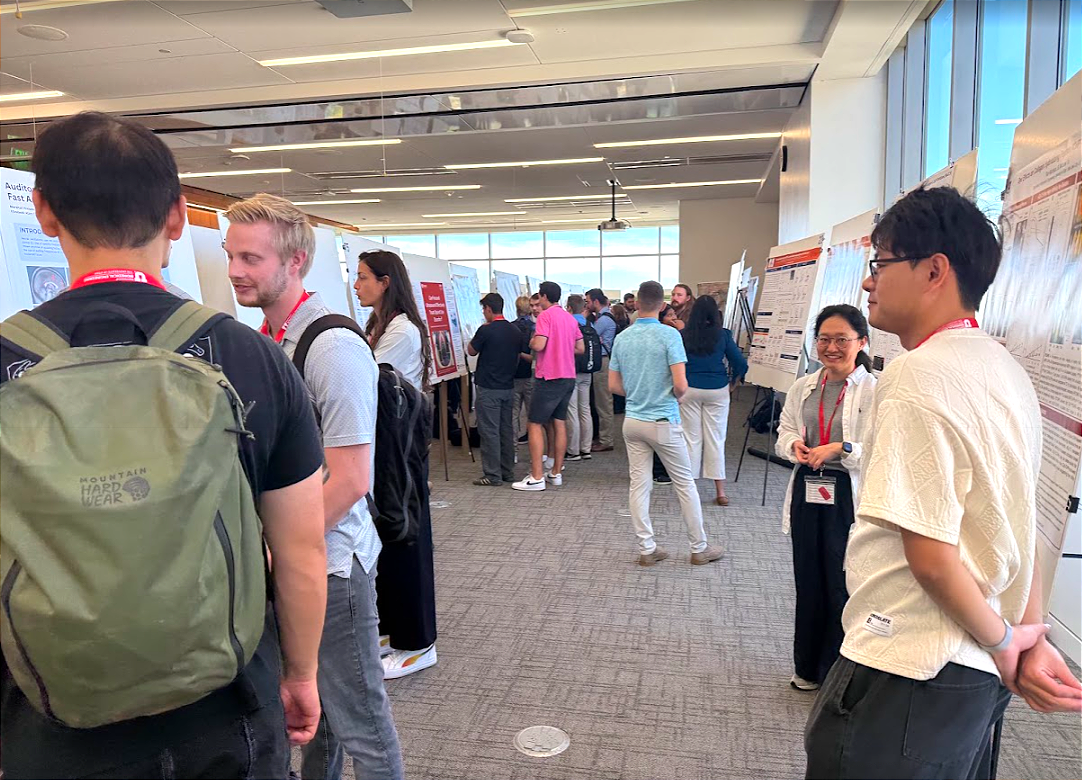
Student participating in the 2026 Utah Biomedical Engineering Conference, Friday, October 2, 2026. Photo: Isabella Pedroza, Nucleus-TechBuzz
Bringing medical innovation to market
The conference's industry perspective extended beyond the companies attending. Tony Chou, founder of Route 92 Medical and an interventional cardiologist, delivered the keynote address, drawing on his experience as a physician, medical-device executive, investor and entrepreneur.
Chou discussed the challenges of bringing medical innovations to market. He said changes in the healthcare system have made it more difficult for new products to reach patients, and encouraged researchers to consider commercialization and potential markets early in the development process.
“It used to be simpler: there was a time where you were rewarded if you were genuinely improving patient care or advancing a certain technology,” Chou said. “Commercialization has become harder as well. I’m hopeful that these system-wide changes can reverse — but that is not the current trend.”
His message offered students a perspective beyond the laboratory: scientific promise alone does not ensure that a technology will reach the people who could benefit from it. Researchers and innovators must also consider how a product could be adopted and brought into clinical practice.
That challenge connects directly to UBEC's emphasis on communication. Students must be able to explain not only how their research works, but also which problems it could solve and why the results matter to people outside their field.
Chou described medical technology as a rewarding career path, even when the route is not straightforward. His advice to students was simple: “Stay with it.”
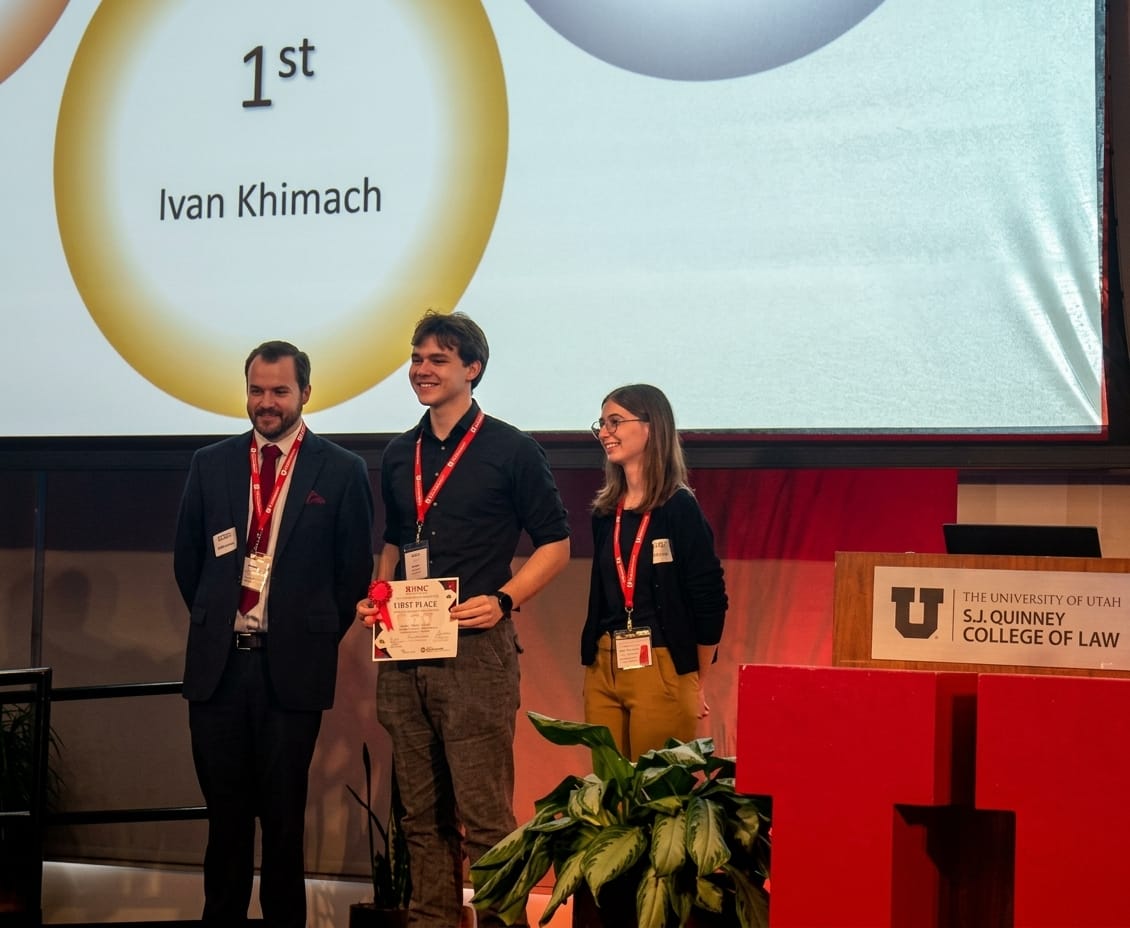
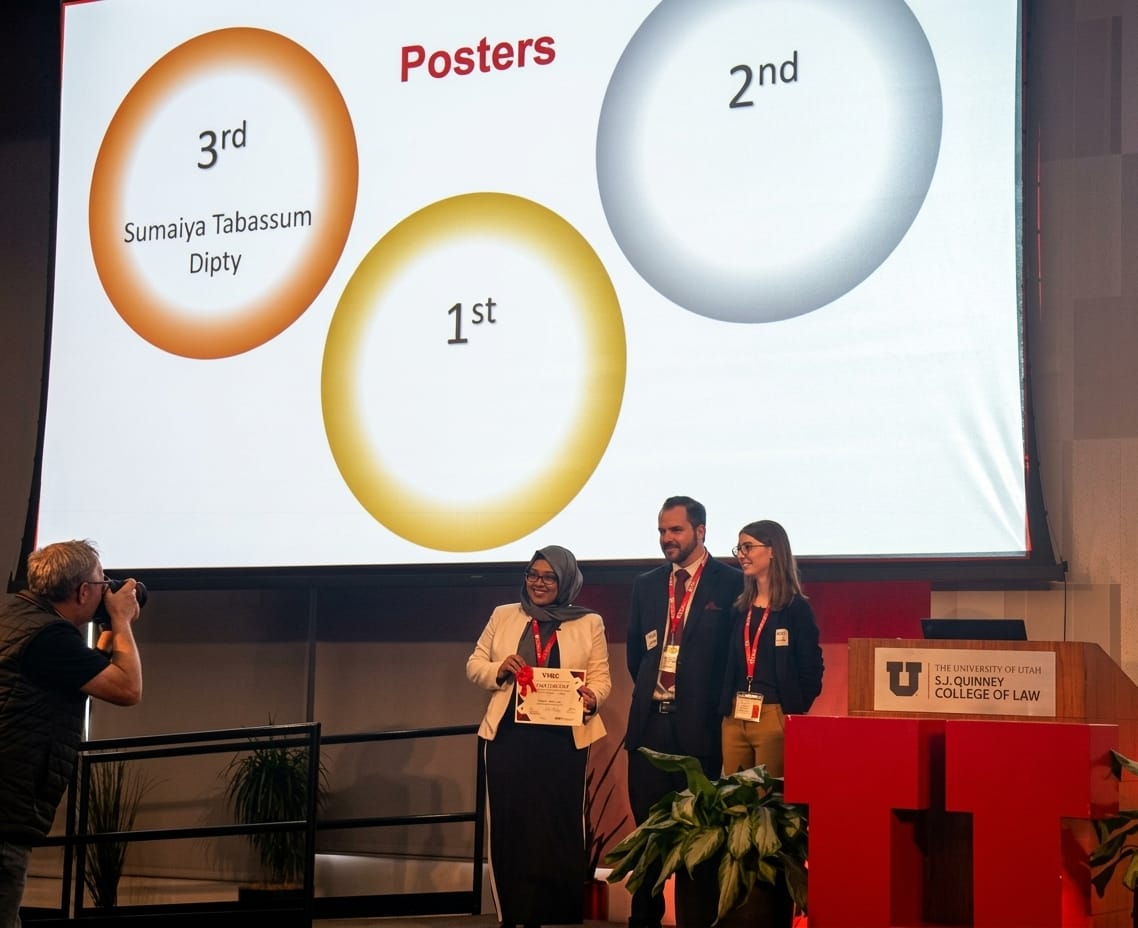
Ivan Khimach receiving the 1st Place Poster award, 2026 Utah Biomedical Engineering Conference, S.J. Quinney College of Law, October 2, 2026. Photo: Isabella Pedroza, Nucleus-TechBuzz
Recognizing student research
UBEC recognized the top three poster and podium presentations. The evaluation criteria included scientific rigor, the clarity of figures and graphics, presentation confidence, and the significance of the research.
The committee reviewed posters before the conference and selected the top 10. Attendees then voted for the best poster using the same criteria, with the committee using that input to determine the final three. Faculty members judged podium presentations using similar criteria, without a preliminary round.
The awards recognized students who combined clear communication with rigorous research and important scientific questions. The awards recognized scientific rigor, clear figures and graphics, presentation confidence, and the significance of the research. Faculty members judged podium presentations; poster awards incorporated attendee voting and committee review.
For students at UBEC, presenting research is an opportunity to develop a skill that can determine whether discoveries reach beyond the laboratory. The conference brings that challenge into focus by creating opportunities for students to explain their work, hear different perspectives and connect with people who may be able to help move research toward practical applications.
As Losser emphasized, understanding industry needs requires conversation between researchers and the people working to solve problems in the field. UBEC gives students a place to begin that conversation.
Companies and Organizations at UBEC 2026
Industry, healthcare, research and innovation organizations represented at the conference.
AiravataBio
BD
DualFlow
Edwards Lifesciences
Faro Molecular
Prism AI Therapeutics
Intermountain Healthcare
Park City Angels
Route 92 Medical
Smile Sync AI
SPARC Health
Stryker Neurovascular
Sunac Therapeutics
Tecan
Ultradent
ARUP Laboratories
The Nucleus Institute
BioHive
View of UofU campus from the S.J. Quinney College of Law, the venue for the 2026 Utah Biomedical Engineering Conference, October 2, 2026. Photo: Satwik Chavakula, TechBuzz
UBEC 2026 Sponsors
The 21st annual Utah Biomedical Engineering Conference was made possible through the generous support of the following sponsors:
University of Utah
Office of the Vice President of Research
Department of Biomedical Engineering
Department of Radiology and Imaging Sciences
John and Maria Price College of Engineering
Center for Medical Innovation
Additional Sponsors
ARUP Laboratories
Nucleus Institute
Tecan
BioHive
Dr. Patrick Tresco
The conference also acknowledges the Estate of Li Chen for its support.