Utah Spaceport Update: A Presidential Order, Site Visits, and a Sense of Inevitability
Utah's spaceport committee shifts into higher gear after Trump's National Space Transportation Policy lands the morning of its August meeting — and after committee members kick the dirt at Delta and Green River
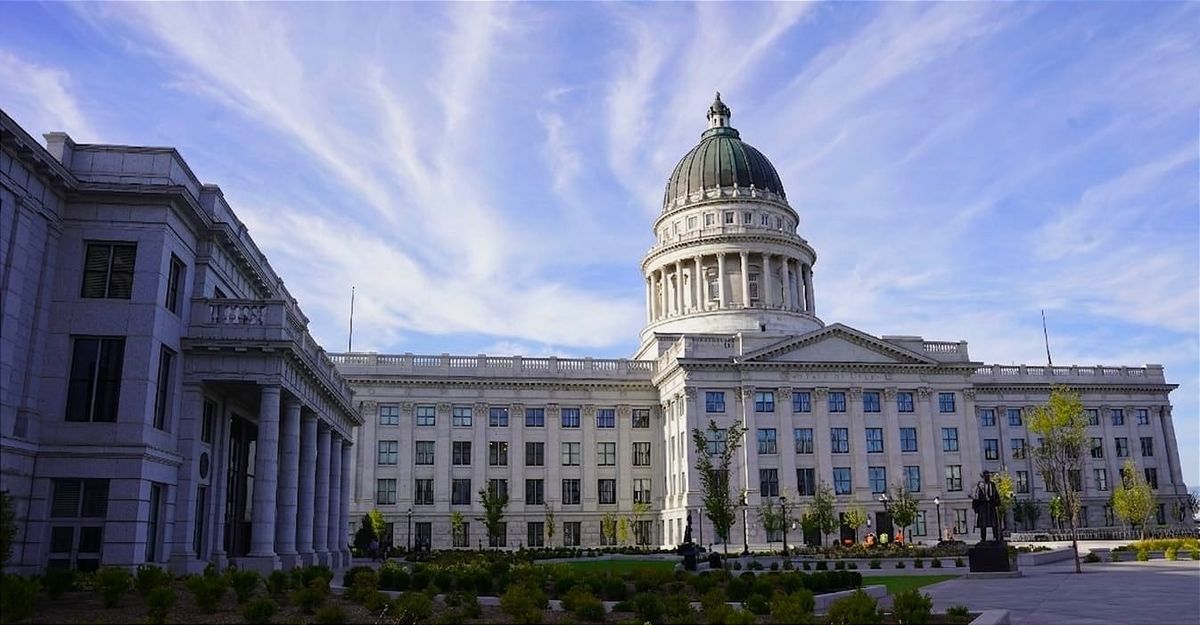
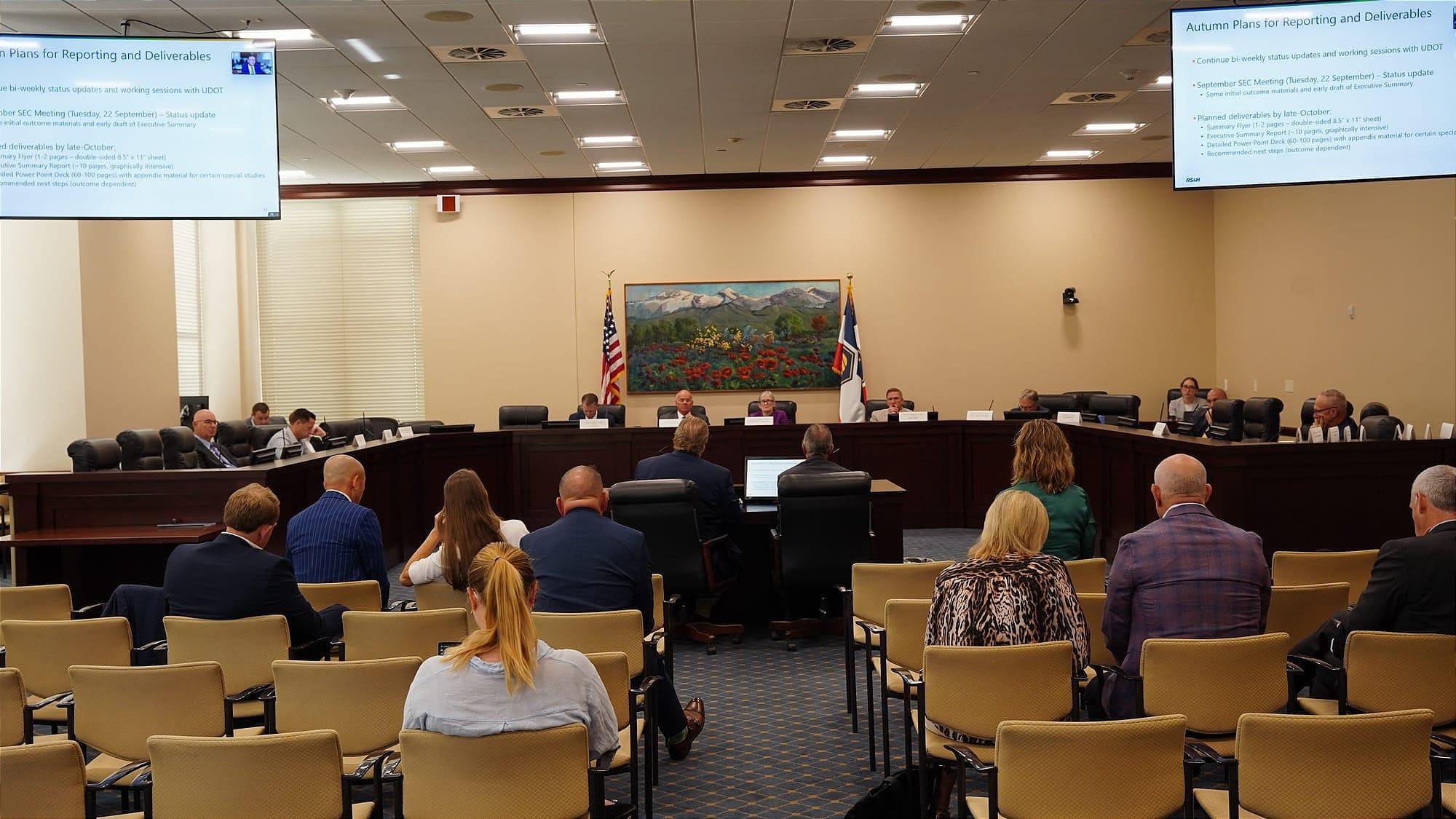
The Senate Building at the Utah State Capitol complex in Salt Lake City, left was the location of the August 21 Utah Spaceport Exploration Committee meeting. Photo: Mark Tullis/TechBuzz
The Senate Building at the Utah State Capitol complex in Salt Lake City, left was the location of the August 21 Utah Spaceport Exploration Committee meeting. Photo: Mark Tullis/TechBuzz
Salt Lake City, Utah — August 25, 2026
The Utah Spaceport Exploration Committee had barely called its August 21 meeting to order when Senator Ann Millner acknowledged that the morning had already brought news. President Trump had released a new National Space Transportation Policy — a sweeping executive directive that, among other things, instructs federal agencies to plan for a national launch cadence of more than 1,000 launches and reentries by 2030, signals a full shift toward private sector-led space industry, and directs the U.S. Department of Transportation, within 180 days, to identify locations for additional launch facilities across the country.
Utah, it turns out, has been doing exactly that work for over a year.
"The next six months is going to be important," Millner told the committee after Brian J. Bean, Senior Policy Advisor to the Utah Senate, summarized the key directives. "Which aligns with the work we're doing already."
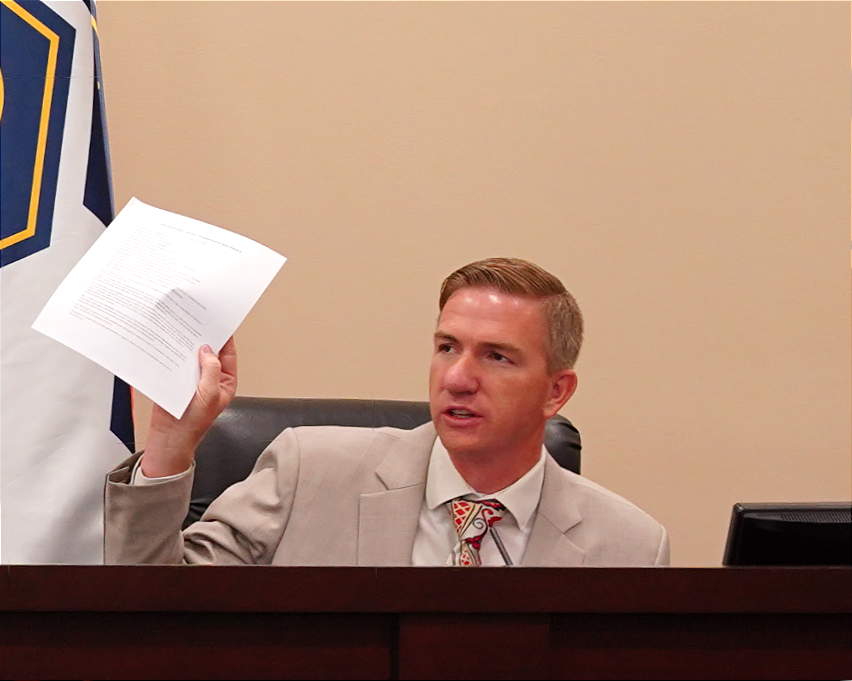
Brian J. Bean, Senior Policy Advisor to the Utah Senate
A Policy That Found Utah Ready
The new policy, which updates the national space transportation framework last revised in 2013, reflects a fundamental reorientation of how the federal government views the commercial space industry. Bean walked the committee through the highlights: space launch should transition from an event-based model, in which each launch is treated as an individual, heavily managed occurrence, to a systems-based model, where launches happen with the frequency and routine of commercial air traffic. The federal government, the policy signals, should operate from behind, supporting infrastructure rather than leading missions.
The policy's directives arrive on tight timelines. The Interior Department has 90 days to identify federal lands that could serve as reentry sites. The Commerce Department has 120 days to update space transportation export policies. The Department of Defense and NASA have 180 days to establish federal range and scheduling criteria. And the Department of Transportation — which funds and oversees UDOT, the agency co-chairing this committee — has 180 days to designate priority airspace for critical launch corridors, integrate launch and reentry activities into air traffic modernization efforts, and identify locations for additional launch facilities. That last directive is precisely what Utah has been pursuing for more than a year.
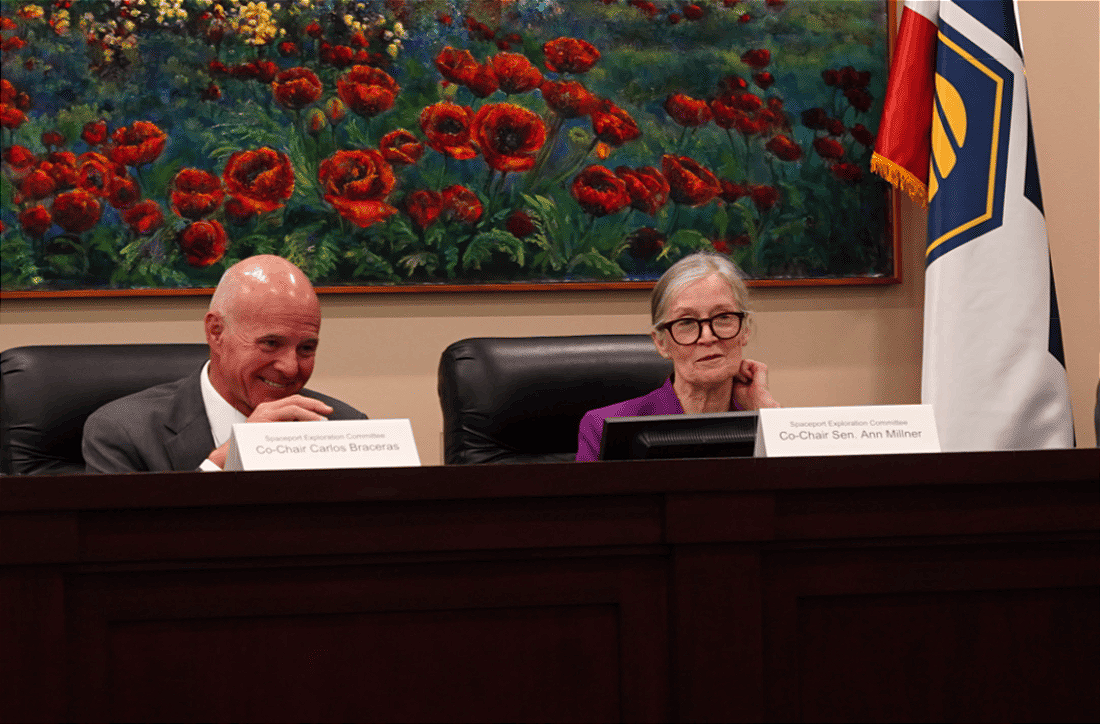
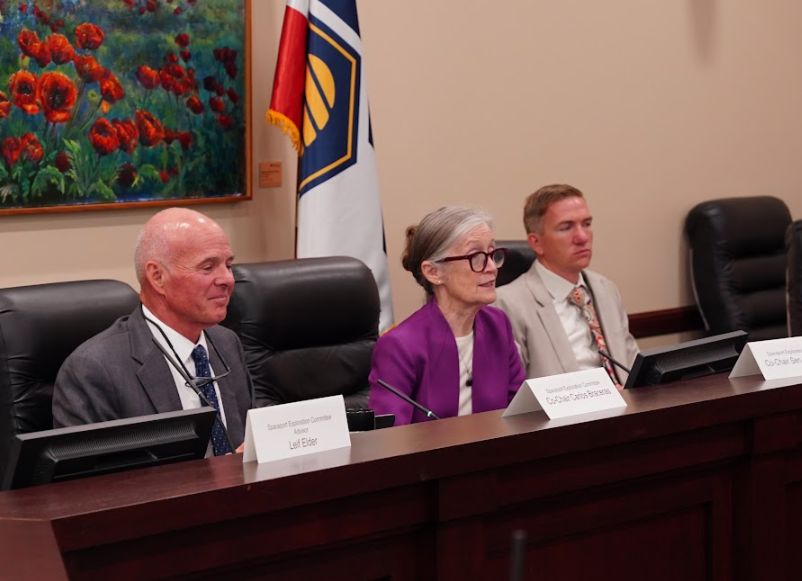
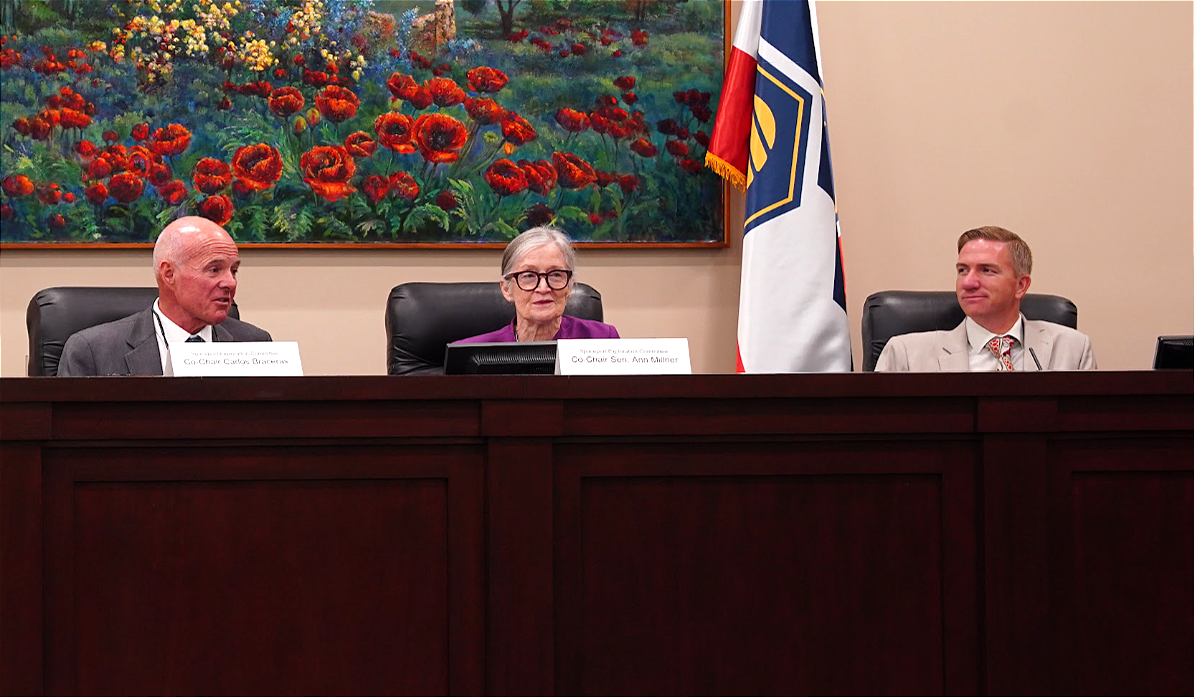
Utah Spaceport Exploration Committee Co-Chairs Carlos Braceras, Utah Department of Transportation executive director, and Sen. Ann Millner attending the committee's August 21 meeting in Salt Lake City. Photo: Mark Tullis/TechBuzz
Jim Sutton, the committee's aerospace advisor and a former Northrop Grumman executive, noted that the Air Force and Space Force Association conference — scheduled for September 14-15 at the Gaylord National in Washington D.C. — would bring together virtually every federal official with influence over these implementation decisions. Sutton confirmed he plans to attend, with committee member Aaron Starks of 47G Utah Aerospace and Defense in tow. The goal: make Utah visible as a candidate before the federal queue takes shape.
Andrew Nelson, Vice President and National Discipline Leader for Aerospace at RS&H — the national consulting firm leading Utah's spaceport site assessment — had planned to open the meeting with the same news. Bean beat him to it, but Nelson noted that the policy's emphasis on building resilience into national launch infrastructure by distributing sites beyond the coasts plays directly into what this committee has been building toward.
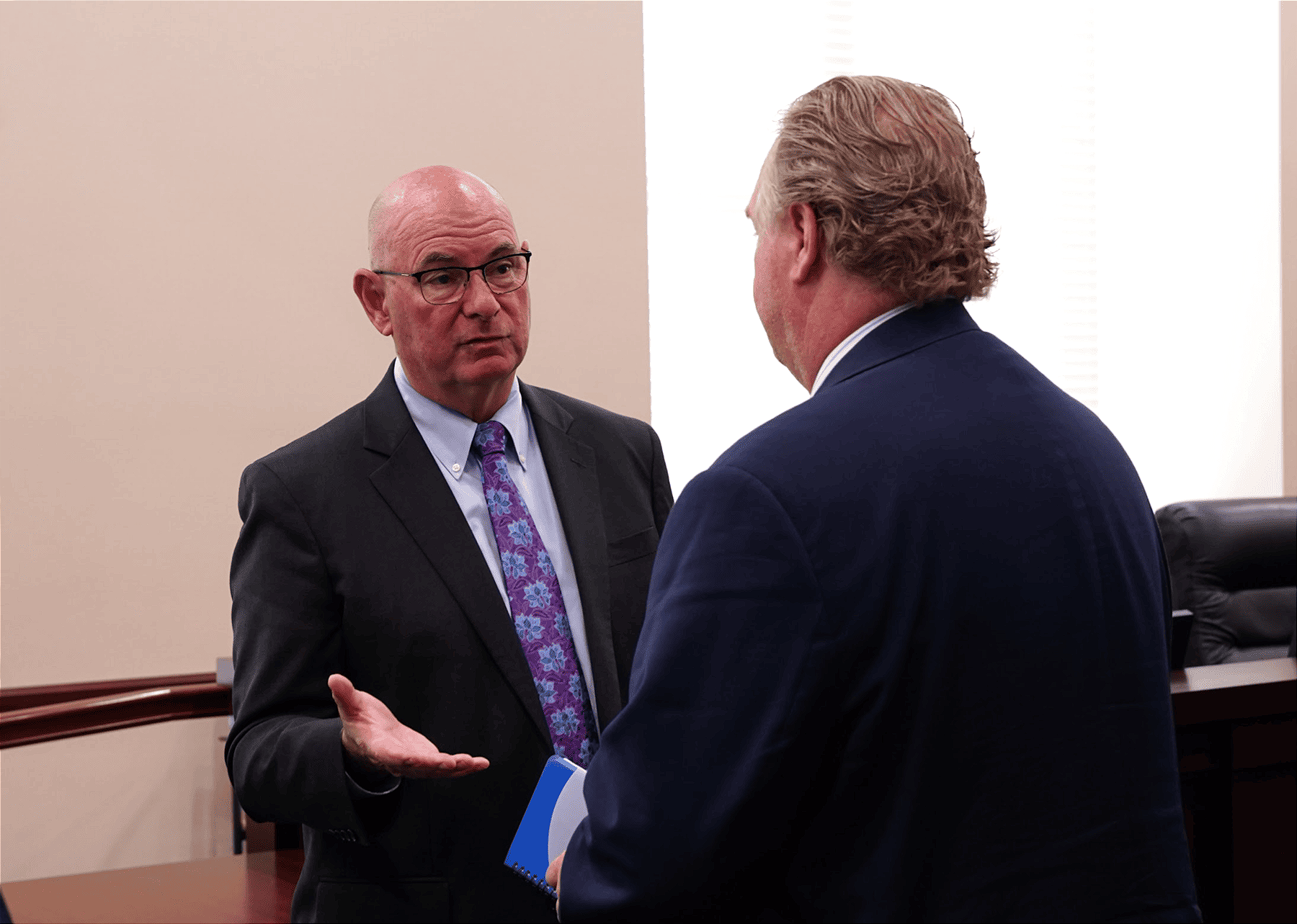
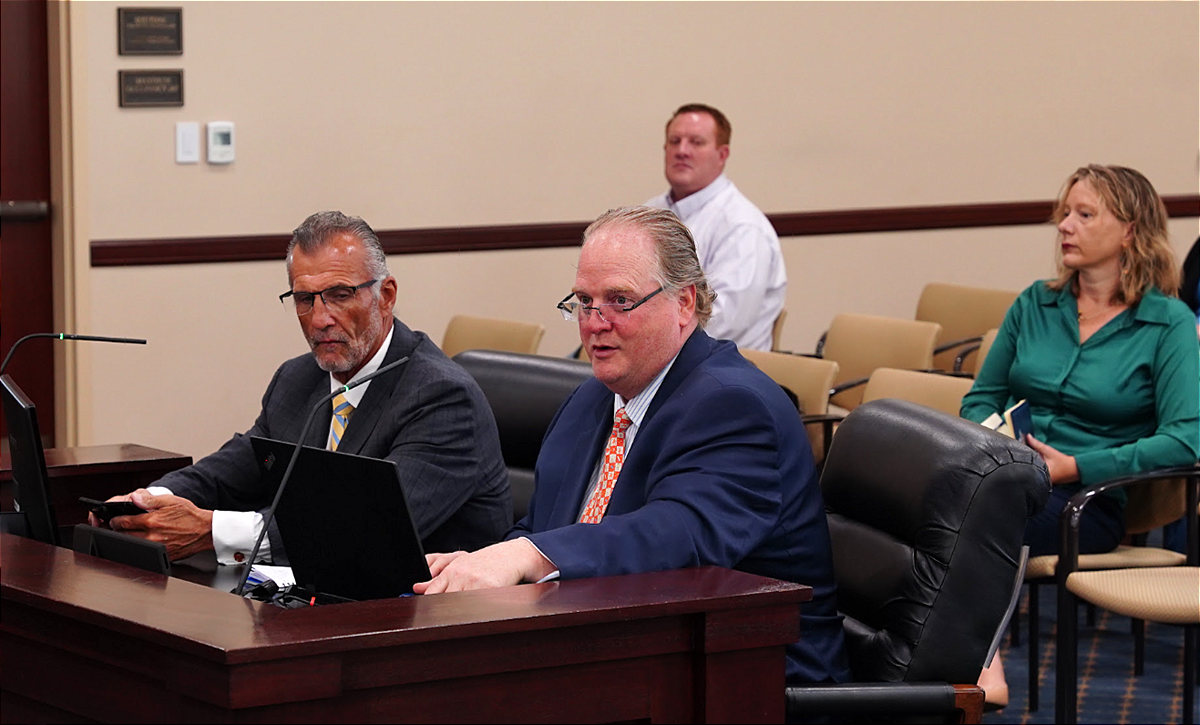
Jim Sutton, aerospace advisor to the Utah Spaceport Exploration Committee and a former Northrop Grumman executive, speaking with Andrew Nelson, Vice President and National Discipline Leader for Aerospace at RS&H and consultant to the committee. Photo: Mark Tullis/TechBuzz
"Not If. Let's Move Forward."
The committee had been busy since its June 19 meeting. On June 23, members toured Hill Air Force Base in Ogden, where they got an inside look at Air Force and Space Force missile and aerospace operations. Space Force personnel participated in the tour and the associated briefing, a detail Millner flagged as significant given the national security dimensions of any future Utah launch site. Rep. Val Peterson, who represents a Weber County district, noted that Hill officials discussed potential funding sources and made clear they see a viable future for Utah in the national space enterprise.
On August 20, UDOT maintenance crews loaded committee members into pickup trucks and 4x4 vehicles and took them on what Braceras described, with evident enjoyment, as some pretty rough roads. "We were out in the dirt, that's for sure," he said. "The hospitality that the locals showed us was remarkable." Millner was quick to add: "They were wonderful hosts."
What the visits produced, member after member said, was a shift from analysis to conviction. "The viability of Utah participating in this activity became more real," Braceras said. "Almost a sense like: we can do this." Neil Holt of the USU Space Dynamics Laboratory said the community engagement at both stops was a highlight, describing the enthusiasm of local officials as genuine and forward-looking. Rep. Jake Sawyer, who represents Utah House District 9 in Weber County, noted that local officials were asking the right questions. Governor's appointee Andy Pierucci credited community leaders for raising issues the committee itself hadn't yet fully considered.
Braceras was careful not to speak for the communities. But he was direct about what he observed. "I could tell they were asking the right questions, and they are very, very interested — both Green River and the Delta site." Braceras, who has spent his career building the infrastructure partnerships that he describes as Utah's secret sauce, summed up where the committee now stands: "Not if. Let's move forward on this."
Two Sites, Two Profiles
RS&H's on-the-ground assessment confirmed that Delta and Green River are genuinely different places with different strengths, and that those differences will shape how Utah thinks about sequencing any future development.
Delta, in Millard County, is infrastructure-rich. The RS&H site visit found very good road access, power available at the site, fiber optic connectivity, readily available water, and remarkably flat terrain extending for long distances. The town's general aviation airport is in good condition. The rail line is literally across the street from the candidate site. The 7-by-4-mile candidate area, RS&H's strawman sizing for a reasonable inland orbital launch site with growth potential, is currently zoned for Range and Forest by Millard County, a designation that is favorable for the spaceport use. Delta's location is also favorable for launch azimuths, and its proximity to Military Operating Areas and proposed Black Hills Range test site creates clear airspace along northern trajectories.
Green River's original candidate location, on the east side of the river in what RS&H calls the "T location," presents a more demanding picture. The site visit found poor to no road access, limited power availability nearby, no fiber connectivity, and rugged terrain throughout the area. The rail line is 5-7 miles away over challenging terrain. The town airport is in very good condition — a genuine asset — and water seems readily available, with community members mentioning available water shares at the site. But the infrastructure deficit at the original location is significant enough that RS&H announced at the August 21 meeting that it is actively evaluating an alternative site on the west side of the river, south of Interstate 70, where the terrain flattens and the development challenges ease considerably. Nelson and RS&H Project Manager Todd Lindner were planning to drive down to assess it the following morning.
The decision to evaluate the alternative site was triggered directly by the team's own boots-on-ground visit — a detail that speaks to the value of the committee's insistence on site visits rather than desk analysis alone. If the alternative western site is selected, RS&H has flagged formally that Green River's entire environmental and flora/fauna assessment will need to be redone — an honest acknowledgment built into the study's completion plan.
Community Voices
Howard Quackenbush knows Delta from the inside. A physical therapist who built a practice serving patients across Millard County after moving to Delta from a career working with professional sports teams, he was recently elected as a county commissioner. He learned about the spaceport proposal in June. His first reaction, he shared with TechBuzz, was curiosity, "One typically thinks about spaceports as being located in Florida or Texas, along coastal areas, not exactly in Utah's high desert." He then realized the economic potential for his community: "I like watching rockets launch." He suspected his neighbors felt the same way. So he asked — informally, in the way that a small-town commissioner can, in his own waiting room. He polled his patients. All were positive.
Howard Quackenbush, Commissioner, Millard County
Dr. Quackenbush brought up the issue of local infrastructure, including hotels. Delta has a 5,000-seat venue for high school sports but almost no hotel rooms to speak of. Rural hotel financing, he explained, is circular by nature; bankers won't finance a hotel without confidence in occupancy, and occupancy is hard to project without an anchor that drives visitors. COVID made lenders even more cautious. A spaceport with regular launches, he said, could be exactly the anchor that breaks that cycle. "It's like a snake eating its tail," he said of the financing challenge. "But a spaceport could change that."
The economic case he makes is broader than tourism. Agricultural land in central Utah typically passes to one or two children in a family, he said. The others often have to leave the county to find work. A spaceport could provide meaningful employment for those who would otherwise have no reason to stay. "Whether it goes to our friends in Green River or here — we like the good folks in Green River — central Utah needs a project like this," Dr. Quackenbush said. "The local residents would welcome it."
He was also practical about the Delta site itself. It is flat, accessible, and well-served by rail, water, power infrastructure, and roads. "It would be easy for people from Northrop Grumman or Hill Air Force Base to get there," he said. "They wouldn't think they are in the middle of a desert."
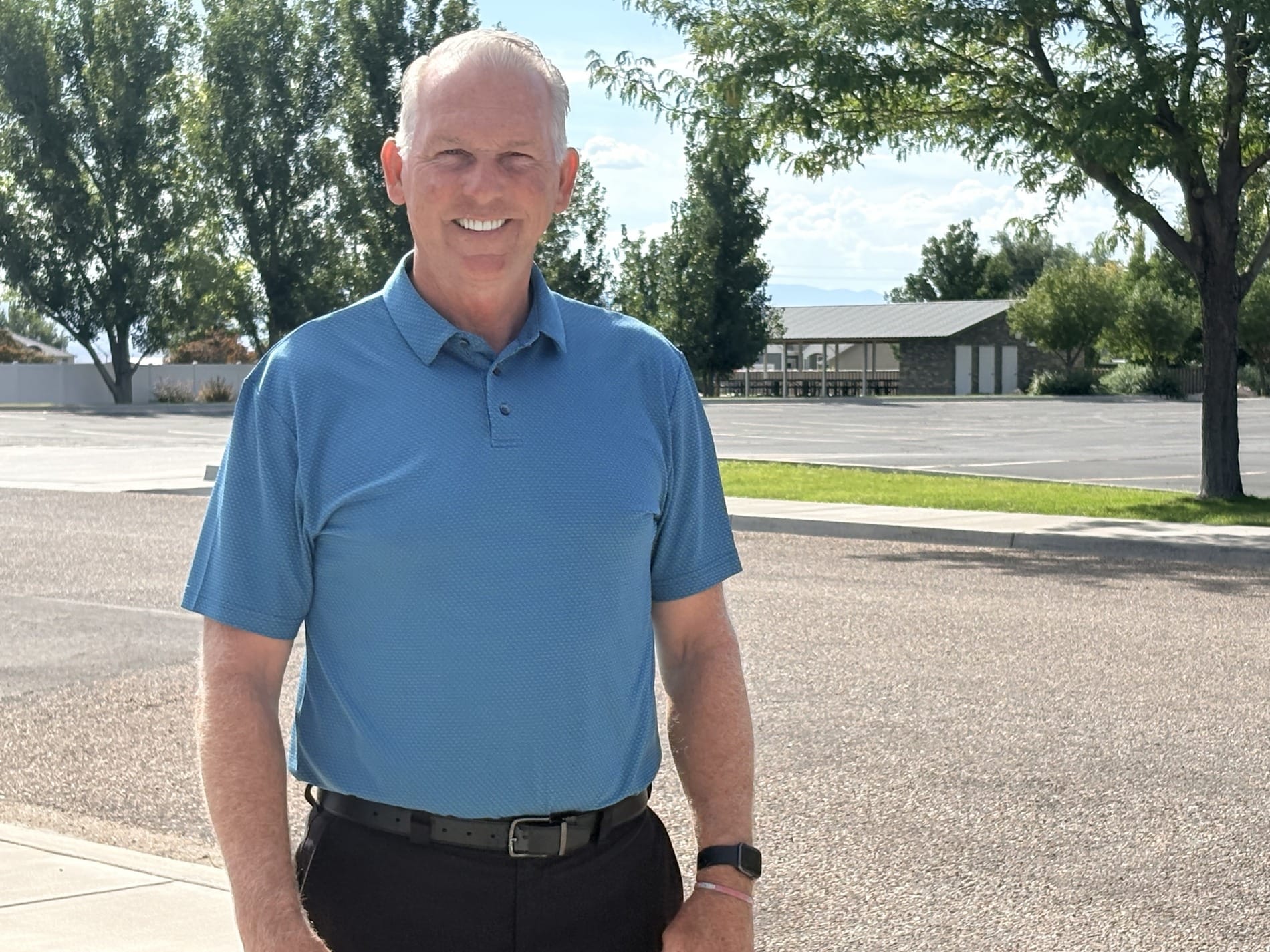
David Wilson, Green River's Director of Planning and Enforcement, told TechBuzz Green River enjoyed hosting the Utah Spaceport Exploration Committee and appreciated the perspective and information the committee shared.
David Wilson, Green River’s director of planning and enforcement, with fiancée Chalyn Francis at Green River’s Melon Days, a local festival held each September celebrating the area’s world-famous melons. Photo: David Wilson
He added, "Green River is no stranger to the idea of a launch complex. Many still remember the launches in the 1960s and 1970s, when Green River played its part in the White Sands Missile Range. Many locals who helped shape this community arrived because of the opportunities that era created. Even though that was before my time, growing up in Green River, I told everyone about the Athena missile in our park. We would enjoy seeing that again. This would involve keeping skilled labor within our community, allowing families to stay and grow, supporting current and new business opportunities, and diversifying our economy in other ways. Green River has played a role in aerospace history before. It will be interesting to see what role we could play in it's future."
What the Science Shows
Nelson walked the committee through Phase Two technical work completed since May, presenting results that confirm both sites' viability while painting a clear picture of their respective strengths and constraints.
On environmental factors, Delta's launch site presents a remarkably clean slate. RS&H found no known historic resource, recreational resource, hazardous materials, wild and scenic river, or farmland of importance within the candidate area. The site is crossed by a network of UDOT and county-managed roads, and contains various wetland types — riverine, freshwater emergent, freshwater forested/shrub, and freshwater pond — though these appear manageable and are addressed routinely at launch sites across the country. The flora and fauna assessment identified just one bird species, one mammal, two insect species, and one plant of potential concern within the launch impact area — a short list. No critical habitat is designated at the site.
Green River's environmental picture is more complex, driven primarily by its proximity to the Green River itself. The river carries a Wild and Scenic River designation and is listed on the Nationwide Rivers Inventory — federal designations that will require coordination during the FAA environmental review process. The site contains some farmland of statewide importance and a network of riverine wetlands throughout the Green River basin. Arches National Park lies due east. The flora and fauna count is higher than Delta's — five bird species, four fish species, two insects, and two plants of concern — reflecting the richer ecosystem surrounding the river. Critically, however, no critical habitat is designated at the Green River site either. And the Old Spanish National Historic Trail crosses the northeast portion of the original Green River location, a federally designated trail that would require Section 106 consultation with the National Park Service during licensing.
On cultural resources, SEARCH — the RS&H team's archaeology subcontractor — conducted an in-depth Phase Two examination of both sites using the Utah SEGO database. Both sites are near waterways with intermittent drainages, which historically correlates with human habitation and archaeological resources.
More than 95% of both spaceport sites will require a formal Class III pedestrian survey, with archaeologists walking transects no more than 49 feet apart under Utah SHPO standards. Class III intensive pedestrian survey is the most common archaeological survey method in Utah and is considered appropriate for most undertakings.
Both sites have comparable numbers and similar types of cultural resources, prehistoric and historic. No known ceremonial or rock art sites were identified at either location. RS&H's conclusion, stated directly on the slide: "Both sites are manageable from a Cultural Resources perspective."
The flight safety numbers, presented with trajectory maps showing the actual launch paths from each site, confirm both candidates' suitability for orbital launch. Delta launches on an azimuth of 347 degrees, nearly due north, to a sun-synchronous orbit at 97.6 degrees inclination. The trajectory passes over sparsely populated eastern Idaho and western Montana before crossing into largely uninhabited Canadian territory. The expected casualty figure: 8 per million, against the FAA's maximum threshold of 100 per million. That figure is not even close to the limit. Green River launches southerly at an azimuth of 191 degrees, nearly due south, on the same orbital type and inclination, with the trajectory passing over sparse northern Mexico and into the Gulf of California before reaching open Pacific Ocean. Expected casualty: 61 per million. Still within the FAA threshold, though with much less margin than Delta, reflecting somewhat more populated territory along the southern downrange corridor.
Who Utah Is Really Built For
After the meeting, TechBuzz News spoke with Paula Endicott, RS&H Senior Project Manager, whose fingerprints, in Nelson's description, are on spaceport licensing work across the country and who has designed launch infrastructure at Cape Canaveral, Vandenberg, and Wallops Island. Her explanation of Utah's market case was clear.
Andrew Nelson, Vice President and National Discipline Leader for Aerospace at RS&H and consultant to the committee, speaking to the committee. Todd Lindner (left), RS&H Program Manager, and Paula Endicott (right), RS&H Senior Project Manager
"The major coastal launch sites are backlogged. Small and mid-size launch operators. The companies that don't have the volume or the leverage of SpaceX are waiting in line. SpaceX alone operates at three of the nation's premier launch facilities: its Boca Chica facility in South Texas, Launch Complex 39A at Cape Canaveral in Florida, and Vandenberg Space Force Base in California."
Utah's spaceport would serve the operators SpaceX is crowding out. The Trump administration's directive to plan for 1,000 annual launches by 2030 only sharpens that case; that volume cannot flow through two or three sites on the Florida and California coasts.
A Faster Path: Reentry First
One of the most actionable insights to emerge from the August 21 meeting was a strategic pivot the committee hadn't fully explored before: Utah could pursue a reentry license before a launch license, potentially cutting the path to operation by more than a year.
The reentry vehicles being modeled in RS&H's Phase Two flight safety analysis give this strategy immediate credibility. ARCTOS, the team's flight safety subcontractor, is running feasibility studies for two classes of reentry vehicle at both Delta and Green River: a small-to-medium ballistic capsule — the class of vehicle Varda Space Industries used when it successfully reentered a capsule in Utah's West Desert in 2024 — and a large ballistic reentry vehicle, specifically modeled on the Boeing CST-100 Starliner and SpaceX Dragon capsule, both of which currently ferry astronauts and cargo to and from NASA's International Space Station. Utah is not being modeled for hypothetical vehicles. It is being modeled for hardware that is flying today.
Todd Lindner, RS&H Program Manager whose résumé includes serving as CEO of Mojave Air and Spaceport in California and director of Cecil Spaceport in Jacksonville, Florida, put a specific number on the timeline advantage: a reentry-only license could potentially be secured in as little as 14 months. A full launch license, under favorable conditions with an active customer, runs closer to 18 months at the fastest and more realistically two to two and a half years. The FAA's statutory review clock — 180 days, beginning only after a formal application is accepted — runs separately for reentry and launch licenses, meaning both applications can move forward in parallel, with the reentry license likely reaching completion first.
Green River's existing restricted airspace for historical point-to-point operations into White Sands Missile Range gives it a particular head start on the reentry case. Delta's proximity to historic UTTR/Dugway reentry corridors gives it a similar advantage from a different direction. Nelson confirmed the parallel track is viable and that both sites could ultimately support both functions. Millner asked the question that matters most for a legislature trying to sequence investments: if you start with reentry and add launch later, do you go back to square one on licensing? Nelson's answer: no. The reentry license and the launch license are two separate pieces of paper.
47 Ways to Fund It
KPMG's initial financial findings, presented at the August 21 meeting, documented 47 federal and state funding programs available to a Utah spaceport: 30 federal and 17 Utah state and local. Broken down by mechanism: 21 discretionary grants, 11 tax credit and incentive programs, 7 loan and guarantee programs, 6 revolving funds and bond programs, and 2 workforce and training programs. Each was evaluated against a consistent scorecard covering eligibility, spaceport fit, funding size and match requirements, partner needs, authorization status, compliance caveats, and — critically — precedents from real spaceport projects that have successfully won the funding.
The strongest cluster of opportunities lies in transportation grants and state incentives. USDOT's Mega, INFRA, Rural Surface Transportation, and BUILD programs. Rural status is particularly advantageous under some of these programs, but these programs have different statutory criteria and cost-share rules.
Space Florida won a $90 million INFRA grant for bridge replacement and road improvements (replacement of the SR 405 bridge over the Indian River Lagoon, widening Space Commerce Way, and improvements to 3.7 miles of NASA Parkway West) supporting access to Cape Canaveral Spaceport.
The Consolidated Rail Infrastructure and Safety Improvements (CRISI) program provides federal funding for freight and passenger rail infrastructure, including projects that improve rail safety, efficiency, reliability and multimodal connections. The latest CRISI round made approximately $2.04 billion available and closed June 22, 2026, making the next funding cycle a potential target for Utah.
Utah also has several potentially relevant incentive programs. The Utah Inland Port Authority has an Authority Infrastructure Bank that has financed rail and other logistics infrastructure. The High Cost Infrastructure Tax Credit (HCITC) can support qualifying infrastructure investments, including roads and railroads, with credits generally capped at 50% of infrastructure costs. Utah's Economic Development Tax Increment Financing (EDTIF) and Rural Economic Development Tax Increment Financing (REDTIF) provide post-performance tax credits for qualifying business investment and job creation, with REDTIF offering enhanced incentives for qualifying rural projects.
One program deserves particular attention: the FAA's Space Transportation Infrastructure Matching (STIM) Grants Program, authorized under 51 U.S.C. Chapter 511. STIM is the federal grant program specifically designed for spaceport infrastructure, but it has not received funding since fiscal year 2012. The bipartisan SPACEPORT Act, introduced in both chambers of Congress in September 2025, would modernize STIM, permit federal grants of up to 90% of project costs and authorize up to $10 million annually. Utah's congressional delegation should understand the program and the potential significance of its reactivation for Utah's emerging spaceport infrastructure.
KPMG's key takeaway from the slide, stated plainly: there is no single spaceport fund. A spaceport gets financed by combining sources — federal transportation grants for roads and rail, state incentives to fill the gaps — and several of the strongest programs face reauthorization deadlines, FY2026 funding cliffs, or pending legislation. Timing matters.
Nelson added a candid caution that the committee took seriously: states that have treated spaceports as self-sustaining economic engines from day one have consistently overpromised and underdelivered. The missions that typically accompany a spaceport — STEM education, workforce development, community economic development — impose real costs that are not recoverable through launch fees in the early years. "There have been states that have largely overpromised and greatly underdelivered for decades," Nelson said, "and they're just now getting out of that cycle." Braceras echoed the point: "We can chase after exciting things all day long. We want to do it responsibly."
The Full Economic Picture
Beyond launch revenues, KPMG is building a comprehensive economic model using IMPLAN — the industry-standard input-output tool — to quantify direct, indirect, and induced economic contributions at both the state and county level across multiple scenarios. The model will capture not just spaceport construction and operational spending, but also an economic dimension that often goes undiscussed: visitor spending in the surrounding economy by people who travel to attend launches or tours.
Spaceport tourism is a measurable economic contributor. Spaceport America's latest economic-impact study, conducted by New Mexico State University using IMPLAN, explicitly incorporates out-of-state visitor spending into its analysis. The study reports more than 60,400 visitors to the facility in 2024, demonstrating the potential for space-related tourism to generate economic activity beyond launch operations themselves.
The workforce analysis runs parallel to the economic modeling and is notably rigorous. Rather than simply estimating job counts, KPMG is mapping the specific knowledge, skills, and abilities required to build and operate a spaceport against what Utah's regional universities, community colleges, and technical colleges currently offer. Where gaps exist, the analysis will recommend workforce development strategies and potential institutional partnerships. The result will give the Legislature a clear picture not just of how many jobs a Utah spaceport might create, but of whether Utah can actually fill them — and what it would need to build to do so.
Going to Market
The committee has issued a formal Request for Interest — a brief form asking companies whether they would use Utah launch or reentry facilities if built. No commitments required. The document is intended to give the committee something concrete to bring to the Legislature in November: a picture of who is already raising their hand.
Nelson suggested broadening the appeal to include space-adjacent markets — autonomous vehicles, component testing, media production, STEM activation — that all established spaceports rely on for early cash flow and community economic development before launch volumes reach sustainable levels. Bean noted that the Space Force angle deserves its own separate outreach channel, given the national security sensitivities involved. Chief Master Sergeant Brian L. Garrett, the Utah National Guard's Senior Enlisted Advisor to the Director of the Joint Staff and the committee's military representative, is well positioned to help navigate that conversation.
The deadline to submit a resposne to the Utah Space Port Usage RFI is September 14, 2026 at 5:00pm.
What Autumn Brings
RS&H's autumn completion plan is specific and demanding. Before the October final presentation, the team must finalize environmental analysis, cultural resources analysis, sonic boom and noise assessments, reentry flight safety analysis, economic impact analysis, workforce assessment, high-level site design, and governance considerations — while also resolving the Green River alternative site question and finalizing the site comparison narratives that will form the backbone of the Legislature report. Nelson described the committee's September 22 meeting as a preview session where members will see the shape of the final product and weigh in before it solidifies.
The final RS&H package will include a one-to-two page public flyer, a 10-to-15 page executive summary, a comprehensive 60-to-100 page technical report with appendices, and formal recommendations including rough-order-of-magnitude cost estimates for next steps and an aggressive-but-realistic licensing timeline. The committee then presents to two legislative interim committees in November.
The FAA licensing process is not a single event but a staged sequence: an open-ended pre-application period, followed by a formal application, followed by a 180-day statutory review covering safety, policy, environmental, and airspace dimensions simultaneously, followed by a license valid for up to five years and renewable. Nelson's counsel to the committee on timeline: 18 months in the best case with a committed customer and a favorable environmental assessment; two to two and a half years as a realistic target; and the parallel reentry application potentially hitting much sooner. The years spent on licensing, he emphasized, need not be years spent waiting — land acquisition, utility planning, road improvements, and facility development can all begin in parallel.
As the meeting closed, Millner reflected on the weight of what the committee is now carrying. "We are speeding up this process and accelerating this process," she said. "And yes, we know we're asking for more." She paused. "We want to make a really, really good recommendation that has been thoroughly studied."
The committee's next meeting is September 22, 2026, from 9:00 to 11:00 a.m. The final study presentation is expected in October, with a Legislature report in November.
The committee invites companies to indicate if they would use a spaceport's launch or reentry facilities, should they be built, by filling out the Request for Interest before end of day, September 17, 2026.
Share this article
The link has been copied!
Your link has expired. Please request a new one.
Your link has expired. Please request a new one.
Your link has expired. Please request a new one.
Great! You've successfully signed up.
Great! You've successfully signed up.
Welcome back! You've successfully signed in.
Success! You now have access to additional content.