Beyond the 401(k): How Utah Startup NestSTEPS Is Turning Homeownership Into an Enterprise Benefit
NestSTEPS (South Jordan, UT) addresses housing affordability by converting home savings into an enterprise benefit. Co-founder Larry Salazar explains how employer-matched contributions, financial coaching, and PEO partnerships drive workforce retention.
NestSTEPS co-founders Sherry and Larry Salazar outside the Utah State Capitol following discussions with state housing policy leaders regarding employer tax credits for homeownership contributions. Photo: NestSTEPS
NestSTEPS co-founders Sherry and Larry Salazar outside the Utah State Capitol following discussions with state housing policy leaders regarding employer tax credits for homeownership contributions. Photo: NestSTEPS
South Jordan, Utah — September 28, 2025
Utah’s soaring housing market has dominated public discourse from the state capitol to local family dinner tables. While Governor Spencer Cox and state lawmakers routinely grapple with inventory shortages and zoning reforms, a growing segment of the state's emerging workforce faces a daunting barrier: rising down payment thresholds that make homeownership feel increasingly out of reach.
For Larry Salazar, President and Co-founder of South Jordan-based NestSTEPS, waiting for government policy to single-handedly solve housing affordability misses a fundamental economic reality.
"There’s a constant discussion that we just need to get more inventory in place to lower prices," Salazar explained during a recent interview with TechBuzz News. "But forcing prices down collapses the equity of the 60% of people who already own homes. The real solution is enabling employees to build healthy financial habits, eliminate unconscious spending, and partnering with employers who can provide matching contributions toward a down payment."
Reversing Defaults: How the Platform Shapes Savings
Employer-assisted housing initiatives are not entirely unprecedented. In the 1990s, entities like Fannie Mae and Aurora Health pioneered forgivable loan models to reduce turnover. However, NestSTEPS has digitized and scaled the framework into a structured employer benefit designed to mirror the familiar mechanics of a 401(k).
Salazar asserts that while traditional 401(k)s are important, they often feel distant or future-focused. "A home is immediate, essential, and the most powerful wealth-building asset most working families will ever own," Salazar notes. "It is not abstract or elective. It is where stability is formed and where financial pressure is either eased or intensified."
NestSTEPS co-founders Sherry and Larry Salazar at their WECON SHRM booth, highlighting how employer-matched home savings build long-term workforce stability. Photo: NestSTEPS
To tackle unconscious spending, the NestSTEPS platform reverses traditional cash-flow dynamics. Instead of paychecks depositing into standard checking accounts where saving is an afterthought, funds are automatically directed into a dedicated primary savings account.
If an employee attempts an early withdrawal for non-housing expenses, the software introduces friction by displaying real-time impacts on their home purchase timeline (such as showing a mandatory warning that the withdrawal causes a "+3 month goal delay"). Throughout the process, workers receive 1:1 guidance from licensed professionals, including Home Advisors and Equity Architects, who monitor milestones and Debt-to-Income (DTI) metrics.
Metric / Dimension
Standard 401(k) Model
NestSTEPS Home Savings Benefit PDF+ 1
Primary Goal
Retirement wealth accumulation
Immediate homeownership & down payment funding
Workforce Appeal
Long-horizon (20–40 years)
Short-to-medium horizon (1–5 years)
Employer Benefit
Standard talent attraction
Reduced turnover (up to 65%) & lower financial stress
Advisory Support
Self-directed or general advisors
Dedicated Home Advisors & Equity Architects[cite: 2]
Funding Structure
Payroll deduction + match
Automated payroll deduction + fixed or matched contribution
The Enterprise Business Case: Retention and Productivity
Participating employers can structure contributions flexibly—ranging from flat-fee down-payment contributions (typically $3,000 to $10,000) to ongoing mortgage principal pay-down programs for existing homeowners.
For employers, the return on investment comes down to two primary metrics: durable retention and workplace productivity.
"Historical data shows employees participating in housing assistance programs are 50% to 65% less likely to turn over compared to non-participants," Salazar explains. "When you consider the thousands of dollars required to replace a skilled worker, investing directly in an employee's long-term financial stability yields a clear return."
Salazar also points to financial stress as a silent drag on enterprise efficiency. Internal research conducted by NestSTEPS found that 86% of respondents reported homeownership would significantly reduce their financial stress. Furthermore, broad industry data from PwC indicates that roughly 30% of employees spend three or more hours each week dealing with personal financial issues on the job. NestSTEPS provides employers with an enterprise portal to measure these outcomes directly through cohort progress tracking and automated ROI analysis.
Brokerage and PEO Partners Drive Regional Expansion
Though initially targeting localized industries like construction, education, and health systems, NestSTEPS experienced unexpected adoption across tech companies, middle-market enterprises, and SMBs.
To scale efficiently without expanding massive internal sales teams, NestSTEPS partnered with regional Professional Employer Organizations (PEOs) and benefit brokerages. Following an initial deployment across 11 core employers, these strategic partnerships are slated to roll out the NestSTEPS platform to several hundred businesses across the Intermountain West entering early 2027.
Industry partners view the platform as an essential differentiator in talent acquisition.
“Where and how people live and work is changing, and the employers who recognize that connection will have a meaningful advantage in the competition for talent,” said Jim Oman, Director of Benefits at Utah-based PEO ROW Partners. “Adding homeownership benefits fits right in with our end-to-end PEO model because we believe that benefits should fit the goals of both the workers who utilize them and the employers providing them. NestSTEPS® has created something incredible that will help a lot of people put down roots in their communities and keep top talent at their jobs for a long time.”
Benefits consultants echo that sentiment regarding shifting employee expectations.
“Our job is not just to renew health insurance plans every year. Our job is to help employers build benefit strategies that actually solve problems for their people and their business,” added Chris Miller, Founder & CEO of Utah-based benefits brokerage Miller & Associates. “Homeownership support is a timely, practical benefit that can help employers stand out in a market where employees are feeling real pressure from housing costs.”
A Media and Enterprise Veteran at the Helm
Salazar’s ability to articulate complex financial mechanisms comes from a diverse 25-year career spanning HR benefits, fintech, health technology, and cybersecurity. A graduate of Brigham Young University, Salazar spent his early career on-air as an award-winning broadcast journalist for NBC- and CBS-affiliated stations before leading executive stakeholder communications for Boeing's space division.
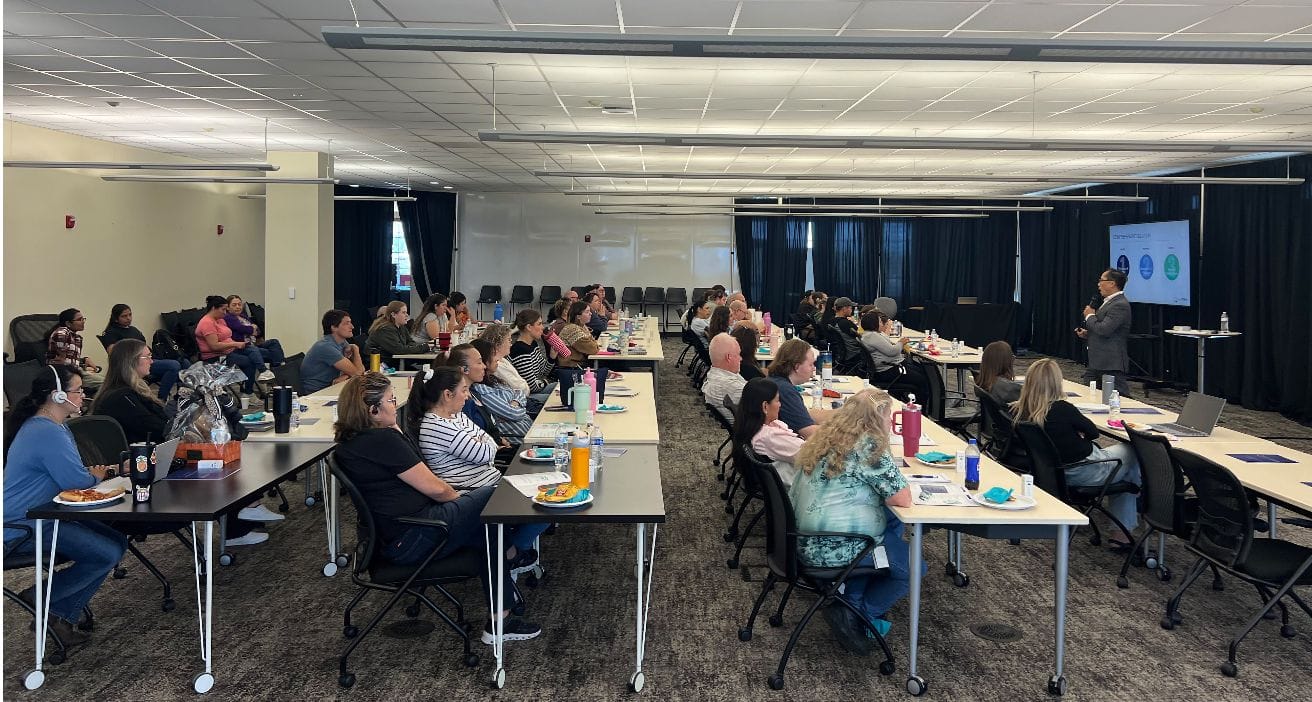
NestSTEPS President and Co-founder Larry Salazar presents the company’s employer-sponsored homeownership platform at a corporate workshop. Photo: NestSTEPS
Navigating Policy
While NestSTEPS operates in the private sector, its strategy intersects directly with state and federal housing initiatives. Salazar and his co-founder/wife Sherry Salazar have engaged in preliminary discussions with Steve Waldrip, Governor Cox’s Senior Advisor for Housing Strategy and Innovation.
The goal? Exploring state-level tax incentives or credits for Utah businesses that contribute to employee home savings accounts.
"We brought up the concept of creating tax relief for employers making these homeownership contributions," Salazar revealed. "The feedback from the state housing team was very open, and we are continuing those conversations to look at legislative avenues here in Utah, alongside federal lobbying efforts to ensure employer contributions receive favorable tax treatment for workers."
As mortgage rates remain dynamic and regional real estate prices present hurdles for early-career workers, NestSTEPS positions its platform as a tangible bridge toward the American Dream—one paycheck at a time
Key Takeaways
Enterprise Benefit Model: NestSTEPS matches employee home savings through automated paycheck deductions and custom employer contributions.
Behavioral Software Design: Income is directed into a separate deposit account first, reversing standard checking defaults to reduce impulse spending.
Expert Advisory Network: Connects workers with human Home Advisors and Equity Architects for 1:1 real estate financial planning.
Market Validation: Industry partners like ROW Partners (PEO) and Miller & Associates (Brokerage) are incorporating NestSTEPS into regional offerings.
Legislative Engagement: Salazar has held preliminary discussions with Steve Waldrip, Utah's Senior Advisor for Housing Strategy, on employer tax credits.