Backcountry Wants to Close the Gap Between the Box and the First Pedal Stroke
Backcountry’s acquisition of Velofix (Vancouver, BC) adds a 96-technician mobile service network as the Utah retailer works to transform online bike purchases into ready-to-ride customer experiences and broader outdoor services.
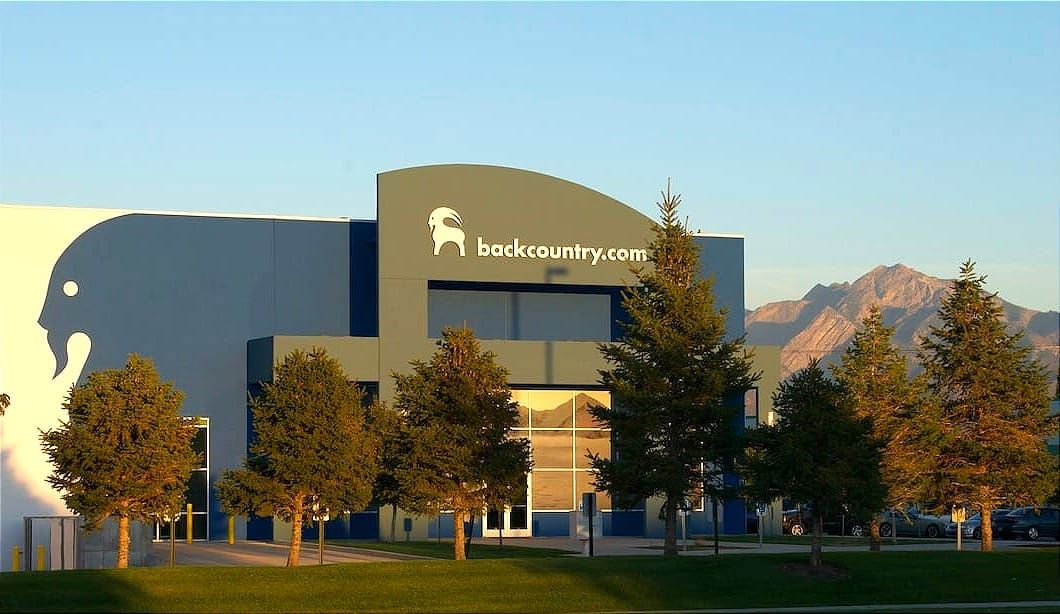
Backcountry HQ in Cottonwood Heights, Utah. Photo: Backcountry
Backcountry HQ in Cottonwood Heights, Utah. Photo: Backcountry
Cottonwood Heights, Utah — September 29, 2026
For all the advantages of buying a bicycle online, there is one problem that has never been completely solved: the transaction doesn't necessarily end when the box arrives.
The bike may need to be assembled, tuned and adjusted. The handlebars and saddle may need to be positioned correctly. And for a rider buying a high-end bicycle, getting the fit right can be as important as choosing the bike itself.
Backcountry believes that gap between delivery and the first pedal stroke represents an opportunity.
Founded in 1996 in a garage in Park City, Utah, Backcountry is now headquartered in Cottonwood Heights, Utah. Recently, the outdoor retailer acquired the assets of Velofix, North America's largest mobile bike shop network. The transaction closed on September 17, 2026. Terms were not disclosed.
Based in Vancouver, British Columbia, Velofix brings 96 certified technicians operating fully equipped service vans across the United States and Canada. Since its founding in Vancouver in 2013, the company says its technicians have served more than 215,000 riders, with service territories currently reaching about 50% of riders in North America.
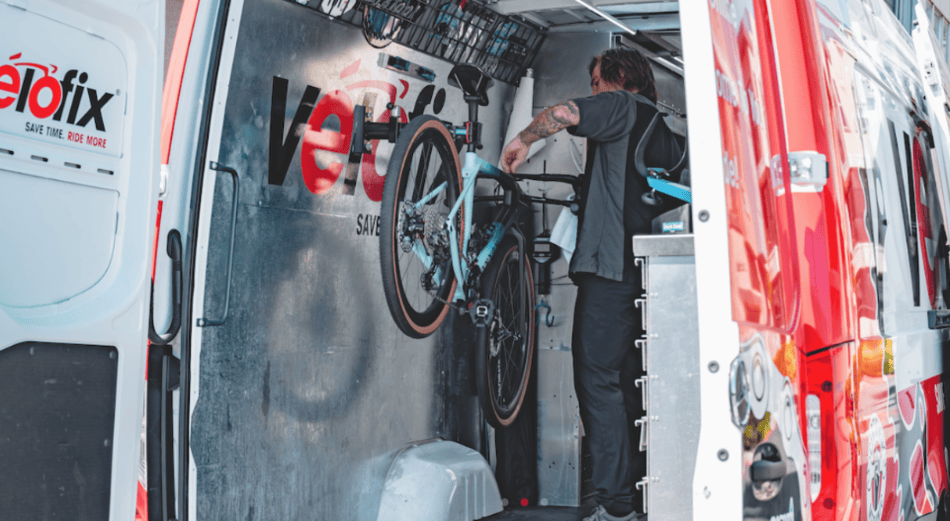
A Velofix certified technician working on a bike in a Velofix van at the customer's location. Photo: Velofix
For Backcountry President Kevin Lenau, however, the acquisition is about more than adding a repair network to the company's bicycle business. He sat down recently with TechBuzz to discuss how bikes are sold online, including some of the limitations.
"The biggest barriers to buying a bike online is: 'Where am I going to get it serviced?'" Lenau said. "That's kind of the value prop that brick and mortar stores have."
He said Backcountry now wants to bridge that gap.
From the box to the driveway
Backcountry and its Competitive Cyclist brand have long shipped bicycles to customers with much of the assembly completed. For experienced riders, that can be enough: attach the pedals, install the saddle and, depending on the bike, reconnect the handlebars.
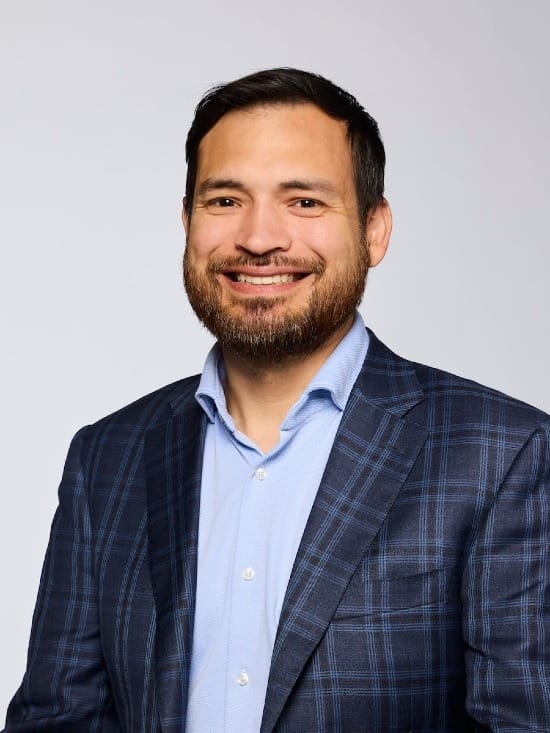
Kevin Lenau, President, Backcountry. Photo: Backcountry
But Lenau said there is another segment of customers for whom even that amount of assembly represents a barrier.
He estimates that perhaps 60% of riders are comfortable completing the final assembly themselves, while another 40% would prefer not to take on the job.
"For those people, getting to that ready-to-ride level is going to be a huge unlock for the business," he said.
Velofix gives Backcountry a way to address that problem at the customer's home.
In the near term, Lenau said, a customer could have a bicycle delivered to the house and then have a Velofix technician arrive to complete the assembly and fit the bike.
The longer-term version of the experience is more seamless.
Under that model, the bicycle would be delivered to a Velofix technician, who would perform most of the assembly before bringing the finished bike to the customer and completing the fit.
"That will be the best service," Lenau said. "I think that's the gold bar that we're reaching towards."
The acquisition therefore changes the meaning of "delivery" for an online bicycle retailer. Instead of the customer's responsibility beginning when the shipping box arrives, Backcountry wants the physical handoff to look more like the final step in a traditional bike-shop purchase.
Velofix's existing services include new-bike builds and assembly, seasonal tune-ups, diagnostic repairs, drivetrain and suspension work, e-bike diagnostics and safety inspections. Technicians also perform bike fits and support races, corporate campuses, clubs, teams and events.
A mobile service network with room to grow
Backcountry currently reaches about half of the riders in North America through the Velofix service network. Lenau said the company's goal is to increase that coverage to approximately 75%.
Getting there will require significant expansion.
Lenau said Backcountry expects to roughly double the fleet over the next three years. He described 75% coverage as approximately 100 metropolitan areas, while noting that expanding coverage much further becomes increasingly difficult because of the geographic distribution of the U.S. population.
The Velofix operation also isn't entirely a franchise business.
About two-thirds of the vans are company-owned and operated, while approximately one-third are operated by franchisees, according to Lenau. Backcountry intends to use both models as it expands the network.
The distinction matters because the acquisition gives Backcountry an existing physical infrastructure that can be expanded rather than requiring the company to build a national service operation from scratch.
That infrastructure also provides an important capability as bicycles become more technologically sophisticated.
Approximately 75% of Velofix's technicians are already certified to work on e-bikes, Lenau said. Backcountry intends to move that figure toward 100%.
For a company selling increasingly sophisticated e-mountain bikes, the ability to provide specialized service after the sale becomes part of the value proposition of selling the bike in the first place.
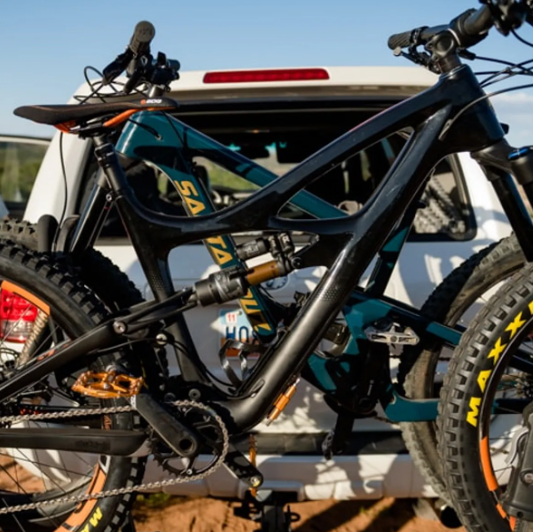
Photo: Backcountry
Salt Lake City offers a glimpse of the model
The strategy is particularly visible in Backcountry's home market.
A customer in the Salt Lake City area can potentially interact with several parts of the company's infrastructure, Lenau said: Backcountry's warehouse, its retail stores and now the Velofix service network.
The warehouse provides the fastest route for a local customer who wants a bike prepared and ready to ride. A customer near one of Backcountry's stores can have the bike prepared there. And customers living in areas covered by Velofix can use the mobile service network.
That creates a physical layer around what has historically been an online transaction.
It also gives Backcountry a way to test the concept in its own backyard as it expands the model nationally.
More than bike repair
The Velofix acquisition also fits into Backcountry's broader effort to build a deeper relationship with customers after the original transaction.
One piece of that strategy is Summit Club+, Backcountry's paid loyalty program. The company's announcement says the first customer benefit from the Velofix acquisition will be exclusive offers for Summit Club+ members.
Lenau described the underlying philosophy as "surplus customer value": when Backcountry adds something outside its traditional retail business, the company wants the value of that addition to accrue primarily to the customer.
Velofix gives the company another way to deliver that value through service.
The mobile network could also extend the reach of services that previously depended on Backcountry's relatively small physical-store footprint. Backcountry currently has nine stores, Lenau said, while Velofix can bring service directly to customers in a much broader geographic area.
The larger ambition extends beyond bicycles.
Lenau said Backcountry is developing a broader technology strategy around outdoor services, including a companion app that could eventually incorporate services such as bike fitting and shoe fitting.
The existing Velofix app, he acknowledged, is currently fairly basic.
"It is what it is," he said.
Backcountry plans to invest in it. The company's longer-term goal, Lenau said, is for services to become a $100 million arm of the business by 2030. That target encompasses a broader strategy than Velofix alone, but the acquisition gives Backcountry a physical service network that can serve as one of its foundations.
Building a service relationship after the sale
That may ultimately be the more important part of the acquisition.
Backcountry began as an online retailer, built its reputation around specialized outdoor gear and differentiated itself through its Gearhead Expert program—people who help customers choose equipment through phone, chat and email.
Velofix adds another dimension to that expertise.
Instead of an expert helping a customer decide what to buy, a technician can help the customer get the equipment working properly after it has been purchased. The distinction between those two experiences is becoming less important to Backcountry's strategy.
The company is trying to connect them.
A customer can start with an online conversation about which bicycle to buy, purchase the bicycle through Backcountry or Competitive Cyclist, have it assembled and fitted by a Velofix technician, return to the service network for maintenance, and potentially interact with additional services through Backcountry's technology platform.
In that model, the bike is no longer the end of the transaction. It becomes the beginning of a longer customer relationship.
For an online retailer, that may be the more significant opportunity created by bringing the bike shop to the driveway.