Paul Allen’s Daily News Builds a Network of AI-Assisted Local Newspapers
Paul Allen’s Daily News pairs AI tools with local editors to publish community newspapers. The startup reports 17 live papers, offers revenue-sharing plans for operators and is seeking $500,000 as it recruits editors and expands coverage.
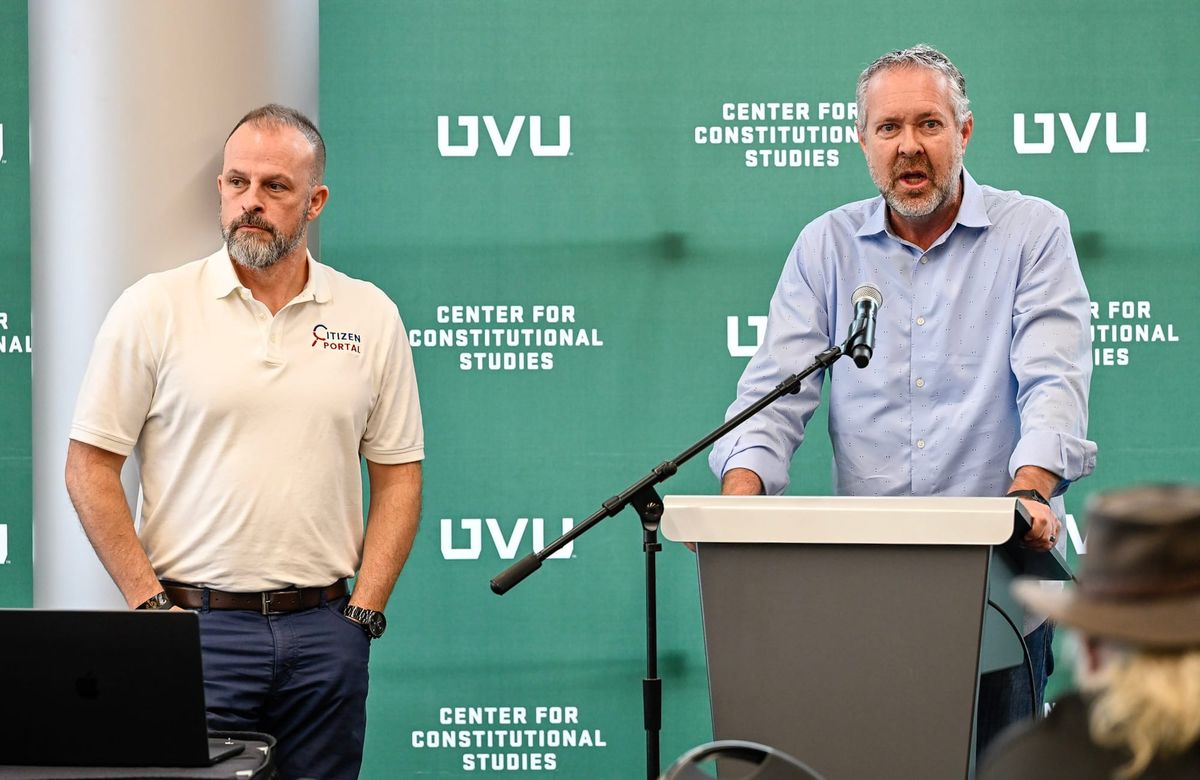
Citizen Portal General Manager Thomas Dyches with Daily News Founder and CEO, Paul Allen, speaking at the AI & the Future of Freedom conference at UVU, October 22, 2026. Orem, Utah. Photo: Hank McIntire, UVU
Citizen Portal General Manager Thomas Dyches with Daily News Founder and CEO, Paul Allen, speaking at the AI & the Future of Freedom conference at UVU, October 22, 2026. Orem, Utah. Photo: Hank McIntire, UVU
The Ancestry.com co-founder is seeking $500,000 for a platform that combines AI tools, local editors and a revenue-sharing business model. The company reports 17 live publications.
Lehi, Utah — November 13, 2026
Paul Allen’s pitch fits on a bumper sticker: You’re not taking a job. You’re buying a business.
The Ancestry.com co-founder is returning to Utah with a new focus: helping local editors run community newspapers with AI handling much of the research and drafting. He is now CEO of Daily News, a startup that hands ordinary people a team of AI agents and a masthead. The agents gather information, draft stories and run the website and newsletter. The human “editor-in-chief” supplies judgment, local knowledge and the name in the footer.
“The human editor is in charge,” Allen told TechBuzz.
He is also raising $500,000, and he’d like it done fast. “We are currently fundraising $500,000, trying to do it this week,” he said.
Here’s how the startup got to this point, and what still needs proving.
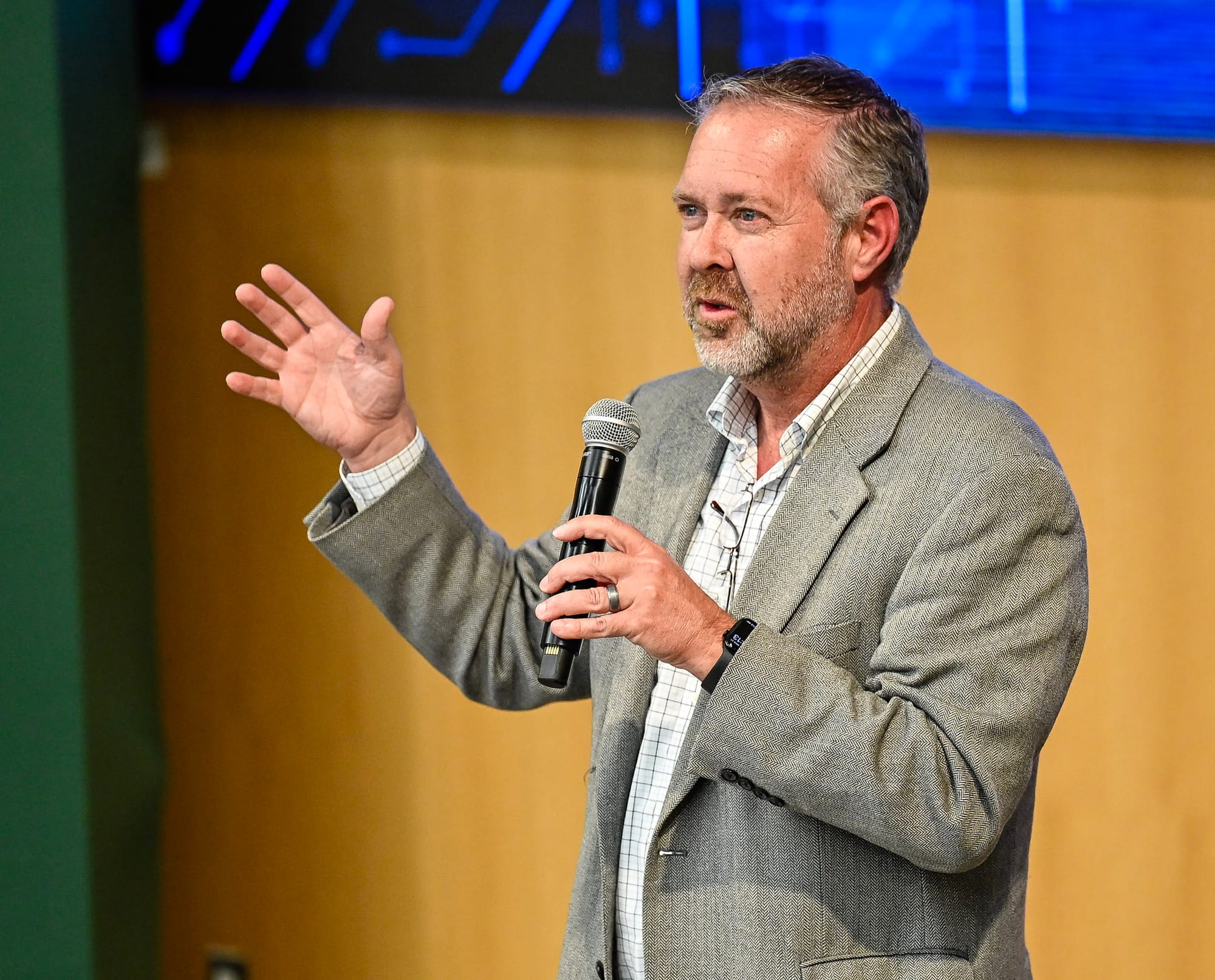
Daily News Founder and CEO, Paul Allen, speaking at the AI & the Future of Freedom conference at UVU, October 22, 2026. Orem, Utah. Photo: Hank McIntire, UVU
The traction, per the company
Daily News launched October 15. Four weeks later, Allen says the company has:
103 applicants for editor spots
About two dozen paying editors
17 live papers
2,591 stories published in the preceding 30 days
Take the The Cache Citizen, which serves Cache County. Its November 12 front page carried stories on proposed bus-service changes, property taxes, Utah State University events and local businesses. Jeffrey Wallace is listed as editor. The transit story opens with a link to the board minutes it was built from, and a disclosure notes AI drafting and names Wallace in the approval line.
That’s the pitch in miniature: government documents in, readable local copy out, a named human on the hook.
From meeting minutes to masthead
Daily News grew out of Citizen Portal, the searchable government-meeting database Allen and general manager Thomas Dyches showed off at Utah Valley University in October. As TechBuzz reported on October 23, the idea was to extend that database into community publications run by human editors.
The scale of the raw material explains the ambition. Dyches said Citizen Portal is on pace to transcribe 625,000 hours of government meetings this year, which he put at roughly 71 years of meetings, and has cataloged more than 2 million meetings so far. He estimated the U.S. has at least 51,000 governing jurisdictions, school boards included, and almost nobody watching them.
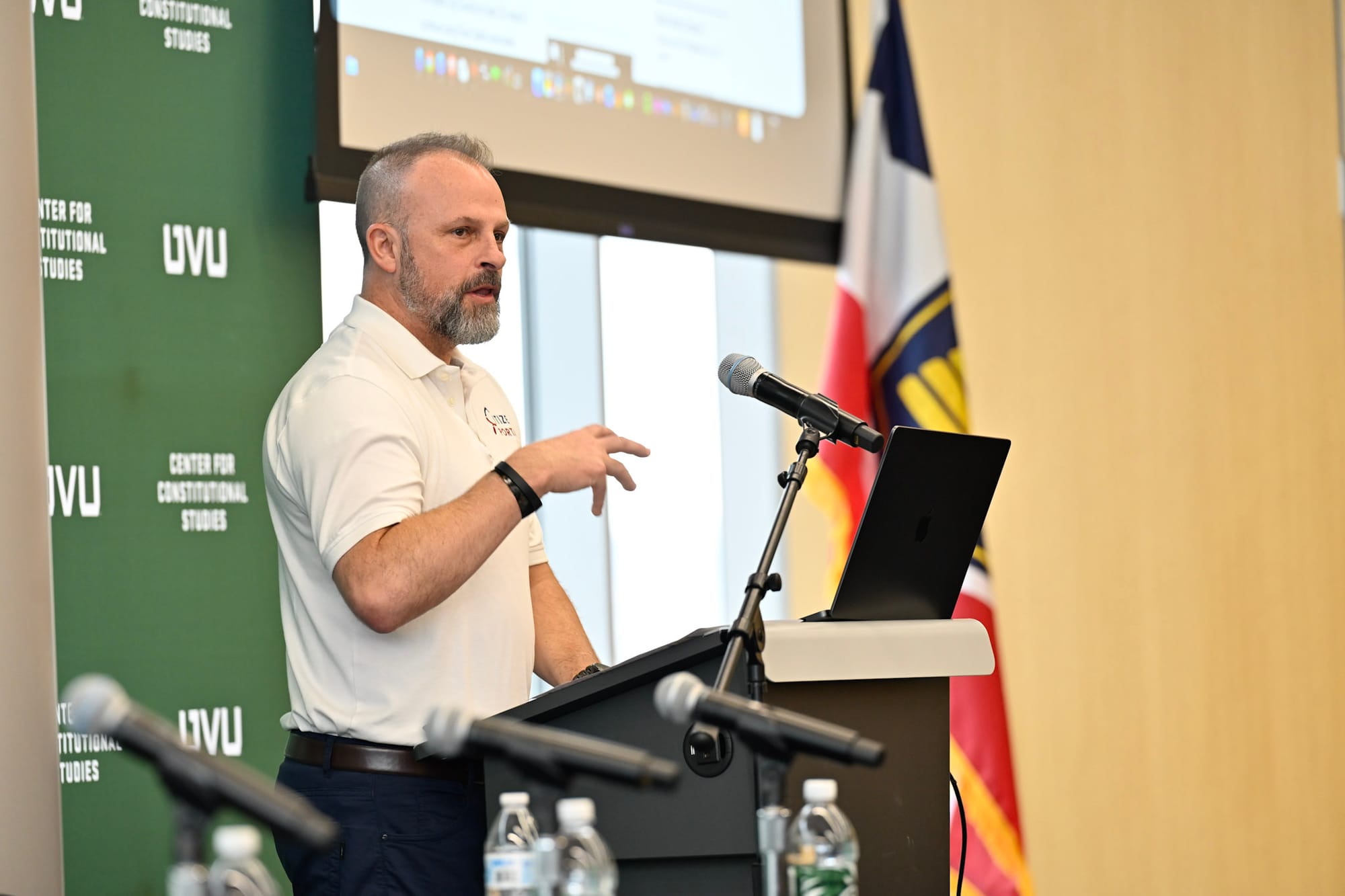
Citizen Portal General Manager Thomas Dyches speaking at Tech Demo Day of the AI & the Future of Freedom conference. October 22, 2026. Clarke Building, UVU, Orem, Utah. Photo: Hank McIntire, UVU
“One reporter covering three counties of government business,” Dyches said of one media company’s coverage. “There’s a news desert by the thousands out there.”
His demo paper covered Sanpete County, which has 13 towns and 31,000 residents, with stories on the county commission and Mount Pleasant’s city power. Generative AI, he told the UVU audience, “is like a slot machine” until you chain it to a database of public records. That’s the bet: tether the model to sources, and it stops making things up.
Buying the business
The company's advertised plans distinguish between editing a company-owned publication and owning one:
$299 a month: Daily News owns the site, brand and app. The editor keeps monthly revenue up to $299, then splits anything above that 50/50 with the company.
$1,999 a month: The editor owns the paper. The operator keeps the first $10,000 of monthly revenue and 80% of everything above it.
Revenue comes from reader subscriptions and local advertising. The company suggests $7.50 a month or $75 a year, though editors set their own prices. The Cache Citizen currently advertises $1 a month.
The math carries a footnote. Allen’s Substack post talks about sharing profits. Allen’s counter is the 80-year-old who signed up for the first training and started running his own paper. According to Allen, he reported that it’s “easy peasy,” that AI does the work and you just oversee it. Allen wants prospective editors to hear that it’s approachable and not a black box.
How much “in charge” is the human?
The company’s published policies are worth reading closely. Editors choose how their papers publish. Some approve every story before it runs, and others let routine stories go out without individual sign-off. Sensitive material, including obituaries and items with unconfirmed facts, has to wait for an editor.
So “the human editor is in charge” is true in the way a landlord is in charge of a building. Responsibility sits with a named person, but that person may not have read every story before readers did. The policies also lay out source links, dated corrections and public retraction notices. Those are checking mechanisms, not guarantees of accuracy.
Dyches framed the stakes at UVU. “It’s a responsibility. It’s not a blog,” he said. “This is a newspaper.” The company is developing editor training to match.
The content moat
Allen says his own job is to go get the content that can’t simply be scraped. He’s pursuing agreements with Huddle for high school sports and Legacy.com for obituaries, with a target of about a dozen such deals. The company says it already holds two proprietary datasets, one from Citizen Portal and one from Polco, the community-data and analytics company.
These deals remain a goal. “We have several conversations in place right now,” Allen said, and none are announced.
The Polco tie is further along. Allen said Polco and Citizen Portal are collaborating, with Allen joining forces with Polco co-founder and CEO Nick Mastronardi. Content partner Mastronardi said, “I really want to bring two things into the news media experience. Really high quality data analytics that a local newsroom by itself would struggle to do... And the future of news media, especially in the digital era, is that you're owning the interface with your constituents."
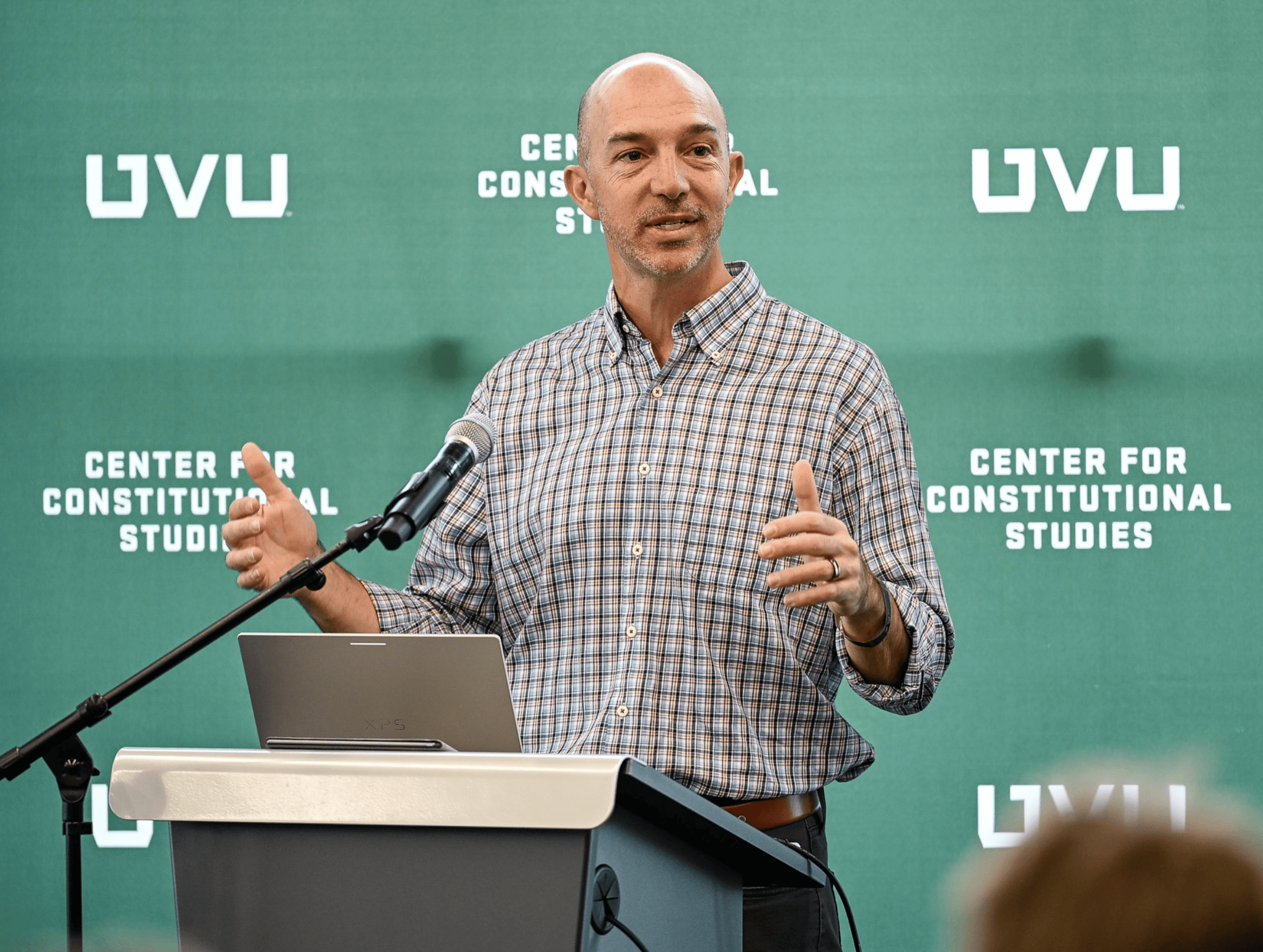
Polco’s Nick Mastronardi, whose community data is one of the two proprietary datasets behind Daily News. Freedom Tech Demo Day, Clarke Building, UVU, October 22, 2026. Photo: Hank McIntire, UVU
He added, "We built a Bloomberg terminal of local government performance. 40,000 cities in it. Every city over a population of 1,000, going back 15 years... It should be in the hands of news media, which has kind of evaporated because they didn't have Paul's ingenuity in rebuilding the cost structure. I couldn't imagine finding something I was more passionate about working on."
At the UVU event in October, Dyches also pointed to the budget angle. He said a lot of cities must issue budget books, and Citizen Portal’s historical finance data could power interactive versions on editors’ sites, alongside budget-balancing simulations. He said that data exists for every city in Wisconsin and Michigan, and he expected Ohio and Florida soon. Utah data isn’t in hand yet, though he said he expects it.
Why he’s doing it
Allen’s motivation is partly ideological. He cited Chuck Todd’s observation that the death of local news coincided with rising national polarization. In his November 11 essay, he argued that communities are healthier when residents share a common set of facts and know their neighbors have them too.
What’s next
The ambition is substantial. In his November 12 post, Allen set a goal of reaching 10,000 cities by 2030. That is an expansion target, not the company's current reach. For now, Allen said he is talking with venture investors, individual angels and angel groups about the $500,000 fundraising effort. He described positive interest, but the materials reviewed for this draft do not establish a completed financing round.
Daily News' next test is turning early editor interest into durable local publications: papers that readers use, operators can sustain and communities can hold accountable.