Beyond the Airframe: How Joby Aviation and Utah Are Building the Autonomous Sky
Joby Aviation (Santa Cruz, CA) demonstrated operational maturity by completing a coast-to-coast autonomous flight in a Cessna Caravan without pilot intervention. Backed by Utah’s 47G coalition and UDOT’s uFLY framework, the technology reimagines remote logistics, defense, and emergency aviation.
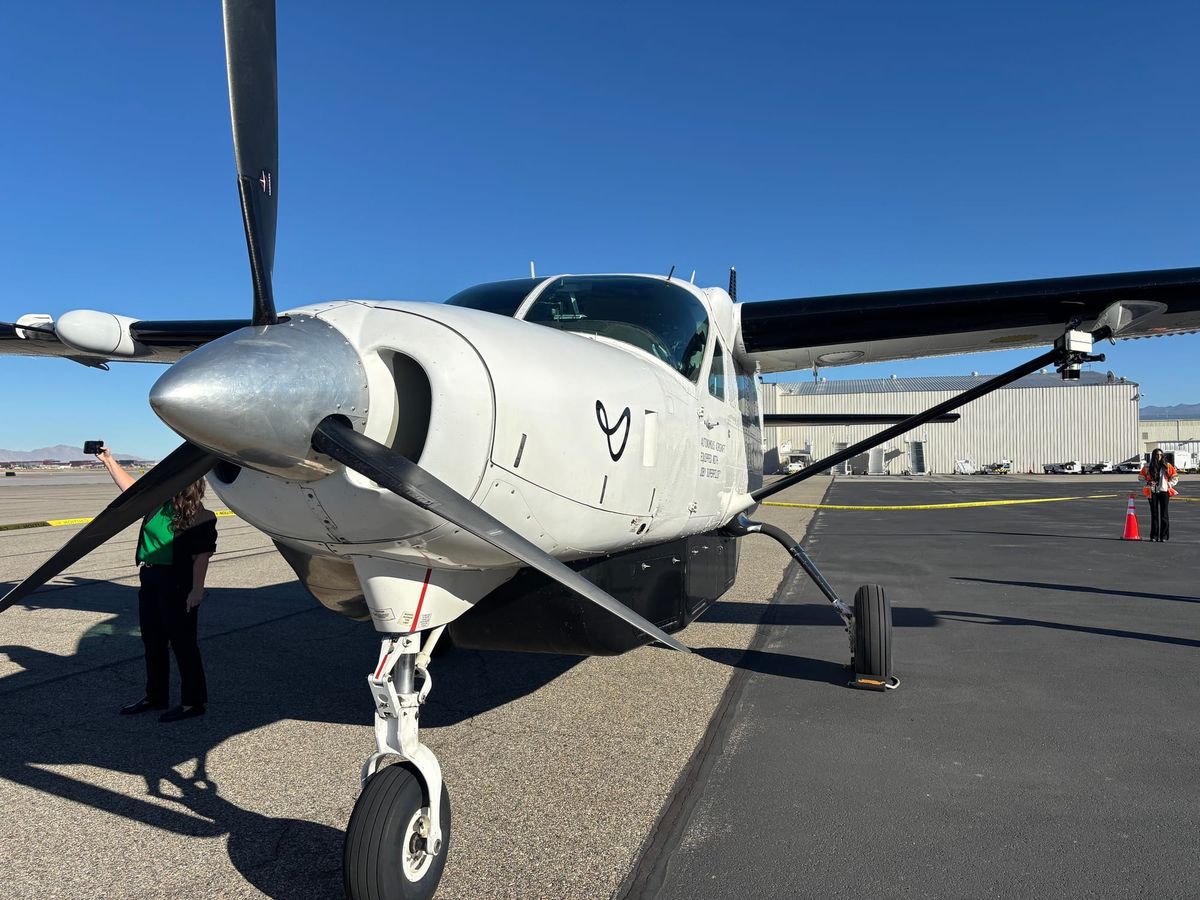
Joby Aviation’s N101XW, a modified Cessna 208 Caravan equipped with the company’s autonomous flight technology, arrives at Salt Lake City International Airport after completing a 751-nautical-mile flight from Oklahoma City without the onboard safety pilot touching the controls. Photo: Mark Tullis, TechBuzz
Joby Aviation’s N101XW, a modified Cessna 208 Caravan equipped with the company’s autonomous flight technology, arrives at Salt Lake City International Airport after completing a 751-nautical-mile flight from Oklahoma City without the onboard safety pilot touching the controls. Photo: Mark Tullis, TechBuzz
Salt Lake City, Utah — September 30, 2026
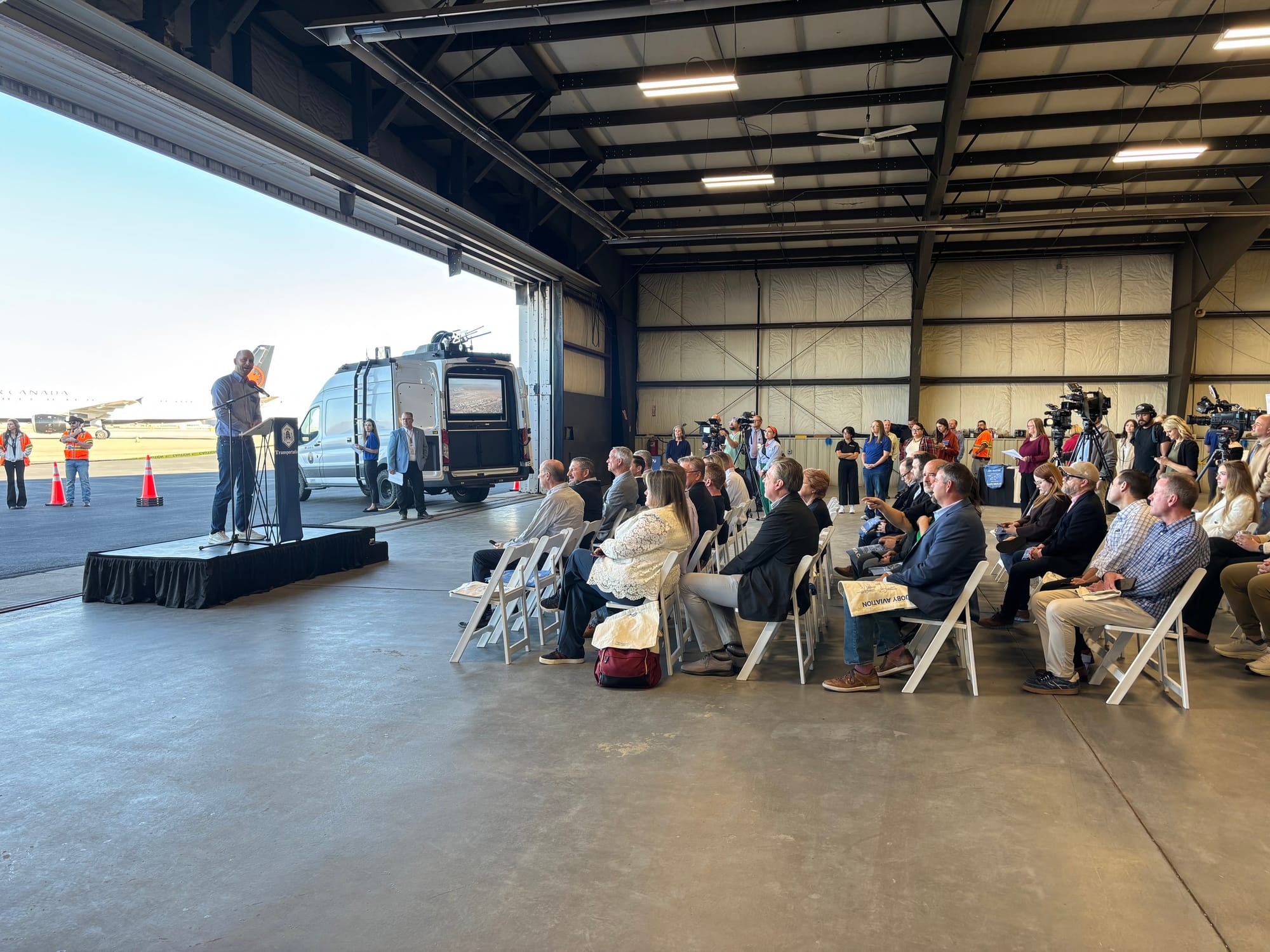
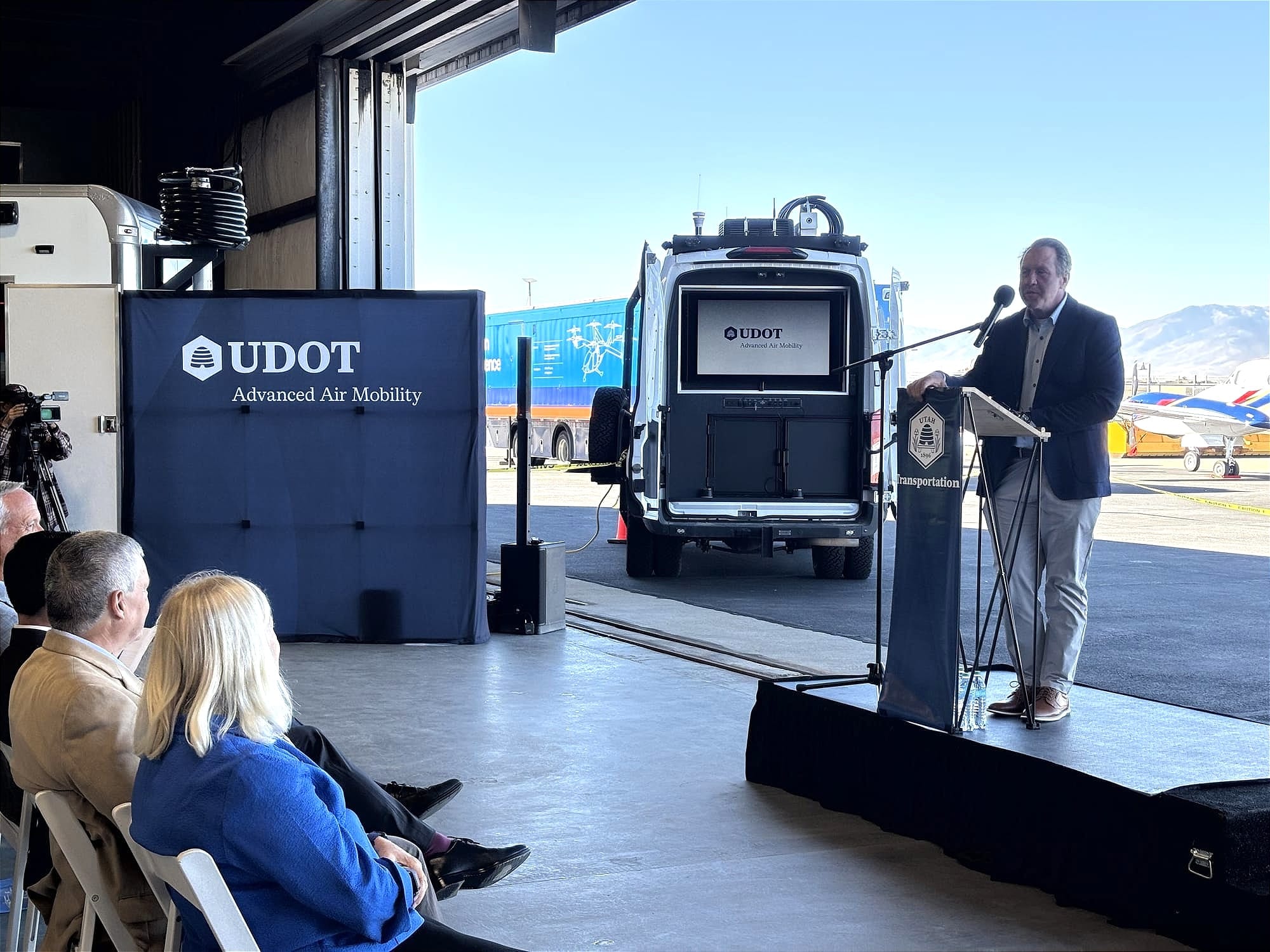
Inside the UDOT hangar at Salt Lake City International Airport, an eager crowd of aerospace executives, state lawmakers, and industry partners gathered as a familiar turboprop landed uneventfully, along with the morning's typical air traffic, and pulled up on time just outside to the sunlit hangar. Hosted by UDOT and aerospace organization 47G, the event gave guests an up-close look at Joby Aviation’s J208, a converted 1990s-era Cessna 208 Caravan equipped with Joby’s autonomous flight technology, and a frontline briefing on how the system is being developed for dual-use commercial freight and defense logistics.
Attendees gathered inside the UDOT hangar at Salt Lake City International Airport as UDOT, Joby Aviation, and state leaders present on the future of autonomous flight and advanced air mobility in Utah. Photo: Mark Tullis, TechBuzz
From the outside, there was nothing futuristic about the 675-hp single-engine aircraft from the early 1990s sitting on the tarmac. It was a familiar aviation workhorse that has been hauling people and cargo for decades. It looked like an ordinary airplane arriving at an ordinary airport on a busy weekday.
It wasn’t.
The aircraft was mid-way through an ambitious 5,541-nautical-mile, 12-stop coast-to-coast round trip. After launching from Concord, California, it completed a historic 3,199-mile transcontinental flight to the Outer Banks of North Carolina. It marked the milestone with a low pass over the First Flight Monument at Kitty Hawk, where powered flight began in 1903. Now on its return westbound leg, the Caravan touched down in Salt Lake City after completing a 751-nautical-mile hop from Oklahoma City (KOKC to KSLC). It was longest single leg of its return trip across America. By the time it reached Salt Lake City, the aircraft had accumulated roughly 5,000 miles across the country. During that entire span, Joby says, an onboard safety pilot never touched the flight controls once.
The technology, not the airframe, is what makes the flight remarkable. And that distinction is central to what Joby is trying to demonstrate.
The Caravan’s airframe is already certified; its autonomous stack is undergoing the rigorous testing and regulatory process needed for specialized commercial and defense operations. Joby is quick to clarify that the autonomous Caravan is not a prototype for its flagship passenger air taxi, which the company intends to operate with commercially certified pilots on board.
Instead, this autonomous platform is being developed for missions where having a pilot physically in the cockpit is unnecessary, or potentially dangerous. That includes wildfire aviation, medical delivery, disaster response, and high-risk military logistics.
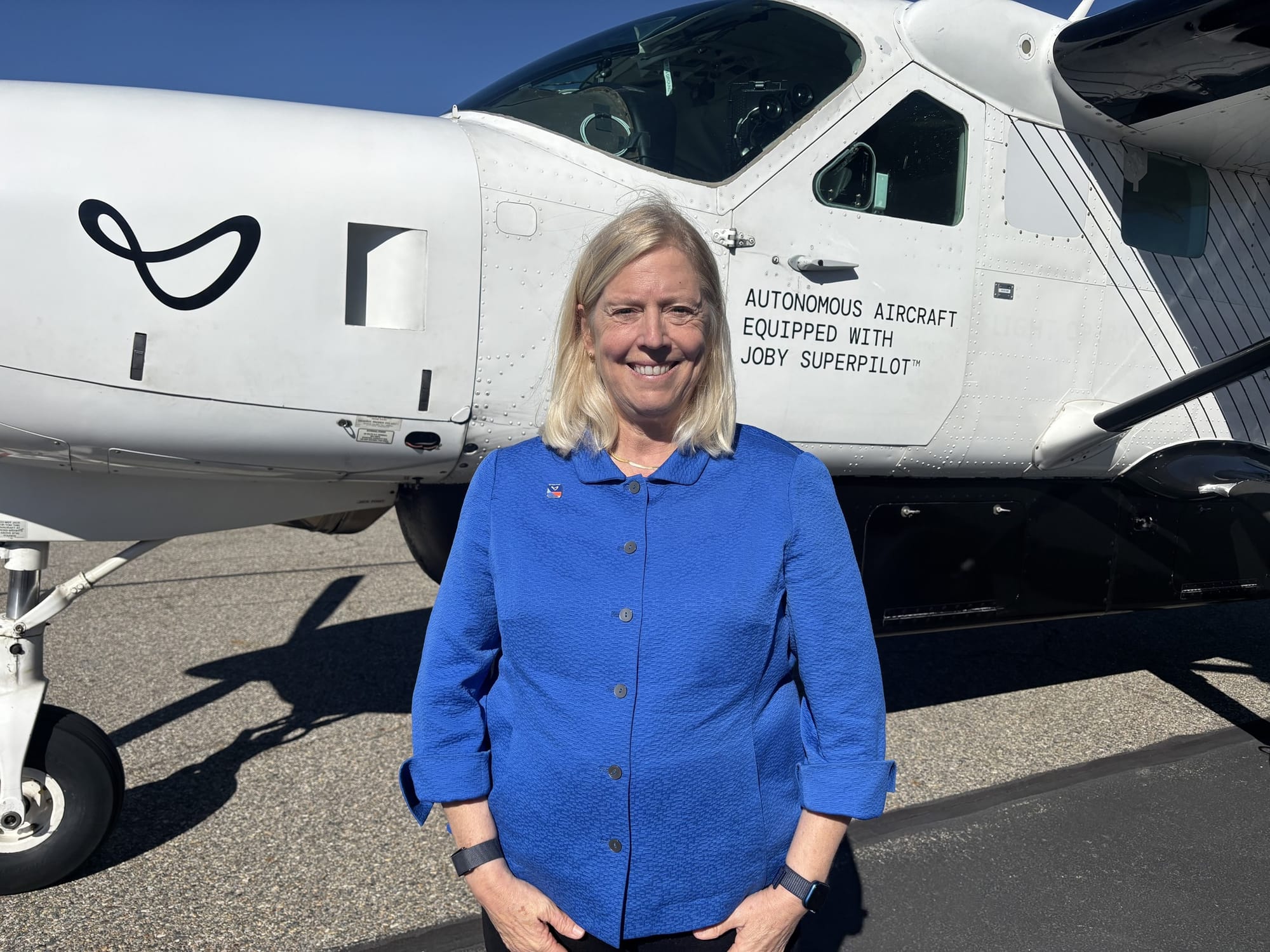
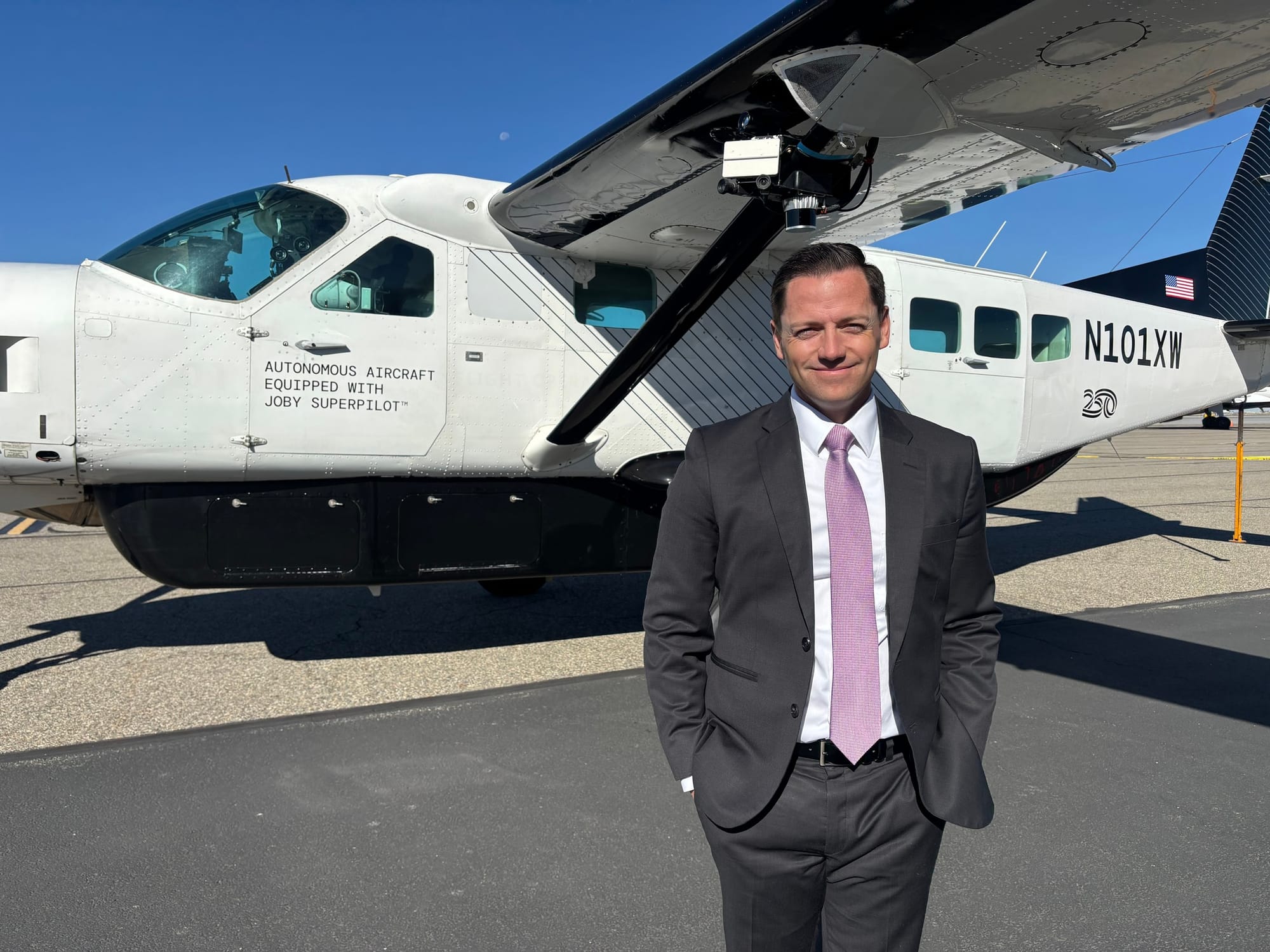
Bonnie Simi, Joby Aviation’s President of Operations, stands in front of the autonomous Cessna Caravan testbed equipped with Joby Superpilot™ technology following its arrival at Salt Lake City International Airport, September 30, 2026. Photo: Mark Tullis, TechBuzz
For Bonnie Simi, Joby’s Utah-based president of operations, the achievement represents a remarkable turn in a career spent at 30,000 feet. Simi flew for United Airlines and JetBlue during a 33-year career as an airline pilot and competed in three Olympic Games in the luge. Today, she is helping pioneer systems that keep the pilot on the ground while the aircraft flies the mission.
“I never thought I would see the day where we’d be sharing airspace with autonomous aircraft,” Simi said in the UDOT hangar in Salt Lake City, watching the Caravan blend seamlessly and without much drama into air traffic between commercial airliner landings.
A pilot without a cockpit
Joby’s cross-country (and back) demonstration was designed to show real-world operational maturity, not a carefully rehearsed laboratory experiment. The aircraft autonomously handled taxiing, takeoff, cruise, navigation, and landing, with remote supervision provided from Joby’s autonomy headquarters in California and Shaw Air Force Base in South Carolina, points more than 2,300 miles away.
Crucially, Joby did not pre-scout the Salt Lake City arrival. The aircraft integrated directly into the existing aviation system, communicating with air traffic control and sharing airspace with conventional commercial traffic.
As Simi pointed out, "autonomous" does not mean unmonitored. A remote pilot remains actively in the loop, communicating with air traffic control and taking action whenever required. If controllers issue a heading change, the remote supervisor inputs the update from a ground station. In this test flight, a pilot was in the cockpit to monitor the autonomous systems and intervene if needed. For this critical test, it wasn't needed.
Removing the human crew from hazardous environments, like flying low-altitude wildland fire reconnaissance through dense smoke and severe turbulence, eliminates risk to human life. Another advantage is that ground-based pilots can also work in shifts, drastically cutting down on fatigue during long-duration operations.
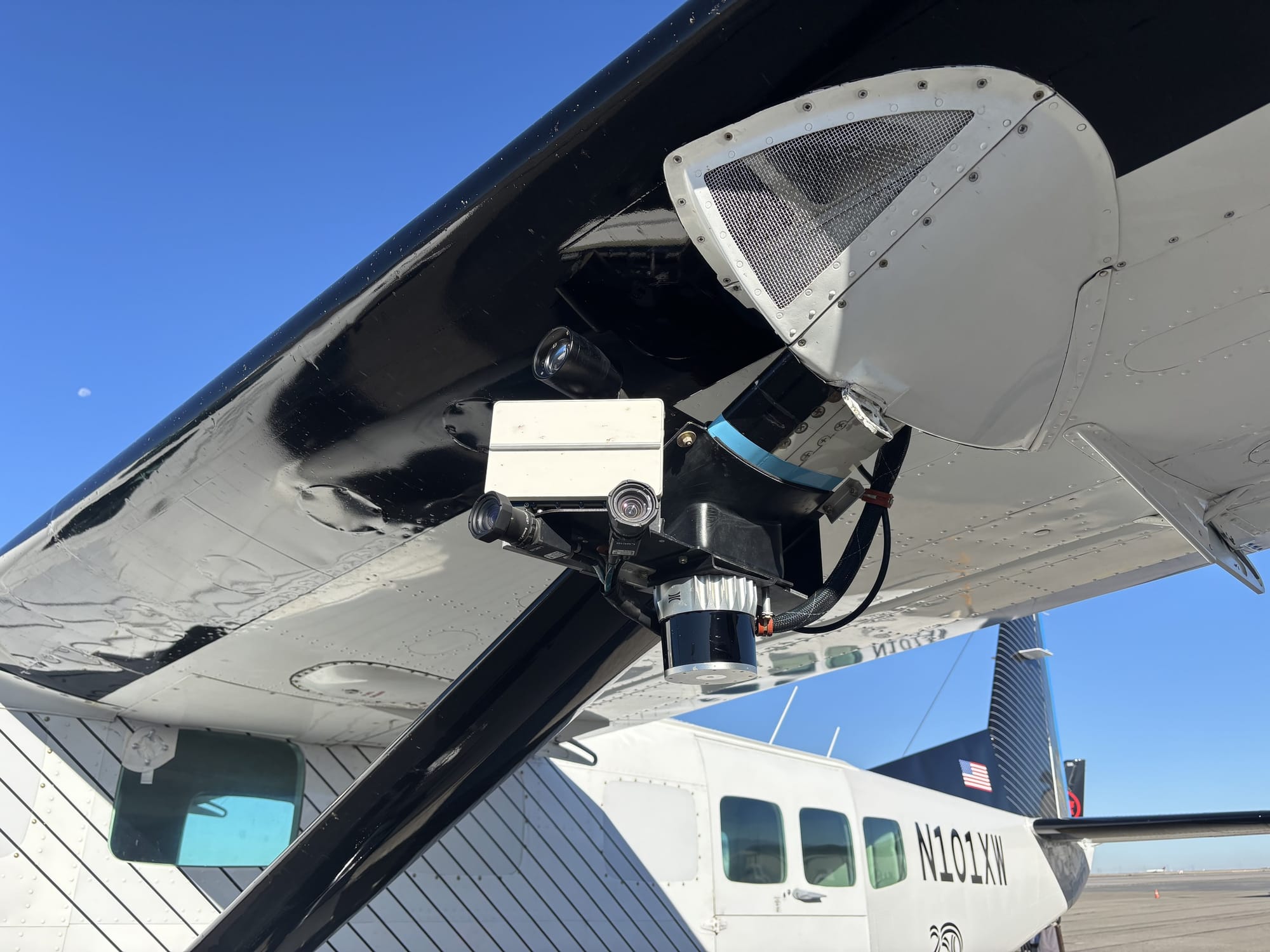
Furthermore, the aircraft’s sensor suite provides ground operators with a 360-degree real-time view via external optical cameras, offering situational awareness superior to what a pilot sees through a traditional windshield.
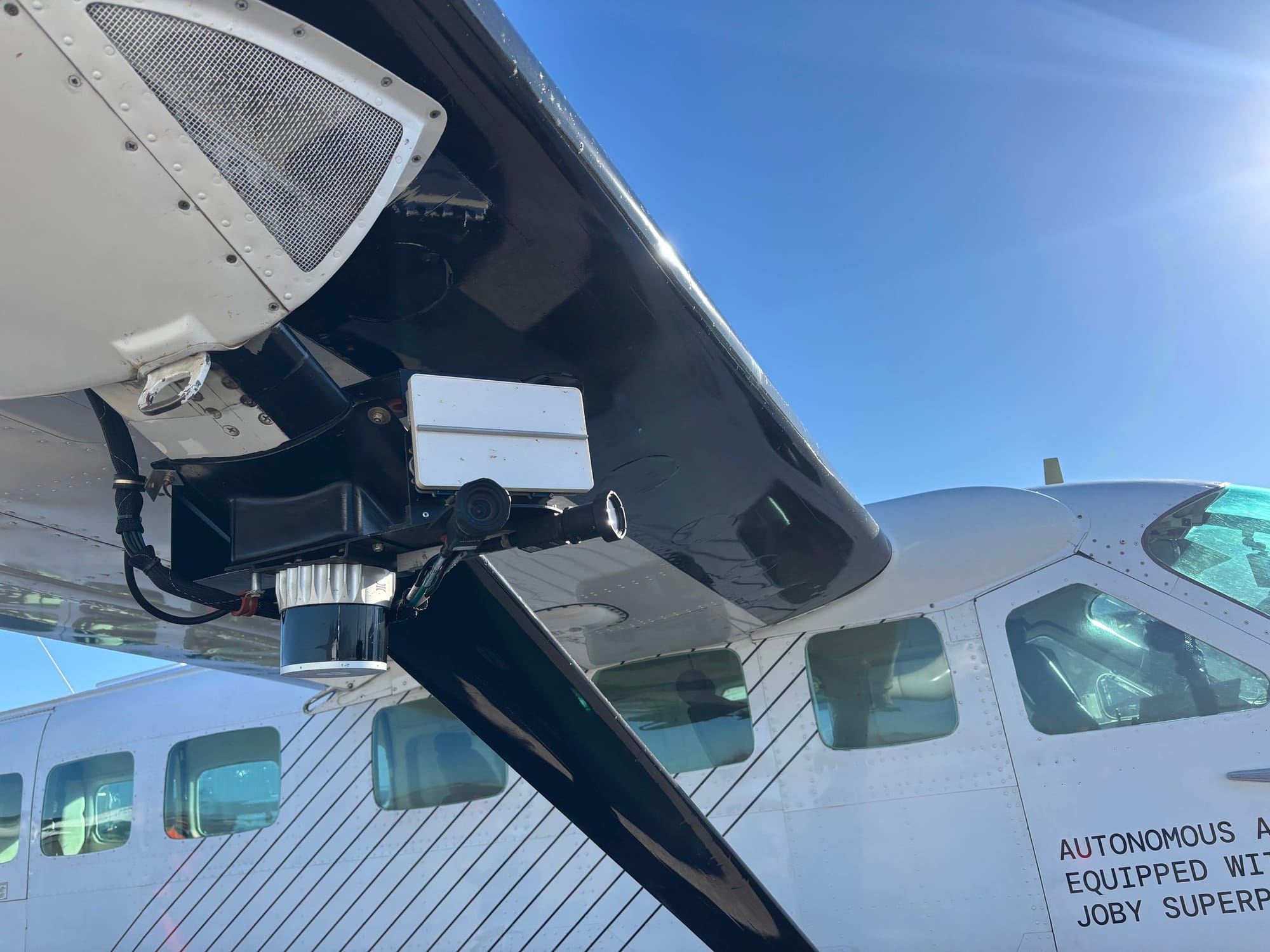
Joby Aviation’s first-generation autonomous sensor pod mounted beneath the wing strut of N101XW. Future iterations of the system will feature sleeker, direct integration into production airframes. Photo: Mark Tullis, TechBuzz
Why take the pilot out?
In our interview, Simi was quick to emphasize a critical distinction: autonomy isn’t about replacing commercial airline pilots. Instead, it’s about deploying aircraft into situations where putting a person in the cockpit is unnecessarily dangerous.
"Firefighting is a very good use case," Simi said. Firefighting aircraft routinely operate low over rugged terrain through thick smoke, violent updrafts, and rapidly shifting conditions. Other critical missions include delivering medical cargo to remote regions or executing defense logistics in contested environments, such as situations where military operations face severe electronic warfare and GPS jamming. Joby is actively developing fail-safe technology to ensure these autonomous systems operate reliably even when GPS is jammed or completely unavailable.
Removing human crews from hazardous zones eliminates risk to life, while ground-based pilots working in shifts can drastically reduce pilot fatigue during long-duration missions.
Sensors also provide ground pilots with situational awareness superior to a traditional cockpit. "Pilots don't have rearview mirrors," Simi noted, pointing out that external camera arrays provide a full 360-degree view around the fuselage.
Joby Aviation’s autonomous sensor pod mounted beneath the wing strut of N101XW. Future iterations of the system will be integrated into production airframes, be more streamlined, and may contain additional sensors. Photo: Mark Tullis, TechBuzz
Evolving hardware and the next-year milestone
While the Caravan at Salt Lake City sported a first-generation sensor pod mounted to its wing strut, Joby is already flight-testing a second-generation aircraft featuring integrated airframe sensors and upgraded Lidar capabilities. Demonstrations like the 5,000-mile transcontinental tour serve as critical proof points for regulators.
Simi told TechBuzz Joby is working closely with the FAA toward a pivotal milestone: taking the safety pilot out of the aircraft entirely, a transition they anticipate could begin as early as next year.
Beyond pilotless missions, Simi foresees autonomy becoming a universal layer of aviation safety. As a private pilot who flies a Cirrus equipped with a single-button "Auto-Land" emergency system, she views autonomous flight stack integration as the natural evolution of aircraft safety, or capable of taking over and landing safely if a human pilot becomes incapacitated.
In five years, Simi expects autonomous operations for specialized cargo, defense, and emergency missions to become routine. "It's happening," she said. "The pilot isn't going away. The pilot is moving to the ground."
Utah’s ecosystem and 47G leadership
The cross-country mission also highlights the critical state and federal frameworks building the ground floor for advanced air mobility (AAM).
Joby’s tour is tied directly to the White House-backed Early Integration Pilot Program (eIPP) and Utah’s multi-state uFLY coalition. Spearheaded by the Utah Department of Transportation (UDOT) alongside key statewide stakeholders, including 47G (Utah’s aerospace and defense association), the Utah Inland Port Authority, and the Governor’s Office of Economic Opportunity (GOEO). The effort is collectively known as Project ALTA, managed by Kori Ann Edwards, 47G's Chief Strategy Officer, and previously covered by TechBuzz News. Organizations like 47G turned out in force for the Salt Lake City demonstration, underscoring Utah's push to position itself as the national testbed for next-generation aerospace infrastructure.
"Utah has built an ideal environment for advanced air mobility," Simi noted. "When state leaders get together and decide to lean into innovation... you build it, and we will come."
Jefferson Moss, Innovation Commissioner for the Governor’s Office of Economic Opportunity, highlights the impact of next-generation aviation at the UDOT Advanced Air Mobility event: “Advanced air mobility could create more than 11,000 jobs and generate more than $8 billion in business activity in Utah through 2045.” Joby pop-out trailer parked outside next to UDOT hangar. September 30, 2026. Photo: Mark Tullis, TechBuzz
State leaders see advanced aviation as a generational economic driver. Jefferson Moss, Innovation Commissioner for the Governor’s Office of Economic Opportunity, noted that state projections show advanced air mobility could create more than 11,000 jobs and generate over $8 billion in business activity through 2045. Pointing to upcoming milestones like the 2034 Winter Games, Moss added, "The Olympics is going to be a huge part. I love that it's almost giving us a little bit of a deadline and a mandate... and this is going to play a really critical role."
Aaron Starks, President and CEO of 47G, brought a unique mix of wit, local aviation history, and aggressive vision to the event. He kicked off his remarks with a lighthearted admission: like many nervous flyers, he’s often sat on a commercial flight secretly fantasizing about stepping up to save the day if the pilot suddenly became incapacitated. "Joby has completely ruined that dream for me," Starks joked, pointing out that autonomous technology is quickly taking the high-stakes hero scenario off the table.
Aaron Starks, President and CEO of 47G, stands beside Joby Aviation’s autonomous Cessna Caravan testbed equipped with Joby Superpilot™ technology following the aircraft's arrival at Salt Lake City International Airport. He mentioned in his remarks: "It's not an easy task to set out and say 'I'm going to create an airplane manufacturing company'...in fact, that's one of the worst ideas that you could possibly have if you're going to start a company. Thank you, Joby, for enduring, for taking risk, and for choosing Utah." Photo: Mark Tullis, TechBuzz
On a more serious, and historically-rooted note, he tied the event back to Utah’s pioneer aviation roots, noting that Salt Lake City hosted its first 10-minute flight in 1910, just six years after Kitty Hawk. "I think about those pioneering ancestors who marveled at what took place then, in the same way that we're marveling now," Starks said.
Starks also issued a direct call to municipal leaders to accelerate local vertiport and charging infrastructure. "When we founded 47G, we said we're going to make Utah the world's premier operable air mobility ecosystem and compete with markets like Boston, New York, Texas, and California," Starks said. "We have planes—Joby is developing several types of aircraft alone—but we need infrastructure next. We need to get going if we're going to make that 2034 deadline."
Utah’s legislative groundwork began in earnest in 2023, when Senator Wayne Harper and Representative Kay Christofferson sponsored foundational legislation defining advanced air mobility in state law and empowering UDOT to manage low-altitude airspace integration.
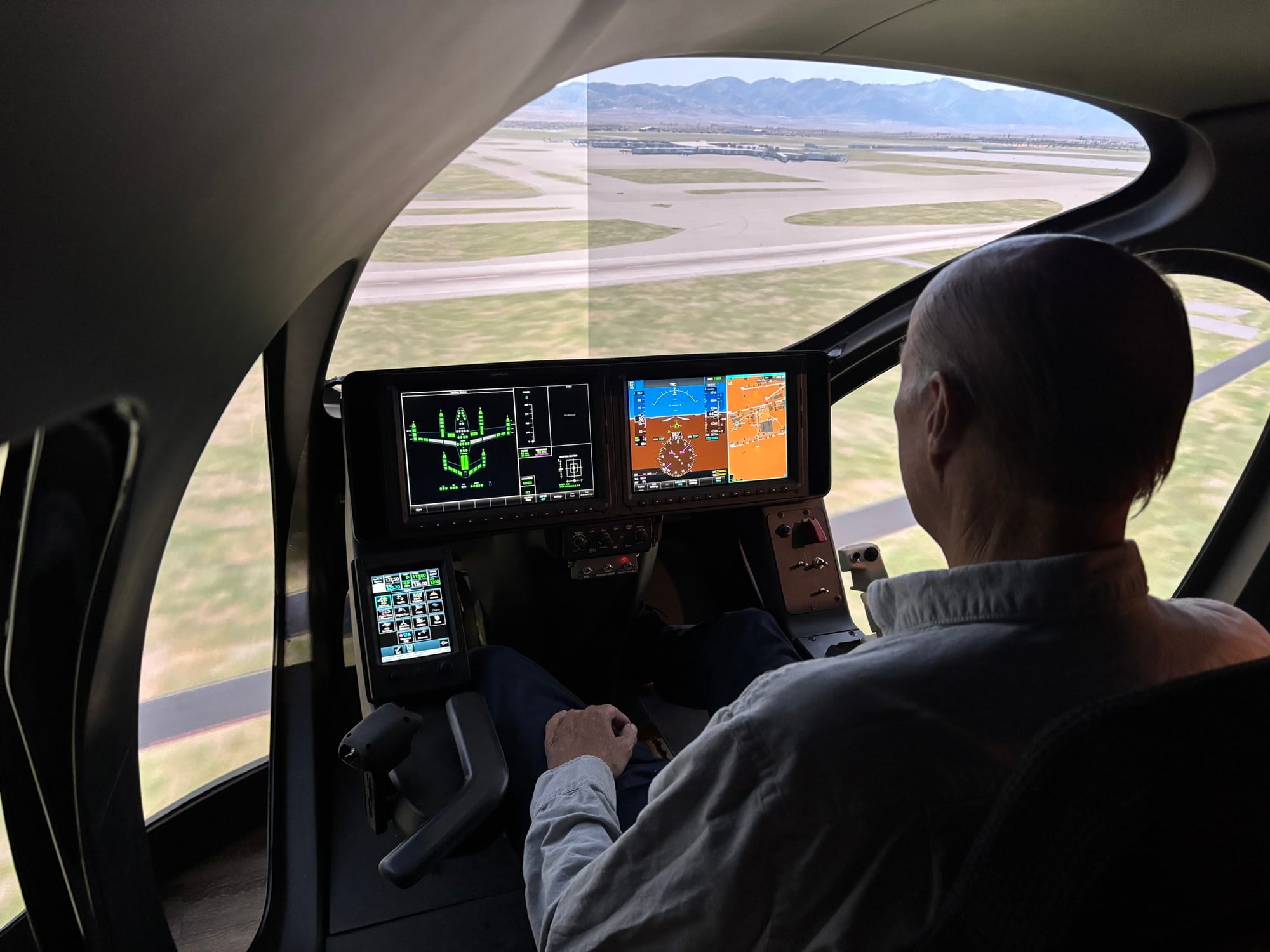
"We don't want to wait until autonomous aircraft and air taxis are operating at scale," Sen. Harper said at the event, which included participating in aircraft simulations in the Joby trailer, next to the UDOT hangar. "We want to make sure that when they operate, we are prepared for what infrastructure they need, how they connect with our existing transportation system, and how our communities connect."
An event attendee tests Joby Aviation’s aircraft controls inside a mobile flight simulator housed in Joby’s demonstration trailer parked outside the UDOT hangar, Salt Lake City International Airport, September 30, 2026. Photo: Mark Tullis, TechBuzz
Infrastructure and the weather challenge
For all the promise of autonomous flight, the fundamental laws of aviation still apply. Clint Harper, an advanced-mobility specialist working with UDOT and a 30-year veteran of the U.S. Air Force, emphasizes that weather and infrastructure remain the ultimate variables.
“All aircraft have weather limitations based on equipment, engines, icing, precipitation,” Harper said. “We’ve got certain systems on the aircraft that mitigate risk, and systems on the ground that mitigate risk. We pair them together to accomplish the mission.”
Harper’s military career focused on introducing aviation into austere, non-traditional environments. He sees a direct parallel in Utah’s AAM rollout. The state’s extreme diversity, including high-altitude airports, desert heat, mountain terrain, rapidly expanding urban centers, and isolated rural towns, provides a complete testing matrix for real-world operations.
Looking ahead, the 2034 Winter Olympics in Utah loom as a high-profile target for advanced transit, with visionaries eyeing eight-minute electric flights between Salt Lake City International and Park City or Deer Valley.
However, state officials and industry leaders stress that the infrastructure will be active long before then. "If we do it right, we’ll be showing this off long before the Olympics," Harper said. "We’ll have a fully functioning system already supporting Utah."
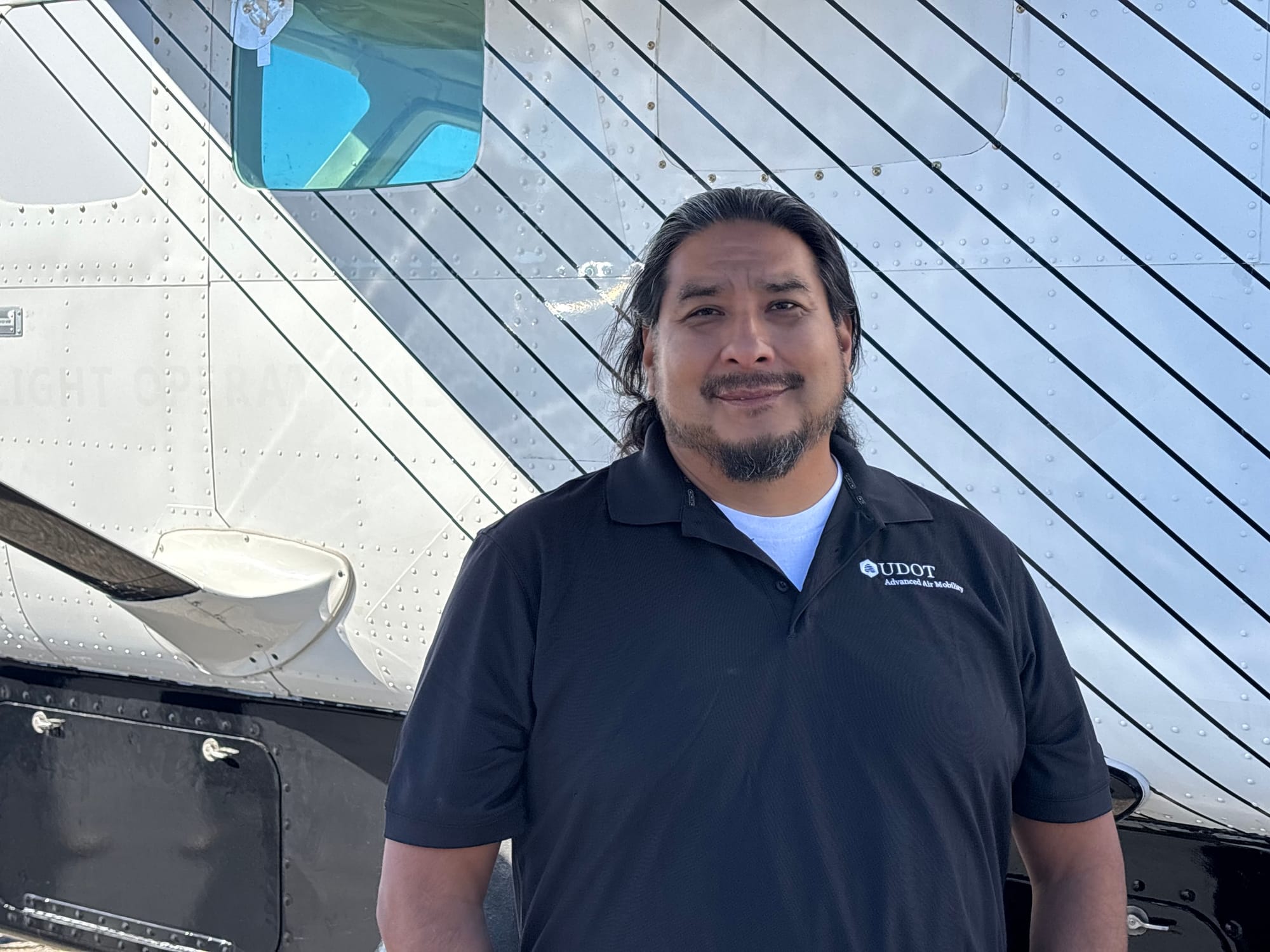
Clint Harper, Advanced Air Mobility Specialist with the Utah Department of Transportation (UDOT), stands beside Joby Aviation’s autonomous Cessna Caravan testbed, outside the UDOT Hangar. Harper, a U.S. Air Force veteran, sees a strong parallel between his military background and state-level air mobility: “My job in the Air Force was basically bringing aviation into areas that traditionally didn’t support aviation. We’re doing that same concept today with advanced mobility...bringing aviation into environments that didn’t typically support aviation before, and trying to do it in a safe, risk-mitigated manner.” Photo: Mark Tullis, TechBuzz
Moving the pilot, not losing the pilot
As N101XW sat outside the UDOT hangar, surrounded by aerospace leaders, state lawmakers, and industry teams, it looked like any other turboprop parked on the tarmac. There were no experimental wings or radical airframe redesigns. Besides the non-descript cluster of sensors and cameras bolted with fabricated brackets to each wing strut (and to be refined in future iterations), the autonomous revolution that Joby is ushering into aviation is mostly embedded inside the avionics, the software stack, the ground communications network, and the state-level partnerships making autonomous flights possible.
For Bonnie Simi, who logged 33 years in commercial cockpits, the shift is profound, and it is already here. The pilot isn’t going away.