Rodatherm and Fulcrum Point Bet on Waterless Geothermal — With a Shale-Field Playbook
Rodatherm Energy (Salt Lake City, UT) and Fulcrum Point Holdings (Salt Lake City, UT) are applying a shale-drilling financing model to scale waterless geothermal power near Brigham City, pairing it with Utah's nuclear buildout in a phased, cash-flow-funded energy campus strategy.
When Curtis Cook talks about scaling geothermal power across Utah, he doesn't reach for an energy metaphor. He reaches for his previous job in shale drilling.
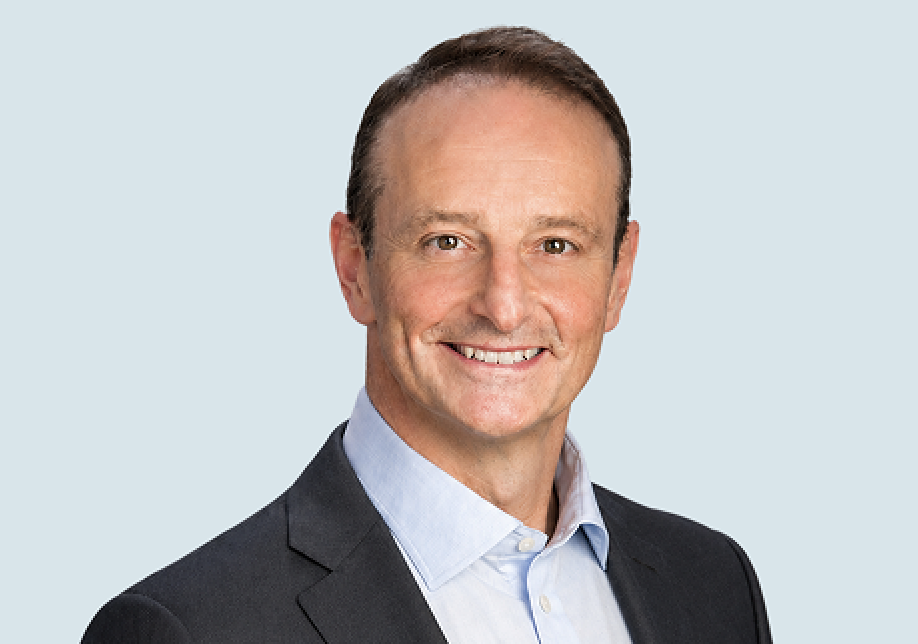
"We're literally taking a page out of my former world, pad drilling and shale," said Cook, founder and CEO of Rodatherm Energy Corporation, who spent nearly two decades founding and running Calgary-based oil and gas companies before turning to geothermal. Cook's earlier venture, Vesta Energy Corp, grew a single well discovery into a company valued at more than $1 billion, according to Rodatherm's own materials. Rodatherm itself is headquartered in Salt Lake City, with a second office in Calgary reflecting Cook's roots in Alberta's energy sector. "It allows you to amortize your one-time costs and keep your cost structure low. And it allows you to bring that 10-megawatt capacity on and then use your cash flow to fund subsequent sites. Once the flywheel starts, it just grows and grows and grows."
Curtis Cook, Founder and CEO, Rodatherm Energy Corporation. Photo courtesy Rodatherm Energy Corporation / Chris Coombs
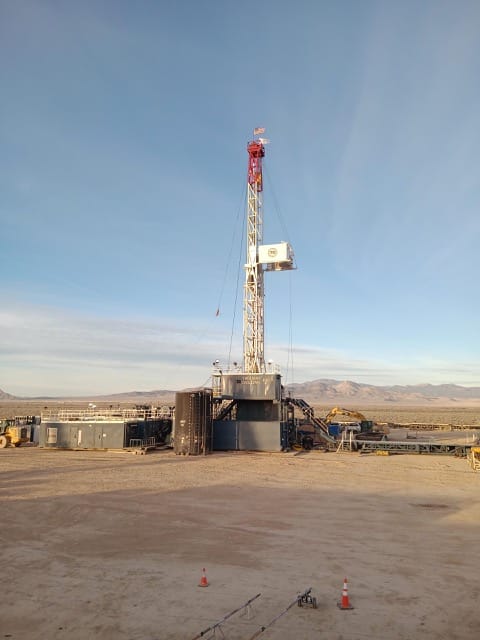
That financing logic — build a small, provable unit, let its revenue fund the next one, and repeat — is the organizing idea behind a new memorandum of understanding between Rodatherm and Fulcrum Point Holdings, the Salt Lake City-based energy infrastructure developer already leading Utah's nuclear buildout in Box Elder County. The companies plan to begin with a 10-megawatt geothermal site near Brigham City, with construction targeted for late in the first quarter of 2027, and scale toward 200 megawatts of capacity over time.
It's a notable expansion for Fulcrum Point, which has spent the past year advancing two nuclear projects under Utah's Operation Gigawatt initiative — the original Brigham City small modular reactor ecosystem announced with Hi Tech Solutions and Holtec International in November 2025, and the Blue Castle nuclear joint venture in Green River announced in May 2026. The geothermal partnership marks a third leg of what is increasingly a portfolio strategy, not a single-technology bet.
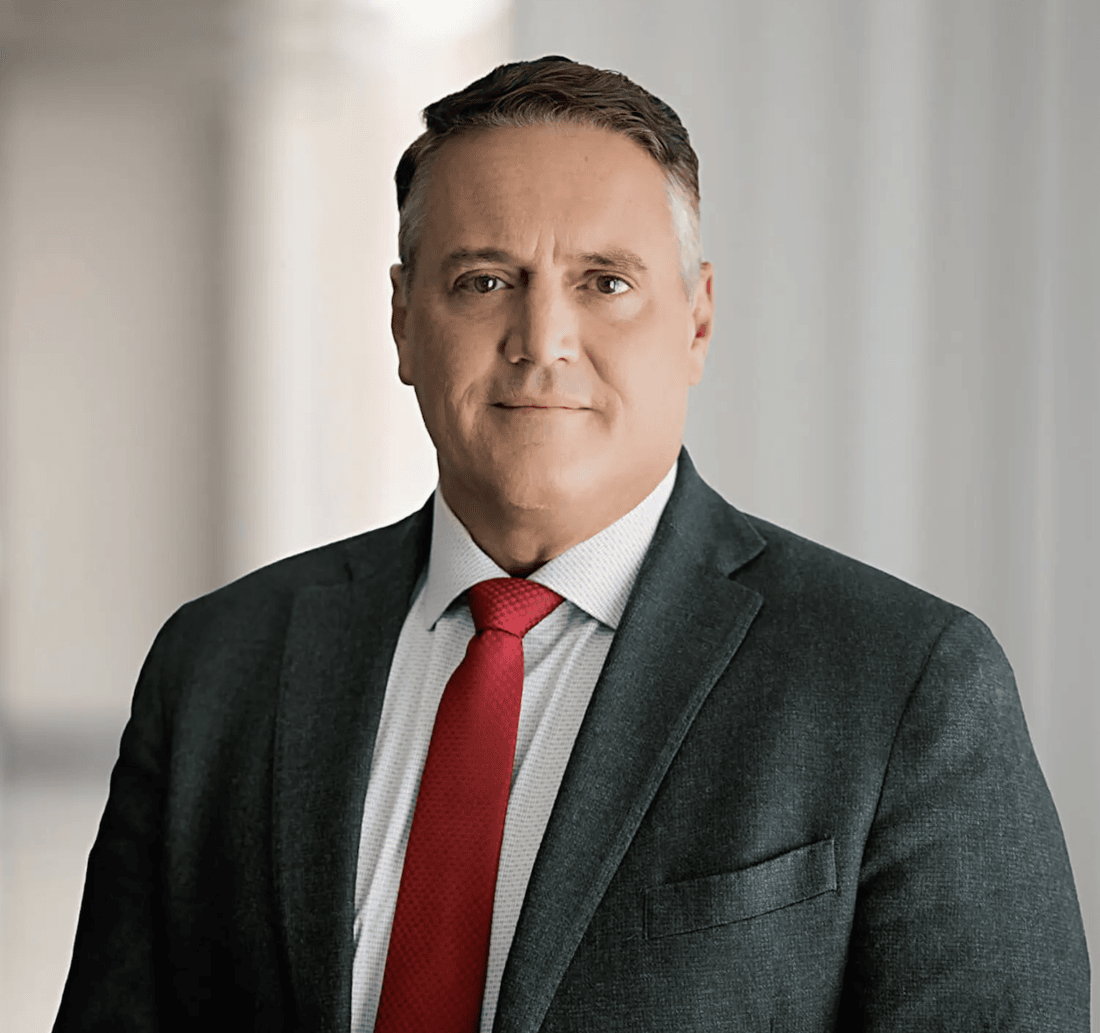
"The synergies allowed us to essentially create the broader MOU and the broader understanding of that energy campus," Cook shared with TechBuzz, describing early conversations with Fulcrum Point and Hi Tech Solutions. Kirt Marlow, Senior Vice President of Energy Deployment at Hi Tech Solutions, put it more bluntly: in his experience, geothermal and small modular nuclear reactors have never before been sited side by side in the same energy campus in the United States. "I think this is a fairly new exercise for clean baseload power," Marlow told TechBuzz, pointing to the roughly 90-plus percent uptime availability both technologies offer.
Kirt Marlow, Senior Vice President of Energy Deployment, Hi Tech Solutions. Photo courtesy Chris Coombs
The Refrigerator in the Ground
Rodatherm's technology, branded Waterless Geothermal Systems, avoids one of geothermal energy's biggest historical costs: water. Cook said that when his team first evaluated geothermal from an efficiency and bankability standpoint, water kept showing up as a liability. It is expensive to operate, difficult to manage, and a poor refrigerant.
"To put a very simplistic tone to our technology, we are essentially the back of your refrigerator at home," Cook clarified vividly to TechBuzz. "If you remove the compressor, it's identical. What we are doing is taking that and putting that into the ground, creating that heat pump ... and enabling us to extract that heat."
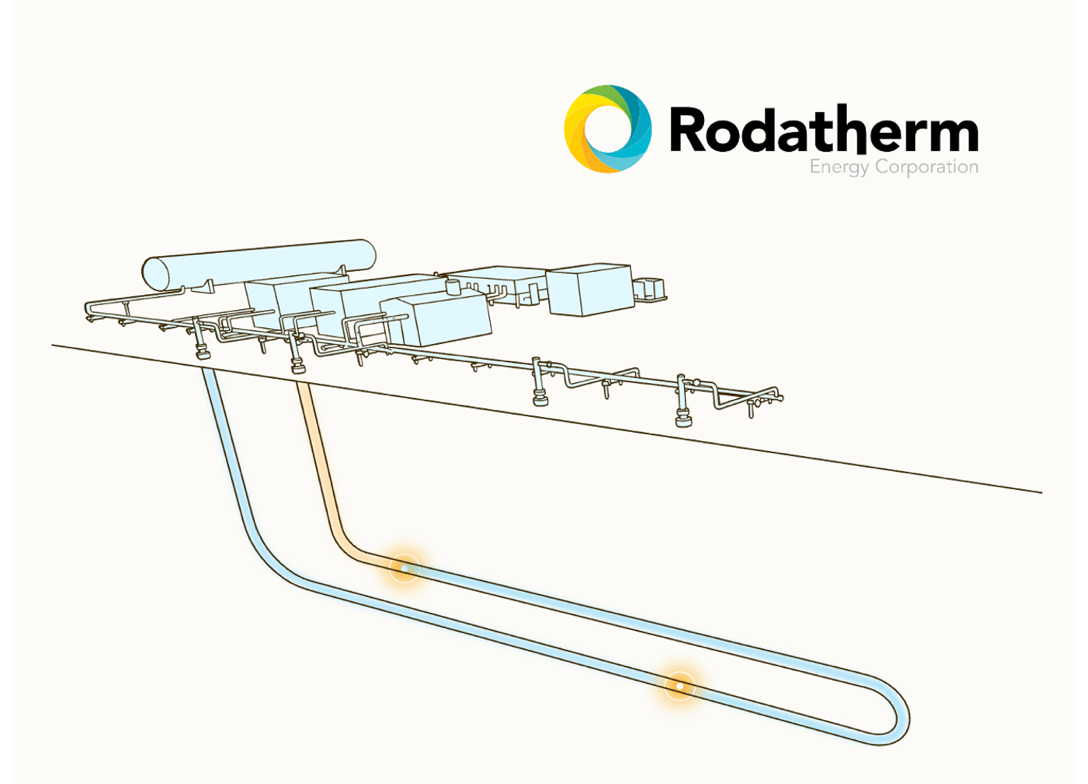
The system uses an organic refrigerant that moves through a closed loop — liquid underground, gas at the surface, straight into a turbo expander and an air-cooling system — producing power with what Cook described as zero emissions and no water withdrawal. That matters most, he said, because geothermal potential often overlaps with environmentally sensitive land or dense urban demand centers, which is precisely where new power is needed.
Rodatherm Waterless Geothermal Systems (WGS) uses a closed-loop subsurface heat exchange. Diagram courtesy Rodatherm Energy Corporation / Chris Coombs
The Brigham City site sits within the Wasatch Corridor's sedimentary basin, a geological structure Cook said is unusually well suited to geothermal extraction. Deep underground, porous rock layers hold brackish water that enables efficient heat transfer through convection — in effect, Cook said, using naturally occurring geology to do work that would otherwise require mechanical intervention.
Two Sites, Two Technologies, One County
Marlow said the initial project is really two adjacent developments rather than one. The early-phase, non-nuclear portion — geothermal paired with gas generation — will sit closer to Brigham City itself, supporting the city's municipal utility. The nuclear reactor sites, by contrast, will be sited farther west in Box Elder County, where Fulcrum Point and its partners are still conducting site characterization across multiple candidate locations.
"From a geothermal perspective, we're proximal to everything," Cook added, noting that the Wasatch Corridor's sedimentary basin extends broadly enough that Rodatherm can locate near essentially any future construction in the area.
Both executives credited Utah's regulatory environment, and Senate Bill 132 specifically, with enabling the kind of staged, incremental development their financing model depends on — allowing the companies to build and prove out smaller facilities rather than committing to a single, capital-intensive megaproject upfront. Utah Department of Natural Resources Executive Director Joel Ferry and his department were singled out by both Cook and Marlow for their collaboration on the project's development.
On the nuclear side, Marlow said the state has focused public-information efforts in rural communities — including outreach in Green River and Price — and has worked with regulators to streamline permitting without compromising safety. "I think there's usually a framing that if you get rid of regulation somehow that makes it less safe," Marlow said. "There are really intelligent technical ways to do that permitting that allows us to reduce the bureaucracy and maintain a high level of public confidence."
A Fleet Strategy, on Two Tracks
The pad-site logic Cook described for geothermal has a direct parallel on the nuclear side. Marlow said Fulcrum Point and Hi Tech Solutions are pursuing a similar "fleet" approach for small modular reactors — moving toward eight to twelve reactors deployed as a group across the Mountain West, rather than developing standalone units.
"Building a standalone unit really isn't very functional," Marlow said. "We really need a Western fleet ... to get into that same cycle and keep the maintenance supply chain in operations."
Cook agreed the modularity is the point. "That's essentially how you would scale," he said. "We know that model from the oil and gas industry ... it's very difficult to make a single mega-project work" given the time value of money involved in financing large, one-off developments.
Workforce and Veterans
Fulcrum Point's broader Brigham City buildout, including the nuclear ecosystem announced in 2025, is expected to create roughly 1,300 positions, and Marlow said the companies have committed to filling up to 30 percent of new hires through the Department of Defense's SkillBridge program, which transitions active-duty service members into civilian careers.
"Few people make great operations and maintenance people the way that people with military experience do," Marlow said, noting that standard military vocabulary — conduct of operations, standard operating procedures — maps directly onto both geothermal and nuclear plant operations. The proximity to Hill Air Force Base and Utah's broader aerospace and defense sector in Weber and Box Elder counties reinforces the pipeline, he said.
Cook framed the long-term opportunity in generational terms. "We are talking about developing Utah's geothermal resources, and they are local, and they're not going away," he said. "The investment is also really in the people of Utah and the workers that are going to be developing this asset ... it's likely going to be a multigenerational development."
Beyond Electricity: Heat as a Resource
One of the more distinctive elements of Rodatherm's pitch is what happens to the heat itself. Because the geothermal cycle relies on an air-cooling step at the surface, Cook said bypassing that cooling can redirect substantial usable heat toward agricultural applications, such as climate-controlled greenhouses, or simpler interventions like frost abatement.
Cook pointed to this year's frost damage throughout northern Utah and especially in Brigham City's extensive peach orchards, part of Utah's famous Fruit Way, along the old highway that includes several small, local farms. He said it is example of the kind of local agricultural vulnerability Rodatherm's technology could address. He said similar heat-reuse models are already operating in Boise, Idaho, and in northern Germany.
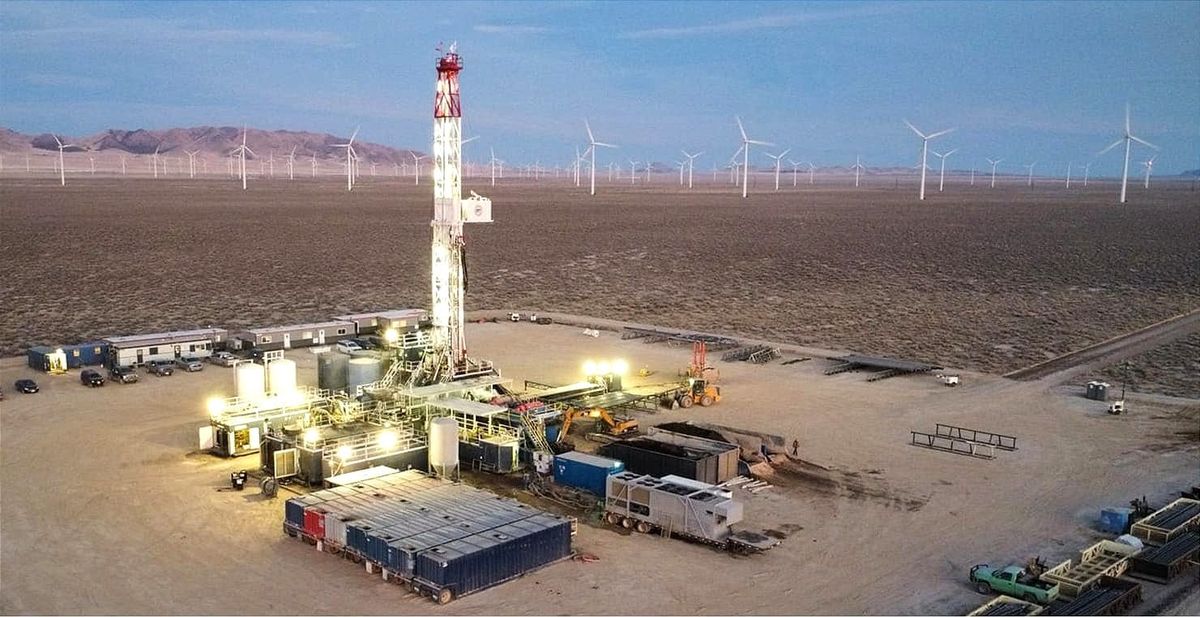
Photo courtesy Rodatherm Energy Corporation / Chris Coombs
What's Still Ahead
Several pieces of the buildout remain in progress. Cook said Rodatherm is finalizing local power purchase agreements for the initial 10-megawatt site and expects to announce them soon. Construction on that first site is targeted for the first quarter of 2027, with the capacity expected to be available when Hi Tech Solutions begins construction on its own nearby facility in 2028.
Marlow said the companies have not yet made specific announcements about additional sites beyond Brigham City, but confirmed both Delta and Green River remain areas of interest — Delta for its transmission characteristics and potential to export power to Nevada and California, and Green River for similar discussions with Arizona and Colorado. Cook said any application of the geothermal model to a potential Utah spaceport site, a project under separate discussion for both Delta and Green River, remains premature. Still, he said, geothermal campuses are built to expand incrementally once established, making them well suited to support whatever development follows.
Marlow acknowledged that public perception remains one of the industry's persistent challenges, particularly for nuclear. "Having a low-profile industrial facility that really becomes a great part of the community" is part of overcoming outdated assumptions about what a reactor site looks like, he said. Its an education effort he expects to continue as more rural Utah communities weigh hosting future energy campuses of their own.