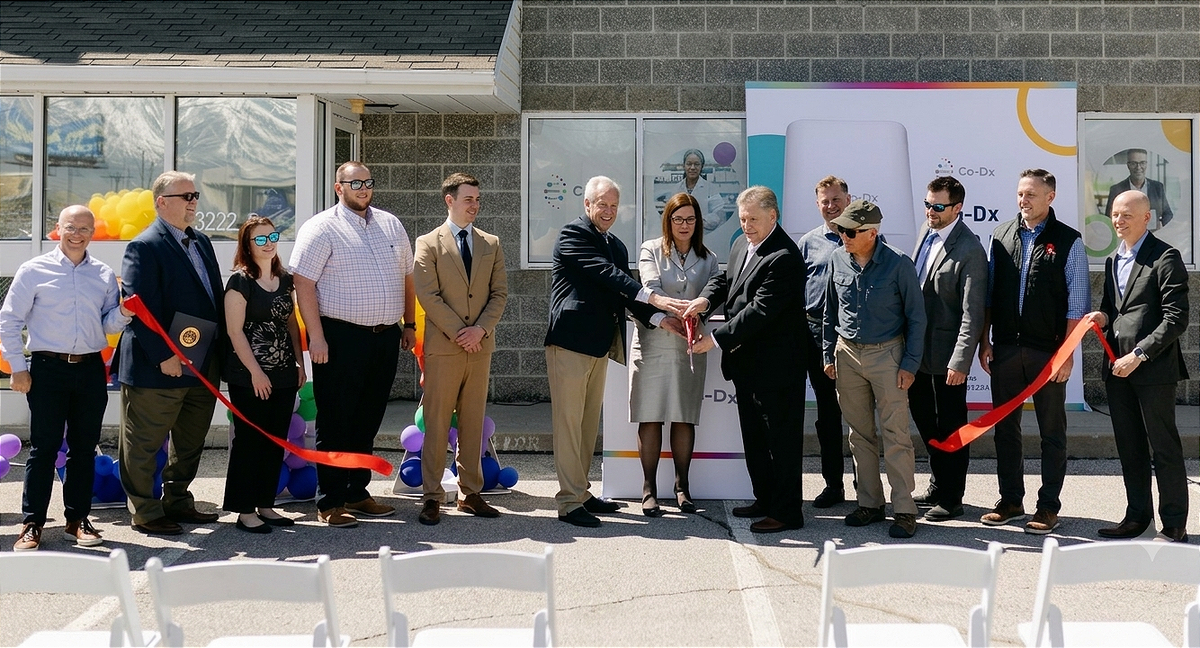
Co-Diagnostics Bets the Future of PCR Is Not the Laboratory—It's Everywhere
Co-Diagnostics (Salt Lake City, UT) has completed validation studies supporting FDA submission of its portable PCR platform, positioning the Utah company to expand laboratory-quality molecular diagnostics into point-of-care settings and underserved global markets.
When the COVID-19 pandemic erupted, a relatively small Utah diagnostics company found itself thrust onto the global stage. Co-Diagnostics, headquartered in Salt Lake City, rapidly developed one of the first American-made PCR COVID-19 tests to receive a CE Mark in Europe, ultimately shipping tens of millions of tests to more than 50 countries.
For many companies, that success would have marked the pinnacle of the story. For Co-Diagnostics, it became the funding mechanism for something far more ambitious.
Rather than simply expanding its existing diagnostic business, the company invested approximately $125 million of its pandemic-era revenue into building a completely new molecular diagnostics platform. It is a handheld PCR instrument designed to bring laboratory-quality testing into physicians' offices, pharmacies, nursing facilities, and eventually even remote villages where sophisticated laboratory equipment has never been practical.
This week, the company reached what may be its most important milestone yet.
Co-Diagnostics announced it has completed both the clinical and analytical validation studies needed for its planned U.S. Food and Drug Administration 510(k) submission for its Co-Dx PCR Flu A/B & RSV multiplex test running on the Co-Dx PCR Pro platform. The company also plans to submit a CLIA Waiver by Application simultaneously, allowing the system to be used in point-of-care settings if cleared.
The submission is targeted for the third quarter of 2026.
For CEO Dwight Egan, the announcement represents the culmination of years of engineering rather than the end of the journey. He sat down with TechBuzz to explain the significance of this announcement.
Dwight Egan, CEO, Co-Diagnostics
"Completing both the analytical and clinical performance studies for the upper respiratory test is a significant execution milestone," Egan said. "The FDA 510(k) and CLIA Waiver by Application processes require substantial analytical and clinical evidence, and the depth of the work our team has completed reflects the quality of the submission we are preparing to make."
The validation effort was extensive. According to the company, more than 1,400 symptomatic patients participated across nine geographically diverse U.S. clinical sites. Analytical validation included 27 individual studies and more than 10,000 PCR test cup runs, including multicenter reproducibility studies demonstrating consistent performance by untrained operators across multiple locations and instruments.
Those studies are particularly important because Co-Diagnostics is pursuing both FDA clearance and a CLIA waiver simultaneously—an indication that the company believes its platform is simple enough to operate outside traditional laboratory environments while still delivering PCR-quality results.
That vision has shaped nearly every engineering decision the company has made over the past five years.
From Pandemic Success to Long-Term Strategy
Co-Diagnostics was founded in 2013 around a patented molecular technology known as CoPrimers, specialized molecules designed to improve polymerase chain reaction (PCR), widely regarded as the gold standard for infectious disease detection.
The company's timing proved fortunate.
When SARS-CoV-2 emerged in early 2020, Co-Diagnostics quickly developed a PCR COVID-19 assay that gained international adoption. By 2023, the company had generated over $200 million in test sales
Instead of viewing that windfall as a one-time event, leadership began asking a larger question.
"What did the pandemic teach us?" Egan recalled.
The answer, he said, was that even advanced healthcare systems lacked the ability to deliver highly accurate molecular diagnostics close to patients.
Traditional PCR instruments often cost tens of thousands of dollars, require specialized laboratory infrastructure, trained technicians, controlled environments, and reliable electrical power. During COVID, those limitations became painfully obvious.
Co-Diagnostics decided to redesign the entire experience.
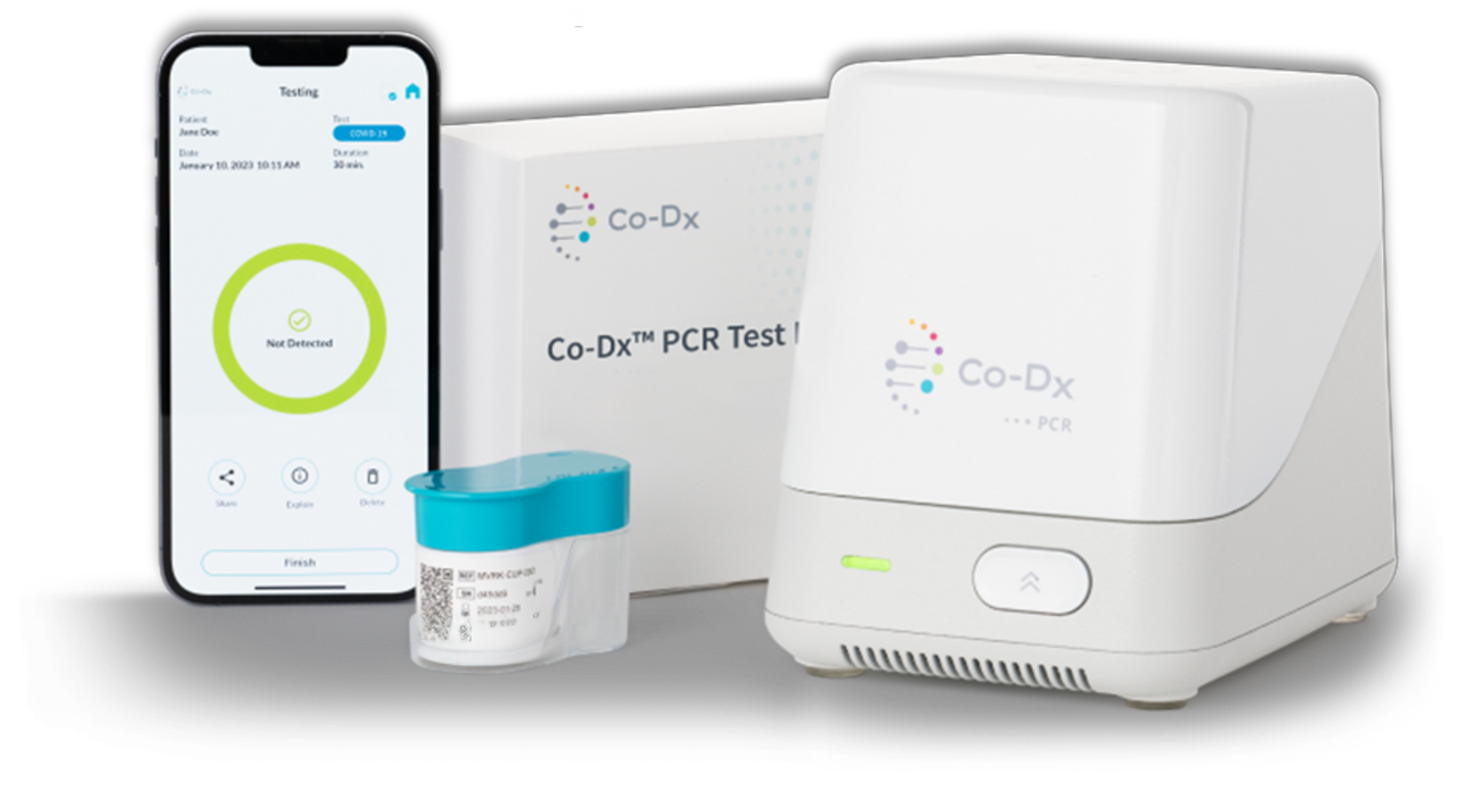
Co-Dx PCR Pro point-of-care PCR diagnostic instrument, test, mobile app
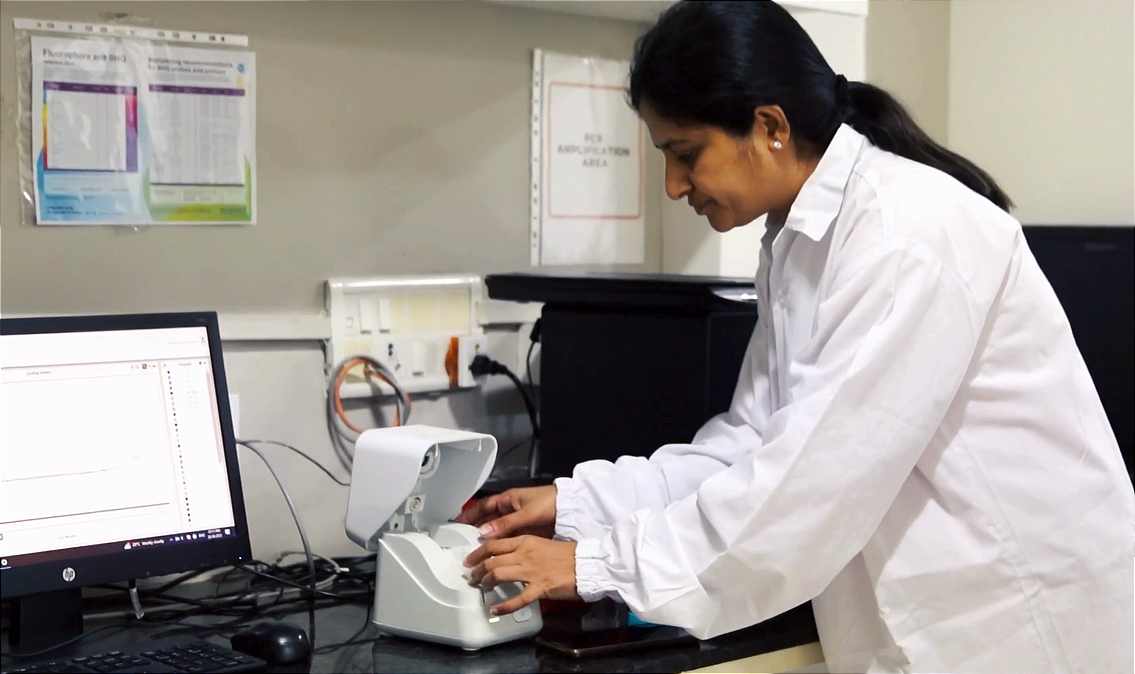
The result is an instrument small enough to fit in the palm of a hand while performing real-time PCR analysis comparable to much larger laboratory systems.
Unlike many portable diagnostic technologies that rely on antigen testing or simplified chemistry, the Co-Dx platform continues to use PCR itself, allowing it to maintain laboratory-level sensitivity while reducing size and complexity.
"We wanted to take PCR where it has never gone before," Egan said.
Building More Than a Device
Developing a portable PCR platform required expertise beyond molecular biology.
Co-Diagnostics recruited engineers and scientists with extensive experience developing sophisticated molecular diagnostic systems, including veterans of Utah's BioFire organization. The company ultimately acquired engineering businesses that had participated in the platform's development and consolidated manufacturing in Salt Lake City.
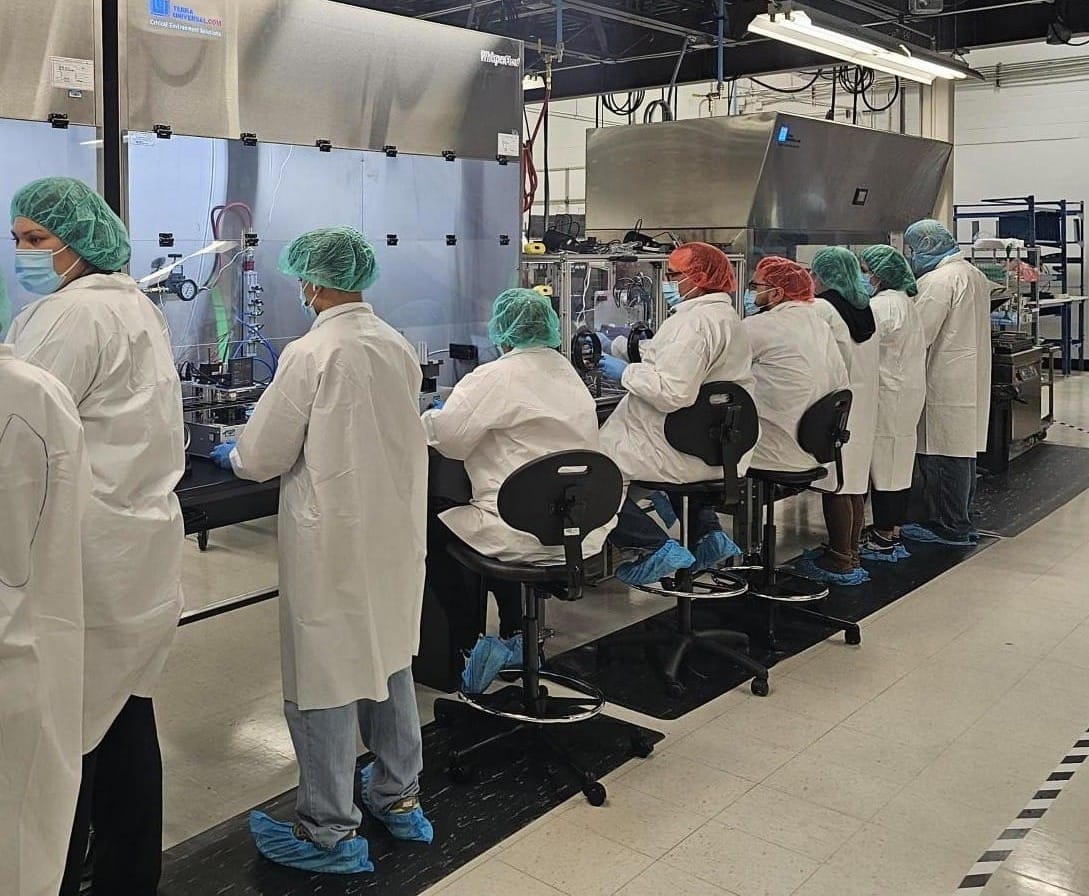
Manufacturing Line at Co-Diagnostics South Salt Lake Facility
Today, production takes place inside a renovated manufacturing facility where both the reusable instruments and disposable PCR cartridges are assembled.
The company has already produced more than half a million test cartridges during validation and approximately 1,200 instruments as it prepares for commercialization.
Manufacturing itself has become another competitive focus.
Egan says Co-Diagnostics recently unveiled an AI-assisted automated production line capable of manufacturing roughly four times as many test cartridges per day as manual assembly while simultaneously performing automated quality inspections throughout the process.
Rather than replacing employees, he views automation primarily as a way to increase consistency and throughput while allowing personnel to move into higher-value technical roles.
As regulatory clearance approaches, scaling manufacturing may become nearly as important as securing FDA approval.
Why Multiplex Matters
One of the distinguishing features of Co-Diagnostics' technology is multiplex testing—the ability to detect multiple pathogens from a single patient sample.
The FDA submission focuses on influenza A, influenza B and Respiratory Syncytial Virus (RSV), three respiratory illnesses that often produce similar symptoms but require different clinical decisions.
Rather than performing separate tests, physicians can receive results from all three targets in a single PCR run.
The company's underlying CoPrimer chemistry enables even broader panels.
In India, for example, where the company has had extensive experience, Co-Diagnostics already offers cervical cancer screening capable of simultaneously detecting eight human papillomavirus targets in a single test.
Future panels planned for the Co-Dx platform include sexually transmitted infections, Streptococcus A, tuberculosis, malaria and numerous emerging infectious diseases.
The company also markets mosquito surveillance assays used by public health agencies to monitor pathogens including West Nile virus, Zika virus, dengue, chikungunya and Western equine encephalitis.
For Egan, multiplex capability represents one of the platform's greatest long-term advantages because additional diagnostic menus can be introduced without fundamentally changing the instrument itself.
A Global Strategy
Although FDA clearance remains the immediate priority, Co-Diagnostics' ambitions extend well beyond the United States.
Long before COVID-19, the company identified India as one of its most important strategic markets. In 2017, it formed CoSara, a joint venture with the Sarabhai family—one of India's best-known pharmaceutical families—to manufacture and distribute molecular diagnostics throughout the country. Today, the operation includes laboratories that produce diagnostic reagents, a growing commercial organization, and manufacturing capabilities that will eventually produce the company's portable PCR instruments alongside its test cartridges.
India presents one of the world's largest opportunities for decentralized molecular diagnostics because of its enormous tuberculosis burden. According to Egan, approximately 1,000 people die from tuberculosis every day in India despite the disease being curable when diagnosed early.
Current testing in many remote areas still relies on smear microscopy—a technology more than a century old that requires technicians to visually identify bacteria under microscopes and whose accuracy varies significantly.
Co-Diagnostics believes its portable PCR platform could fundamentally change that equation. The testing reagents included within the disposable cartridges are freeze-dried so they can be transported and stored without refrigeration, while the instrument itself can operate on battery power, eliminating dependence on reliable electrical infrastructure. Those characteristics make the system attractive not only for India but also for parts of Africa, Southeast Asia and Latin America where laboratory infrastructure remains limited.
Beyond tuberculosis, the company's joint venture has already received regulatory clearances in India for 15 molecular diagnostic tests and plans to migrate many of those assays onto its new portable platform, expanding access to diseases ranging from cervical cancer screening to malaria and other infectious diseases.
Co-Diagnostics and Arabian Eagle finalizing their joint venture, CoMira Diagnostics at a signing ceremony held in the Kingdom of Saudi Arabia Oct. 2025. CoMira Diagnostics was formed to be one of the first domestic molecular diagnostics manufacturers of its kind in Saudi Arabia. Pictured: Dwight Egan, CEO of Salt Lake City-based Co-Diagnostics and Ihssan Rjoob, CEO of Arabian Eagle Manufacturing and CoMira Diagnostics.
Co-Diagnostics has already established manufacturing and commercial partnerships in India through its CoSara joint venture and recently expanded into the Middle East through a new venture in Saudi Arabia that will ultimately serve multiple countries throughout the region.
The company is also evaluating additional opportunities across Latin America and other international markets.
The Road Ahead
Despite completing its validation studies, Co-Diagnostics still faces perhaps its most consequential hurdle.
FDA review is necessarily rigorous, particularly for molecular diagnostic systems intended for decentralized use. Even well-prepared submissions often generate requests for additional information during the review process.
Egan says the company expects a collaborative dialogue and believes its previous experience with FDA emergency authorization for its COVID-19 assay provides valuable perspective.
He also notes that the company enters this phase from a position of relative financial strength compared with many emerging medical technology firms, having funded much of the platform's development through operating revenue generated during the pandemic rather than relying exclusively on outside capital.
If clearance proceeds as planned, the implications extend beyond a single respiratory test.
The current Flu A/B & RSV assay represents the first intended menu item on what Co-Diagnostics envisions becoming an expanding ecosystem of molecular diagnostics delivered through one compact instrument.
In pharmacies, the platform could provide rapid answers during respiratory virus season. In physicians' offices, it could reduce delays associated with centralized laboratory testing. In developing countries, it could place gold-standard PCR technology into clinics that have never had access to advanced molecular diagnostics.
That broader vision explains why the company devoted years—and more than $125 million—to building a platform before bringing it to market.
For now, however, everything depends on one milestone.
The engineering is complete. The validation studies are finished. The manufacturing systems are scaling.
Once submitted, the next chapter belongs to the FDA.
The Co-Dx PCR platform (including the PCR Home®, PCR Pro®, mobile app, and all associated tests) is subject to review by the FDA and/or other regulatory bodies and is not yet available for sale. Learn more at co-dx.com.
Share this article
The link has been copied!
Your link has expired. Please request a new one.
Your link has expired. Please request a new one.
Your link has expired. Please request a new one.
Great! You've successfully signed up.
Great! You've successfully signed up.
Welcome back! You've successfully signed in.
Success! You now have access to additional content.