Utah Becomes the Testing Ground for a Reactor Technology the West Hasn't Built Yet
Nuclea Energy signed an MOU to explore siting a lead-cooled test reactor at Utah's San Rafael Energy Lab in Emery County, a technology with no existing Western Hemisphere precedent.
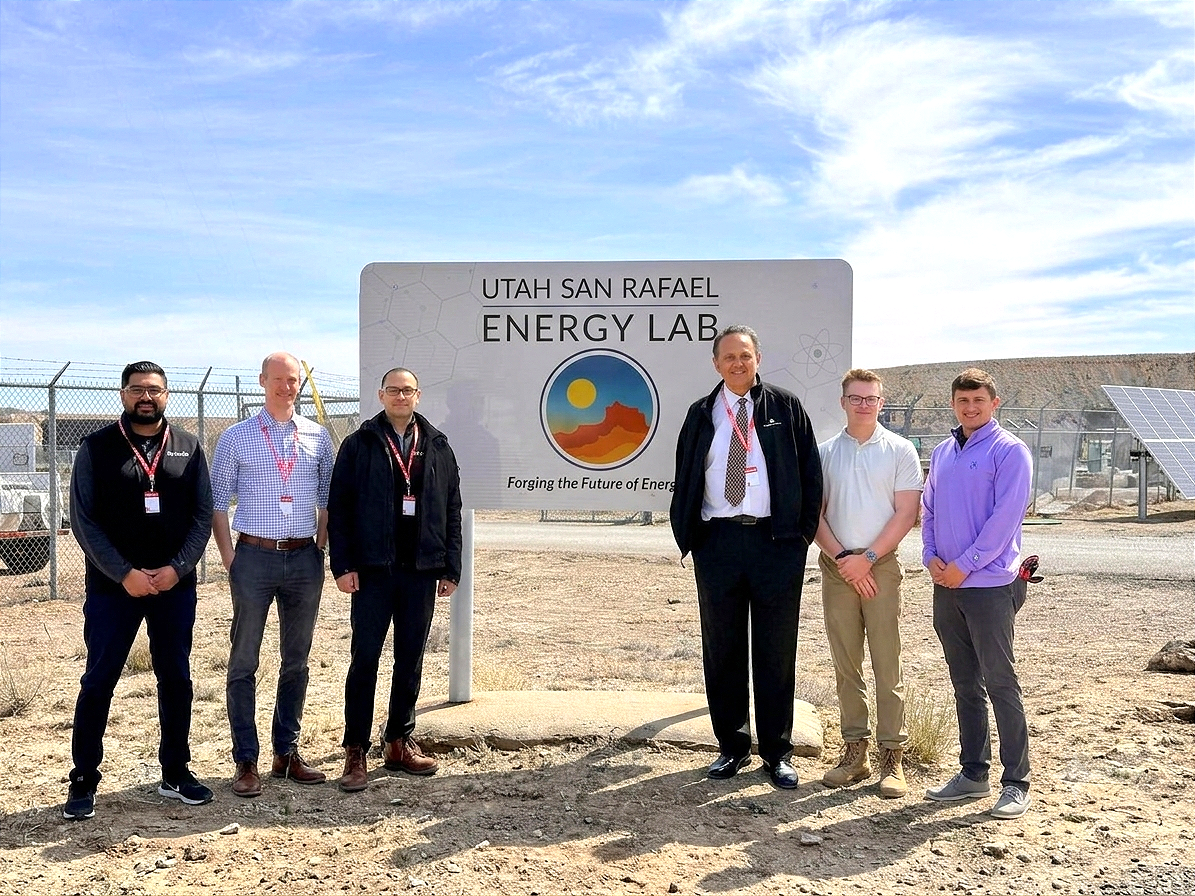
Nuclea Energy CEO Josef Freundorfer (second from left) and members of the Nuclea team stand outside the Utah San Rafael Energy Lab (USREL) in Emery County, the proposed site for the company's Morpheus test reactor under a memorandum of understanding signed with the Utah Office of Energy Development.
Nuclea Energy CEO Josef Freundorfer (second from left) and members of the Nuclea team stand outside the Utah San Rafael Energy Lab (USREL) in Emery County, the proposed site for the company's Morpheus test reactor under a memorandum of understanding signed with the Utah Office of Energy Development.
Emery County, Utah — August 5, 2026
The same day Weber County hosted its own community conversation about nuclear energy, a different kind of nuclear story was unfolding roughly 200 miles south. In Emery County, at the Utah San Rafael Energy Lab (USREL), the state has quietly agreed to explore something that doesn't yet exist anywhere in the Western Hemisphere: a lead-cooled test reactor.
Nuclea Energy USA Inc., a subsidiary of the Mississauga, Ontario-based Nuclea Energy Inc., announced on August 5 that it signed a memorandum of understanding (MOU) with the Utah Office of Energy Development (OED) on June 2 to explore siting a test reactor for its Morpheus microreactor at USREL. A day later, Nuclea announced a second, unrelated MOU — this one with New Mining Co., a Bitcoin mining infrastructure operator, to evaluate whether Nuclea's reactor technology could eventually power up to 100 MWe of behind-the-meter computing load.
Taken together, the two announcements mark a notable moment for Utah's energy ambitions: the state isn't just recruiting proven reactor designs anymore. It's positioning itself as the place where an unproven one gets tested first.
TechBuzz spoke with Nuclea CEO Josef Freundorfer to understand why Utah — and why lead.
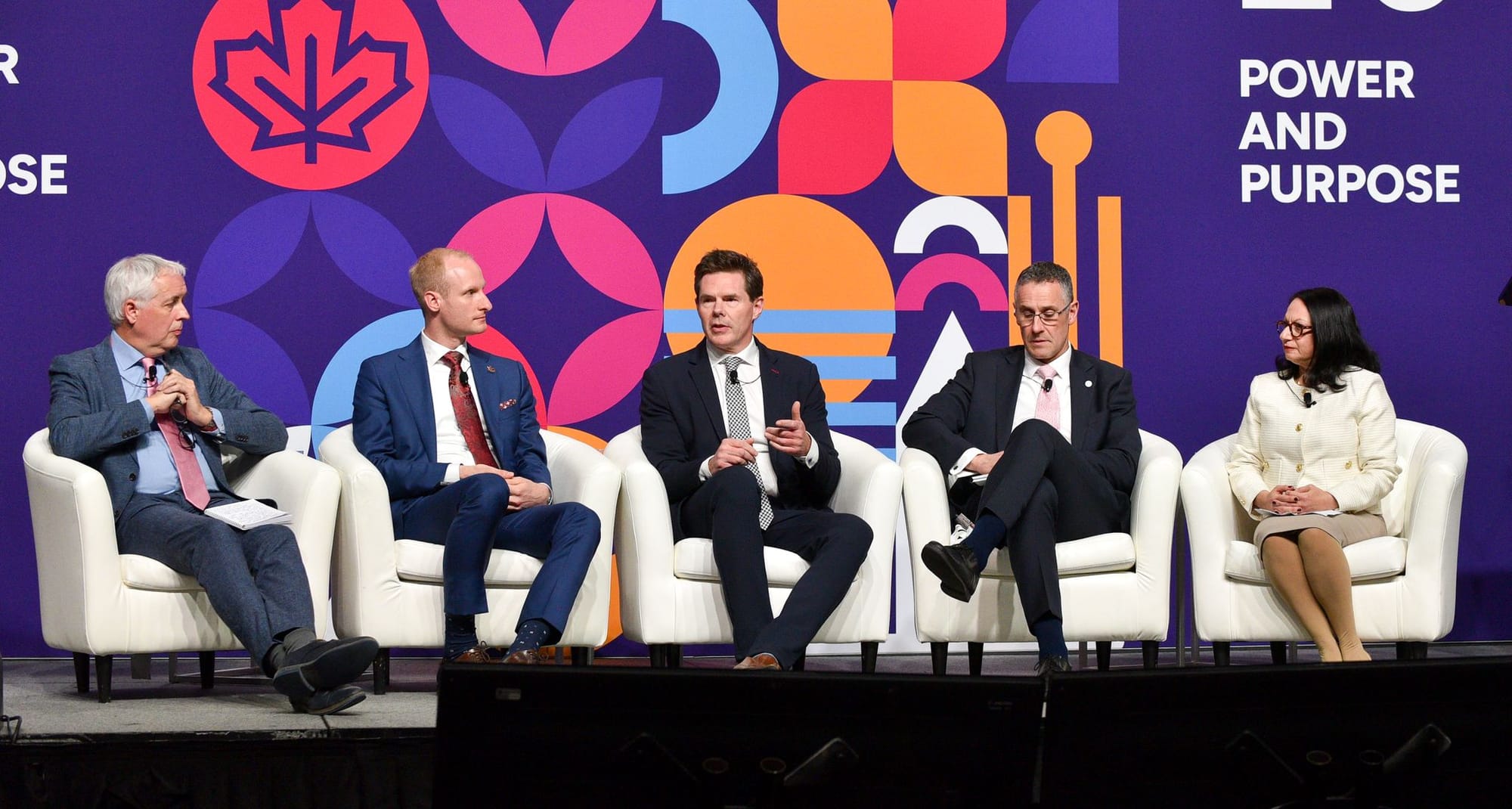
Josef Freundorfer (second from left), CEO of Nuclea Energy, speaks on a panel at CNA2026: Power and Purpose, the Canadian Nuclear Association's annual conference and trade show, held in Ottawa on April 28-30, 2026. The event, Canada's largest nuclear industry gathering, drew industry executives, policymakers, and innovators to discuss nuclear's expanding role in meeting rising electricity demand.
A Coolant Nobody Else in North America Is Using
Most of the advanced reactor conversation happening in Utah right now involves either traditional light-water designs (Blue Castle, the AP1000) or molten salt technology, championed locally by BYU's Matt Memmott and his company AlphaTech. Nuclea's Morpheus reactor takes a third path entirely: liquid lead as a coolant, rather than water, gas, or salt.
"We've selected lead as a coolant rather than water or gas or molten salt," Freundorfer said. "There's many, many reasons why you would select lead... but the two main things that make lead a unique and a safe coolant for an advanced reactor comes down to the fact that lead as a coolant can operate at very high temperatures, significantly higher than any other coolant in the world, which then keeps the fuel itself safe."
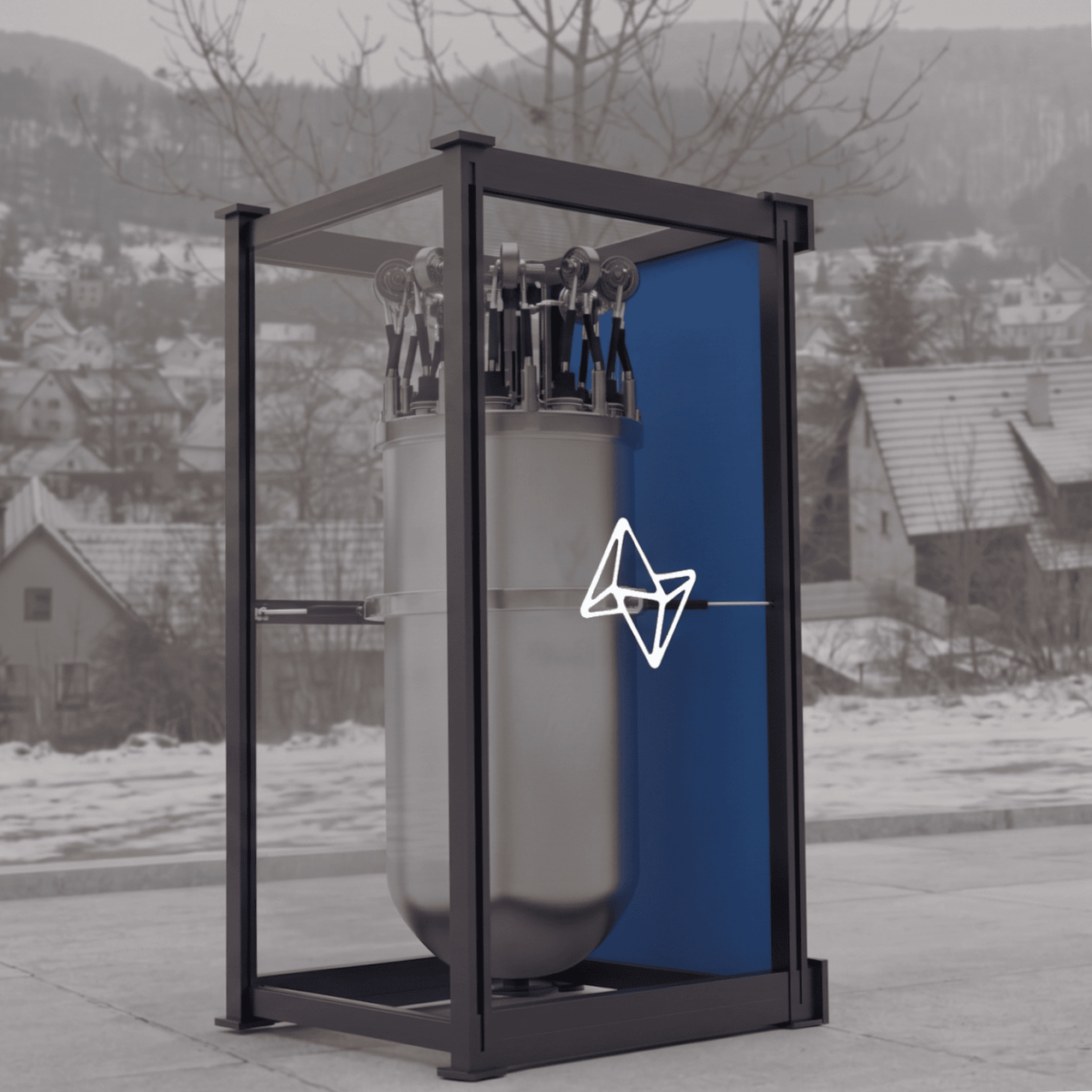
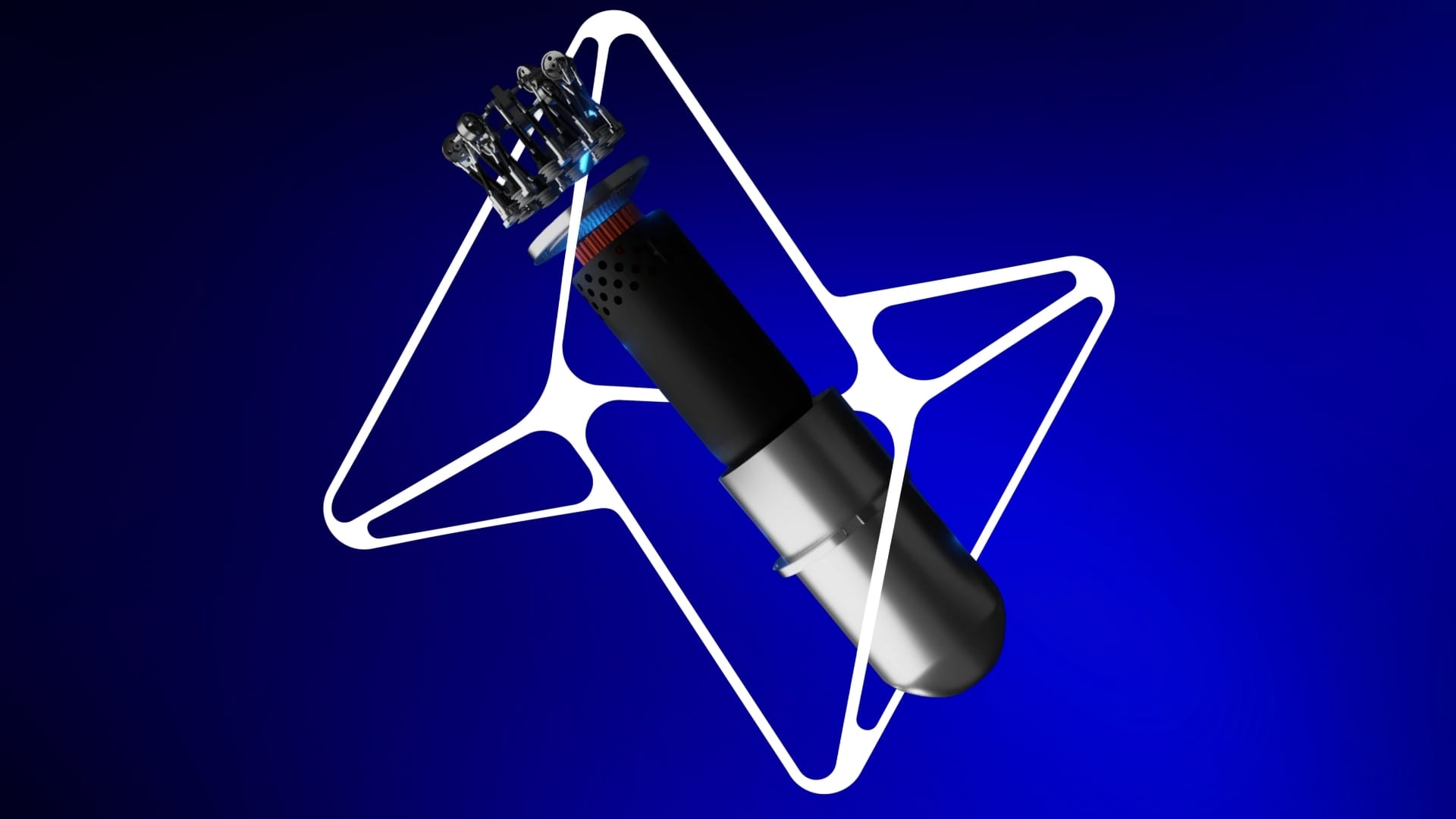
A rendering of Nuclea Energy's Morpheus microreactor, the lead-cooled, factory-built unit at the center of the company's proposed test reactor at Utah's San Rafael Energy Lab. Unlike conventional reactors, Morpheus operates at roughly atmospheric pressure — a property CEO Josef Freundorfer says removes much of the driving force behind pressure-related accidents — while its lead coolant is designed to withstand far higher temperatures than water, gas, or molten salt. Nuclea says the design can scale from about 3.5 to 50 MWe.
The pitch centers on two properties. First, lead doesn't boil at reactor operating temperatures the way water can, which Freundorfer said removes one of the primary mechanisms behind historical fuel-damage accidents. Second, because lead operates at roughly atmospheric pressure rather than under the intense pressurization required by conventional reactors, there's little driving the coolant to escape the vessel even in an accident scenario.
"It's very unusual, and it's one of the key safety features associated with it," Freundorfer said. "The fuel is very safe and can operate to very high temperatures. And two, the coolant and everything in the reactor isn't trying to even escape... What's it trying to push out of the vessel, right?"
Freundorfer described the company's broader safety philosophy, one he distinguished from reactors that rely on layered mechanical and human-operated systems to maintain safety. "The majority of the safety comes from the inherent physics of what you've created, rather than systems that control physics," he said. "If nature is controlling what's happening and making sure everything's safe, that's far more reliable than having a whole variety of complex and redundant safety systems operating it."
Pressed on whether an unforeseen combination of failures, such the kind that preceded the Fukushima accident, could still catch the design off guard, Freundorfer acknowledged the honest answer is that testing is still ahead. "We're performing modeling and simulations to determine what the manner in which our reactor reacts to that, in order to supply to the regulators and really get that buy-in," he said. He noted a genuine trade-off unique to lead: because it freezes near room temperature, a leak could cause the reactor to partially seal itself — a "self-healing" property that also introduces new engineering and economic challenges around flow and long-term maintenance that the company is still working through.
Why Emery County, Specifically
Freundorfer was direct about why Nuclea chose Utah over other nuclear-friendly states like Texas, Idaho, or Wyoming: a regulatory and cultural environment he described as unusually open to new reactor concepts, paired with a specific lab — USREL — that he said can move faster than more established national labs.
"For being a state that in a way has not been involved in this long-term nuclear history, they have moved extremely fast with technical and safety rigor," he said, adding that in traditional nuclear jurisdictions, "you can oftentimes get boggled down in the education aspect... they're always going to want you to bend to their system rather than meet you halfway."
He pointed to a broader trade memorandum of understanding Governor Spencer Cox signed with Ontario Premier Doug Ford on June 29 at the Western Governors' Association meeting in Deer Valley as evidence of the relationship Utah has been building with Canadian nuclear developers specifically. The three-year cooperation framework, part of Ford's "Fortress North America" strategy to deepen trade ties with individual U.S. states, builds on nearly $7 billion in existing annual trade between Ontario and Utah and names advanced nuclear technologies, grid modernization, and energy storage among its priority sectors alongside critical minerals, defense manufacturing, and life sciences.
On USREL itself, Freundorfer said the lab's advantage isn't so much infrastructure Nuclea couldn't build elsewhere, but a demonstrated ability to move a novel reactor concept from regulatory engagement to physical construction without the bureaucratic disconnect he said larger labs often struggle with. "Being able to pick up the phone and talk to someone, whether at the lab, the regulator, or the state, quickly... I think is more optimal when you compare it to maybe some of the larger labs around."
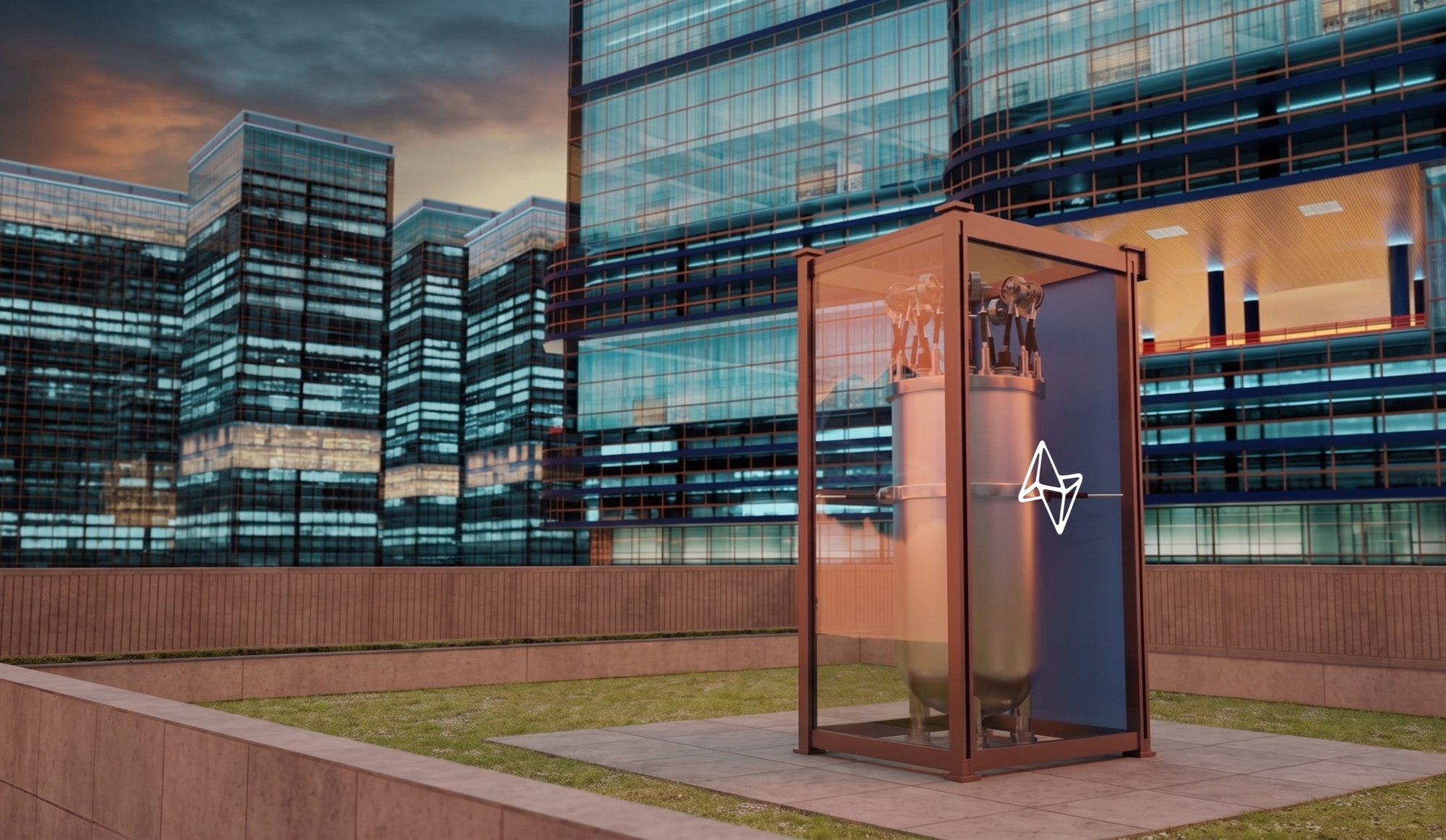
A rendering of Nuclea Energy's Morpheus microreactor situated near high-density commercial infrastructure — the kind of behind-the-meter setting envisioned in the company's MOU with Bitcoin miner New Mining Co. CEO Josef Freundorfer says Morpheus's compact, factory-built footprint is designed to serve data centers and industrial operators wherever grid capacity falls short, without the large cooling infrastructure conventional reactors require.
What the Test Reactor Is Actually For
Freundorfer was careful not to get ahead of a siting process that's still in the MOU stage. He preferred not to commit to specific milestone dates, but he described the broad shape of what a Morpheus test reactor would need to demonstrate: reduced-scale operation of the reactor's control and chemistry systems, validation of lead-specific materials challenges, and testing of the ceramic fuel pin design Nuclea plans to use commercially. The reactor would likely run critical for about a year, generating the instrumented data needed to refine the commercial design before Nuclea pursues full NRC licensing.
"It'd be a really strong step to de-risk the commercial plant that we're developing," he said.
That de-risking, he added, is also what stands between Nuclea and its second Utah announcement — the New Mining MOU. Asked whether the Emery County test reactor is intended to directly supply New Mining's Bitcoin mining operations, Freundorfer said the connection is more indirect: the test reactor's job is to prove out Morpheus broadly enough that commercial customers, including but not limited to New Mining, are willing to sign binding agreements. "I would expect any commercial customer would want to see an operating Morpheus reactor before signing a purchase agreement," Freundorfer said, agreeing with the premise of the question. "It's all just trying to sequence everything in a row... relationships take time to build."
The New Mining MOU itself is non-binding and explicitly not a power purchase agreement; under its terms, Nuclea would provide engineering and regulatory advisory work while a separately contracted utility or nuclear operator would handle any eventual power generation and delivery.
Fuel, Regulators, and a Public Listing in Progress
Commercially, Morpheus is designed to run on standard ceramic fuel pins — the same fuel type used across most existing reactors — rather than newer, more exotic fuel forms some competitors are pursuing. Freundorfer said that choice is deliberate: it lets Nuclea plug into an existing global fuel supply chain rather than build one from scratch. On the regulatory side, he said the Emery County pilot will be run primarily in partnership with the U.S. Department of Energy under its reactor pilot programs, with results feeding into eventual U.S. Nuclear Regulatory Commission review for commercial deployment. Nuclea has not yet formally opened NRC licensing discussions, though Freundorfer said the company is "on track" to do so.
The MOU announcements arrive amid a separate, and more conventional, corporate milestone. On July 30, Nuclea announced a definitive business combination agreement with Mangoceuticals, Inc. (NASDAQ: MGRX), a Dallas-based, Nasdaq-listed company, that would give Nuclea a path to a U.S. public listing. Under the terms disclosed in SEC filings, former Nuclea shareholders would hold approximately 96% of the combined company on a fully diluted basis, with a required concurrent private placement of at least $15 million funded into escrow. The deal still requires Mangoceuticals stockholder approval — because the share issuance exceeds Nasdaq's ownership-change threshold — along with U.S. and Canadian regulatory clearances before it closes. Separately, Mangoceuticals disclosed on August 4 that Nasdaq granted it a 180-day extension to regain compliance with the exchange's minimum bid price requirement, an unrelated listing matter the company said it continues to monitor.
A Second Data Point for Emery County
Nuclea's MOU adds a new name to a growing list of nuclear activity anchored in Emery County and its surrounding region, alongside the Blue Castle/Fulcrum Point project underway in Green River, as covered by TechBuzz. Freundorfer argued that jurisdictions willing to host first-of-a-kind demonstration reactors typically capture a disproportionate share of the resulting supply chain and manufacturing investment as a technology matures. He pointed to Utah's selection as a potential host for a Department of Energy nuclear fuel cycle innovation hub as a reason he expects that dynamic to play out here specifically.
Whether that bet pays off depends on a siting process, a licensing pathway, and a public listing that are all, as of this week, still in progress. But for a state betting heavily on nuclear as part of Operation Gigawatt, Nuclea's arrival adds a technology to Utah's portfolio that, by Freundorfer's own account, doesn't yet have a working precedent anywhere else on the continent.