Meet the Utah Hackathon Winner Taking On the $10 Billion Dating Industry
Craig Cossairt is preparing to launch Bloom, an AI-native dating app that converts into a relationship app once couples commit — a first for the industry. He's building toward launch after winning a UVU data governance bounty in June.
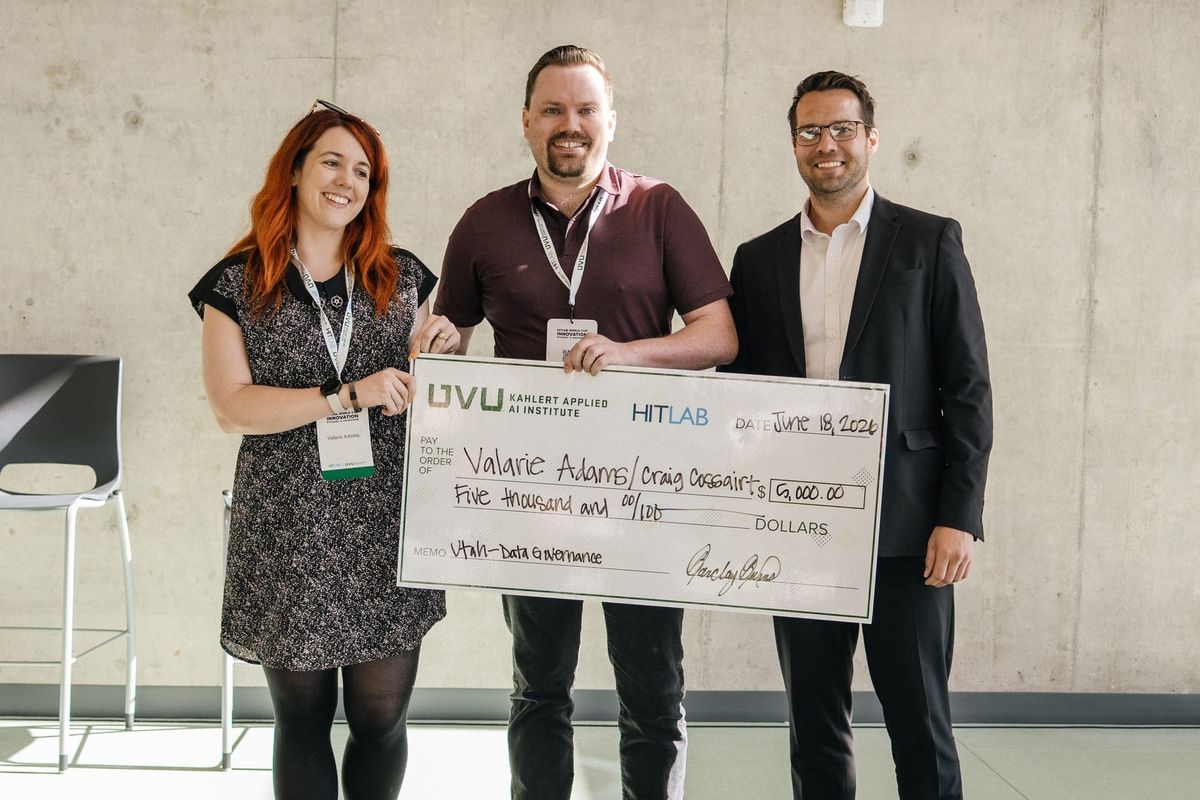
Valarie Adams and Craig Cossairt receiving the $5,000 Utah Data Governance Bounty from Chris Bramwell, Utah's Chief Privacy Officer, at the HITLAB x UVU World Cup Innovation Pitchday & Hackathon on June 18, 2026., Photo: Joseph Jorgenson, Kahlert Applied AI Story Lab, UVU
Valarie Adams and Craig Cossairt receiving the $5,000 Utah Data Governance Bounty from Chris Bramwell, Utah's Chief Privacy Officer, at the HITLAB x UVU World Cup Innovation Pitchday & Hackathon on June 18, 2026., Photo: Joseph Jorgenson, Kahlert Applied AI Story Lab, UVU
South Jordan, Utah — August 3, 2026
Craig Cossairt was laid off in late 2024, in the middle of a wave of tech layoffs that made it hard to find a new job. Instead, he started building one. Bloom Dating, Inc. — a Delaware C-Corp Cossairt incorporated in March 2026 — is now a pre-seed company with a working iOS and Android app, several couples testing it in TestFlight, and a thesis he's betting a company on: the dating app industry is structurally misaligned with what its users actually want.
Cossairt describes Bloom Dating as a business-model flip. Most dating apps earn subscription revenue while you stay single, so when the app works, it loses a customer. Bloom is designed around the whole relationship journey: when two people become a couple, the app's "Dating Mode" closes and "Relationship Mode" activates, which includes shared date planning, couple prompts, and relationship activities.
Cossairt described Bloom as "the dating app that grows with you," and said it contrasts with other dating apps because the model aligns itself with the success of its users.
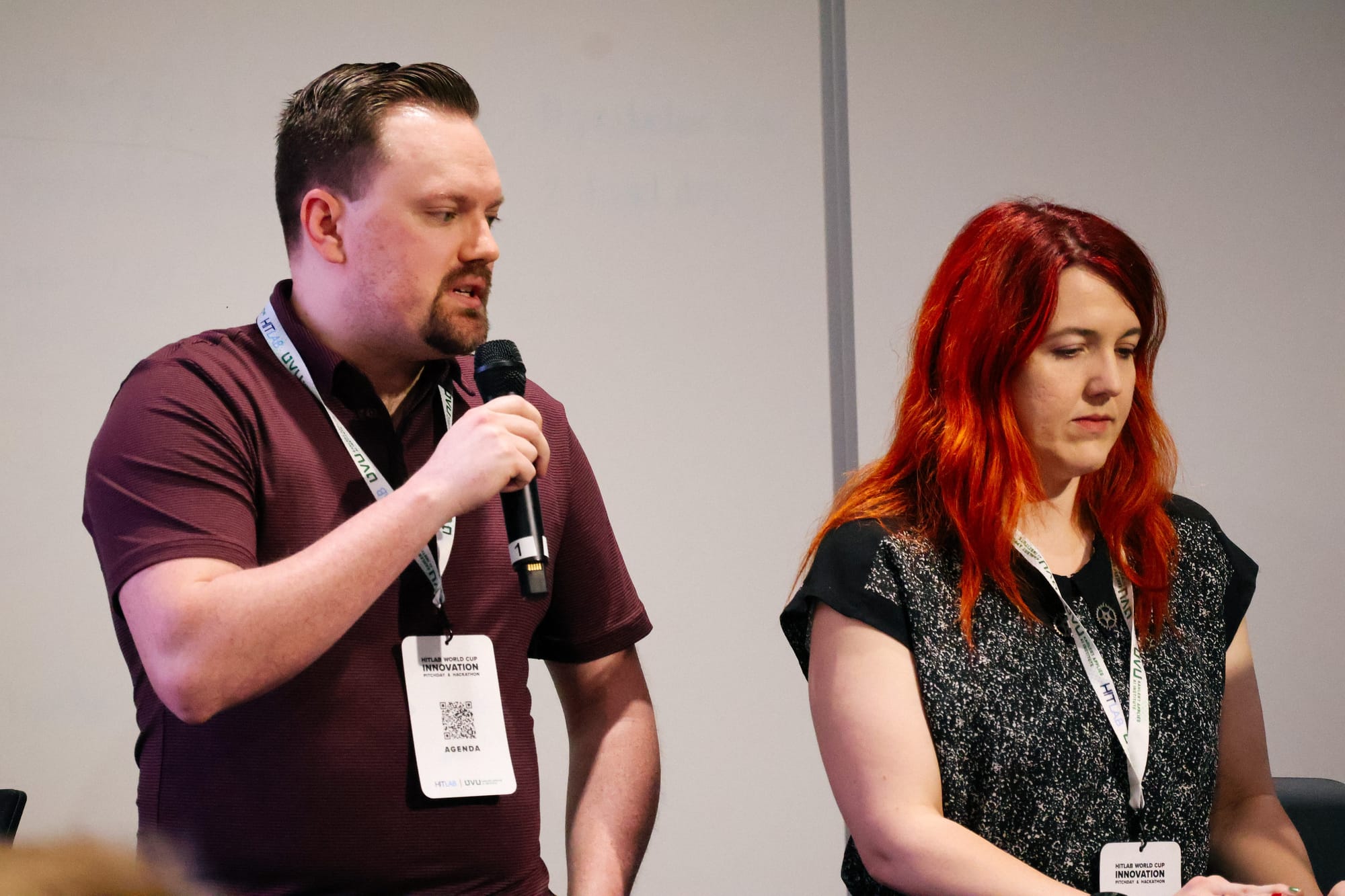
Bloom founder Craig Cossairt with Valarie Adams at the HITLAB x UVU World Cup Innovation Pitchday & Hackathon that took place at the Smith Engineering Building at UVU, June 18, 2026. Photo: Juan Escudero, Kahlert Applied AI Story Lab, UVU
TechBuzz readers have crossed paths with Cossairt's work twice in recent months without necessarily connecting the dots. He and Valarie Adams won the Utah Data Governance Bounty at June's HITLAB x UVU hackathon, and Bloom Dating was named one of ten Utah finalists in the Startup World Cup regional competition at StartFEST, held June 23–24 at Draper's Loveland Living Planet Aquarium.
"For all of the dating apps, they make money based off of how long you stay using their apps," Cossairt said. "So it goes counter to their stated purpose." He pointed to Hinge's own tagline — designed to be deleted — as evidence of the tension. "No business is going to actively try and churn their user base."
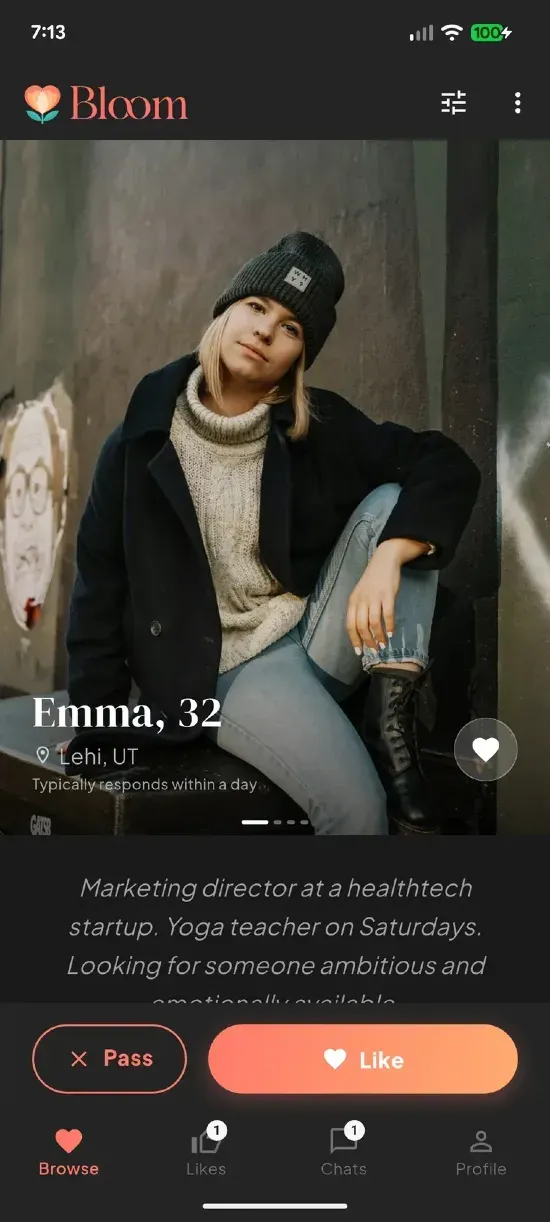
The main browsing view for Bloom, featuring localized profiles along with anti-ghosting responsiveness signals. Image: Bloom Dating
Cossairt's company, Bloom, is his answer. It's a dating app that converts into a relationship app the moment a couple decides to commit — a bridge he says doesn't exist anywhere else in the industry.
A Bounty Win at UVU
Cossairt isn't new to Utah's startup and hackathon circuit. He and Valarie Adams won the Utah Data Governance Bounty at the HITLAB x UVU World Cup Innovation Pitchday & Hackathon, held June 17–18, 2026 at UVU's Smith Engineering Building in Orem. The two-day event drew more than 200 people competing for a share of $96,000 in prizes tied to problems posed by the state, including Utah's Office of Data Privacy.
Cossairt said he followed up with Stefan Harlan, a UVU associate dean he met at the event, sending detailed feedback afterward. Christopher Bramwell, Director of the Utah Office of Data Privacy, has since asked Cossairt and Adams to continue contributing to state-related work, a possibility Cossairt said he's still working out logistically.
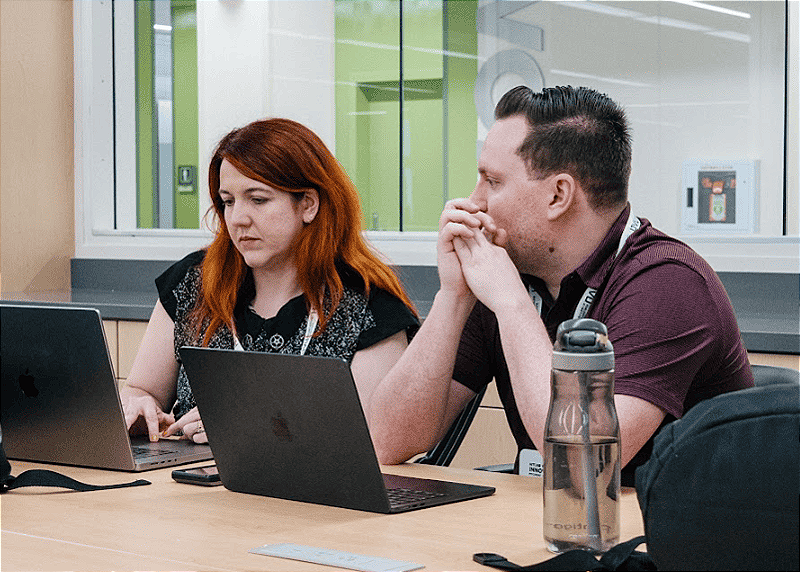
Valarie Adams and Craig Cossairt building at the HITLAB x UVU World Cup Innovation Pitchday & Hackathon, Smith Engineering Building, June 18, 2026. Photo: Juan Escudero, Kahlert Applied AI Story Lab, UVU
Why a Dating App
Cossairt traces the idea back further than his layoff. He said he's held it since going through a divorce in 2018, while separately following AI's development for years. Once he had time and a mature-enough set of AI tools, he says, the barrier that had always slowed him down in a corporate product role — waiting on engineering — was gone.
"AI's capable enough to be kind of the CTO or lead developer," he said. "Over the course of a couple months, I went from nothing to a full prototype."
Cossairt frames the opportunity partly in demographic terms: he cited a marriage rate he says has decreased 42% from its 1970 level, down from 10.6 per 1,000 people in 1970 to 6.1 in 2023, according to CDC/NCHS data. He also said the median marriage age for men is about seven years older than in the past, according to US Census data, and a U.S. fertility rate he said is around 1.6 births per woman, according to NCHS data.
His conclusion: dating apps, as an industry, bear some responsibility for those trends because their business model rewards prolonging the search rather than ending it.
What Bloom Does Differently
On the dating side, Bloom includes standard swipe-and-match mechanics, but Cossairt has made a point of not paywalling features he says most competitors gate — including seeing who has liked you and setting matching preferences.
"You can't find people that you're actually interested in unless you pay them money," he said. "I think in doing so, they're making the app worse at its stated purpose."
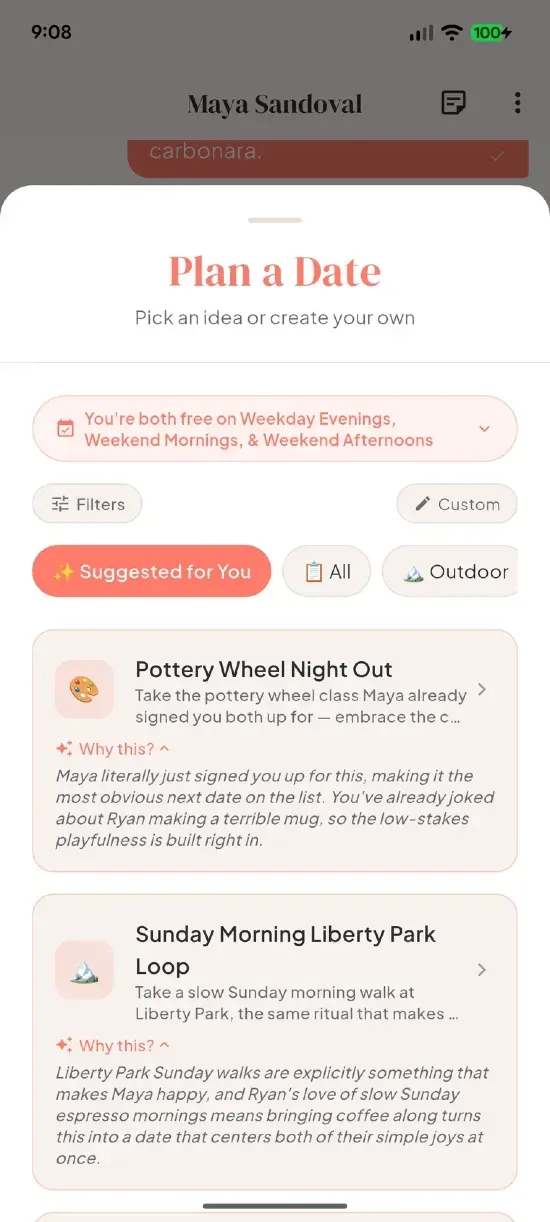
Bloom also includes an AI-assisted date planner that reads both users' profiles to suggest a tailored date, then pulls in Google location data to recommend a specific venue and time — which can be sent to a match to accept, decline, or negotiate. A private-notes feature lets users log small details from conversations, like a favorite color or a sibling's name, so they aren't forgotten.
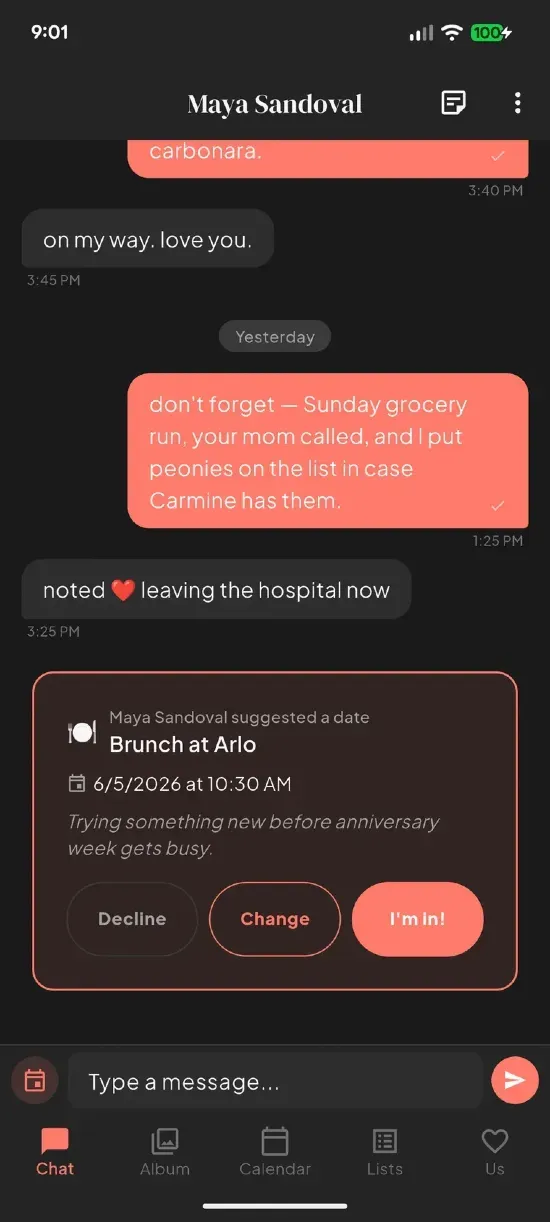
Bloom’s chat interface features integrated date-planning cards, shared calendars, and milestone tools after couples commit. Image: Bloom Dating
An anti-ghosting system tracks response times and signals to other users, more subtly, that someone tends to respond slowly — with in-app nudges if a user's responsiveness drops.
Cossairt sums up the pitch in a tagline: "the dating app that grows with you." The core differentiator, according to Cossairt, is that a couple can choose to convert their match from dating mode into relationship mode entirely. Once that happens, users retain the private notes and date-planning tools, but gain a shared photo album, shared calendar, and shared to-do-style lists. The app also tracks relationship milestones — first dates, anniversaries — and can prompt reminders ahead of key dates.
Bloom's relationship mode also includes "journeys," long-term shared activities a couple can track together. Cossairt gave examples like cooking through every recipe in a cookbook or visiting all 50 states. The app also includes "insights," an AI-generated summary of a couple's attachment style, communication style, and love languages, drawn from their chat history, journeys, and calendar. A curated library of relationship prompts, which Cossairt says now numbers in the several hundreds, is designed to help couples keep learning about each other over time.
Bloom’s date-planning feature provides custom activity ideas alongside contextual explanations ("Why this?") drawn from the couple's interests. Image: Bloom Dating
Business Model
Bloom runs on a freemium model: free with ads, or $15 a month for premium, discounted to roughly $10 a month if paid annually, with an additional three-month tier. In relationship mode, only one partner in a couple needs to maintain a premium subscription for both to have access. Cossairt said he plans to add affiliate revenue tied to date-planning features, such as restaurant reservations, and potential partnerships with local businesses.
Launch Plans
Bloom has no set public launch date, but the app is now built and in App Store submission prep, according to Cossairt. He's building a waitlist at bloom.date and wants to reach roughly 500 to 1,000 users in the Wasatch Front before launching, to ensure enough density for the dating side of the app to function. Several couples are already testing the relationship-mode features through TestFlight. Bloom will launch Utah-first along the Wasatch Front before expanding elsewhere.
He said Bloom's decision to launch first in Utah isn't only personal. "I think the Utah market aligns with what the stated purpose of Bloom is," he said, citing what he described as the country's youngest population, highest marriage rate, and a culture of intentional dating, alongside the Wasatch Front's geographic density and concentration of universities.
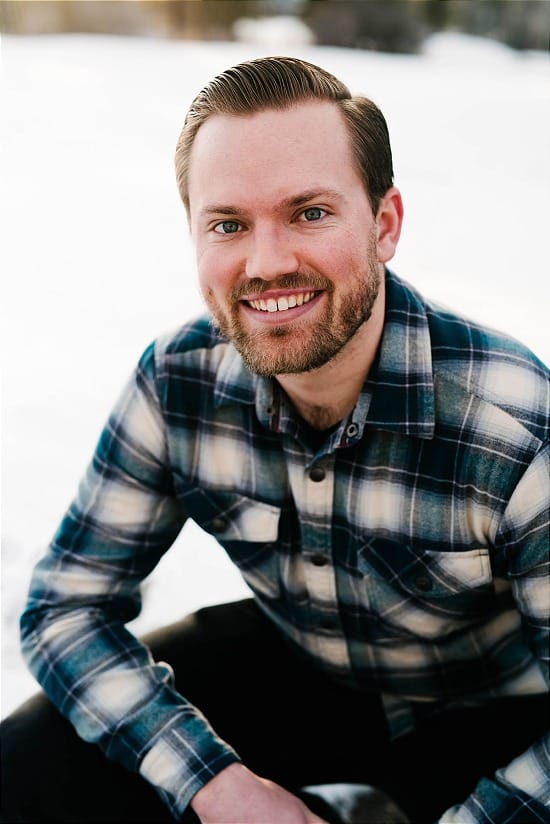
Craig Cossairt, Founder and CEO, Bloom Dating. Photo: Bloom Dating
A Crowded, Consolidated Industry
Cossairt is entering a market dominated by two companies. Match Group owns Tinder, Hinge, and several other apps; Bumble owns its namesake app as well as Badoo, one of the larger international dating platforms.
Asked about building solo with AI rather than an engineering team, Cossairt referenced a prediction from Anthropic CEO Dario Amodei that a solo-founder, billion-dollar company could emerge sometime in 2026. Amodei made that prediction at Anthropic's Code with Claude developer conference, attaching odds of roughly 70 to 80 percent and naming proprietary trading, developer tools, and automated customer service as the categories he considered most likely — not dating apps specifically, and as of his most recent public comments, the prediction had not yet materialized. Cossairt cited the broader premise as motivation rather than a claim that Bloom fits Amodei's named categories.
"I think we've gotten to the point now where it's possible," Cossairt said of building a company this way. "I think I'm proving that it's possible."
He described the tradeoffs candidly: long hours, and a crash course in marketing, legal, and finance alongside the product work he's more comfortable with. "The hardest day is always the next one," he said. "Now building is the easy part and the go-to-market part is the hard part."
Beyond Bloom
Bloom is Cossairt's primary focus, but not his only project. He's also built:
Cozy Fables — custom bedtime stories starring a user's own child, which Cossairt describes as a weekend build for his nieces and nephews.
Hestia — an open-source meal planner with an AI nutrition coach and inventory-aware grocery lists, shared publicly on GitHub for anyone willing to supply their own API keys.
Trellis — a free starter GitHub project template drawn from what he learned building Bloom, aimed at founders new to AI-assisted "vibe-coding."