STARTFEST Day One 2026: The Human Edge
Four speakers at StartFest 2026 in Draper, Utah, converged on a single theme: in the AI era, the differentiator is not the tool. It is the human — empathetic, prepared, and self-aware.


Four speakers at StartFest 2026 in Draper, Utah, converged on a single theme: in the AI era, the differentiator is not the tool. It is the human — empathetic, prepared, and self-aware.
At Utah's original startup festival, four speakers delivered the same message from four different angles: AI changes everything except what actually matters.
Draper, Utah — June 23, 2026
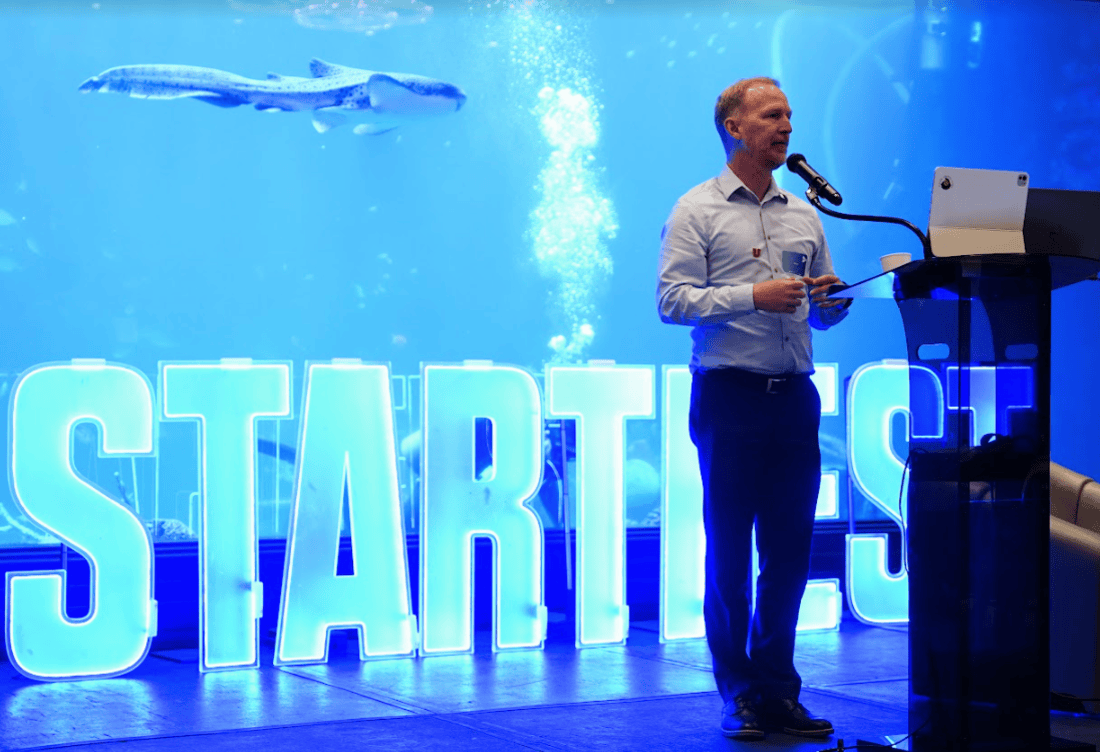
"Mo" the ubiquitous female Zebra Shark who lives at the Loveland Living Planet Aquarium was not available for comment. But she made multiple appearances on the StartFest stage throughout the day.
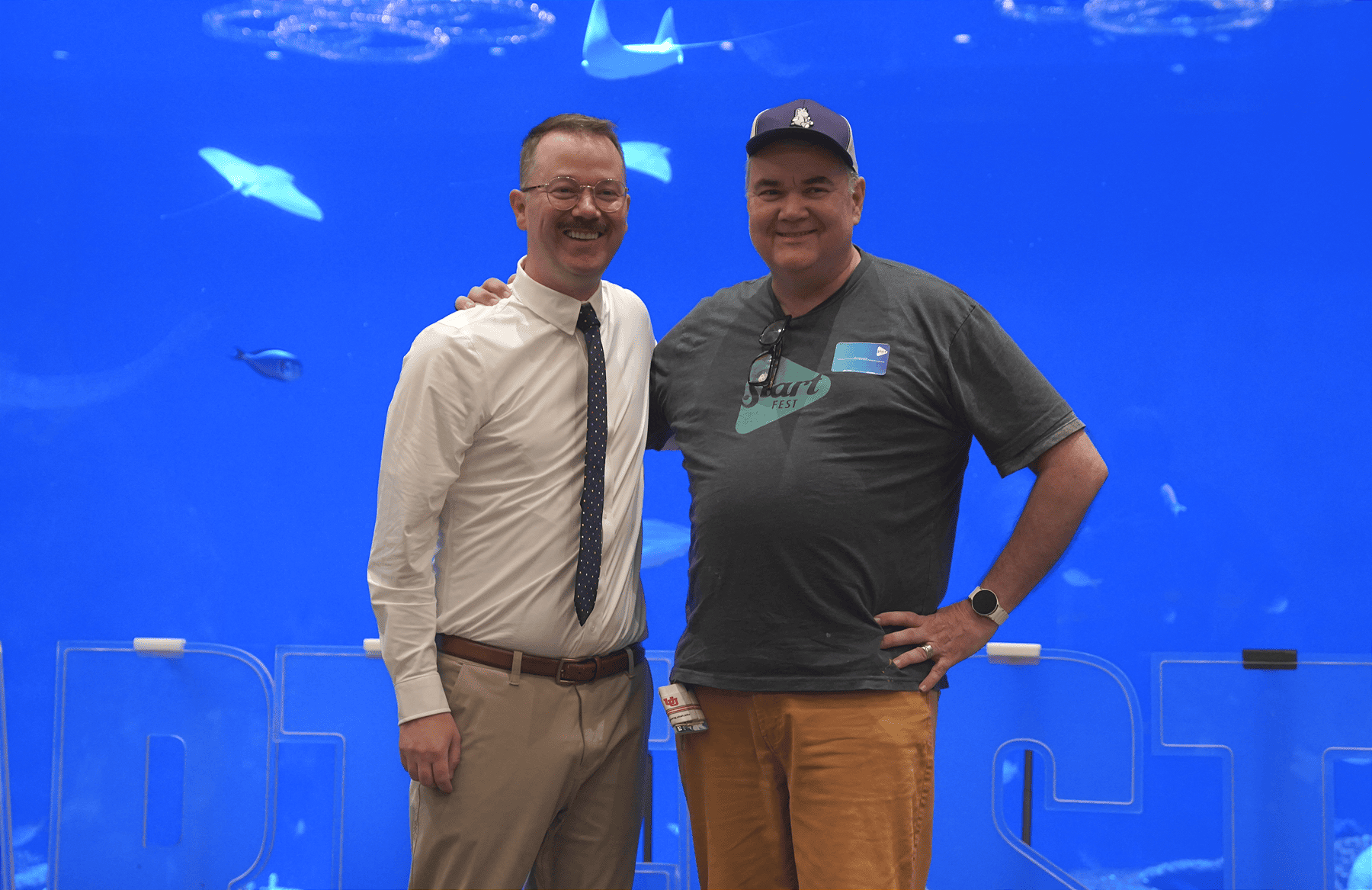
"The show doesn't make anyone a VC," Scott Holley told a room of early-stage founders Tuesday morning, referring to toward the tank behind him on center stage, "any more than standing next to a shark tank at the aquarium does."
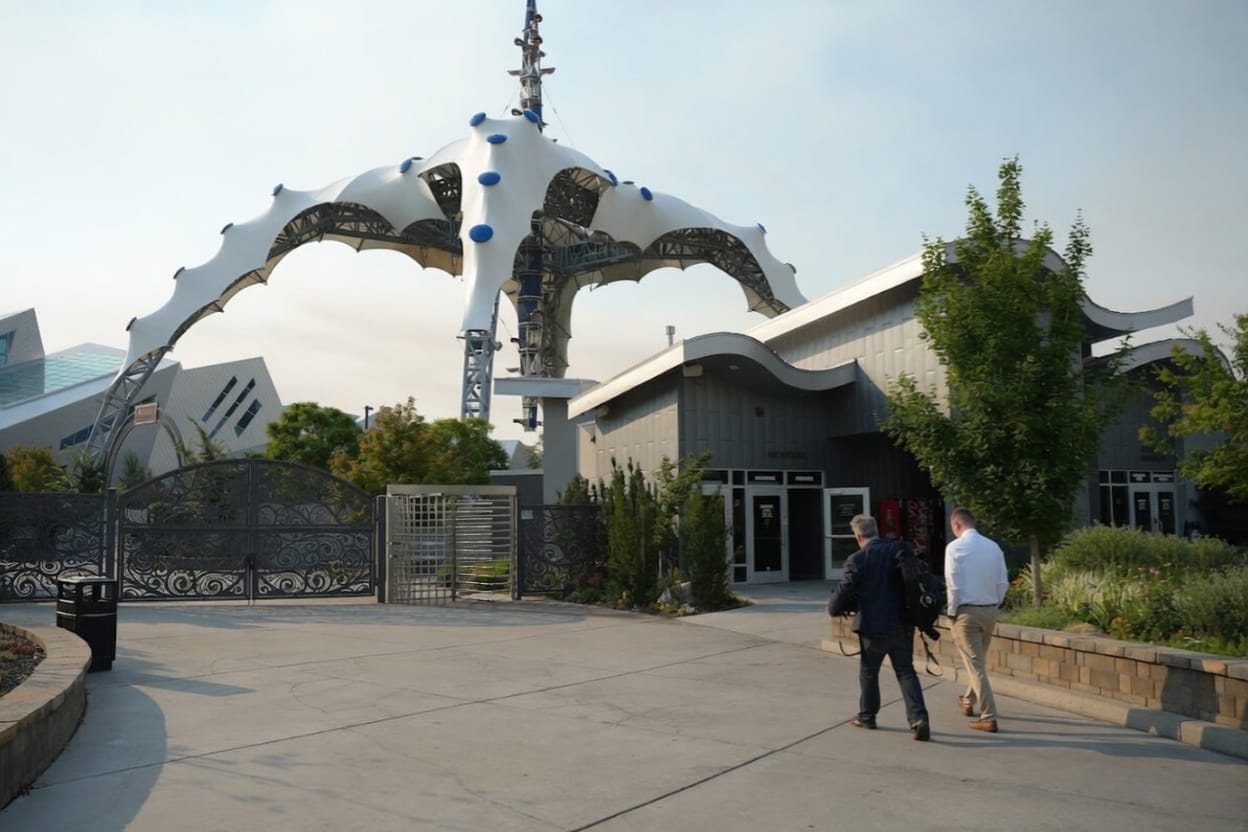
Holley's line landed. It also captured something larger running through the first day of StartFest 2026, Utah's original startup festival, now in its latest iteration at full strength taking place at the Mountain America Event Center in Draper, Utah, the newest part of the Loveland Living Aquarium complex. Four speakers across four sessions arrived at the same conclusion by entirely different routes: in the AI era, the differentiator is not the tool. It's the human holding it.
StartFest, produced by Silicon Slopes, drew over a thousand founders, operators, and entrepreneurs for what amounts to one of the better deals in Utah's tech calendar: two days of keynotes, workshops, and panels across six tracks, including AI, Funding, Sales, Marketing, Self-Leadership, and Operations. All for a modest $50, every dollar of which funds Start School, Silicon Slopes' free entrepreneurship program.
The opening frame
Opening keynote Nick Thomas, co-founder of both Bluetooth and Finicity, a financial data company that was acquired by Mastercard in June of 2020 for nearly a billion dollars. Thomas titled his talk "The Six Million Dollar Human," a riff on the 1970s television series about a man rebuilt by technology to be "better, stronger, faster." Old timers in the audience smiled as they mouthed those words in unison as the memorable music and voice track played in the intro video.
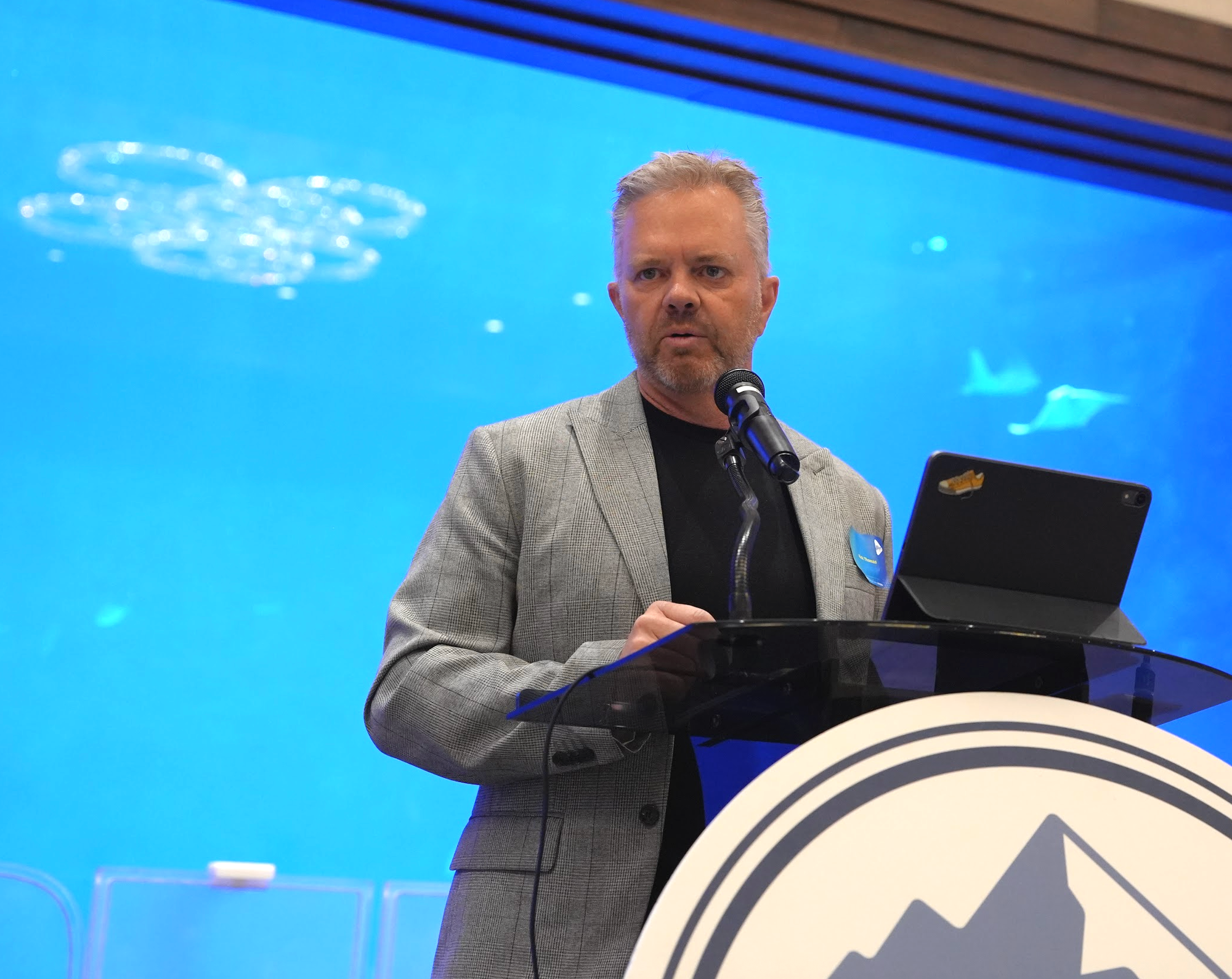
Thomas's argument was that we are living that moment right now, just not in the way the show imagined. "We're rebuilding work, we're rebuilding companies, we're rebuilding leadership, and we're rebuilding what one human can do," he told the audience. "The question is not just, can we become more powerful as humans. The question is, can we become more human while becoming more powerful."
Thomas drew on a career that includes helping build the world's first cellular-capable modem and co-founding the Bluetooth Special Interest Group. It is the original nine-company consortium whose standard, named for a 10th-century Danish king who unified Scandinavia, went on to enroll more than 43,000 member companies worldwide. He applied that same standards-building instinct to financial data at Finicity, where he spent 14 years developing what became the backbone of open banking before Mastercard came calling.
His framework for navigating the AI era was built around what he calls ESP: empathy, self-control, and personal responsibility: what he described as emotional intelligence made practical. "AI gives us leverage," he said. "Leverage without empathy can become manipulation. Leverage without self-control can become chaos. Leverage without personal responsibility can become blame at scale."
Where the money is moving
The mainstage panel that followed brought a more grounded view of the current market. Ryan Caldwell, CEO and founder of Lehi-based fintech MX participated in a warm conversation with Tara Rosander, Deputy Director and COO of the Governor's Office of Economic Development.
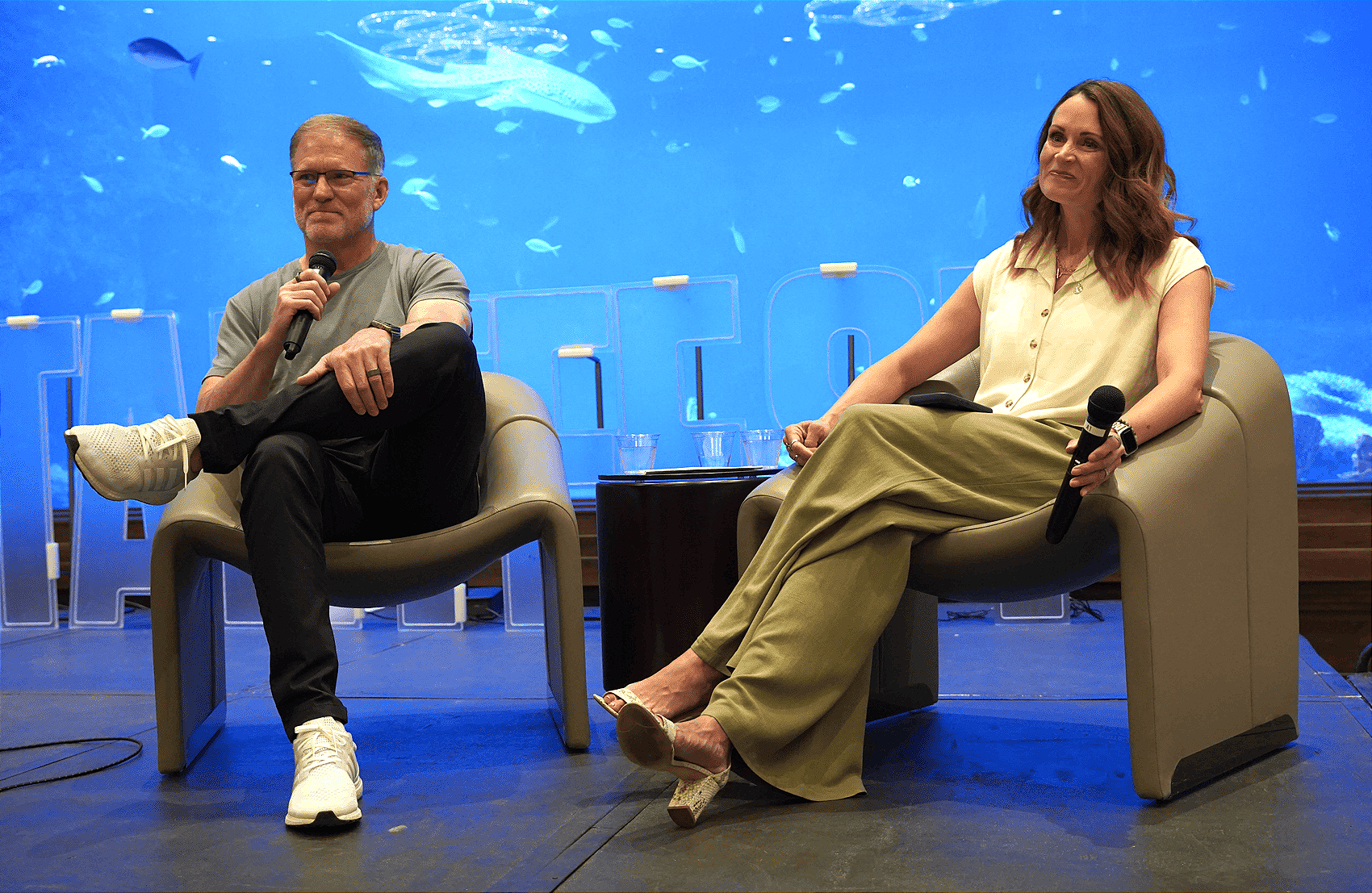
Caldwell, who stepped away from MX at its peak to focus on a serious family health crisis before returning roughly 18 months ago with much of the original founding team, spoke about rebuilding a company on the same foundational values that built it the first time. His hiring philosophy centers on what he calls the "give-a-crap factor": identifying candidates who carry genuine fire about something beyond their own career advancement. "I don't want to recruit somebody," Caldwell said. "I want to strike the tuning fork. If the company's structure and purpose and meaning is right, we just strike that tuning fork as long as possible, and we see if they naturally start to resonate."
On AI's role in fintech specifically, Caldwell was direct about the direction of travel. "If in your company you don't have many more AI agents than humans, you have a really big problem," he said, suggesting that even small startups should be thinking in ratios of 100 to 300 AI agents per human employee. He also raised a broader concern: that AI's concentration of capital productivity poses a long-term structural threat to the labor-capital balance that underpins democratic stability, a point he said founders have a moral obligation to reckon with.
The funding reality check
Scott Holley, Executive Director of the Lassonde Entrepreneur Institute at the University of Utah, ran the "Bridging the Gap" session, a tactical breakdown of what he calls seven steps from start to close.
His market read was stark and unsparing. Pre-seed is the new seed, he told attendees. Investors now expect $300,000 to $500,000 in recurring revenue at the seed stage, territory that used to belong to Series A. The capital pool is growing, but concentrating: bigger bets on fewer companies. First-time founders should plan for raises that take up to six months.
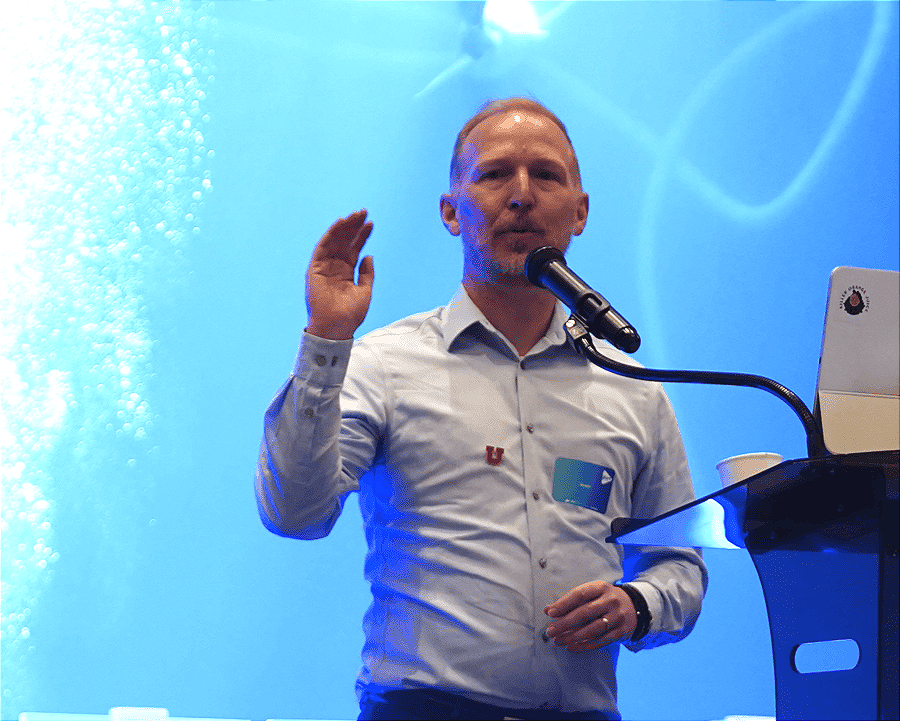
His most pointed advice concerned investor qualification, or the failure of it. "You're hungry, you're checking your personal runway, and so you react to whoever is closest," Holley said. "The nearest chair, the loudest 'I'm interested,' and you hand over your most precious resource, your time, to people who will never wire a dollar." He recommended founders never leave a meeting without asking a prospective investor for their typical decision timeline and a clear yes-or-no window.
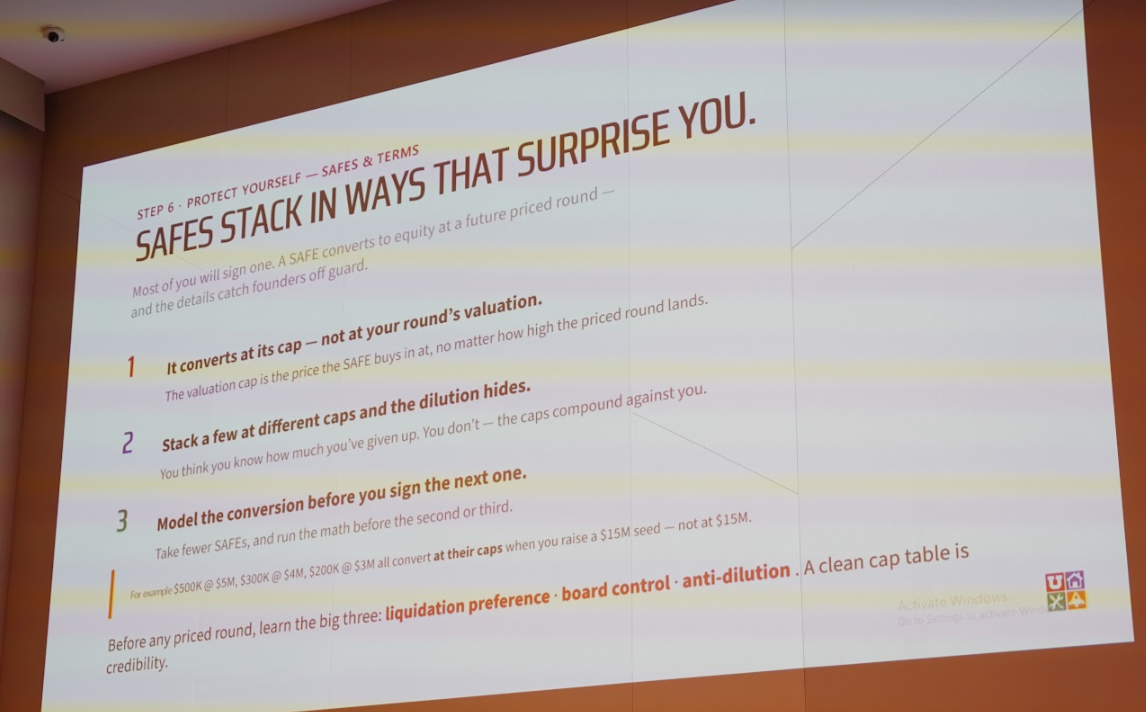
On the instrument question, Holley urged caution with stacked SAFE notes, a pattern he's seen crush founders with dilution they didn't see coming. "Take fewer of them, model your conversion more carefully, and understand that you're betting on the future price round." He also made a case for non-dilutive capital: Lassonde founders have collectively raised $1.4 billion, supported in part by $4.3 million in grants and cash prizes. "You can get tremendous return on very little dollars," he said, "if you're staging them quickly and incrementally through non-dilutive sources first."
The F1 in the garage
Joe Grover, Chief Growth Officer at Ampleo, closed the morning with a sales and marketing session built around a single provocation: everyone in the room has access to the same AI tools. So why are results so different?
His answer, delivered via a contrast between JPMorgan's AI-assisted ad campaign, which generated a 450% increase in click-through rates, and Coca-Cola's AI-generated commercials, which were widely criticized for lacking human connection, was that the tool is the F1 car, and the driver is still everything.
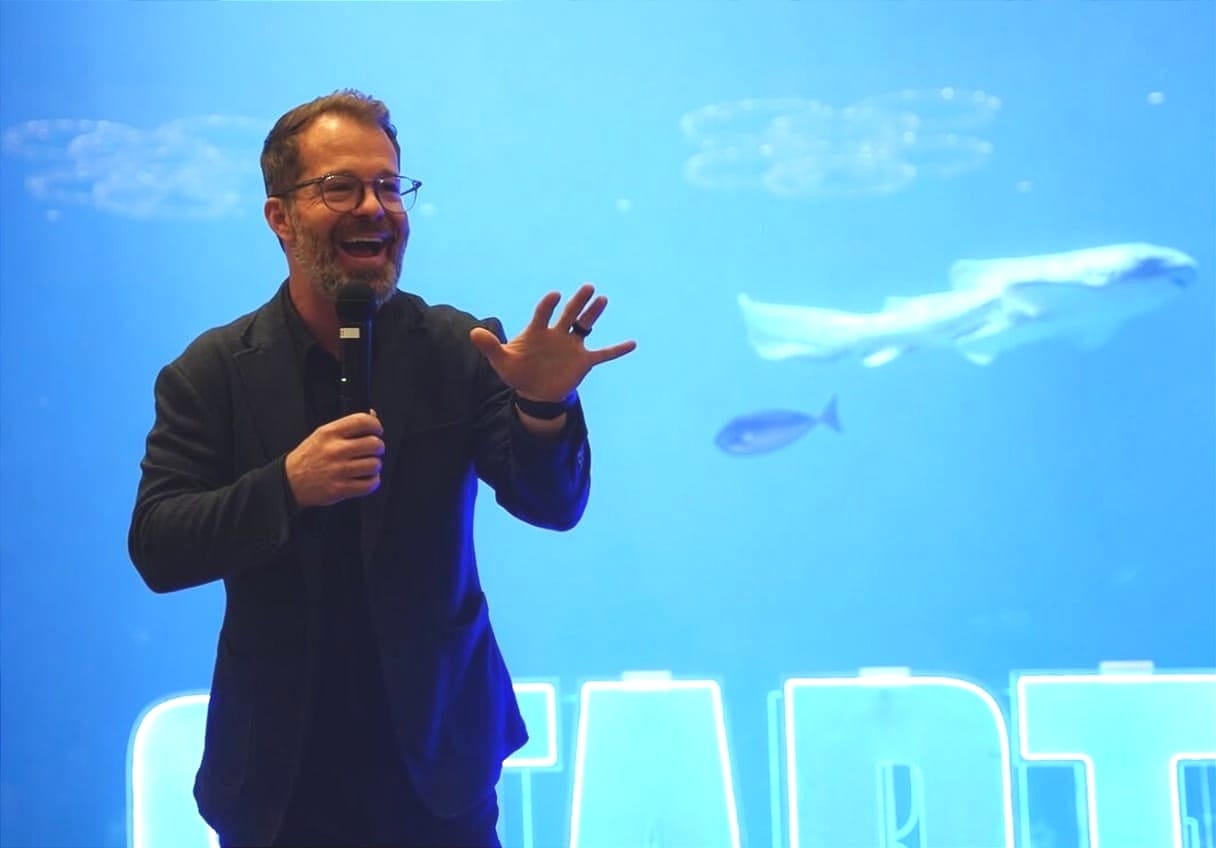
Grover ran a quick show of hands: seven of roughly fifty attendees could quantify AI's direct impact on their revenue. "That's still a beautiful window of opportunity," he said, citing McKinsey data suggesting early AI adopters in go-to-market functions could see nearly double the revenue growth of laggards over the coming years.
His caution was equally blunt: "The most expensive mistakes you'll ever make as a founder or a go-to-market leader are flawless execution on the wrong basis." AI, he argued, can optimize any direction you point it, but deciding which direction requires human judgment, taste, and the willingness to break a pattern when the pattern is wrong. "AI sees the pattern," he said. "Humans are the ones that decide what to pay attention to and when to break it."
The throughline
StartFest runs through Wednesday at the Mountain America Event Center. Tickets Day Two, starting earlier than Day One, and features an exceptionally strong line up, includes additional tracks across all six program areas. What Day One established was a consistent argument that no speaker appeared to have coordinated: that the AI era does not diminish the human variables, such as empathy, judgment, relationships, character; it amplifies them. The founders who treat those as soft extras rather than core infrastructure, several speakers suggested, are likely to find out the hard way.
Day Two opens at 8:45 with Jeremy Andrus, who scaled Traeger into a national brand, speaking on what AI actually means for Utah business.
The centerpiece of the morning is the Startup World Cup regional competition, running from 9:15 to nearly 11:00. Ten Utah finalists, including Badgerlane Wealth, Model Forge, LaunchDocs, Monere, Bloom Dating, and Bringit Travel, pitch for a spot at the global finals in San Francisco. The judging panel includes Anil from Saras AI, Shawn Finnegan, Tyler Jennings from the Governor's Office, Stephanie Taft from EY, and Alyssa Dehart. It is the rare conference session where the outcome is real and the stakes are not hypothetical.
Late morning breaks into the track rooms. Kurt Workman, co-founder of Owlet, joins Clint Betts for a session on leading without a conventional resume. Gabe Larsen takes on the question of hiring your first AI employee. Zack Oates of Ovation runs a growth session that merits more attention than its placement on the schedule suggests.
The afternoon includes a data center panel: Sara Baldwin, Kevin Perry, Rob Davies, and Brian Beutler. They will examine the energy infrastructure behind AI at scale, a conversation the industry has been slow to have openly. At 2:40, Kristen Hansen runs a Claude Cowork 101 session for attendees ready to move from awareness to application.
Learn more at startfest.