The Six Million Dollar Human
Nick Thomas spent 25 years building infrastructure that connected the world. Then he had to reckon with what he'd neglected to build closer to home.


Nick Thomas spent 25 years building infrastructure that connected the world. Then he had to reckon with what he'd neglected to build closer to home.
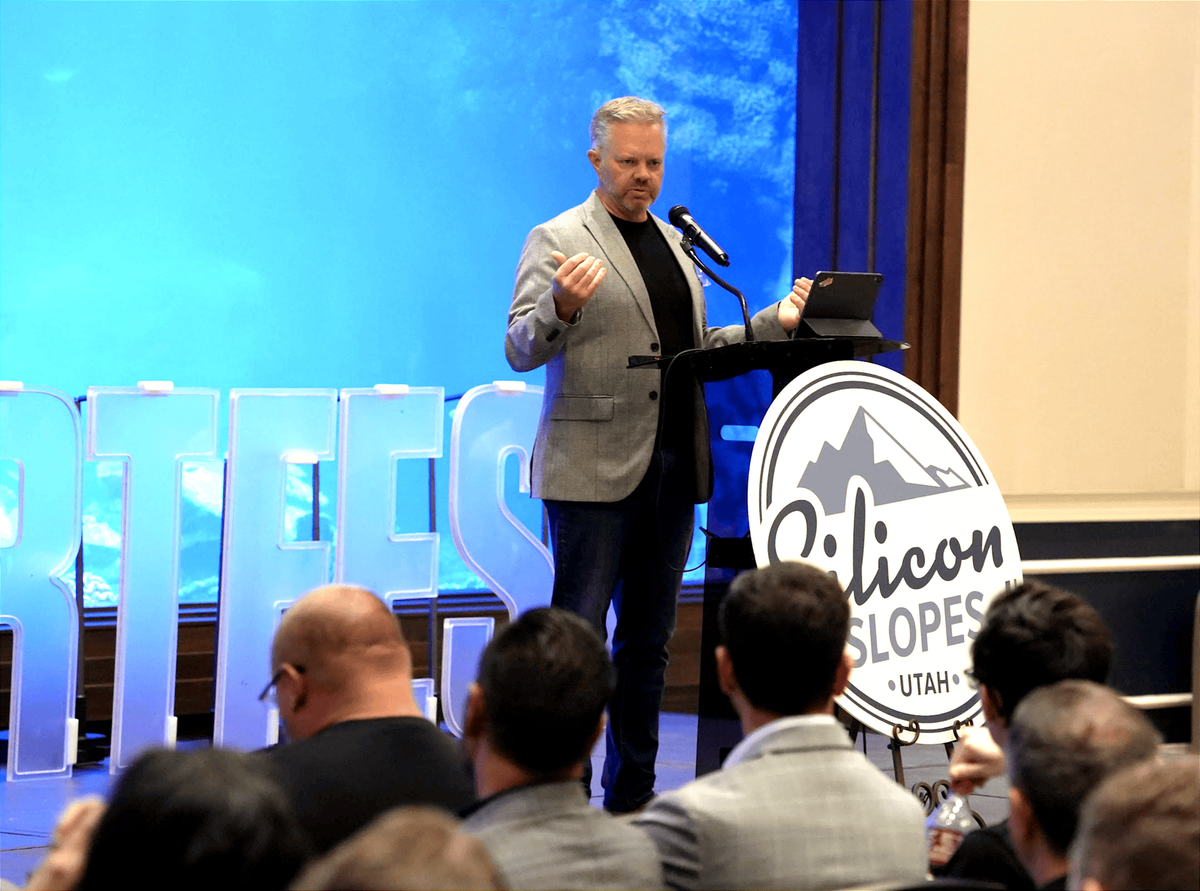
Nick Thomas co-founded Bluetooth, built and sold Finicity to Mastercard, and then lost nearly everything that mattered to him. What he rebuilt next wasn't a company.
Draper, Utah — June 23, 2026
Nick Thomas has a habit of building infrastructure other people didn't know they needed.
In the late 1990s, it was wireless connectivity. He was part of the team that built the world's first cellular-capable modem, and then helped convene the nine founding companies of the Bluetooth Special Interest Group, the consortium that quietly standardized short-range wireless communication for an entire planet.
In the 2000s, it was financial data. He spent 14 years building the pipes that let consumers and lenders access bank data reliably, legally, and at scale, a project that eventually attracted an acquisition offer from Mastercard and closed as one of Utah's landmark exits.
And then, five weeks after that deal closed, he started building something else entirely. This one was harder.
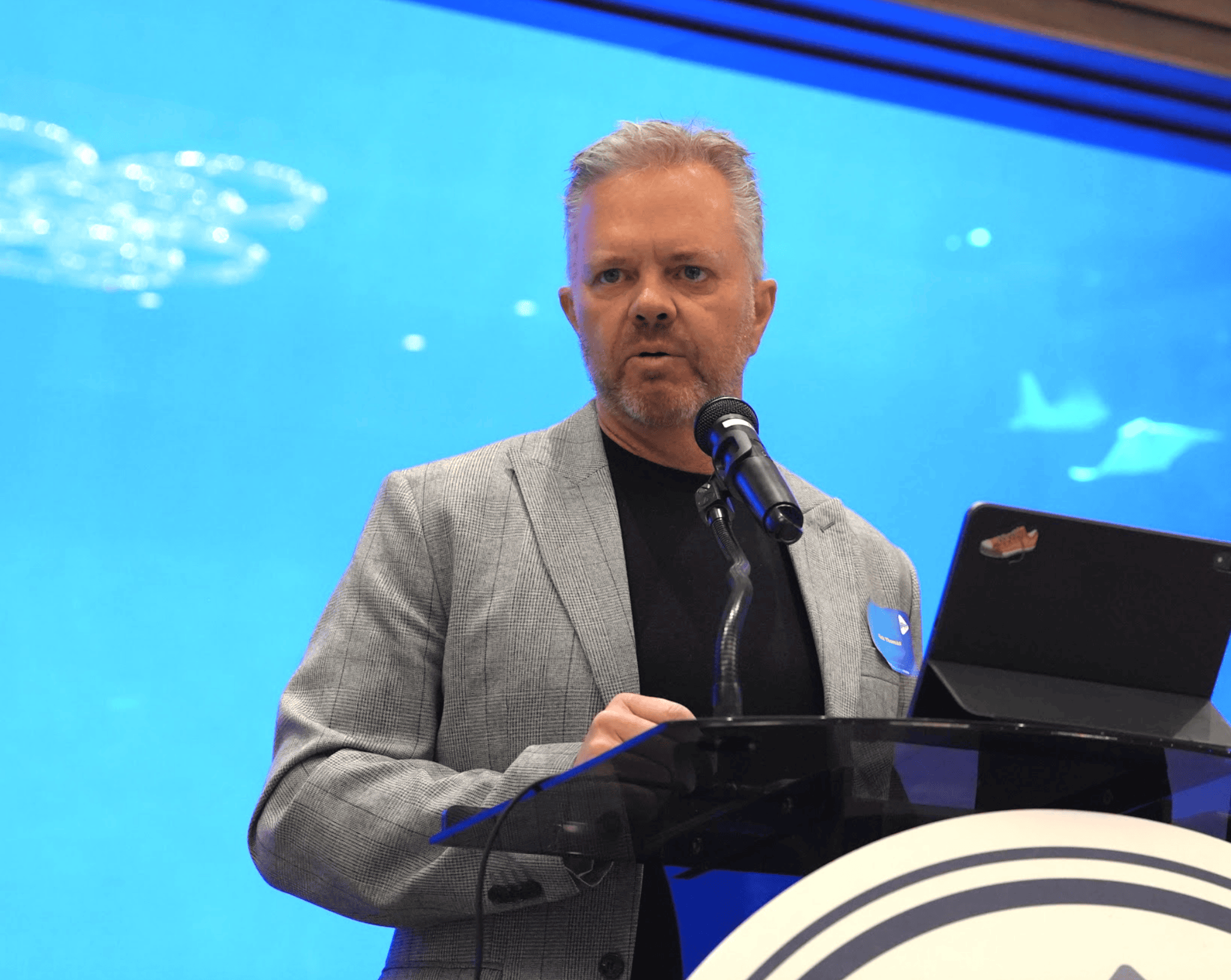
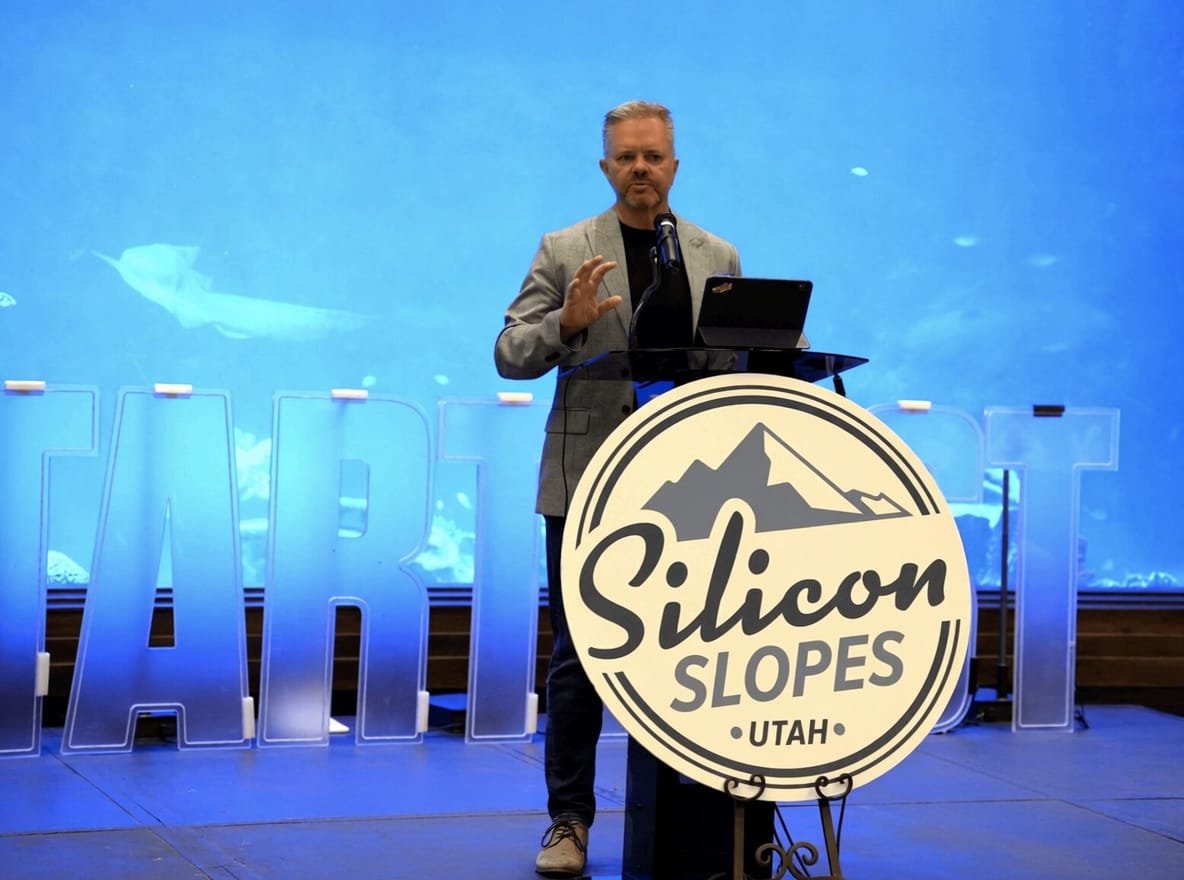
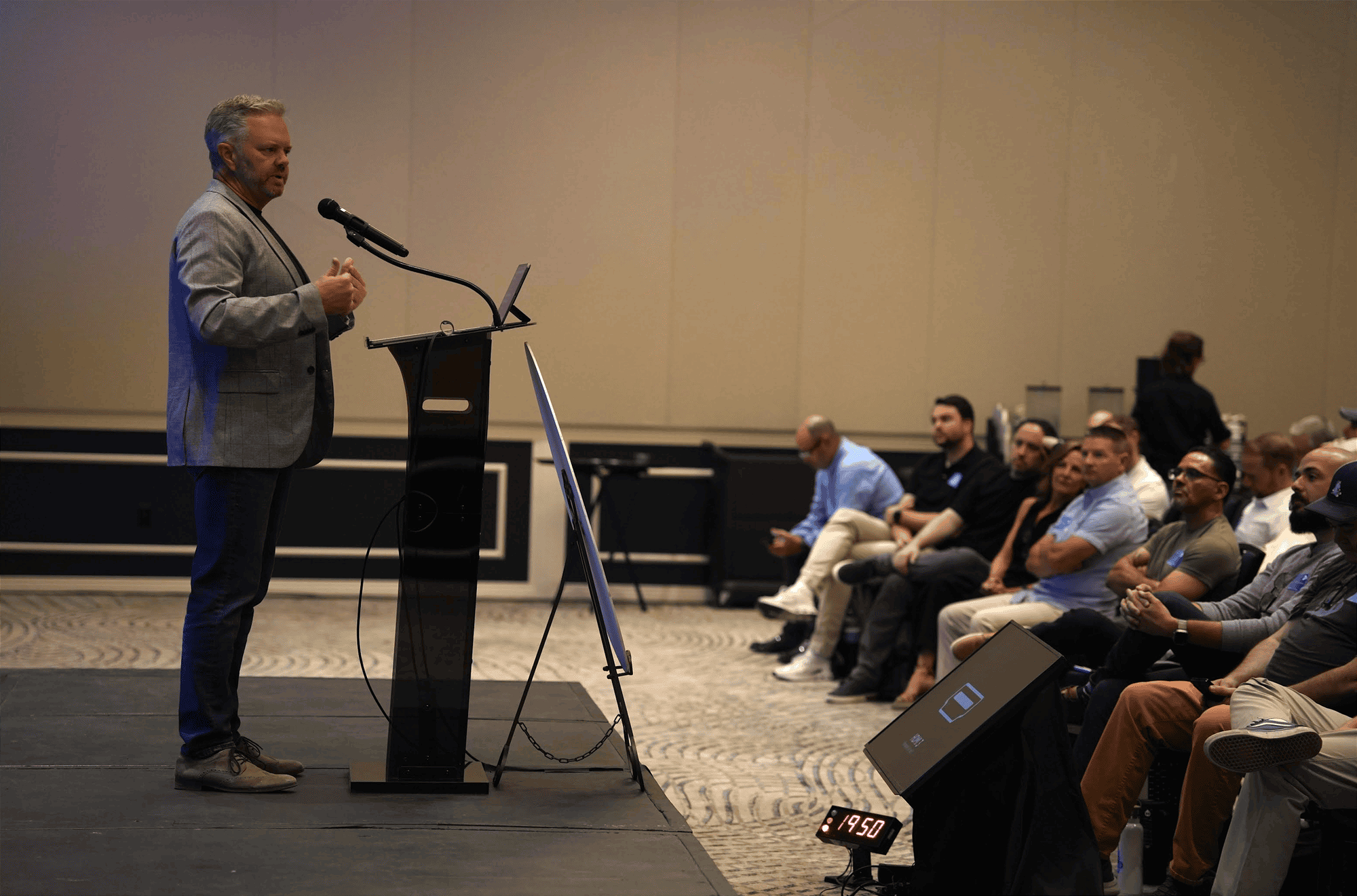
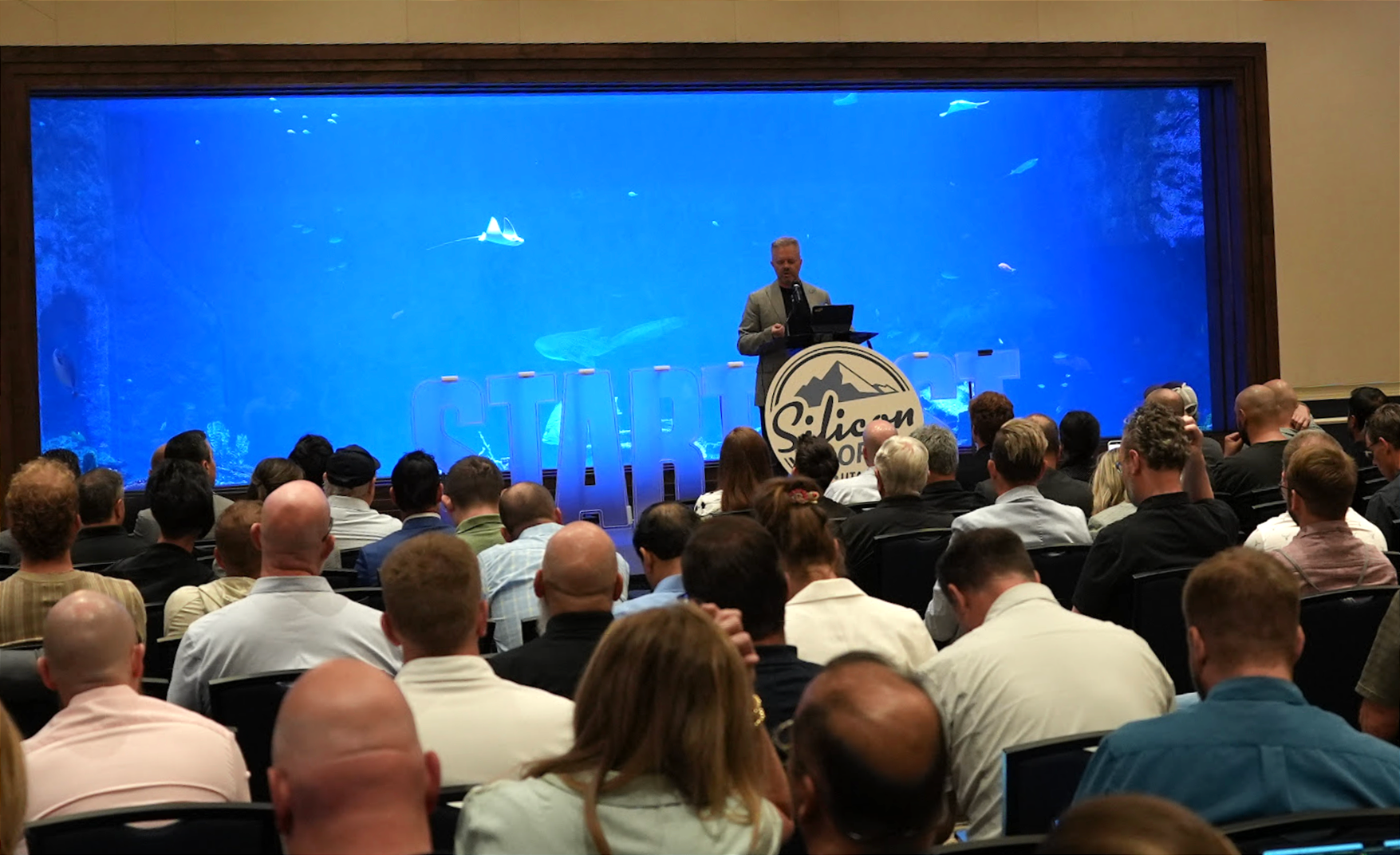
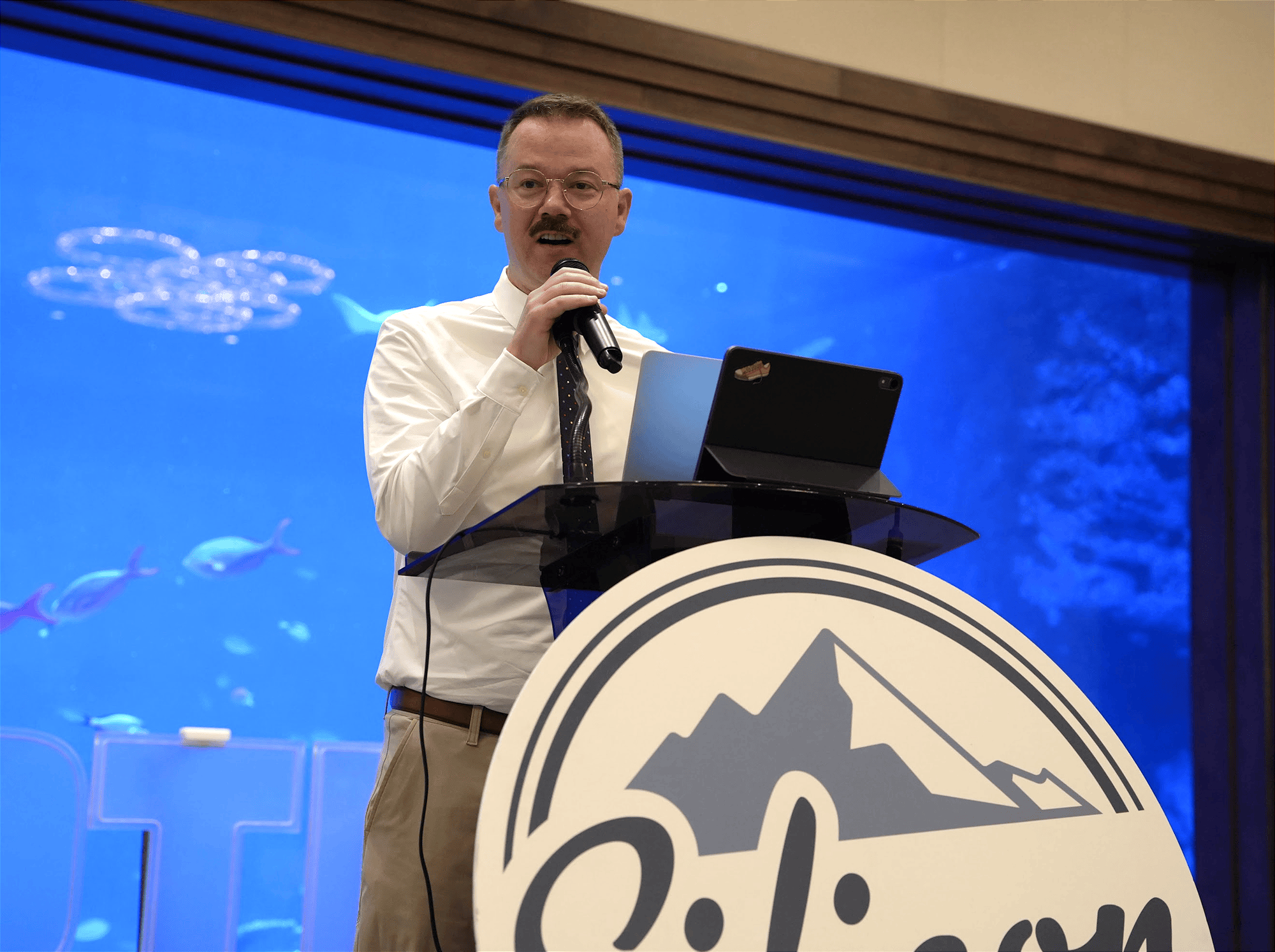
Thomas opened StartFest 2026 on Tuesday at the Mountain America Event Center in Draper, delivering the keynote for Utah's original startup festival in front of a thousand founders, operators, and entrepreneurs. His talk, titled "The Six Million Dollar Human," used the 1970s television show premise — the government rebuilds a crashed test pilot with bionic technology, making him "better than he was before: better, stronger, faster" — as a launching pad for an argument about what AI does and doesn't fix in the humans deploying it.
It was the kind of talk that is difficult to deliver and harder to fake. Thomas wasn't presenting a framework from a safe distance. He was reporting from the middle of it. And it ended up being the most profound, candid, and moving keynote of the day.
The infrastructure years
Thomas's career has followed a consistent thread that he didn't fully recognize until he looked back at it. "Every major chapter was about helping people become more connected, more visible, and more trusted and empowered," he told the packed audience. "When you change the pipes, you change the possibilities."
The first chapter was internet connectivity at Megahertz, a Wave I Utah tech company founded in 1985 and eventually became part of the 3Com family that included US Robotics and Palm. In 1996, Thomas was a member of the team that built the first modem capable of connecting a laptop to a cellular network via a serial cable. It was an unglamorous piece of hardware that was, in retrospect, a preview of mobile computing's entire trajectory.
On the heels of that project, engineers at Ericsson approached Thomas about something more ambitious: creating a standard for wireless short-range communication. Thomas, representing 3Com, US Robotics, and Palm, joined eight other companies to form what became the Bluetooth Special Interest Group. The name came from a proposal by Jim Kardach at Intel, a nod to Harald Bluetooth, the 10th-century Danish king who unified Scandinavia under a single banner, an apt metaphor for what the SIG was attempting to do with a fragmented wireless landscape.
The SIG's founding terms required member companies to sign over all past, present, and future intellectual property related to short-range wireless. It was a provision that effectively prevented any competing standard from emerging. Today the organization is a Delaware nonprofit headquartered in Kirkland, Washington, with more than 43,000 member companies. "I never made a dime off of Bluetooth," Thomas noted, "and nor did any of the founders, unless we sold products that used the technology." The point was not complaint. It was a lesson he has applied repeatedly: participating in industry standardization while building products simultaneously is both ethically sound and strategically powerful.
The second chapter was Finicity. Thomas co-founded the Murray-based company in 2000 with a modest ambition, a personal finance app that would help consumers track their budgets on the Palm Pilot, and a significant technical problem: getting transaction data out of banks that had no interest in sharing it. The solution involved more than 10,000 unofficial hacks to log into bank accounts using customer credentials and harvest transaction data nightly. "We broke rules," Thomas said. "We did things you weren't supposed to do, because it wasn't possible, and we created a new reality in the process."
Fourteen years later, other fintechs started calling to ask if they could access the same data connectivity infrastructure Finicity had built for itself. Thomas pulled the technology out of the consumer app, put an API on top of it, and pivoted to B2B — selling data pipe access to lenders who used it to slash mortgage decision times from ten days to ten minutes and closing timelines from seventy days to ten.
In 2016, he applied the Bluetooth playbook to financial data. He wrote a white paper called Initiative X and spent two years convincing twenty-one of the world's largest financial services and fintech firms to converge on a common standard for bank APIs. In October 2018, that effort formally launched as the Financial Data Exchange. Two years later, in November 2020, Mastercard acquired Finicity for $825 million (approximately $960 after earnouts).
"We literally went from 2014, barely surviving, to an amazing, exciting exit," Thomas said. "It was beautiful."
The crash
Five weeks after the close, his life began coming apart.
Thomas's wife of 22 years revealed that their relationship was in a much worse place than he thought. He had been so focused on external systems, connection infrastructure, trust infrastructure, identity infrastructure, that he had failed to notice the deterioration of his most important internal ones. Ten months later, separation. Eighteen months later, divorce. Then the cascade: moving out of a home of 17 years, navigating a company transition after two decades, losing the personal and professional community that had become the load-bearing walls of his identity.
"The strange thing about identity," he told the audience, "is that you don't always know how much of it is being held up by the people, places, roles, rooms, rhythms, and relationships around you until they're gone."
He was not subtle about where this had led him. "I wasn't the heroic founder from the highlight reel," he said. "I wasn't the competent entrepreneur in the press release. I was in a heap in a dark corner, alone."
What followed was not a montage. There was therapy, courses, hard conversations, grief, accountability, and what he described as a lot of staring into the abyss wondering if another ten minutes was worth it. Slowly, with help, he began to rebuild — not a company, but an emotional framework. An awareness of himself and the people around him that the infrastructure years had crowded out.
"I stand here not as someone who has completed the upgrade," he said. "I stand here as someone who finally accepted the work order."
The rebuild
The argument Thomas built from that experience is the one he brought to StartFest: that the AI era makes emotional underdevelopment in founders not just a personal liability but a professional one.
"AI gives power to the person operating it," he said, "and power magnifies the operator." A founder with strong pattern recognition and weak empathy, operating at AI-enabled scale, doesn't just underperform — they do damage faster and at greater reach than any previous generation of underdeveloped leaders could have managed.
The framework he proposed, ESP, came from Alissa Goodwin Snell, founder of Lasting Love Academy (and his dating coach), and is fit for purpose to address that gap at the practical level.
Empathy, he was careful to note, is not niceness: "being nice is often conflict avoidance in a sweater." It is the ability to understand another person's experience accurately enough to respond responsibly. Self-control is not suppression. It is the ability to feel something strongly without making it everyone else's emergency. Personal responsibility means owning impact, not just intent. "The era of intent is enough," he said, "is over."
The Six Million Dollar Human of the title is the output of both upgrades running in parallel: AI capability and emotional intelligence, developed together intentionally rather than left to chance. "A founder builds six million dollar humans," Thomas said, "by creating a culture where people stay close to the customer's pain, where truth travels fast, where tools are adopted aggressively, where emotional chaos is not confused with passion, where ownership is expected, and where repair is normal."
That last word, repair, carried weight in context. Thomas wasn't speaking theoretically about organizational health. He was speaking from a place where the cost of not repairing things had been measured in years and relationships and a marriage that didn't survive the exit that was supposed to be the reward for everything.
"You can build companies and still avoid yourself," he said. "You can scale revenue and still shrink emotionally. You can win in the market and lose trust at home."
The old premise of the show, he told the audience near the close, was that technology could rebuild the human body. The new premise is more demanding: we can rebuild us. "Build better humans," he said, "and we can build better companies that will build a better tomorrow."
StartFest 2026 continues Wednesday at the Mountain America Event Center in Sandy. Tickets are $50 at siliconslopes.com/startfest, with all proceeds funding Start School, Silicon Slopes' free entrepreneurship program. Learn more about Love Lasting Academy here.