Inside LOIS Legal Research: How Filevine Is Hunting for the Precedents Citators Can't See
Filevine (Salt Lake City, UT) launched its LOIS platform, adding an AI-native legal citator that targets specific passages rather than whole opinions, using dual-pathway retrieval to surface uncited "sub silentio" conflicts.
Somewhere in the federal reporters, a judge once looked at two earlier opinions and declared, in effect, that the second had quietly overruled the first, without ever citing it by name. No footnote. No "cf." No signal a traditional citator could latch onto. For the lawyer relying on the earlier opinion, the ground had shifted, and nothing in Westlaw or LexisNexis would have told them so.
That kind of silent conflict, known in legal circles as a sub silentio reversal, is the gap Filevine says its newest product is built to close. The Salt Lake City-based legal technology company has released LOIS Legal Research, an AI-native citator and authority-validation tool built into its Legal Operating Intelligence System, or LOIS, console. In early internal testing, Filevine says the tool caught sub silentio conflicts nearly every time, cases where the two dominant legal research platforms largely came up empty.
"Citators tell you about the case. Lawyers cite the holding. LOIS Legal Research closes that gap," said Ryan Anderson, Filevine's co-founder and CEO. "AI is changing how lawyers research the law. LOIS Legal Research is built so that AI can be trusted to tell them whether the law still holds."
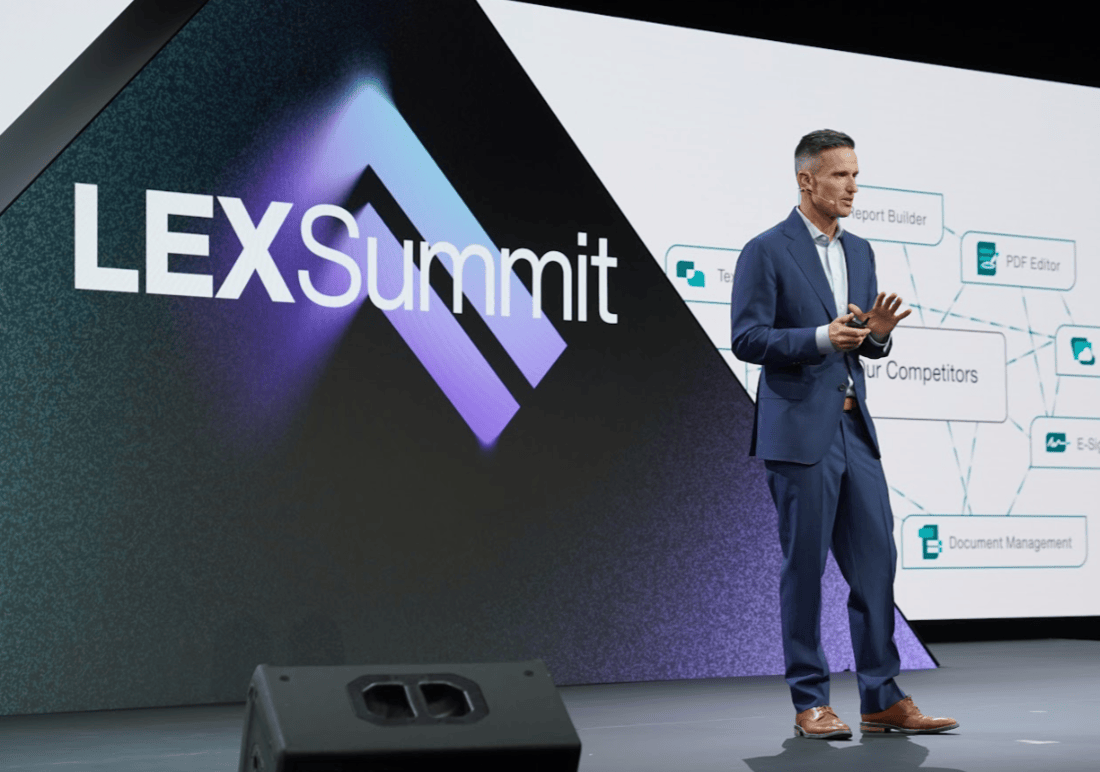
Filevine CEO, Ryan Anderson, speaking at LEXSummit 2024, Salt Lake City, Utah. Photo: Mark Tullis, TechBuzz
The product lets attorneys highlight a specific passage or holding in a case, rather than the opinion as a whole, and returns a structured memo detailing how later courts have treated that exact proposition, including a table of authorities and a treatment signal.
A duopoly forty years in the making
Westlaw and LexisNexis have gone largely unchallenged as the dominant legal research platforms for decades, an entrenchment John Rizner, Filevine's product manager and the architect of LOIS Legal Research's underlying approach, traces to two structural advantages. Shepard's Citations, the citation-tracking system whose earliest volumes date to the 1870s, relied on attorney editors manually tracing how each new opinion engaged with the cases it cited — a labor-intensive process that rewarded incumbents with decades of head start. Bloomberg Law attempted to break into the market in past years but has not displaced the two dominant players.
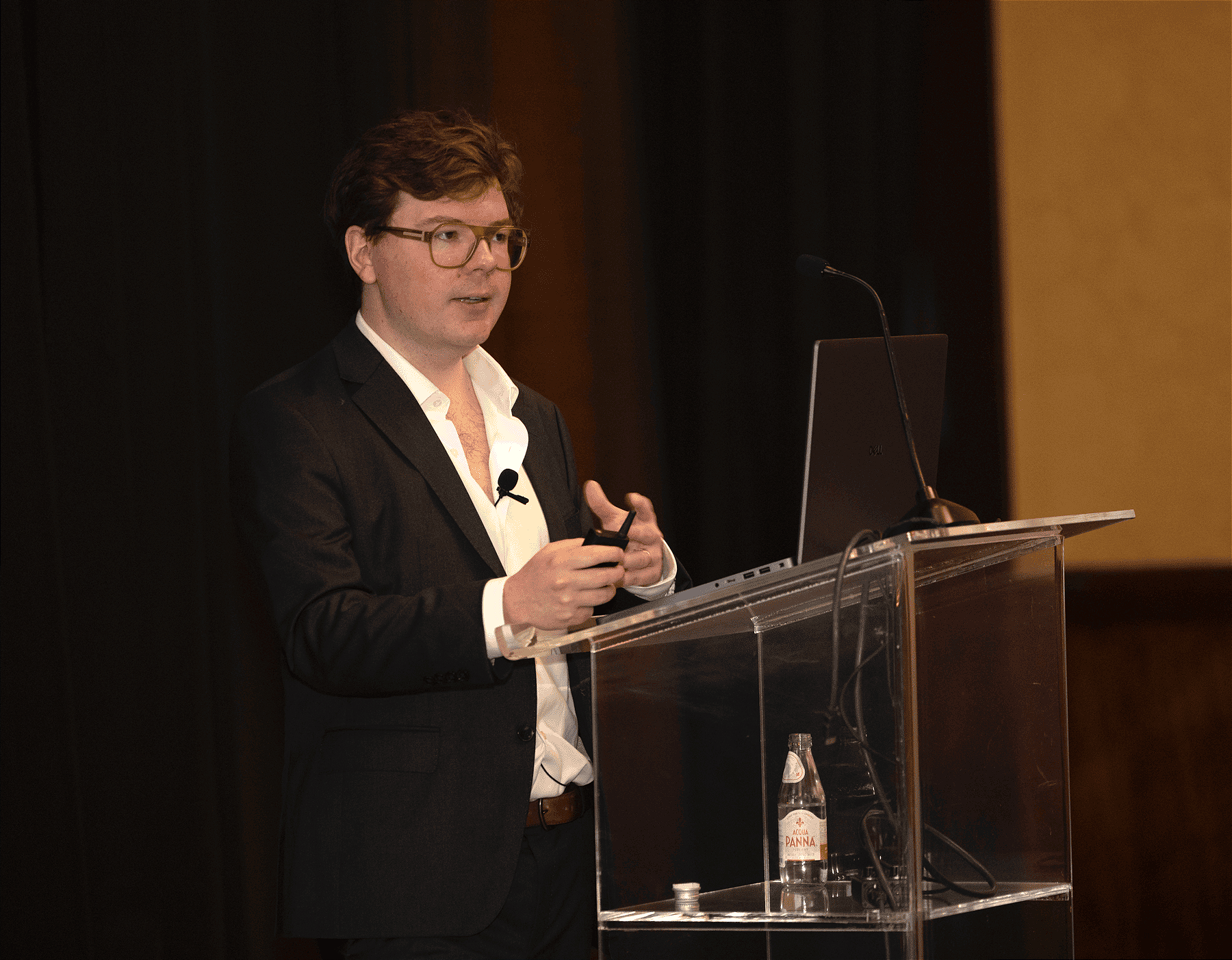
John Rizner, Product Manager, Filevine. Credit: Filevine
The second advantage was structural: the companies publishing court opinions were often the same companies performing the citation analysis, making the underlying data itself difficult for a newcomer to access at scale.
Rizner said two recent shifts changed the calculus. Advances in natural language processing and large language models made it possible to analyze opinions at a level of nuance previously reserved for human editors, while open-source legal databases — including the Free Law Project's CourtListener and Harvard Law School's Case Law Access Project — made centuries of U.S. opinion data broadly available for the first time.
Two nets in the water
Traditional citators work almost entirely off citation graphs: opinion A cites opinion B, which cites opinion C, and a researcher follows that chain outward. Michael Anderson, Filevine's chief product officer, compared that approach to a music-recommendation algorithm that suggests songs based on what listeners with similar habits have played — useful, but blind to connections outside the established pattern.
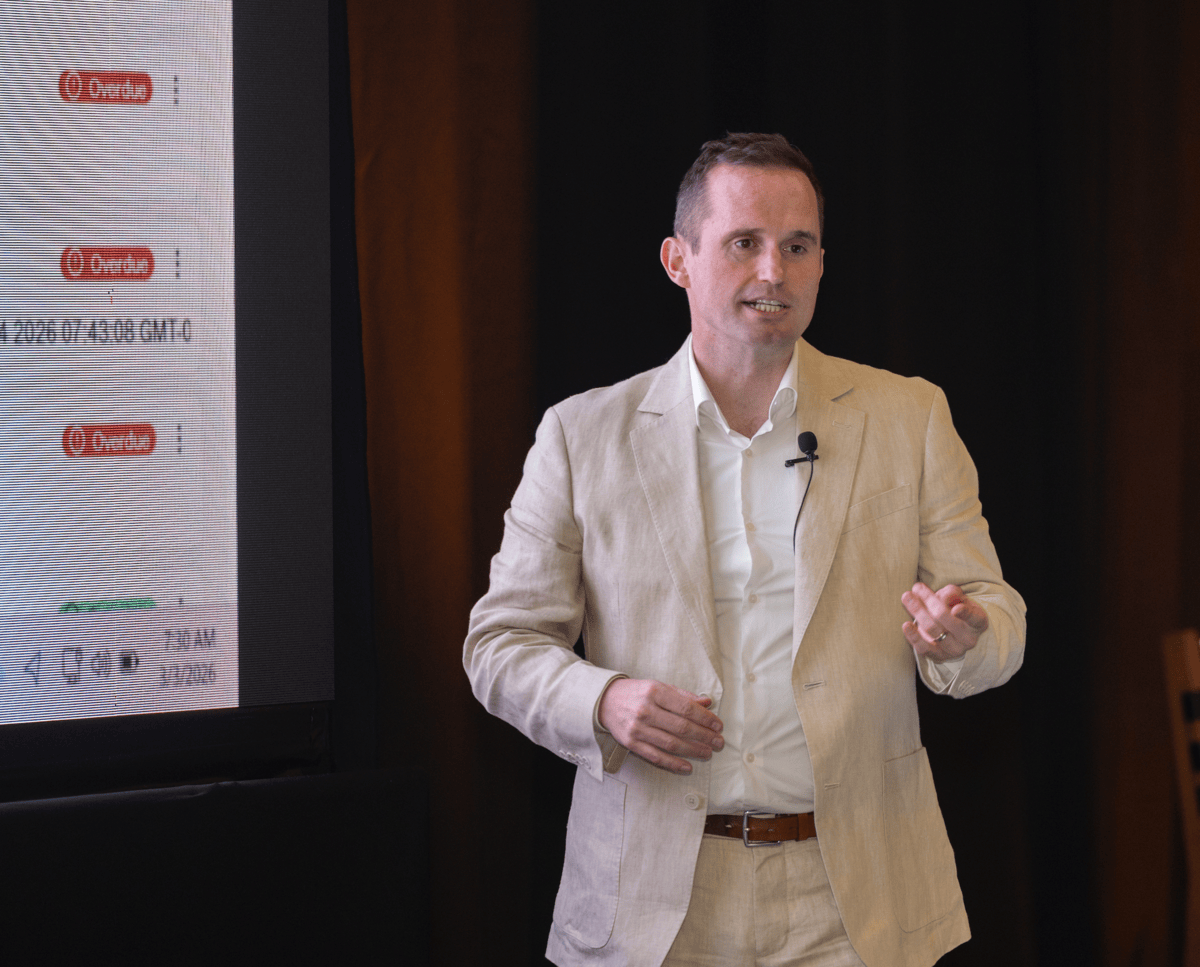
Michael Anderson, Chief Product Officer, Filevine. Credit: Filevine
LOIS Legal Research runs a second, parallel pathway alongside the citation graph: a semantic-similarity search that surfaces later opinions engaging with the same legal proposition even when those opinions never cite the original case at all. Rizner described the combination as two fishing nets cast into the same water — one catching citational relationships, the other catching conceptual ones — with the results from both passed to a large language model for a final structured analysis.
"We might catch fish in that first net. We might catch fish in the second net," Rizner said. "It might be the case that fish caught in the second net aren't caught in the first net, and vice versa."
Anderson said the company has already found entire pockets of relevant case law invisible to existing citators simply because no explicit citation link exists in the underlying documents, despite clear substantive overlap between the opinions.
The scale involved in that process is considerable. Rizner said a single completed analysis for one user can involve tens of thousands of individual large language model calls, a function of sifting through opinion corpuses that run into the millions — CourtListener's alone numbers in the eight-to-nine-million range, he said — while maintaining confidence in the result.
Early numbers, with caveats
Filevine is in the middle of building a formal benchmark spanning all fifty states and federal jurisdictions, drawing methodological inspiration from prior academic research by legal scholars Susan Nevelow Mart (Professor Emeritus at the University of Colorado Law School) and Paul Hellyer(Reference Librarian, William & Mary Law School), whose work documented meaningful divergence between Westlaw's and LexisNexis's results for identical citation queries. That full benchmark is expected to be released publicly later this summer.
In smaller internal studies conducted ahead of that release, Filevine said it identified cases in which a later court explicitly found that one earlier opinion had overruled another, then tested whether Westlaw and LexisNexis caught those relationships. Rizner said the two platforms did not always agree with each other on standard overruling relationships, and where they did align, Filevine's own tool recorded roughly 94% recall.
The more notable figure involves the subset of those relationships in which the overruling opinion never mentioned the earlier one at all — the sub silentio cases. On that subset, Rizner said Filevine's dual-pathway approach found the correct relationship nearly 99–100% of the time in early, small-scale testing, while the existing citators struggled to surface almost any of them.
Those figures come from internal, limited-scale testing rather than the broader forthcoming benchmark. Filevine will release a whitepaper later in 2026 on the company's findings.
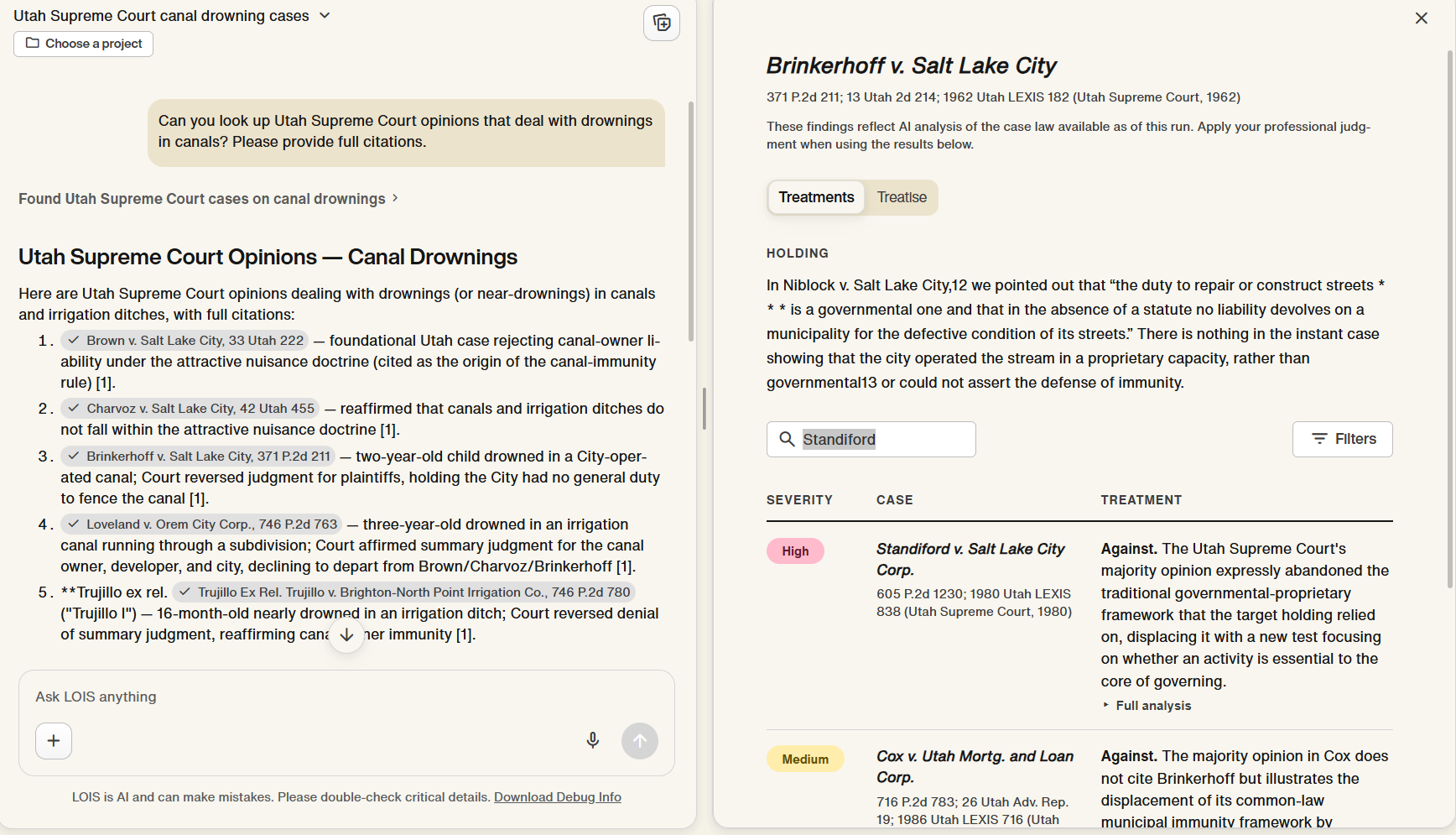
A split-screen view of Filevine's LOIS Legal Research illustrates both halves of the tool's dual-pathway approach. On the left, a conversational query returns a list of verified Utah Supreme Court opinions on canal and irrigation-ditch drownings, each citation checkmarked against LOIS's caselaw sources. On the right, a passage-level treatment analysis of Brinkerhoff v. Salt Lake City shows how later opinions have engaged with its holding, including Cox v. Utah Mortgage and Loan Corp., flagged as working against Brinkerhoff's framework even though it never cites the case directly, an example of the kind of uncited, sub silentio conflict traditional citators are prone to miss. Credit: Filevine
Guarding against a hallucination problem of the industry's own making
The release of an AI-native legal research tool arrives at a moment when courts have increasingly sanctioned attorneys for citing fabricated or misstated case law generated by AI tools, the backdrop Filevine says shaped some of its product roadmap. Anderson said customer feedback since the tool's initial rollout has centered on ensuring users can distinguish a verified opinion, whose text can be opened and read directly within the platform, from one the system cannot fully verify.
Anderson said a significant feature release addressing that distinction directly is expected within days of the interview, adding features intended to flag or restrict a citation the system cannot verify against the underlying opinion text.
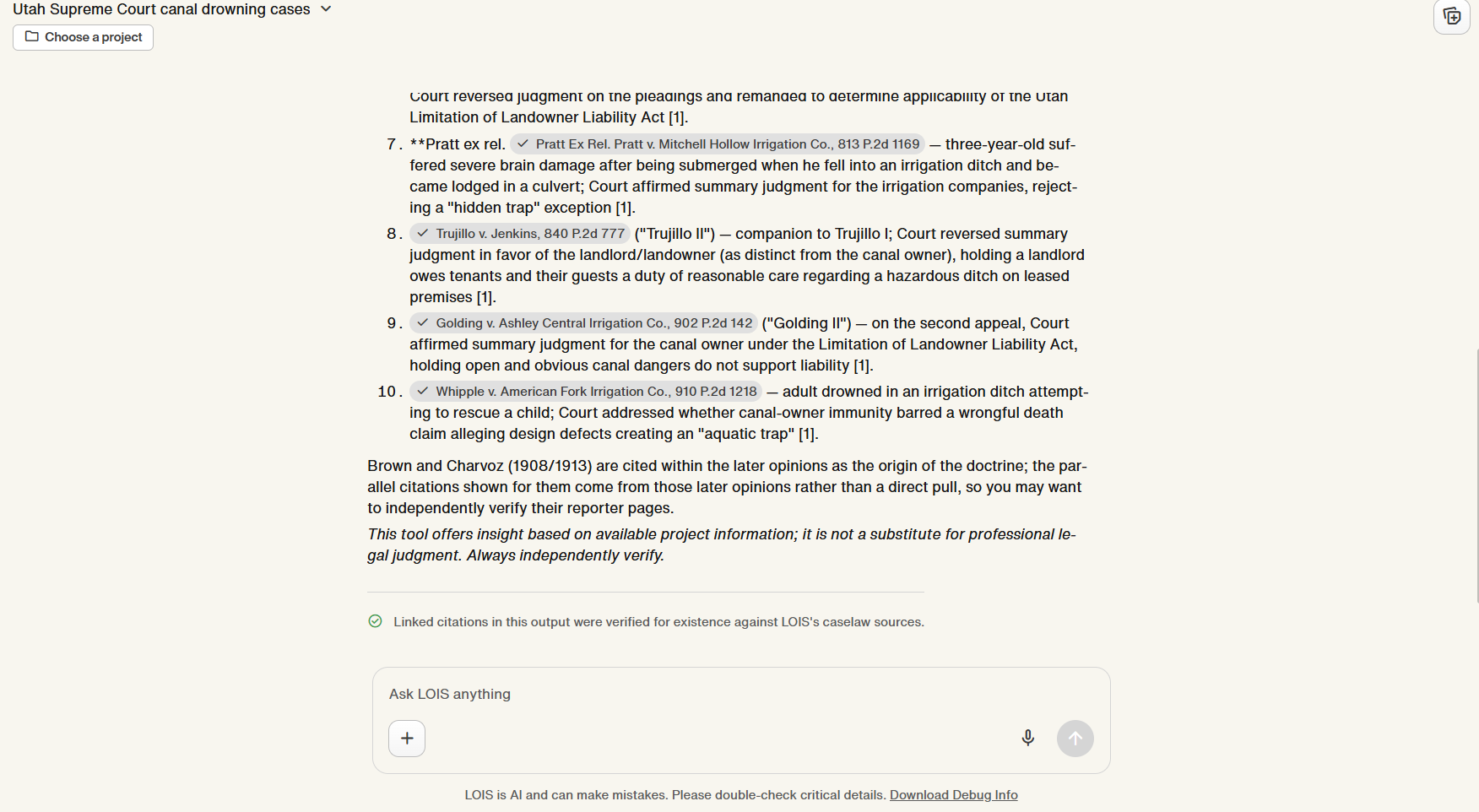
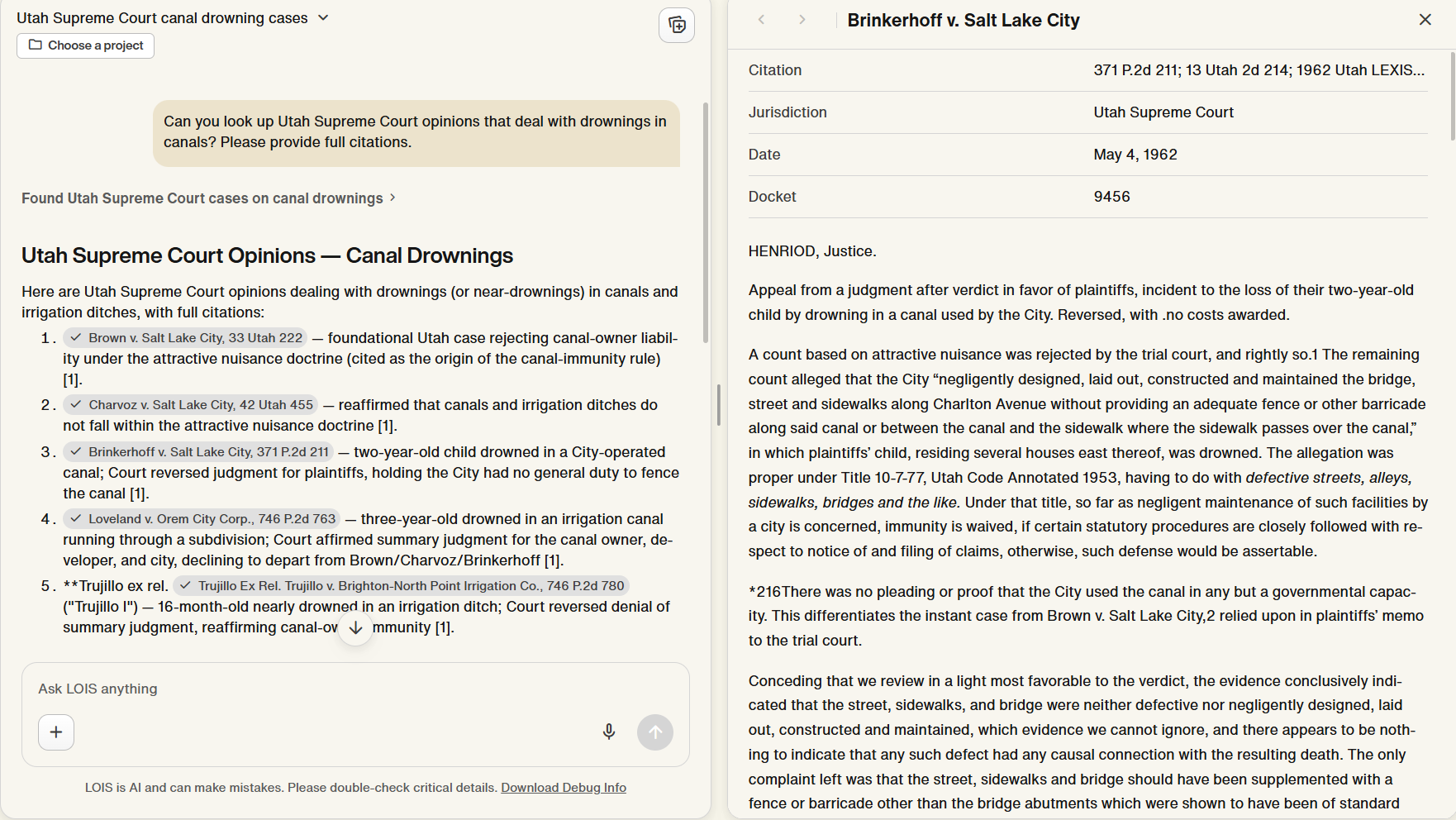
In this LOIS Legal Research output, verified citations carry a checkmark, while the system explicitly flags citations it could not independently confirm and directs the user to verify them — part of Filevine's approach to guarding against AI hallucination in legal research. Credit: FilevineClicking into a case from LOIS Legal Research's results list opens the full opinion text directly in the console — in this case, the 1962 Brinkerhoff v. Salt Lake City decision, complete with citation, docket, and the original opinion by Justice Henriod. The ability to move seamlessly from a citator result to the underlying source material is central to how Filevine says the tool helps attorneys verify, rather than simply trust, its output. Credit: Filevine
Filevine frames LOIS Legal Research as a complement to, rather than a replacement for, Westlaw and LexisNexis subscriptions many firms already maintain, a "trust layer" meant to catch relationships those established workflows may miss.
Who it's built for
Rizner and Anderson said the tool is aimed broadly at litigators, from solo practitioners without dedicated legal research budgets to the largest firms' most specialized appellate teams. Anderson said early users have reported the tool would have changed their approach to cases handled earlier this year had it been available at the time.
The tool can be used on a standalone basis or integrated with a firm's existing case data already stored in Filevine's platform, which the company said deepens the semantic relevance of results by giving the system additional case-specific context.
Anderson said Filevine intends to extend the same dual-pathway approach beyond legal opinions and into statutes and regulations, and pointed to transactional law as a further target — specifically, helping attorneys working on initial debt offerings identify prevailing market-clearing terms across comparable deals.
Rizner said one of the more unexpected early adoption patterns has been how quickly users gravitated toward conversational, plain-language queries rather than the Boolean search conventions long standard in legal research training.
"We're seeing within LOIS a lot of folks searching for the legal research they care about in a very conversational way," Rizner said, adding that the shift surprised him given how deeply Boolean search techniques are ingrained in traditional legal education.
What's next
Filevine has discussed LOIS Legal Research at industry trade shows since its limited release to early customers, though the company has not yet presented it at LEX Summit, its annual user conference.
LOIS arrived roughly a year after Filevine closed a combined $400 million in funding across two rounds, led first by Insight Partners and later by Accel and Halo Fund, a raise that pushed the company into Utah unicorn status, as TechBuzz previously reported, and gave it substantial resources to expand its legal AI product line.
This year's LEX Summit is scheduled for October 26-29, 2026 at the Marriott Marquis San Diego Marina. It will feature a series of major company and product announcements, executive keynotes, and customer panels that will share insight on how lawtech, and LOIS in particular, is changing their practices.
Firms interested in LOIS can request access or schedule a demonstration through Filevine's website.
Share this article
The link has been copied!
Your link has expired. Please request a new one.
Your link has expired. Please request a new one.
Your link has expired. Please request a new one.
Great! You've successfully signed up.
Great! You've successfully signed up.
Welcome back! You've successfully signed in.
Success! You now have access to additional content.