Half a Lake Left: Utah Leaders Pledge $30 Million to Save the Great Salt Lake
Utah business leaders and major foundations announced $30 million in philanthropic commitments Monday to save the Great Salt Lake, warning that without urgent water conservation and strategic water rights acquisition, the lake faces collapse within five years.
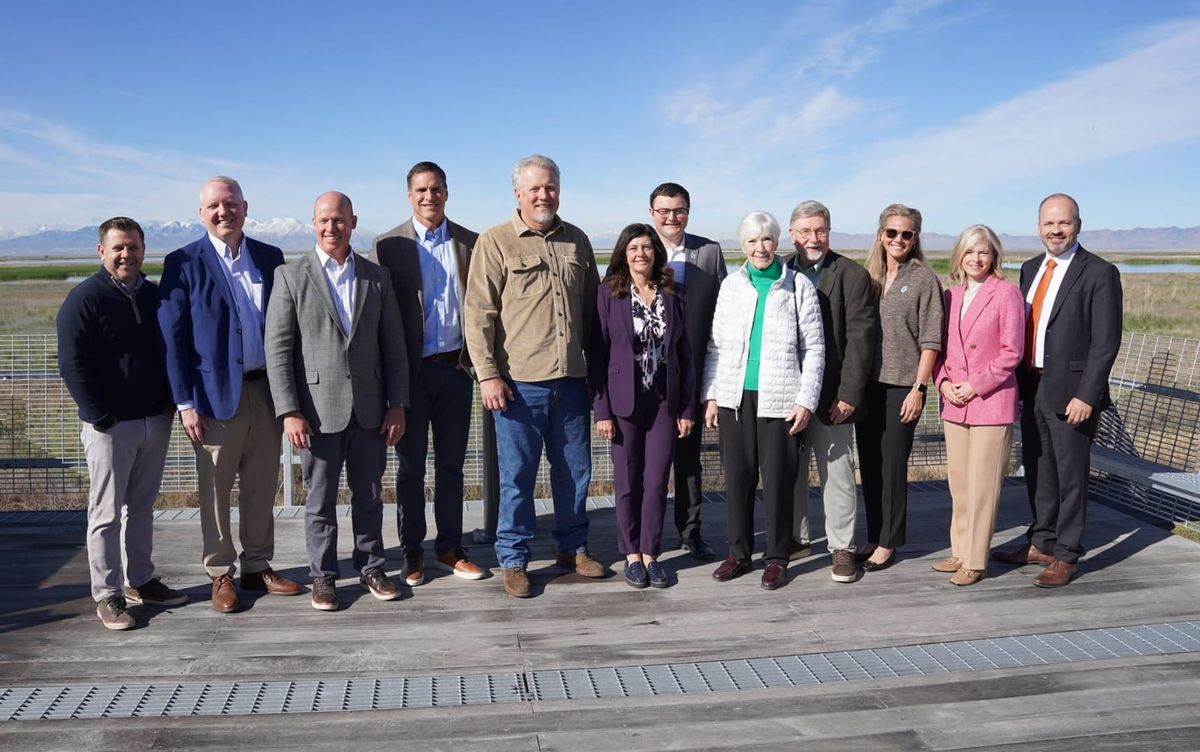
A growing coalition of philanthropists, state officials, and major Utah companies gathered Monday morning with an unmistakable message: the window to save one of America's most iconic natural landmarks is narrowing fast.
Farmington — April 13, 2026
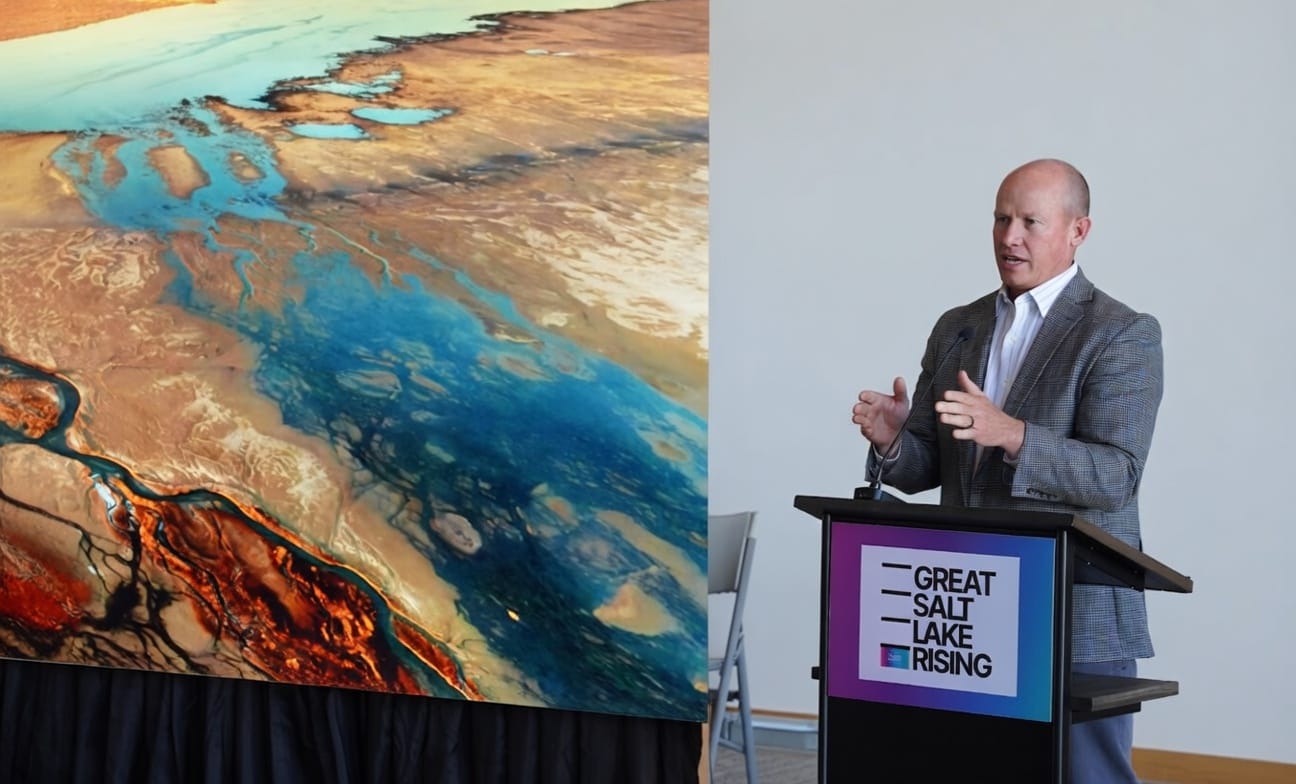
Josh Romney arrived at the Great Salt Lake Rising event at the Eccles Wildlife Education Center in Farmington with the kind of energy that only comes from someone who has crossed a line he didn't know existed.
"I decided to dedicate a portion of my life to this," he told the crowd gathered at the base of the Wasatch Front. "What I didn't realize is that portion would soon become all of my life."
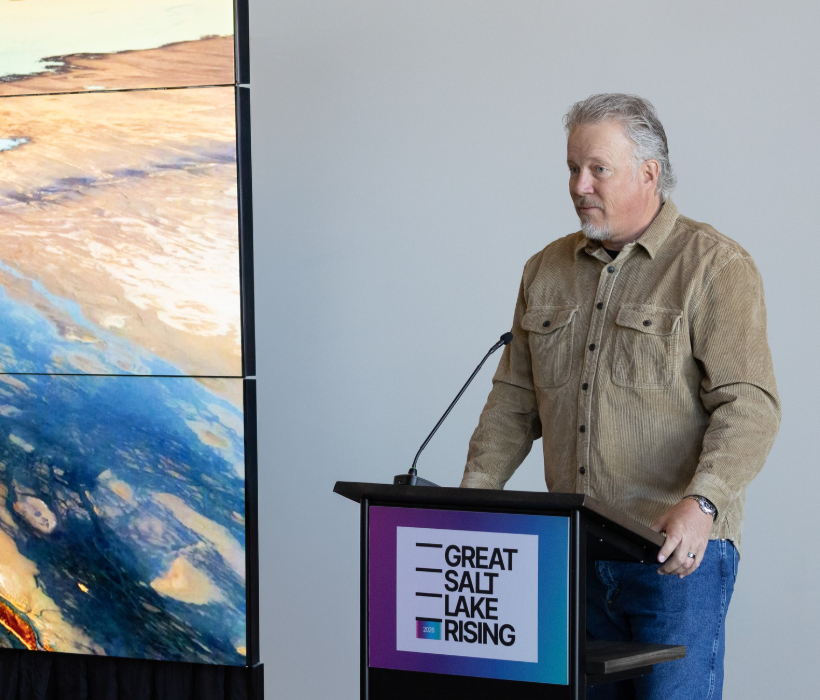
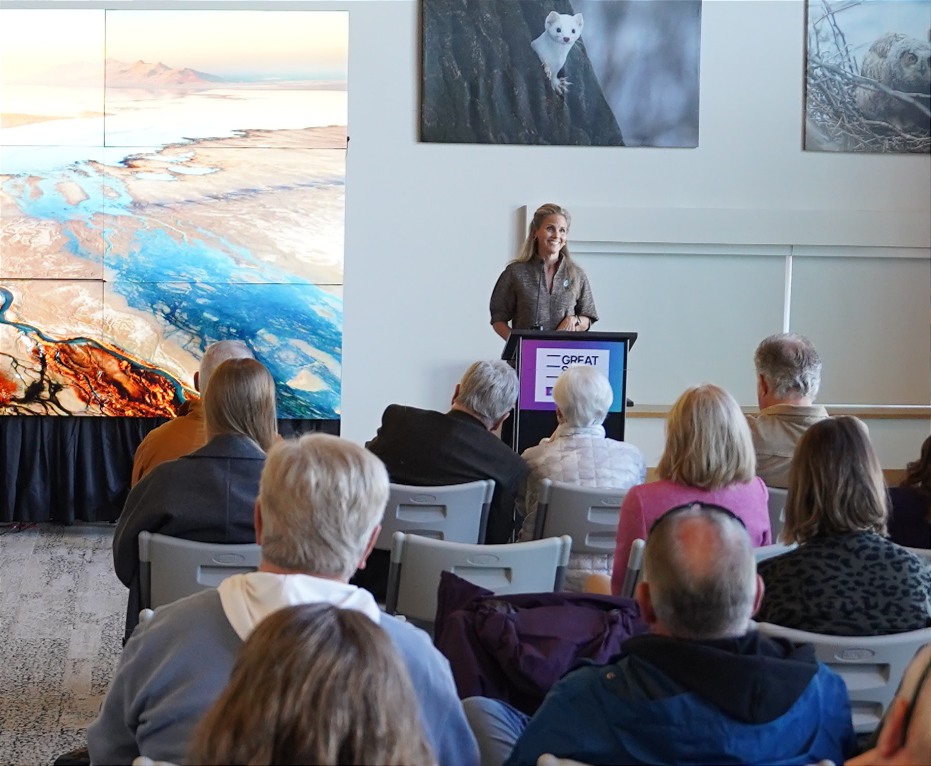
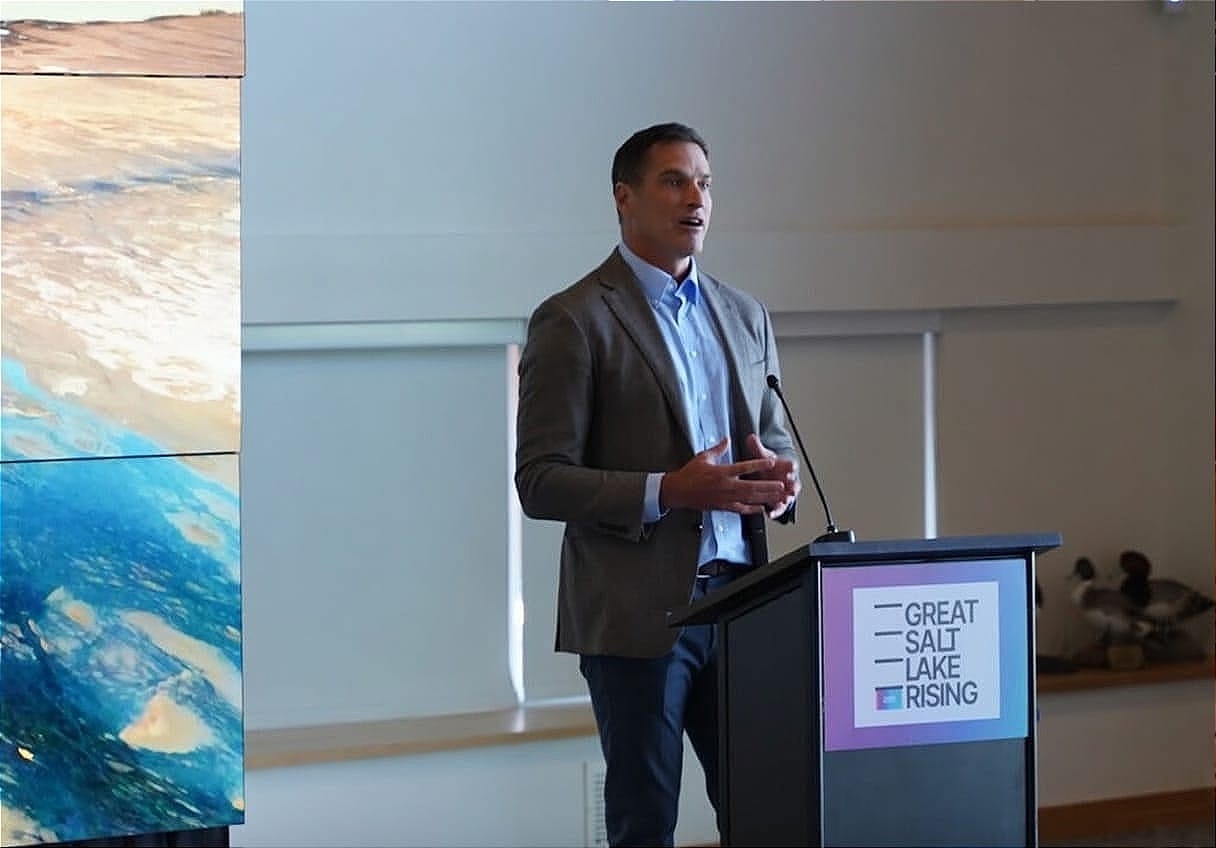
Josh Romney, Board Chair, Great Salt Lake Rising, welcoming the audience for the announcement of $30 million in foundation donations towards saving the Great Salt Lake.
For Romney—businessman, board chair of Great Salt Lake Rising, and now something closer to a full-time environmental advocate—that shift happened fast. He says he began studying the lake's crisis in depth about nine months ago. What he found was stark enough to rearrange his priorities completely.
The Great Salt Lake has already lost roughly half its water. Its surface elevation has dropped to near-record lows. And while drought and a warming climate are part of the story, the dominant cause is more controllable: too much water is being diverted before it ever reaches the lake. That's both the bad news and the good news. Unlike the climate, water use is something Utah can act on.
That premise—urgency plus solvability—formed the backbone of today's event, which delivered one of the most significant single-morning philanthropic announcements in the lake's conservation history: $30 million in new commitments from three of Utah's most recognized names.
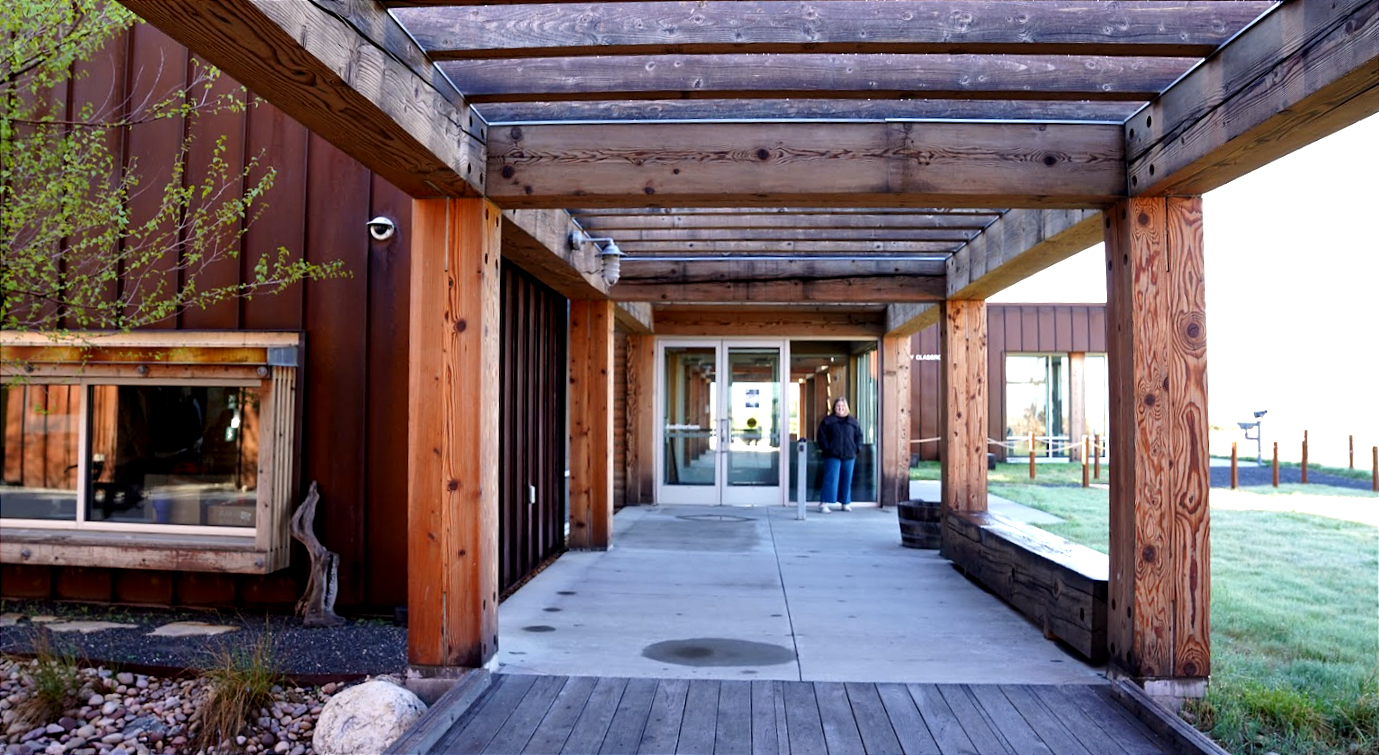
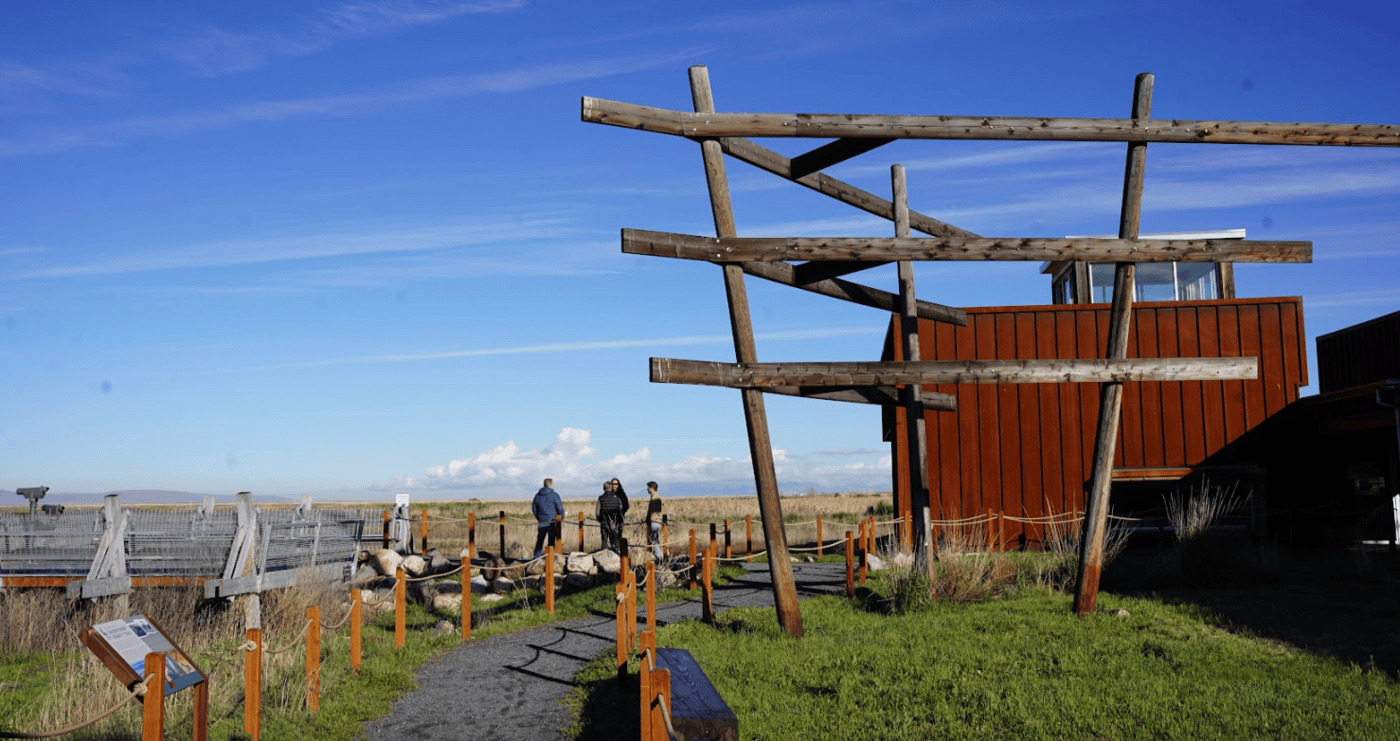
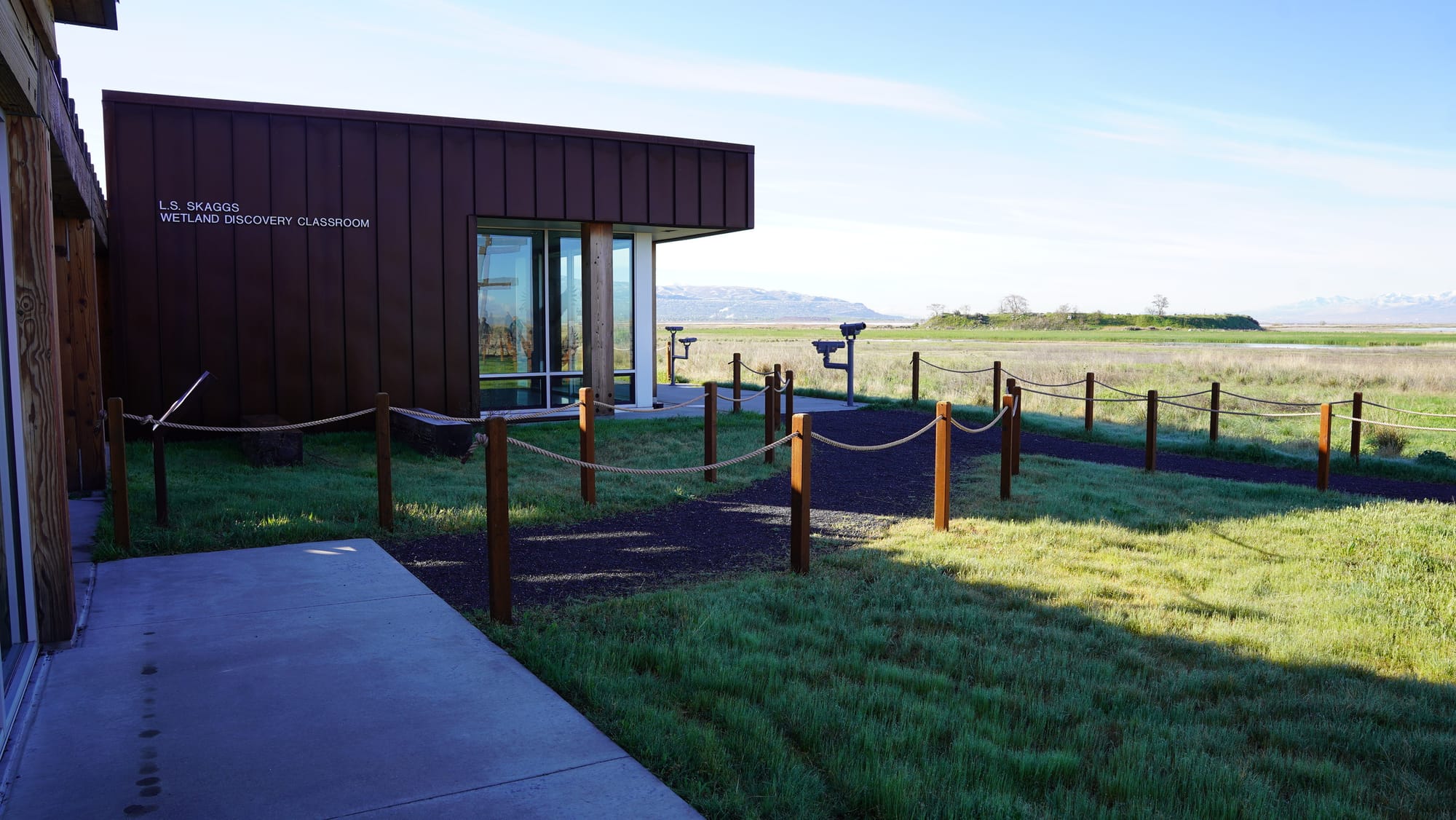
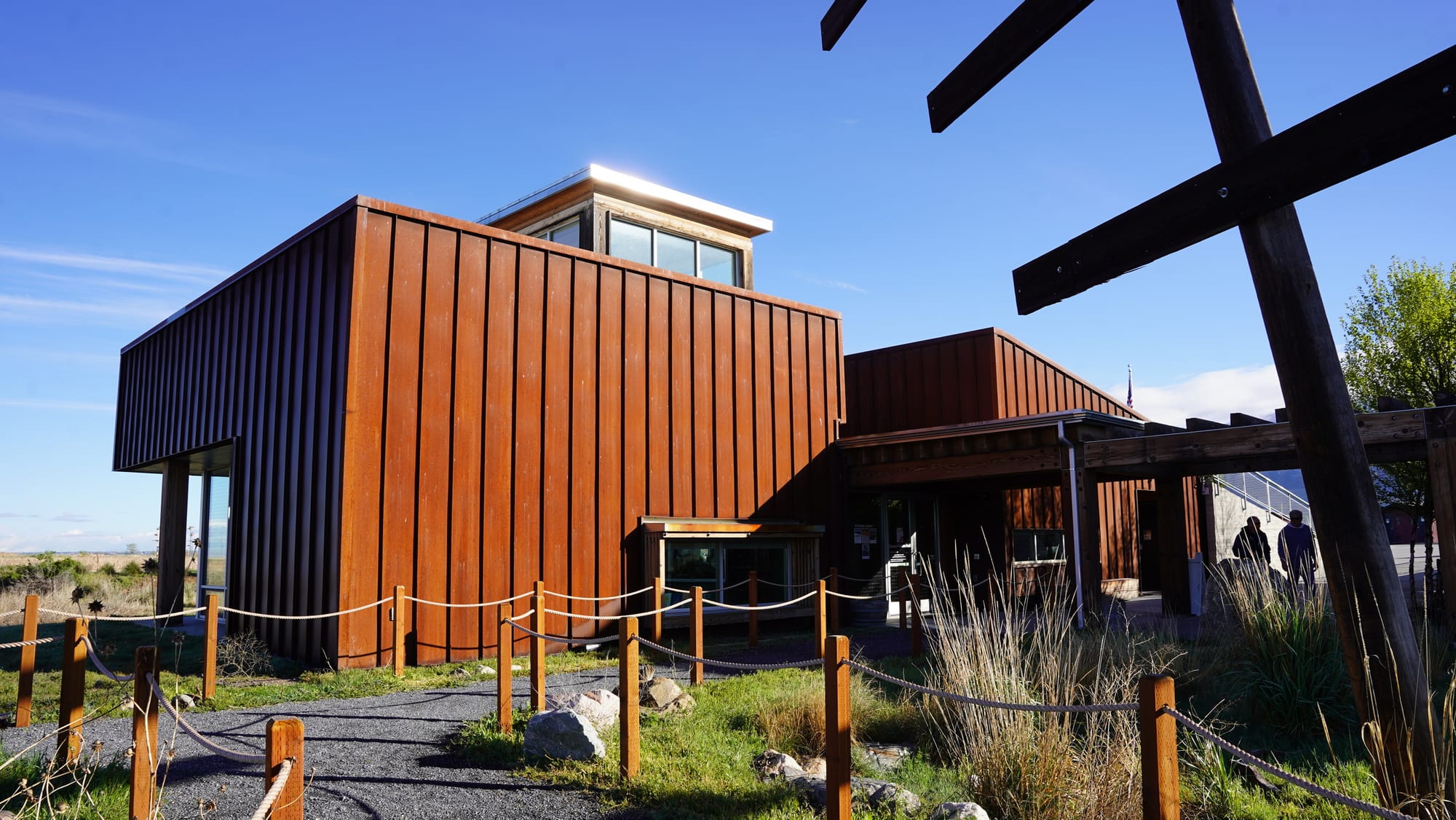
The Eccles Wildlife Education Center in Farmington has become a gathering place for Utah's Great Salt Lake conservation movement and for public education about the state's highly diverse waterfowl population. It is a utilitarian, heavily-timbered, free public facility managed by the Division of Wildlife Resources.
The Announcements
The Larry H. & Gail Miller Family Foundation opened the giving with a $10 million commitment, followed by Maverik—Adventure's First Stop—with another $10 million, and the J. Willard and Alice S. Marriott Foundation with a third $10 million pledge. Together, they mark a turning point in what has until now been a conservation effort running largely on urgency and goodwill.
Greg Miller, trustee of the Miller Family Foundation, didn't waste words making the case for why the moment demands action.
"The decisions we make now will shape the future of this lake and the future of our state," he said. "We have an opportunity to be proactive—to support practical solutions that can make a real difference starting right now."
Greg Miller, Trustee of the Larry H. & Gail Miller Family Foundation, speaking at the Great Salt Lake Rising Announcement, April 13, 2026
The foundation's investment is built around three goals: accelerate restoration work already underway, inspire additional private support, and signal clearly that environmental stewardship and economic vitality aren't in conflict. "Protecting the Great Salt Lake is about protecting the future of our communities," Miller said.
That last point is increasingly hard to argue against. The lake anchors Utah's iconic snowpack—the moisture it generates feeds the winter storms that make the Wasatch Front's skiing the envy of the mountain west. It supports wildlife habitat, air quality, and a recreation economy worth billions. Letting it collapse isn't just an environmental tragedy. It's an economic miscalculation.
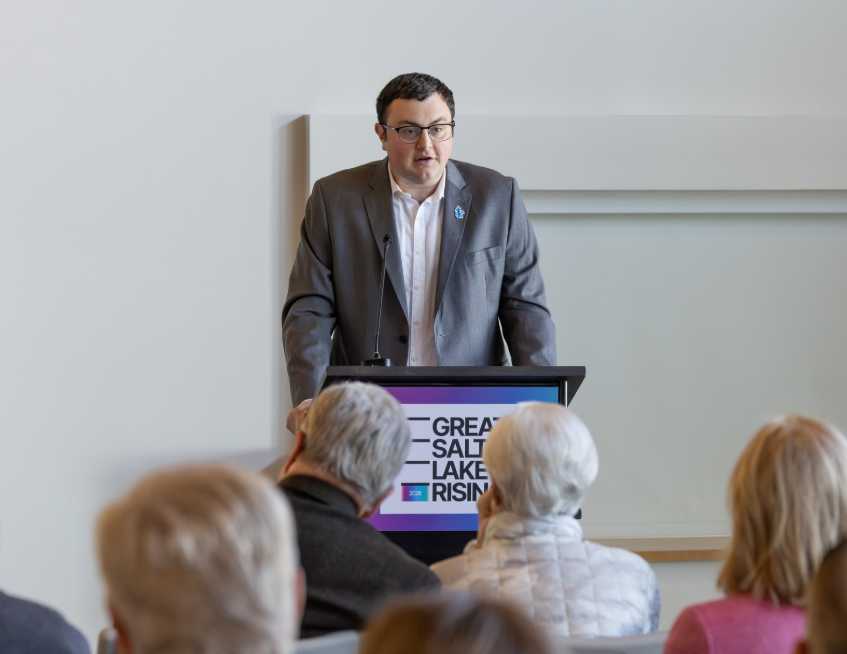
Drew Maggelet, Board Member of Maverik’s Parent Company, speaking at the Great Salt Lake Rising Announcement: donations from his organization's foundation, The Larry H. and Gail Miller Family Foundation, and The J. Willard and Alice S. Marriott Foundation.
Drew Maggelet, a board member of FJ Management, Inc.—the parent company of Maverik—made that case from the ground up. Maverik, which operates more than 400 convenience stores across 20 states, is headquartered in Salt Lake City. Its $10 million donation came with a frank statement of self-interest. FJ Management's Chair and CEO, Crystal Maggelet, Drew's mother, also attended the event.
"The Wasatch Front is our base camp and our home," Maggelet said. "We are all too aware of how critical the Great Salt Lake is—to just about any adventure in northern Utah."
He ticked through the consequences of a healthy lake versus a dying one: snowfall that powers world-class skiing and snowmobiling; rivers and reservoirs prime for fishing and kayaking. And he added a generational dimension that several speakers returned to throughout the morning.
"We're third generation here—and we want to stay here. It's that critical that we act."
A five-year warning
If there was a single moment that shifted the room's energy from celebration to urgency, it came from Karen Marriott.
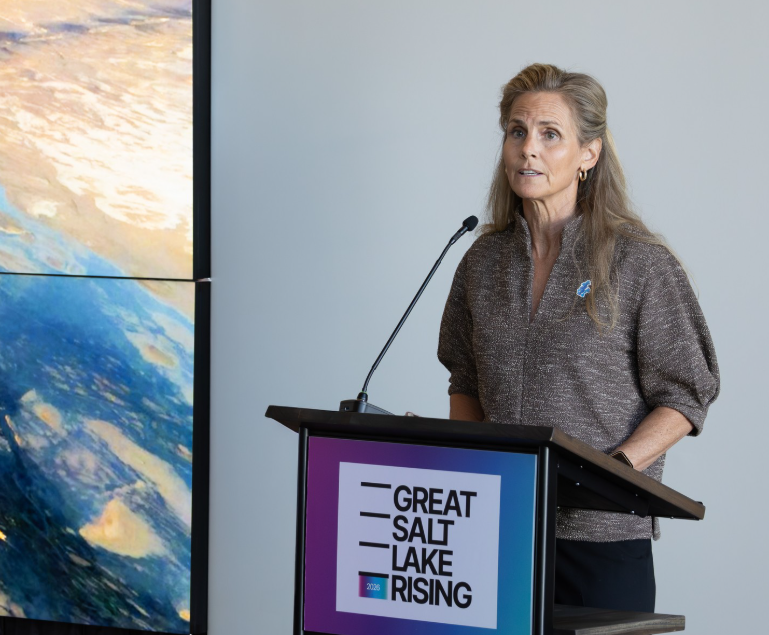
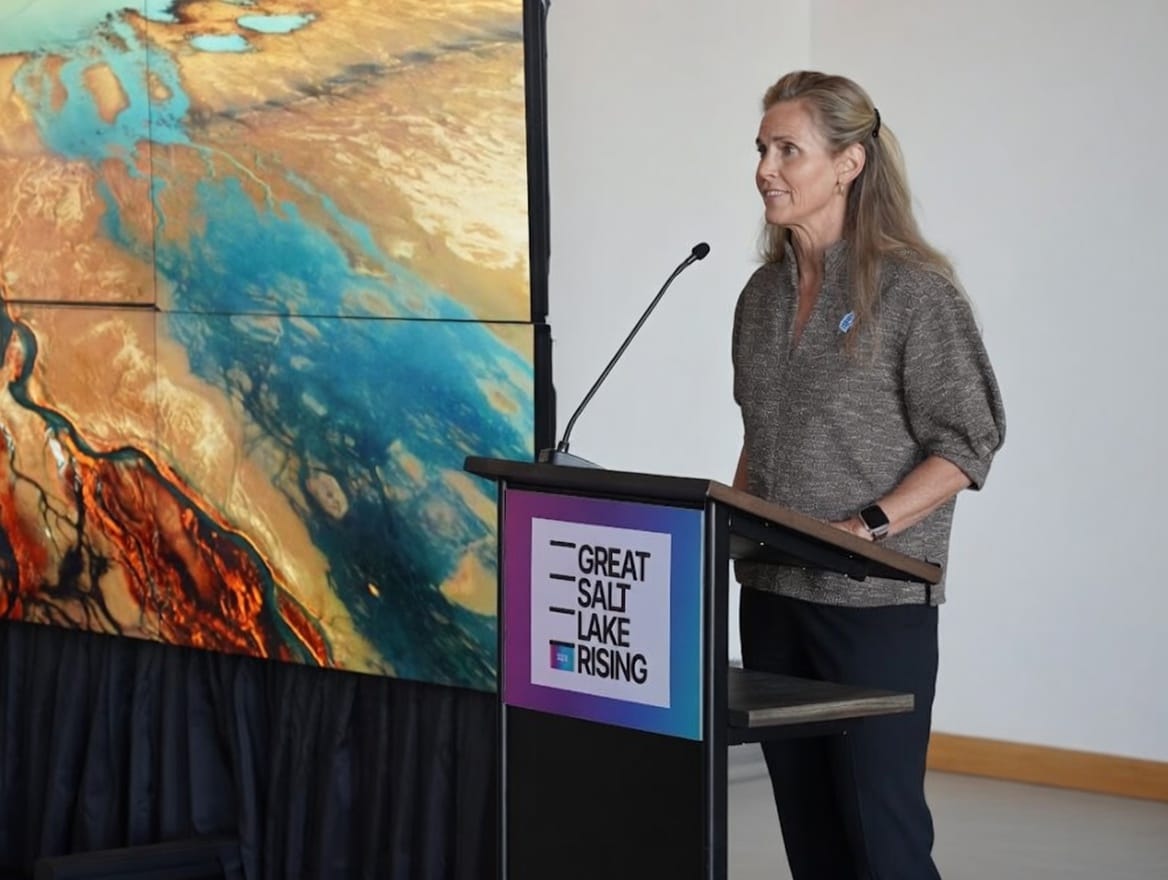
Karen Marriott announcing her family foundation's (JWASMF) $10 million donation to Great Salt Lake Rising, along with The Larry H. and Gail Miller Family Foundation and Maverik
For Marriott, the path to writing a $10 million check ran through a well-timed documentary. She told TechBuzz that The Lake — the Abby Ellis documentary that won the Special Jury Award for Impact for Change at the 2026 Sundance Film Festival and was executive-produced by Heather Kahlert, Leonardo DiCaprio and the Free Solo team — was the catalyst that moved her family from awareness to action. The film (currently seeking distribution — check sandboxfilms.org for updates) follows Utah scientists racing to prevent what one describes as "an environmental nuclear bomb," and it clearly hit home for a family with roots in Utah.
That personal reckoning translated into one of the morning's most direct warnings.
Representing the J. Willard and Alice S. Marriott Foundation—established by Bill and Allie Marriott, founders of what became Marriott International—she announced the family's $10 million commitment and then delivered the morning's most direct warning.
"Within the next five years, if we don't act, the lake is expected to fall into collapse," she said. "Exposing a dangerous amount of sediment that turns into dust—with serious impacts on our health, our snowpack, our economy, and our wildlife."
The George S. and Dolores Doré Eccles Wildlife Education Center in Farmington, opened in 2018, sits at the edge of Farmington Bay — one of the Great Salt Lake's most vital wetland areas and a stop for tens of millions of migratory birds annually.
Marriott's connection to the lake is personal as well as philanthropic. Her family's roots in Utah run back to the mid-1800s, when ancestors came to the Great Salt Lake Valley as part of an early wave of Mormon settlers. The foundation, based in Bethesda, Maryland, doesn't typically focus its work here. But the stakes changed the calculus.
"The consequences are too great if we do not all act," she said.
She also framed the issue around a deadline that's increasingly hard to ignore: the 2034 Winter Olympics, awarded to Salt Lake City. The world will be watching.
"There will be one of two stories we tell," Marriott said. "Will people be coming to a dust bowl wasteland—or will we tell the story of Utah coming together as a community to save this lake?"
"Within the next five years, if we don't act, the lake is expected to fall into collapse," she said.
Karen Marriott speaking at the Great Salt Lake Rising Announcement, April 13, 2026
What the money actually does
Philanthropy at this scale tends to invite a reasonable question: "What, exactly, is the plan for the $30 million?"
TechBuzz asked Tim Hawkes, Executive Director of Great Salt Lake Rising that very question.
His answer was less glamorous than a pipeline or a grand infrastructure scheme—and vehemently so.
The core goal is acquiring what Hawkes calls "wet water." That phrase draws a crucial distinction: not paper water rights that exist on legal documents, but actual new inflows reaching the lake. That means purchasing or leasing water rights, partnering with the state on resource management deals, and building a long-term portfolio of water directed specifically toward the lake.
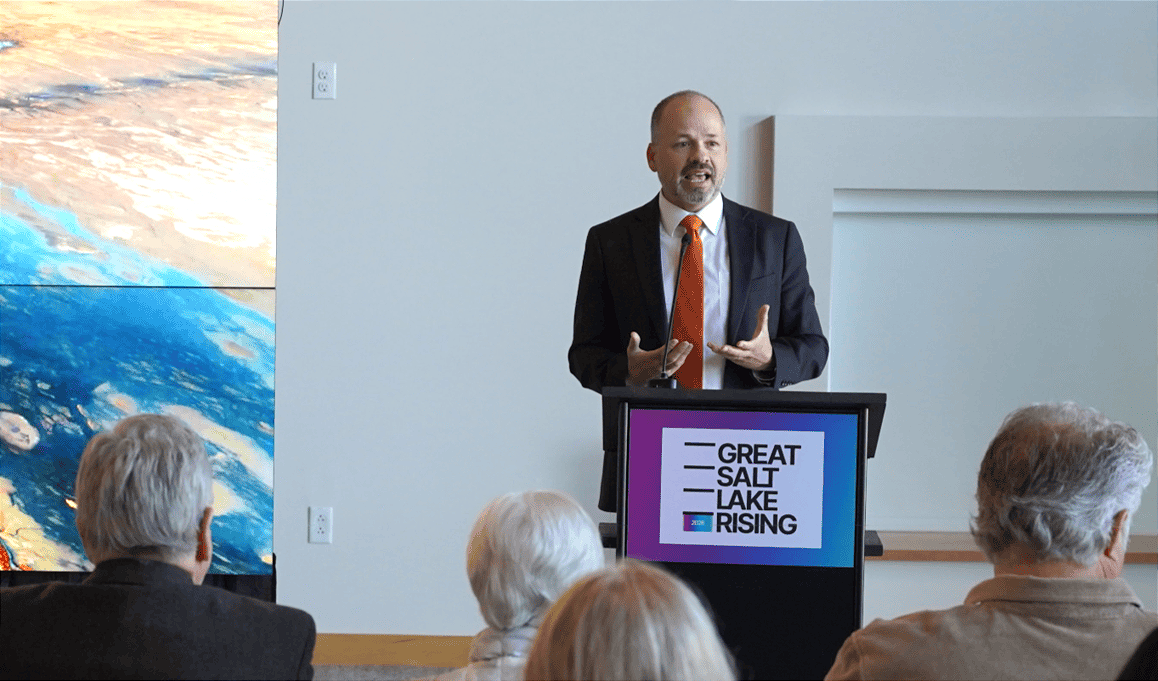
Tim Hawkes, Executive Director of Great Salt Lake Rising, speaking at the announcement of $30 million in donations to Great Salt Lake Rising from three foundations: The Larry H. and Gail Miller Family Foundation, Maverik and The J. Willard and Alice S. Marriott Foundation; the Eccles Wildlife Education Center in Farmington, April 13, 2026
Recent state moves point toward what that can look like in practice. Earlier this year, Utah executed a major acquisition of land and water rights tied to U.S. Magnesium — genuinely one of the most dramatic recent developments in the lake's story.
When U.S. Magnesium — historically one of Utah's largest polluters, and at one point the country's largest producer of the mineral — halted operations after equipment failure in 2021 and filed for bankruptcy in September 2025, it created an unexpected opening. Utah's Division of Forestry, Fire & State Landswon a bid in federal bankruptcy court in Delaware, securing over 144,000 acre-feet of water rights annually — roughly the volume of Deer Creek Reservoir — along with 4,500 acres on the lake's southwest shore, for just over $30 million. Joel Ferry called it "the single largest transaction and opportunity" he'd ever seen for the Great Salt Lake.
Joel Ferry, Director of the Utah Department of Natural Resources, speaking at today's event announcing donations to Great Salt Lake Rising from three foundations: The Larry H. and Gail Miller Family Foundation, Maverik and The J. Willard and Alice S. Marriott Foundation, at the Eccles Wildlife Education Center in Farmington on Monday morning, April 13, 2026
The speed was remarkable: the Legislature authorized the bid, the state won in bankruptcy court, and the purchase was funded in the 2026 budget — all in a narrow window before the assets could have gone to a competing private bidder. The only other bidder was LiMag Holdings, an affiliate of U.S. Magnesium's own parent company. The state plans to donate those water rights directly to the Great Salt Lake — the division's director noted that leasing that volume of water rights alone would have cost millions of dollars per year.
That deal is the clearest real-world example of what "wet water" acquisition looks like in practice, said Hawkes, and it's exactly what the $30 million philanthropic push from Monday's event is designed to replicate and expand, especially when windows for such windfalls can close quickly.
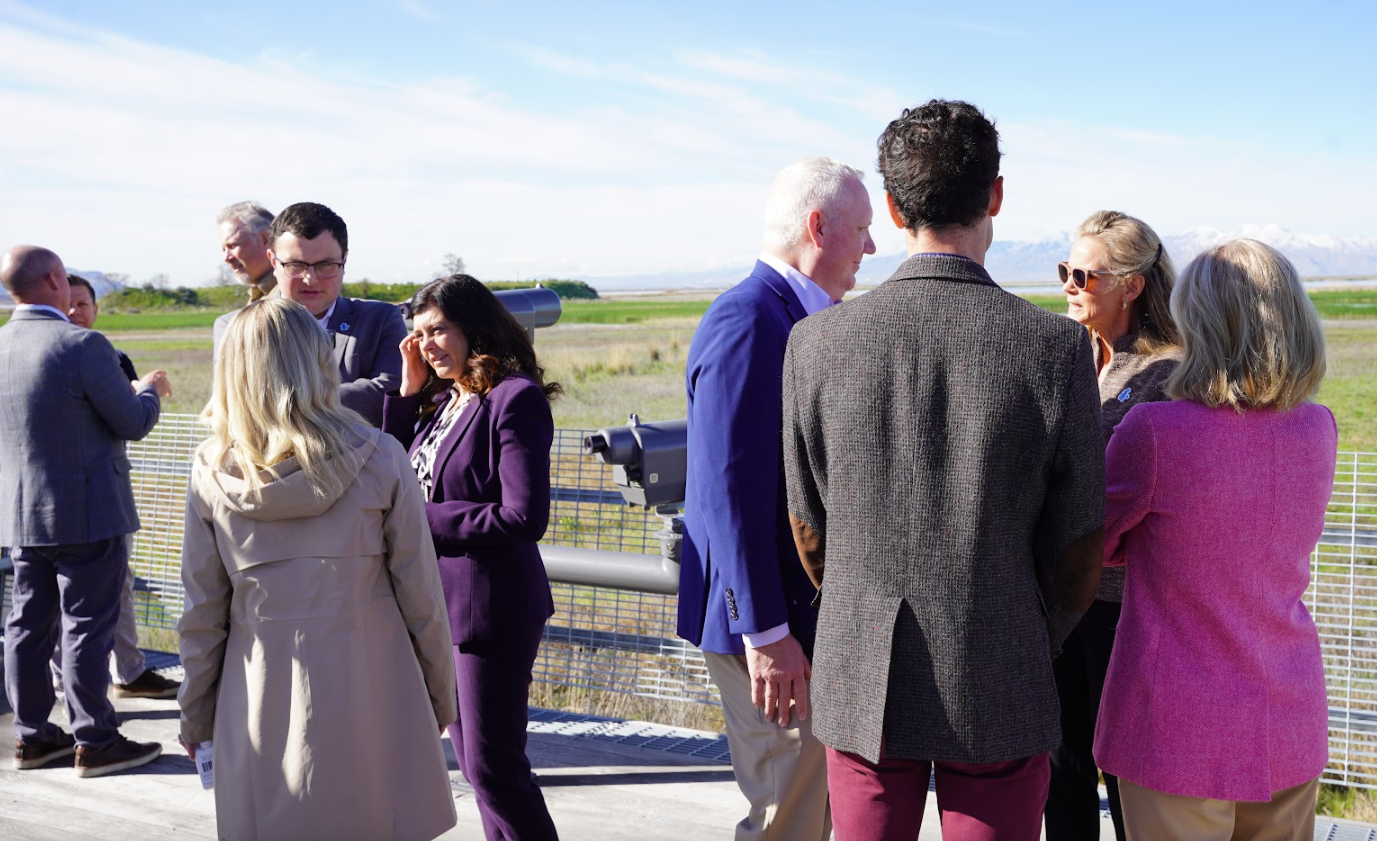
Hawkes, in the follow-up conversation with TechBuzz on the outdoor viewing platform, was direct about what won't work: big, speculative infrastructure ideas like ocean pipelines.
"Those ideas are highly speculative, extremely complex, and staggeringly expensive," he said. "We're better off focusing on what we can control now."
The L.S. Skaggs Wetland Discovery Classroom at the George S. and Dolores Doré Eccles Wildlife Education Center, which opened in 2018 on the shores of Farmington Bay. Operated by the Utah Division of Wildlife Resources and free to the public, the center sits at the edge of a wetland that hosts more than 250 bird species — and that the $30 million commitment is racing to protect.
The harder ask
Money helps. Policy helps. But both Hawkes and other speakers circled back to an uncomfortable truth: the most powerful lever isn't philanthropic—it's behavioral.
"It's going to be people," Hawkes said. "It's a group effort. It's going to take people watering their lawns less—everyone actually sacrificing."
That means residents using less water outdoors. It means businesses, schools, and churches asking what they can each contribute. It means farmers adapting—not as a punishment, but as part of a shared solution.
The George S. and Dolores Doré Eccles Wildlife Education Center in Farmington was completed on September 18, 2018. It was funded by the Utah state legislature, the Utah Division of Wildlife Resources, and a generous donation from the George S. and Dolores Doré Eccles Foundation. It was built on the site of an original nature center founded by Robert "Bob" Hasenyager, a Utah Division of Wildlife Resources employee who constructed the first facility — two portable classrooms and a small boardwalk — with the help of high school students, before his death in 2013.
Hawkes singled out Domo as an early example of tech sector engagement, saying the American Fork-based data company stepped up when the Great Salt Lake Business Council was formed — before it was even asked for anything beyond a public show of support.
Hawkes also flagged emerging tools—smart irrigation systems, agricultural efficiency tech, cloud seeding—as meaningful if limited contributors.
"There's no silver bullet," he said flatly. "If everybody asks what they can do individually, we can move very far, very fast."
The state's role
Joel Ferry, executive director of Utah's Department of Natural Resources, brought the government dimension into focus. The state has made real commitments—funding, policy shifts, late-night negotiations over resource deals. But Ferry's sharpest line wasn't about what the state has spent. It was about the discipline the moment demands.
"We're really good at balancing a budget," he said. "We need to balance our water budget as well. We need to live within our means."
He's not pessimistic about whether that's possible. He's emphatic that it is.
"There is sufficient water if we're smart about how we use it," Ferry said.
He tied it to a concrete commitment: "By 2034, we're going to have a Great Salt Lake that is sustainable, viable, and saved. That is our goal."
A video message from Governor Spencer Cox reinforced the state's alignment with the private-sector push. Between the philanthropic commitments, the executive branch, and legislative action, Ferry argued that the coalition now has critical mass.
"Leaders step up when the call is made," he said, addressing the room. "These commitments are what true leadership looks like. We can't do this without you."
What comes next
The morning wrapped up with Romney closing by noting how quickly serious people tend to get serious about this issue once they understand it.
Josh Romney, Board Chair, Great Salt Lake Rising, wrapping the announcement of $30 million in donations designed to save the Great Salt Lake from collapse
"It usually takes one or two meetings," he said. "And then they want to be involved."
That conversion rate—from skeptic to advocate to donor—is the organizing principle behind Great Salt Lake Rising. The bet is that the lake's problems are visible enough, and the solutions legible enough, that momentum can build faster than the water table drops.
But the margin is thin. Researchers cited at the event suggest that without meaningful intervention in the next five years, the lake crosses into collapse territory—a threshold that triggers a cascade of environmental and economic consequences that would take generations to undo.
Karen Marriott, speaking at today's event announcing her family foundation's donation to Great Salt Lake Rising, along with The Larry H. and Gail Miller Family Foundation and Maverik. The event took place at the Eccles Wildlife Education Center in Farmington on Monday morning, April 13, 2026
"The urgency is real," Marriott said. "But so is the opportunity."
Whether Utah takes it is still an open question. Monday's event was evidence that serious people with serious resources are now asking it together. That's a start.
For more information or to get involved, visit gslrising.org.
Share this article
The link has been copied!
Your link has expired. Please request a new one.
Your link has expired. Please request a new one.
Your link has expired. Please request a new one.
Great! You've successfully signed up.
Great! You've successfully signed up.
Welcome back! You've successfully signed in.
Success! You now have access to additional content.