Utah Declares Itself the Crossroads of America's Air Mobility Future at Inaugural 47G Project Alta Summit
Utah's inaugural Project Alta Summit convened aerospace leaders at the University of Utah to accelerate advanced air mobility deployment, spotlighting the state's FAA EIPP designation, hybrid-electric aircraft innovation, supply chain readiness, and an eight-year runway to the 2034 Winter Olympics.
A first-of-its-kind gathering in Utah bringing together OEMs, suppliers, investors, regulators, and lawmakers to move advanced air mobility from concept to countdown.
Salt Lake City, Utah — May 26, 2026
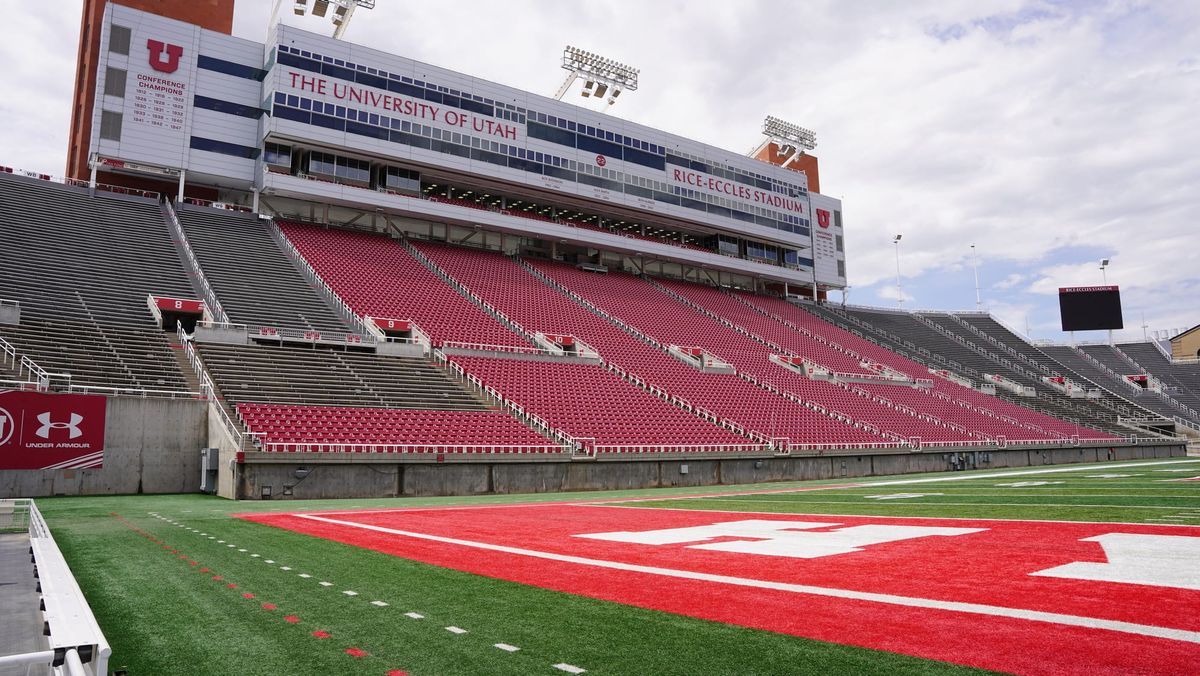
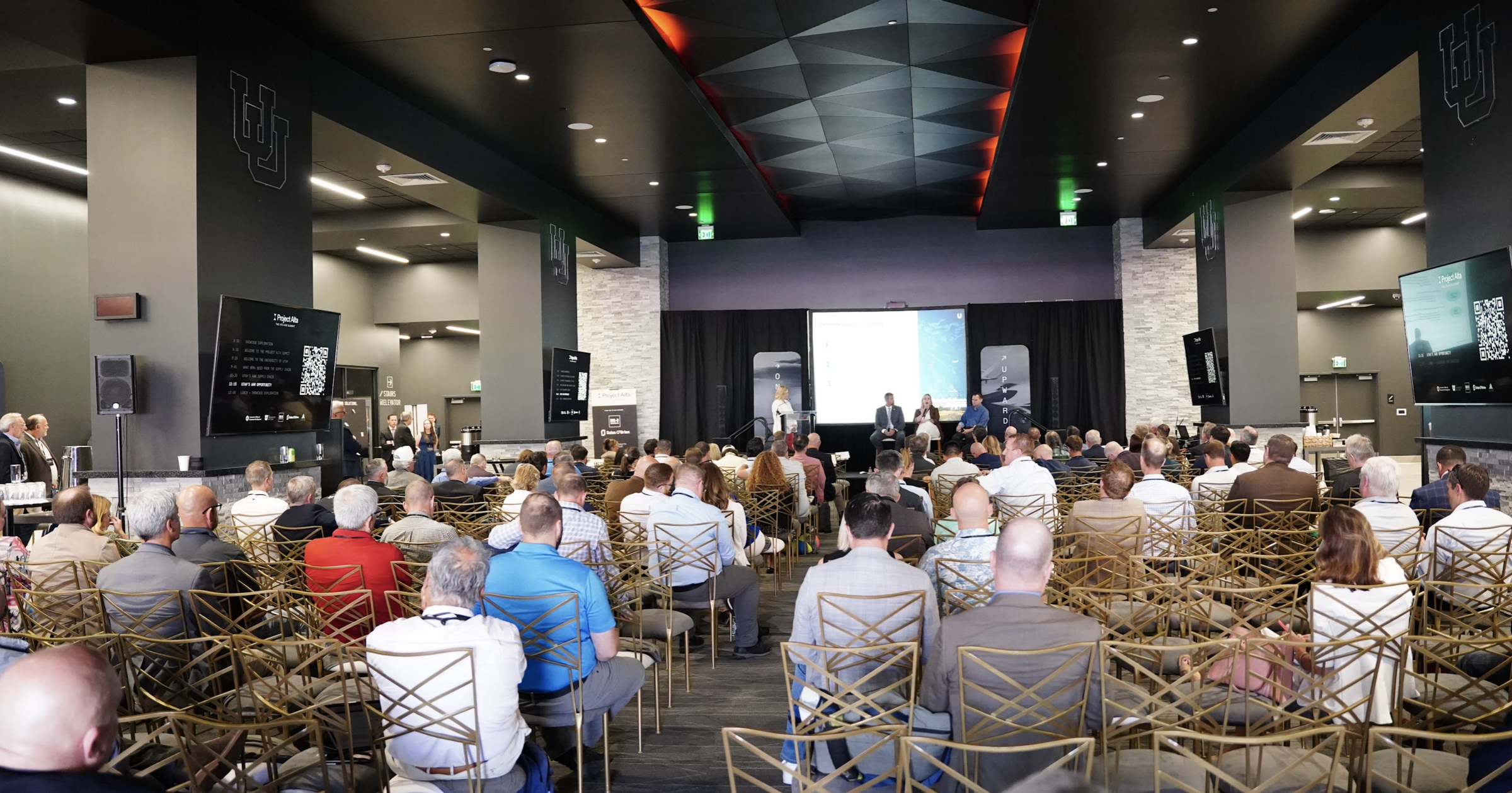
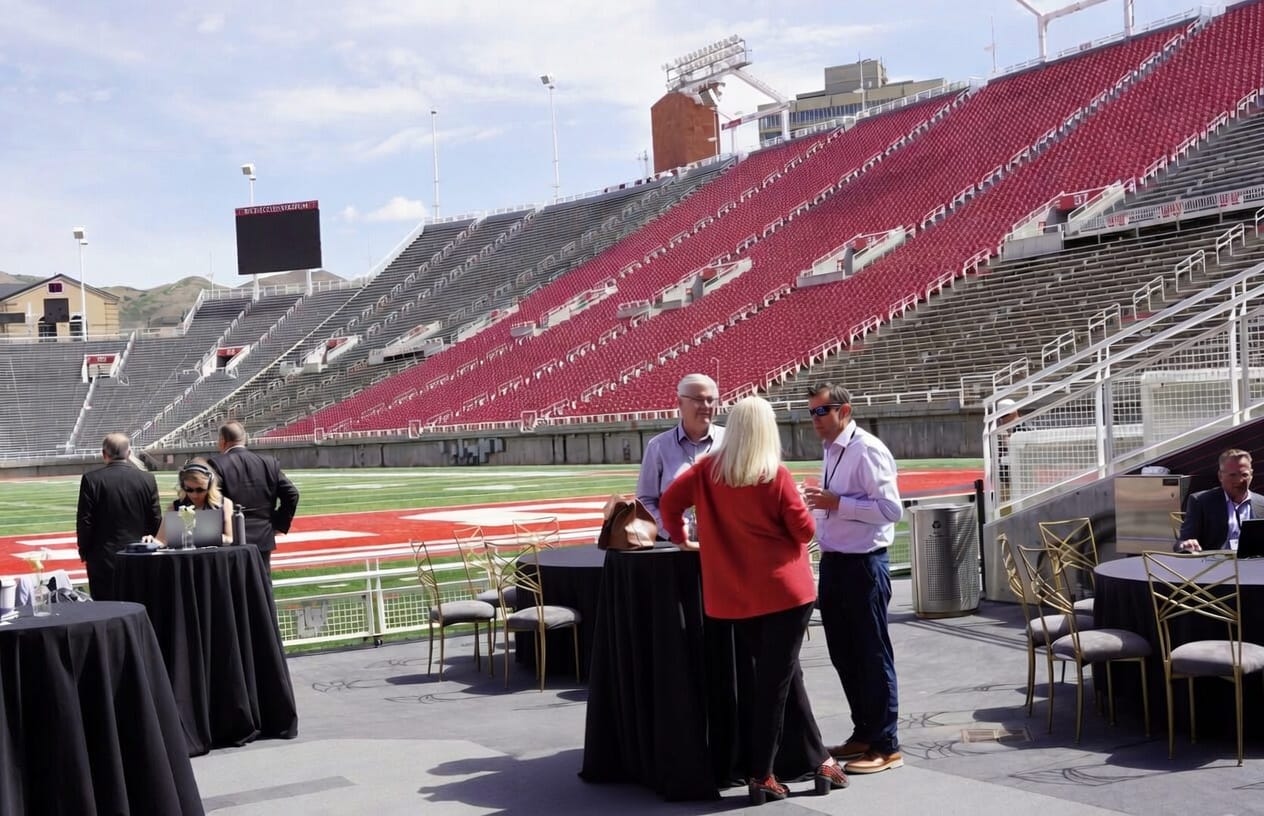
Convened by 47G | Utah Aerospace and Defense, the inaugural Project Alta Summit kicked off its first day of a two-day summit at the Ken Garff University Club at Rice-Eccles Stadium. National and global leaders in aerospace, infrastructure, public policy, and investment came together for a full-day reckoning with a question that has floated over the aviation world for years: when does advanced air mobility actually happen?
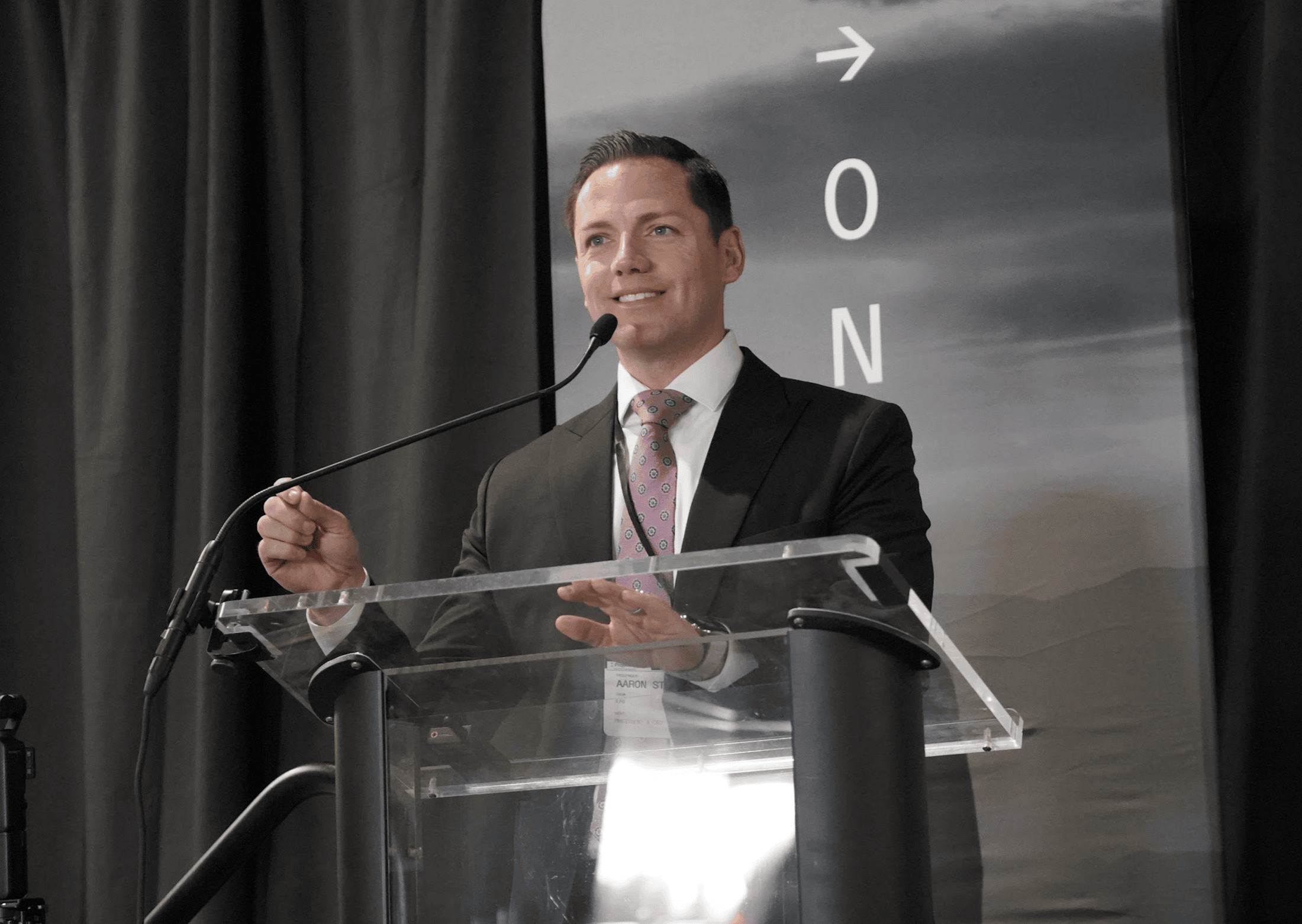
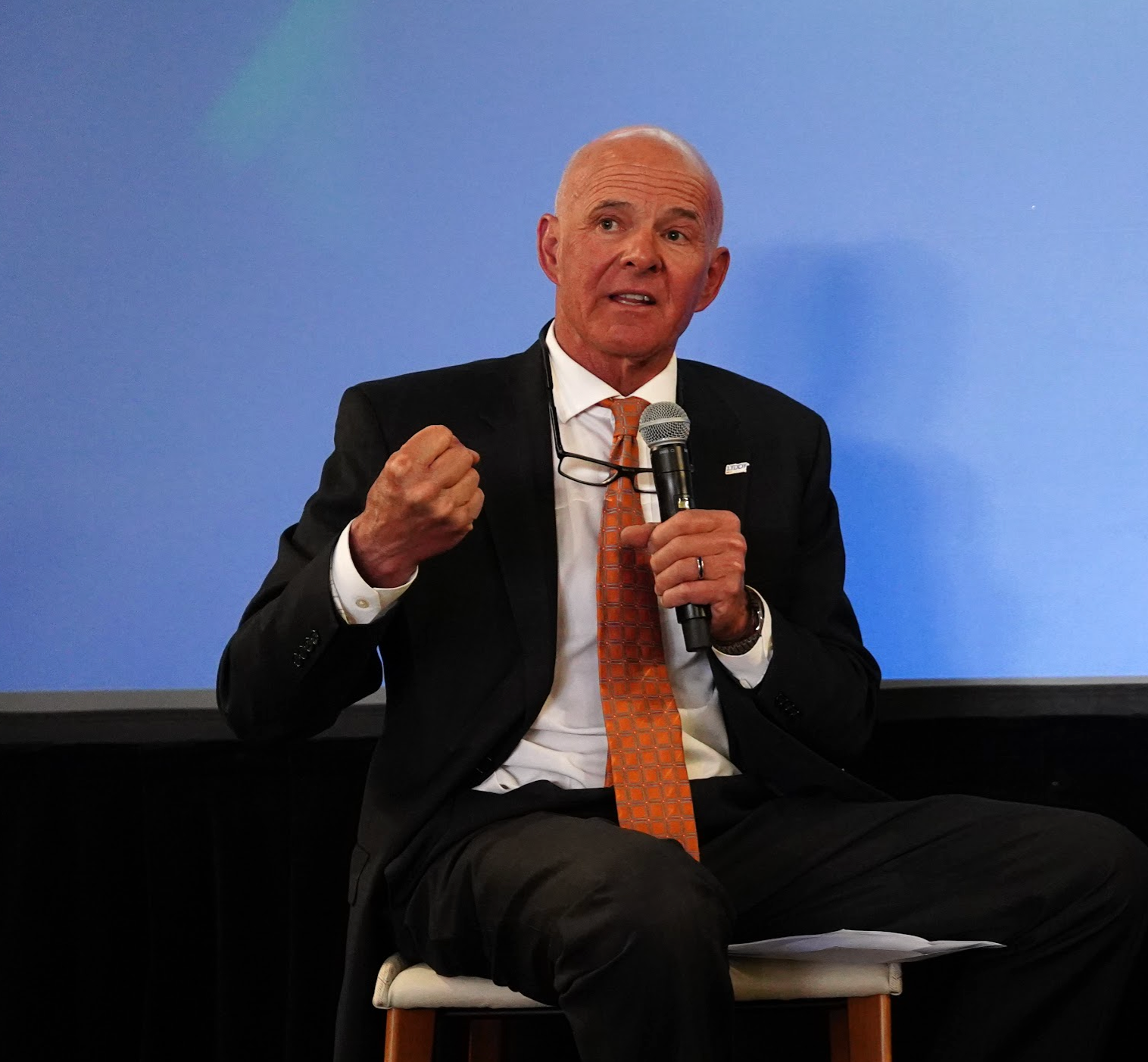
"We are a designated site ahead of the 2034 Olympics. We will meet our timeline of creating infrastructure and flying air taxis, people, parcels, and packages." — Aaron Starks, President & CEO, 47G
The answer this room kept landing on: now.
The urgency had a concrete anchor: eight years to the 2034 Winter Olympics in Salt Lake City, and a mandate from the federal government. In March, Utah's Department of Transportation was named one of only eight states named under the FAA's new eVTOL Integration Pilot Program — a designation known as EIPP — under the program name uFLY: America's AAM Crossroads to the West. Utah's selection, in a field that included some of the most aeronautically active states in the country, was the day's most-cited fact and the summit's central proof of concept.
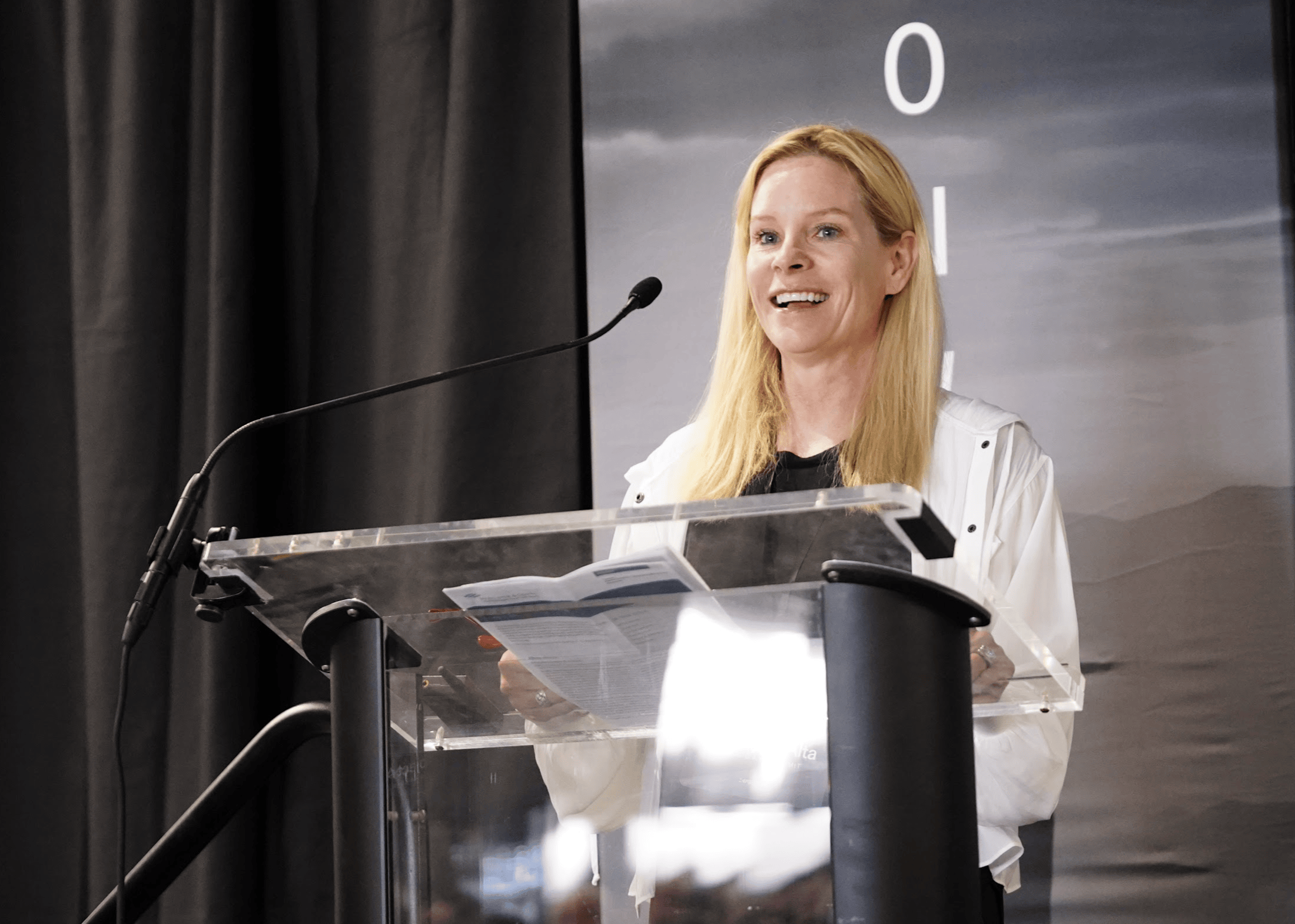
"This is not going to be just, 'let's meet the Jetsons'. The future is here right now. We need to start moving on this immediately." Erin Rothwell, Vice President of Research, University of Utah
The OEMs: Hybrid Is Having Its Moment
The morning's first panel set the technical tone. Three aircraft manufacturers — AmpAire, ODYS Aviation, and DBT Aero — each made the case for hybrid-electric propulsion as the pragmatic path to market, a counterweight to the all-electric narrative that has dominated AAM headlines.
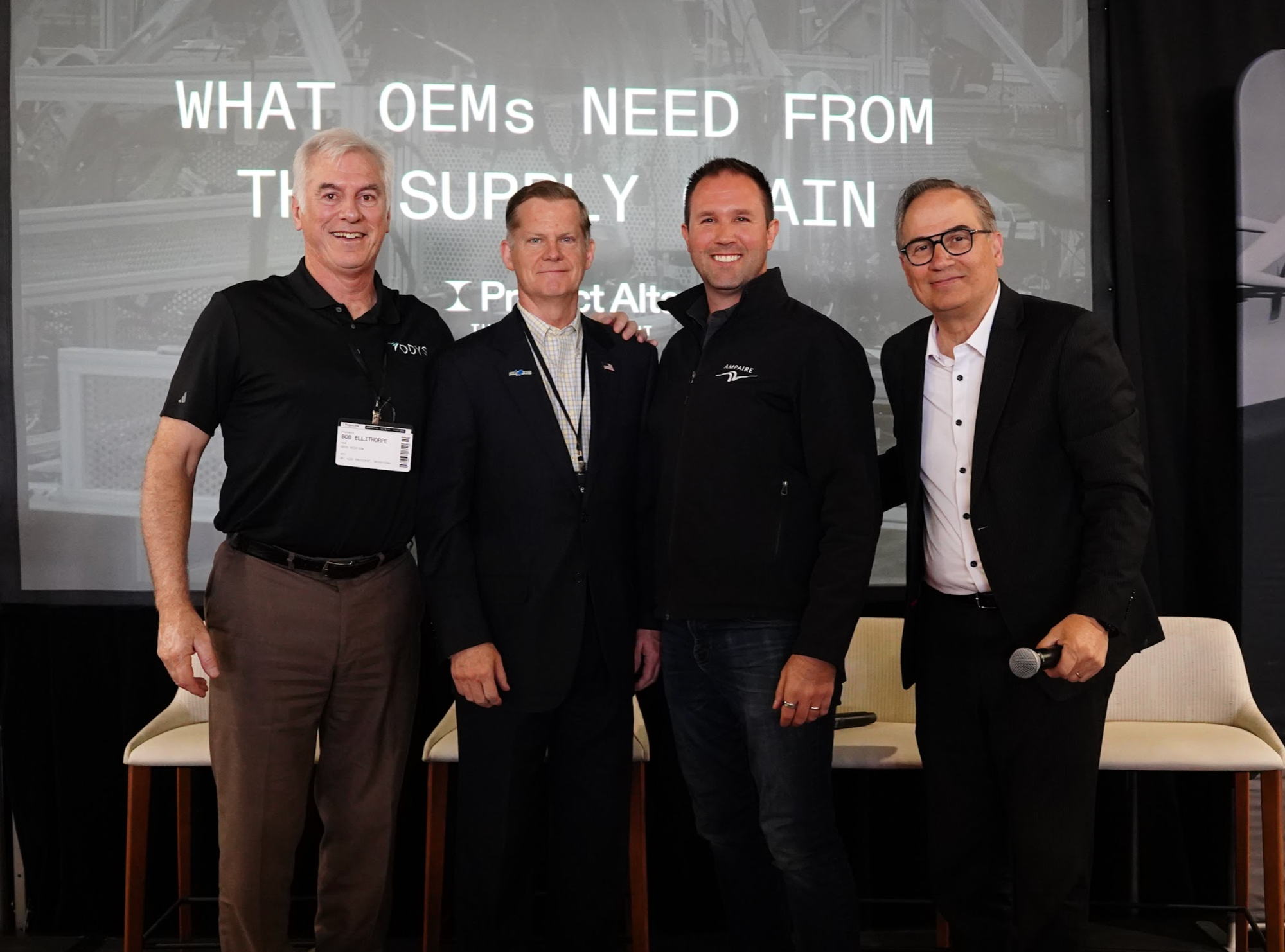
Bob Ellithorpe, SVP of Operations at ODYS Aviation; Michael Duke, Founder of DBT Aero; Kevin Noertker, Co-Founder and CEO of AmpAire; and Chris Metts, Executive Director of Project Alta at 47G, following the "What OEMs Need from the Supply Chain" panel at the inaugural Project Alta Summit, Rice-Eccles Stadium, Salt Lake City, May 26, 2026.
Kevin Noertker, Co-Founder and CEO of AmpAire, opened with a story from Hawaii, where the company deployed what it calls the world's largest hybrid-electric plane over the islands — only to watch the chargers arrive after the aircraft. The experience forced a rethink. "We completely rearchitected our system to build hybrid-electric engines that self-charge, just like your early days Toyota Prius," Noertker explained. The result: AmpAire's fleet has now logged over 35,000 flights, with empirical data showing 54% average fuel savings on a Cessna Grand Caravan — the workhorse aircraft of regional cargo and rural connectivity.
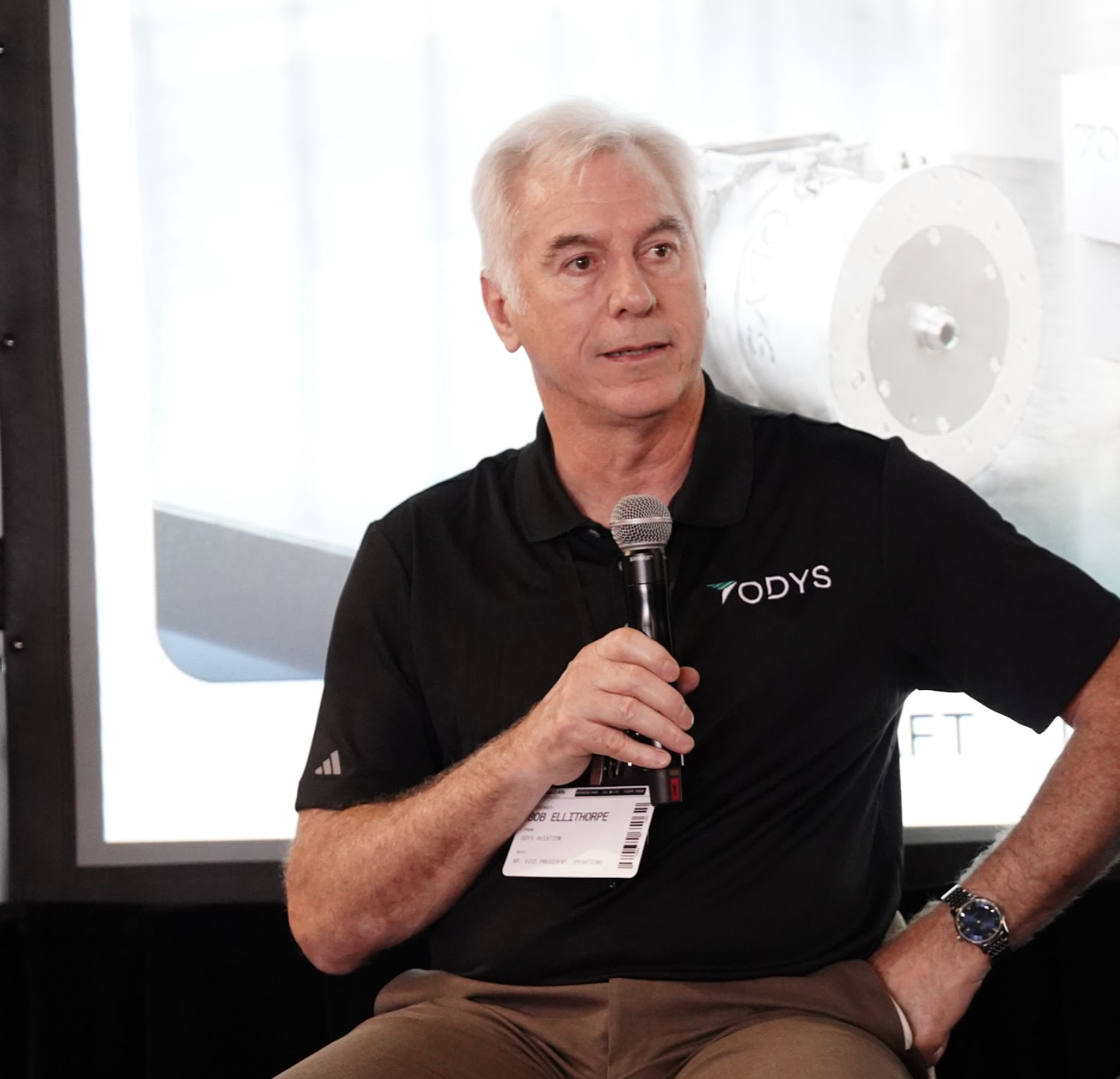
Bob Ellithorpe, Senior VP Operations, ODYS Aviation
Bob Ellithorpe, Senior Vice President of Operations at ODYS Aviation, previously featured in TechBuzz, offered what might have been the summit's most tantalizing business disclosure: the company is narrowing its shortlist for its first manufacturing facility, and Utah is among the final six states under consideration. "Utah is one of the six," he said, pausing for effect. ODYS is developing dual-use hybrid aircraft — one cargo, one passenger — designed around a common propulsion platform with applications for both civilian logistics and defense customers.
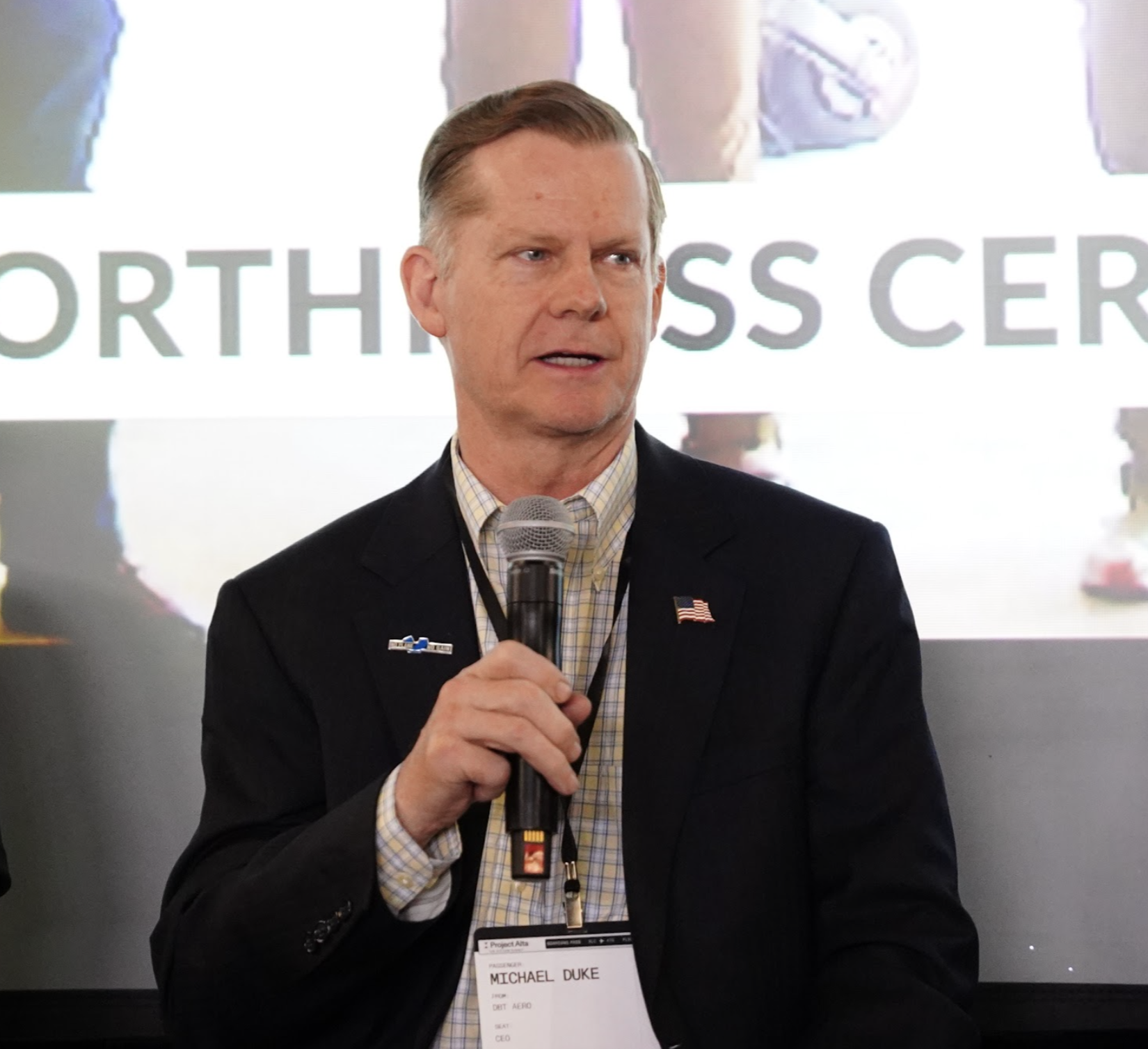
Michael Duke, Founder of DBT Aero, recently covered by TechBuzz, took a different approach altogether, arguing that geometry, not just propulsion, is the lever aviation has overlooked. His patented "double box tail" design integrates natural laminar flow and propulsion into the aerodynamics themselves, yielding a projected 47% reduction in total hourly operating costs compared to a conventional caravan-class aircraft.
"It's an aircraft accountants love, because the physics were the beginning point. When you get the physics right, the economics follow." Michael Duke, Founder, DBT Aero
The economic argument that kept surfacing — flying Cedar City to Salt Lake for $75, or Palo Alto to South Lake Tahoe in 45 minutes without TSA — framed AAM not as a luxury product but as a replacement for underserved routes that the current system simply prices out of viability.
The Supply Chain: Utah Already Has More Than It Knows
The mid-morning pivot to supply chain revealed something the broader national conversation often misses: Utah's aerospace manufacturing base is not a future asset — it is a present one, and it is already embedded in the AAM story.
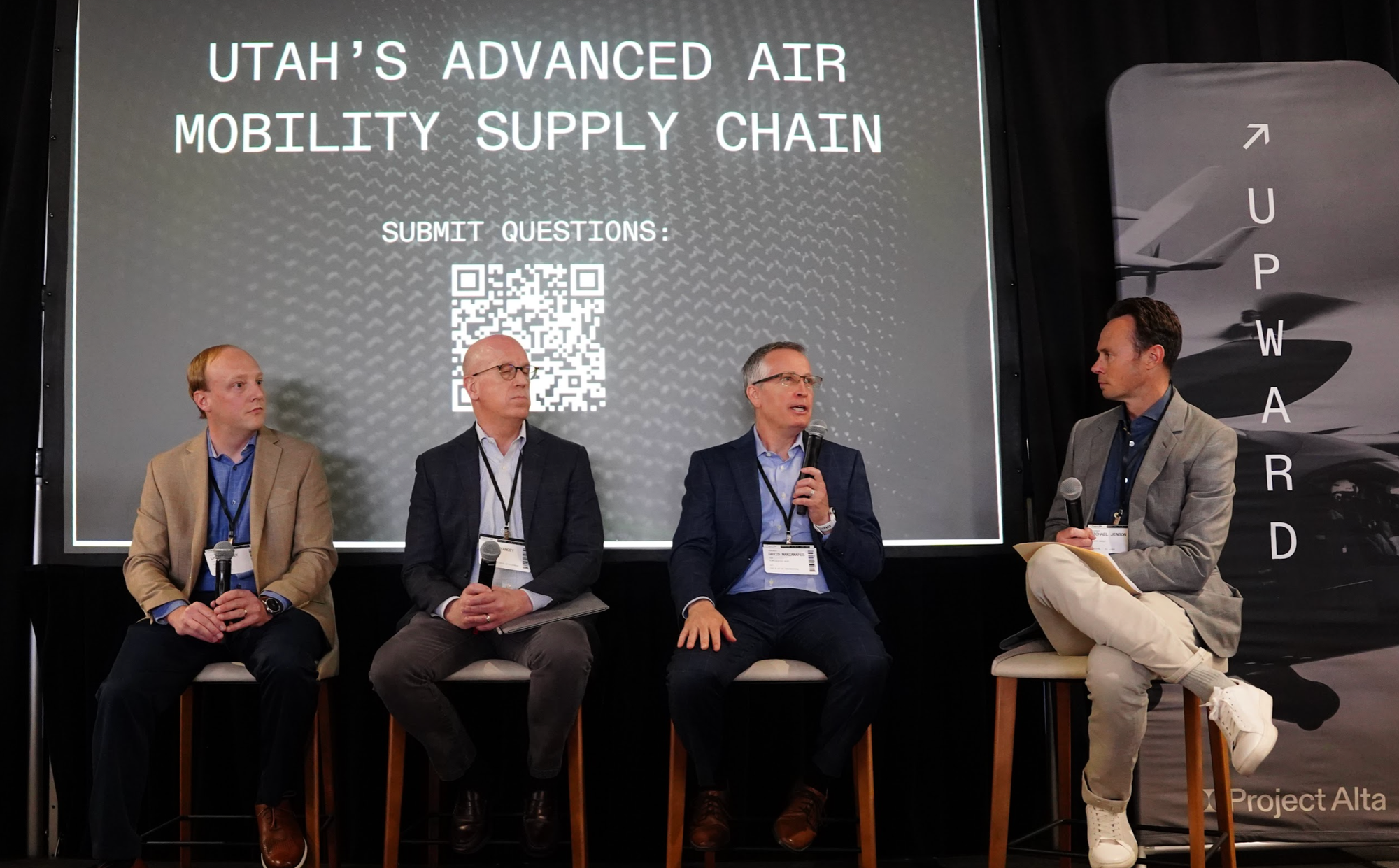
Chase Dorsey, General Manager of Albany Engineered Composites; Robert Yancey, Business Development Director at Hexcel Corporation; David Manzanares, VP of Engineering and COO of Hummingbird Aero; and moderator Michael Jenson, Principal at Cicero Group, during the "Utah's Advanced Air Mobility Supply Chain" panel at the Project Alta Summit, Rice-Eccles Stadium, Salt Lake City, May 26, 2026.
Hexcel Corporation, which manufactures roughly 90% of the carbon fiber it supplies worldwide from its West Valley City facility, has been a Project Alta partner since the governor announced the initiative at its plant. Albany Engineered Composites' Salt Lake City location is currently building 80% of the composite content of Beta Technologies' certification aircraft. Hummingbird Aero, headquartered in South Salt Lake, is supplying flight-critical actuation systems to multiple AAM OEMs, according to the company's VP of Engineering and COO David Manzanares.
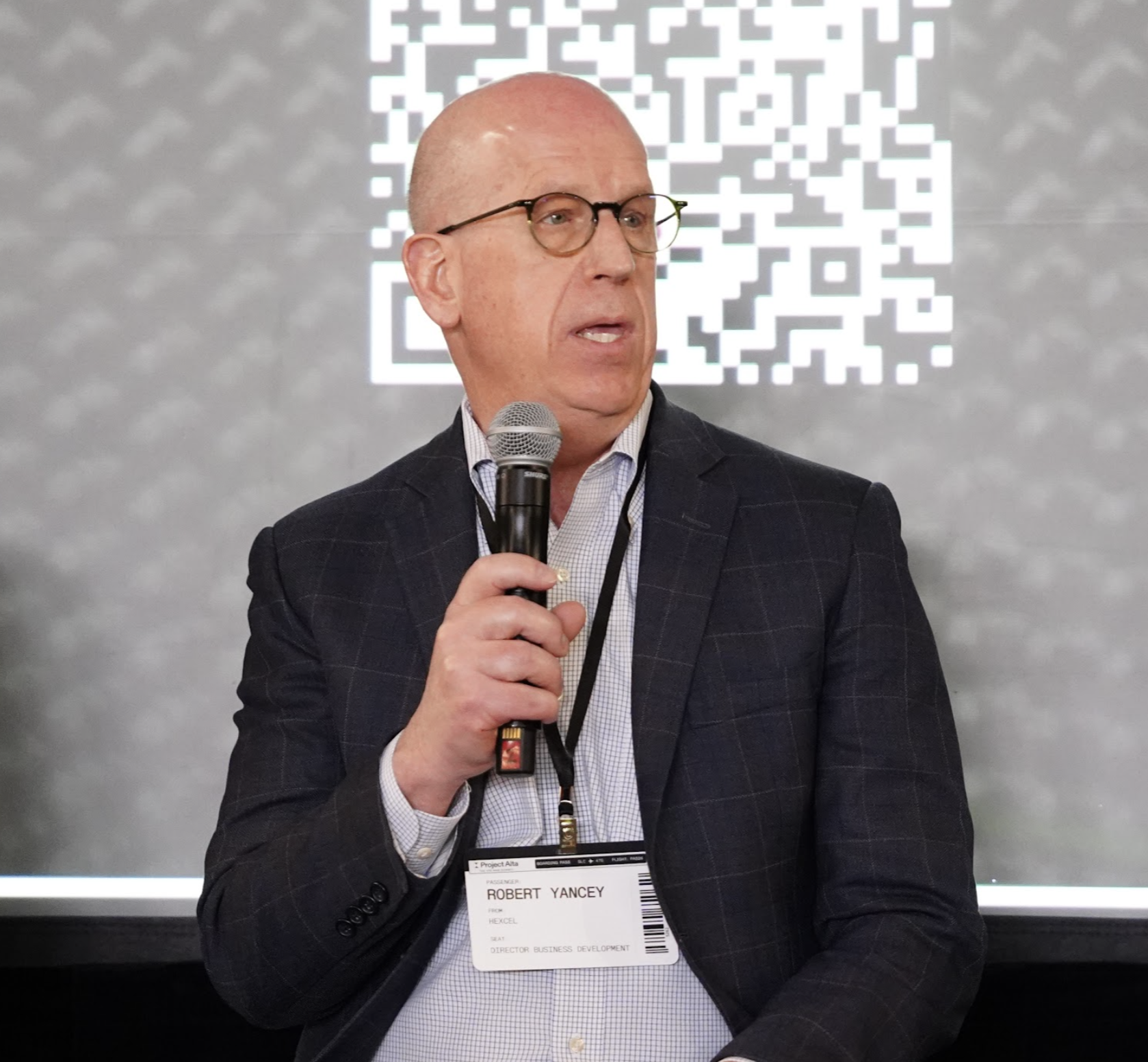
Robert Yancey, Director, Business Development, Hexcel
But the panel, moderated by Cicero Group's Michael Jenson, also surfaced a candid concern: the aerospace supply chain is not built for what's coming. "The commercial aerospace supply chain is still not back to pre-COVID levels," noted Hexcel's Robert Yancey. "And now you have accelerated defense procurement, drones, and AAM all competing for the same materials. I'm not sure the existing supply chain has capacity to meet AAM if it takes off the way investors and OEMs are projecting."
The path forward, the panelists agreed, runs through two things: capital investment in new manufacturing capacity, and, most critically, workforce. Composites expertise, high-voltage electrical knowledge, aerospace-standard quality systems: these skills don't exist in sufficient quantity, and they won't appear without deliberate investment in training pipelines tied to universities and technical colleges. "Workforce is 25% of our decision calculus" for factory location, Ellithorpe confirmed.
The State's Hand: EIPP, Incentives, and a $65M Infrastructure Bank
UDOT's Advanced Air Mobility Program Manager Paul Damron detailed the uFLY program's timeline: within 90 days of finalizing its FAA contract, operations begin. AmpAire is already named as one of the first 90-day operators. Four airports — Logan, Sky Park, Provo, and Heber — have received grant agreements for charging infrastructure, with agreements delivered just two weeks before the summit.
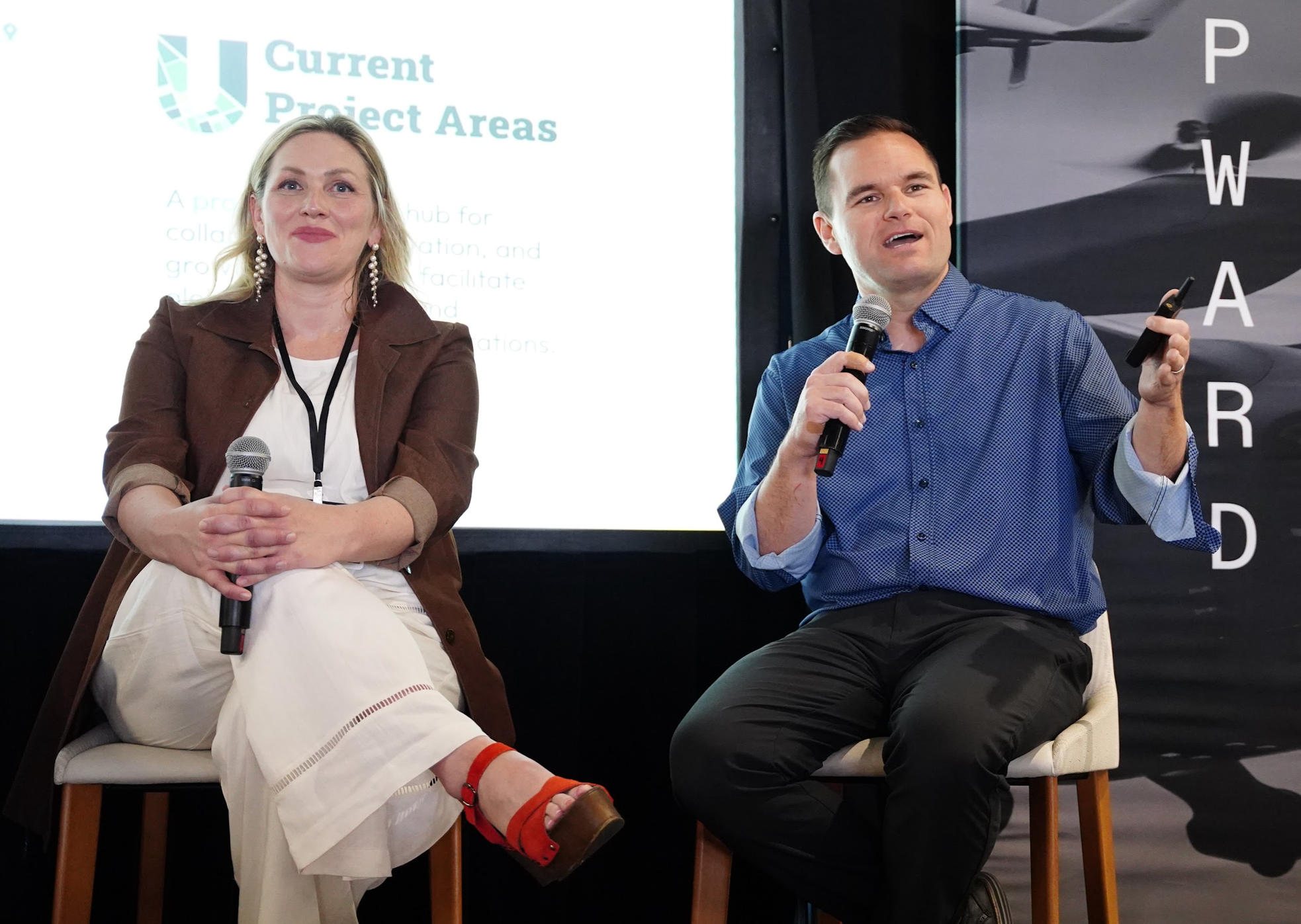
"About 92% of our air cargo leaves the state of Utah on a truck and goes to coastal airports. We are not using our skies nearly as effectively as we could," said Ben Hart, Executive Director, Utah Inland Port Authority, with Liesl Limburg, VP of Business Development, Governor's Office of Economic Development.
Liesl Limburg of the Governor's Office of Economic Development laid out the state's incentive stack: job creation thresholds, targeted industry programs, a newly hired workforce development director with a Boeing pedigree, and a regulatory relief office designed to remove barriers before they calcify. The University of Utah, she noted, ranks second nationally for likelihood of producing unicorn companies.
Hart brought perhaps the most underappreciated asset to the table: a $65 million infrastructure bank, public infrastructure district authority, and 16 project areas spanning 18 counties, a ready-made financial and geographic scaffold for an AAM network. The Inland Port, he argued, is positioned to fund batteries, storage, charging infrastructure, and cargo route development as a matter of transportation policy, not just aviation novelty.
Utah's Advanced Air Mobility Opportunity panel moderated by Kori Ann Edwards, Chief Strategy Officer at 47G. It included Paul Damron, Advanced Air Mobility Program Manager at UDOT; and Liesl Limburg, VP of Business Development at the Governor's Office of Economic Development; and Ben Hart. Project Alta Summit, Rice-Eccles Stadium, Salt Lake City, May 26, 2026.
Stacking the Digital Infrastructure
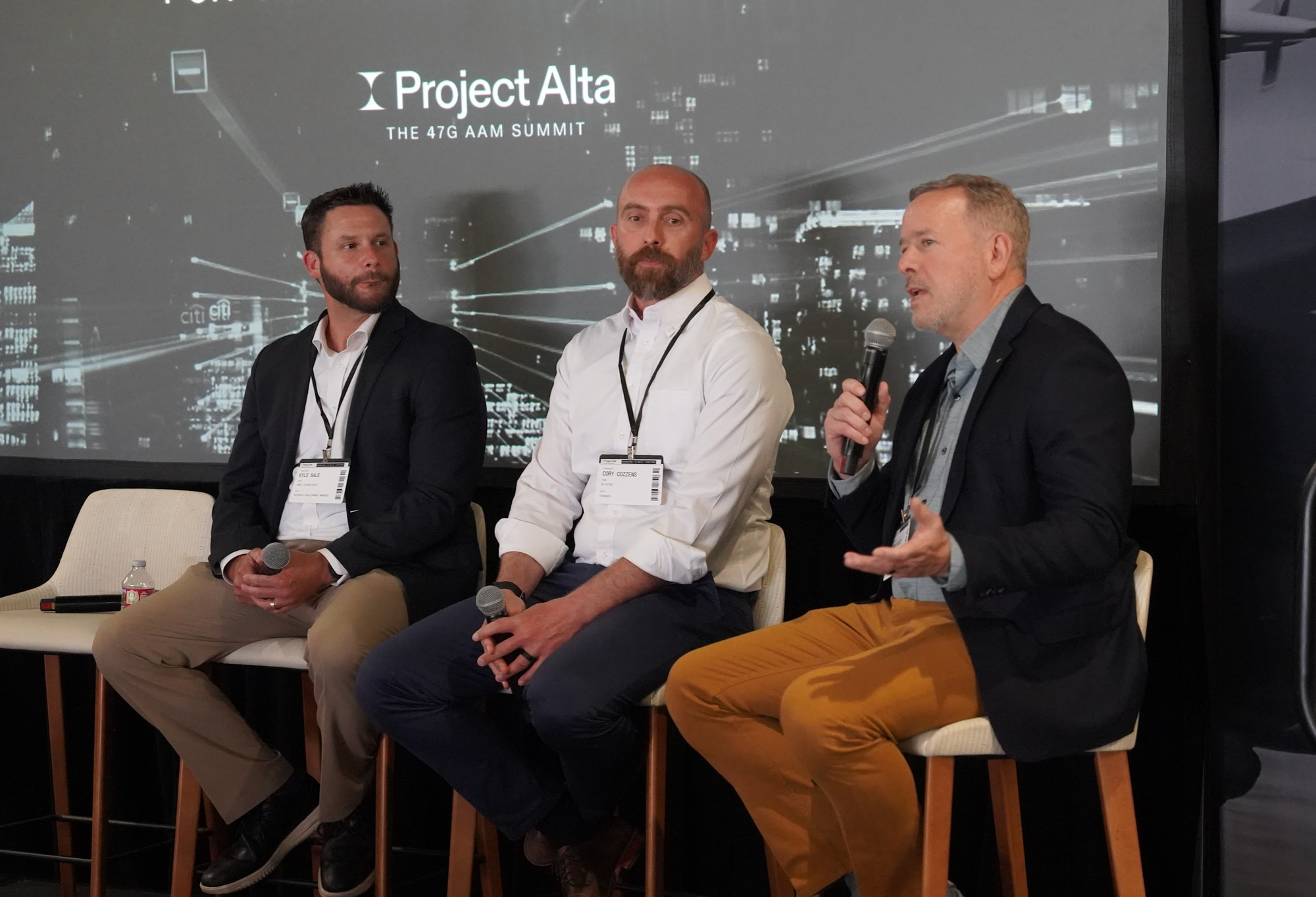
The post-lunch "Stacking the Stack" panel, anchored by Utah State University's Cal Coopmans alongside Sean Cassidy of Airgyde, Kyle Sale of ANRA Technologies, and Cory Cozzens of Altaport, moved into the technical substrate that makes everything else possible: UTM (unmanned traffic management), PSU (provider of services for unmanned aviation), cybersecurity, and the interoperability standards that will determine whether competing operators can share airspace or end up balkanizing it.
Kyle Sale, Business Development Manager at ANRA Technologies; Cory Cozzens, Co-Founder and Board Member of Altaport; and Sean Cassidy, (speaking) CEO of Airgyde, during the "Stacking the Stack: The Physical and Digital Support for Advanced Air Mobility" panel at the Project Alta Summit, Rice-Eccles Stadium, Salt Lake City, May 26, 2026. The panel explored UTM interoperability, vertiport infrastructure, and the digital backbone required to scale advanced air mobility operations.
The panel's sharpest warning came in the form of a historical analogy: Brazil's São Paulo has roughly 200 rooftop helipads, but most operators only use one or two because there's no connective tissue linking them. Cory Cozzens of Altaport, who previously ran Airbus's on-demand helicopter service under the brand Voom in São Paulo, Mexico City, and San Francisco, described the operational reality: "We had a team of a dozen people every day just picking up the phone, calling landing locations." The lesson: interoperability is not a technical nicety — it is the business model.
Cozzens also identified the most persistent unsolved problem in landing infrastructure: nobody has yet said "and we'll pay for it" to GA airports asking about vertiport construction. Until the business case for ground infrastructure closes, the aircraft will have nowhere to land.
The View From Washington
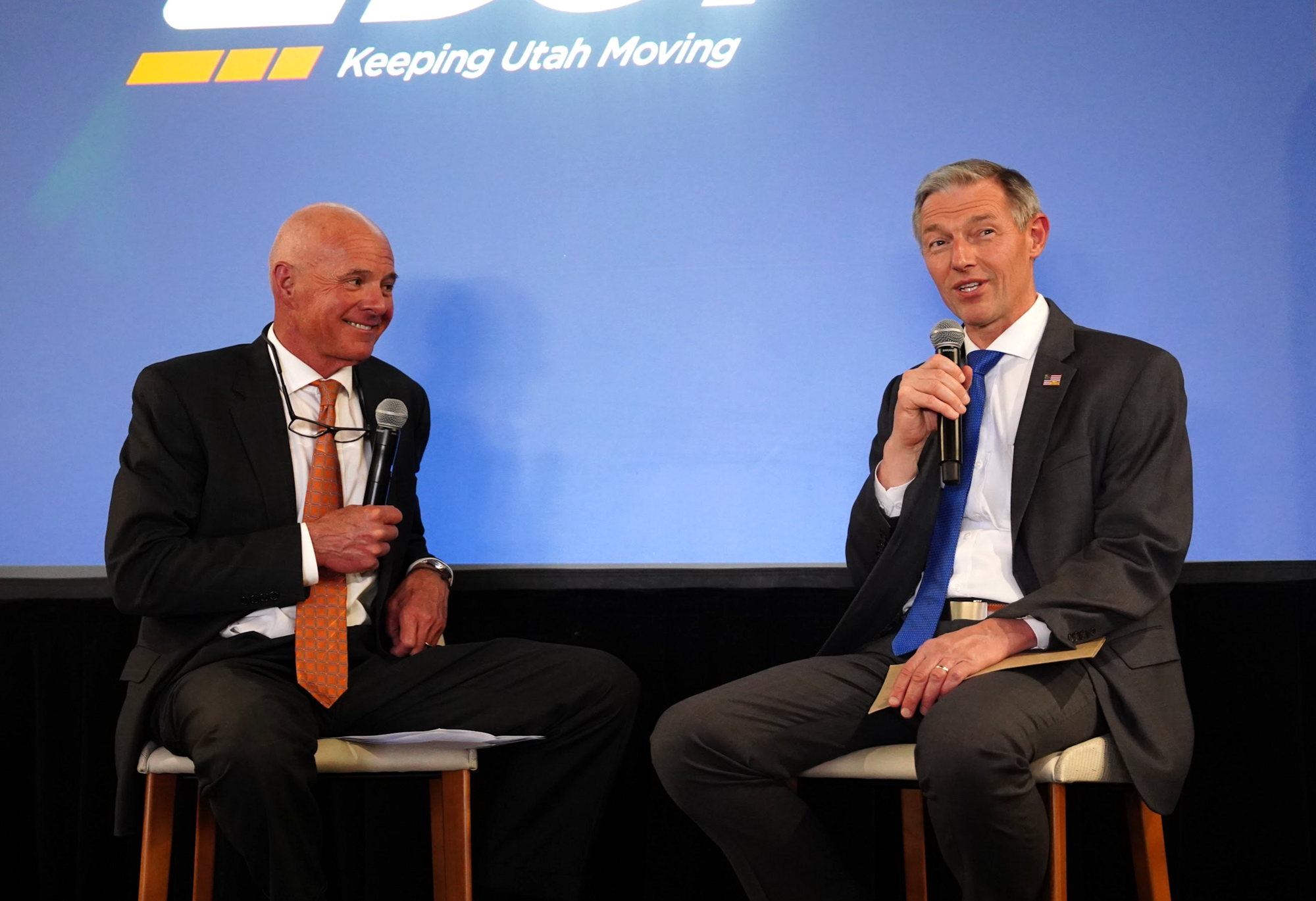
The day's final session brought UDOT Executive Director Carlos Braceras and Congressman Mike Kennedy (R-UT, 3rd District) into conversation about the political conditions for AAM's success — and the congressman did not disappoint.
Every member of Utah's congressional delegation, both senators and all four House members, wrote letters of support for the EIPP application and engaged personally with the FAA. That coalition, spanning party lines and both chambers, is what moved the needle.
"We have four congress people. California has 52. But we have unanimity." Congressman Mike Kennedy, U.S. Representative, Utah's 3rd District, in a conversation with UDOT Executive Director Carlos Braceras
His tactical advice to the room on converting skeptical legislators was equally direct: stop scheduling meetings in Washington offices and start staging demonstrations. "When they can touch, feel, and see, and experience these devices, they are far more likely to see you for the amazing people that you are," Kennedy said. He mentioned that the National Republican Campaign Committee would be in Park City on June 12–13, and suggested — without quite suggesting — that having an AAM vehicle in a nearby parking lot might be a better lobbying strategy than any PowerPoint deck.
"Does it have to be safer than a human or does it have to be perfect? It just needs to be better than people are today, and we will get to perfect along the way. Don't let perfect be the enemy." Carlos Braceras, Executive Director, UDOT
The Starting Gun
As the day closed, Chris Metts, 47G's Executive Director for Project Alta, framed what Day Two's sessions would represent: not more vision-casting, but the moment to begin making infrastructure decisions with real financial and logistical consequences.
Utah has the partnerships, the mandate, the institutional architecture, and, if the Project Alta Summit was any indication, the momentum. What it needs now is infrastructure in the ground, manufacturing commitments signed, and workforce pipelines opened.
The Project Alta Summit is taking place May 26–27 at the Ken Garff University Club at Rice-Eccles Stadium in Salt Lake City, hosted by 47G. The inaugural event features strategic discussions, industry innovators, and an AAM showcase highlighting cutting-edge aircraft, infrastructure systems, and enabling technologies.
Share this article
The link has been copied!
Your link has expired. Please request a new one.
Your link has expired. Please request a new one.
Your link has expired. Please request a new one.
Great! You've successfully signed up.
Great! You've successfully signed up.
Welcome back! You've successfully signed in.
Success! You now have access to additional content.