From Vision to Vertical: Project Alta Summit Day Two Puts Shovels in the Dirt
Utah's Project Alta Summit Day Two shifted from inspiration to obligation, as the FAA, Joby Aviation, Beta Technologies, and community leaders committed to concrete infrastructure timelines, vertiport sites, and workforce pipelines ahead of the 2034 Winter Olympics.
The second day of Utah's inaugural advanced air mobility summit moved decisively from inspiration to execution, with the FAA, Joby Aviation, Beta Technologies, and a roomful of community leaders making commitments that will define the state's aviation future.
Salt Lake City, Utah — May 27, 2026
If Day One of the Project Alta Summit was about convincing a room that advanced air mobility is real, Day Two was about making it irreversible.
The mood at Rice-Eccles Stadium on Wednesday shifted from possibility to obligation. The aircraft exist. The federal mandate exists. The partnerships exist. What remains, and what the second day of 47G's inaugural summit was explicitly designed to address, is the infrastructure: the charging stations, the vertiports, the grid upgrades, the zoning ordinances, the workforce pipelines, and the community trust that will determine whether Utah's eight-year runway to the 2034 Winter Olympics becomes a launchpad or a missed opportunity.
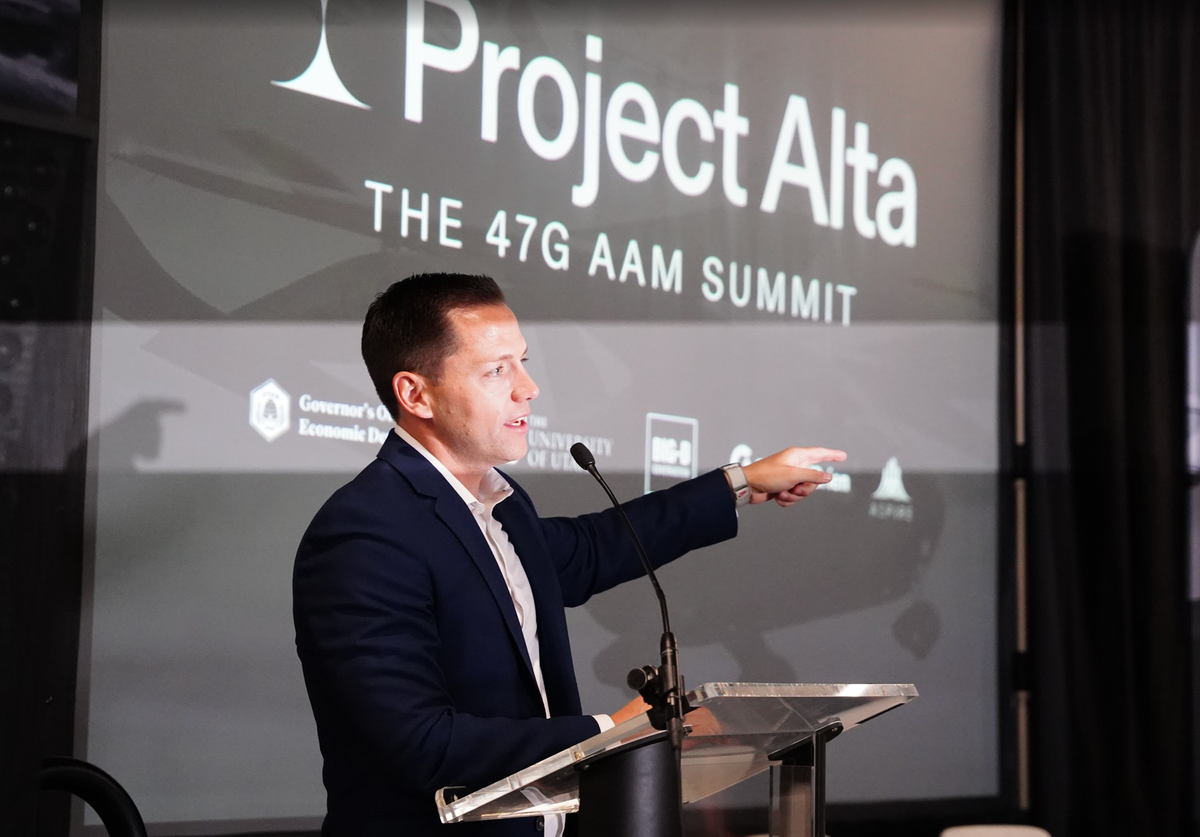
"Today we move from possibility to practicality," said Matthew Croshaw, Chief Operating Officer of 47G, in his morning welcome. "It has to get off a slide deck, it has to get out of a lab, out of a hangar, out of a press release. If this future is going to matter, it has to land somewhere."
Croshaw's framing set the tone for a day that covered more ground than perhaps any single gathering in Utah's AAM history, from FAA regulatory philosophy to grid substation lead times, from Joby Aviation's certification timeline to a BYU professor's DARPA-funded research on certifying 3D-printed aircraft components in 12 hours.
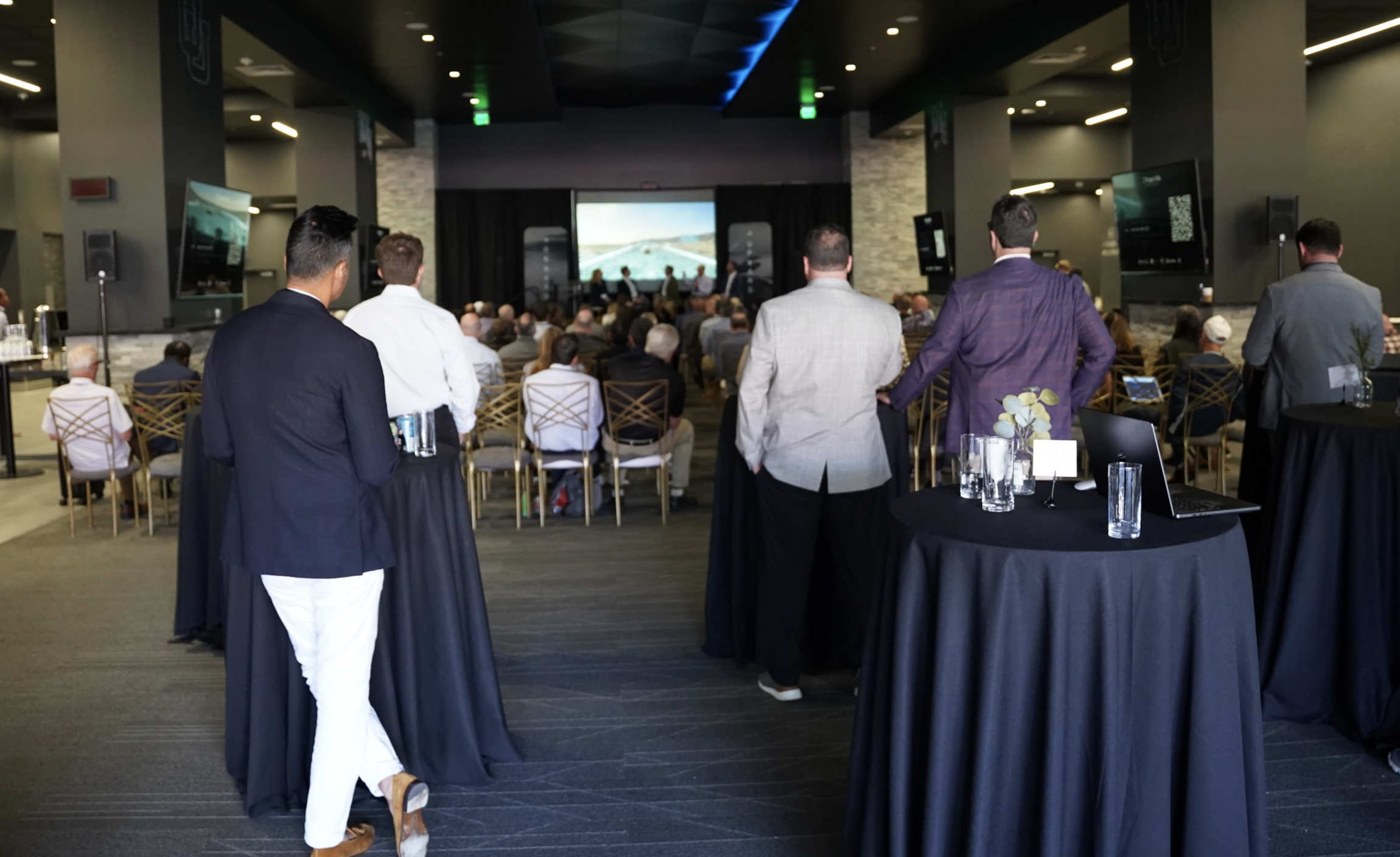
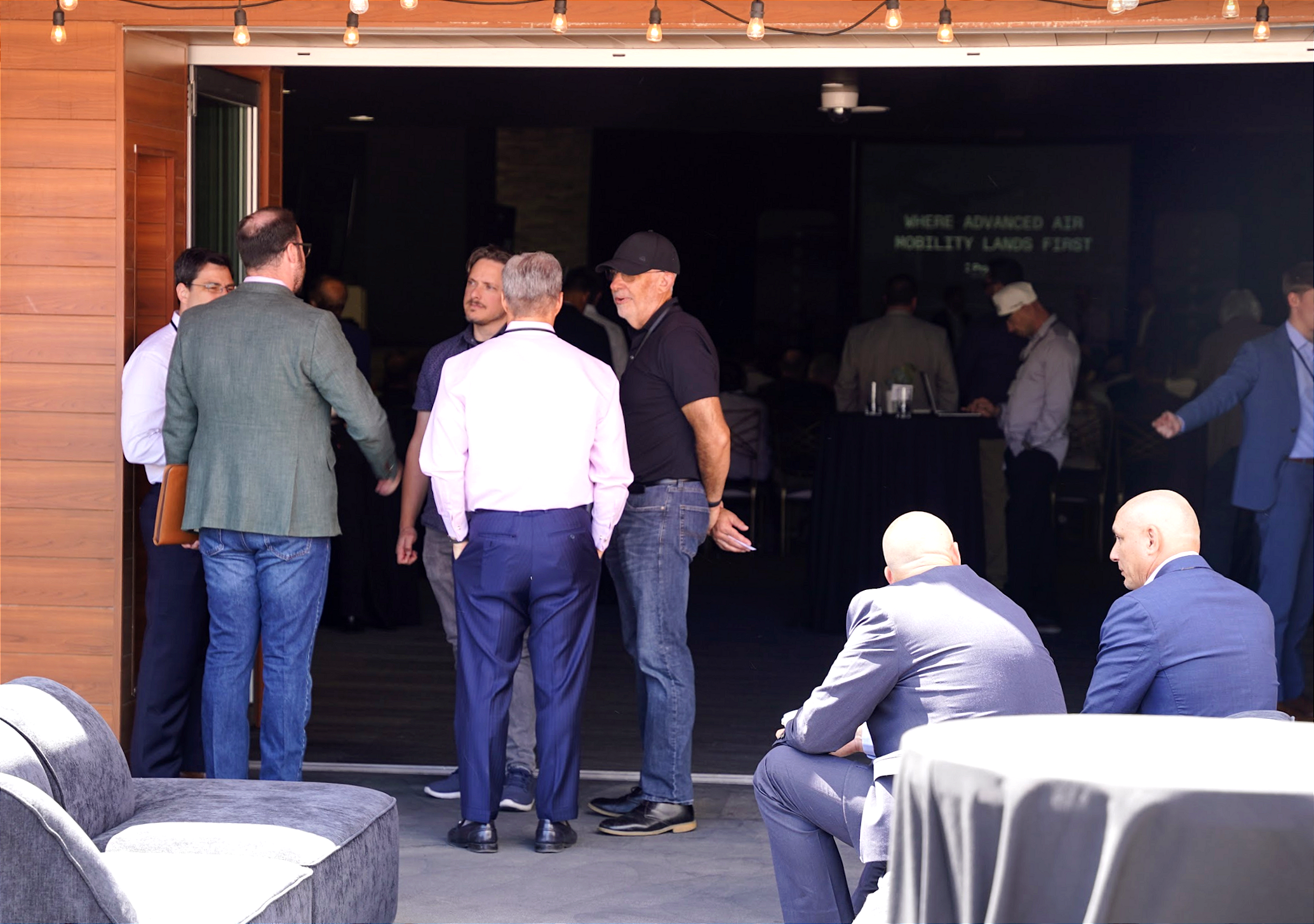
Project Alta Summit Day Two attendees, Ken Garff University Club, Rice-Eccles Stadium, Salt Lake City, May 27, 2026
The FAA: Don't Wait for Us
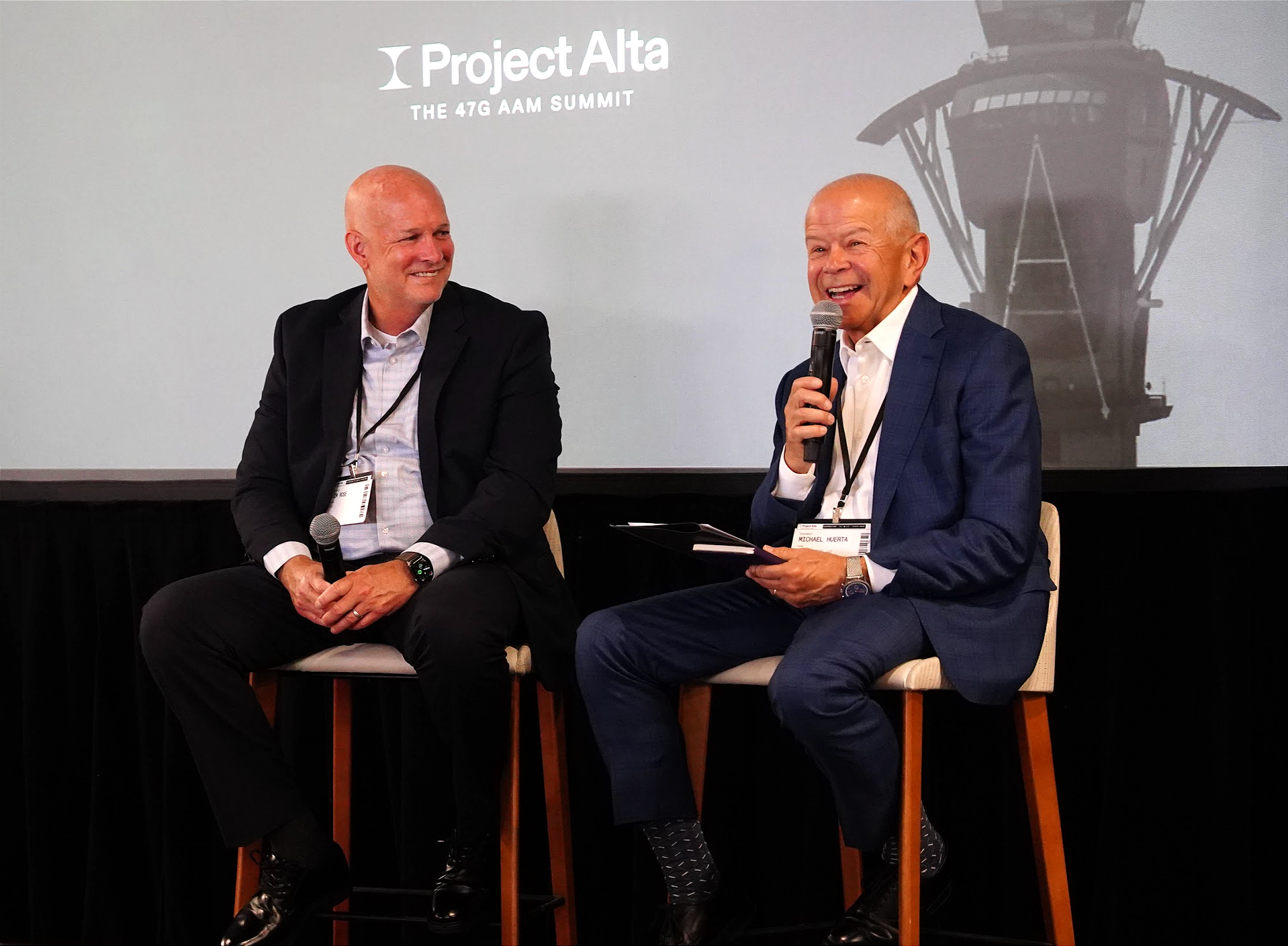
The morning's anchor session featured a conversation between Michael Huerta, former FAA Administrator and Project Alta coalition chair, and Jim Rose, Acting Director of the FAA's AAM Technologies Office. This is the federal official directly responsible for overseeing all eight EIPP programs.
Rose's message to the room was blunt and welcome: stop waiting for FAA permission to build infrastructure.
"Don't wait on the FAA," Rose said. "If you think infrastructure is needed, go do it. Make the best decisions you can. Don't wait on us."
Rose explained that the EIPP program, born from a White House executive order in the summer of 2025, is managing 26 states and hundreds of operations across the eight designated sites. Utah's proposal stood out for specific reasons. "Utah's application had more OEMs and operators than any other proposal, and more types of operations," Rose said. "The risk of not succeeding was low, maybe nil."
He confirmed that Utah's first operation under the EIPP program is imminent, with project plans being finalized now. Once the first operation occurs anywhere in the country, a three-year program clock begins, making 2026 a true starting gun for the national AAM deployment race.
On the question of autonomous operations, Rose was equally candid. The FAA is actively wrestling with the legal and philosophical question of what "pilot in command" means when no pilot is aboard. "Somebody's got to be in charge," he said. "Is that a remote pilot? Is it someone who designed the program? That's still up for discussion." But he added a note of confidence: "I think it's coming. The motion is real."
Former FAA Administrator Michael Huerta, Project Alta coalition chair, speaks during the "FAA Perspective" fireside chat as Jim Rose, Acting Director of the FAA's AAM Technologies Office, listens at the Project Alta Summit Day Two, Rice-Eccles Stadium, Salt Lake City, May 27, 2026. Rose told the audience of community leaders and developers: Don't wait on the FAA — if you think infrastructure is needed, go do it.
Huerta, drawing on his years leading the FAA, noted that Utah has a little-known but important history as a federal testbed. Salt Lake Center, the air traffic control facility managing the region, covers the largest geographic territory of any center in the country, with dramatic terrain diversity from urban corridors to remote wilderness. "If you can do it here, you can do it anywhere," he said.
Beta Technologies: 61 Chargers, and Counting
Nate Ward, Charge Network Development Lead at Beta Technologies, delivered what may have been the summit's most practically useful session. It was a detailed look at what it actually takes to build electric aviation charging infrastructure, from utility coordination to the physical footprint of a charging unit.
Beta's network now stands at 61 chargers nationwide. Of those, Ward noted, only six or seven are west of the Mississippi. The implication hung in the room: the western United States, including Utah, is starting nearly from scratch.
Ward described a network architecture that begins with four to six chargers, then accelerates rapidly as communities recognize the economic development opportunity. Beta's charger, a five-by-five-foot unit with a 50-foot corded reel, is designed to come to the aircraft, not the other way around. "Not a good idea to have a $5 million aircraft taxiing across an airport to charge," said Joshua Portlock, Co-Founder and CEO of Electro.Aero, echoing Beta's approach. "You land, bring the charger to the aircraft, charge while you're boarding and deplaning, and you're gone."
Beta's charging standard, CCS, is vehicle-agnostic by design. "From the start we made a decision: are we building a network to support Beta, or to support all of electric aviation?" Ward said. "We chose all of electric aviation, and that's proven to be the right decision." The standard is compatible with Archer, Textron, Wisk, and even electric ground vehicles, meaning the infrastructure investment serves multiple purposes simultaneously.
Ward's advice to community planners was direct: get the charger into your master plan and your capital budget now. Installation typically takes six to nine months, though Ward noted it can be done in three to four. "Florida bought 34 of our chargers through a state program," he said. "Michigan funded four through a grant. Utah has funded four airports already. You don't have to invest all the dollars today, just get it in the plan."
Beta, now publicly traded, is also developing a 19-seat all-electric aircraft that Ward described as potentially transformational for regional routes, a category that maps directly onto Utah's geography.
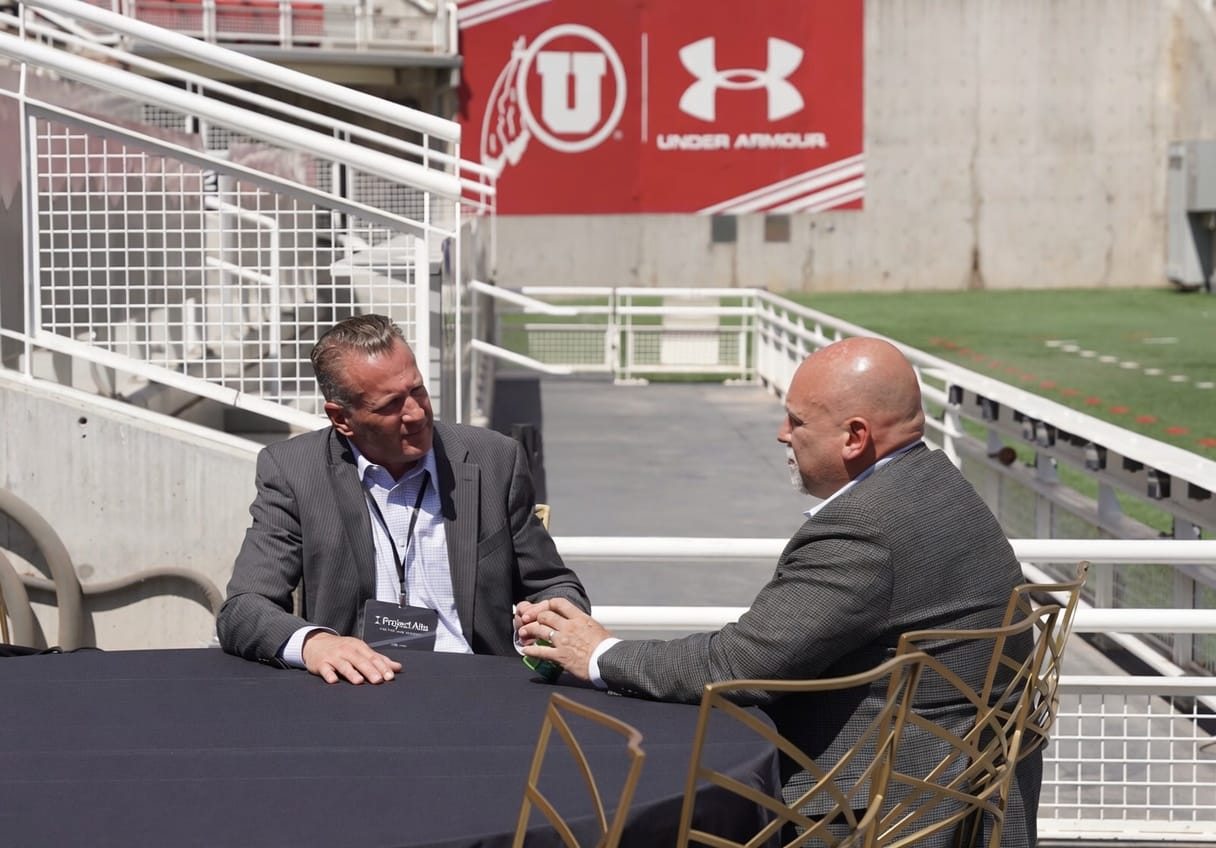
Attendees during a break at the Project Alta Summit Day Two, field level Ken Garff University Club, Rice-Eccles Stadium, Salt Lake City, May 27, 2026
Joby Aviation: The Certification Leader Looks at Utah
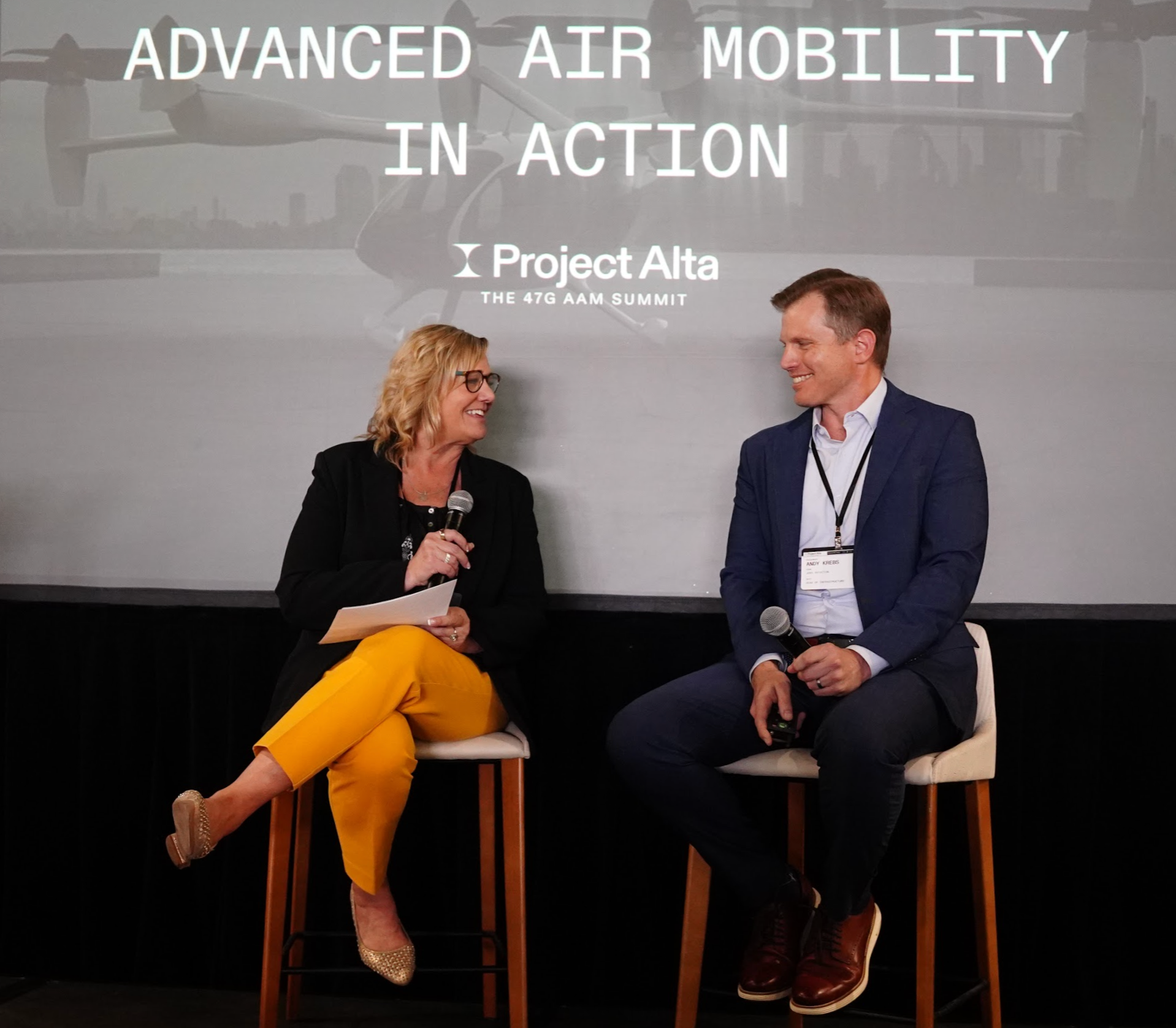
Andy Krebs, Head of Infrastructure at Joby Aviation, brought the summit's most significant news from the OEM front. Joby completed FAA Stage 4 type certification in late March 2026. This is the most consequential regulatory milestone any eVTOL manufacturer has ever reached with U.S. aviation authorities. Joby is now in the final stretch before commercial operations.
Krebs came to the summit with a Salt Lake launch route map already prepared. "I thought it would be fun to think about what a launch route looks like for a relatively local market," he said, projecting a map that traced corridors across the Wasatch Front. The message was clear: Joby is thinking seriously about Utah.
Kori Ann Edwards, Chief Strategy Officer at 47G, discussing Joby's AAM accomplishments with Andy Krebs, Head of Infrastructure at Joby Aviation, Project Alta Summit Day Two, Rice-Eccles Stadium, Salt Lake City, May 27, 2026
Krebs, who previously led Starship launch engineering and spaceport infrastructure at SpaceX before bringing that same build-fast discipline to aviation, described Joby's infrastructure philosophy as radical flexibility. "Our goal is to be as adaptive as possible to really layer into the built environment, as opposed to trying to change it," he said. The aircraft, a five-seat, six-rotor design capable of 200 mph cruise speed and roughly 150 miles of range, has now flown over 50,000 miles. Joby has conducted piloted air taxi operations in Dubai, San Francisco, and most recently New York City, where it flew demonstrations in and around Manhattan.
On what makes a market attractive, Krebs was specific: engaged regulators, developers with skin in the game, and a community that demonstrably wants the technology. "If we know the community here wants us, and there are ways of working with regulators to make sure we have approvals and can build and operate, that's really, really key," he said. "So far, it's already working."
His workforce message added urgency to Utah's university partnerships: the coming electric age needs engineers trained in electric motors and electrical systems rather than hydraulics, at both the university and technician level. "We're hoping we're entering a new electric age," he said. "More is more when it comes to workforce development."
Project Alta Summit Day Two attendees enjoying the shade of the field level Ken Garff University Club, Rice-Eccles Stadium, Salt Lake City, May 27, 2026
Where AAM Lands First: Boots on the Ground
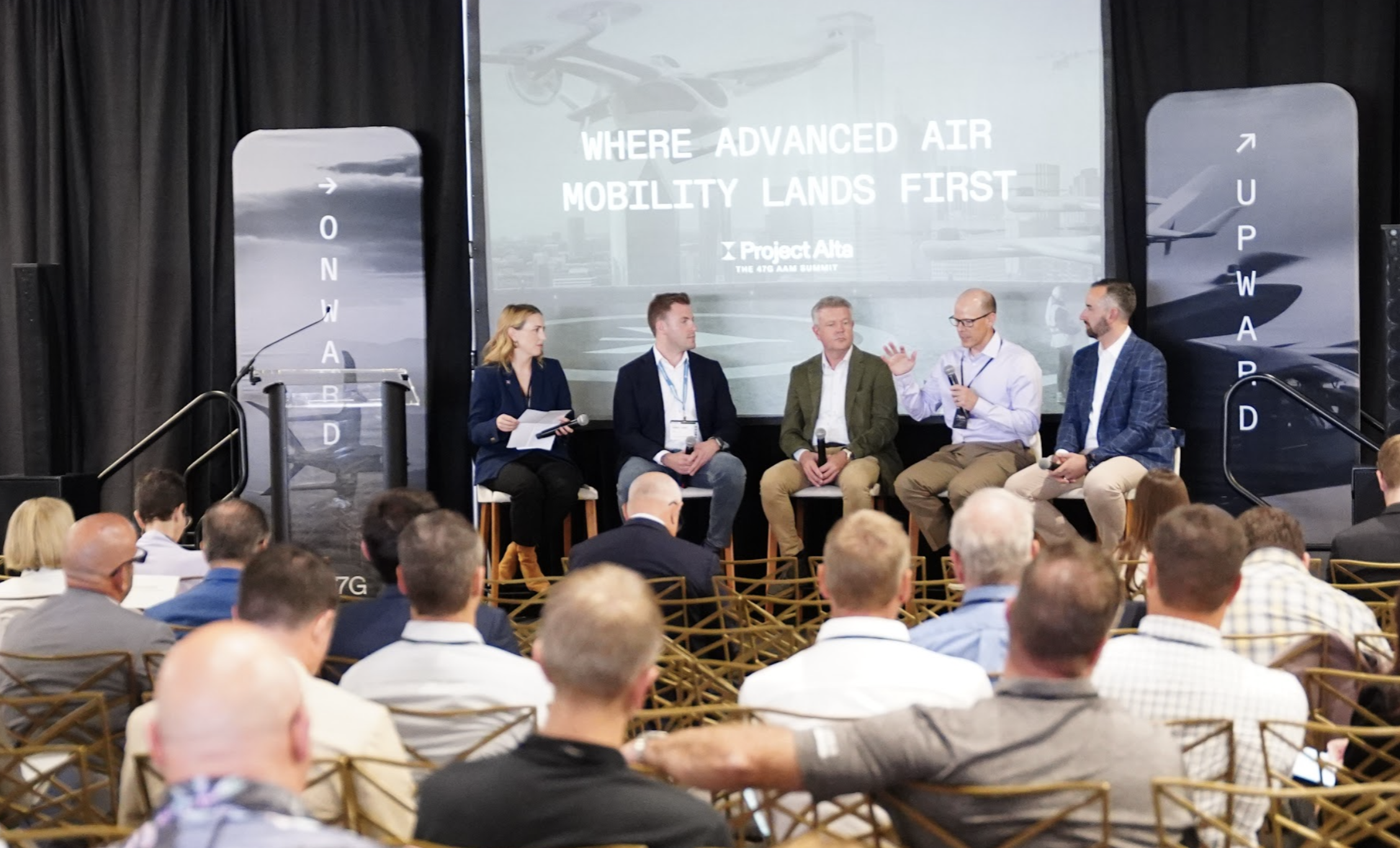
A morning panel, moderated by Mandy Nelson, Director of Strategic Relationships AAM at the Bristow Group, featured developers and airport planners already building vertiport infrastructure grounded the summit's ambitions in operational reality.
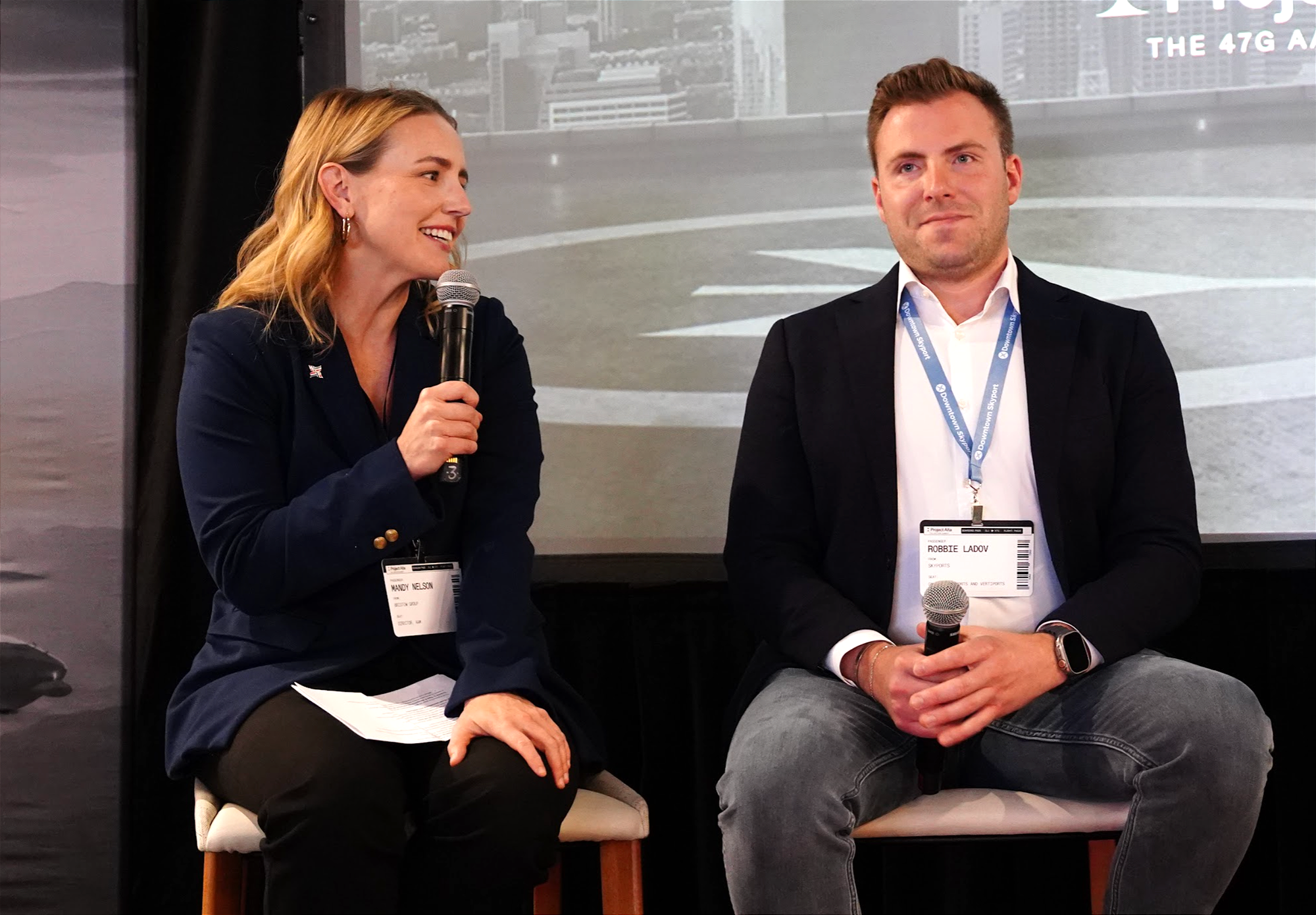
Robbie Ladov, General Manager of US Heliports and Vertiports for Skyports, the global infrastructure developer that operates the Downtown Manhattan Heliport, the busiest heliport in the United States, and recently completed a vertiport at Dubai International Airport in partnership with Joby Aviation, offered the summit's most pointed warning about community acceptance. "There's a misconception in the industry that because these aircraft are quiet, communities will accept them," Ladov said. "In Manhattan, I get thousands of voice complaints every month." His advice: work through government sponsors, engage communities early, and never assume silence means acceptance.
Mandy Nelson, Director of Strategic Relationships AAM at Bristow Group, moderates the "Where Advanced Air Mobility Lands First" panel alongside Robbie Ladov, General Manager of US Heliports and Vertiports at Skyports, at the Project Alta Summit Day Two, Rice-Eccles Stadium, Salt Lake City, May 27, 2026. Ladov, who manages the busiest heliport in the United States at Downtown Manhattan, warned the audience: There's a misconception in the industry that because these aircraft are quiet, communities will accept them — in Manhattan, I get thousands of voice complaints every month.
Brady Fredrickson, Director of Planning at Salt Lake City International Airport, confirmed that the airport is planning not one vertiport but a system — on the parking garage, on the east side for corporate aviation, near future employee facilities, and potentially at the South Valley Regional Airport and Tooele Valley Airport. "If we put two vertiports on top of a parking garage, the throughput can't support demand," he said. "It's a system that's going to function on campus." The airport is already working with Rocky Mountain Power to confirm grid capacity, and will begin detailed airspace integration modeling this summer.
Don Willie, Director of Operations at The Point, the 600-acre mixed-use development on the former Utah State Prison site in Draper, and heavily covered by TechBuzz, described a project that has been building vertiport planning into its infrastructure from the ground up. Power conduit has already been routed to the top of a planned parking structure in anticipation of vertiport installation. "We broke ground on Porter Rockwell Boulevard a year and a half ago," Willie said. "At the same time, all the backbone infrastructure is going in. We asked: if we're going to have power for a vertiport, how do we get it there, and what do we need to do today for something that's ready in 10 years?"
Moderator Mandy Nelson leads the "Where Advanced Air Mobility Lands First" panel at the Project Alta Summit Day Two, Rice-Eccles Stadium, Salt Lake City, May 27, 2026. The panel featured Robbie Ladov, General Manager of US Heliports and Vertiports at Skyports; Andrew Duffell, President of the Research Park at Florida Atlantic University; Brady Fredrickson, Director of Planning & Environmental at Salt Lake City International Airport; and Don Willie, Director of Operations at The Point. The panel's collective message: vertiport infrastructure must be planned now, built as networks, and designed to serve communities — not just aircraft.
Justin Vandy, New Product R&D Lead at Cherokee Federal, introduced the summit's most immediately deployable infrastructure solution: a mobile vertipad platform that sets up in under five minutes by one person, fits on a trailer, has a lower PSI footprint than a car parking space, and can accommodate EV charging for any OEM. "What goes up has to come down somewhere," Vandy said. "We don't have to wait for next year or years down the line to assess, permit, and construct. We can start testing today."
The Regulatory and Electrification Reality
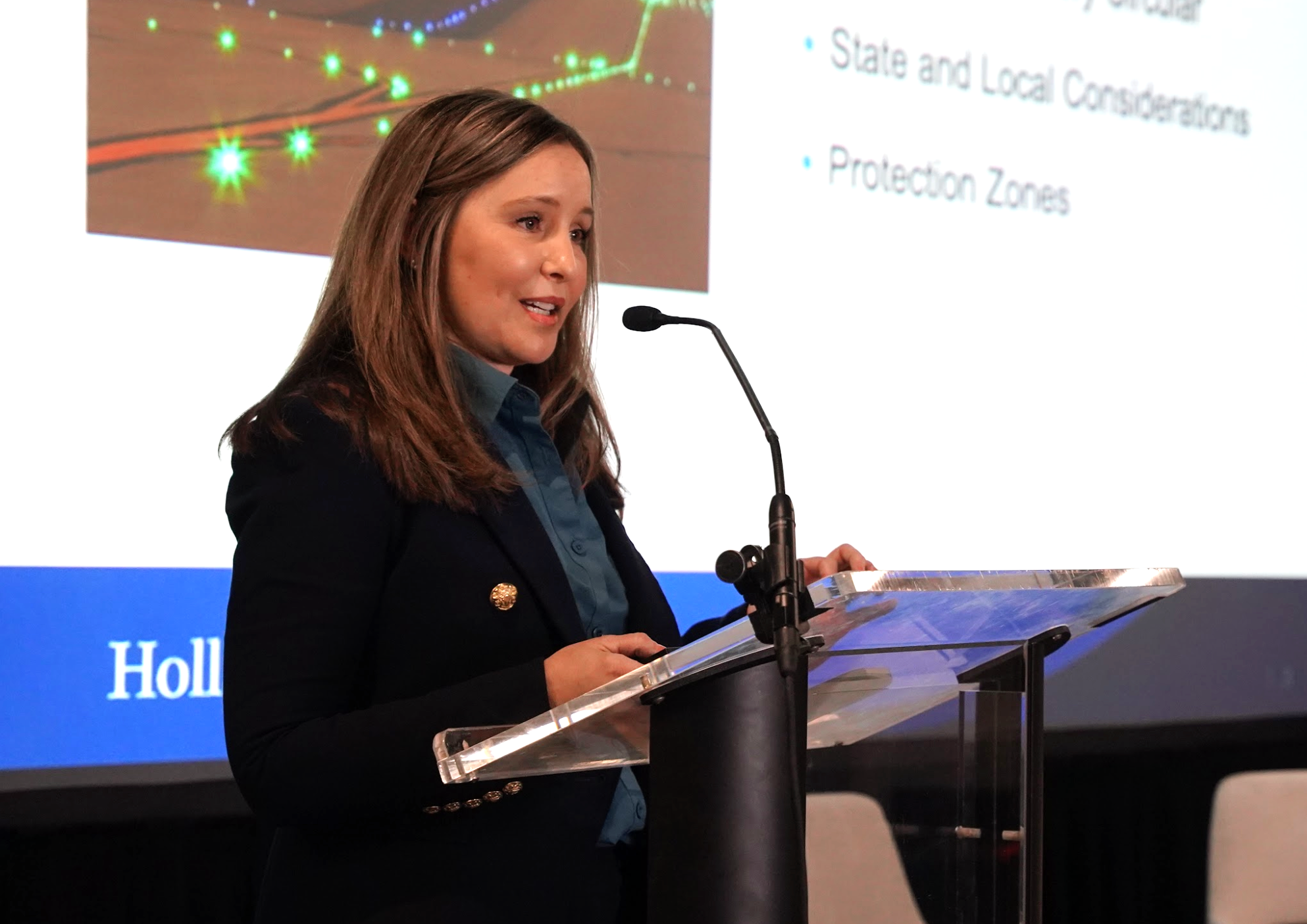
Attorney Katie Inman, a partner at Holland & Knight with deep FAA and NTSB experience, delivered a dense and important session on the legal framework surrounding vertiport development. Her core message: vertiports are not legally defined the same as airports, creating genuine funding ambiguity, but Utah's streamlined approval process is among the best in the nation.
Katie Inman, Partner, Public Policy & Regulation at Holland & Knight, addresses the legal and regulatory framework for vertiport development. Utah's streamlined process for airport approval looks straightforward to me, Inman told attendees, noting that among EIPP states, Utah's regulatory environment is among the most developer-friendly in the country.
"I've done the rules, and Utah looks straightforward to me," Inman stated, contrasting it favorably with Florida's more onerous designation process and the Port Authority of New York and New Jersey's procurement-driven model. She noted that Florida just passed legislation allowing up to 100% state DOT funding for vertiport development, and encouraged Utah officials to watch that model closely. Her broader advice: private financing is what the federal government currently anticipates as the primary mechanism, and project developers should move forward using FAA Engineering Brief 105 design standards while awaiting the forthcoming advisory circular.
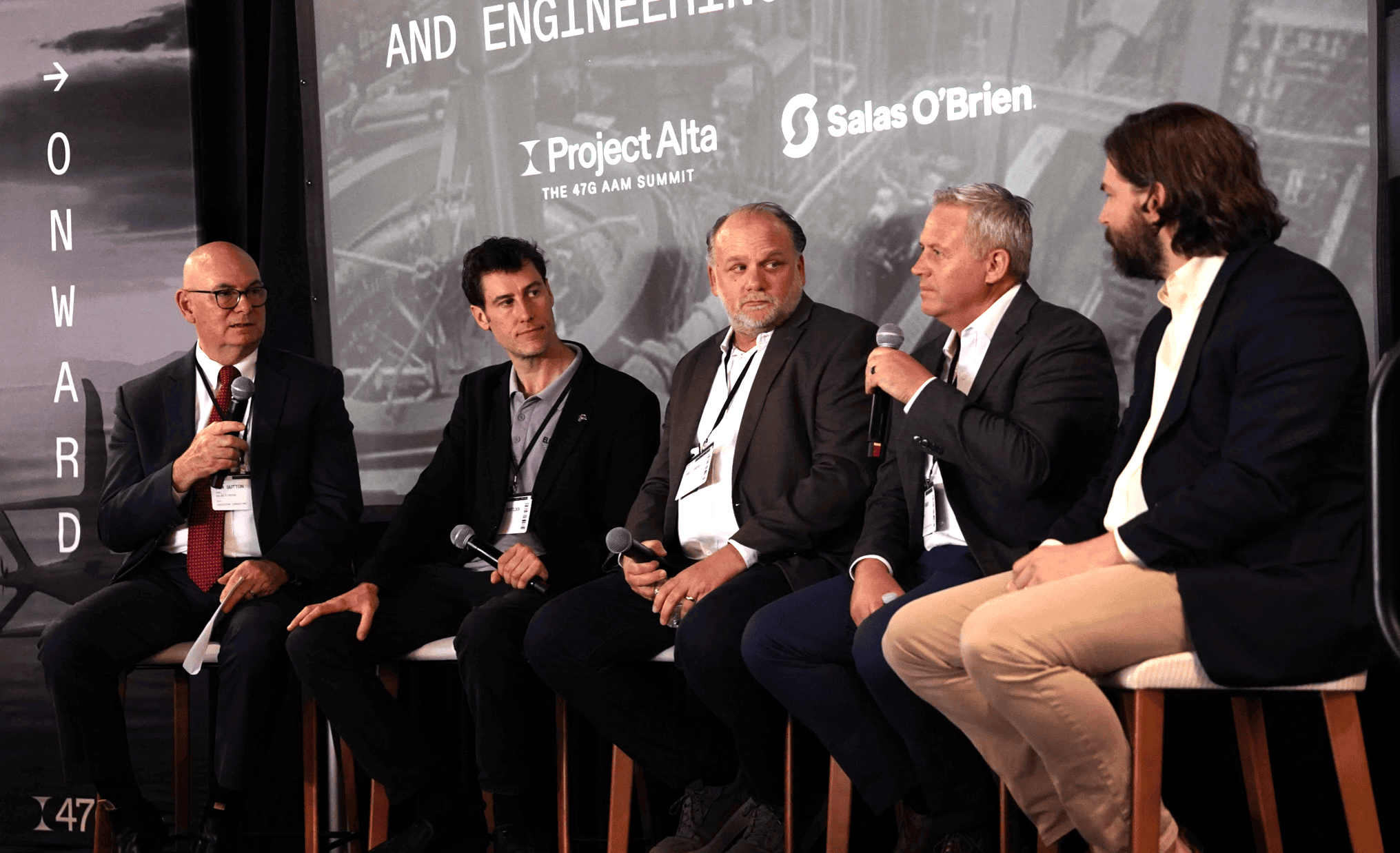
The electrification panel was moderated by Jim Sutton of Salas O'Brien and featured Phillip Sutherland of Salas O'Brien, Jake Barker of Rocky Mountain Power, Joshua Portlock of Electro.Aero, and James Campbell of the ASPIRE Engineering Research Center at Utah State University. It surfaced the summit's most sobering infrastructure timeline reality.
Jim Sutton, Executive Consultant, Salas O'Brien; Joshua Portlock, Co-Founder and CEO, Electro.Aero; James Campbell, Chief Strategy Officer, ASPIRE Engineering Research Center at Utah State University; Jake Barker, Managing Director of Grid Planning and Power Quality, Rocky Mountain Power; Phillip Sutherland, Principal, Salas O'Brien — during "The Charging, Electrification, and Engineering to Power AAM" panel at the Project Alta Summit Day Two, Rice-Eccles Stadium, Salt Lake City, May 27, 2026. The panel's sobering headline: infrastructure for the 2034 Olympics must be operational by 2032 — giving Utah six years to build it.
Barker laid it out plainly: a single charging station at an existing location takes six months to a year to install. A substation upgrade takes three to five years. A transmission line upgrade can take five to ten years, depending on permitting and property. "If you know you need a substation, you need to start that conversation now," he said.
Campbell, who spent 20 years as Director of Innovation at Rocky Mountain Power before joining ASPIRE, added that for Utah to have robust infrastructure operational in time for serious Olympic testing, "we basically have to have things in play and working already by 2032." That gives communities six years — and counting.
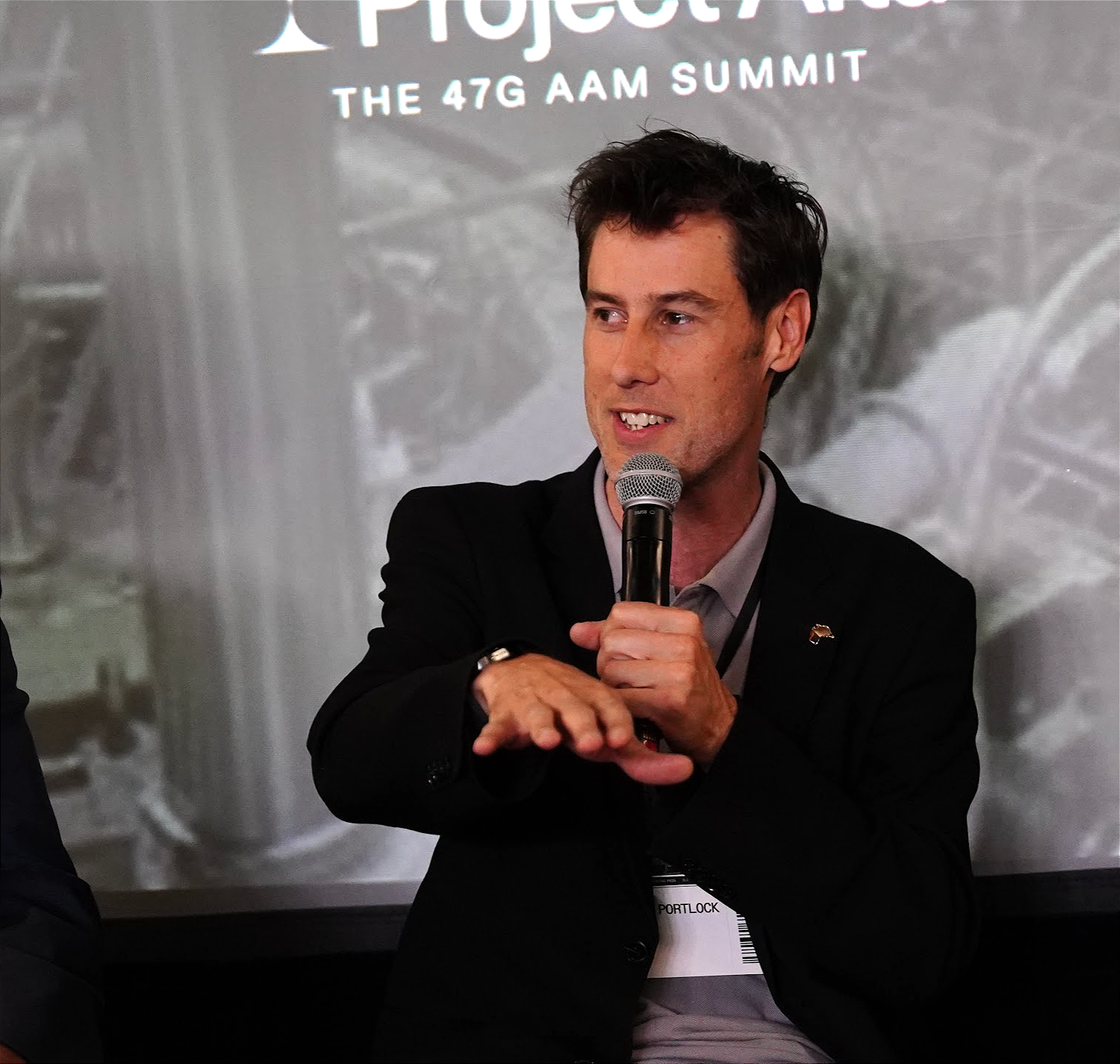
Joshua Portlock, Co-Founder and CEO of Electro.Aero, speaks during the "Charging, Electrification, and Engineering to Power AAM" panel at the Project Alta Summit Day Two, Rice-Eccles Stadium, Salt Lake City, May 27, 2026. Portlock, whose company operates the world's most highly utilized commercial electric aircraft fleet in Australia, made the case for portable charging infrastructure: ...not a good idea to have a $5 million aircraft taxiing across an airport to charge — you land, bring the charger to the aircraft, and you're gone.
Portlock noted that Electro.Aero's own charger lead times have grown from one to two months to six to nine months as demand has surged globally. "The supply chain needs to ramp up," he said. "We'd love to manufacture here in Utah."
The Universities: Research Already on the Critical Path
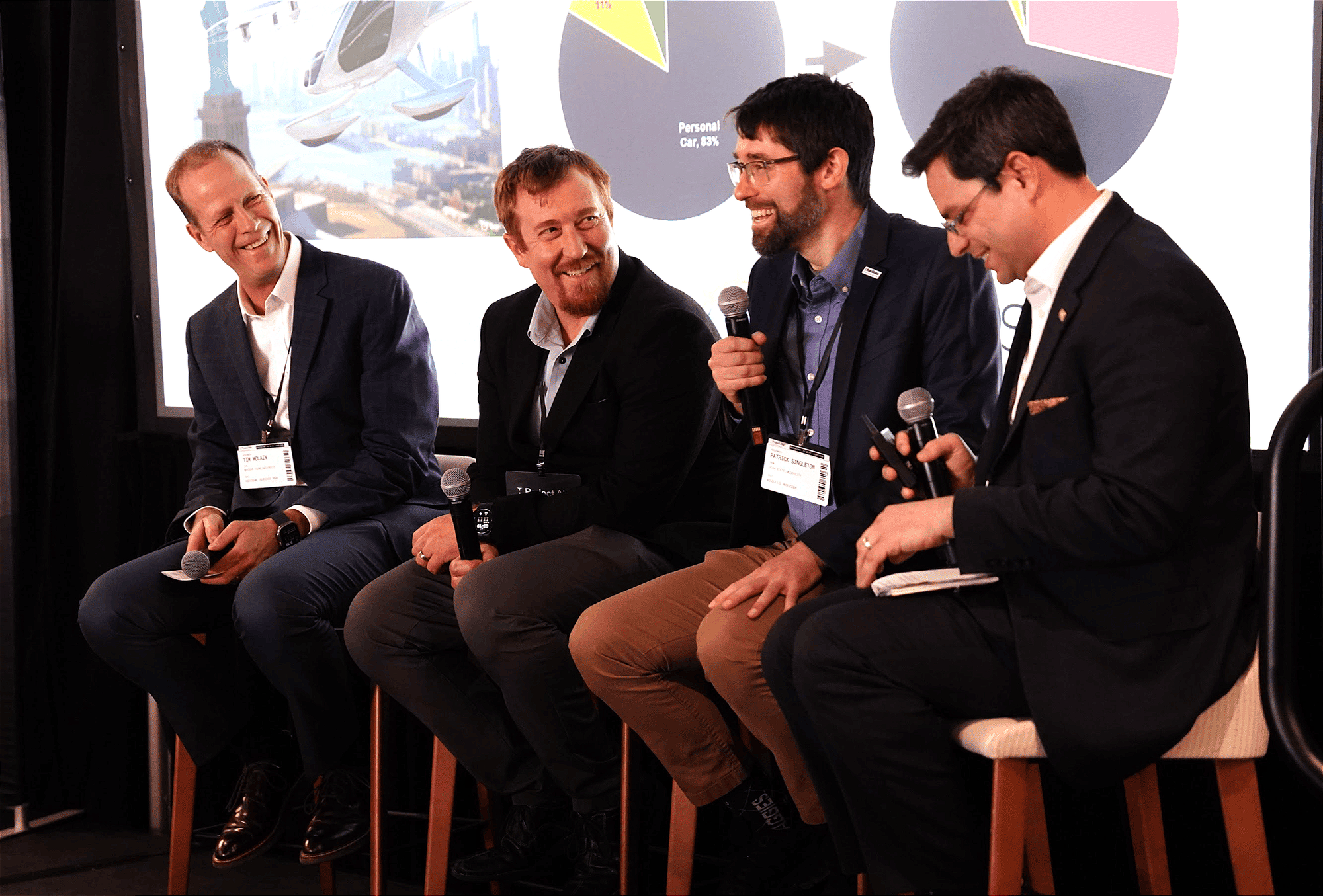
A late-afternoon panel moderated by Benjamin Schwartz of Monterey Technologies, Inc. made the case that Utah's research universities are not merely observers of the AAM revolution; they are already contributing to it in ways that will determine the pace of the entire industry.
Tim McLain, Associate Dean of the Ira A. Fulton College of Engineering at Brigham Young University; Jacob Hochhalter, Associate Professor of Mechanical Engineering at the University of Utah; Patrick Singleton, Associate Professor of Transportation at Utah State University; and moderator Benjamin Schwartz, VP of Human-Centered Engineering at Monterey Technologies enjoying a light moment in "The Human Side of Infrastructure" panel at the Project Alta Summit Day Two, Rice-Eccles Stadium, Salt Lake City, May 27, 2026. The panel argued that infrastructure, not aircraft, is rapidly becoming the critical path for advanced air mobility — and that Utah's research universities are already helping solve it.
Jacob Hochhalter, Associate Professor of Mechanical Engineering at the University of Utah and leader of the Utah Aerospace Hub, described a DARPA-funded project called Surge that aims to certify a structurally critical additively manufactured component within 12 hours of printing, compared to the current standard of 10 to 20 years. "If we don't figure out how to change that fundamentally, we're going to still be saying the same things in 40 years," Hochhalter said. The research applies physics-based simulation and machine learning to complement physical testing, potentially compressing certification timelines by orders of magnitude.
Tim McLain, Associate Dean of the Ira A. Fulton College of Engineering at BYU, described a completed STTR collaboration with Archer Aviation, funded by the US Air Force, on GPS-denied autonomous landing algorithms for vertiports. Six students were supported by the project; two are finishing master's degrees this summer, four are pursuing PhDs in autonomous aircraft systems. "If you have an exciting research problem and combine that with industry partners, awesome students, and flight testing to verify the work," McLain said, "you build a world-class experience that prepares people to jump into AAM and have an impact."
Patrick Singleton, Associate Professor of Transportation at Utah State University, brought a behavioral scientist's perspective to demand forecasting, warning that the temporal and spatial mismatch in AAM demand — more people traveling from rural Utah to Salt Lake in the morning than the reverse — will require careful fleet management and vertiport design. "There's going to have to be some work on fleet repositioning and the spatial and temporal imbalance," he cautioned.
Project Alta Summit Day Two attendees enjoying the amenities of the Ken Garff University Club, Rice-Eccles Stadium, Salt Lake City, May 27, 2026
Ready. Set. Fly.
Aaron Starks closed the summit the way he opened it — with conviction, specificity, and a direct challenge to everyone in the room.
Starks didn't just address the room — he canvassed it, working the mic from the front rows all the way to the far back of the hall, calling on audience members by name and extracting public commitments one by one.
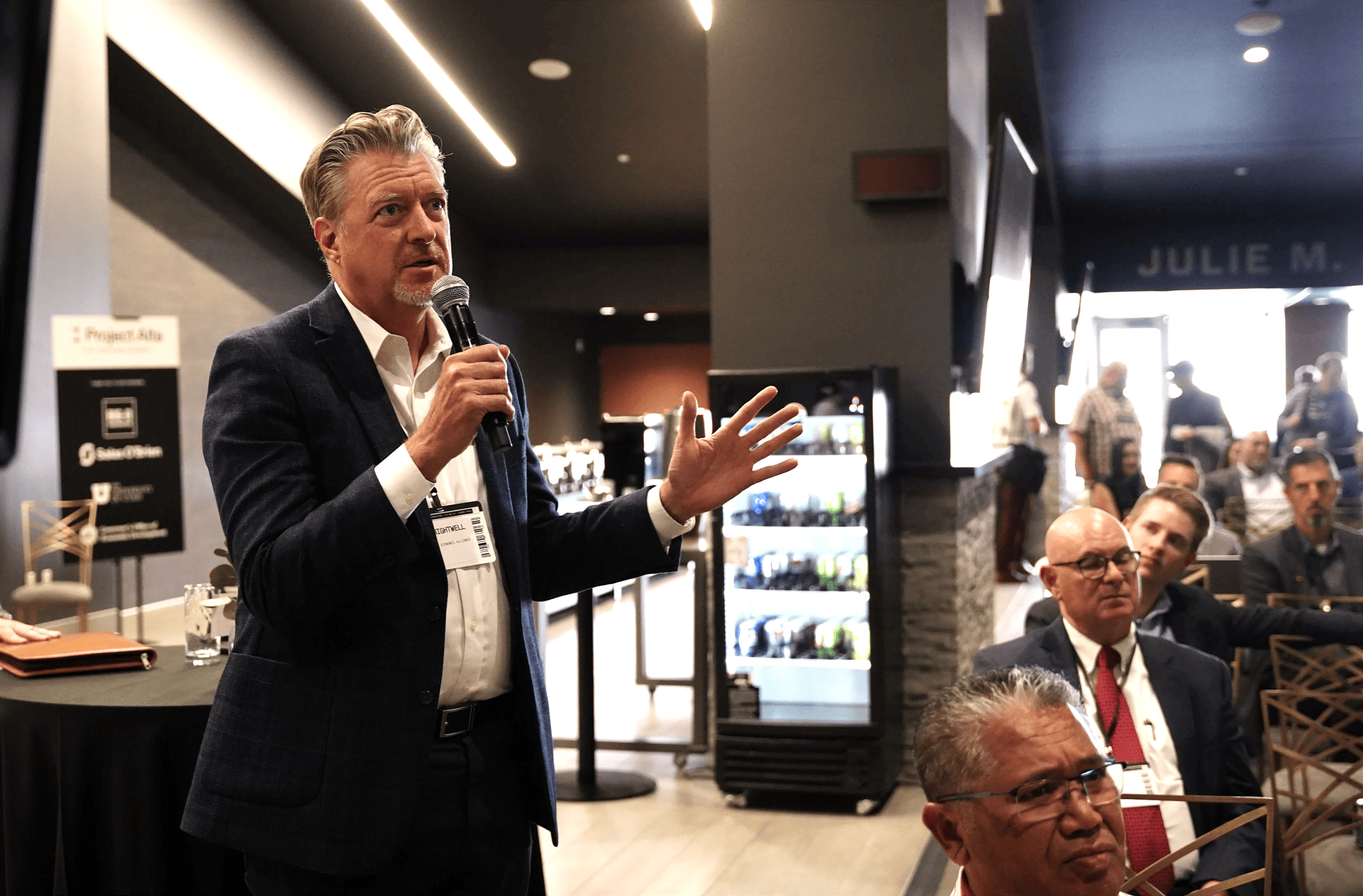
Todd Brightwell, President and CEO of the Southern Utah Economic Alliance, accepted a challenge on the spot: select Southern Utah's first vertiport location by December 31, 2026.
Todd Brightwell, President and CEO of the Southern Utah Economic Alliance, responds after being called out by name by 47G President and CEO Aaron Starks during the closing "Ready. Set. Fly." session at the Project Alta Summit Day Two, Rice-Eccles Stadium, Salt Lake City, May 27, 2026. Brightwell is a veteran site selector who previously served as COO of the Economic Development Corporation of Utah where he helped attract Adobe, Goldman Sachs, Oracle, Boeing, and Procter & Gamble to Utah.
A representative from Layton — a city on the doorstep of Hill Air Force Base and its sprawling defense and commercialization supply chain — committed to pursuing funding studies, with Starks pointing him toward federal grant streams available in the room.
Shawn Milne, Director of Community and Economic Development at the Bear River Association of Governments, accepted Brightwell's challenge with a grin and threw one back: north versus south, Cache Valley versus Southern Utah, whoever announces first wins. "We need a system to be really successful," Milne said, "and we're here to be part of that team."
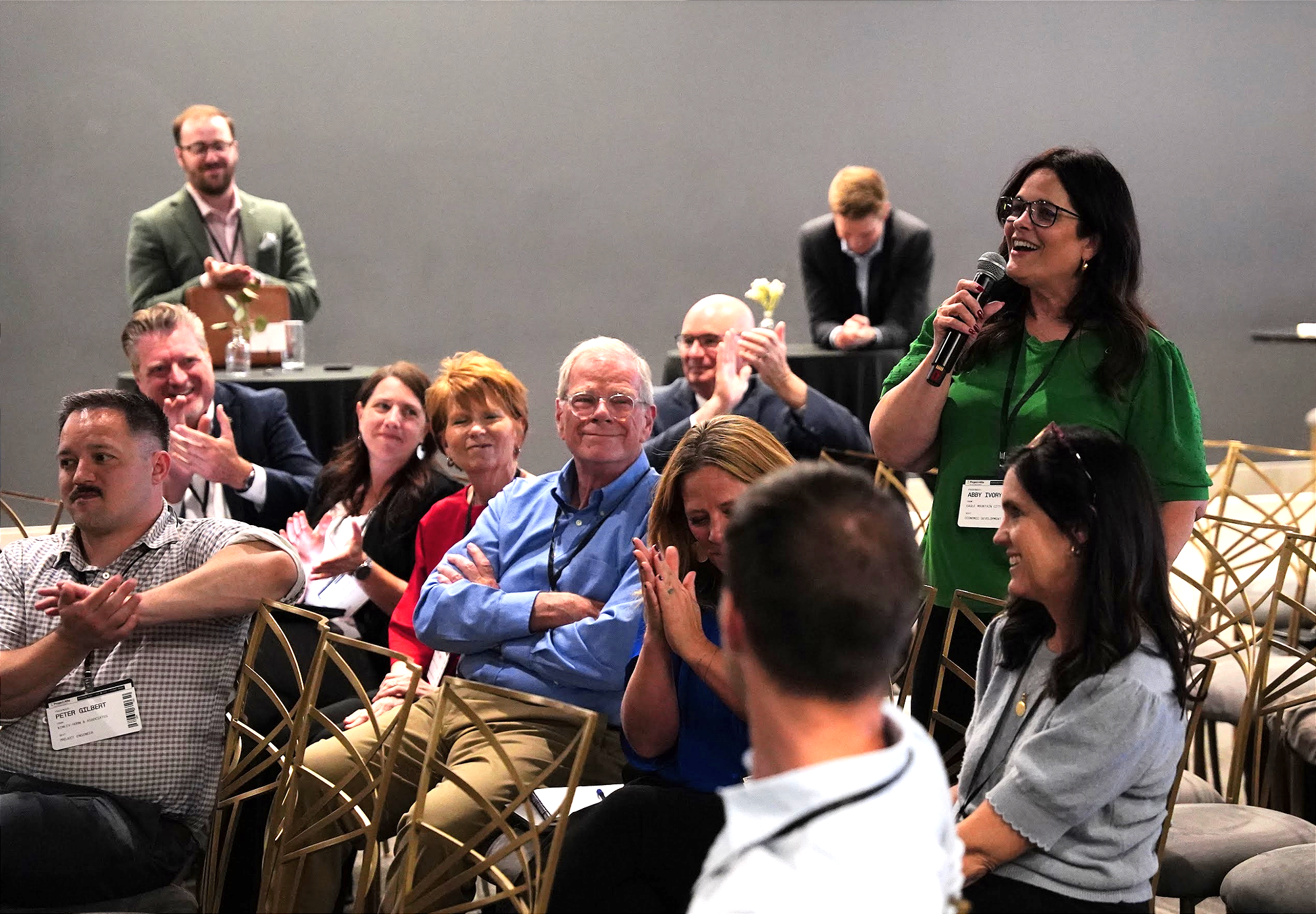
The loudest moment came when Abby Ivory, Economic Development Director for Eagle Mountain City, rose to speak. "We will be the first people to build the port," she declared — and the room erupted. The applause that followed was the sound of an audience that had spent two days absorbing vision finally hearing someone convert it into a commitment.
Abby Ivory, Economic Development Director for Eagle Mountain City, draws applause after declaring her city's intention to be the first in Utah to break ground on a vertiport, during the closing "Ready. Set. Fly." session at the Project Alta Summit Day Two, Rice-Eccles Stadium, Salt Lake City, May 27, 2026. We will be the first people to build the port, Ivory told the cheering crowd — the summit's most electric moment.
Dea Theodore, Salt Lake County Council Member and Council Chair Pro Tempore, represented the county's largest jurisdiction with a pledge of coordination and support, though stopping short of the specific commitments that had energized the room moments before. It was perhaps an honest reflection of Salt Lake County's role in AAM — less about building vertiports itself and more about enabling the cities, developers, and operators who will.
Then he called out TechBuzz by name — specifically challenging this reporter, who was in the room taking photos, to write more articles about air mobility in Utah. A room full of aerospace executives laughed.
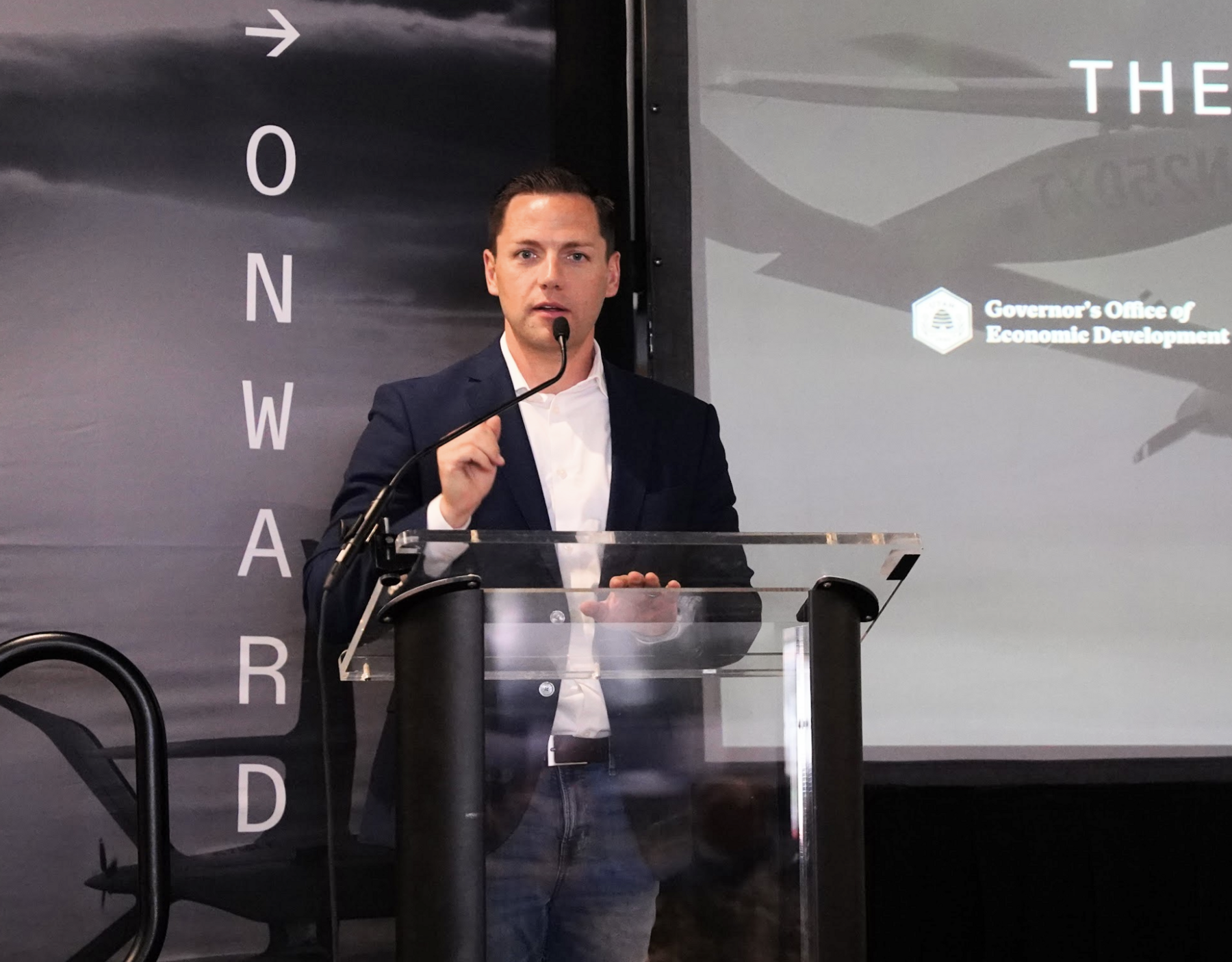
Aaron Starks, President and CEO of 47G, calling out TechBuzz during the final moments of the inaugural Project Alta Summit, Rice-Eccles Stadium, University of Utah, Salt Lake City, May 27, 2026.
Starks offered a closing image that captured the entire two-day conversation in a single story: he described boarding a King Air on the governor's plane and flying from Salt Lake City to Logan in 17 minutes. "When we talk about one Utah as a strategy," he said, "it happens only through air mobility."
He noted that 300 semi trucks idle every night in Salt Lake County neighborhoods, waiting to unload. That 30% of the nation's freight flows through Utah. That a resident of Richfield can now contemplate a 36-minute flight to a Jazz or Mammoth game and be home the same night.
The point, though, was serious: the story of what is being built in Utah deserves to be told, repeatedly and loudly, because the communities, investors, planners, and legislators who need to act are not yet fully in the room. Getting them there, through media, through demonstration flights, through community engagement toolkits, through public vertiport announcements, is as much a part of the infrastructure as the chargers and the landing pads.
"The remaining half of 2026 is going to be about execution," Starks said in closing. "Putting shovels in the dirt. Before we can attract the OEMs, before we can get them to come, there has to be infrastructure. You have to build."
The starting gun has been fired. Utah is on the clock.
The Project Alta Summit was convened by 47G | Utah Aerospace and Defense at the Ken Garff University Club, Rice-Eccles Stadium, University of Utah, on May 26–27, 2026. Day Two sessions included panels on FAA integration, Beta Technologies charging infrastructure, Joby Aviation operations, vertiport development, regulatory frameworks, electrification and grid planning, and university research partnerships, as shown above. TechBuzz coverage of Day One sessions can be found here.
Share this article
The link has been copied!
Your link has expired. Please request a new one.
Your link has expired. Please request a new one.
Your link has expired. Please request a new one.
Great! You've successfully signed up.
Great! You've successfully signed up.
Welcome back! You've successfully signed in.
Success! You now have access to additional content.