ONEMETA Pushes Real-Time Multilingual AI Into Media Infrastructure With NVIDIA Holoscan Integration
ONEMETA (Bountiful, UT) integrates its real-time multilingual AI into NVIDIA Holoscan for Media, enabling low-latency translation and transcription across live media workflows through GPU-accelerated infrastructure for enterprise broadcast environments globally.
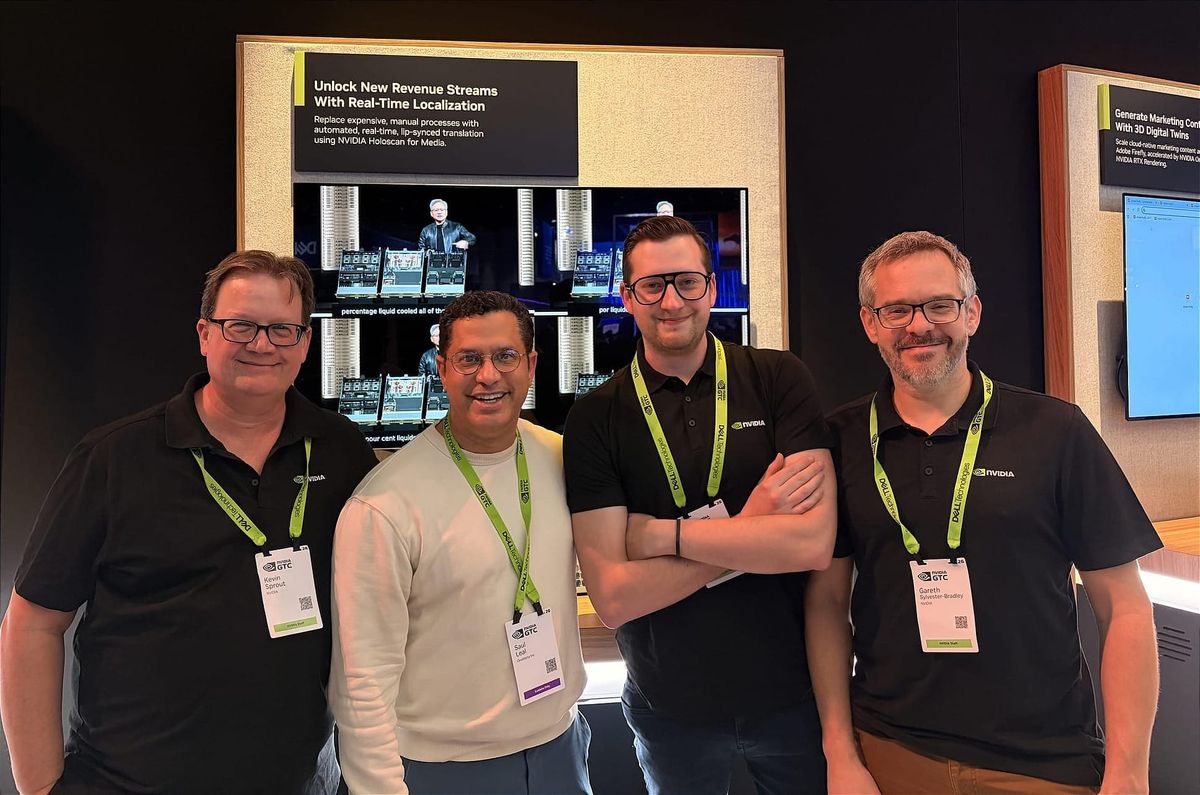
ONEMETA is an AI company based in Bountiful, Utah that is building real-time multilingual translation and transcription systems designed for enterprise, government, and media environments. The company this week announced it is moving deeper into the AI media infrastructure stack through an integration with NVIDIA’s Holoscan for Media platform, unveiled last month at NVIDIA GTC 2026. The move positions the company inside one of NVIDIA’s core frameworks for real-time AI in live production environments.
Holoscan for Media is designed to run AI applications directly inside live video pipelines, spanning cloud, edge, and on-premise deployments. The system is aimed at broadcasters and streaming platforms that are shifting away from traditional broadcast hardware toward software-defined production infrastructure.
ONEMETA’s role in that stack is focused on real-time multilingual processing—specifically translation and transcription embedded directly into live and recorded media workflows. The company says its system supports more than 140 languages and dialects, operating at low latency within enterprise-grade environments.
Language as infrastructure, not a service layer
In an interview prior to the announcement, ONEMETA CEO Saul Leal described the company’s thesis about language. "language is not a feature layer—it should be part of core infrastructure."
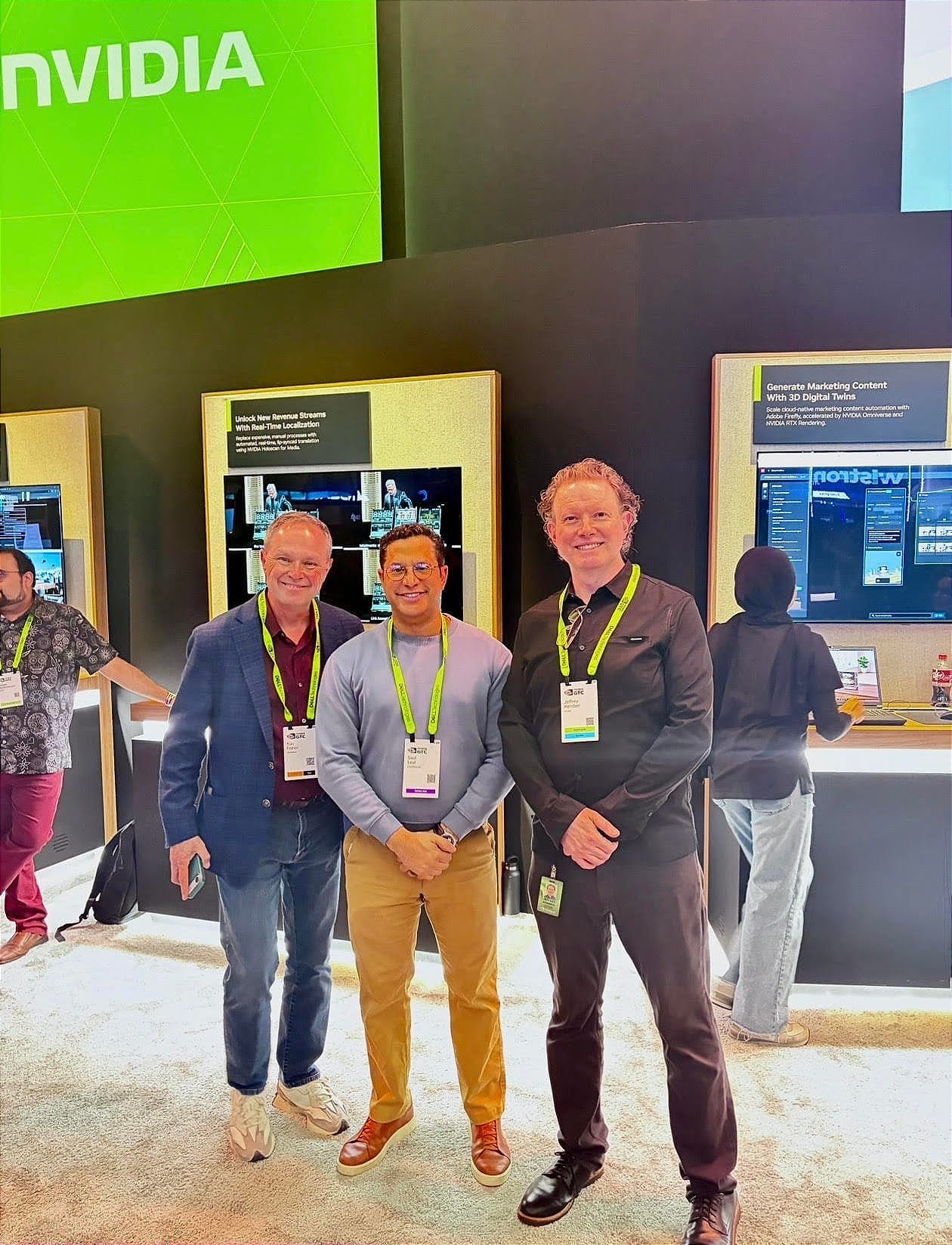
Saúl Leal, Founder and CEO, OneMeta
He framed the company’s origin around a simple observation: modern language models perform well only in a narrow set of dialects and conditions, and degrade quickly outside them.
English (U.S.) and a limited set of Spanish dialects perform strongly in current transcription systems, he said, but accuracy drops significantly across other English variants and most global languages when dialect-level nuance is introduced.
That gap, according to Leal, is what ONEMETA is targeting—not just language coverage, but dialect-specific accuracy in real-time systems.
Beyond translation: transcription, context, and control
Leal argued that transcription is the foundational layer for modern AI language systems, and that translation is only one step above it. ONEMETA’s approach combines transcription, translation, and contextual processing as a single pipeline rather than separate services.
The company’s VerbumSuite™ platform is designed to integrate into enterprise workflows rather than sit outside them, handling live audio, video, and text streams with what it describes as sub-200 millisecond latency—fast enough to appear instantaneous to users.
Security and “multi-tenant isolation” as a differentiator
A central part of ONEMETA’s positioning is not just speed or accuracy, but data isolation.
Leal emphasized a multi-tenant architecture where each client—and in some cases each downstream client—operates in a fully isolated environment with separate models and datasets. The goal is to avoid cross-client data leakage at the model-insight level, a concern that has grown as large language models become embedded in enterprise workflows.
He argued this is particularly important in industries where insights themselves carry competitive value, such as finance, telecom, and healthcare.
The company says it has undergone enterprise security reviews across regulated sectors and maintains compliance frameworks including SOC 2, HIPAA, and ISO 27001.
NVIDIA partnership and “inside the chip” positioning
The integration into Holoscan for Media builds on what Leal described as a multi-year evaluation process with NVIDIA, including technical due diligence and enterprise reference checks.
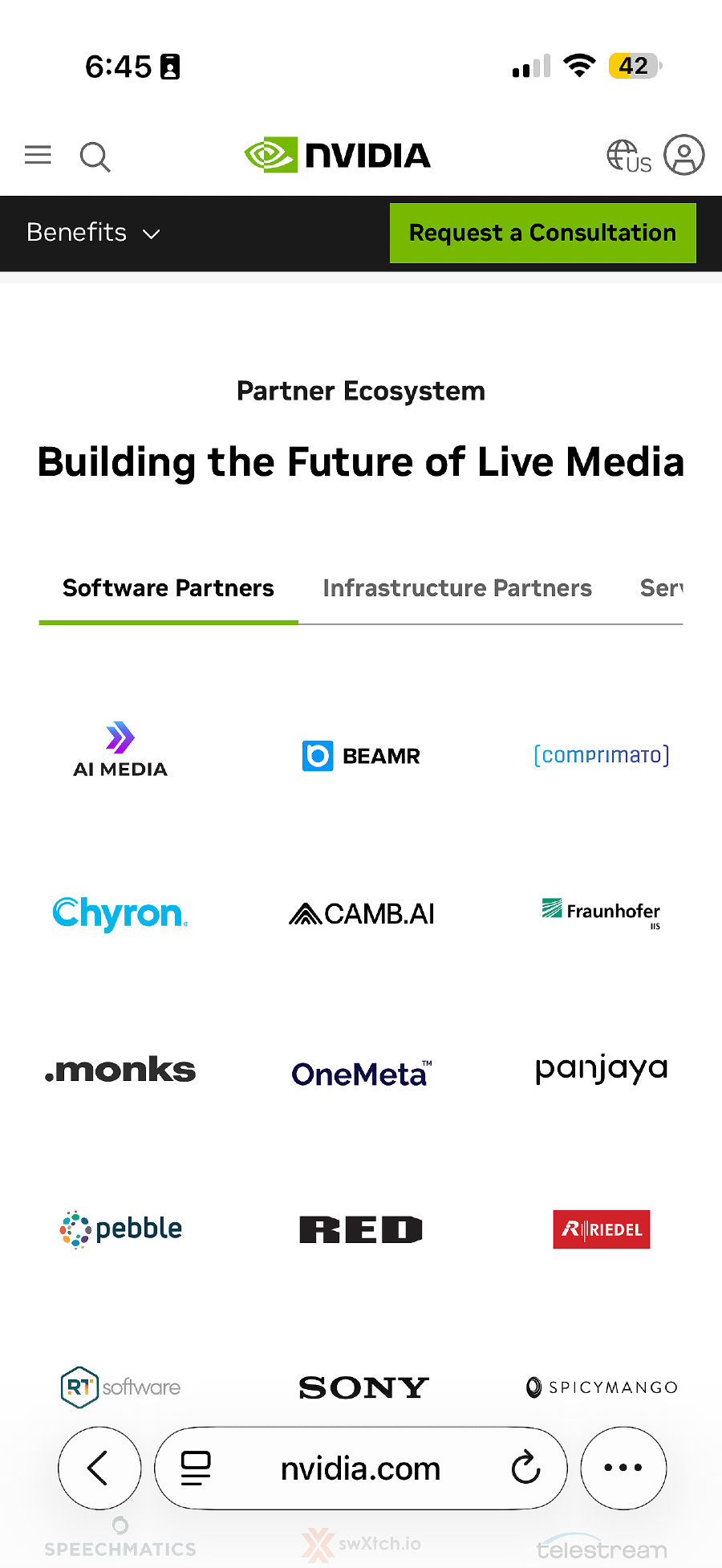
ONEMETA is now positioned as a partner developing components that run within NVIDIA’s accelerated compute ecosystem for media workflows, including video, audio, and graphics processing.
Leal said the companies are working toward deeper integration into GPU-accelerated pipelines, with early live implementations expected before the end of the year following the announcement.
From call centers to live global media
While the NVIDIA integration is framed around media infrastructure, ONEMETA already operates across multiple enterprise environments, including call centers, staffing platforms, education systems, and government-related deployments.
Use cases range from real-time multilingual call center agents to live translation in education settings, such as parent-teacher conferences, and document-level translation embedded directly into enterprise workflows.
Leal described the broader vision in more abstract terms: enabling real-time communication between individuals regardless of language, without requiring separate translation steps or external applications.
The shift toward real-time global communication
The company’s argument ultimately rests on a broader industry shift: as content distribution becomes global and real-time, language becomes a system constraint rather than a post-production problem.
That shift is also what makes NVIDIA’s media infrastructure strategy relevant. Holoscan for Media is explicitly designed to collapse traditional broadcast pipelines into AI-accelerated systems where translation, captioning, and localization can occur natively inside the workflow.
ONEMETA’s integration slots directly into that model.
At Silicon Slopes Summit 2026, ONEMETA deployed its VerbumOnSite™ platform to deliver real-time multilingual captions directly to attendees via a QR-code-enabled web app, allowing participants to instantly view live translation in their preferred language without downloading any software, demonstrating near-instantaneous speech-to-text translation in a live conference environment.