Kristie J. Rowley, BambooHR's Senior Manager of AI/ML Engineering, discusses her unconventional path from rural Idaho to leading AI development at the Draper company, and offers advice for young women navigating the fast-moving, unpredictable world of applied AI.
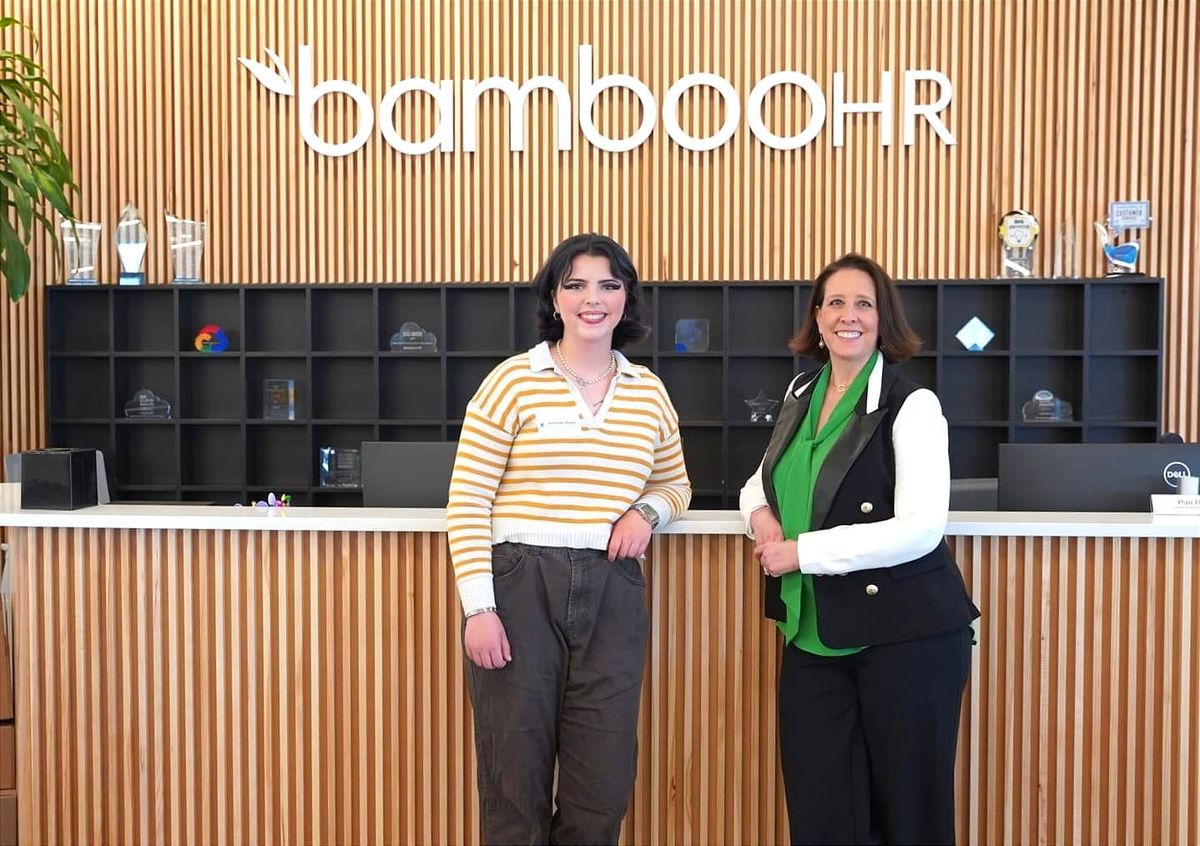
Kristie J. Rowley, PhD, Senior Manager of AI/ML Engineering at BambooHR, with TechBuzz's Kennedy Mason at the company's Draper, Utah, headquarters. Photo: Mark Tullis, TechBuzz
Kristie J. Rowley, PhD, Senior Manager of AI/ML Engineering at BambooHR, with TechBuzz's Kennedy Mason at the company's Draper, Utah, headquarters. Photo: Mark Tullis, TechBuzz
From Shelley, Idaho, to AI Leadership: A Conversation With BambooHR's Kristie Rowley
Draper, Utah — July 21, 2026
Kristie J. Rowley, PhD, has spent the past five years building out AI capability at BambooHR (Draper, Utah), the HR software company where she now serves as senior manager of AI/ML engineering. Before BambooHR, she helped establish the AI Labs team at Domo, following a research career that began, by her own account, almost entirely by accident.
Rowley sat down with SheTech-TechBuzz media interns Kennedy Mason and Renesmee Saulter (via Zoom) to discuss her path into AI, the pace of change in the industry, and what she tells young women weighing a future in tech.
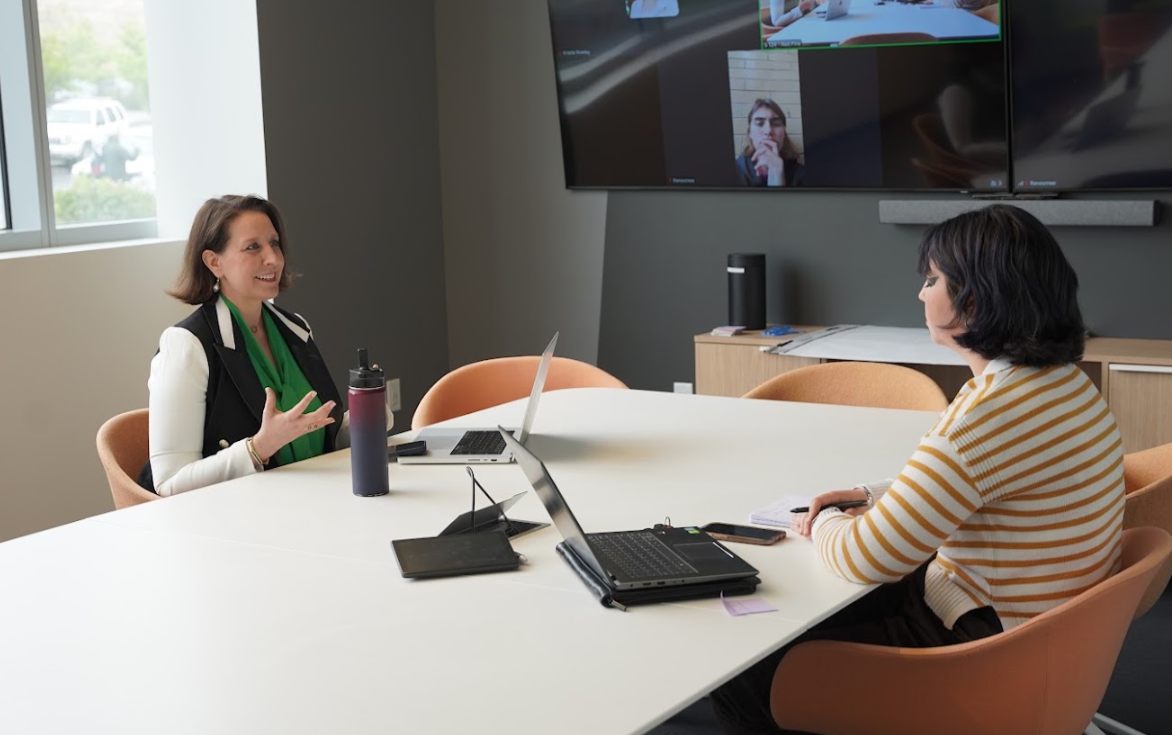
Kristie J. Rowley, PhD, speaks with SheTech-TechBuzz Median Intern Kennedy Mason at BambooHR's Draper office. Renesmee Saulter joining the interview via Zoom from Gunnison, Utah. Photo: Mark Tullis, TechBuzz
An Accidental Path Into AI
Rowley grew up in Shelley, Idaho, a small town she describes as offering just two viable professional paths growing up: medicine or law. She chose law as her intended direction and applied to law school multiple times but never enrolled, instead following what she called a natural interest in statistics and research.
That interest led her to Vanderbilt University, where she completed an interdisciplinary PhD combining research and data science, funded in part through one of the earliest federal programs aimed at building interdisciplinary research and education expertise. The field did not yet carry the "data science" label, she said, but that is what the discipline ultimately became.
"I never was sitting at home going, 'I think I want to be a data scientist,'" Rowley said, noting that such jobs largely did not exist when she was younger. "Those were things that came to me as I went along my career."
After completing her doctorate, Rowley followed the conventional academic path into a professorship before a technology company recruited her away. She later joined Domo (American Fork, Utah), where she helped build the company's AI Labs team, drawn in part by the opportunity to work alongside Catherine Wong (current COO at Entrata), whom Rowley cited as a personal source of inspiration. She joined BambooHR five years ago as the company's AI investment was beginning to scale.
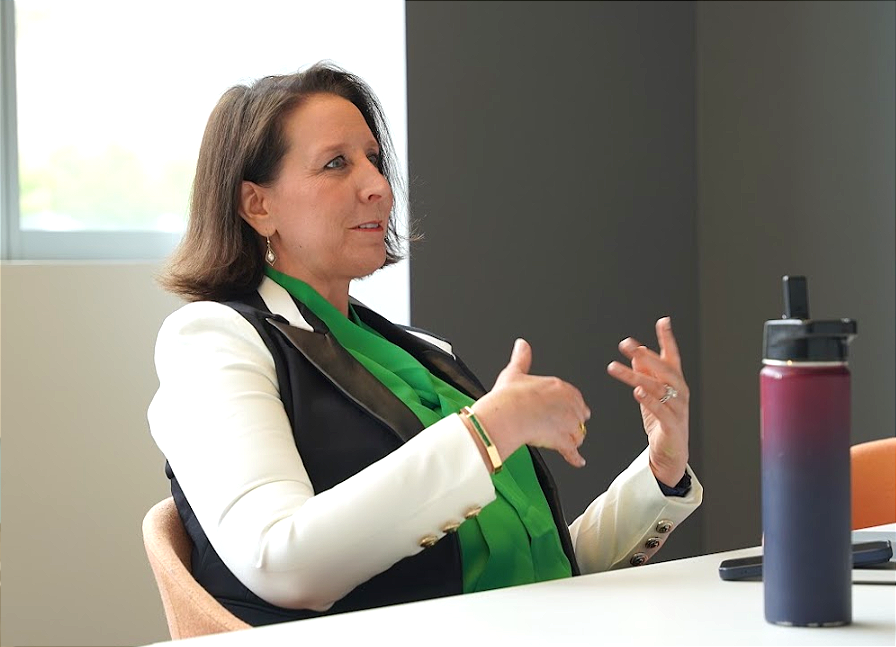
Kristie J. Rowley, PhD, Senior Manager of AI/ML engineering at BambooHR, sharing insights at the company's Draper headquarters. Photo: Mark Tullis, TechBuzz
Building AI Into the Business, Not Just the Product
At BambooHR, Rowley's team is separate from the product organization; rather than embedding AI into the company's software directly, her group focuses on how AI is used to run the business itself. She said BambooHR began investing in AI roughly five years ago, predating the current wave of generative AI tools, and has since grown its dedicated AI team to about 30 people while pushing AI adoption company-wide.
Customer-facing AI tools embedded in BambooHR's product save users roughly 17 hours a week, according to Rowley, by reducing the volume of routine questions that would otherwise go to HR staff.
Rowley described the shift in how stakeholders react to AI demonstrations over just the past two years. Where a demo once drew amazement, she said, the same capability today is often met with an expectation that it should already be fully built. "The expectations around AI, one of the things AI has done is just accelerate everyone's expectations," she said, adding that responsible deployment still requires guardrails, human oversight, and time.
Kristie J. Rowley, PhD, senior manager of AI/ML engineering at BambooHR, talking with Kennedy Mason during her SheTech series interview with TechBuzz at the company's Draper headquarters. Photo: Mark Tullis, TechBuzz
Weighing the Tradeoffs
Asked about the ethical and environmental costs of AI, Rowley did not minimize them. She compared the current moment to earlier technological transitions, including the shift from horse-drawn transportation to automobiles in early 20th-century cities, which solved one set of problems (urban pollution from horse traffic) while creating new ones (the rise of factory labor). She expects AI to follow a similar pattern: some jobs will disappear, others will emerge, and the net effect on society is not yet fully known.
On resource use, Rowley said AI's energy demands are real but not unprecedented, comparing them to the resource intensity of earlier computing transitions. She argued that society faces genuine tradeoff decisions, including whether AI use for recreation carries the same justification as AI use for productivity.
She was direct about the risk of over-reliance on AI tools. "To let it do your thinking for you is dangerous," Rowley said, citing research suggesting that dependence on AI for cognitive tasks can erode users' own reasoning skills over time. She also noted that AI systems inherit the values and biases of the people who build them, making bias awareness and human feedback loops essential to responsible deployment.
Rowley drew a firm line, however, around risk-taking involving people's livelihoods or personal data. "I don't think it's fun to play, to be risky with people's livelihoods," she said, describing that as one boundary she is unwilling to cross even amid a broader culture of fast iteration and failure.
Kristie J. Rowley, Senior Manager of AI/ML Engineering at BambooHR, talking with SheTech-TechBuzz media interns at the company's Draper headquarters. Photo: Mark Tullis, TechBuzz
What She Wants From AI's Future
Looking ahead, Rowley said her goal for AI at BambooHR is more individualized software experiences, tools that adapt to a person's preferences, working style, or accessibility needs rather than presenting the same interface to everyone. She pointed to neurodivergence accommodation as one underexplored application of that kind of personalization.
She described data quality as the primary lever for improving AI models, alongside continuous human feedback on whether AI-generated outcomes are actually useful to the people using them.
Advice for Young Women in Tech
Rowley's advice to young women considering a career in AI or technology centered on curiosity and comfort with failure. "Go try it. Be curious. Don't be afraid of things. Don't be afraid of failing," she said, recalling her own experience frequently being the only woman, or only girl, in technical settings like a high school robotics club.
She encouraged young women to seek out mentors and peers who challenge them rather than people who feel comfortable to be around, and specifically to build relationships with people whose backgrounds differ from their own. She argued that a narrow range of perspectives among AI builders produces biased, less trustworthy systems, and that exposure to different people and experiences is directly relevant to building better technology.
Asked whether she faced added obstacles as a woman in the field, Rowley said she often could not isolate specific instances of differential treatment but acknowledged the possibility that it occurred. She credited both women and men as mentors and advocates over the course of her career, and pointed to SheTech as one of her favorite programs on the WTC calendar; her team presented at this year's event.
Kristie Rowley, Sr. Manager, AI / ML Engineering at BambooHR and Kennedy Mason taking a break from the tour of the well-equipped BambooHR headquarters following the interview. Photo: Mark Tullis, TechBuzz
Share this article
The link has been copied!
Your link has expired. Please request a new one.
Your link has expired. Please request a new one.
Your link has expired. Please request a new one.
Great! You've successfully signed up.
Great! You've successfully signed up.
Welcome back! You've successfully signed in.
Success! You now have access to additional content.