Awardco's Amy Poll Butler on Culture, COVID's Silver Lining, and Why HR Needs "Gas and Brakes" on AI
Awardco VP of People Operations Amy Poll Butler discusses her 2026 Utah Business Women to Watch honor, the company's path from bootstrapped startup to $1 billion valuation, and her measured approach to bringing AI into HR decision-making.
Amy Poll Butler spends her days making sure other people feel seen. Sitting down to talk about her own recent recognition, she admitted the spotlight isn't exactly her comfort zone. A few minutes into the conversation, however, the VP of People Operations at Awardco was talking the way she clearly talks best: about culture, about data, and about what it actually takes to make 600 employees across three countries feel like they matter.
Poll Butler was named to Utah Business's 2026 Women to Watch list this spring, recognized for her work building the people infrastructure behind one of Utah's fastest-growing tech companies. It's a fitting acknowledgment for someone whose entire job is convincing leaders that recognition isn't a soft skill — it's a retention strategy.
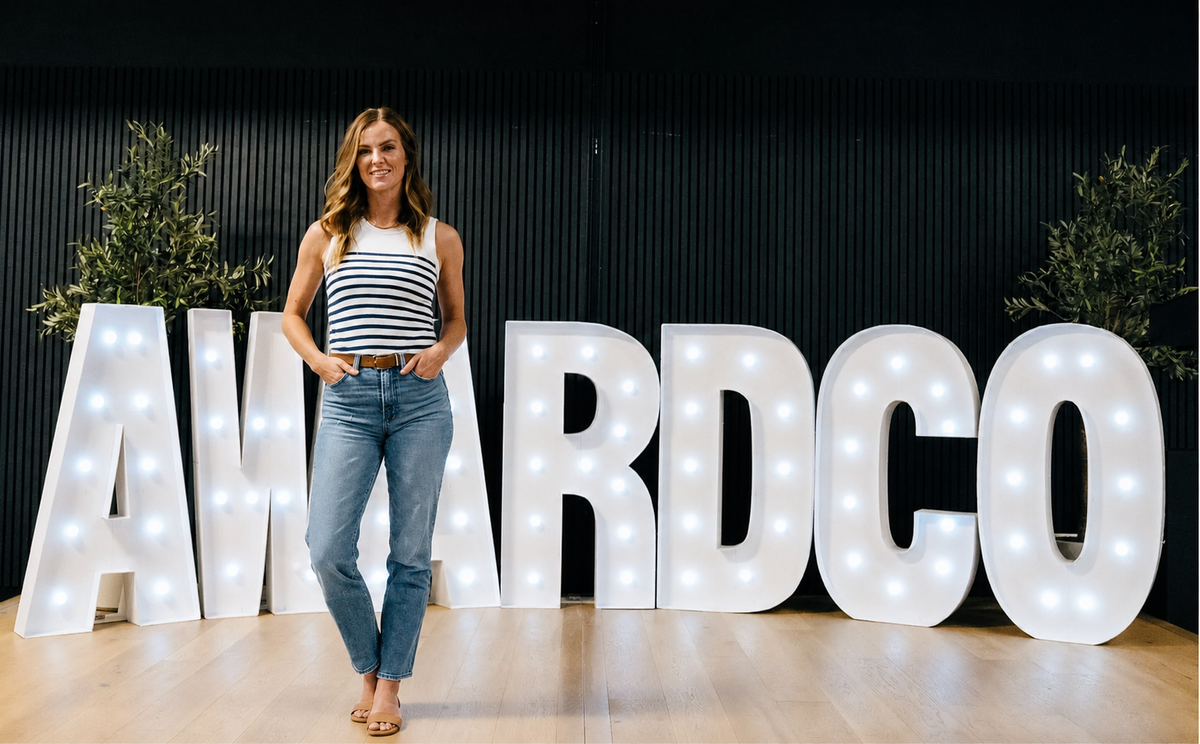
Amy Poll Butler, VP of People Operations at Awardco, in the company's Lindon office. "We walk the walk, we talk the talk," Poll Butler said of the company's approach to recognition. Photo by Juan Escudero, UVU Kahlert Applied AI Institute
"It's what Awardco does so well, is recognition," Poll Butler said. "It's not just what we sell. It's what attracted me to come to Awardco — people here really do talk the talk where they walk the walk."
From Lifestyle Business to Unicorn
Poll Butler joined Awardco two years ago, arriving after the Lindon-based company had already begun its transformation from a steady, founder-run business into one of Utah's rare billion-dollar valuations. TechBuzz has tracked that climb closely. In 2021, Awardco raised a $65 million Series A — at the time the largest Series A round in HR SaaS history — while remaining cash-flow positive and having grown revenue and headcount every year since its 2015 founding. By May 2025, the company had quadrupled its revenue again, closing a $165 million Series B led by Sixth Street Growth and Spectrum Equity that pushed its valuation past $1 billion. Today Awardco serves roughly 6 million users in more than 160 countries, with offices in Lindon, St. George, and London.
Poll Butler sees COVID as the hinge point in that story. Before the pandemic, she said, Awardco had spent several years as a slower-growth business. Then remote work forced HR teams everywhere to rethink how they built connection without a physical office.
"Suddenly everybody was working from home, and they needed that connective tissue," Poll Butler said. "Awardco was well positioned to be able to do that. We create culture, we create belonging."
What impressed her most, she said, wasn't just the growth; it was how deliberately the leadership team managed it, bringing in experienced executives and new product lines (the company recently added an Engage product alongside its core recognition platform) rather than chasing growth for its own sake.
Recognition as a Design Problem
Ask Poll Butler how Awardco keeps thousands of employees, across wildly different cultures, feeling genuinely valued, and she'll tell you it starts with treating recognition like a design problem rather than a single program.
"We have dozens of programs that run in hopes that some member of our organization will connect with something," she said, pointing to examples ranging from a hiking-focused "Elevate" recognition program to birthday and heritage-month campaigns. Employees at Awardco build personal recognition profiles — indicating what kind of praise they want, and how publicly they want to receive it — that managers can reference regardless of where an employee is based.
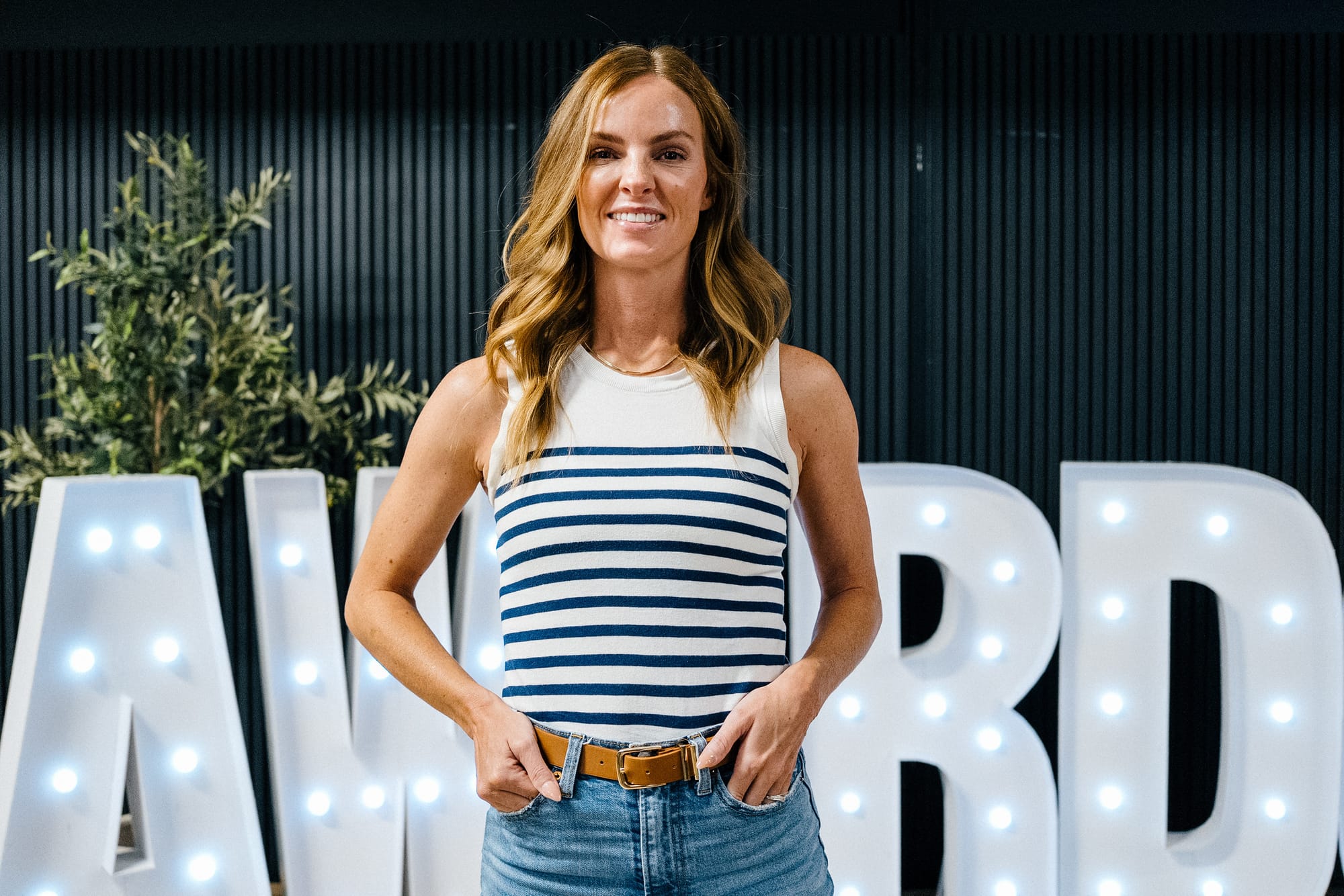
Amy Poll Butler says Awardco's in-office culture is core to its retention strategy: "When I walk in here and I get to interact with everybody on a daily basis, I feel a stronger sense of belonging... I want to be better at my job." Photo by Juan Escudero, UVU Kahlert Applied AI Institute
That matters more as the company's footprint has gone global. Awardco's London office, staffed with 13 to 15 regional employees, exists in part to translate recognition into cultural context, Poll Butler said. Some employees don't want public praise broadcast on the office's recognition feed at all.
"Humans are humans, and we all want to feel valued and appreciated, but how that shows up can be different from region to region," she said.
It's a philosophy that echoes what Awardco has said publicly about its own product. Company leadership has noted that the vast majority of recognitions sent through its platform are non-monetary — a sincere thank-you, delivered well, tends to outperform a gift card. Poll Butler's version of that same idea, from the people-ops side of the business: a verbal "great job" in a meeting fades fast, but a written note that arrives in an employee's inbox afterward signals that someone actually took the time.
AI, With Gas and Brakes
Few topics animated Poll Butler more than artificial intelligence — and her take was notably more measured than the industry's dominant narrative of AI-driven headcount cuts.
"There's this scarcity mentality, and I've fallen victim to it," she said. "AI is changing so quickly that just as you make a decision, it's changed. I want to make sure we aren't moving too quickly — it's this perfect balance of go fast, go slow. Gas and brakes."
She was blunt about the risk of overcorrecting: some companies, she said, cut staff early expecting AI efficiencies, only to find token costs and lost institutional knowledge more expensive than the people they let go.
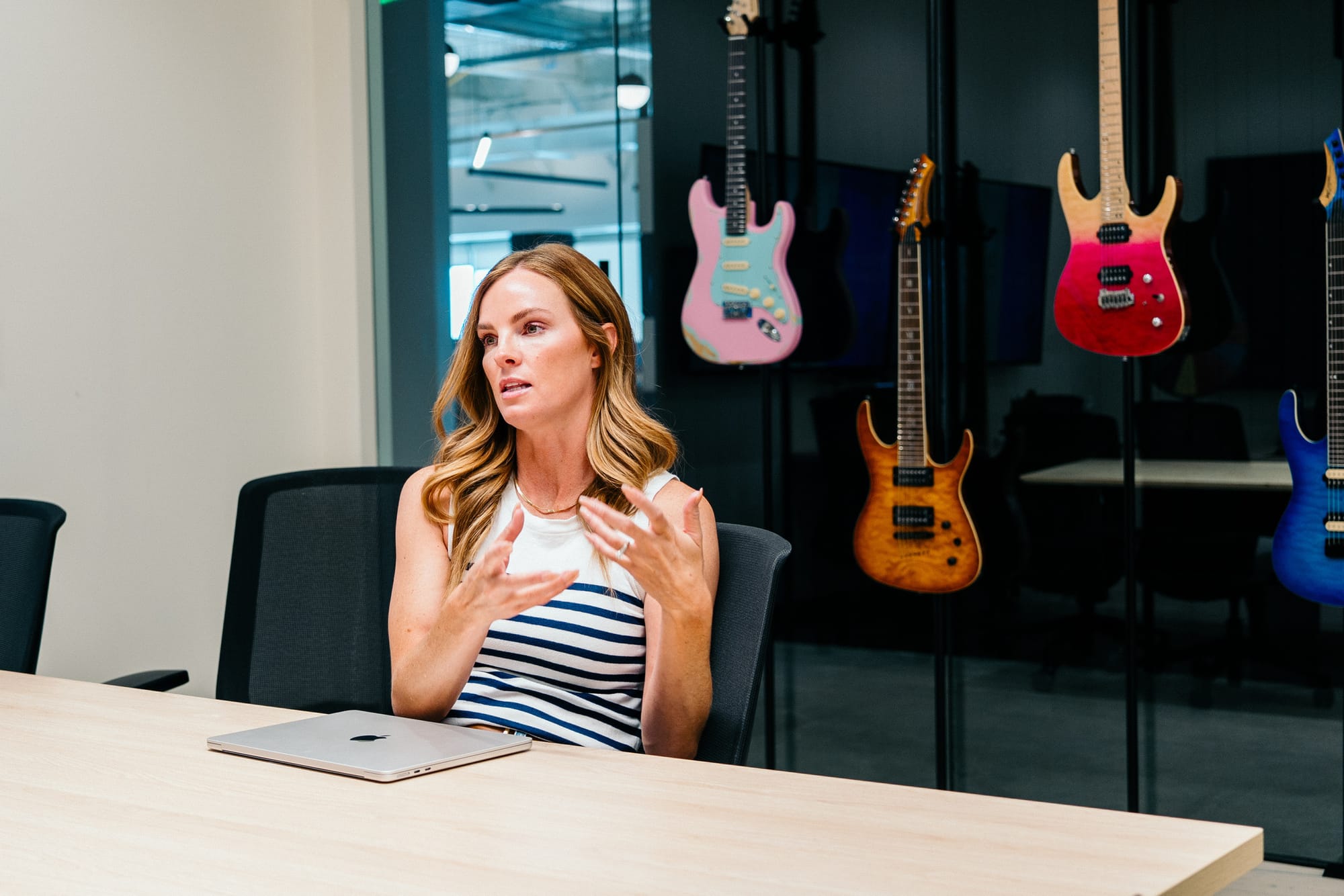
Awardco's VP of People Operations, Amy Poll Butler, on bringing data into performance management: "Now you don't have to apply any of your bias — you can just say, okay, that was based on an algorithm. Do I trust this number?" Photo by Juan Escudero, UVU Kahlert Applied AI Institute
Inside Awardco, Poll Butler's team has been experimenting with AI in performance reviews — not to have it write evaluations outright, but to pull from Slack activity, one-on-one notes, recognition data, and engagement metrics to produce a more consistent, less biased read on how someone is performing against an agreed rubric. Leaders still decide whether to trust or calibrate the resulting score, she said, but the goal is to strip out some of the unconscious bias that creeps into a traditional, backward-looking review.
That balance — leaning on AI for data and insight while keeping human judgment in the loop — is the same idea Poll Butler emphasized in her own Women to Watch feature, where she described her next professional focus as ensuring "human judgment and context remain central" as AI reshapes how companies manage people.
"Make Yourself Invaluable"
Poll Butler credits much of her approach to a lesson her mother, an entrepreneur running small businesses in Panguitch, gave her before her first job out of school, at Qualtrics: make yourself invaluable, learn everything you can about the business, and raise your hand for as many projects as you have time for.
Even Awardco's executive team isn't immune to a little friendly competition: "I just left our executive meeting, and he put up a leaderboard of every executive in that room — who's recognizing the most, who's not. Amy Poll Butler, VP of People Operations at Awardco, Lindon Utah. Photo by Juan Escudero, UVU Kahlert Applied AI Institute
It's advice she's carried through her career, and one she said has as much to do with learning to delegate as it does with saying yes. The more her team knows about how the business runs, she said, the better equipped they are to push back thoughtfully when an idea doesn't make sense, rather than simply saying no.
Looking ahead, Poll Butler expects HR to lean more heavily on data as companies scale and workforces become more distributed, replacing the old habit of "reading the room" with harder evidence about what's actually happening with employees. For a company built on the idea that recognition drives retention, that shift is also a bet on Awardco's own product — visibility into who's being recognized, and who isn't, as a signal leaders can act on before problems show up in exit interviews.
It's the kind of insight Poll Butler would rather let the data, and the company's culture, speak to, rather than take the credit herself. But for a Utah tech company now valued north of $1 billion, having someone in the room who'd rather deflect the spotlight than chase it may be exactly the point.