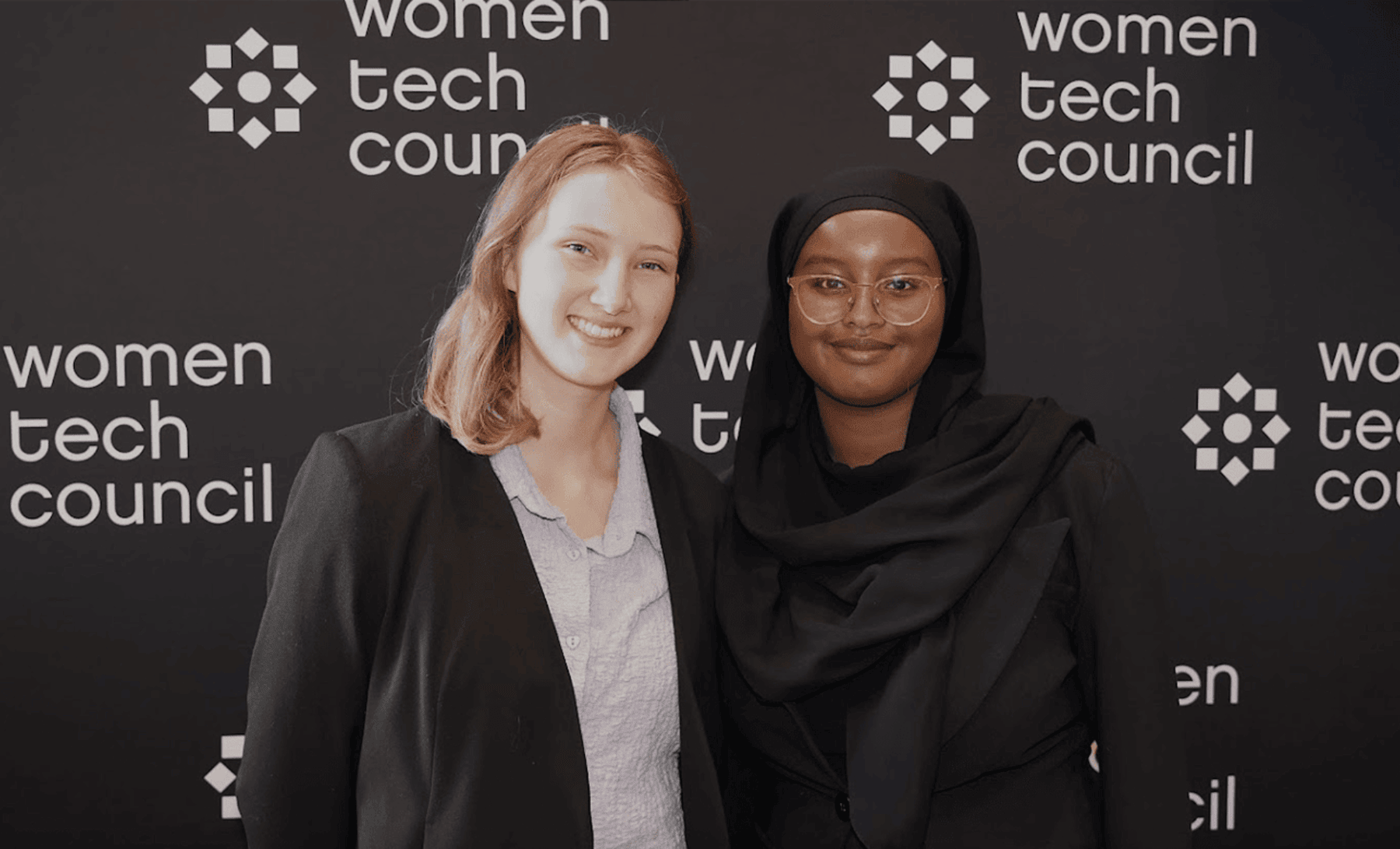
Abs King, Lead Product Designer at Palladyne AI (Salt Lake City, UT) bridges the gap between industrial workers and AI-powered robots through user-centered interface design, drawing on a background in organizational communication.
Imagine a world where AI-trained robots handle the most dangerous, repetitive, and physically-taxing work in factories and manufacturing plants, guided by everyday industry workers, not engineers. This is the world Abs King, Product Design Lead at Palladyne AI, is working to build.
King is on the AI Women Powerlist for the Women Tech Council, and for good reason. For just over a year, she has been developing the user experience for Palladyne AI's robot products. The company develops embodied AI and autonomy software for robotic platforms and autonomous systems in defense and commercial industries, including Palladyne IQ for industrial robots and cobots. Industrial robots are designed for the jobs that take the biggest toll on human workers: dangerous, repetitive, and physically grueling tasks. King's focus is designing the tools that let industry workers actually control them.
The barrier has historically been code. Workers in factories rarely have a background in robotics or AI, and the technical gap keeps them at arm's length from the machines meant to help them. King's work closes that gap — designing screens, instructions, and interfaces that walk users through training, troubleshooting, and every other step of a robot's process. By grounding the UI in industry jargon and simple controls like toggles, buttons, and drop-downs, she makes AI-powered robots accessible to nearly anyone.
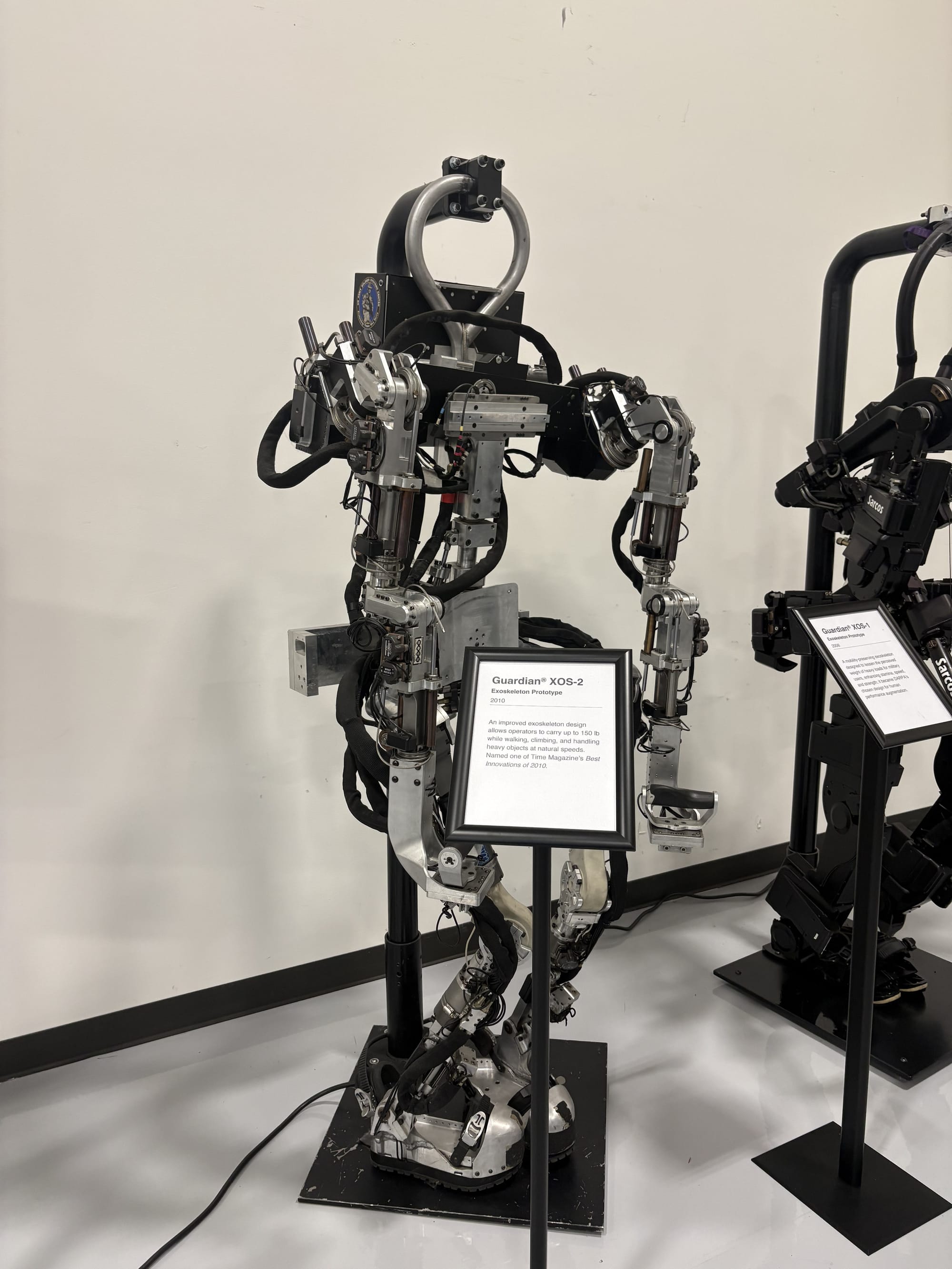
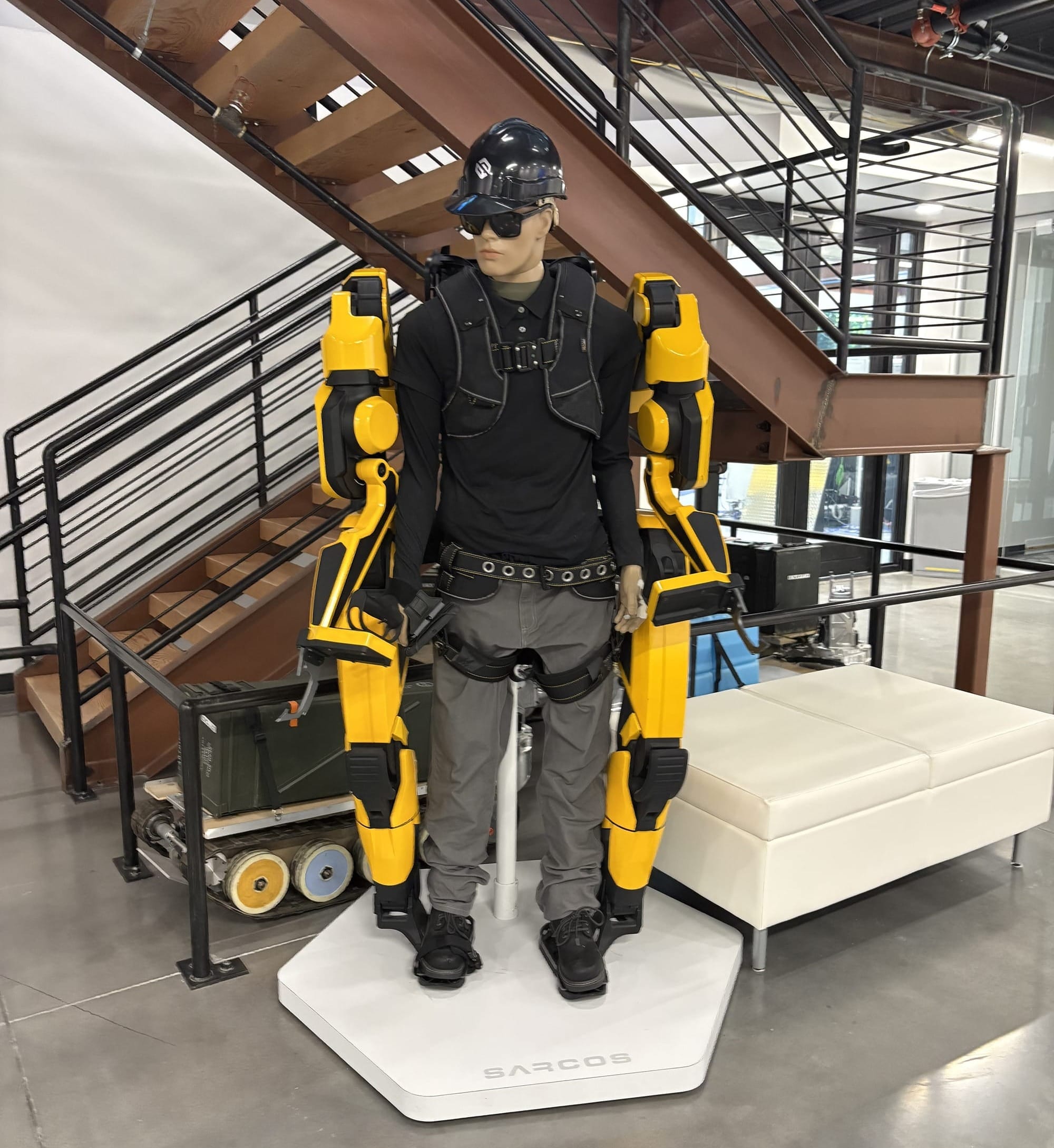
The Guardian XOS-2 is a 2010 Sarcos exoskeleton prototype on display at Palladyne AI’s Salt Lake City HQ. Photo: Najma Ahmed
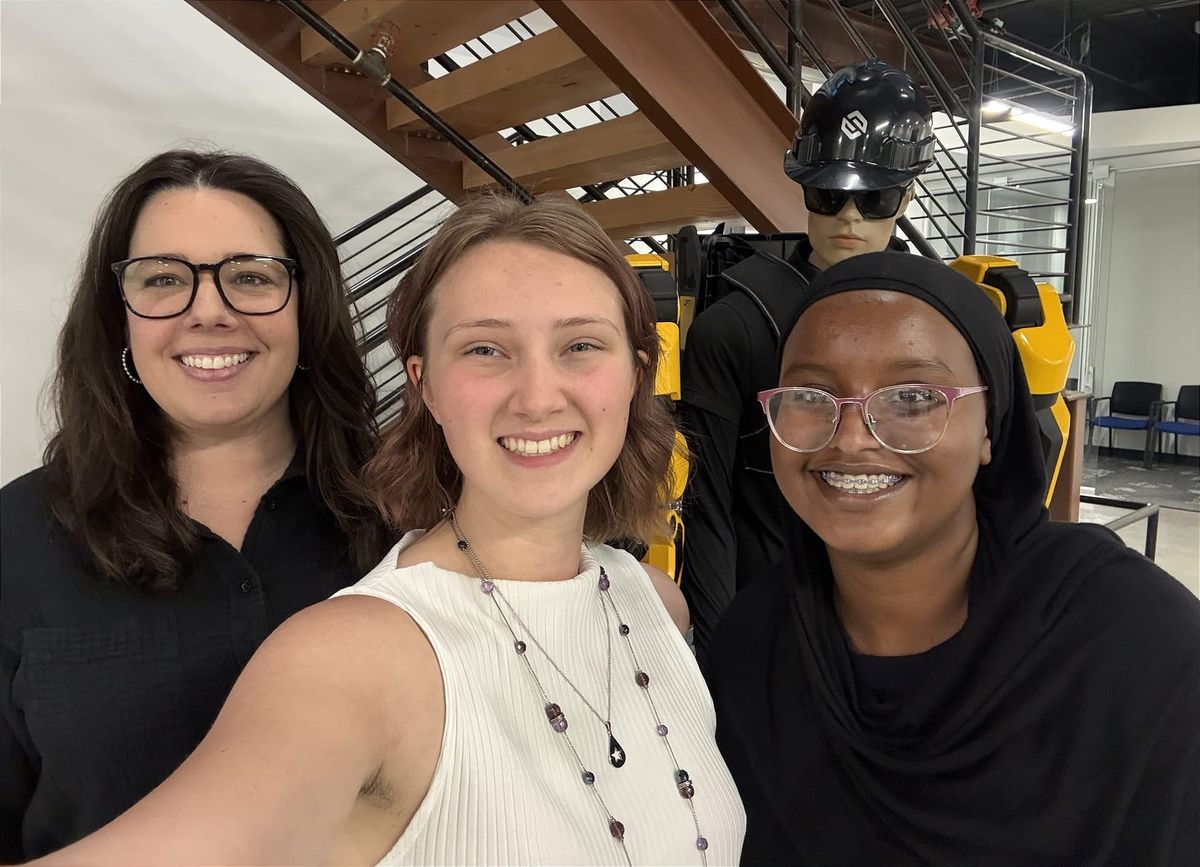
Najma Ahmed and I got to tour Palladyne AI's office in downtown Salt Lake City, where several robots are on display. The exoskeletons stop you in your tracks. These are impressive structures with a robotic exterior designed for a human to step inside, giving workers "greater capabilities than they would have on their own." Many of their other designs mimic human joints or limbs to extend range of motion. One of the more surprising robots on display was built for cleaning car engines: a robotic arm with a custom brush end that uses cameras and AI object recognition to identify the type of engine, read its orientation, and guide the arm to precisely the right position.
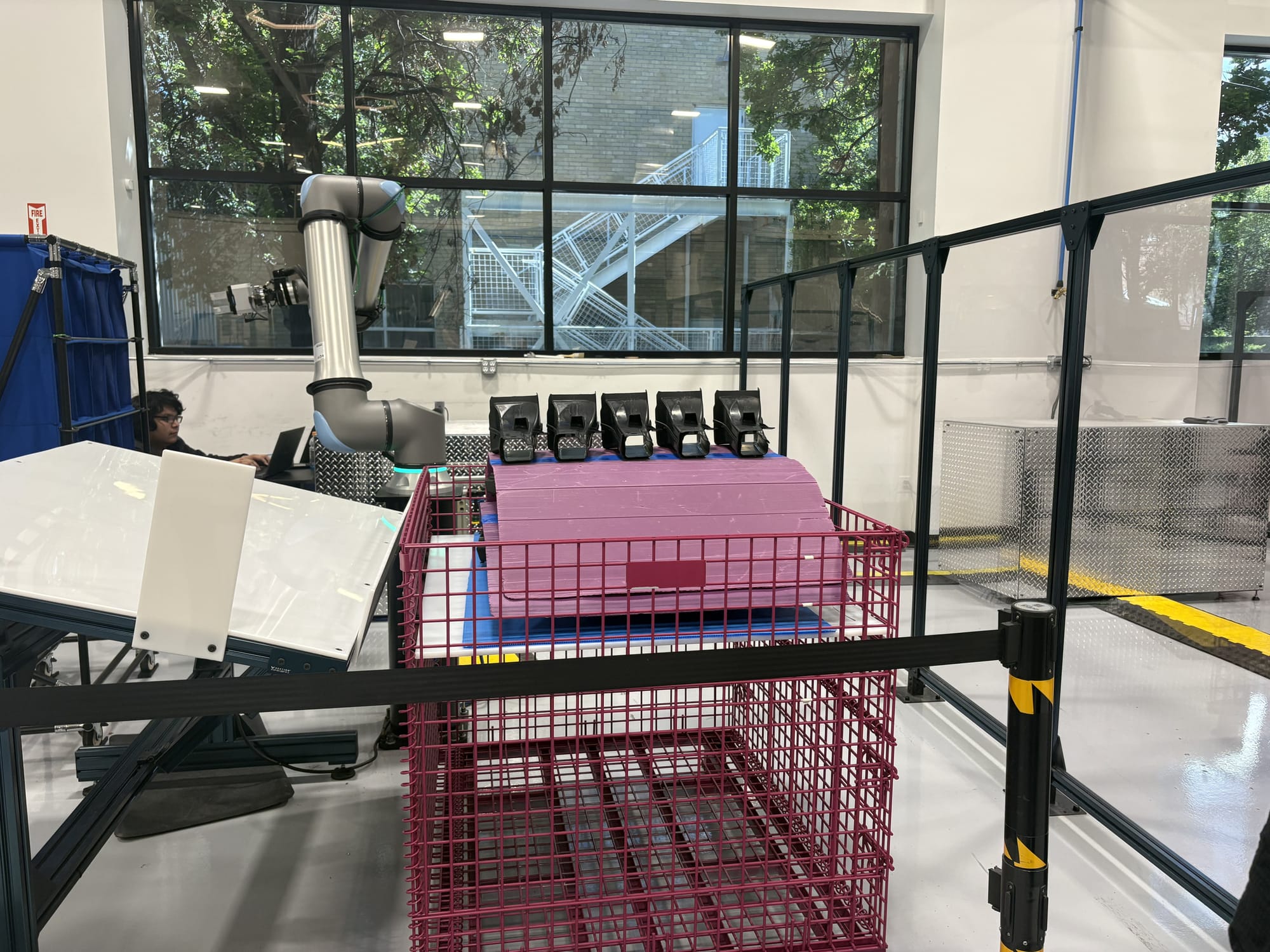
Robot controlled by Palladyne AI’s edge-based autonomy software, exemplifying Palladyne AI's shift from exoskeleton hardware to mission-critical, AI-enhanced, multi-domain autonomous systems. Photo: Najma Ahmed
King believes STEM is often seen as an elusive industry. It is hard to picture, harder to enter. She pushed back on that directly when we spoke, walking us through what her job actually looks like day to day. She works closely with Palladyne AI's engineering and coding teams to stay ahead of what the product is doing and where it's going next, which gives her the foundation to build the right interface alongside it. She's also deeply involved in the planning process at each stage, always asking how the tool can better fit the user's needs.
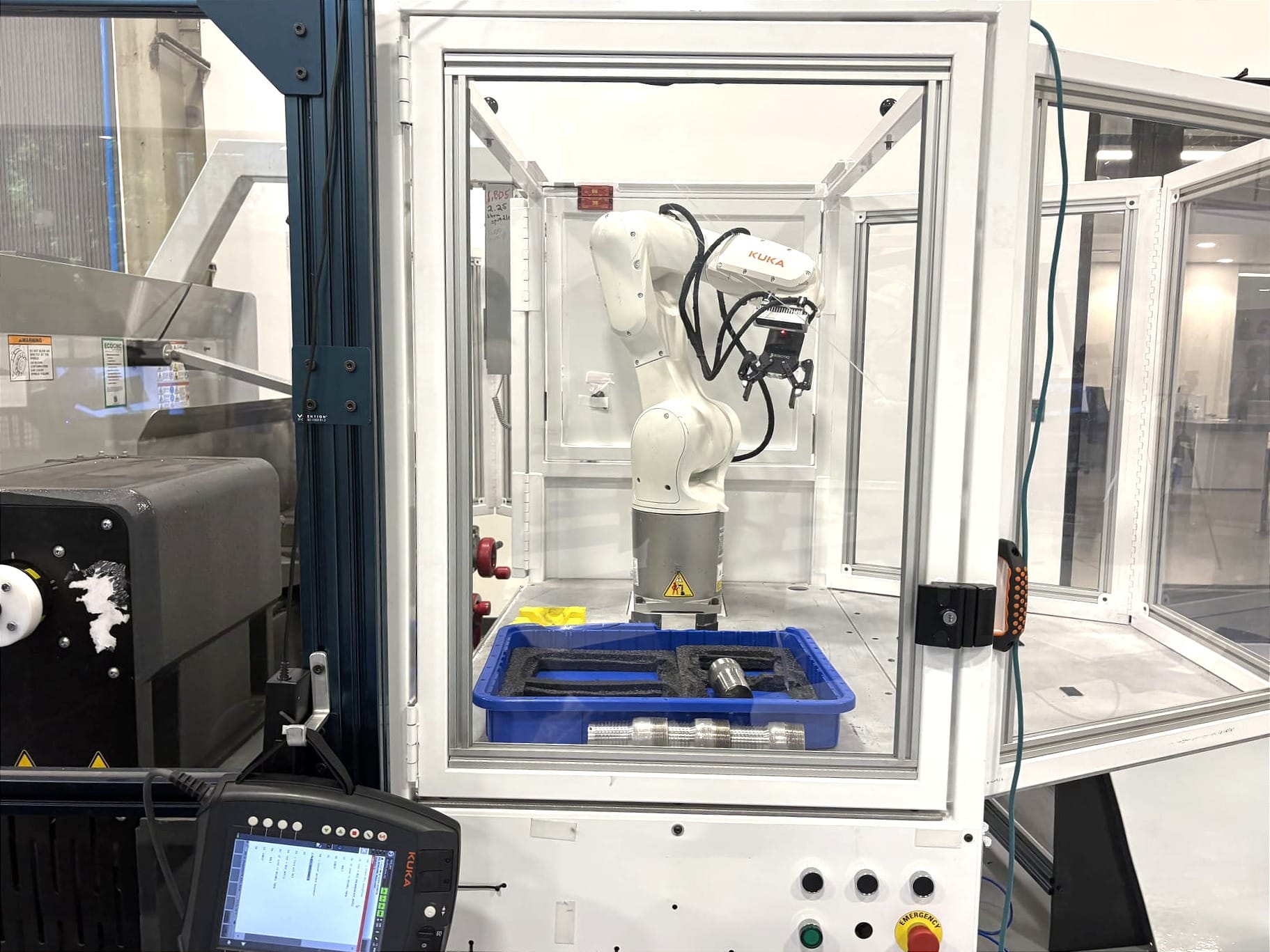
A KUKA robotic arm inside a safety enclosure at Palladyne AI's Salt Lake City office, with its operator control panel visible in the foreground. Photo: Najma Ahmed
Her background might surprise you. King came up through organizational communication — the study of how people do their jobs — earning her PhD at Purdue University and teaching at Texas Tech University. She learned about collaboration, leadership, and professional communication, especially in technology environments. That grounding informs everything about her approach. "This science is so complicated," she told us. "We have to be good at the language side." Strong language, she argued, is what makes intimidating STEM concepts approachable — and what leads to "greater collaboration and actually solving problems."
After years of teaching and directing a research lab, King reached a turning point. She knew it was time to "stop studying this stuff and actually start applying it." She described the shift as moving from "following someone else's learning path" to building her own. This decision led her to consulting, and eventually to Palladyne AI, where she got involved at a "deeper level."
In her own work, AI isn't just the product; it's also a tool. King uses it to generate quick design mock-ups and research the industries she's designing for, freeing up more time for the final design work she does herself. She's clear-eyed about the controversy around AI and jobs.
The Sarcos full-body exoskeleton was an approach human-robot collaboration where the worker stays in control. Now Palladyne is advancing this same goal through its software products. Sarcos rebranded to Palladyne AI in March 2024 AI in a shift toward “embodied AI”, ie.e software that gives machines the ability to understand and act within the physical world. Photo: Najma Ahmed
The fear of displacement is real, she acknowledges, but she's hoping for a future where AI doesn't eliminate jobs so much as create a new category of them: the "Robot or AI operator," a role that would be safer and far less physically demanding than most current industrial jobs. The tools we use have always evolved quickly, she pointed out. AI is no different. "I just hope that we are able to use it for all the amazing things that it can do."
Like many women in tech, King has been the only woman in the room. She's had positive experiences with her colleagues, she told us, but acknowledged the difficulty is often internal. Her advice cut straight to it: "You are the constant in your work. All people can struggle with being unsure of themselves. You need to listen to yourself."
Learn more about Palladyne at www.palladyneai.com. See previous recent coverage of Palladyne here and here. See Palladyne Pilot overview video here:
Agatha Hunnicutt and Najma Ahmed are 2025-26 SheTech Media Interns with the Women Tech Council and TechBuzz News. Both attend West High School in the Salt Lake City School District.
Agatha Hunnicutt is a junior at West High School. She is extremely passionate about STEM, as well as writing and communicating important ideas. Agatha is highly involved with her high school’s SheTech club as its president. She is also a SheTech student board member. She is also her school’s crochet club president and has been volunteering with Mission Math Utah and the Salt Lake Public Library for several years.
Najma Ahmed has worked at the Natural History Museum of Utah as a Teen Explainer and Programs Assistant. She's involved in Global Diplomacy Club, High School Democrats of America, and SheTech.
Share this article
The link has been copied!
Your link has expired. Please request a new one.
Your link has expired. Please request a new one.
Your link has expired. Please request a new one.
Great! You've successfully signed up.
Great! You've successfully signed up.
Welcome back! You've successfully signed in.
Success! You now have access to additional content.