At Women Tech Council Summit, Utah Leaders Say AI Is Reshaping Jobs, Not Erasing Them
Utah tech leaders gathered at Thanksgiving Point's Show Barn for the Women Tech Council's "AI Won't Wait" summit, where executives, educators, and practitioners made the case that AI readiness — not AI adoption — is now the defining competitive variable.
Utah's top technology leaders met in Lehi on June 4 for the Women Tech Council's Innovation summit "AI Won't Wait". Their shared message: artificial intelligence is reshaping the tasks inside jobs, not eliminating the people who hold them.
Lehi, Utah — June 5, 2025
On June 4, the Women Tech Council packed the Show Barn at Thanksgiving Point with executives, engineers, HR chiefs, data scientists, and career re-entrants who all came for the same reason: AI is no longer a future problem, and Utah's tech community is done treating it like one.
The "AI Won't Wait"-themed Innovation Summit drew leaders from Pattern, Waystar, Zions Bank, Tab Bank, AvidXchange, Utah Valley University, SAP, Leland, BambooHR, Domo, Slalom, Safety Chain, and many others. The throughline across every panel, demo, and keynote was the same: the companies pulling ahead aren't the ones with the most advanced models. They're the ones that have figured out how to change what their people do, and fast.
The Framing: A Gap That Has to Close
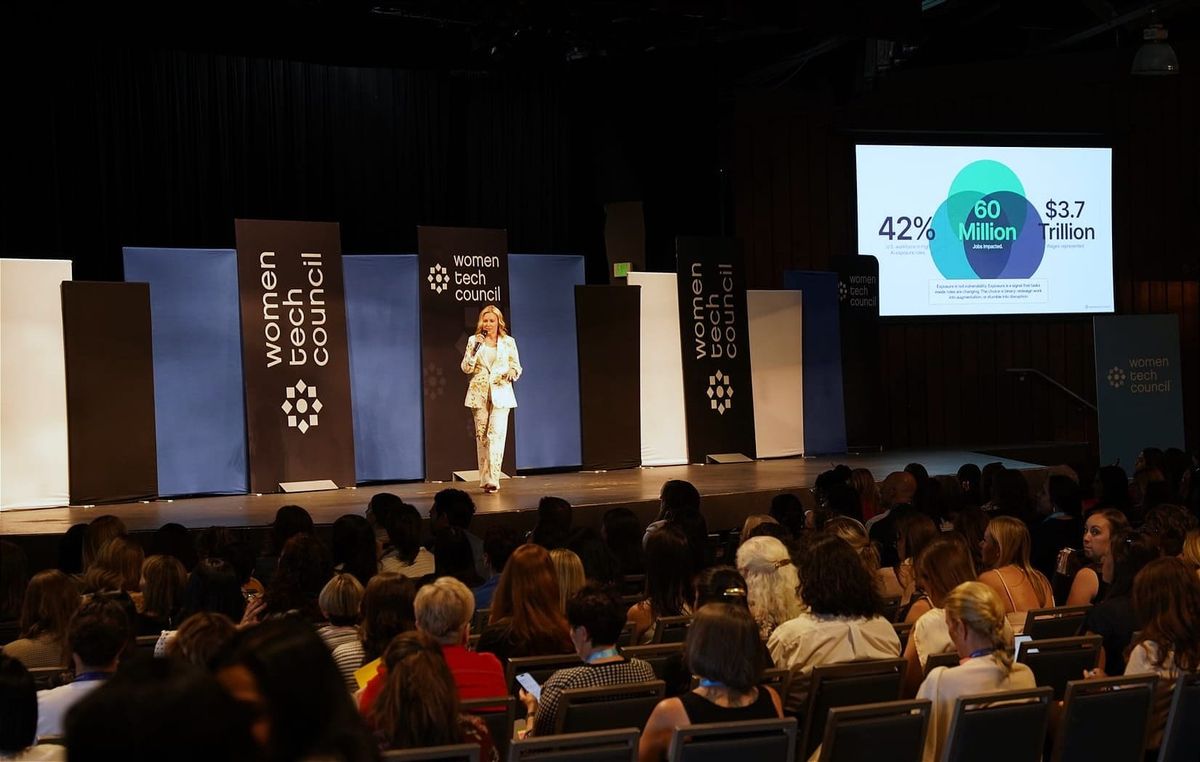
Women Tech Council Founder Cydni Tetro opened the morning with data that set the stakes.
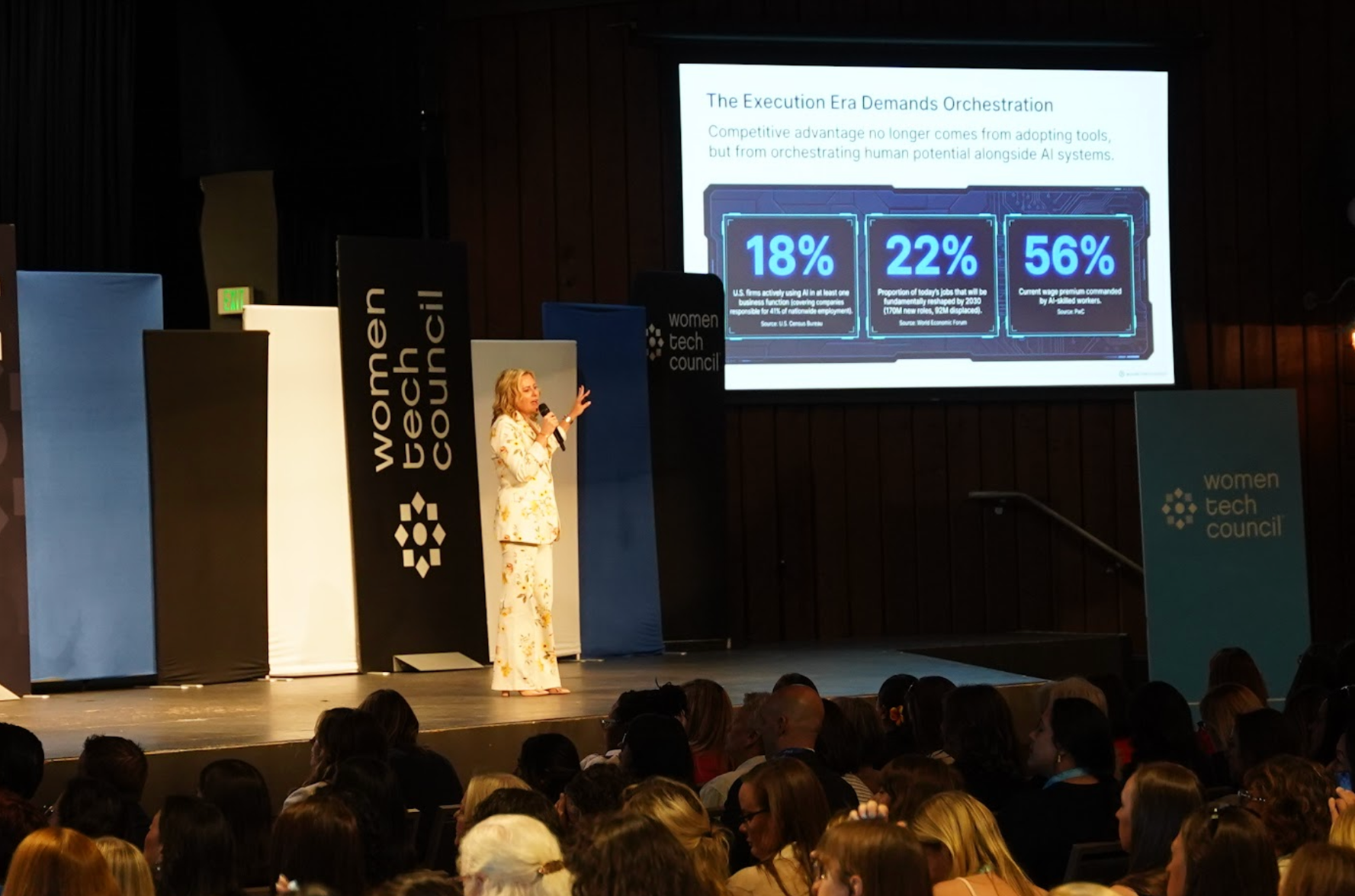
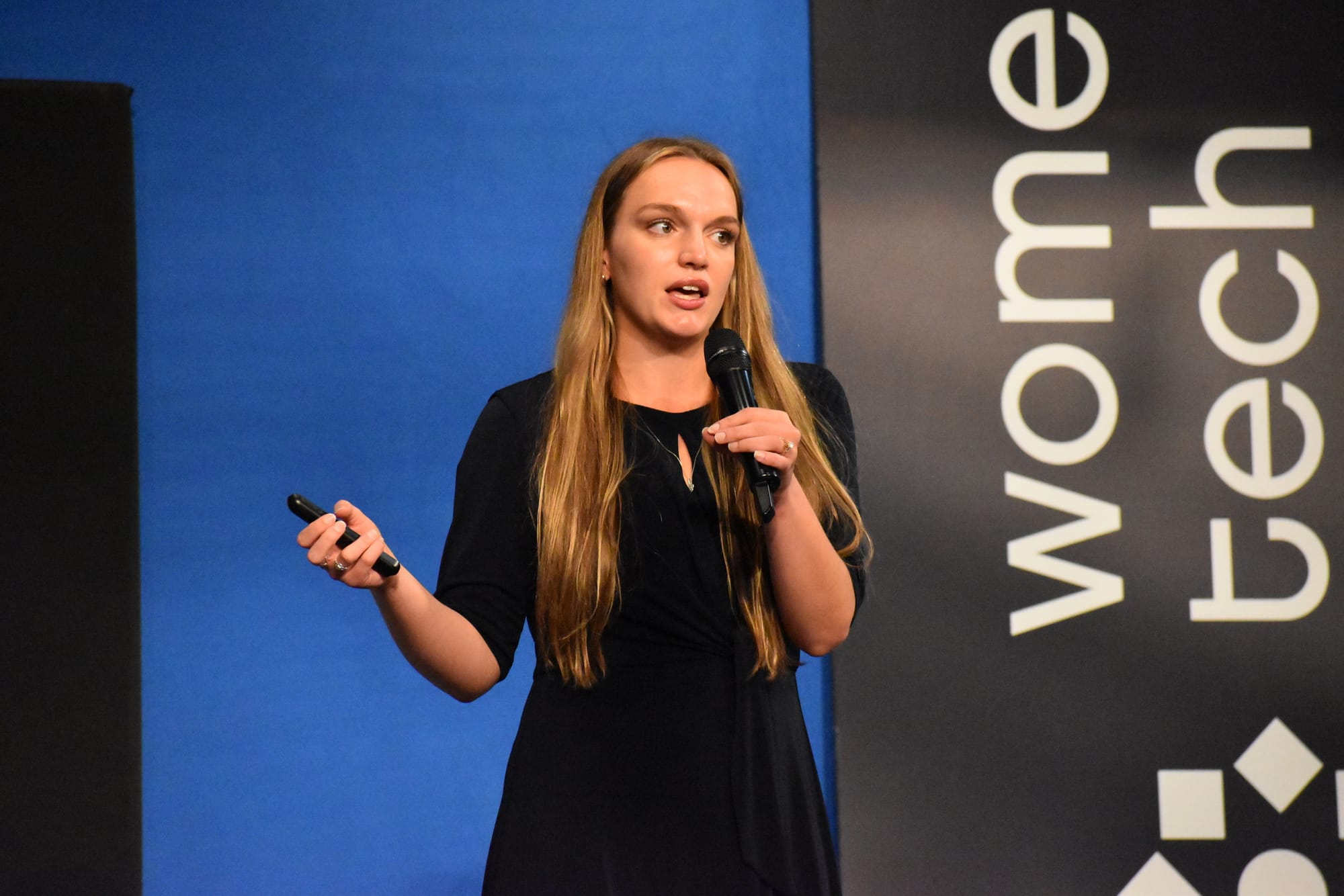
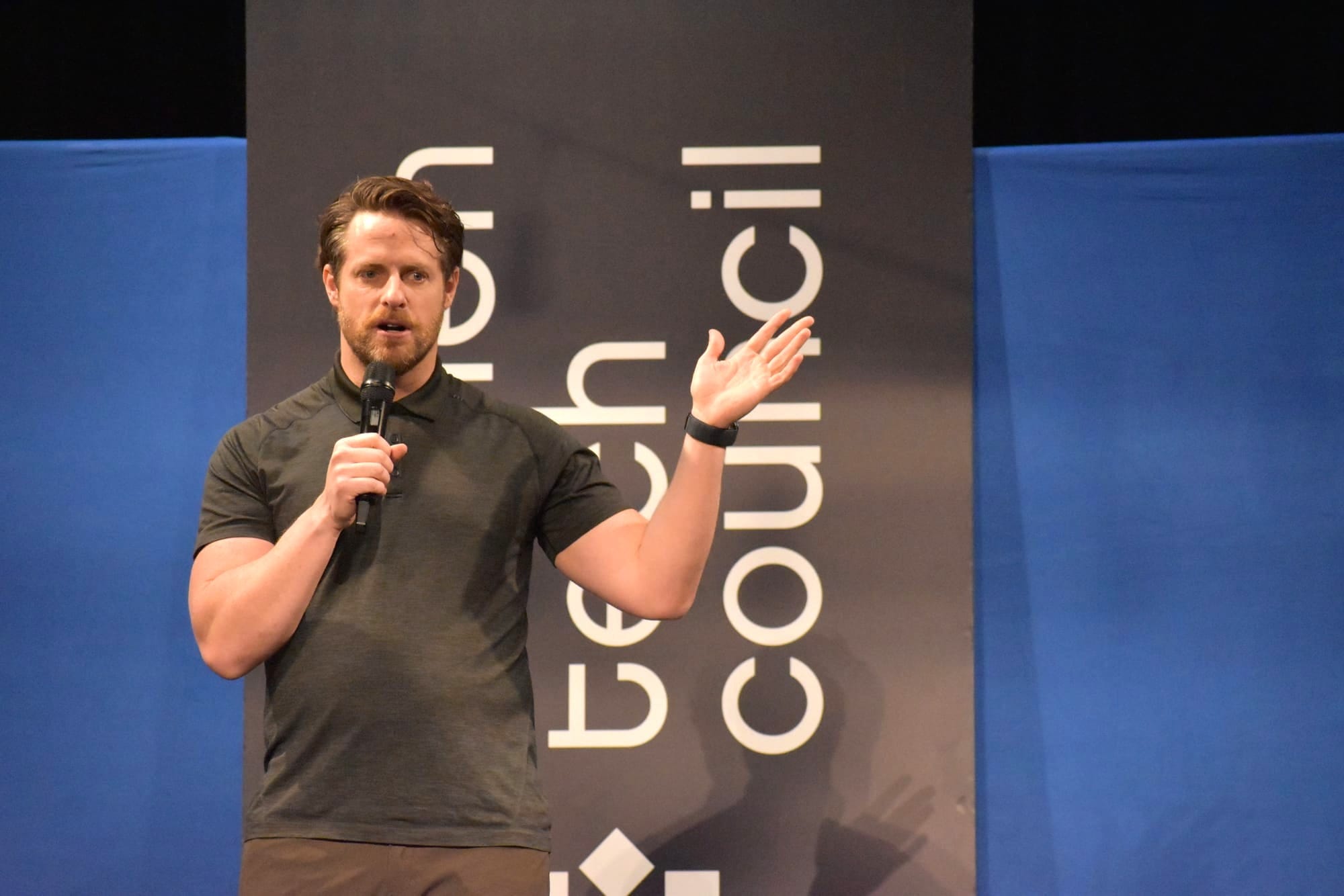
Women Tech Council Founder Cydni Tetro addresses attendees at the "AI Won't Wait" Innovation Summit at Thanksgiving Point's Show Barn in Lehi on June 4. The slide captured the summit's central argument in three numbers: only 18 percent of U.S. firms are actively using AI in even one business function, 22 percent of today's jobs will be fundamentally reshaped by 2030, and AI-skilled workers already command a 56 percent wage premium. "Competitive advantage no longer comes from adopting tools," the slide read, "but from orchestrating human potential alongside AI systems."
Roughly 42 percent of the U.S. workforce, about 16 million jobs, representing more than $3.7 trillion in wages, sits in roles with high exposure to AI disruption. The urgency is sharpest for individuals: AI-skilled workers already command a 56 percent wage premium over their peers, and 22 percent of today's jobs will be fundamentally reshaped by 2030.
At the same time, the council's own research from its recent AI-ready returnship program found that more than half of participants had MBAs or PhDs and came from executive roles: evidence, Tetro argued, that strategic experience matters more than ever, not less.
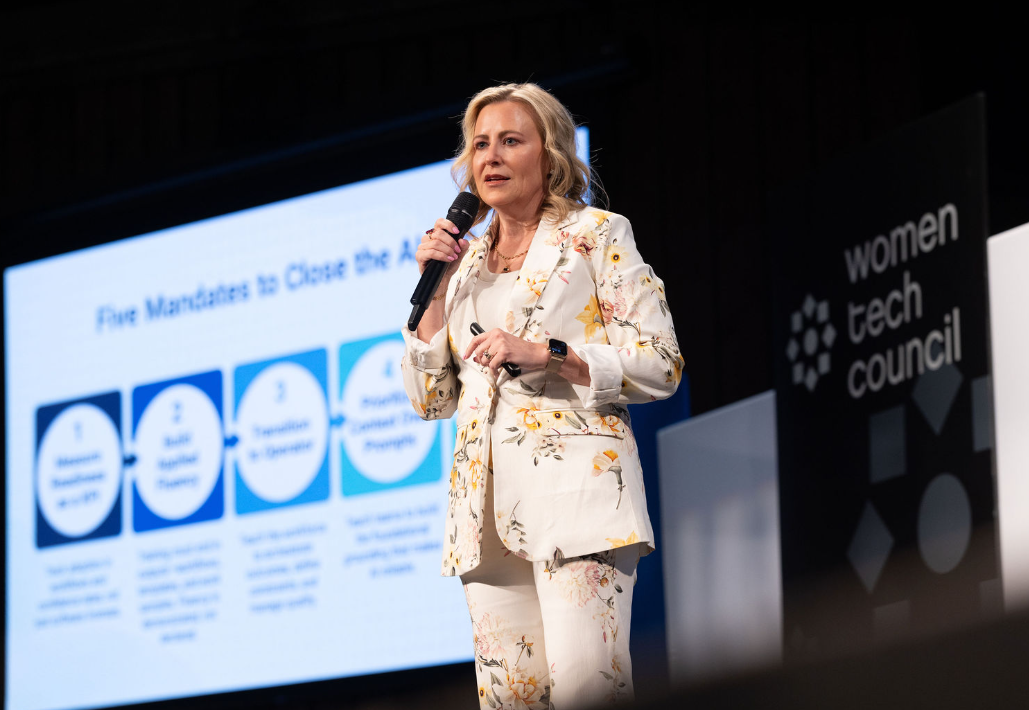
Women Tech Council Founder Cydni Tetro on stage at the WTC Innovation Summit, Thanksgiving Point's Show Barn in Lehi on June 4. Photo: Kinser Studios
"The AI readiness gap has to get closed for all of us as individuals and for our teams before we end up with a massive talent gap," Tetro told the room. Her five mandates for closing it: measure AI readiness as a KPI, build applied fluency across teams, shift every team member toward operating rather than just observing, prioritize context over generic prompts, and stop treating AI as a threat to existing talent.
She added, "I run into people all the time who say they're intimidated by AI, they don't know what they don't know, the tools are moving too fast. That intimidation makes people frozen. But applied fluency is the only way you get to the ROI on AI." Her closing frame was direct: "The companies that will win won't just adopt AI. They will actually upgrade humans."
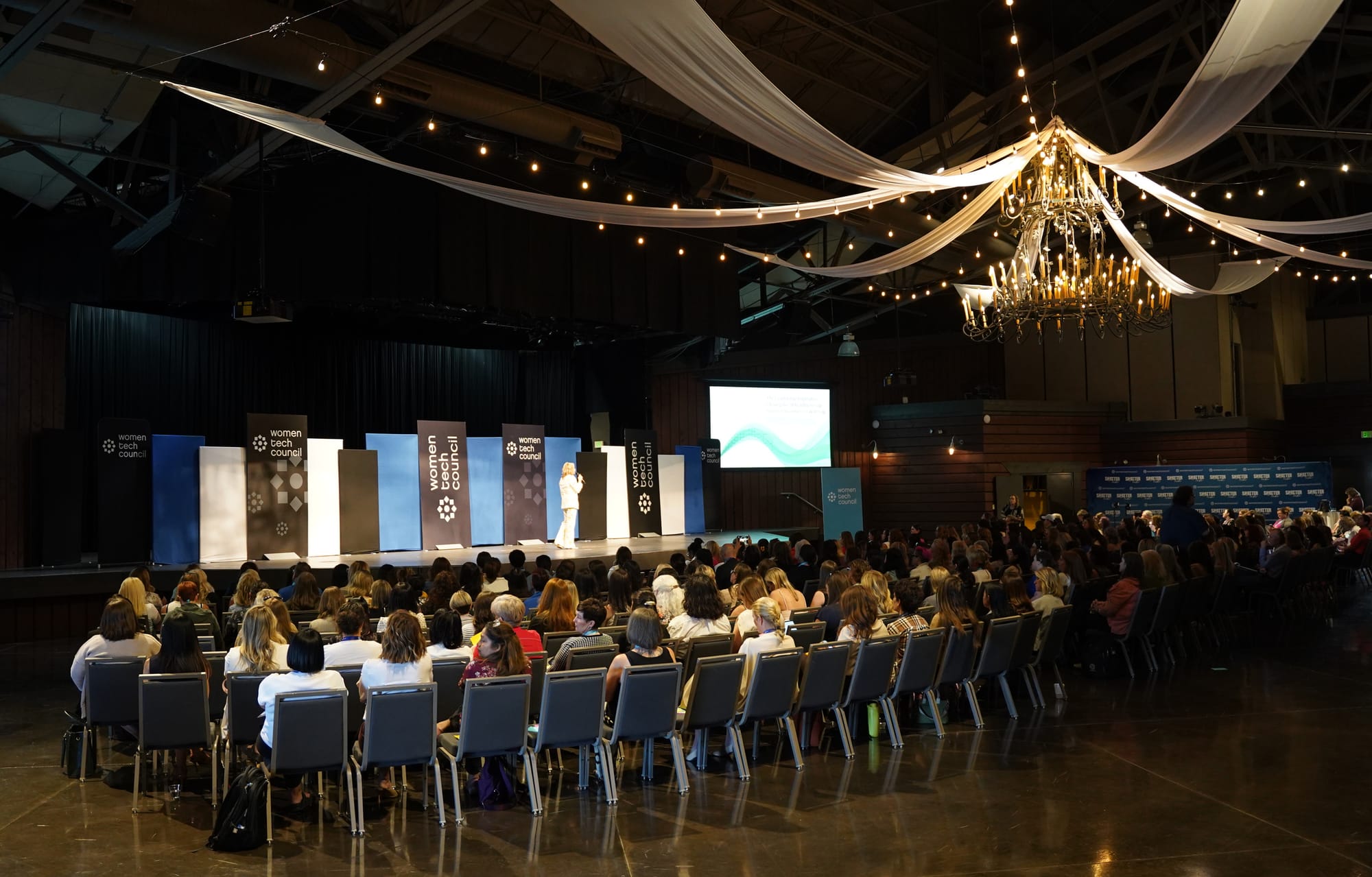
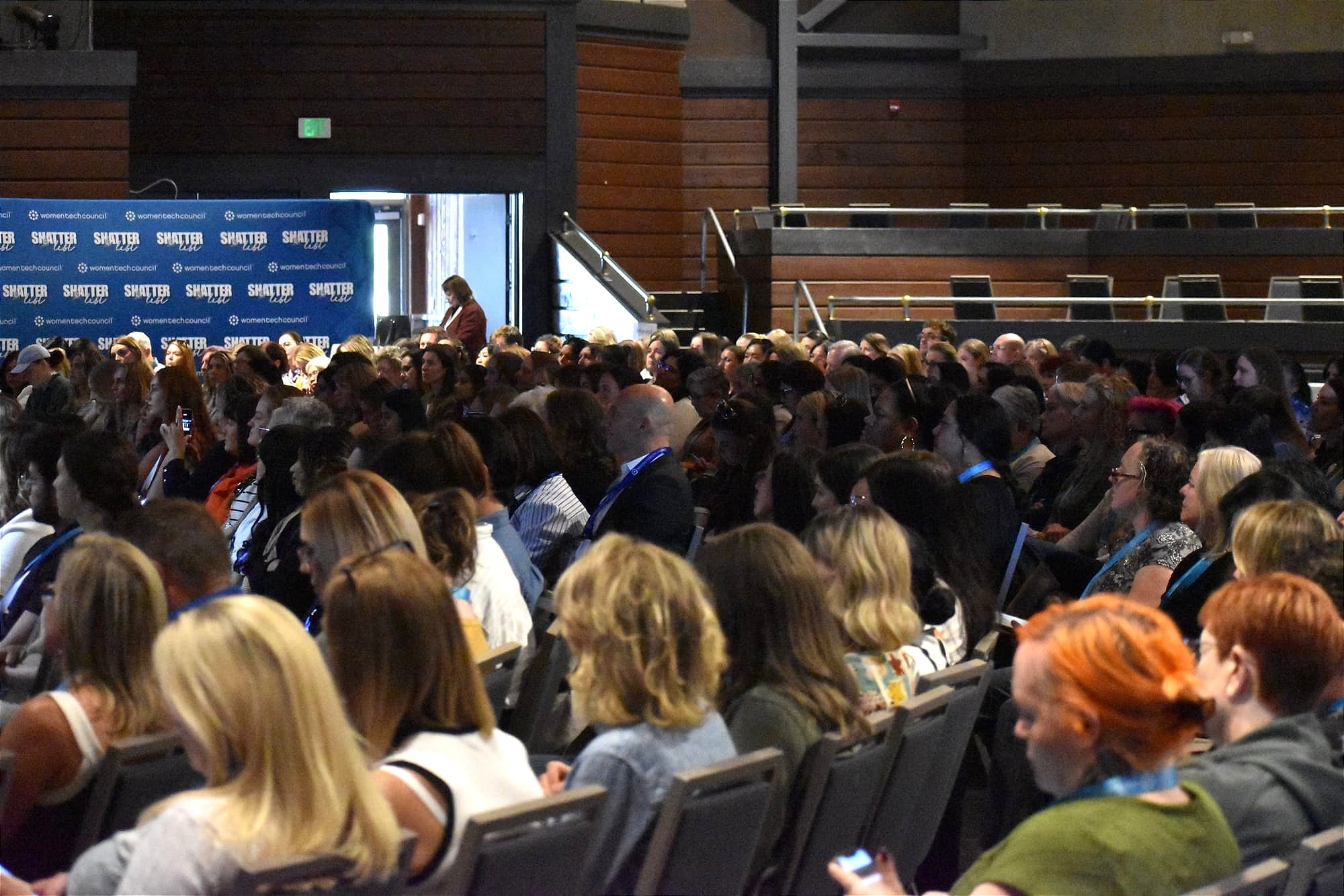
The Show Barn at Thanksgiving Point in Lehi, set for the Women Tech Council's "AI Won't Wait" Innovation Summit on June 4.
The Key Distinction: Jobs Versus Tasks
If there was a single idea that echoed across every session, it was this: automating a job rarely works. Attacking the tasks inside it almost always does.
Jacob Miller, vice president of platform intelligence at Pattern, put it plainly. "Jobs are just agglomerations of tasks, and those tasks are wildly different from each other," he said. "What do we do? We attack tasks, we enhance, streamline, automate, and tackle them, and the jobs will naturally shake out." He pointed to accountants as a useful historical marker: the title has survived 50 years of radical technological change, and there are far more accountants today than there were before computers. The tasks look completely different. The job endured because people kept updating what the role actually did.
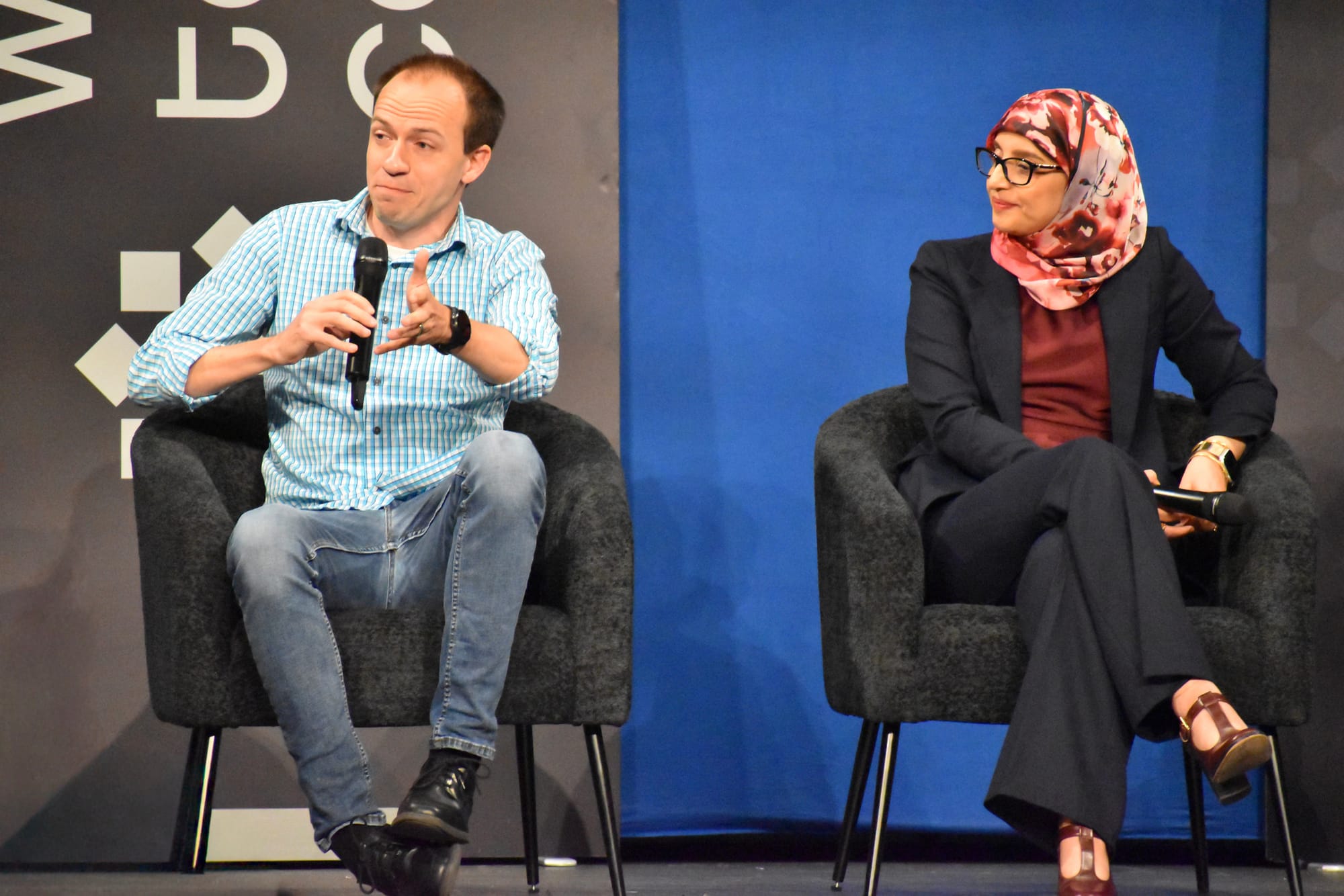
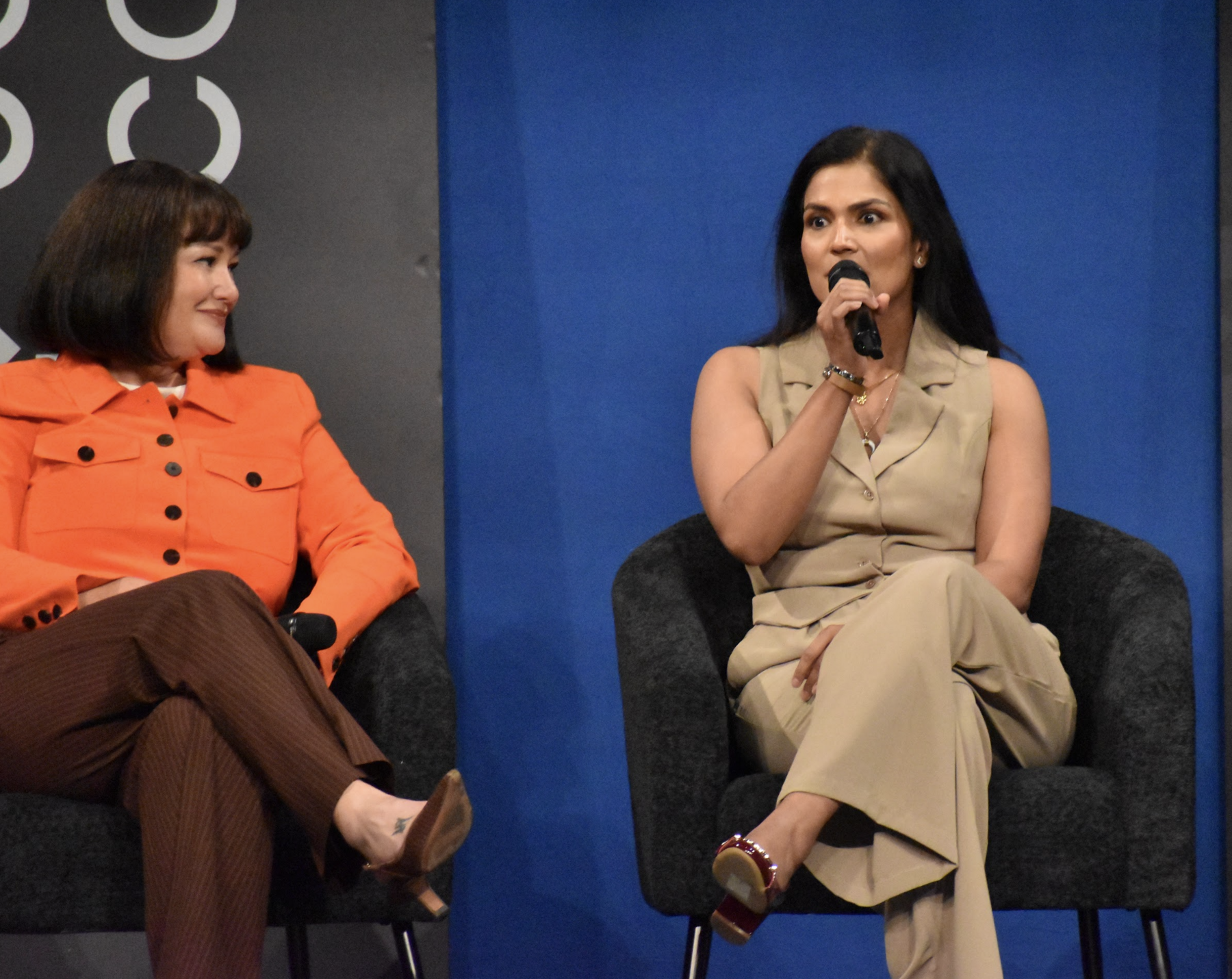
Jacob Miller, VP of platform intelligence at Pattern and Rasha Qudisat, Chief Engagement Officer at UVU, speak during the "Rewiring Work" panel at the Women Tech Council's "AI Won't Wait" summit at Thanksgiving Point's Show Barn in Lehi on June 4. Miller argued that job titles are poor targets for automation — the tasks inside them are what actually change. Qudisat backed that up with UVU data, noting her institution measures AI adoption every semester precisely because the task composition of jobs keeps shifting. "It's not eliminating jobs per se," she said. "But it's changing how the work is being done." Photo: Joseph Jorgensen
Miller's team at Pattern doesn't try to automate entire roles. They identify the specific tasks AI can accelerate and let jobs reshape themselves around higher-value work. "Trying to predict the jobs of the future — I don't really know what those are," he said. "But I do have an idea what the tasks of the future are."
Rasha Qudisat, Chief Engagement Officer at Utah Valley University, said UVU has been tracking this shift with real data since spring 2025. "We're seeing our employees getting started automating the repetitive tasks, so they are more speedy in deliverables," she said. "It's not eliminating jobs per se, but it's changing how the work is being done." Her team measures AI adoption and utilization every semester — and the results keep changing, which is the point. "The tasks within jobs are very flexible," she said. "They're changing every semester."
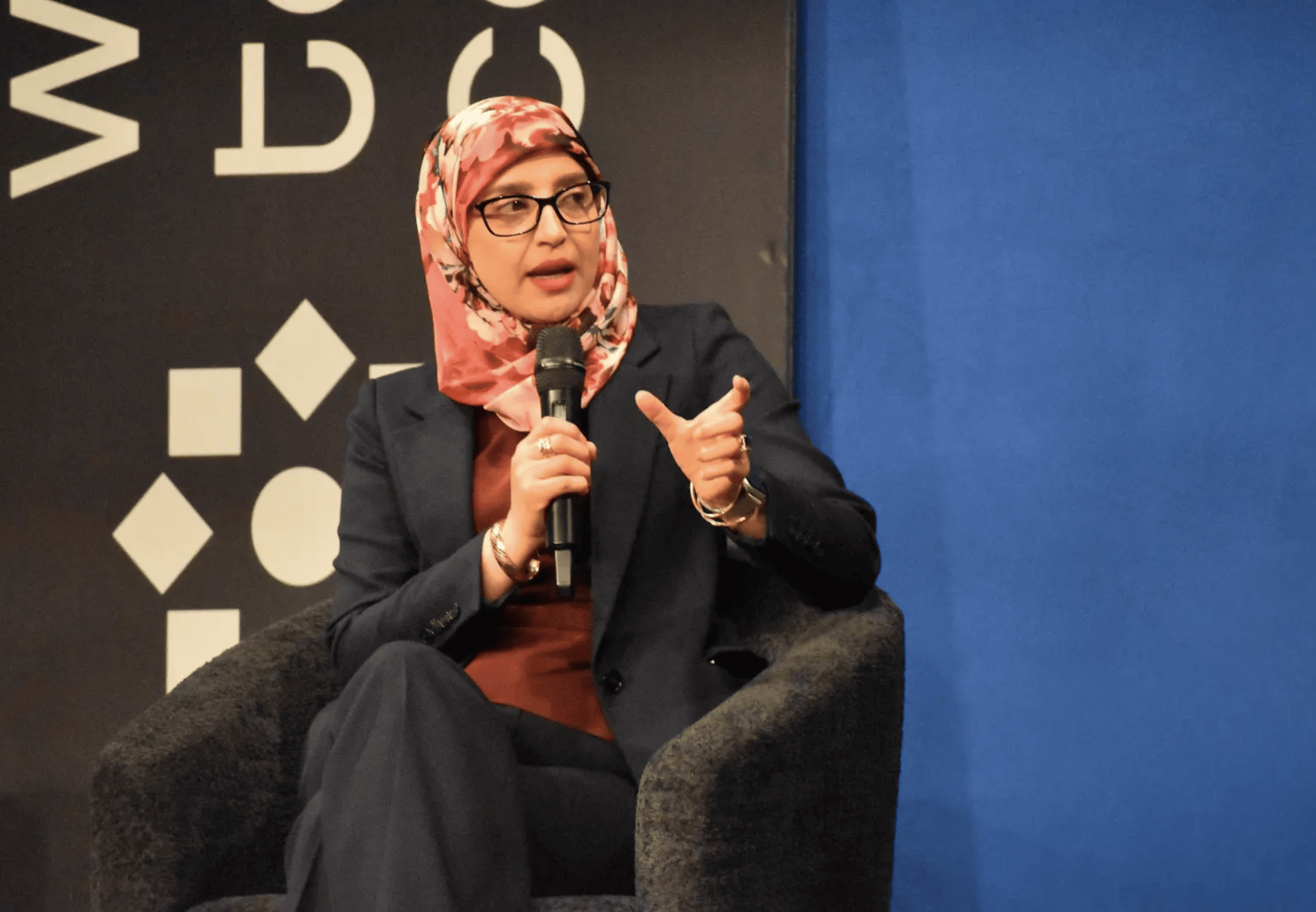
Rasha Qudisat, chief engagement and effectiveness officer at Utah Valley University, speaks during the "Rewiring Work" panel at the Women Tech Council's Innovation Summit at Thanksgiving Poin in Lehi on June 4. Qudisat brought institutional data to a conversation full of anecdote — describing how UVU has measured AI adoption and utilization every semester since spring 2025, and watching the task composition of jobs shift each time. Her argument was pointed: speed without judgment is not progress. "Critical thinking is always the top skill employers ask for in our graduates...no matter what discipline, no matter what the job title. Photo: Joseph Jorgensen
The Hiring Market: Flooded, Not Frozen
Some of the day's most striking data came from Kim Wittman, Chief People Officer at Waystar, the healthcare payments company. Wittman said applications to Waystar have surged more than 300 percent year-to-date, reaching roughly 90,000 — against a peak of about 150 open jobs, managed by a team of eight recruiters.
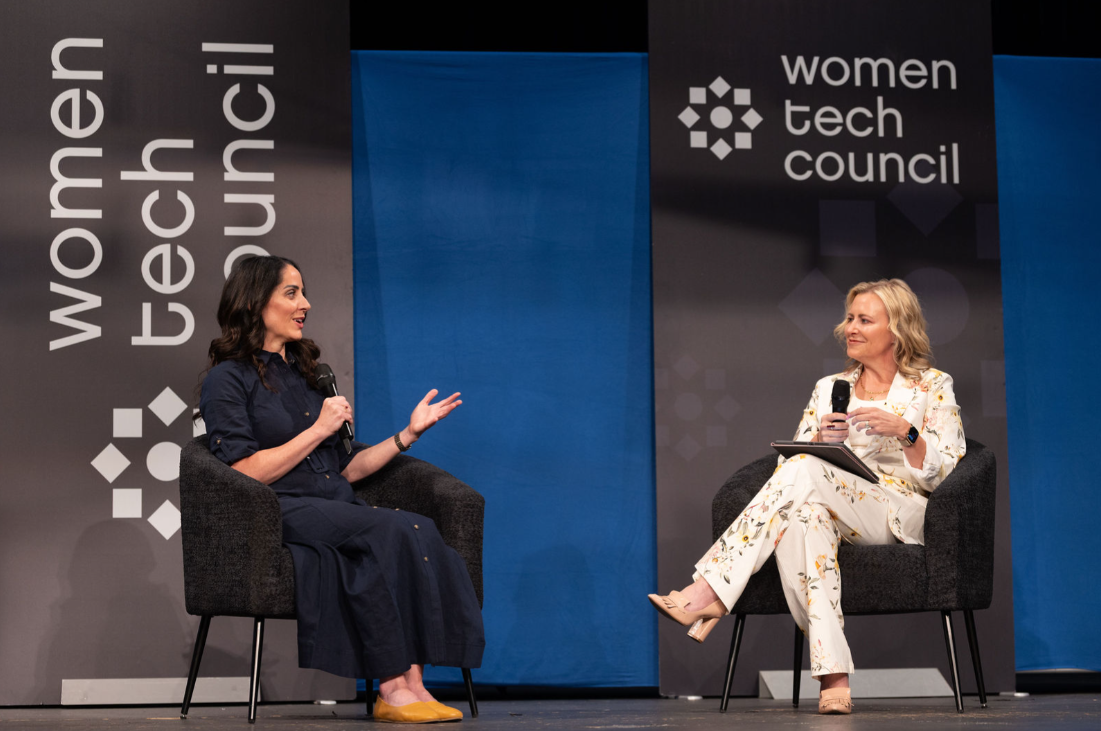
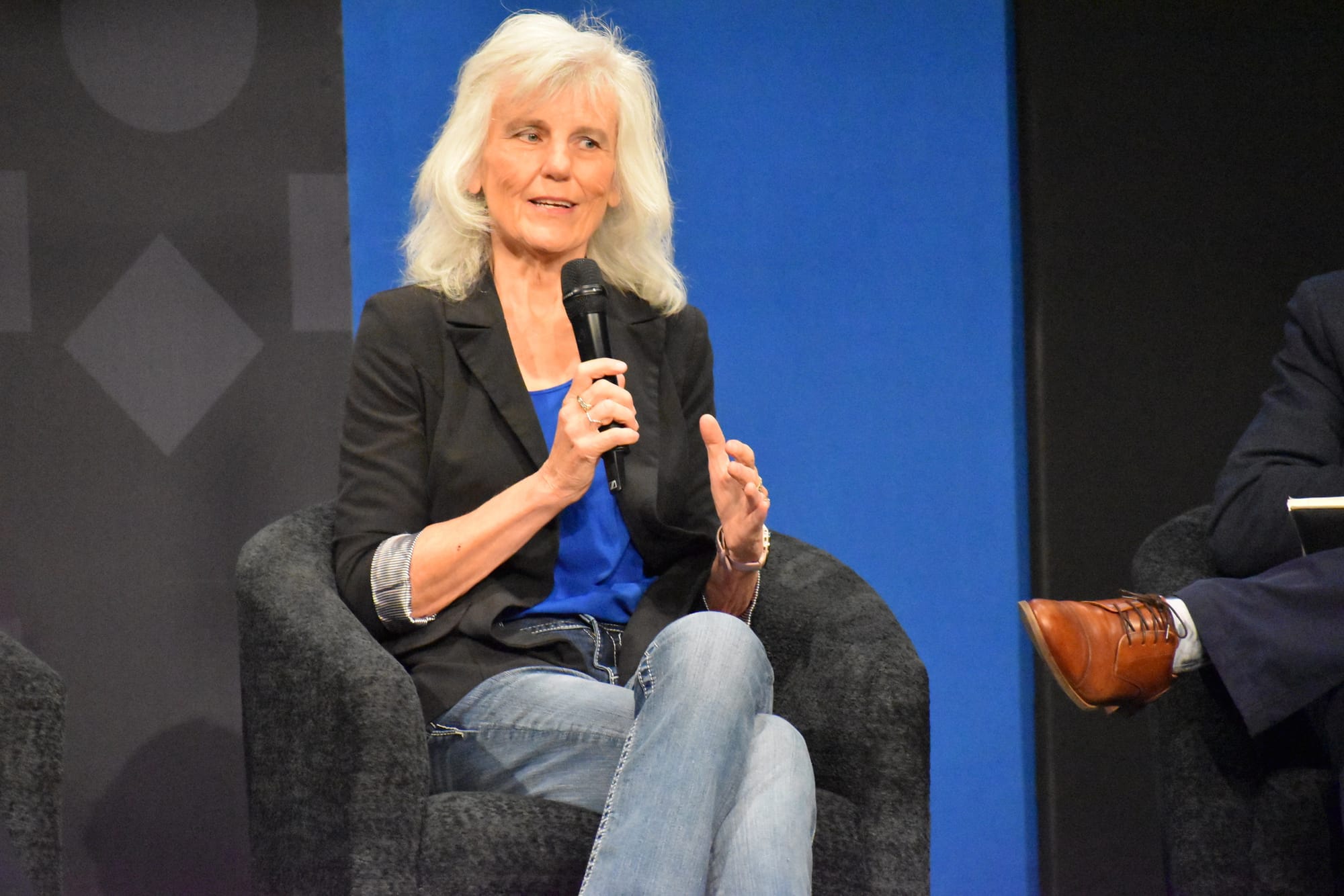
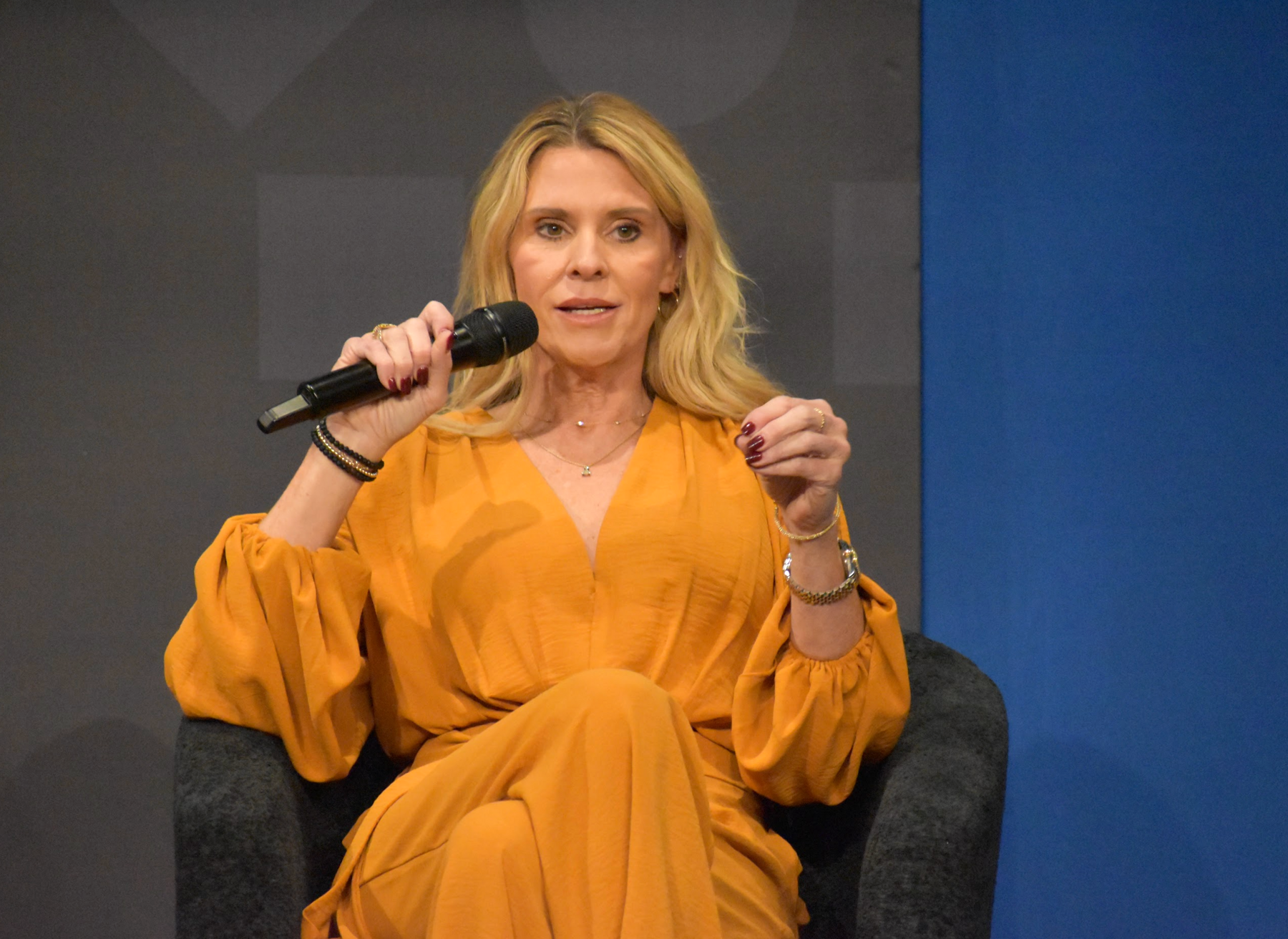
Kim Wittman, Chief People Officer at Waystar (left), speaks with Women Tech Council president Cydni Tetro during a featured conversation at the "AI Won't Wait" summit at Thanksgiving Point's Show Barn in Lehi on June 4. Wittman, whose company has received more than 90,000 job applications this year against roughly 150 open roles, urged attendees to treat professional relationships as their most durable career asset. "Your network has never been more important," she said. "Those connections make all the difference in the world." Photo: Kinser Studios
She was clear that the company is still hiring aggressively, but that the composition of roles is shifting. "We may not be hiring all of the same jobs that we were a year ago, because the work is changing, and so we have to continually evaluate what we need."
In a market that competitive, Wittman pointed job seekers toward one advantage that no AI can replicate: their network. "Our network has never been more important," she said. "Those connections — even second connections, or just how you can get to someone — make all the difference in the world." She advised candidates to use AI tools to align their resumes to specific job descriptions, but to steward that process themselves rather than outsourcing it entirely. Hard numbers and concrete outcomes, she said, matter more than ever. "If you just put 'AI capabilities' on your resume, actually give an example of what that looks like."
Kim Wittman, Chief People Officer at Waystar, at the Women Tech Council's "AI Won't Wait" Innovation Summit at Thanksgiving Point's Show Barn in Lehi on June 4. "If you are not at least trying and stepping into AI," she said, "you will be noticed. People will know." Photo: Joseph Jorgensen
Wittman also flagged an important counterweight to prevailing doom narratives: even Anthropic and OpenAI, she noted, have recently walked back earlier projections about mass displacement. "There is a whole bunch of foundation that needs to be laid before we can get all the way to an agentic workforce," she said. "And that's where I see people really starting to change their skill sets."
The Innovation Panel: Speed, Friction, and Decisions
A panel moderated by Derek White, founder and CEO of Primitive, dug into what AI is doing to the mechanics of product development. The consensus: everything is faster now, which means the bottleneck has moved.
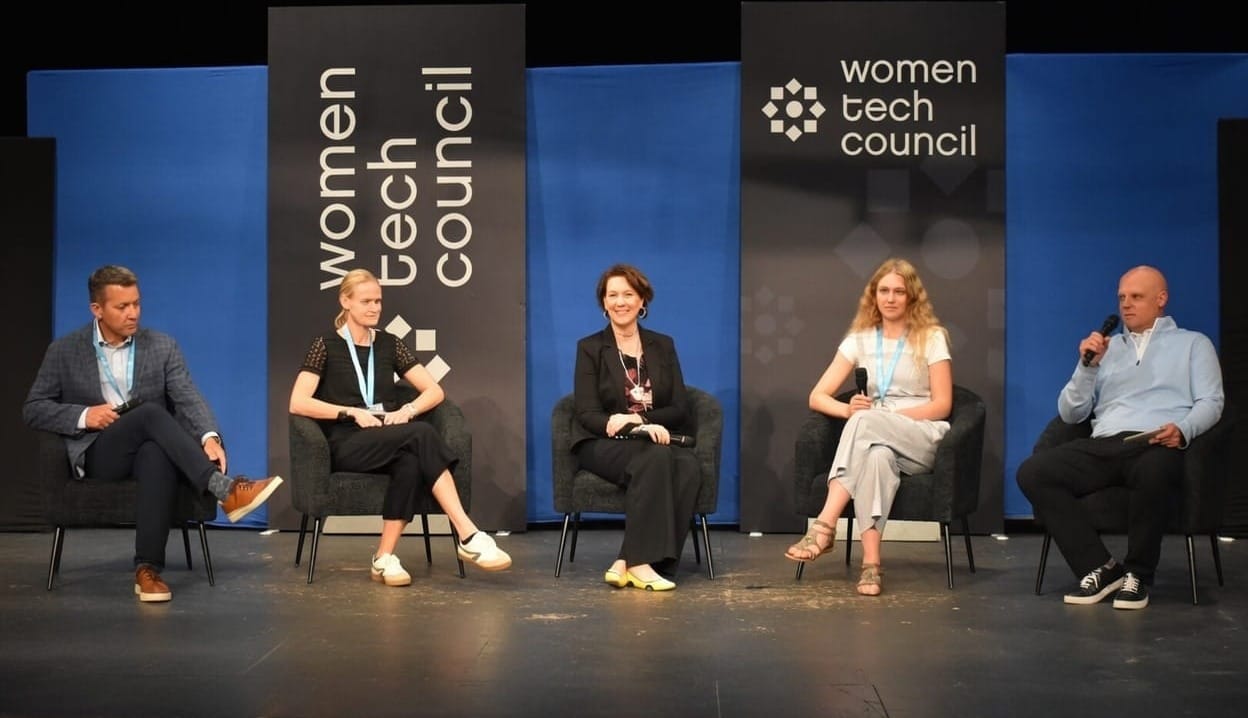
From left: Brian Ware, Lisa Tecklenburg, Kristie Rowley, Brooke Baker, and moderator Derek White during the AI and product innovation panel at the Women Tech Council's "AI Won't Wait" summit at Thanksgiving Point's Show Barn in Lehi on June 4. The panel argued that AI has moved the bottleneck in product development from building to deciding — and that organizations still running on pre-AI operating models are leaving speed on the table. "The friction that's holding companies back isn't the technology," Ware said. "It's the organizational friction between build, measure, and learn." Photo: Joseph Jorgensen
"What was months is now weeks, weeks is now days," said Brian Ware, office lead for Salt Lake City-based Slalom, a global business and technology consulting firm with 53 offices across 12 countries, known for pairing deep technology and data expertise with hands-on delivery for enterprise, mid-market, and public sector clients. "And it's becoming less about the technology and more about the organizational friction, the friction between build, measure, and learn. That's really holding companies back."
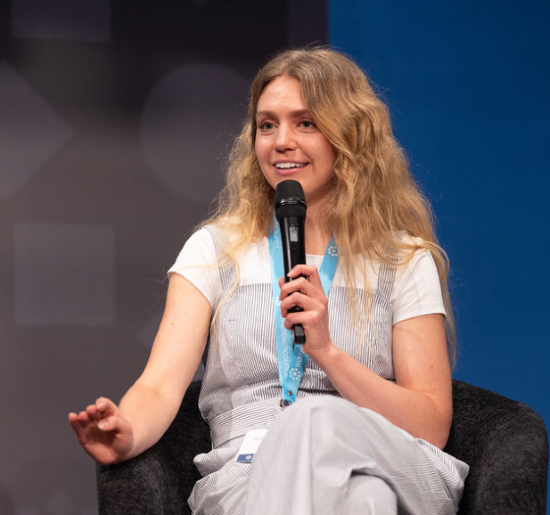
Brooke Baker, Director of Data Science at Prove, speaks during the AI and product innovation panel at the Women Tech Council's "AI Won't Wait" summit at Thanksgiving Point's Show Barn in Lehi on June 4. Baker, who brings deep data science experience to operationalizing AI, warned that even impressive-looking AI outputs can be brittle — and that human validation at each stage of the pipeline is what separates durable systems from ones that break the moment requirements shift. "If you just give AI a prompt end to end, it will do it," she said. "But if you change the requirements minimally, you get a completely different process — and that's not robust." Photo: Kinser Studios
Kristie Rowley, Sr. Manager AI/ML Engineering at BambooHR, said her team has abandoned the traditional agile sprint model entirely. "The concept of two-week agile sprints is dead," she said. "We've adopted continuous flow. We take in projects, work on them, iterate, put them down when there are bottlenecks, and pick them back up. The bottlenecks are in weird places now — places we've never seen before." She also said something that drew visible reaction from the room: "There's no such thing as a developer or data scientist who gets to sit in a closet all day and code. We are all consultants now. The better we speak to each other and understand business problems, the more employable we'll be."
Kristie Rowley, Sr. Manager AI/ML Engineering at BambooHR, speaks during the innovation and product development panel at the Women Tech Council's "AI Won't Wait" summit in Lehi on June 4. Rowley told the audience her team has abandoned two-week agile sprints entirely in favor of continuous flow — and that the shift has changed who counts as a valuable technical contributor. "The better we can speak to each other and understand business problems," she said, "the more employable and useful we'll be in the future." Photo: Joseph Jorgensen
Lisa Tecklenburg, drawing on deep CPG and executive experience, offered a concrete example of speed's impact. A cross-functional team of roughly 60 people, including world-class consultants with decades of experience, spent three days developing a set of hypotheses for a capital-intensive business problem. The company's internal AI agent produced the same list in five minutes. "If we had only started there with the hypotheses and then said 'break the hypotheses,'" Tecklenburg said, "we actually could have gone far faster."
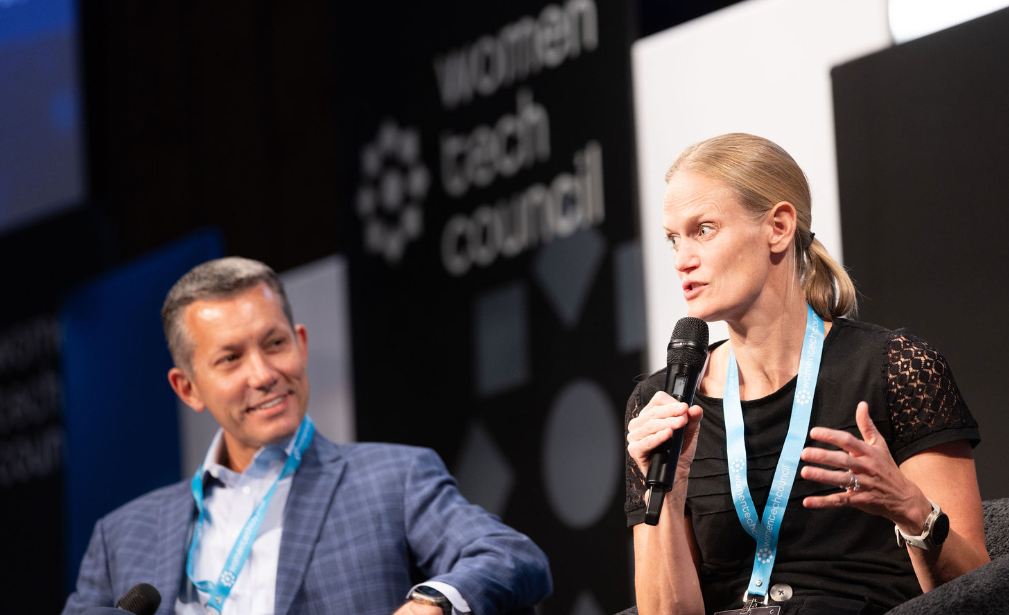
Lisa Tecklenburg speaks during the AI and product innovation panel, as Brian Ware listens at the Women Tech Council's Innovation Summit. Tecklenburg, drawing on deep CPG and executive turnaround experience, described watching an internal AI agent replicate three days of work by 60 senior consultants in five minutes — and argued the real lesson wasn't about speed. "If we had only started there with the hypotheses and then said 'break the hypotheses,'" she said, "we actually could have gone far faster." Photo: Kinser Studios
Rowley added that AI's power as a pattern-recognition engine is real but bounded. "AI recognizes patterns and uses them to make predictions or create content based on old patterns," she said. "AI is way better at that than humans. But it doesn't go beyond the patterns. True ingenuity, true invention, true contextual alignment — that's what humans are good at, and that's what humans need to be good at."
Rewiring Work: The Human Advantage
The summit's final major panel, moderated by Vic Hockett, associate commissioner for Talent Ready Utah, addressed the workforce transformation directly — and the skills that will matter most when repetitive work disappears.
Darcy Douglas, VP of AI Center of Excellence at SAP Taulia, addresses the "Rewiring Work" panel at the Women Tech Council's "AI Won't Wait" summit in Lehi on June 4. Douglas warned that the pace of AI change is creating a quiet but pervasive anxiety even among top performers — and that leaders who ignore it do so at their peril. "Recognizing that general level of anxiety is fundamental to how we approach this internally and how we communicate with people." Photo: Joseph Jorgensen
The panelists were blunt: anxiety is real, and it's pervasive. Darcy Douglas, VP of AI Center of Excellence at SAP Taulia, said that across organizations, even high performers express surprise at the prospect of a layoff. "There's a change in the process for how people are working, but there's also a change in the foundation of stability that people feel," she said. "Recognizing that general level of anxiety is relatively fundamental to how we approach this internally and how we communicate with people."
Kristin Hansen, general manager at Leland, said she sees two distinct emotional camps in every organization: those who feel blocked and scared, and those running full speed ahead, looking for every workaround to get more AI access. "What both of them really need is similar," she said — "more structure, more encouragement, internal excitement about innovating together, and an acknowledgment that AI is moving really fast and things will change every week."
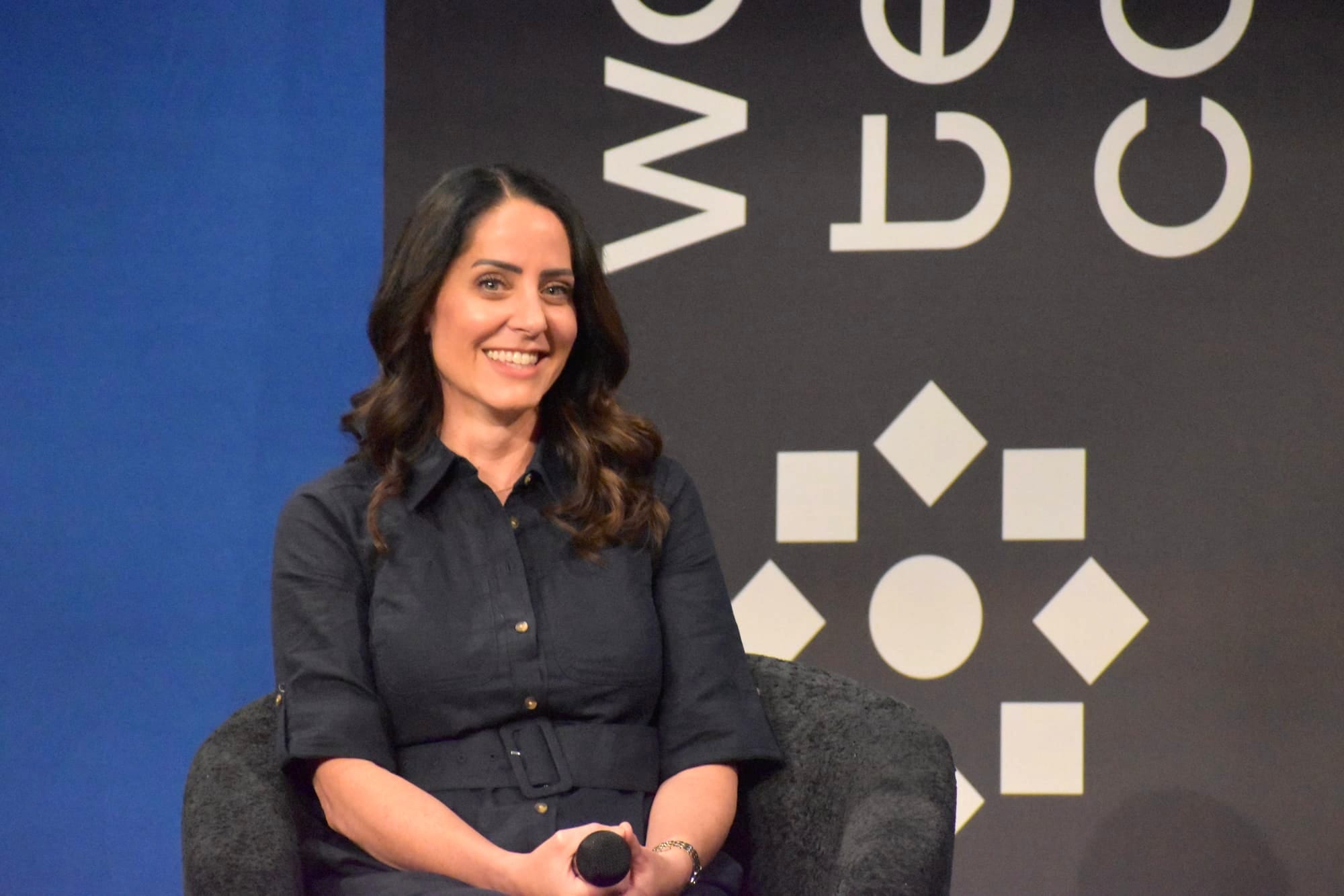
Kristin Hansen, general manager at Leland, addresses the "Rewiring Work" panel at the Women Tech Council's "AI Won't Wait" summit in Lehi on June 4. Hansen argued that as AI homogenizes output across industries, human creativity becomes a sharper competitive edge, not a softer one. "Businesses win because they stand out and have a unique identity," she said. "People who can maintain that sense of novelty will be really, really important. Photo: Joseph Jorgensen
On the question of which human skills hold up, the panelists converged on a few:
Systems thinking. Miller said any strong hire today needs to understand what's upstream and downstream from their work, why data is shaped the way it is, and how a change they make ripples outward. "As models get better and better, the gap between a senior person and an intern using AI begins to close," he said. "So we have to ask: where can I add value that functional expertise, systems awareness, and user understanding can provide?"
Creativity and novelty. Hansen noted that AI produces the aggregate average of everything it has been trained on — while people are drawn to what feels fresh. "Businesses win because they stand out and they have a unique identity," she said. "People who can maintain that sense of novelty and differentiation will be really, really important."
Critical thinking. Qudisat said UVU actively teaches employees and students to critique AI outputs rather than pass them along. "We should not be rewarding speed alone," she said. "We need to invest in how you use the time you save to produce better quality." She added that every employer survey UVU conducts returns the same top answer: critical thinking is the skill they want most, regardless of discipline.
Rasha Qudisat, Chief Engagement Officer at Utah Valley University, speaks at the Women Tech Council's "AI Won't Wait" Innovation Summit at Thanksgiving Point's Show Barn in Lehi on June 4. UVU tracks AI utilization every semester, and the data keeps changing, which she said is the point. Jobs aren't disappearing. "We need to invest in how you use the time you save to produce better quality." Photo: Kinser Studios
Human connection. Wittman said the skills that made people stand out before AI will make them stand out within it. "Think about what brings you joy in your job — not the skills, but the things," she said. "If it's problem solving, it'll make you better at solving problems with AI. If it's teaching, start teaching your department about AI. Those things you might have called soft skills are becoming more important than your technical college."
Hockett shared a striking note from MIT research: participants who used large language models to write essays showed roughly 50 percent less brain connectivity than those who used search engines, and more than 80 percent couldn't recall what they had submitted. Brain activity levels took hours or days to return to baseline. "That should be a red flag," he said.
The CIO View: Governance, Grit, and Going All In
The summit saved one of its sharpest panels for last. Five female CIOs and security leaders, a distinction Tetro called out explicitly, noting Utah still has ground to cover in placing women in that seat, took the stage for a ground-level look at what AI adoption actually looks like inside regulated, complex enterprises.
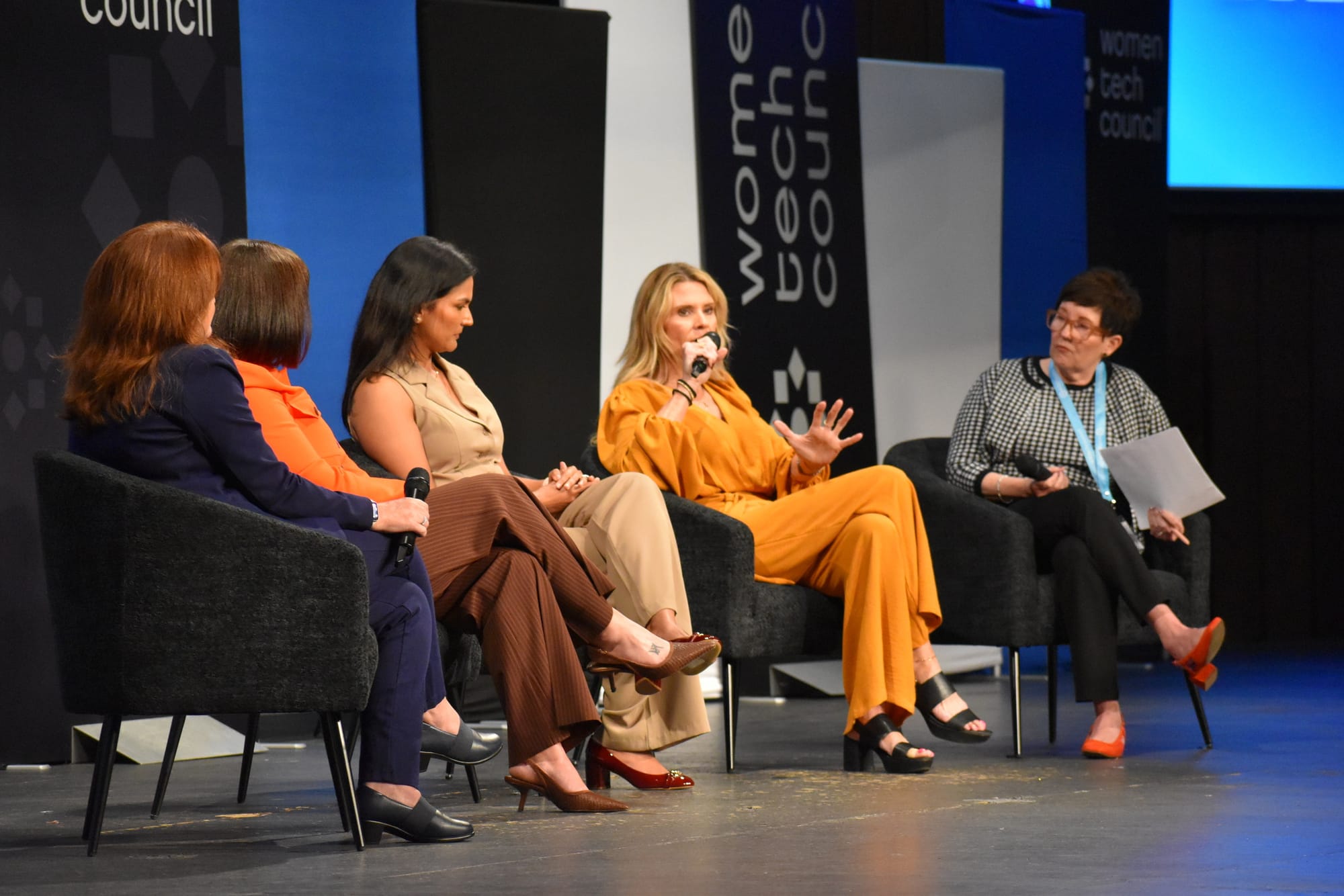
From left: Jami Hughes, CISO at Zions Bancorporation, Tami Fisher, CIO at Tab Bank; Manu Sood, CIO at AvidXchange; Shawnna DelHierro, CIO at SoundHound AI; and moderator Julie Simmons, CIO at DDI World, during the closing CIO panel at the Women Tech Council's "AI Won't Wait" Innovation Summit. The five women — all holding or recently holding C-suite technology roles — tackled AI governance, workflow transformation, and the twin mistakes of moving too slow and moving without purpose. "What business problem are you solving?" Fisher asked. "What friction point are you trying to reduce?" Photo: Joseph Jorgensen
Julie Simmons, CIO at DDI World, moderated. Her panelists: Shawnna DelHierro, CIO at SoundHound AI; Manu Sood, CIO at AvidXchange; Tami Fisher, CIO at Tab Bank; and Jami Hughes, CISO at Zions Bancorporation.
The first question — how much of your enterprise is actually AI-enabled — produced two different but complementary answers. Sood said AvidXchange measures AI adoption by workflows, not headcount. "We thought about how many of our native workflows — whether in business operations, finance, HR, engineering, or technology operations — are actually getting impacted, altered, or changed because of AI," she said. By that measure, close to 50 percent of AvidXchange's core workflows are now AI-assisted or fully changed.
Fisher said Tab Bank measures by people: roughly 35 to 40 percent of the organization uses AI in their daily activities, with a goal to double that by year-end. Her team got there by demanding business cases upfront. "We asked our organization: what value are you going to get from this? Run your pilot, learn from it, and kill the projects as fast as you can if they're not delivering — so we can reinvest in something that adds more value."
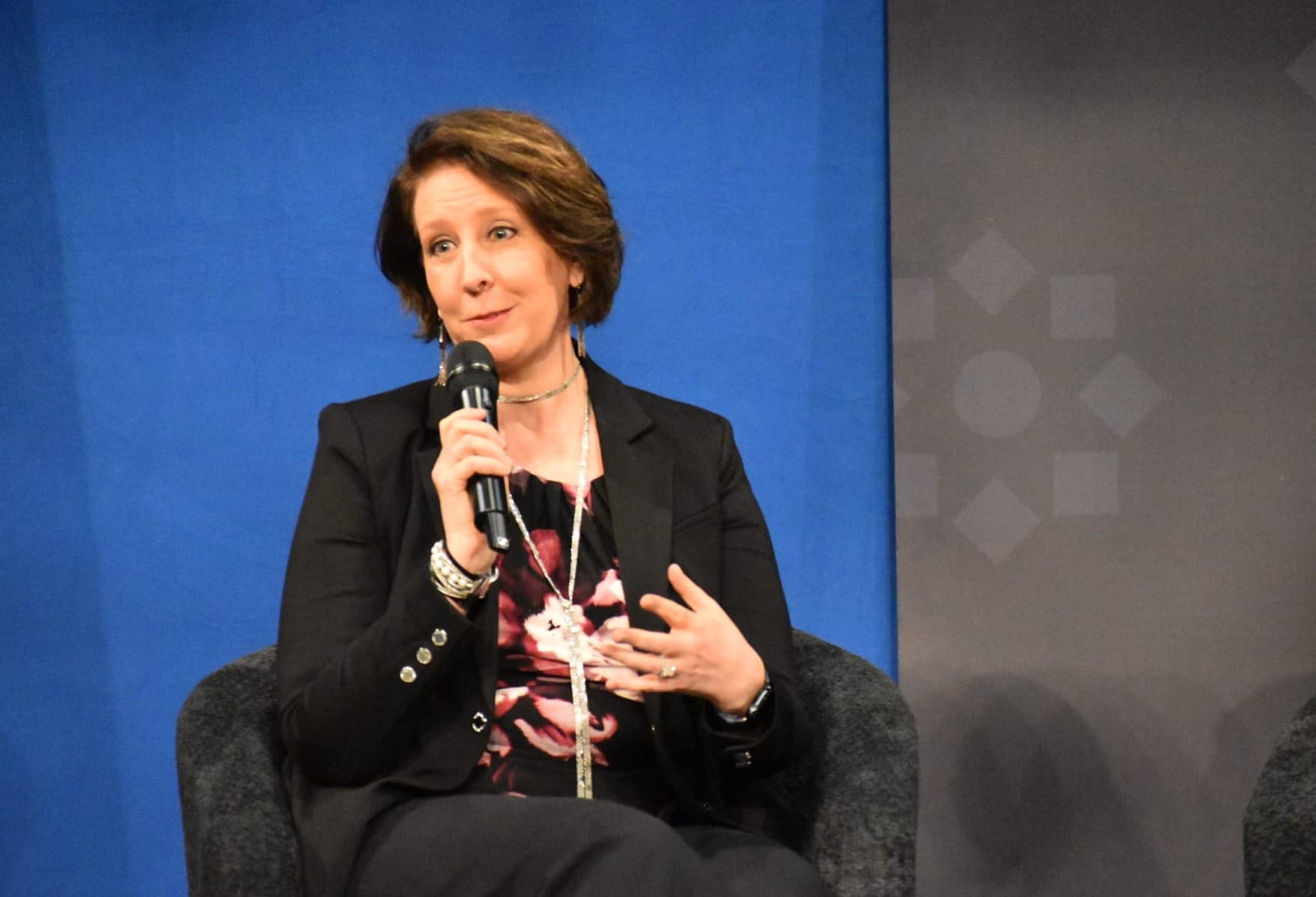
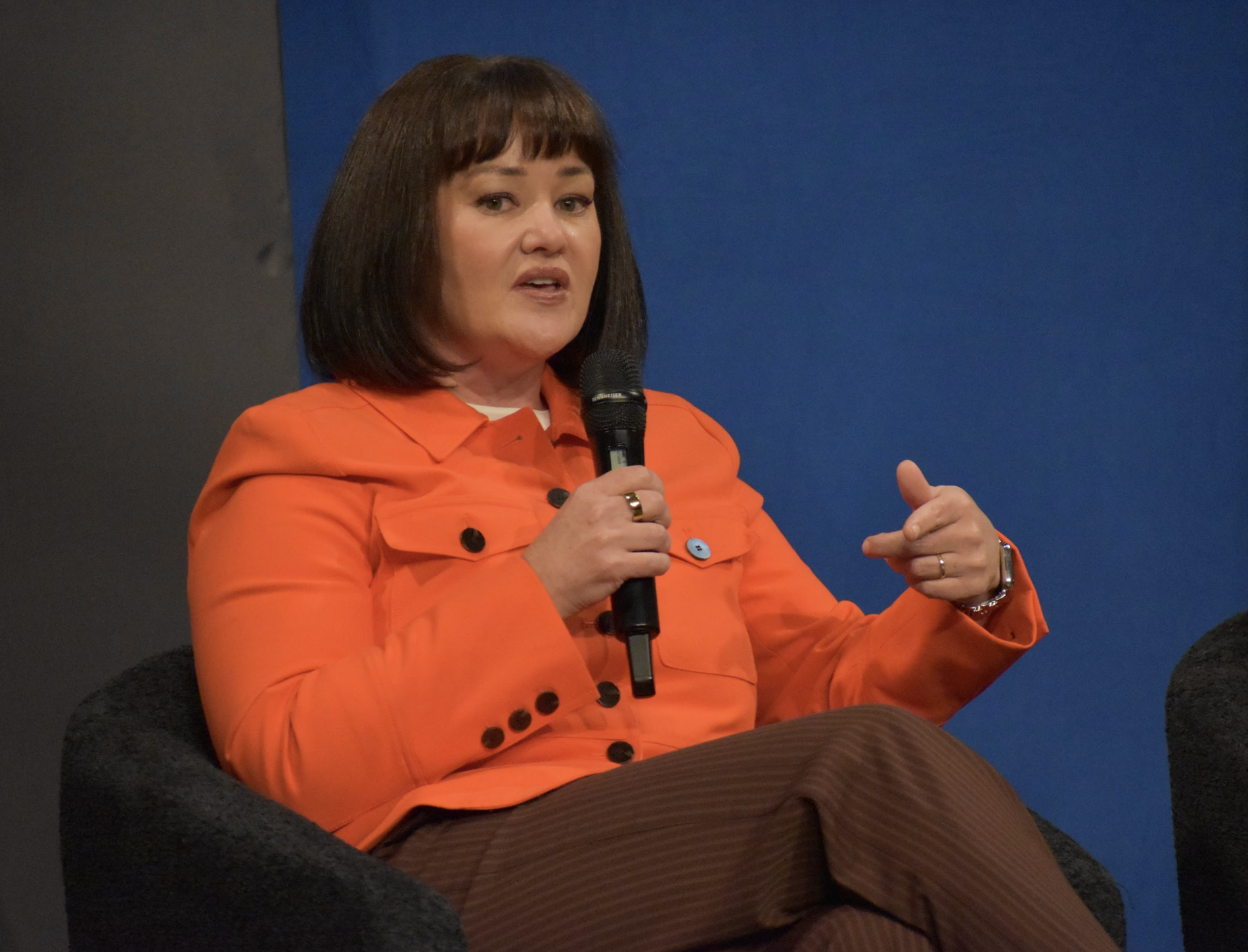
Tami Fisher, CIO at Tab Bank, speaks during the closing CIO panel at the Women Tech Council's "AI Won't Wait" Innovation Summit at Thanksgiving Point's Show Barn in Lehi on June 4. Fisher described a disciplined pilot framework her team uses to cut through AI noise: build a quick business case, run the experiment, measure the result, and kill anything that isn't delivering — fast. "It's not just something to do because it's cool," she said. "What business problem are you solving? What friction point are you trying to reduce?" Photo: Joseph Jorgensen
On governance, the panel was unified: it has to be distributed, not siloed in IT, and it has to enable rather than block. DelHierro said the organizations that treat AI as an IT project will inevitably fail. "This is more a cultural change than a technology change by any stretch of the imagination," she said. Hughes described a governance metric her team at Zions built to track when developers accept AI recommendations versus when they override them — and why. "Are they overriding because of job security fears? Because AI hallucinated? Because they understand the infrastructure better than the model does?" she said. "That metric has been key for our organization as we've evolved."
Sood flagged the data problem that trips up many organizations before governance even becomes relevant. "We quickly realized we didn't have a good data foundation," she said. "Garbage in, garbage out. We pivoted to investing in data — master data management, data cleansing, making sure knowledge articles were being updated — because if you're having AI serve up an answer to a customer, it better be the best and most accurate answer."
Tami Fisher, CIO at Tab Bank (left), listens as Manu Sood, CIO at AvidXchange, speaks during the closing CIO panel at the Women Tech Council's "AI Won't Wait" Innovation Summit at Thanksgiving Point's Show Barn in Lehi on June 4. Sood described how AvidXchange measures AI adoption by workflows rather than headcount — finding that close to 50 percent of the company's core workflows are now AI-assisted or fully transformed. The lesson she brought back to the room was a data warning most organizations learn the hard way. "If you don't have good data," she said, "garbage in, garbage out." Photo: Joseph Jorgensen
On the question of the biggest mistakes in AI adoption, the panel identified two opposite failure modes. Fisher named them directly: organizations standing back and waiting to see what happens, and organizations introducing AI for AI's sake. "It's not just something to do because it's cool," she said. "What business problem are you solving? What friction point are you trying to reduce?" Hughes added that she sees too many teams theorizing about AI's potential without tying any of it to business value. "We're having fun with the tool, we're doing things," she said, "but are we actually producing results?"
The panel closed with advice for every person in the room, regardless of level. Hughes said the framing of "upskilling" is already outdated. "We need to be future skilling — looking ahead at what we will need," she said. Her team at Zions gamifies AI certification, with Hughes herself pursuing credentials alongside her staff. Sood distilled it to a single shift: "Move from the fear of AI to the fluency of AI. The more fluent you get, AI fluency naturally translates into career fluency."
Shawnna DelHierro, CIO at SoundHound AI, wraps up the closing CIO panel at the Women Tech Council's "AI Won't Wait" Innovation Summit at Thanksgiving Point's Show Barn in Lehi on June 4. DelHierro closed with a challenge she said she raises with executives regularly: stop thinking in terms of build versus buy, and start using AI itself to accelerate the decision. More broadly, she urged leaders to look beyond their own industry for signals of what's coming. "What's happening at a global scale — those lead-lag indicators are really important to what's coming right around the corner," she said. "You might be in a different industry in six months or a year. Stay sharp, stay aware, and don't put blinders on." Photo: Joseph Jorgensen
DelHierro urged the audience to look beyond their own industry and role and to watch what's happening globally, because the signals appearing elsewhere today are arriving here tomorrow. And Simmons offered the most counterintuitive piece of advice of the day: "If you're senior, find a junior mentor. Carve out the time. Roles are merging and changing, and your ability to drive value — AI or otherwise — is what's going to matter wherever your career goes next."
AI in Action: Three Live Demos
Between panels, the summit ran three rapid-fire demos under the banner "AI in Action."
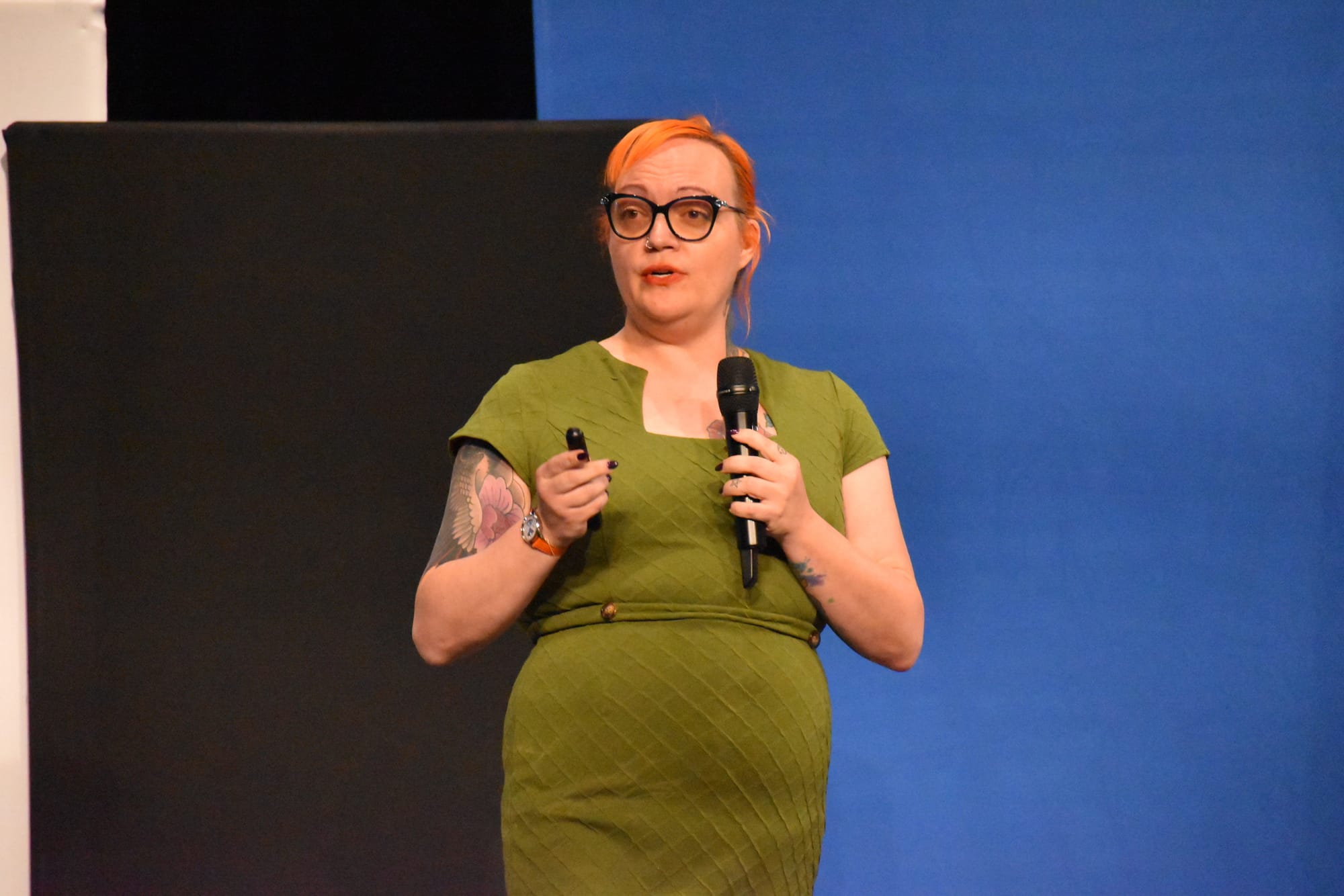
Magdalena Haas, associate data scientist at Domo, demonstrates a live AI agent deployment during the "AI in Action" segment at the Women Tech Council's "AI Won't Wait" summit at Thanksgiving Point's Show Barn in Lehi on June 4. Haas walked attendees through a photo curation agent she built for a small business client — one capable of evaluating 16 images against defined criteria, scoring each at 87 percent confidence, and producing a dashboard readable by non-technical users. Her real point was the framework, not the photos. "Probably all of you work with customers, contracts, or IT tickets," she said. "Think about how this applies to something you're doing right now." Photo: Joseph Jorgensen
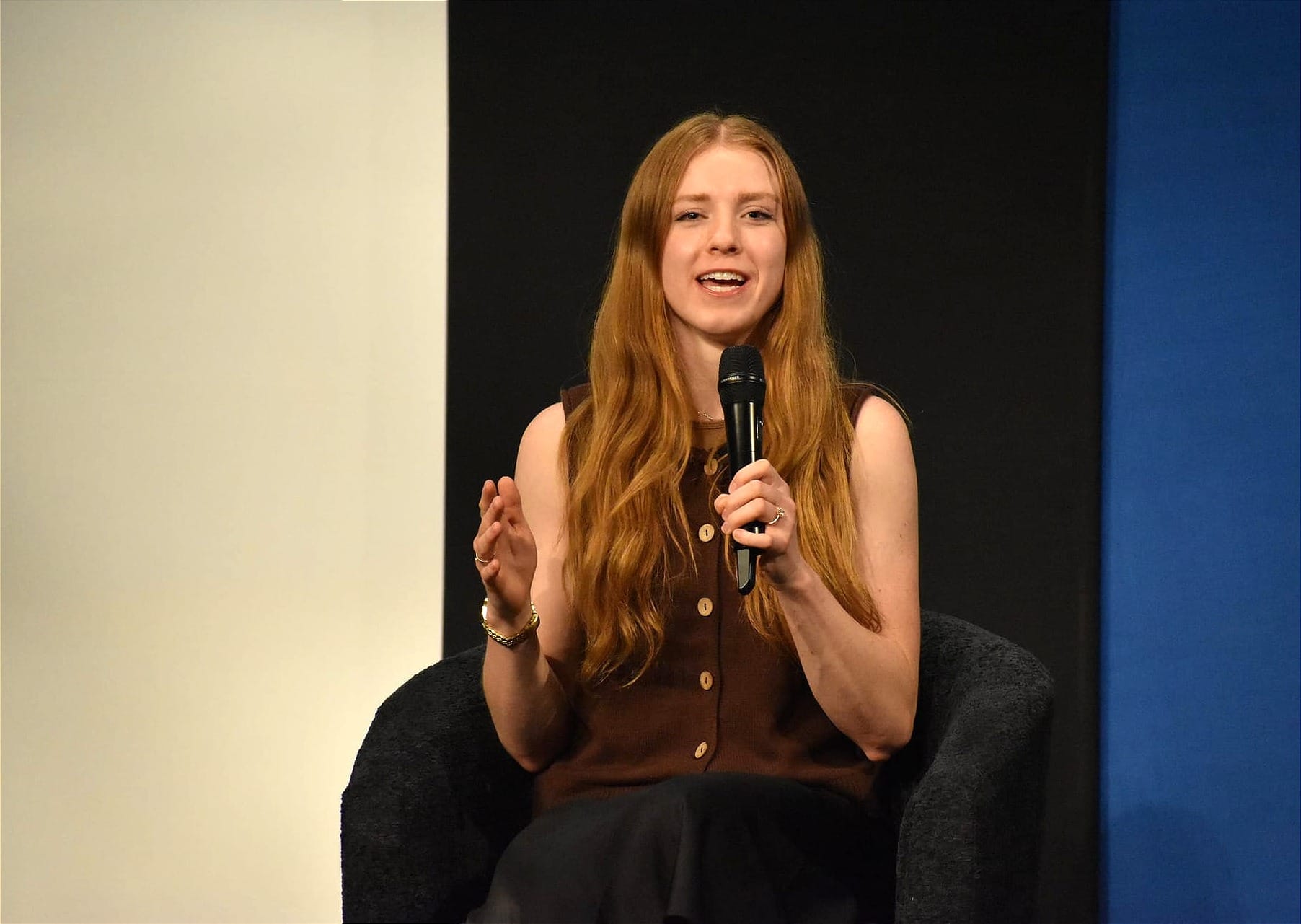
Maggie Haas, associate data scientist at Domo, walked through a baby photo curation agent she built for a photography studio client — a tool that evaluates up to 16 images against defined criteria including emotion, framing, and composition, outputs a confidence score for each selection, and produces a dashboard readable by non-technical users. Her real point wasn't baby photos. "I challenge you to think about how you can use this framework in something you're currently doing at work that takes forever and is super tedious," she said. "Because this machine could do it for you."
Clémence Roger, director of content strategy at Safety Chain, a software company serving food and beverage manufacturers, demonstrated Content Chain, an internal AI tool her team built to produce compliant, brand-consistent thought leadership content. The system ingests SME transcripts, applies regulatory and brand review layers, strips AI-generated patterns, and routes drafts through human approval. Result: content that previously took seven days and four people now takes two hours and two. "It doesn't mean we got rid of the other two people," Moss said. "They focus on other parts of the strategy."
Clémence Roger, Director of Content Strategy, SafetyChain Software. Photo: Joseph Jorgensen
Jon Bradshaw, CEO of Codebase and president of AI Utah, demonstrated three live video production workflows that his team uses in production. The first centered on Riverside, the platform his team uses to record and clip podcasts. Bradshaw showed how Riverside's AI analyzes a full-length recording, scores each segment for viral potential, and surfaces the best clips automatically, complete with captions, layout options, and AI-generated thumbnails, all adjustable in seconds. A task that once took a skilled editor a full day now takes minutes, and requires no technical expertise. "Anyone from the CEO to an intern can come through and do this," he said. His team generates tens of millions of views using this workflow. The second demo used Descript to generate an executive avatar video from a single profile photo and a typed script — useful, he noted, for FAQs, internal communications, or any situation where an executive doesn't have time to sit in front of a camera. The third used Runway to animate a still product image into a short video, with the prompt itself written by ChatGPT. Taken together, the three demos made a single point: professional video content is no longer a production resource problem.
Jon Bradshaw, President of Codebase and Founder of AI Utah, takes the stage during the "AI in Action" demo segment at the Women Tech Council's "AI Won't Wait" summit at Thanksgiving Point's Show Barn in Lehi on June 4. Bradshaw walked attendees through three live video production workflows — AI-assisted podcast clipping, executive avatar creation, and product video generation from a single still image — demonstrating that content once requiring a full day of professional editing can now be produced in minutes by anyone on a team. "From the CEO to an intern," he said, "anyone can come through and do this." Photo: Joseph Jorgensen
A Council Built for This Moment
The summit reflects work the Women Tech Council has been doing in Utah for more than 15 years, focused on the economic impact of women in technology from high school to the boardroom. Its She Tech program has reached more than 40,000 high school girls over the past decade. This summer, roughly 70 students launch through the council's internship program, with another 30 on property at Thanksgiving Point as part of a partnership with City Point.
Attendees fill the Show Barn at Thanksgiving Point in Lehi for the Women Tech Council's "AI Won't Wait" Innovation Summit on June 4. The full-house crowd drew executives, engineers, educators, and career re-entrants from across Utah's tech ecosystem. Photo: Joseph Jorgensen
The council's recently completed AI-ready returnship, developed in partnership with Talent Ready Utah, drew 185 participants through a curriculum covering prompt engineering, context engineering, agent building, AI in marketing, and AI in product development. During one product session alone, roughly 30 participants built and shared working applications in real time. The program runs again in the fall.
Women Tech Awards nominations are open now. This year's focus is innovation. Nominations take 30 seconds and require only a name and contact information.
The Takeaway
The summit did not promise a smooth road. Several panelists described real job displacement, real anxiety, and real organizational friction that technology alone won't fix. But the leaders in that room, the ones already measuring AI readiness as a KPI, running internal certification programs, rethinking what open roles actually need to do, aren't waiting for clarity that may never come.
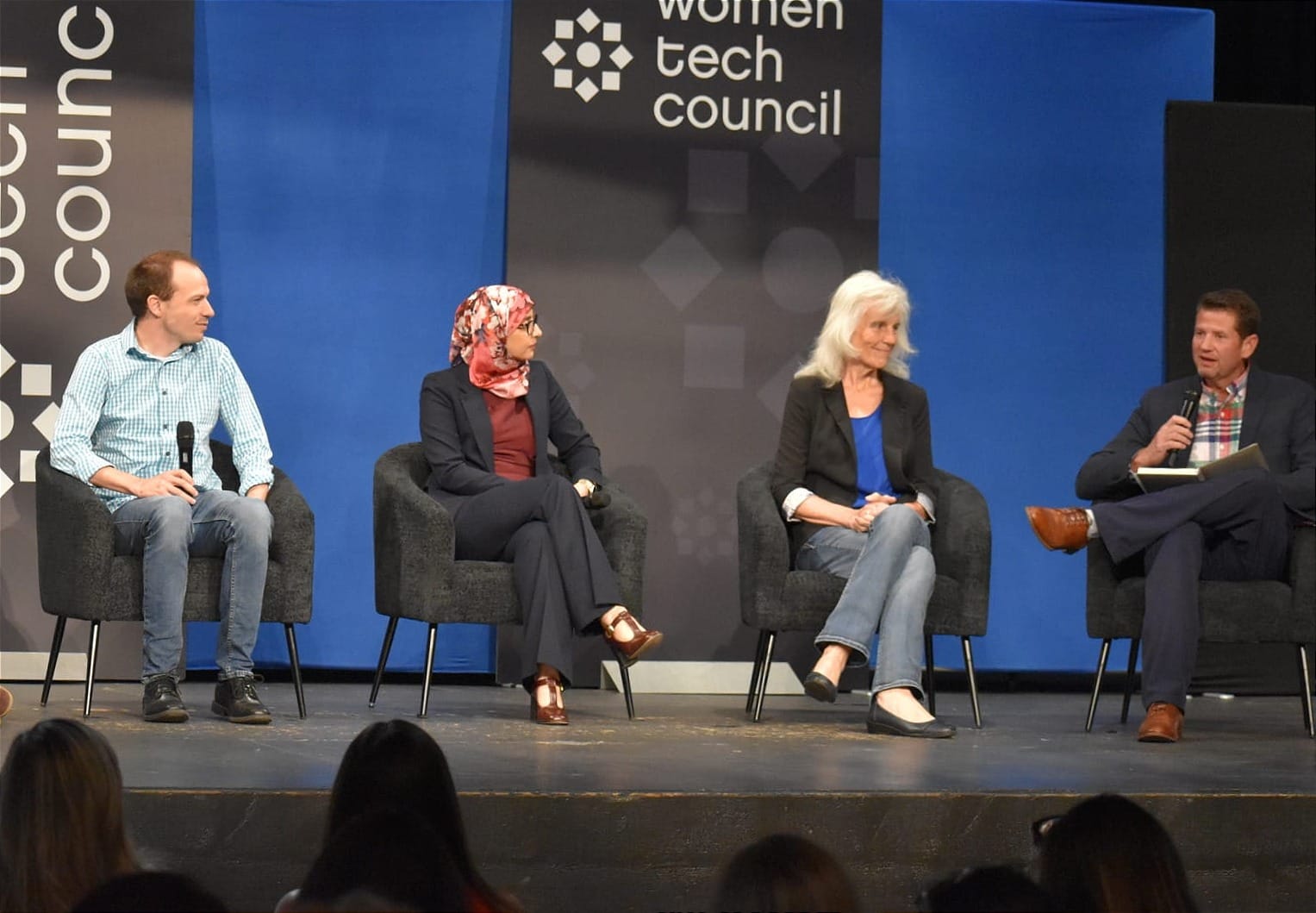
Vic Hockett, Associate Commissioner for Talent Ready Utah speaking at the Women Tech Council's "AI Won't Wait" Innovation Summit at Thanksgiving Point's Show Barn in Lehi on June 4. Next to him (right to left) are Darcy Douglas, VP of AI Center of Excellence at SAP Taulia; Rasha Qudisat, Chief Engagement Officer at UVU; and Jacob Miller, VP of platform intelligence at Pattern
The lightning-round close said it best. When Hockett asked panelists to finish the sentence "In an AI-driven world, people who will win will be the ones who...," the answers stacked up fast: stay deeply human; combine speed with judgment; don't confuse output with impact; build within their organizations an AI-first culture where people feel psychologically safe to experiment; and build and experiment fast while staying focused on their own goals and ideas.
That's the mandate. The tools are already here. The gap is between the people using them intentionally and the people still deciding whether to start.
The Show Barn at Thanksgiving Point in Lehi, Utah, hosted the Women Tech Council's "AI Won't Wait" Innovation Summit on June 4, 2026. The full-day event brought together more than a dozen panels, demos, and keynotes from Utah's tech community — all centered on a single question: how do individuals and organizations close the AI readiness gap before it becomes a talent crisis. Photo: Kinser Studios
Share this article
The link has been copied!
Your link has expired. Please request a new one.
Your link has expired. Please request a new one.
Your link has expired. Please request a new one.
Great! You've successfully signed up.
Great! You've successfully signed up.
Welcome back! You've successfully signed in.
Success! You now have access to additional content.