Pactive Gamifies Fitness with Social Lifting Groups and AI Coaching
Utah startup Pactive is reimagining workout tracking by combining gamification, social accountability and AI coaching. Founded by two BYU graduates, the app aims to solve fitness's biggest challenge: motivating users to return consistently and build lasting habits.
After years of using traditional workout apps, Evan Jensen realized something: nearly all of them were good at recording workouts, but few gave users much reason to return the next day.
Like millions of gym-goers, Jensen had tried the familiar routine. Log the exercises. Record the sets and reps. Track personal records. Watch the charts grow. The technology worked exactly as advertised.
The problem, he says, wasn't tracking workouts. It was sustaining motivation.
"We wondered what would happen if a workout app borrowed more from games than spreadsheets," Jensen said in an interview with TechBuzz.
That question eventually became Pactive, a Utah startup that blends workout tracking with gamification, social accountability and artificial intelligence in an effort to solve what its founders see as the fitness industry's biggest challenge: consistency.
Launched June 21 on iOS and Android, Pactive enters one of the most crowded categories in mobile software. Rather than competing feature-for-feature with established workout trackers, the company is betting that keeping people engaged matters more than adding another graph or exercise database.
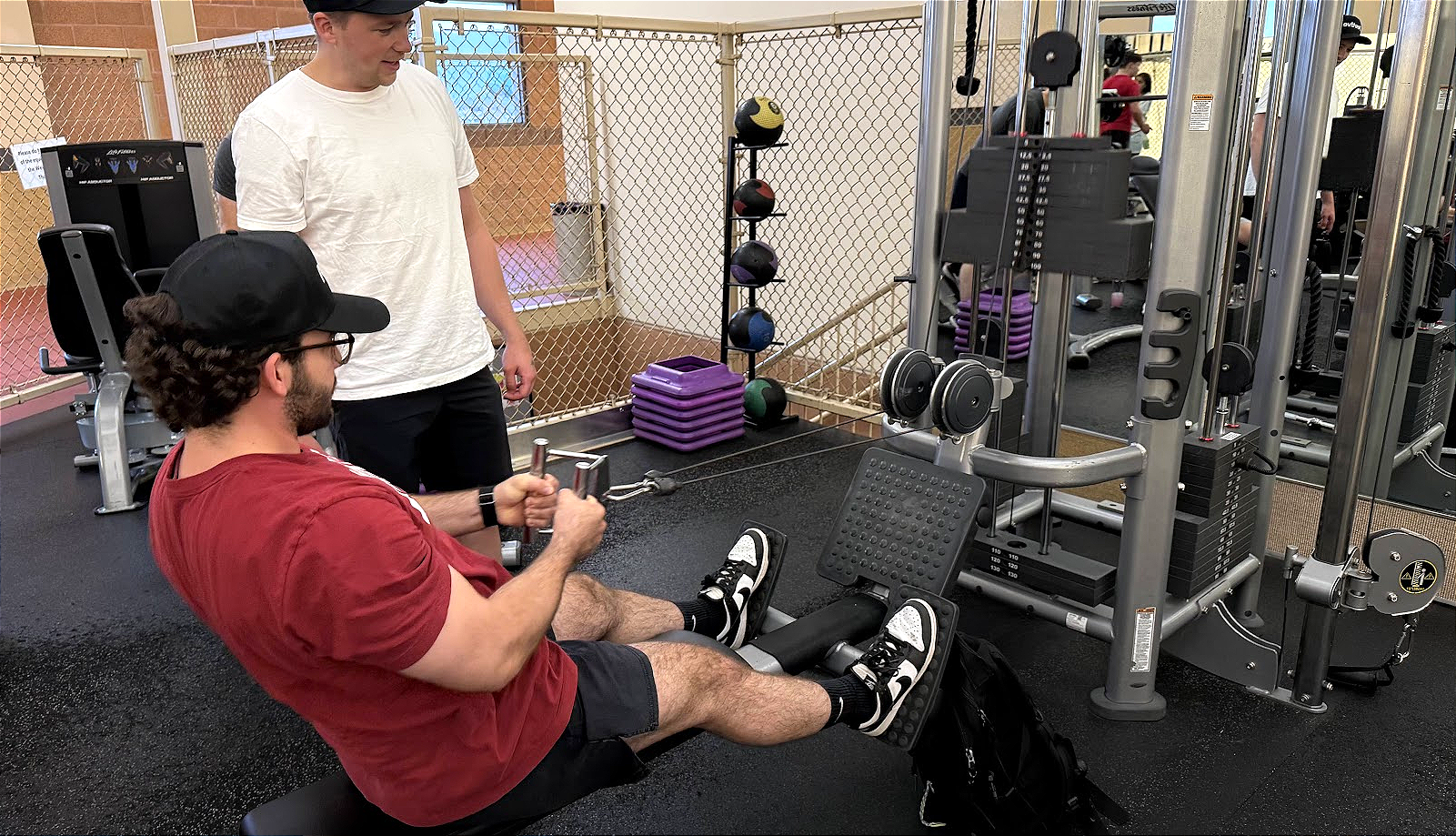
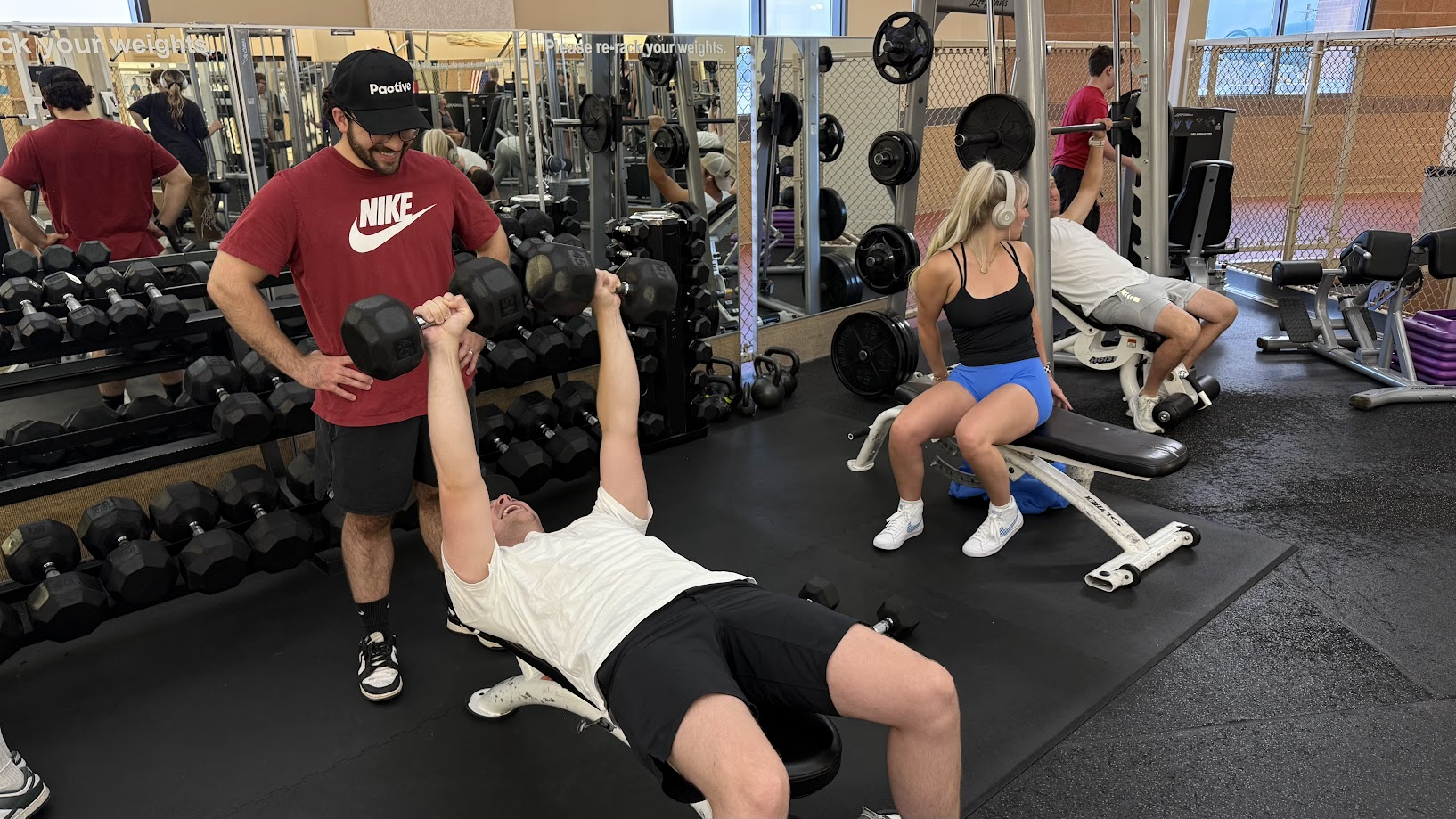
Pactive co-founder Evan Jensen (foreground) demonstrates the app's workout-tracking experience during a training session while co-founder Carter Ferguson looks on. Photo: Evan Jensen
Built after hours
Pactive is the work of co-founders Evan Jensen and Carter Ferguson, both BYU graduates who met while working together in social media before pursuing separate careers.
oday, Jensen serves as a senior category commercial manager for Coca-Cola’s western U.S. operations, overseeing Coca-Cola’s water, sports drink, tea, and coffee brands. Ferguson works in digital marketing at Utah-based HR software company BambooHR.
Building a consumer app wasn't either founder's full-time job.
Instead, Pactive took shape during evenings and weekends while both continued working full-time careers.
That background also influenced the product's design.
Coming from marketing rather than software engineering, Jensen and Ferguson spent considerable time thinking about user behavior and branding before writing code. Ferguson joked that they probably spent more time choosing the company's name than almost any other early decision because they believed a memorable brand would help generate organic growth through word of mouth.
The result was "Pactive," combining the ideas of "pact" and "active," reflecting both commitment and community.
Those ideas ultimately became central to the app itself.
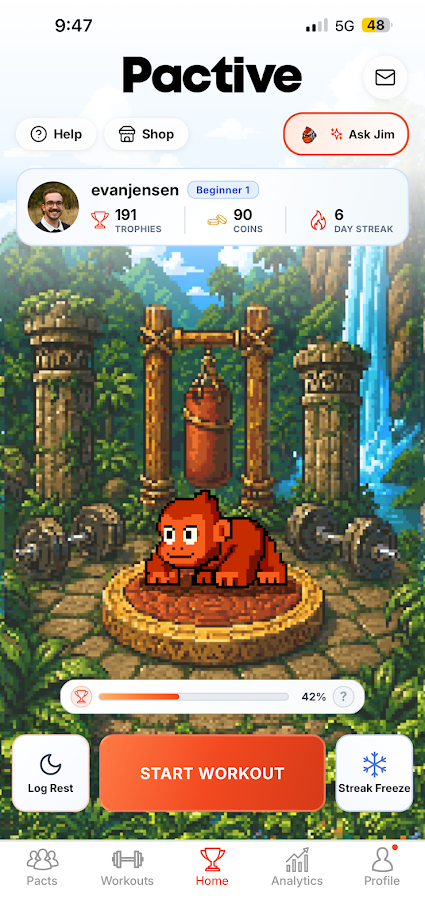
Pactive’s home screen connects workout tracking with gamified progression, allowing users to see their ape companion grow as they stay consistent in the gym.
More than another workout tracker
On its surface, Pactive looks familiar.
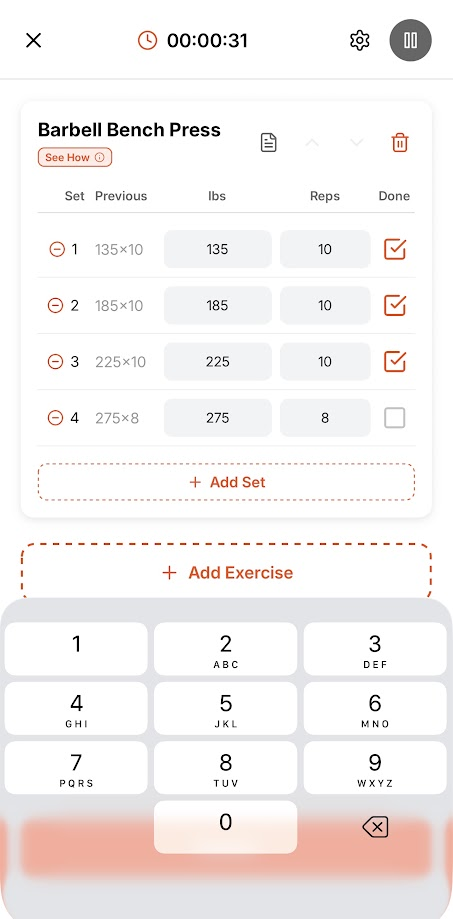
Users build workout routines, log exercises, record weight, sets and repetitions, monitor personal records and review workout history. The app includes an extensive exercise library along with performance analytics showing training volume, muscle group balance and progression over time.
Those features alone would place it alongside dozens of existing workout trackers.
What distinguishes Pactive is everything wrapped around the tracking experience.
Every new user receives a virtual baby ape from the app's mascot, a cyborg gorilla named Jim. Completing workouts earns trophies and experience points that gradually level up the character as users remain consistent.
Jim serves as Pactive’s in-app guide and mascot, helping introduce users to the app’s features while reinforcing the brand’s playful, game-like approach to fitness.
The goal isn't to trivialize fitness, Jensen says, but to reward consistency in a way that traditional workout logs rarely do.
"We saw that there were a lot of workout trackers that were great at getting the job done," he said. "But there wasn't really any reason to come back. There wasn't that motivation factor or that fun factor that kind of makes you want to continue using it."
That philosophy extends throughout the app.
Workout streaks encourage users not to miss training days. Cosmetic rewards and unlockable achievements add game-like progression. Future updates may even include annual summaries similar to Spotify Wrapped, comparing a user's yearly lifting volume to blue whales, elephants or other memorable visual equivalents.
It's a design philosophy more commonly associated with consumer gaming than traditional fitness software.
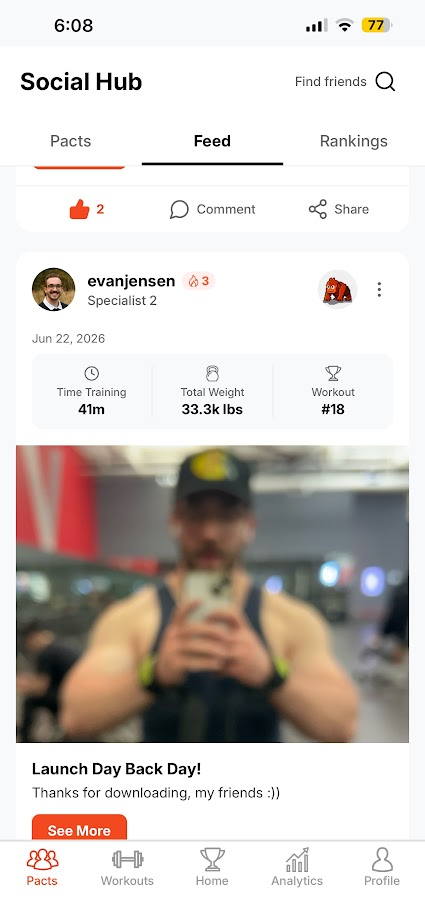
Pactive’s social feed turns logged workouts into shareable posts, helping users celebrate progress, support friends, and stay consistent.
Inspired by Duolingo and Strava
Jensen didn't hesitate when asked about the team's biggest inspirations. "Duolingo and Strava were probably two of our biggest inspirations," he said. The comparison makes sense. Duolingo transformed language learning into a daily habit through streaks, mascots and rewards. Strava built a devoted endurance community around sharing workouts and encouraging friends. Pactive attempts to combine those ideas specifically for strength training.
Rather than viewing motivation as something external, the founders designed nearly every feature to encourage users to return for their next workout. That philosophy also shaped one of the app's most distinctive features.
The power of the Pact
The most compelling part of Pactive isn't the animated ape or the AI coach. It's the social groups known as Pacts.
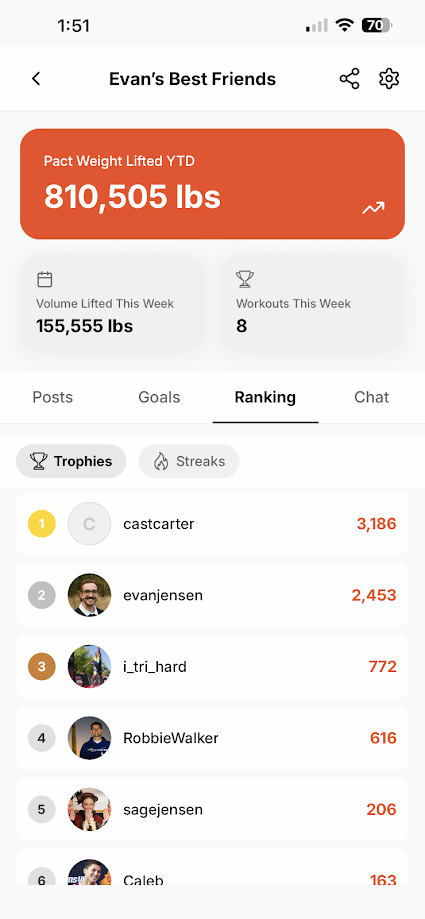
Users can create or join private lifting communities where every completed workout contributes to collective goals. Members can see one another's workouts, comment on progress, celebrate achievements and compare streaks and trophy rankings. Each Pact displays cumulative lifting statistics showing how much weight the entire group has moved together.
Pactive’s Pacts feature helps users and squads set shared workout goals, track progress together, and build accountability through friendly competition.
During a demonstration, Jensen pulled up a group consisting primarily of friends who had helped test the app. Over just a few weeks, the group's combined lifting total had already climbed to hundreds of thousands of pounds.
That number continually grows every time someone completes another workout. Unlike many fitness communities centered on posting photos or transformation pictures, Pacts focus on participation.
Users can open another member's completed workout and examine every exercise, weight, repetition and set. Premium subscribers can even copy another person's workout directly into their own profile with a single tap.
The feature reflects something Ferguson believes many people lose after college. "When you're in college, you're going to the gym every day with your gym bros," he said. "Those days end. Friends move away. People move across the country." Pacts attempt to recreate that accountability digitally.
Friends no longer need to live in the same city—or even train at the same gym—to encourage each other. The social interaction happens inside the app through workout feeds, chat functions, shared goals and collective progress. Instead of asking whether someone exercised today, users can simply see it.
AI as a personal coach
Artificial intelligence has become a common addition to consumer software, but Pactive attempts to connect AI directly to each user's workout history.
The app's AI coach can answer questions using the data users have already logged.
Rather than manually searching through months of workout history, users can ask questions such as when they achieved a particular deadlift personal record or whether their bench press has improved over time.
The AI can also generate customized workout routines based on a user's goals and training history, then automatically load those programs into the workout tracker.
For beginners, that reduces one of the biggest barriers to entering the gym: simply knowing where to start.
Pactive keeps workout tracking simple in the moment, so users can focus on lifting while the app records their progress.
More experienced lifters can use it to review long-term performance trends without digging through spreadsheets or charts.
Some advanced analytics and AI capabilities are available through a $6 monthly premium subscription, while most of the app's core workout tracking remains free.
Encouraging early response
Although Pactive officially launched only weeks ago, the founders say the initial reception has exceeded expectations. Rather than spending months building massive email lists before launch, they chose to release the product quickly and gather feedback from real users.
The company launched with roughly 100 subscribers on its email list. Within hours of release, more than 100 users had downloaded the app. By the end of the first week, that number had roughly doubled.
Most of that growth, Jensen said, came through word of mouth rather than paid advertising.
The app has also accumulated early five-star reviews on Apple's App Store, though it remains far too early to know whether the product's gamification strategy will translate into long-term retention.
That question may ultimately determine whether Pactive succeeds.
Many fitness apps attract enthusiastic downloads only to see users abandon them weeks later. Pactive's founders acknowledge that challenge.
Their goal isn't simply attracting downloads. It's convincing people to keep showing up.
What's next
The founders have already begun refining onboarding, expanding community features and improving the overall user experience based on early feedback. Future updates include richer annual summaries and additional social features designed to reinforce long-term habits.
Whether Pactive ultimately becomes the next breakout fitness platform remains to be seen. The market is intensely competitive, with established names commanding millions of users. Yet Jensen argues that most competitors continue solving the same problem—recording workouts—while overlooking the harder question of why people stop exercising in the first place.
If Pactive succeeds, it may be because it approached the challenge from a different direction. Instead of asking how to build a better workout log, the founders asked how to give people a reason to come back tomorrow.
For anyone who has watched an exercise routine fade after the initial burst of enthusiasm, that may be the more important innovation.
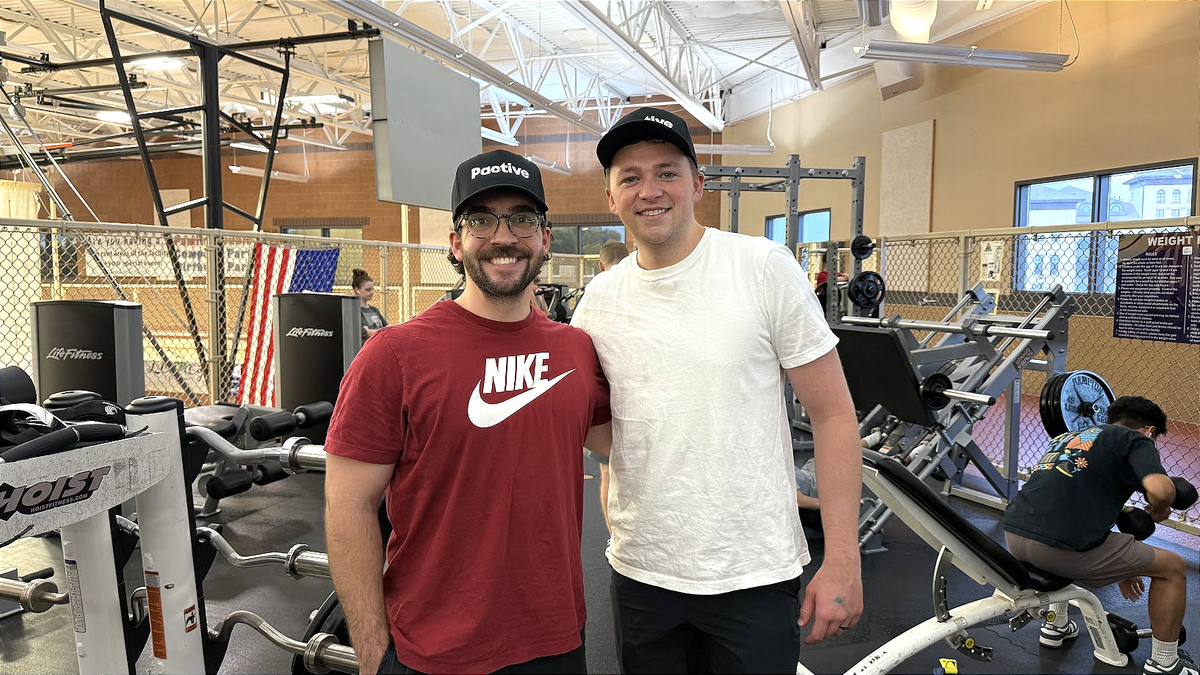
Pactive co-founders Carter and Evan are building the app from firsthand gym experience, with the goal of making workout tracking more fun, social, and consistent.
Pactive is available as a free download for iOS and Android. Learn more at Pactive.com.
Share this article
The link has been copied!
Your link has expired. Please request a new one.
Your link has expired. Please request a new one.
Your link has expired. Please request a new one.
Great! You've successfully signed up.
Great! You've successfully signed up.
Welcome back! You've successfully signed in.
Success! You now have access to additional content.