PassiveLogic's Next Act: Former Siemens CTO, Thomas Kiessling, Takes the Helm as Autonomous Buildings Move Toward Reality
New PassiveLogic CEO Thomas Kiessling discusses the Salt Lake City company's Level 3 autonomy launch, real-world energy savings of 10% to 40%, and plans for data centers and warehouses, framed against TechBuzz's coverage of the company since 2021.
Five years ago, PassiveLogic Co-Founder and CEO Troy Harvey was trying to persuade skeptical investors that buildings could someday operate like autonomous robots. The vision was ambitious, but difficult to explain at a time when artificial intelligence was still largely associated with software.
Today, the Salt Lake City company is entering a markedly different chapter. With former Siemens Smart Infrastructure CTO Thomas Kiessling taking the helm as CEO, strategic backing from Nvidia, Johnson Controls, Brookfield and Prologis, and the launch of what PassiveLogic says is the industry's first Level 3 autonomous operating system for commercial buildings, the conversation has shifted from whether autonomous infrastructure is possible to how quickly it can scale.
This week that argument reached a new milestone: today the company launched full Level 3 autonomy, extending its platform into warehouses and data centers across the U.S. and Europe.
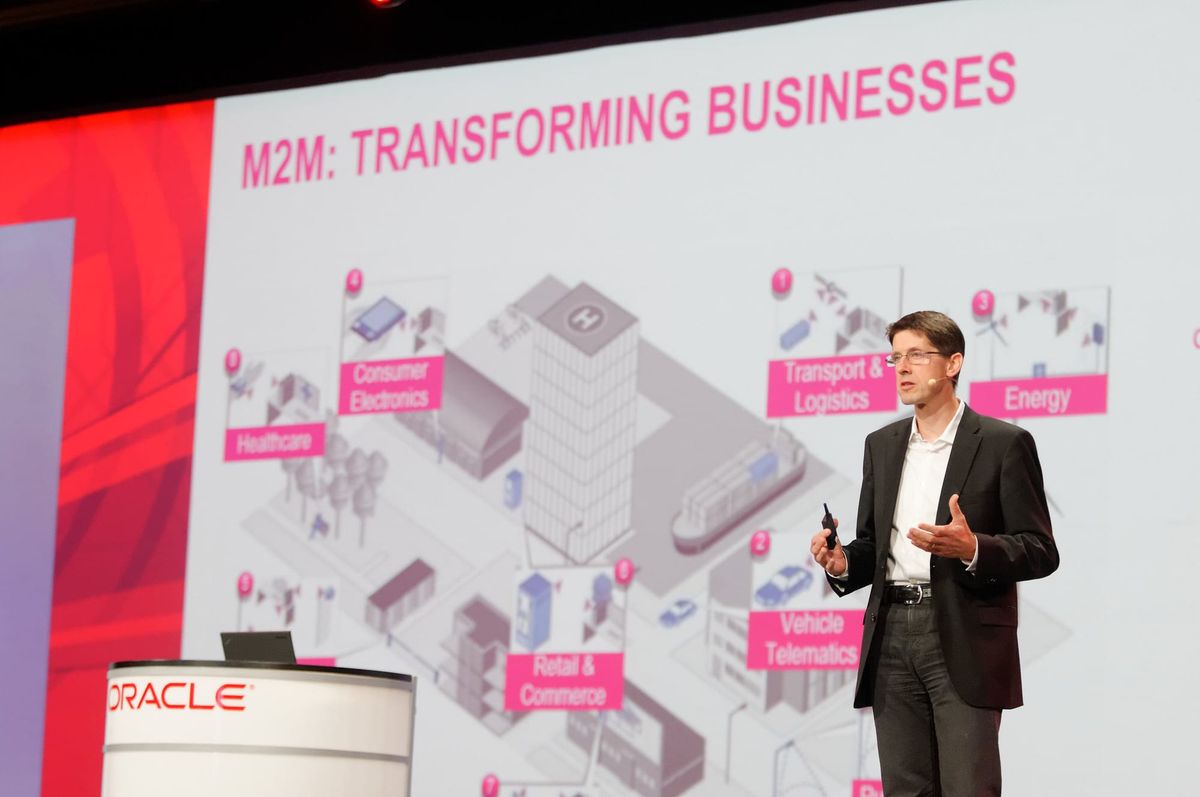
Thomas Kiessling, CEO, PassiveLogic
Thomas Kiessling, former Chief Technology Officer of Siemens Smart Infrastructure, has recently joined PassiveLogic to lead its next phase of commercial growth, stepping into the role built by co-founder Troy Harvey. TechBuzz has followed PassiveLogic since 2021, from its Series A days as a Holladay-based startup pitching a skeptical Sand Hill Road to its current position backed by NVIDIA, Prologis, Brookfield, and Johnson Controls. Kiessling spoke with TechBuzz by phone from Amsterdam, following a week of customer site visits in Germany and the Netherlands, in his first interview since taking the role.
From "Blank Stares" to a $125 Million War Chest
When TechBuzz first profiled PassiveLogic in 2021, Harvey described pitching investors on Sand Hill Road who met the idea of "smart buildings" with blank stares, despite buildings and their surrounding ecosystem representing roughly 20% of world GDP. At the time, the Holladay-based company had raised $16 million and was still working through its Series A.
That skepticism gave way over the following four years to a steady sequence of raises TechBuzz has tracked along the way: a $34 million Series B in January 2022 led by Addition and Keyframe Capital Partners, followed that September by a $15 million strategic investment from NVIDIA's venture arm, NVentures. In late 2023, PassiveLogic came out of a multi-year buildout to launch its full commercial platform, including the Hive edge controller and its Quantum physics-based digital twin standard, alongside a proprietary AI compiler the company said trained models 322 times faster than TensorFlow. By September 2025, the company closed a $74 million Series C led by noa (London), Europe's largest built-world venture firm, with new participation from Prologis Ventures (San Francisco), Johnson Controls (Glendale, WI), and PSP Growth (Chicago), joining existing backers Addition, NVentures, Keyframe, and Brookfield. That round pushed PassiveLogic's total funding of $125 million.
Kiessling's arrival, announced alongside the Level 3 autonomy launch, marks the first time in the company's history that someone other than Harvey has held the CEO title.
While in 2021 Harvey effectively summed up the situation with investors as: "We're building something the market doesn't yet understand."
And now, Kiessling is saying, "The market is finally ready."
Why Kiessling Left Siemens
Kiessling brings three decades of experience in global technology and industrial leadership, including helping shape Siemens' industrial AI strategy and leading development of Building X, the company's cloud-based digital building platform. He also co-founded AMPLY Power, an EV fleet charging-as-a-service company later acquired by BP, and spent 15 years in academia earlier in his career working on control systems, holding a Ph.D. in operations research.
He said he had been watching PassiveLogic from inside Siemens for years, drawn by what he described as the only company to have built a complete vertical stack, from design tools down to edge hardware, for bringing autonomy to commercial and industrial buildings. While he valued the breadth of Siemens' horizontal portfolio, he said no other company matched the depth of PassiveLogic's approach to the built environment.
What Level 3 Autonomy Actually Means
PassiveLogic frames most existing building management systems as Level 0: control logic hard-coded by programmers into individual controllers, reacting to single sensor thresholds without any awareness of the building as a whole. Kiessling said that approach produces inefficiencies, such as heating and cooling running simultaneously in the same building, because no single system understands the building's overall state — the same "giant stationary robot" framing Harvey used when describing the company's vision back in 2021 and again during the 2022 Series B round.
Level 3 autonomy replaces that with continuous simulation of a building's thermodynamics, powered by what the company now calls its Grounded World Model (GWM), built on the Quantum ontology first introduced publicly in 2023. Rather than triggering an action from a single data point, the system models factors such as sun exposure and open doors to calculate the energy needed to maintain comfort in real time. Kiessling described the effect as turning a building into a robot that senses its environment, reasons about it, and takes action, coordinated across thousands of sensors and pieces of equipment.
According to PassiveLogic, the new capability runs on NVIDIA edge hardware and is designed to be traceable and trainable rather than an opaque black box. The company plans to extend the platform later this year with edge-based learning and longer prediction horizons.
"Today, buildings around the world are undergoing a fundamental shift, from operational liabilities to active contributors, functioning as part of the workforce," Kiessling said in the company's July 8 announcement. "We've moved autonomy from theory into deployment in live environments, something the industry has anticipated for years."
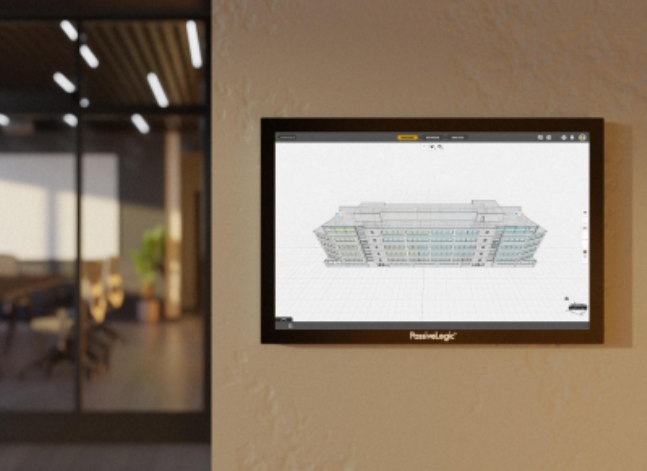
A digital twin of a commercial building rendered on PassiveLogic's platform. Kiessling said the model amounts to far more than a single sensor triggering a single action — it's "a simulation of the thermodynamics of the whole building," continuously calculating what a space needs to stay comfortable as conditions change. Photo: PassiveLogic
Energy Savings: A Wide Range, Depending on the Starting Point
PassiveLogic's public energy-savings claim has climbed over the years TechBuzz has covered it — from 30% in early pilot data cited during the 2022 Series B round, to a current claim of up to 27% in real-world deployments, with a stated potential to cut total U.S. energy consumption by 120 terawatt-hours annually if adopted broadly. Kiessling, in the interview, described a somewhat wider real-world range: roughly 10% to 40%, depending heavily on how well a building's existing systems were maintained before PassiveLogic's platform was installed.
He pointed to a five-day site visit with one of PassiveLogic's largest customers, a European real estate company with roughly 400 properties spanning offices, mixed-use retail centers, and hotels, as representative of that range. Buildings with a well-tuned, expensively engineered conventional building management system tend to see savings closer to 10% to 15%, he said. But he estimated that more than half of the properties he has visited across his career are not maintained to that standard, and in those buildings, PassiveLogic has measured 30% to 40% reductions.
Kiessling described two distinct sources of savings. The first is direct: lower heating, cooling, and electricity use to maintain the same comfort level. The second is what he called flexibility services, in which the system's real-time thermodynamic model allows a building to respond to grid signals, such as a utility request to shed 50 to 100 kilowatts during a peak period, without additional custom programming. He said that capability helps utilities avoid costly substation upgrades, aggregating relatively modest reductions across a cluster of buildings in a single district to defer millions of dollars in grid infrastructure investment.
Extending the Model to Data Centers
Asked about the surge in electricity demand from data centers, Kiessling said PassiveLogic applies the same underlying physics-based approach, adapted to a much higher energy density. The company's role centers on the HVAC systems around server racks: managing the interaction between liquid cooling at the chip level and airflow throughout the facility. He noted that a standard rack today draws roughly 50 kilowatts of peak power, while some of NVIDIA's newest AI factory designs call for 600 kilowatts per rack, with discussion of megawatt-scale racks on the horizon. Data center control, he said, requires reaction times measured in seconds or milliseconds — a demand the same digital-twin approach used in commercial buildings is designed to meet.
Investors as Deployment Partners
Kiessling described each of PassiveLogic's investors as playing a distinct operational role beyond capital. Brookfield, he said, is becoming an operating partner, working building by building across its real estate portfolio. Johnson Controls, as one of the largest HVAC service providers in the U.S., is positioned to become an indirect sales and deployment channel, since Kiessling said a conventional building management system is only cost-effective for roughly 20% of the market today. Prologis, meanwhile, is helping PassiveLogic extend into warehouse space that has historically gone unmonitored, since conditioning only the office portion of a warehouse never justified the cost of a full system.
Why Fewer Than 5% of Buildings Are "Smart"
PassiveLogic's own materials note that commercial and industrial buildings account for close to 40% of global energy use, yet fewer than 5% operate as genuinely intelligent, connected assets. Kiessling attributed the reason why this gap will now finally be closed to five overlapping trends: structurally rising energy prices; the recent arrival of edge computing hardware powerful enough to run a full building's worth of sensor data, driven in large part by NVIDIA's push into edge AI; fragmented design and engineering tools that don't share a common data model; and a persistent labor shortage in facility management, a field he said is dominated by workers nearing retirement with few replacements entering it.
He argued that automation in this case does not displace facility managers so much as extend their reach, allowing one manager to oversee dozens of buildings instead of one or two, and reframing the job around higher-level, digitally assisted decision-making rather than manually locating undocumented equipment in a basement.
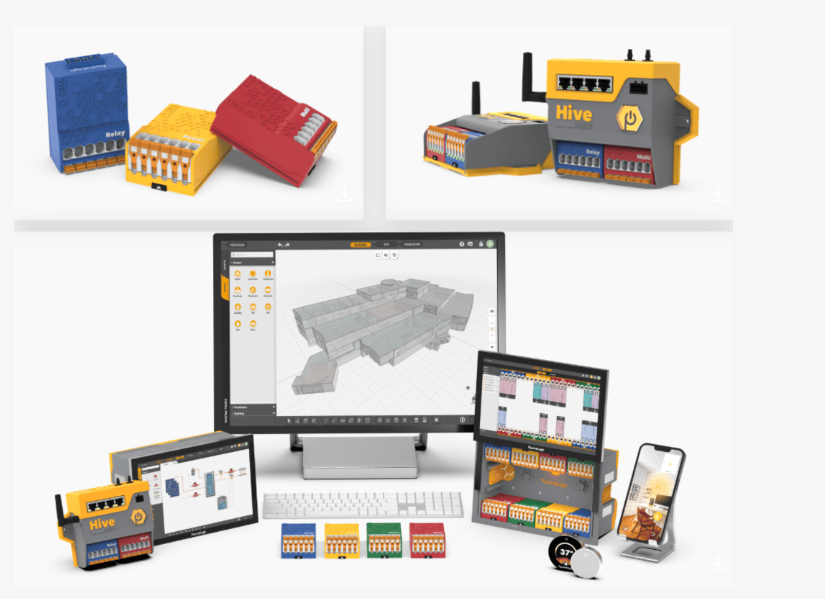
PassiveLogic's Hive hardware — edge controllers and relay modules — paired with the company's design and monitoring software. Kiessling said edge computing power that simply didn't exist a decade ago now lets a single device run "a complex robot with many domains" and thousands of sensors, a shift he pointed to as one of the main reasons building autonomy has only recently become commercially viable. Photo PassiveLogic.
What's Next: Warehouse Robotics and a Utah Connection
Kiessling said PassiveLogic is watching, though not yet actively pursuing, adjacent applications of its autonomy platform, including a scenario discussed with Prologis in which warehouse robots would rely on PassiveLogic's building digital twin for spatial awareness, distinguishing safe paths from restricted zones and human-occupied areas. He compared the underlying control approach, model predictive control, to methods used in rocket guidance and autonomous vehicles.
Looking ahead, Kiessling framed the stakes in broader terms. "The next decade will see Physical AI embedded into every major infrastructure system on Earth," he said. "The winners will be companies that can combine intelligence, autonomy, and real-world outcomes at scale. PassiveLogic has built the foundational platform for the built world to make that future possible, unlocking infrastructural robotics that will improve productivity, uplevel safety, and reduce emissions."
PassiveLogic, based in Sandy, Utah, is the creator of the world's first autonomous infrastructure platform. By combining Physical AI, the PassiveLogic world model, autonomous control, and a vertically integrated technology stack, PassiveLogic enables infrastructure to operate as intelligent, self-managing systems that continuously optimize performance, energy consumption, resilience, and human experience. The company's mission is to democratize engineering and accelerate the transition to a more intelligent, sustainable, and autonomous built world. The company is backed by leading investors including NVentures, Prologis Ventures, Addition, Johnson Controls, noa, Brookfield Growth, G2 Venture Partners, and Keyframe Capital. Thomas Kiessling announced he is PassiveLogic's new CEO this week on LinkedIn.