Utah's Uranium Revival Is Rebuilding More Than Mines — It's Restoring an Industry
Anfield Energy is reopening Velvet-Wood, an underground uranium-vanadium mine near La Sal, Utah, next door to Copper One, ahead of an August legislative tour reviving expertise uranium mining lost decades.
Utah's uranium industry isn't simply making a comeback. It is rebuilding an ecosystem that largely disappeared for more than two decades.
At Anfield Energy's Velvet-Wood uranium-vanadium project in southeastern Utah, crews are preparing a historic underground mine for production while regulators, mining engineers and industry veterans collectively rebuild the expertise needed to revive one of America's most strategically important energy sectors.
That broader story will be on display August 12, when approximately 20 members of the Utah Legislature visit Velvet-Wood as part of a Utah Division of Oil, Gas and Mining (DOGM) educational tour highlighting critical minerals development across the region. Velvet-Wood is one stop on a multi-site itinerary. Legislators are expected to visit several mines and facilities in the area, including Energy Fuels' operations nearby, before heading back to Salt Lake City the same day.
For Anfield Energy Co-Founder and CEO Corey Dias, however, the legislative visit represents more than an opportunity to showcase construction progress. Dias sat down this week with Techbuzz. He said the visit is a chance to demonstrate how modern mining differs from the public perception many people still associate with uranium production, and how it differs from the mine literally on the other side of the mountain.
Corey Dias, Co-Founder and CEO, Anfield Energy
A mountain apart: two very different models of "modern mining"
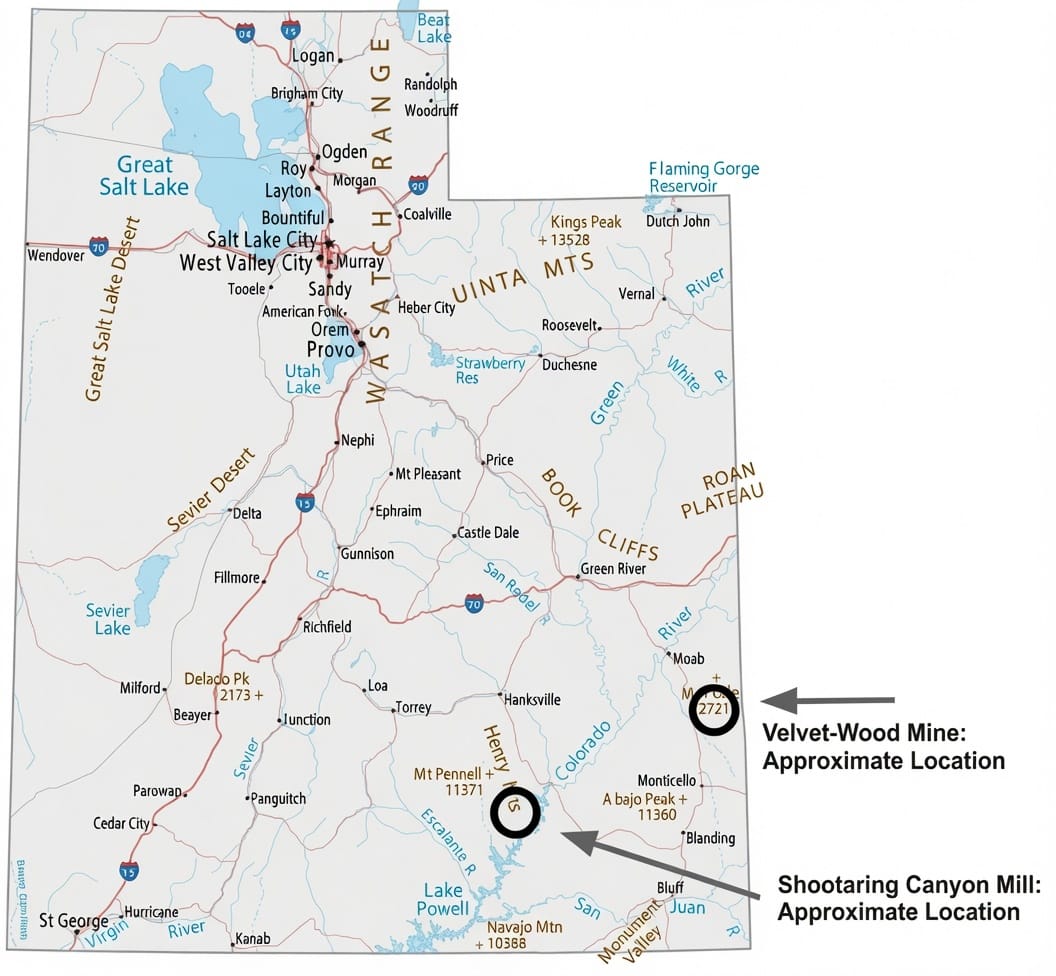
Velvet-Wood is located approximately 10 miles south of La Sal, Utah, in the Lisbon Valley — practically next door to Copper One, some five miles distant —the Mariana Minerals open-pit copper mine that TechBuzzcovered in April as the world's first mine running AI-driven autonomy across mining, refining and capital-project execution simultaneously. The two projects are, in Dias's telling, near-opposite answers to the same question: how does the U.S. rebuild domestic mineral production fast enough to matter?
Where Copper One restarted with a ceremonial blast, drone-choreographed autonomous haul trucks and a nine-figure venture-capital raise, Velvet-Wood is a quieter operation. It is a previously producing underground mine being reopened with minimal new surface disturbance. But Dias said his team has been paying close attention to what's happening one ridge over.
"We've had conversations with a couple of the principals over at Copper One," Dias said. "The most interesting thing for us is the automation side." Anfield is still early in evaluating autonomous equipment across its own portfolio, he said, but the company sees a clear opportunity to reduce underground worker-safety risk and increase material throughput using the same category of technology Copper One has deployed at scale.
"In order to understand what we're doing, you have to be there," Dias said of the upcoming tour. He wants legislators to see the mine's small footprint firsthand, something he said is hard to convey in a report or a presentation in Salt Lake City. "It's a small underground mine, and seeing how little impact there is at the surface is an important takeaway."
Unlike Copper One's large open pit, Velvet-Wood is a previously producing underground mine that generated approximately 4 million pounds of uranium and 5 million pounds of vanadium before closing decades ago. Rather than exploring for new deposits, Anfield is rehabilitating existing underground workings, restoring access to known mineral resources with what the company says is a far smaller surface footprint than a comparable open-pit operation.
Construction is now focused on preparing the mine for production by the end of 2026. One of the largest engineering challenges is dewatering underground workings that have filled with water during more than 40 years of inactivity.
Instead of simply pumping the water away, Anfield is constructing a treatment system that will allow much of it to be reused underground and for dust suppression, reducing the project's demand for additional water resources.
"We're building a plant right now to treat that water as we pump it out of the mine," Dias said. "We'll be reusing that water both underground and for dust suppression."
Rebuilding an industry — and the people who run it
Perhaps the most surprising aspect of Utah's uranium revival is that it extends well beyond mining.
Dias said decades of limited domestic uranium production created a gap in institutional knowledge throughout both industry and government. Many veteran uranium engineers retired as the industry contracted, while universities produced fewer graduates specializing in the field. State regulators, meanwhile, are processing applications for facilities unlike any they have licensed in years.
"The old heads who've been in the sector for years have moved on," Dias said. "There's been a gap of probably 20 years or longer."
That experience gap has created an unusual dynamic in which companies, regulators and engineering consultants are collectively rebuilding expertise as the industry returns. Anfield's own leadership reflects the divide: COO Doug Beahm, a Colorado School of Mines-trained engineer, brings 50 years of experience in mine and mill development, environmental permitting and reclamation — the kind of institutional memory Dias said has largely vanished from the sector. Dias, by contrast, came to uranium from equity research: 20 years in capital markets, including a stint as an institutional equity analyst at CIBC and later at Fortress Investment Group, before co-founding Anfield.
Beahm is also the principal of BRS Inc., the engineering and environmental consulting firm based in Riverton, Wyoming that Anfield has worked with for roughly 12 years and formally brought in-house around May 2026. Dias referred to the "acquisition" in describing how the company added reclamation and permitting expertise. BRS has done extensive geomorphic reclamation work on Wyoming's abandoned uranium mine program, and its involvement has helped Anfield navigate Utah's licensing process for both Velvet-Wood and Shootaring Canyon. Anfield's chairman, Ken Mushinski, adds another layer of institutional knowledge: 33 years at General Atomics and its subsidiaries, including stints leading uranium producer Quasar Resources and uranium developer Cotter Corporation.
A strategic processing advantage
While Velvet-Wood has attracted considerable attention, Dias believes one of Anfield's greatest strategic assets is its mill.
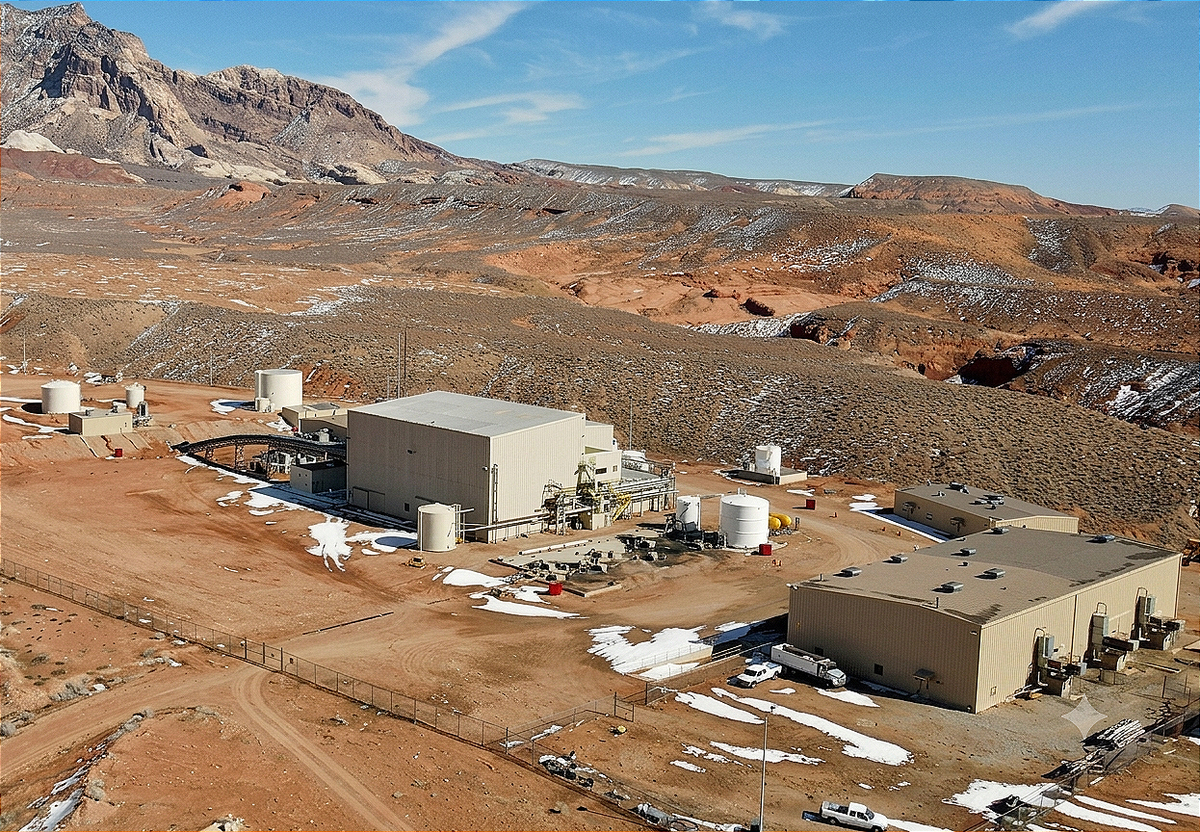
The company's Shootaring Canyon Mill, located in Garfield County, southeastern Utah, approximately 48 miles south of Hanksville and near Ticaboo, is one of only three licensed, permitted and constructed conventional uranium mills in the United States. The others are Energy Fuels' White Mesa Mill situated north of Bluff, Utah and Uranium Energy Corporation's Sweetwater Mill that sits in Sweetwater County, Wyoming's Great Divide Basin — about 40 miles northwest of Rawlins — where the 3,000-ton-per-day mill has been on care and maintenance since it briefly operated in the early 1980s, before UEC acquired it from Rio Tinto in December 2024. This positions Shootaring Canyon Mill as a rare and valuable infrastructure asset amid growing demand for domestic uranium production to support nuclear energy needs.
The mill was originally licensed and constructed by Plateau Resources in the late 1970s/early 1980s. It was built in 1980 and commenced operations in 1982 as a conventional acid-leach facility. Due to a sharp decline in uranium prices, it operated for only about six months before entering standby status. During this brief period, it produced and sold approximately 27,825 pounds of U₃O₈ (yellowcake).
Ownership transitioned over the years, including to U.S. Energy Corp. and then Uranium One, which acquired it around 2007. Uranium One, originally a Canadian public company, in stages between 2009 and 2013, became part of Russia's state-owned nuclear company Rosatom, under Rosatom's Uranium One Group. This made Uranium One responsible for much of Rosatom's uranium production outside Russia, with operations in several countries including the U.S., Kazakhstan, and others. During this time, Uranium One's mining operations focused primarily on in-situ leach (ISL) methods, maintained the facility in care and maintenance without advancing conventional operations.
Anfield acquired Shootaring Canyon Mill from Uranium One in 2015, an acquisition giving the company control of one of only three licensed, permitted and constructed conventional uranium mills in the United States. Once operational, Shootaring Canyon will process ore from Velvet-Wood and Anfield's broader portfolio, which spans 25 mines across the Four Corners region, under what the company describes as a hub-and-spoke strategy.
Dias said Anfield is working with Utah regulators to transition the mill's radioactive materials license from standby status back to active operations. The company expects a decision by the end of 2026 or early 2027.
"There's not a risk of will we get a license or will we not get a license," Dias noted. "It's just a question of the state understanding our plans for both operations and ultimately decommissioning of the mill."
The scarcity of conventional uranium processing facilities has become increasingly significant as federal policymakers seek to strengthen domestic nuclear fuel production and reduce reliance on imported uranium.
Technology's next frontier — underground
Although Velvet-Wood is being developed using conventional underground mining techniques, Dias said emerging automation technologies are likely to play a larger role across Anfield's broader 25-mine portfolio over time, with Copper One's automation playbook, just up the road, offering a real-world testing ground to watch.
"We'd like to look at the ability to reduce worker safety risk and potentially increase material throughput," Dias said.
Beyond uranium
Velvet-Wood also produces vanadium, another federally designated critical mineral that could become increasingly valuable as long-duration energy storage technologies mature. Across its full portfolio, Anfield holds roughly 100 million pounds of vanadium resources.
Traditionally used to strengthen steel, vanadium is also a key component in vanadium redox flow batteries capable of storing renewable energy generated by wind and solar installations. Dias believes those grid-scale batteries could complement nuclear energy and renewable generation as utilities seek reliable, around-the-clock electricity.
"If we're part of that market," he said, "that would be pretty incredible."
A rural economic catalyst
The project is also expected to provide new economic activity in San Juan County through local hiring, equipment purchases and contracting opportunities, echoing the same rural-revitalization argument Governor Cox and other Utah officials made at Copper One's restart in April.
Dias said Anfield has deliberately sought Utah suppliers whenever practical, including underground haul trucks from Young's Machine Company, a multigenerational family-owned business in Monticello, Utah, emphasizing that the benefits of mining extend beyond direct employment.
"We spend our money locally because we want to help develop the local economy," he said.
For lawmakers visiting Velvet-Wood next month, those economic impacts will be part of the discussion. But the broader takeaway may be that Utah's uranium industry is no longer simply reopening old mines. It is rebuilding the engineers, regulators, infrastructure and supply chains needed to restore a domestic critical minerals industry that had largely faded from the American landscape, one ridge over from where Utah just restarted an existing copper mine with an entirely different playbook.