Utah's Life Sciences Export Is Time: Inside the First BioHive Premieres
At Utah's first BioHive Premieres, life sciences leaders from Huntsman, Recursion, BioFire Defense and Seek Labs pitched ways to shorten the time between threat and answer, from one-hour fever tests to AI-driven drug discovery.
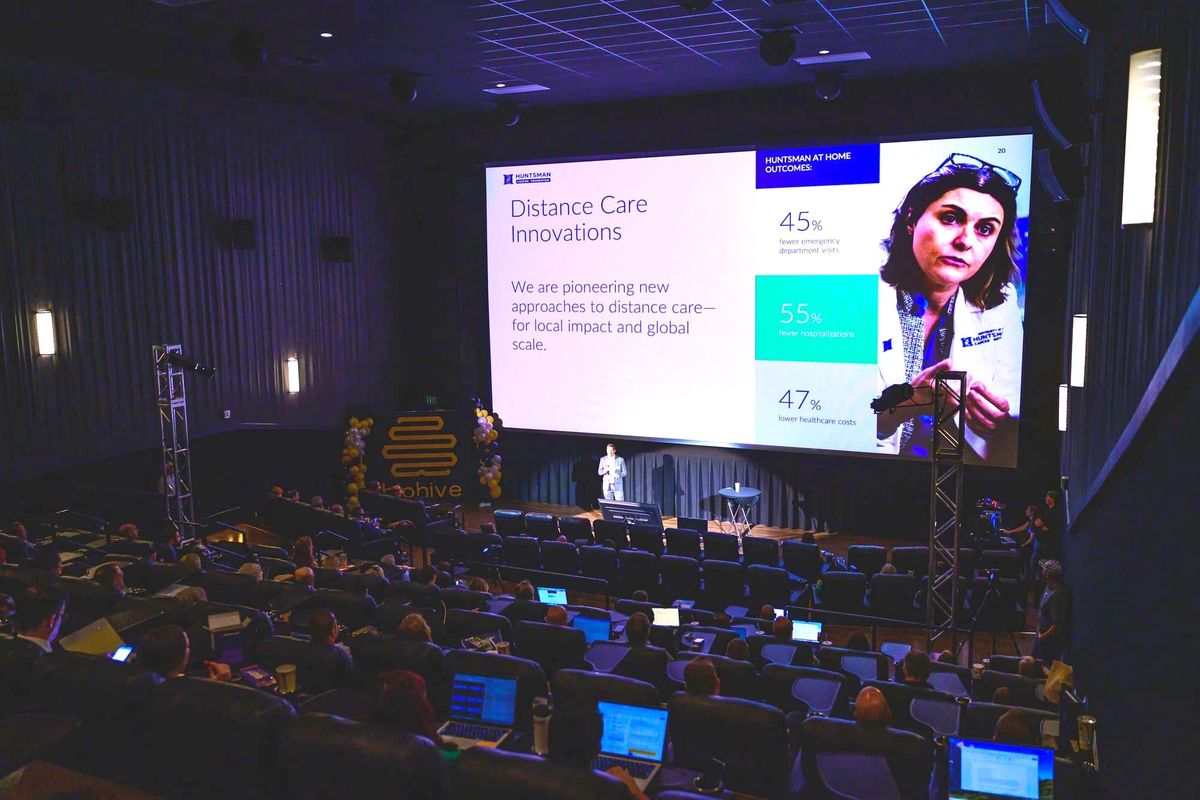
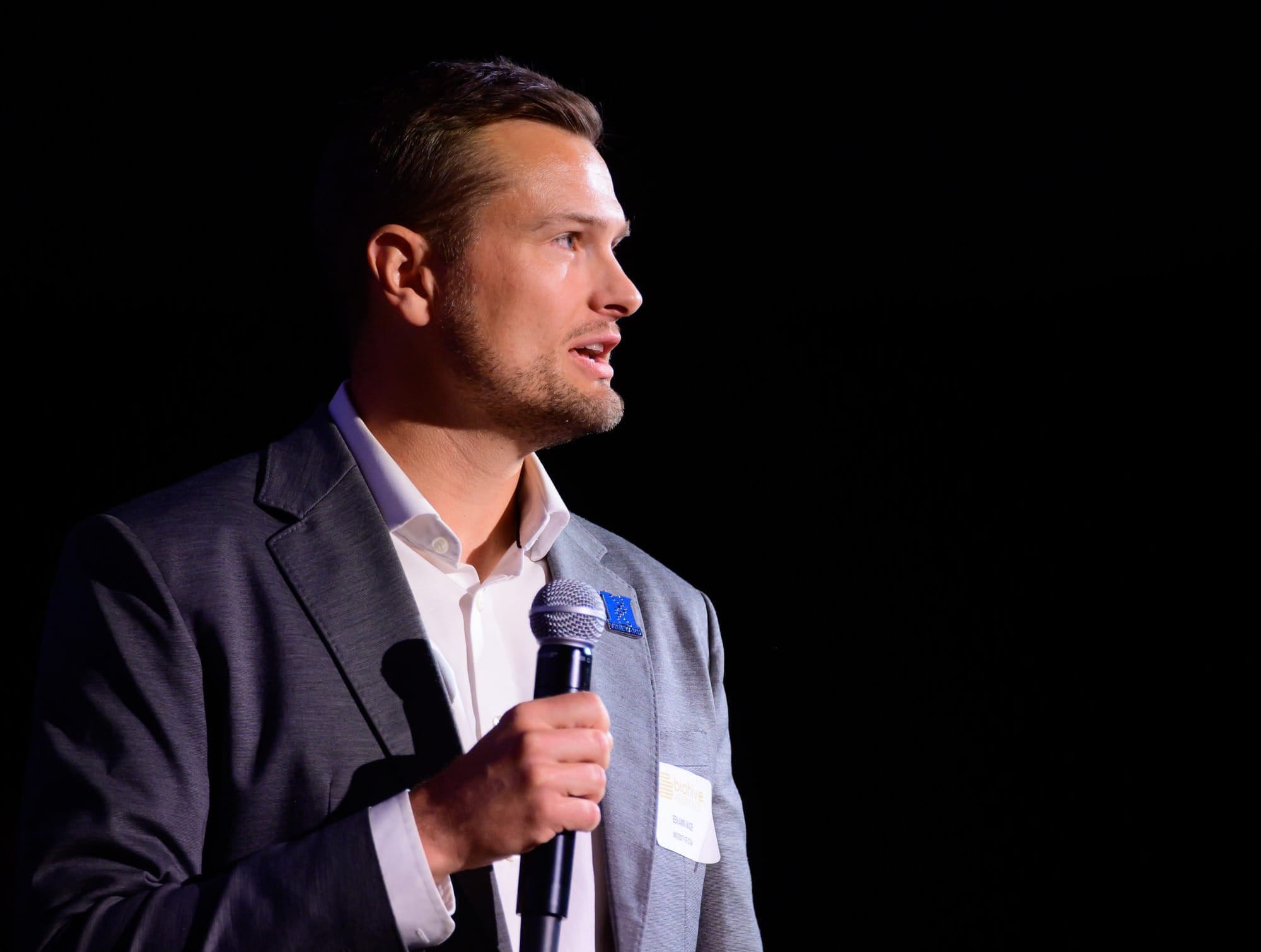
Ben Wade, Associate Executive Director, Vineyard Campus, Huntsman Cancer Institute, presenting plans for the new Vineyard campus whose community health priorities include early detection, health education, community connection and holistic wellness. BioHive Premieres on Oct. 8, Megaplex at The Gateway in Salt Lake City. Photo: Dani Christensen
Ben Wade, Associate Executive Director, Vineyard Campus, Huntsman Cancer Institute, presenting plans for the new Vineyard campus whose community health priorities include early detection, health education, community connection and holistic wellness. BioHive Premieres on Oct. 8, Megaplex at The Gateway in Salt Lake City. Photo: Dani Christensen
Salt Lake City, Utah — October 15, 2026
It took 71 days for the world to declare COVID-19 a pandemic, and more than 700 to get an oral antiviral. At BioHive Premieres in Salt Lake City on October 8, Utah life sciences leaders pitched ways to compress timelines like that: a fever diagnosis in under an hour, a drug candidate in 18 months, one endoscopy instead of six to nine.
BioHive's first healthcare innovation showcase put more than 40 companies on two stages at the Megaplex at The Gateway, each with 15 minutes to make its case. This story covers the oncology, biodefense and Spinout Stage talks. Across them, one idea kept returning. "Utah's export is not devices or therapy; it's time," said John Harris, CEO of BioFire Defense.
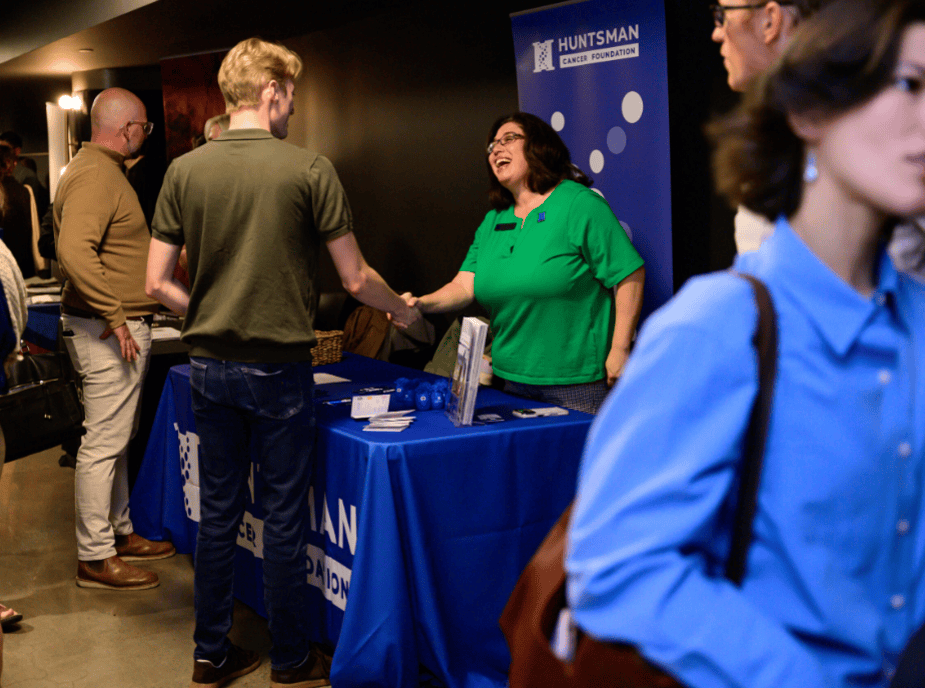
Where moviegoers usually line up for popcorn, BioHive Premieres set up its exhibit hall: booths like Huntsman Cancer Foundations lined the corridor outside Theaters 2 and 3. BioHive Premieres, October 8, 2026. Photo: Dani Christensen
Utah's head start
Opening remarks framed the day as the next chapter in a long local story, pointing to Merritt Medical's CV syringe and the University of Utah's BRCA1 discovery. The speakers returned to that heritage. Erin Mundt of Myriad Genetics noted that BRCA1 testing has been clinically available for 30 years and called the Utah work behind it still relevant. Harris said syndromic testing, which checks a sample for many possible causes of an illness at once, was "developed right here in Utah," tracing BioFire's roots from a potato equipment shop in Idaho Falls to the University of Utah Research Park. Huntsman Cancer Institute's Ben Wade called the Utah Population Database one of the world's richest sources of combined genetic, epidemiologic and health data.
Jenna Barbari, Sr. Director of Communications setting the stage at BioHive Premieres, October 8, 2026 BioHive Photo: Dani Christensen
Faster answers
John Harris opened with a scenario: a mother arrives at a clinic in the Democratic Republic of Congo with a high fever and a headache. Is it Ebola, malaria or dengue? The symptoms overlap, he said, and a wrong guess can send a patient to the wrong ward. "If this mother has malaria, and you guess that it was Ebola, and put her into the Ebola ward, you didn't contain an outbreak; you manufactured one."
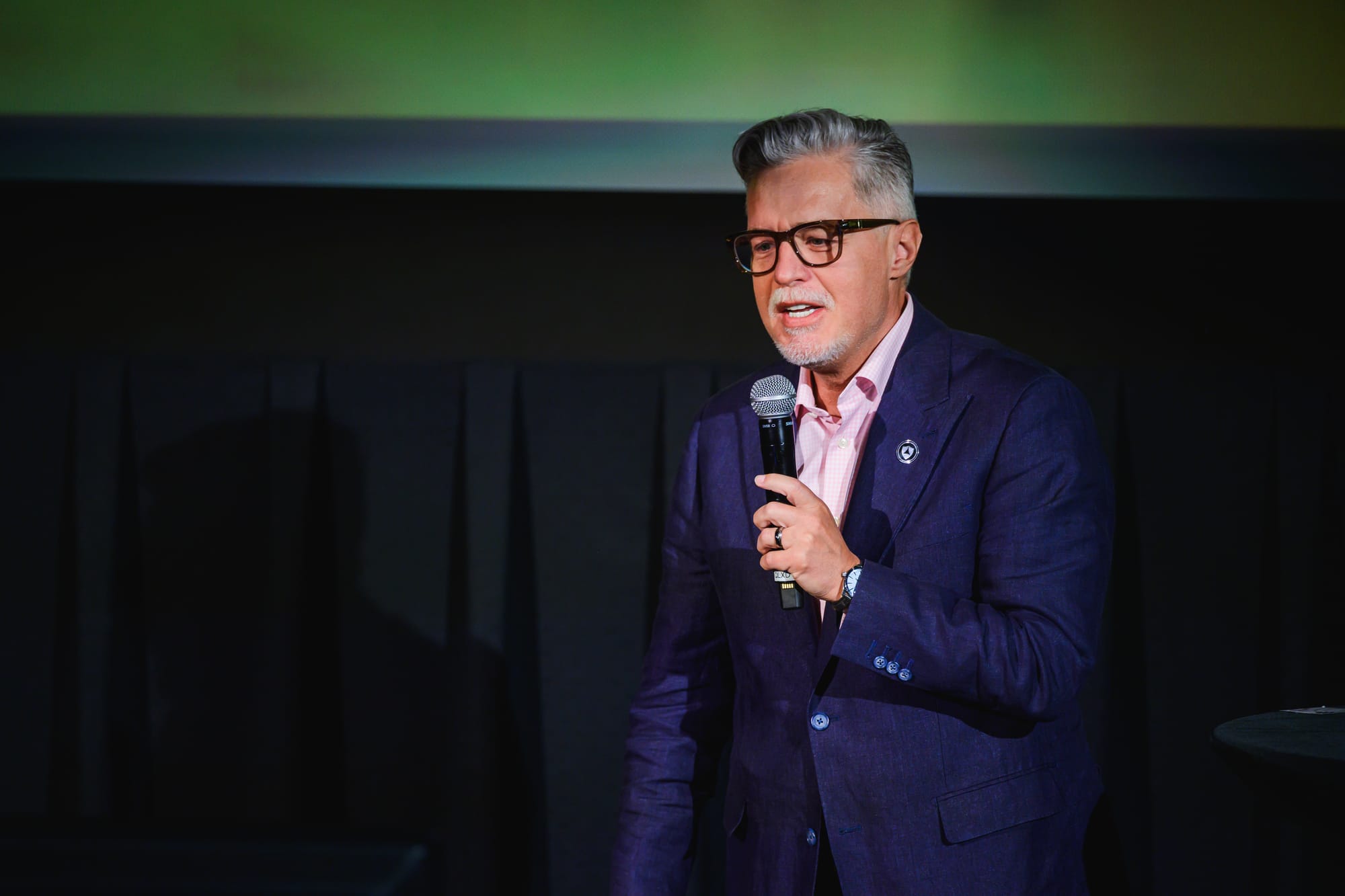
John Harris, CEO of BioFire Defense at BioHive Premieres, October 8, 2026. Photo: Dani Christensen
BioFire Defense's answer is its Global Fever Special Pathogens Panel, which Harris said tests for 16 targets, including dengue, chikungunya, Lassa and Marburg, from two-tenths of a milliliter of blood in under an hour. Results for high-consequence pathogens are presumptive, he said, and still require public health confirmation. A second product, Watchfire, applies the same approach to wastewater. At a French care facility, Harris said, influenza showed up in a building's wastewater before it appeared in a resident's chart, giving staff time to tighten precautions. "Refuse to guess," he told the audience.
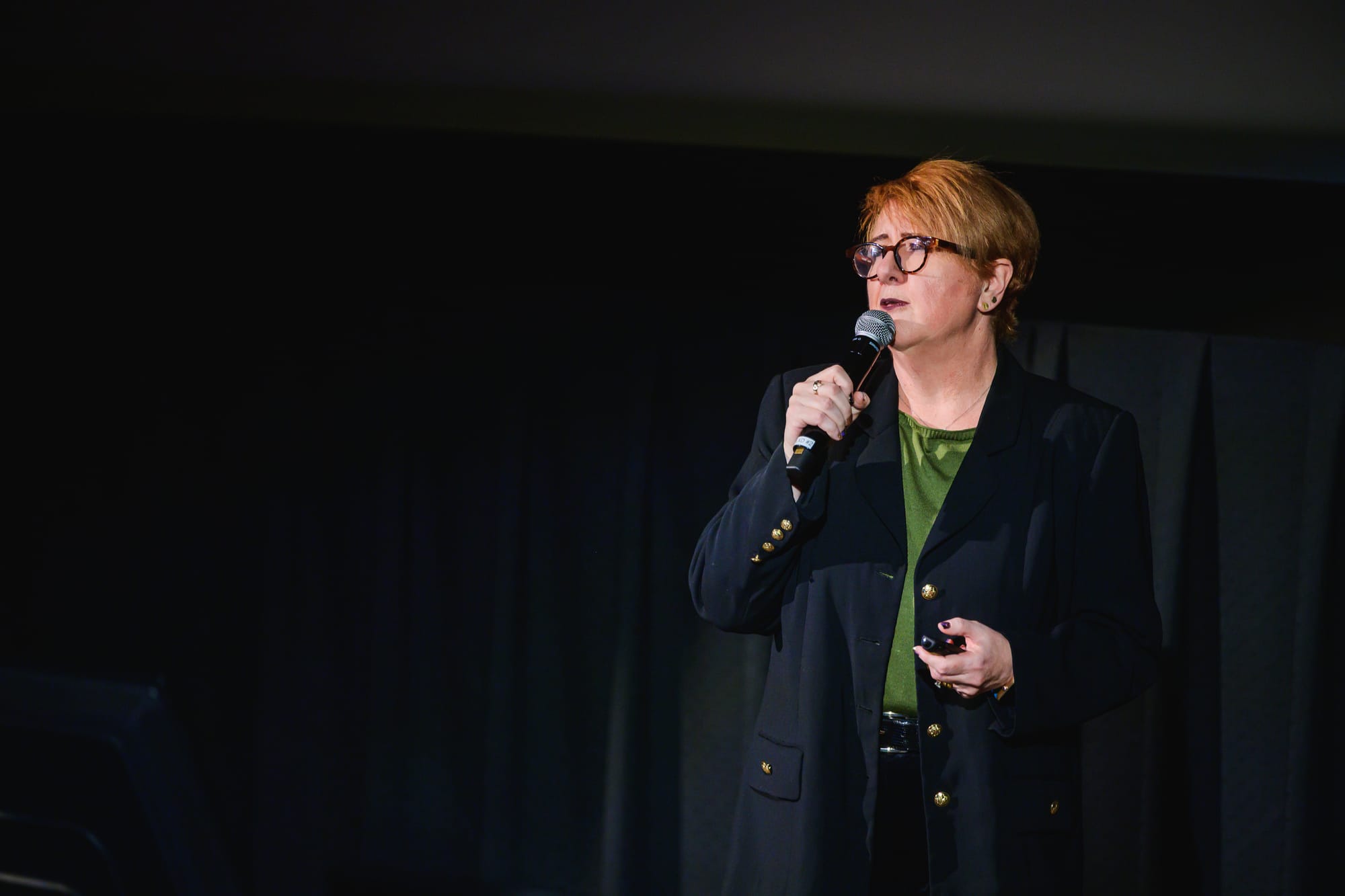
Myriad Genetics' director of medical services Erin Mundt traced how genetic testing has moved beyond cancer risk. Its hereditary cancer test now covers 63 genes, she said, and a newer breast cancer risk score gives women a five-year and lifetime estimate. A test called Precise MRD looks for tumor markers in the blood to track recurrence, she said, though it is not yet in clinical guidelines.
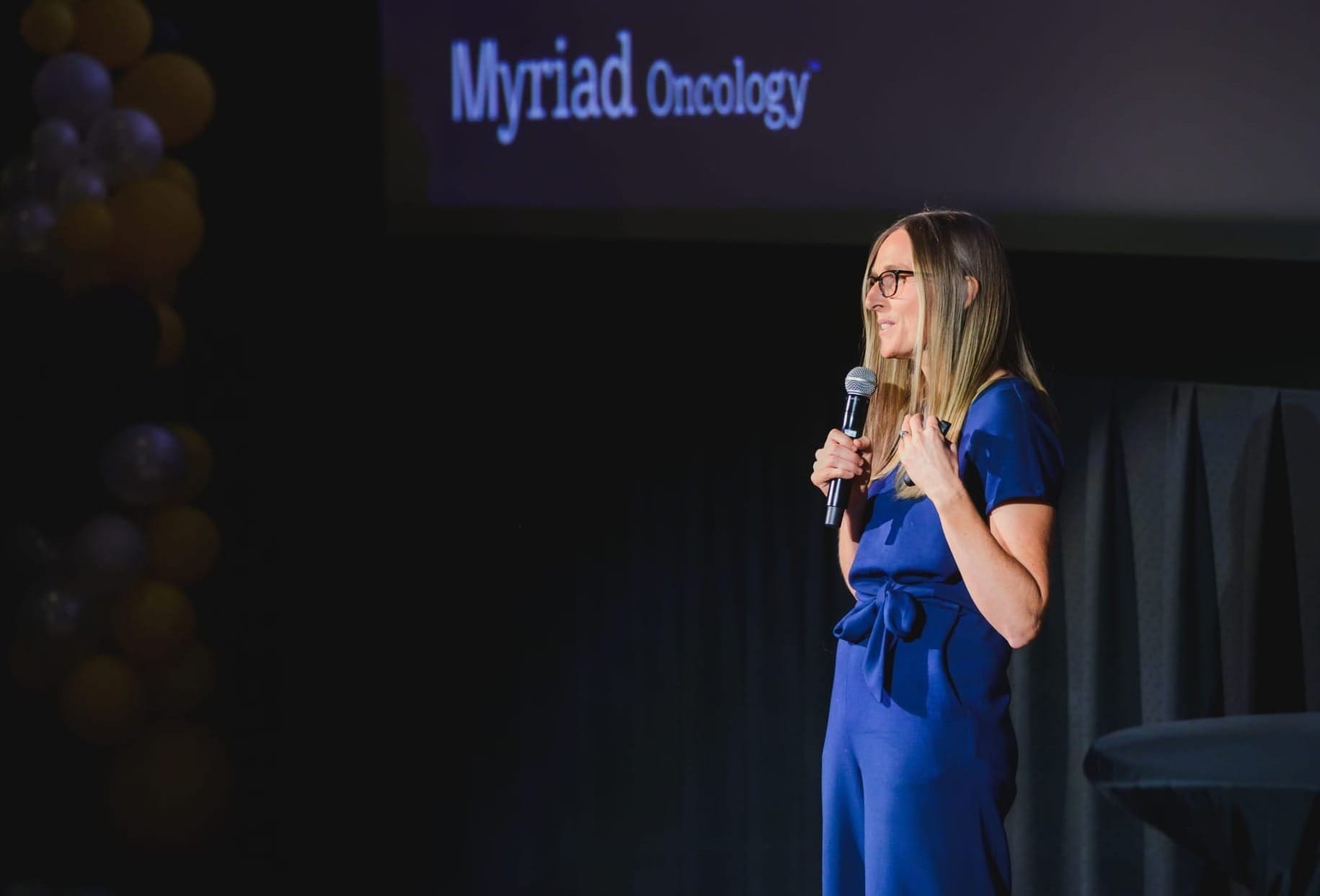
Erin Mundt, Director of Medical Services, Myriad Medical. BioHive Premieres, October 8, 2026. Photo: Dani Christensen
On the Spinout Stage, a University of Utah startup GastroInnovations, pitched a test for eosinophilic esophagitis, an allergic disease of the esophagus. Patients typically eliminate six top allergens and reintroduce them one at a time, with an endoscopy after each step. The company's test samples the esophagus during a single scheduled scope to identify food triggers. In a pilot trial, she said, 66% of patients had a dietary response, compared with 13% for skin-prick testing.
Faster discovery and response
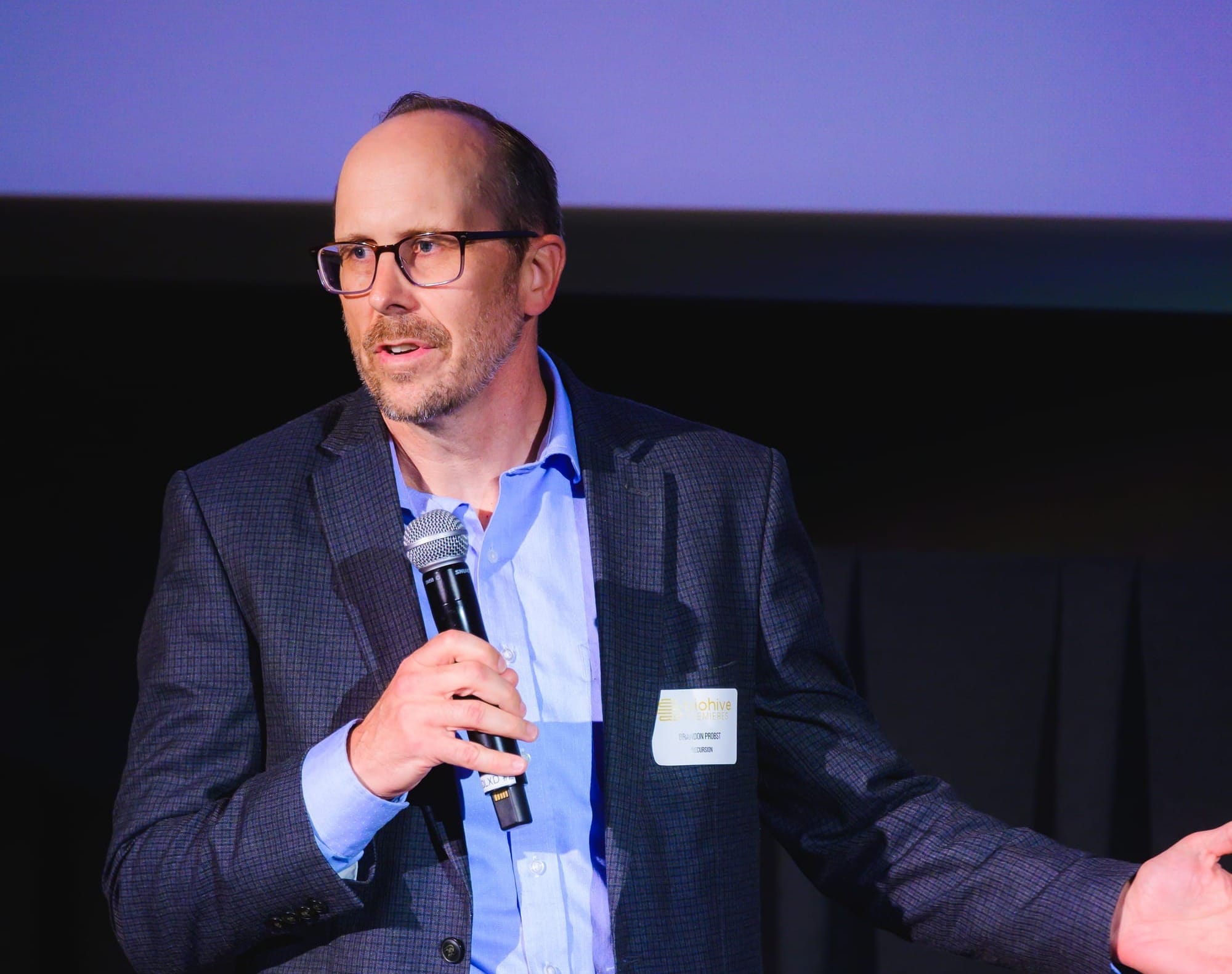
Recursion's VP of Biology Brandon Probst described the odds in conventional drug discovery as a bridge that "collapses 96 out of 100 times." The company's automated labs run millions of experiments, and its AI models search the results for patterns. Probst said that approach led, in 18 months, to a clinical candidate, REC-1245, now in the clinic for solid tumors and lymphomas. He also warned that more data brings more false patterns, illustrating it with a chart that tied spider bites to banana sales.
Brandon Probst, Vice President, Biology, Recursion, Sepaking at BioHive Premieres, October 8, 2026. Photo: Dani Christensen
Alison O'Mahony, senior vice president of research and development at Seek Labs, a Salt Lake City company, argued that the next response shouldn't start from zero. Seek's CRISPR-based platform, which the company has called its Programmable Target Ablation Platform, targets a virus's genome. O'Mahony called it sequence ablation therapeutics. She said it pairs with BioSeeker, an AI tool that maps genetic weak spots in viruses, as previously covered by TechBuzz.
In an early preclinical study of African swine fever, she said, four of seven treated pigs survived, while none of the controls did, and all treated survivors withstood a second exposure. She said a prototype against influenza A has worked in cells and that Seek plans to test it against H5N1 with the U.S. Department of Agriculture. She also said the company is working with the Department of War on Ebola, noting that vaccines for the Zaire strain don't work against the Bundibugyo strain behind the current outbreak
lison O'Mahony of Seek Labs. BioHive Premieres, October 8, 2026. Photo: Dani Christensen
O'Mahony also said AI is expanding what can be designed, and that Seek's software found candidate targets in under an hour for AI-designed viruses. She emphasized that was "analysis and guide design, not a finished drug."
Shorter distance to patients
For Huntsman Cancer Institute, the problem is geography. Wade said patients from Utah County and surrounding areas make more than 50,000 specialized cancer visits to Salt Lake City, totaling 3.9 million miles of travel, and that rural Utahns are 10% to 21% more likely to die of cancer than metropolitan residents. The institute's Vineyard campus, planned for 20 acres, is projected to handle more than 55,000 patient visits in its first year and save patients 1.1 million travel miles, he said. It would also anchor what he called a Cancer Innovation Corridor connecting Huntsman, the University of Utah, Silicon Slopes, BYU, UVU and Vineyard.
Ben Wade, Associate Executive Director, Vineyard Campus, Huntsman Cancer Institute, presenting plans for the new Vineyard campus at BioHive Premieres on Oct. 8, Megaplex at The Gateway in Salt Lake City. "We are coming to Utah County as a partner," he said. "We come to learn from the people and the organizations that are already driving progress, and we seek to collaborate to further that progress." Photo: Dani Christensen
Courtney Garay, vice president of philanthropy for Huntsman Cancer Foundation, framed the effort as community-owned. "Every Utahn owns this institute," she said, "not the Huntsman family."
From lab to market
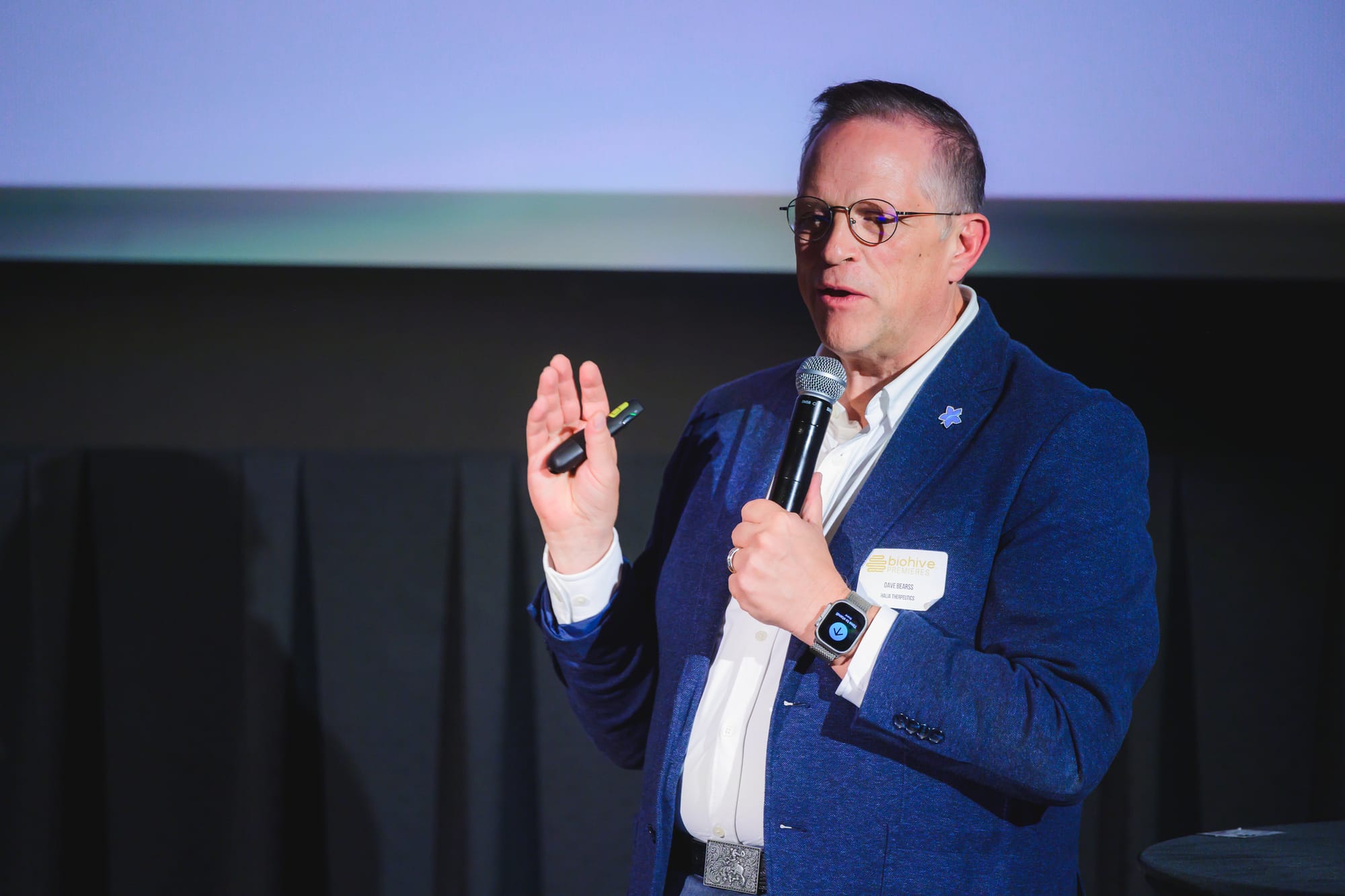
Several speakers showed how research becomes a company. David Bearss, CEO of Halia Therapeutics described ofirnoflast, an oral drug that blocks a protein called NEK7 to break apart the NLRP3 inflammasome, a cellular complex that drives chronic inflammation. In a phase two trial in lower-risk myelodysplastic syndrome, a bone marrow disorder that can progress to leukemia, almost 70% of patients no longer needed red blood cell transfusions and about 30% reached complete remission, he said. Bearss argued the remissions suggest that calming inflammation lets T cells recognize and attack mutated cells again, and said Halia plans a phase one trial of a follow-on drug in solid tumors. The Lehi-based company calls the broader idea "synthetic resilience": understanding why some people at high genetic risk never get cancer, then giving others that protection.
Bearss shared with the audience that for him cancer is personal: his grandfather died of it the year he was born, and his mother died of colon cancer.
FrostByte Defense Technologies is a University of Utah spinout that won top honors at the 2026 Business Innovation Awards. The startup's CEO and co-founder Jakob Travis discussed his autonomous glove liners, socks and face masks that watch for frostbite and respond on their own. Embedded sensors track skin tissue temperature, an algorithm built on medical literature assesses frostbite risk, and a heating element warms the affected fingertip or area, he said.
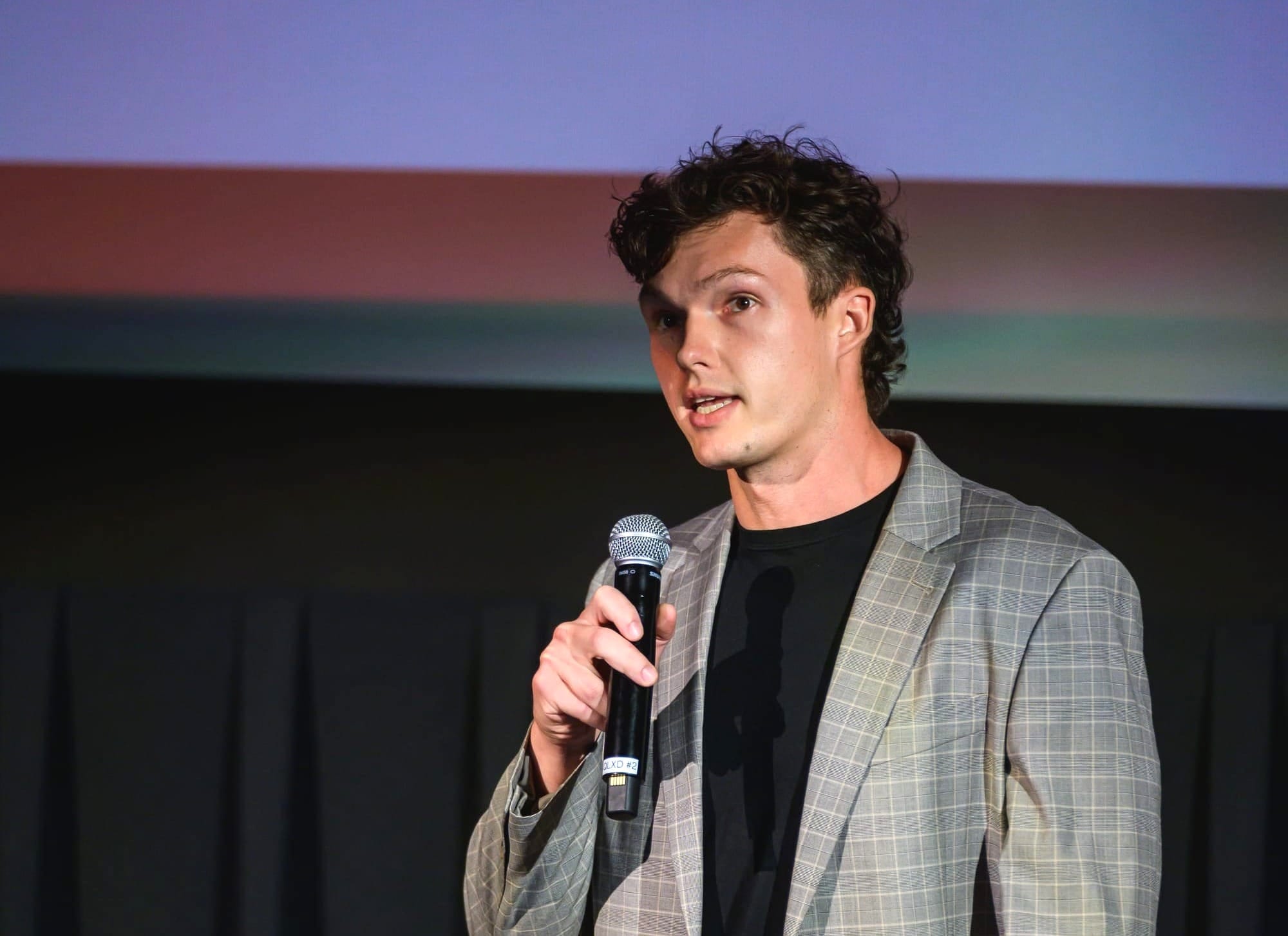
Jakob Travis, CEO and co-founder of FrostByte Defense Technologies, speaking at BioHive Premieres, Salt Lake City, October 8, 2026. Photo: Dani Christensen
Travis argued the problem is bigger than it looks: he said 44% of people who work in cold environments will suffer a cold injury or frostbite during their careers, and that the Army sees about 430 cases a year at roughly $240,000 each, with amputation rates near 30%. In a field test in Alaska with special forces and their medics, he said, skin temperature dropped sharply outdoors at minus 41 degrees, and a finger returned to about 60 degrees Fahrenheit, enough dexterity to administer an IV or repair a vehicle.
The company is running studies at the Naval Health Research Center's cold chamber and is targeting a partner launch in spring 2027, possibly earlier, followed by a direct-to-consumer rollout in winter 2028. Travis said he plans to start with business-to-business sales, "like an Intel Inside chip for your laptop," before moving to skiers, construction workers and linemen.
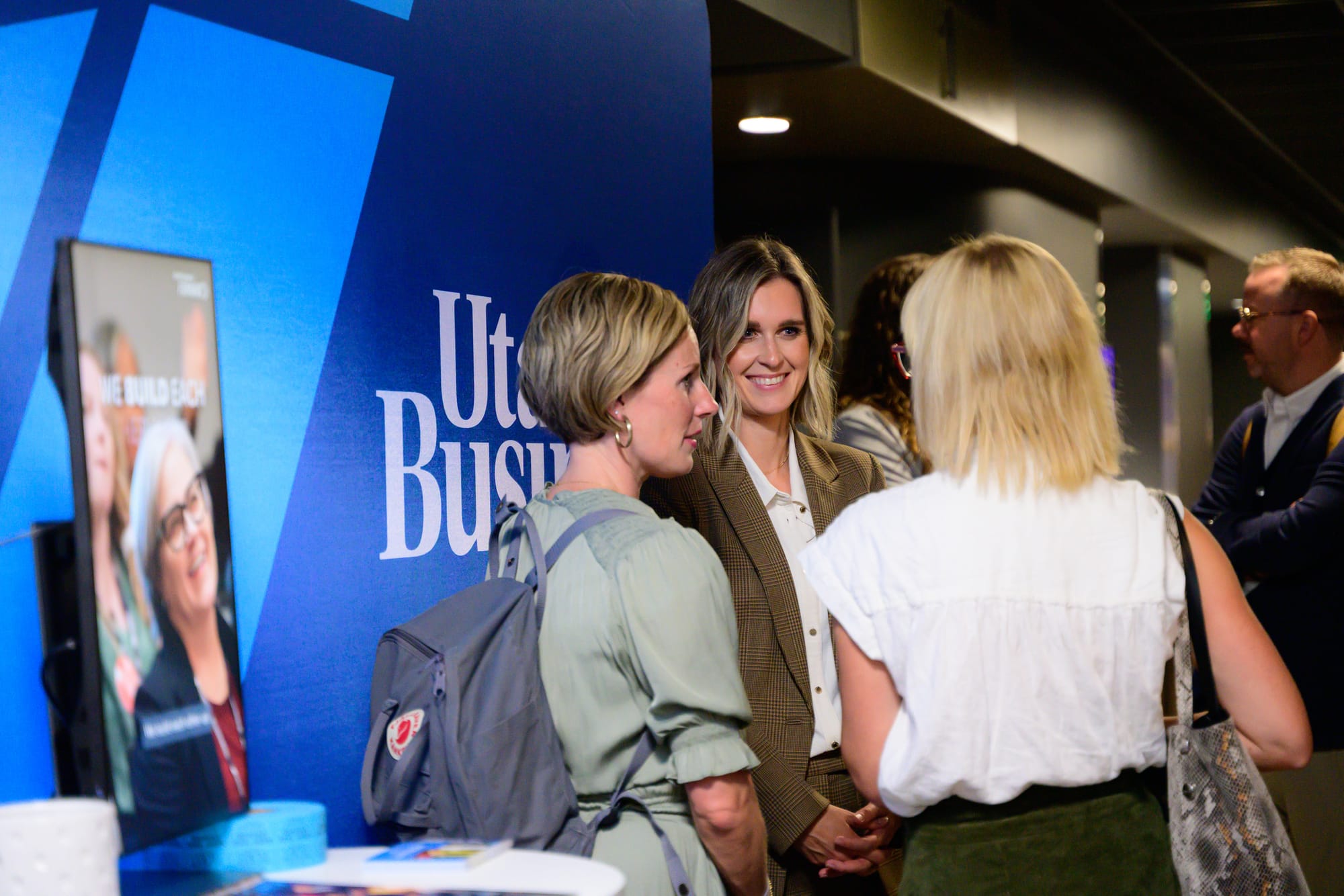
Catherine Bennett of Utah Business chatting with BioHive Premieres attendees at the Utah Business booth. Photo: Dani Christensen
What to watch
Much of what was presented is early. Many of the efficacy figures were reported by the companies themselves, and several programs are preclinical or heading into first-in-human trials. The next checkpoints are concrete: first patients in CVRTI's heart failure trial, Seek's planned H5N1 test with USDA, Halia's next steps with the FDA, FrostByte's commercial launch and the buildout of Huntsman's Vineyard campus.
Seek's O'Mahony closed with a question that could serve for the whole day: "How much of the response can we build before we know the threat?"
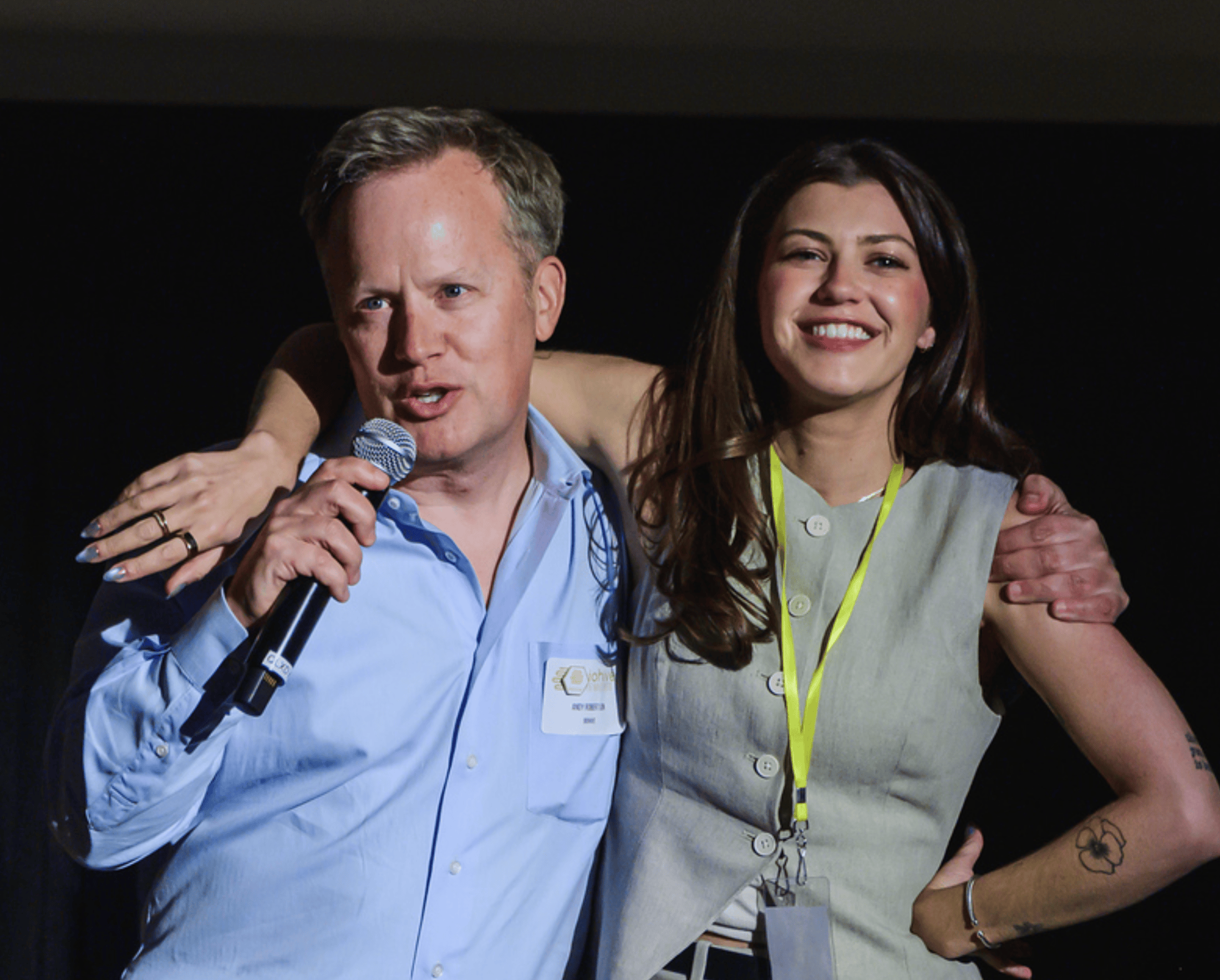
The BioHive team that made it happen: Andy Robertson (Executive Director) and Jenna Barbari, (Sr. Communications Director) thanking the attendee at the close of the inaugural BioHive Premieres, Gateway Megaplex, October 8, 2026 in downtown Salt Lake City. Photo: Dani Christensen
BioHive Live will take place during the week of April 19-23, 2027. Learn more here. See the highlight reel of BioHive Premieres below: