At UVU's HITLAB Innovation World Cup, a Maternal Health Startup Took Top Honors
HITLAB's Innovation World Cup brought 1,277 applicants and a $96K prize pool to Utah Valley University. A retired Army officer's maternal health startup won the pitch competition. A team of builders took home the hackathon bounty.
HITLAB's Innovation World Cup brought 1,277 applicants and a $96K prize pool to Utah Valley University. A retired Army officer's maternal health startup won the pitch competition. A team of builders took home the hackathon bounty.
Orem, Utah — June 23, 2026
A few days before the event, Dave Esra bought a plane ticket to Utah.
Esra had not been planning to come. HITLAB's Innovation World Cup had drawn 1,277 applicants from around the world to compete for a spot on the pitch stage. Esra had submitted his application without much expectation. Then the call came: his maternal health app,BobiHealth, had made the top ten. He booked the flight the same day.
The event drew applicants from around the world and offered one of the larger startup prize pools in Utah's innovation ecosystem. TheHITLAB Innovation World Cup brought six judges, seventeen mentors, and a$96,000 prize pool to Utah Valley University's campus. The event's promotional video pulled 1.1 million views on YouTube. Esra knew what HITLAB was. He had attended their summit in New York. He trusted the organization.
What he did not trust was the pitch competition format. He had done enough of them to know outcomes do not always follow logic. "I don't actively pursue pitch competitions," he said. "Different audiences, different types of judges." He had learned that lesson the hard way — standing in front of judges who once gave the prize to a company that uses AI to trap feral hogs.
Stan, his contact at HITLAB, had encouraged him to apply anyway. So Esra had. And when the top-ten call came, he bought the ticket.
On June 18, BobiHealth won.
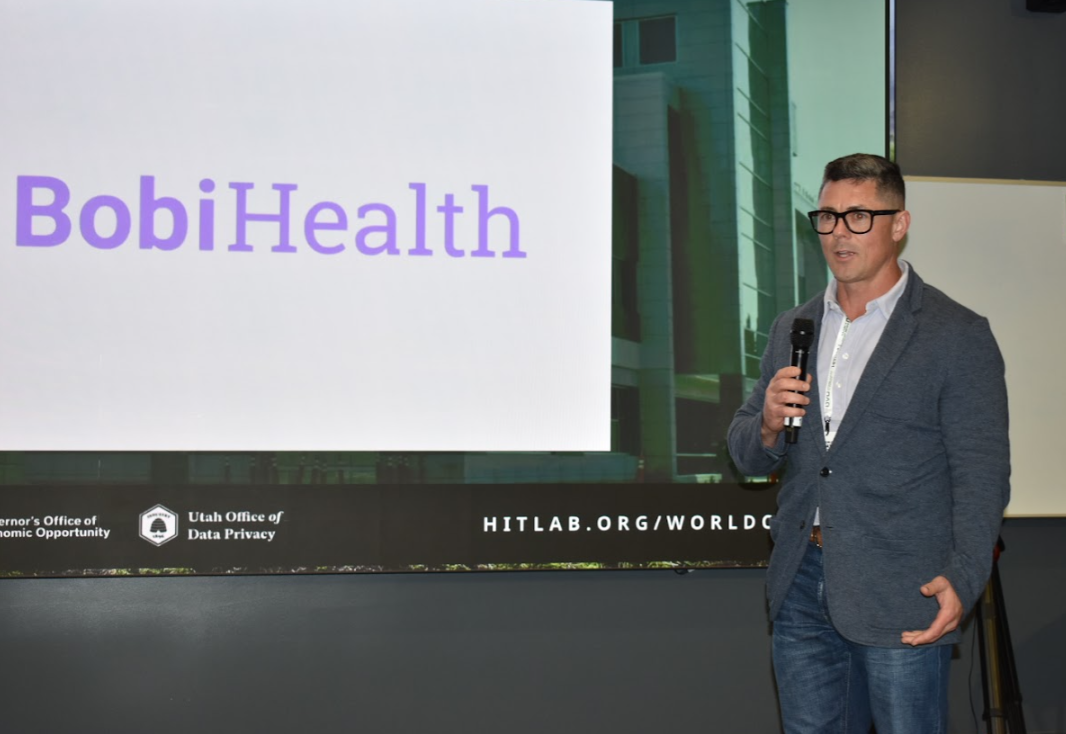
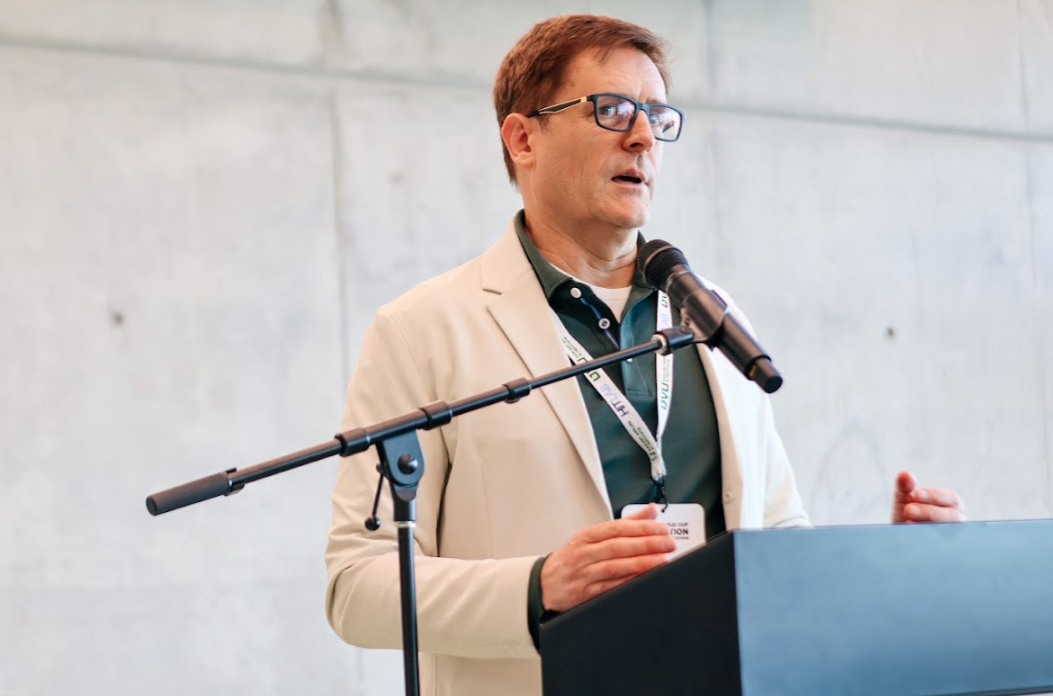
Dave Esra, President, CEO, and Board Chairman, BobiHealthAI; winner of HITLAB - UVU Healthcare Innovation World Cup Pitch
Before the Army
Esra's path to maternal health does not start where most people expect.
Before joining the Army, he worked as a firefighter and EMT. The Army came next: 22 years, infantry and then special operations. "I was always in that kind of service," he said. "Firefighter, EMT, and then the Army."
When he transitioned out, Esra took his project management skills into the corporate world. He worked for Fortune 50 and Fortune 20 companies across finance, government, defense, oil and gas. The work paid well. "I went from having a meaningful mission, in organizations with true, shared values," he said, "to it all being very fuzzy."
What pulled him back was a contract. And then a number.
A company hired Esra to deploy predictive analytics across its value chain. In nine months, the project generated a billion dollars. "That was a key moment for me in my career," he said. "I need to learn more." He enrolled in a post-graduate AI program at MIT.
Around the same time, he picked up a consulting engagement with a company called Predistry. Predistry conducts pregnancy-related drug safety research and surveillance programs. Esra said his work there exposed him to the challenges of collecting maternal health data at scale.
It was there that Esra began to understand the scale of what was not being done.
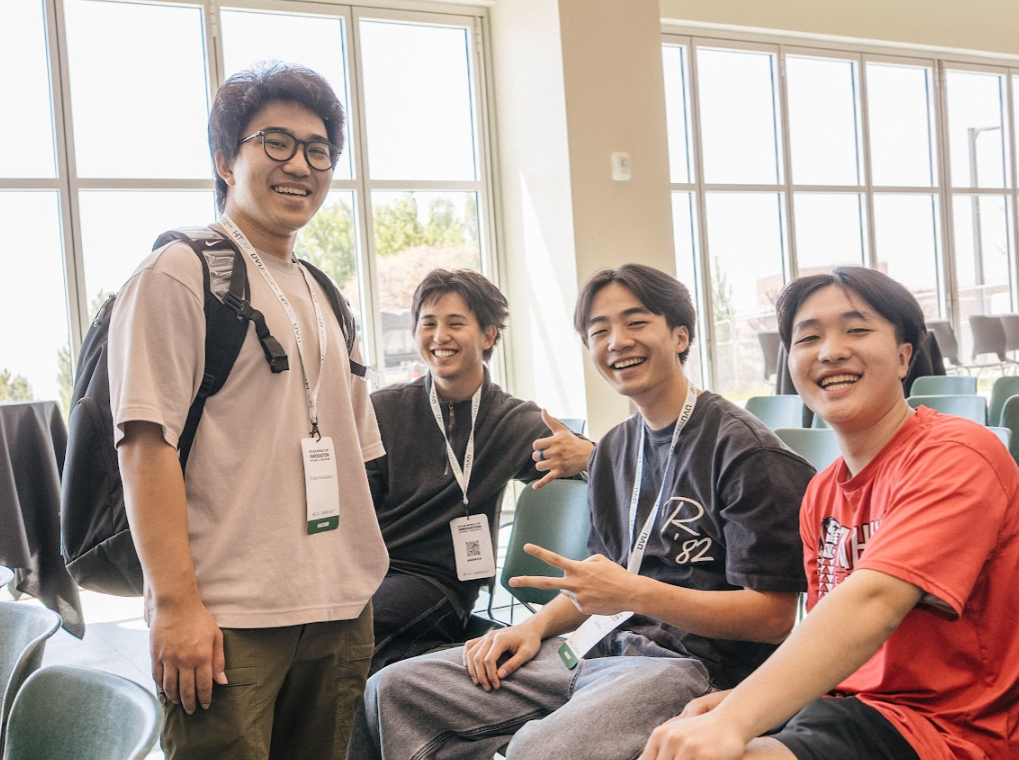
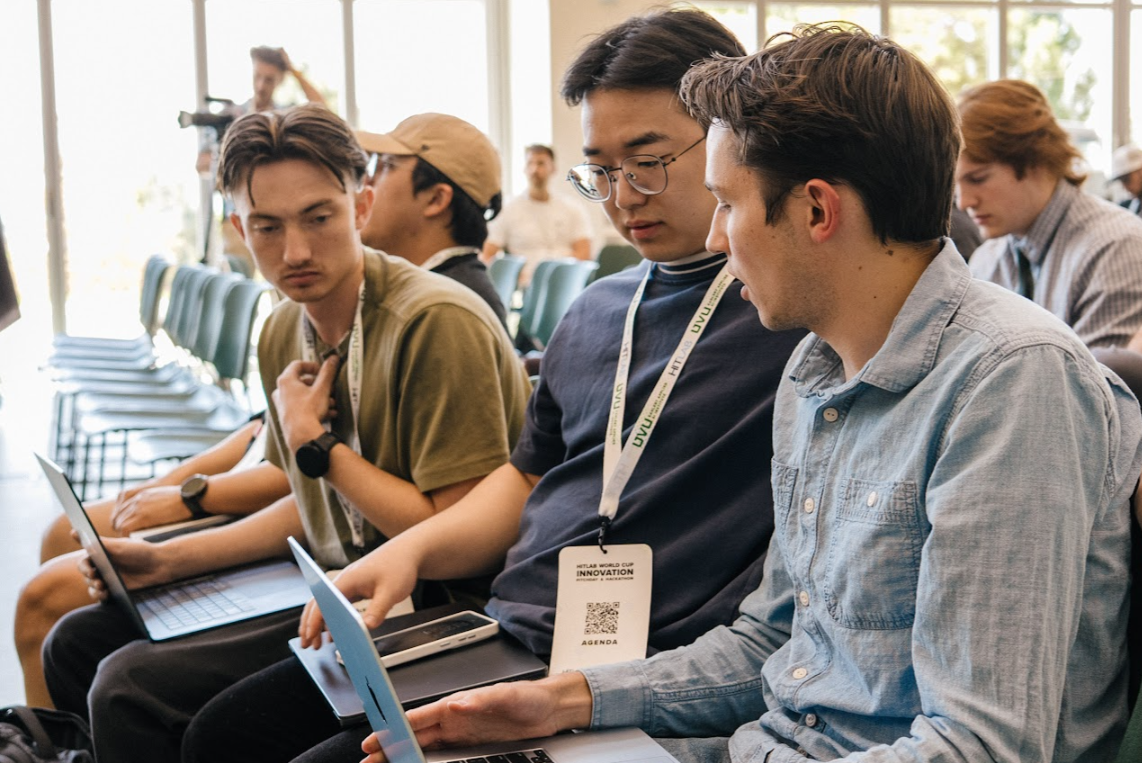
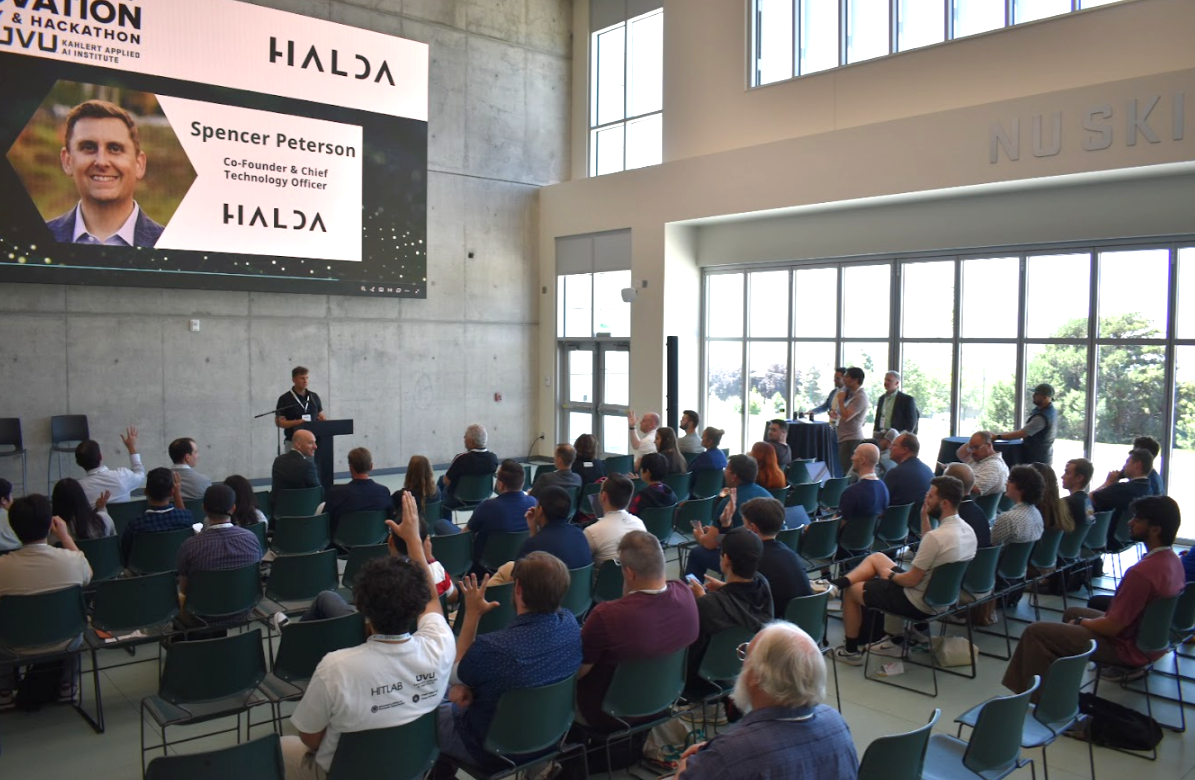
Participants of the HITLAB x UVU World Cup Innovation Pitchday & Hackathon, June 18, 2026, Smith Engineering Building, Utah Valley University. Photo: Juan Escudero, KAII Content Team
The Problem Nobody Tracked
Esra brought up Thalidomide without being asked.
It was a drug sold to pregnant women in the 1950s and 60s. It caused severe birth defects and deaths in thousands of infants before it was pulled. The pharmaceutical industry learned it could not know what a drug would do to a pregnancy until it studied the drug carefully — which is why companies like Predistry exist. But Esra had watched how those studies worked, and he was not reassured. "They're asking moms to go into the portal and fill out a survey every six to twelve weeks," he said. "This is not good enough."
The problem was structural. Healthcare data collection is episodic — a clinic visit here, a survey there. A woman's pregnancy unfolds continuously. The gap between those two things is where complications hide. "Data collection in healthcare is episodic," he said. "It's not continuous."
The World Health Organization estimates that approximately 260,000 women died during or following pregnancy and childbirth in 2023—more than 700 deaths per day, or roughly one every two minutes. WHO says most of those deaths were preventable.
At MIT, Esra chose maternal mortality as his capstone project. Esra said his MIT capstone team developed predictive models for adverse pregnancy outcomes, though those models were research projects rather than clinically validated products. Esra claims one model achieved roughly 95% accuracy within the team's research dataset.
Esra went to the CEO of Predistry with an idea: build the app, solve the problem from the inside.
The CEO said no.
Esra thought about a story he had heard — probably apocryphal, he acknowledged, but it landed. Jeff Bezos, early in his career, consulting for a brick-and-mortar bookstore. He goes to the CEO and says: sell books online. The CEO says: not interested. Bezos starts a small online bookstore named after a river in Brazil.
"I would be a coward if I didn't try," Esra said.
He left. He built BobiHealth.
What BobiHealth Does
BobiHealth launched on the app stores in January 2026. Within six weeks, it had 30,000 downloads, according to Esra. Esra said he only spent a few hundred dollars on advertising. Most of the growth came from users in India, the Philippines, the United States, and Costa Rica finding the app on their own.
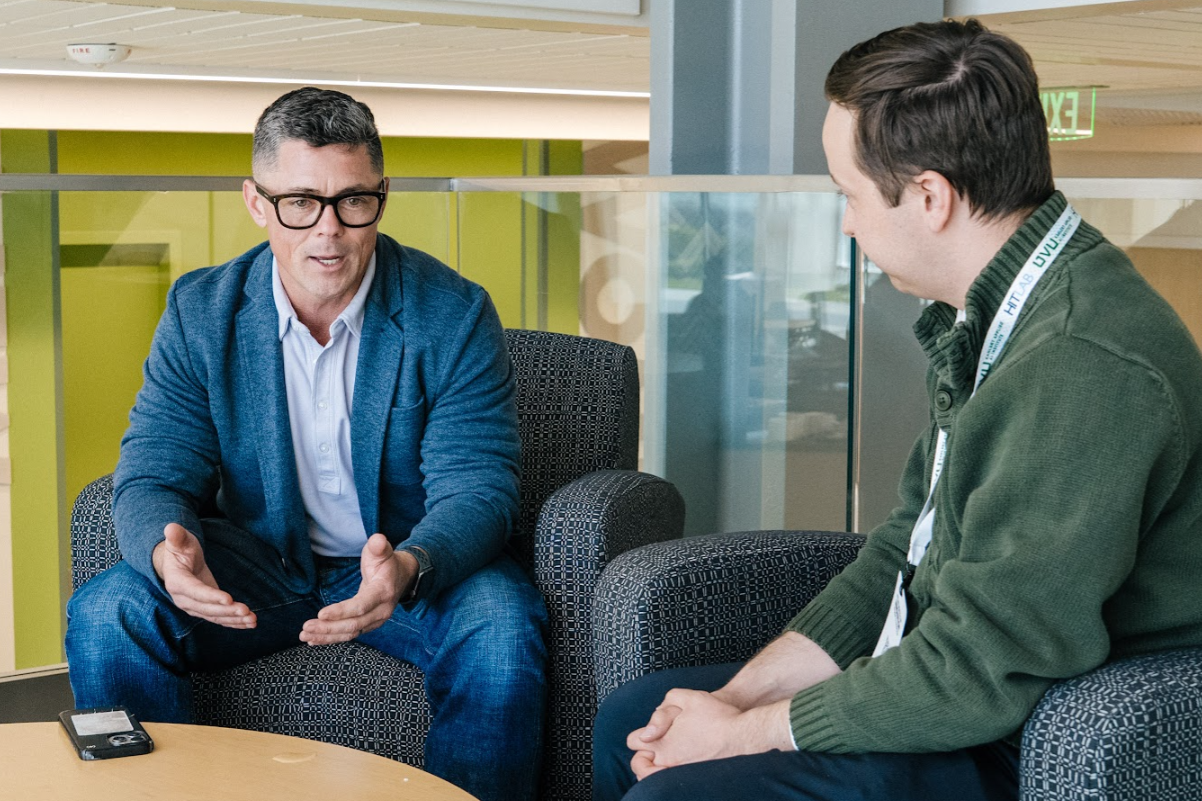
Dave Esra, President, CEO, and Board Chairman, BobiHealthAI, winner of Day One Healthcare Innovation World Cup Pitch, sitting down with reporter, Mason Butler, UVU student and writer for the Kahlert Applied AI Institute, June 17, 2026, UVU Smith Engineering Building. Photo: Juan Escudero, KAII Content Team
The app monitors pregnant and postpartum women continuously. It collects biometric data — symptoms, kick counts, medications, mood — and flags deviations using a green, yellow, red system adapted from clinical triage tools. Green means normal, with tips. Yellow means call a nurse. Red means go in now.
A chatbot handles the in-between moments. Esra calls it "doula-inspired" — because a doula does not diagnose, and neither does the bot. It is trained on provider-approved materials and restricted to topics around pregnancy and infant health. It is available at 2 a.m., when a woman wakes up unsure whether something is wrong. Esra said the company is developing tools that analyze text and voice patterns to help identify users who may be at risk for mental health challenges, subject to user consent and clinical oversight. If a screening is triggered and the user consents, the app can connect her directly with a clinic that gets reimbursed for the intervention.
Esra said future versions of the software could automate tasks such as locating nearby providers, identifying transportation options, or connecting users with support services. If a user says she does not have a doctor, the bot surfaces three nearby providers who accept Medicaid. If she cannot get a ride to the clinic, it can connect her to local transportation. In one pilot partnership, the app arranged for an Uber and a Chick-fil-A gift card.
"It's like a dozen apps in one," he said. "Education hub, kick counter, medication reminders, postpartum dashboard. The feedback we got from early users was: I have too many apps for pregnancy. They wanted one experience."
The mental health dimension is where Esra sees the most untapped potential. He described a conversation with a Hispanic mother who experienced severe depression during pregnancy. Her family told her it was not real — that she did not need medication. "It makes it worse," he said. "We believe we can really move the needle on mental health by normalizing it. This happens to a lot of women. It's okay."
The cultural challenge extends globally. In India, one of BobiHealth's largest user bases, women do not discuss pregnancy health across generations. Mothers do not tell daughters. "They don't talk about women's health," Esra said. "It's getting much better. But there's a cultural stigma."
The Business Bet
BobiHealth is pre-revenue, but Esra sees the timing clearly.
Half of all pregnancies in the United States are covered by Medicaid — tens of billions of dollars in annual spend on maternal and neonatal care. Reducing NICU stays, ER visits, and hospital readmissions generates real cost savings. For Esra, the business case and the mission case are the same case. "These are the communities that really need this the most," he said, "where there's limited access, less trust in the systems, social determinant barriers."
To close Medicaid contracts, BobiHealth needs clinical validation — outcomes data from real pilots with real provider networks. The company is identifying clinic partners now. An earlier attempt at affiliate marketing did not gain traction. The company pivoted to employer benefits platforms, where self-insured employers can offer BobiHealth as a benefit and see direct savings on covered pregnancies. That pipeline is staged and ready.
The team behind it carries weight. Esra's CTO previously led two companies, one publicly traded, one that raised tens of millions of dollars.
Demand from abroad is coming in unsolicited. Doctors in Africa have been sending Esra photographs from remote clinics, asking when the app will reach their communities. "We have doctors in Africa that are begging us," he said. "The hospital may be two hours from here, but it's like ten hours because of a dirt bike trail." The plan is for Medicaid contract revenue to fund the global expansion.
Esra believes the market timing is right. Bill payers — the insurers and government programs that cover the cost of care — are actively discussing real-world data and predictive models in ways they were not a few years ago. "I feel like we're in a just-in-time situation," he said, "where we can take advantage of the momentum to get this going."
Esra believes winning HITLAB could accelerate those efforts. The competition came with study support, credibility, and access to a network of investors and providers, what Esra called "white gloves." He noted that past HITLAB winners have gone on to build significant companies.
Tyler Small, Senior Director of the Kahlert Applied AI Institute, with Mason Butler and Dave Esra, President, CEO, and Board Chairman, BobiHealthAI, winner of Healthcare Innovation World Cup Pitch, UVU. Photo: Juan Escudero, KAII Content Team
"I still can't believe it," he said. "Hard to swallow. Just to be in the top ten, I was like, this is incredible."
Getting there took persistence. Before HITLAB, BobiHealth entered a competition in San Francisco — one Esra had not wanted to attend, but was asked to attend anyway. The company was nearly out of money. Esra said the company won a $100,000 startup competition in San Francisco during a difficult period for the business. "I didn't want to go do it," he said. "They paid for my trip. And it was a huge win when we needed it most."
Public speaking still does not come naturally to Esra. He gets dry mouth at a podium. He meditates before presentations. He practices breathing. It does not fully work. "I get up there, dry mouth, heart rate," he said. "It's not natural for me. It's the least natural thing I've tried." He does it anyway, because he knows it is the only way to get better.
"The highs and lows. You're at the top, and then there's the rest of the ride. Just got to hang on."
The Hackers Next Door
While the pitch competition played out in one part of campus, a parallel contest ran in another.
The HITLAB hackathon drew 337 applicants and assigned them to solve real-world problems submitted as bounties by sponsoring organizations. Teams had roughly 24 hours to build something that worked — and present it.
Several teams had done this before. It showed.
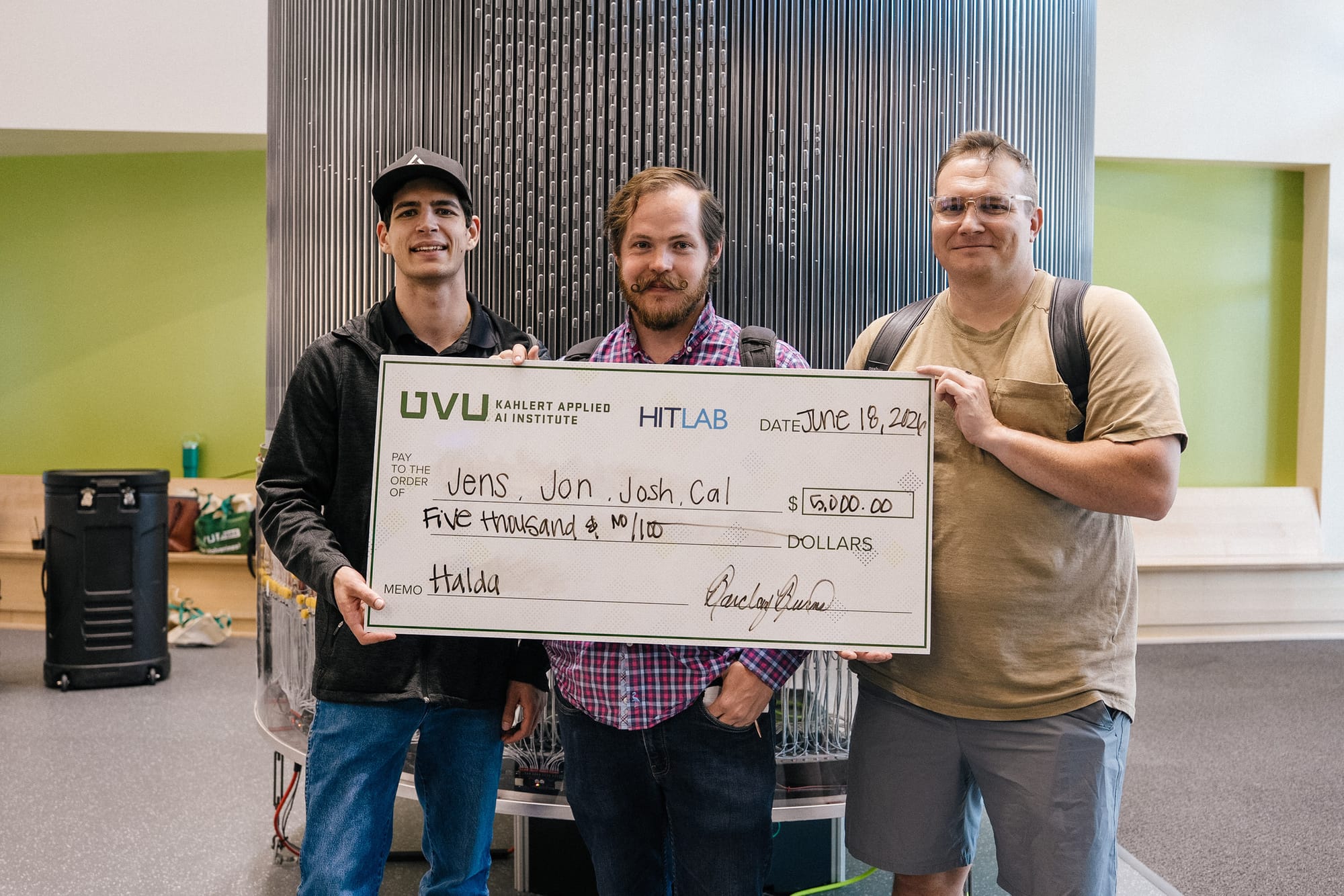
Josh Gimenes, Jonathan Wagstaff and Callahan Larson hold their $5,000 prize after splitting a $10,000 bounty with a competing team at the HITLAB Innovation World Cup. Not pictured: team member Jens Shumway. Photo: Mason Butler/KAII Content Team
Josh Gimenes, Callahan Larson, Jonathan Wagstaff, and Jens Shumway came in throughJust Build, a Utah-based community of builders that meets every Saturday. The group has attended hackathons together across Utah County and beyond for roughly the past year and a half. Asked how they would describe themselves, Gimenes offered "wannabes" before Larson cut in: "Builders." Gimenes agreed.
Their strategy at HITLAB was deliberate. The team spent two to three hours at the start planning — debating which bounty to pursue, whiteboarding the problem, mapping out what they would actually build. They did not write a line of code until after 5 p.m.
"It's worth taking the time at the beginning to come up with a good plan before diving in," Gimenes said. "We felt like we got a late start on the actual product, but we had a good plan for how to do it."
The bounty they chose had a clear destination. One option they considered was compelling but vague — they could not visualize what they would build. The one they picked gave them structure to generate ideas and build toward a concrete demo.
"The demo is the most important thing," Gimenes said. "If you're not going into your planning and your execution with a demo at the forefront, you probably won't make it."
(from left to right) Eddie Kim, McKay Snell, Yirang Lim, and Nathan Longhurst at the HITLAB x UVU World Cup Innovation Pitchday & Hackathon, June 18, 2026, Smith Engineering Building, Utah Valley University. Photo: Juan Escudero, KAII Content Team
Another team arrived with a different kind of preparation. Yirang Lim, Eddie Kim, Nathan Longhurst, and McKay Snell are software engineers at Heal Access USA, a healthcare startup. Their employer actively encourages hackathon participation. All four are recent BYU graduates. They built a student-facing college application tool — a mobile app paired with a Chrome extension that uses AI to autofill application forms across multiple schools using information a student has already entered once.
When the building closed for the night, Lim's team did not stop. They moved to a BYU computer lab and kept going. Most of them got three to four hours of sleep.
"You kind of have to let go of being too picky of an engineer," Lim said. "With the 24-hour window, you're pumping it out. You have to accept, okay, maybe this one thing isn't best practice, but it works."
Both teams won the top Halda Bounty — $5,000 each. Gimenes did not see it coming. "Complete surprise," he said. Lim, whose team took home the same prize, said Gimenes's group earned it. "Josh is solid," Lim said. "Usually he goes solo, but still top of the line. His team was solid."
Halda was one of several companies that provided bounties to the winners of the HITLAB x UVU World Cup Innovation Pitchday & Hackathon, June 17-18, 2026, Smith Engineering Building, Utah Valley University. Photo: Juan Escudero, KAII Content Team
For Gimenes, the broader lesson was about AI. Three years ago, the tools available at a hackathon were limited. Now, managing AI context well can close the gap dramatically. "I've had hackathons before where I literally stepped out halfway through and had half the amount of time as everybody else — but because AI is so powerful, I still was able to get a prize," he said. "The winners are going to be the ones who really know how to use AI the best."
Lim's team reached the same conclusion from a different angle. McKay Snell, a software engineer on the team, described spending a significant stretch of time early on building a structure for the AI to operate within before writing a line of product code. "I've been letting go a little more, but giving it a lot of structure to work in," Snell said. "It's a hackathon — this is the time to experiment and give it more leeway and freedom."
All eight walked away with the same takeaway. "You learn more in 24 hours just building something than you would probably in an entire semester," Gimenes said. Snell put it this way: "Even if you don't win, it is really good experience. You pump out a lot of good stuff. You gain a lot of experience, get a side project for your resume. It's forcing yourself to learn so much in such a short amount of time."
Barclay Burns, Chief AI Officer and Assistant Dean of the Smith College of Engineering and Technology, Utah Valley University, thanking the attendees and organizers of the HITLAB x UVU World Cup Innovation Pitchday & Hackathon, June 17-18, 2026, Smith Engineering Building, Utah Valley University. Photo: Juan Escudero, KAII Content Team
"The winners just worked hard, and they conceptualized the problem set, got their head around digital identity, around complex medical problems, and they delivered," said Barclay Burns, UVU's Chief AI Officer and Associate Dean, and the chief champion and organizer of the event.
"Real challenges were presented, and real solutions were created in 24 hours. Everybody who had a bounty was incredibly pleased with outcomes, so they feel like whatever the value (offered) was well earned. We'll keep them coming back. Other companies now saw the success of this: the energy and vibrancy of Utah."
What's Coming
HITLAB's Innovation World Cup is not a one-time event at UVU. The next hackathon is scheduled for November 15. Details are still being finalized.
For Esra, the work continues. Clinical pilots to find. Fundraising to close. A Medicaid market to crack open. His wife, Sarah, had a high-risk pregnancy years ago. It resolved well. Not everyone has that outcome, or that access. That gap is what BobiHealth is built to close.
"When I was recruited to help in the pandemic, to protect our most vulnerable people on the planet," he said, "that was the calling. That's how an infantry officer becomes the CEO of a maternal health company."
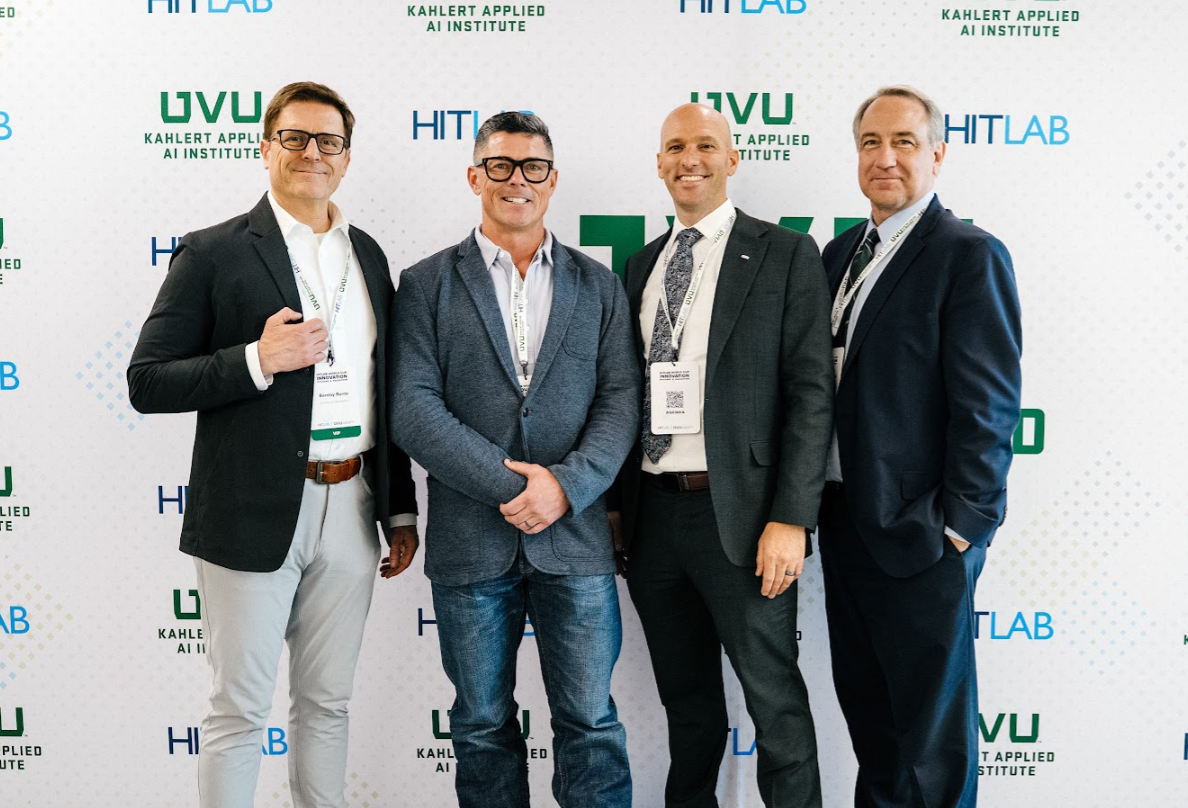
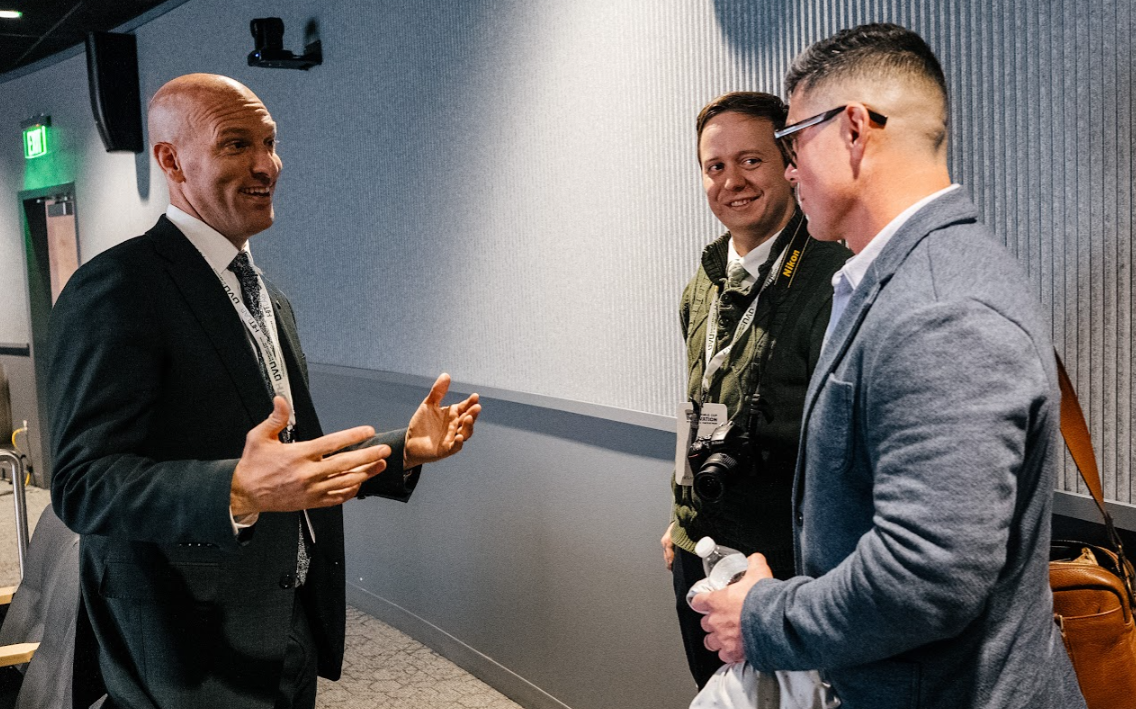
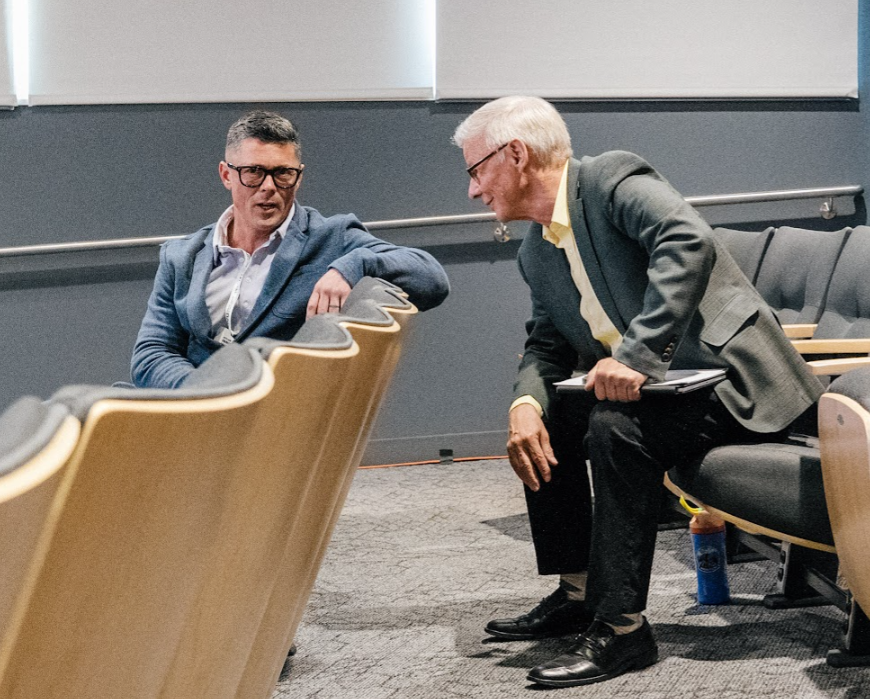
Dave Esra, President, CEO, and Board Chairman of BobiHealth, visiting with Stefan Harlan, Assistant Dean, Advancement, Smith Center for Engineering and Technology, Utah Valley University. Photo: Juan Escudero, KAII Content Team
The HITLAB Innovation World Cup was held June 17–18, 2026, at Utah Valley University in Orem, Utah. The event drew 1,277 pitch competition applicants, 337 hackathon applicants, six pitch day judges, 12 hackathon judges, and 17 mentors. A promotional video for the event received 1.1 million views on YouTube and 100,000 views on TikTok.
BobiHealth has not yet published peer-reviewed outcomes data demonstrating reductions in maternal complications, hospital utilization, or healthcare costs. The company is currently seeking clinical pilot partners to validate those outcomes.
For more information on HITLAB, visithitlab.org. To learn more about BobiHealth, visitbobihealth.com. The next UVU hackathon is scheduled for November 15, 2026.
Share this article
The link has been copied!
Your link has expired. Please request a new one.
Your link has expired. Please request a new one.
Your link has expired. Please request a new one.
Great! You've successfully signed up.
Great! You've successfully signed up.
Welcome back! You've successfully signed in.
Success! You now have access to additional content.