At StartFest, Traeger's CEO Argues Utah's Soul Is Its Real Competitive Edge in the AI Era
At StartFest 2026 in Draper, Utah, Traeger CEO Jeremy Andrus argued that AI makes execution cheap and leadership scarce — and that Utah's pioneer heritage, not Silicon Valley's transactional model, is the state's most durable competitive edge.
Twelve hours after Utah Republican voters ended the political career of the most powerful dealmaker in the state, a man Clint Betts publicly named as a likely future gubernatorial candidate walked onto the StartFest stage at 8:45am and made the case that Utah's partnership between business and government is its single greatest asset in the age of AI.
The packed house at Mountain America Event Center in Draper knew what had happened the night before. Jeremy Andrus, CEO of Salt Lake City-based Traeger, addressed the future anyway.
"We've got this incredible underpinning of entrepreneurship," Andrus said, "and an environment that's built around partnership with business, not antagonism with business. Relative to other states, this is where you want to be."
What followed was one of the more direct and memorable keynotes of StartFest 2026. It was part business philosophy, part personal reckoning, and part quiet argument about what kind of state Utah chooses to be as artificial intelligence reshapes the workforce beneath it.
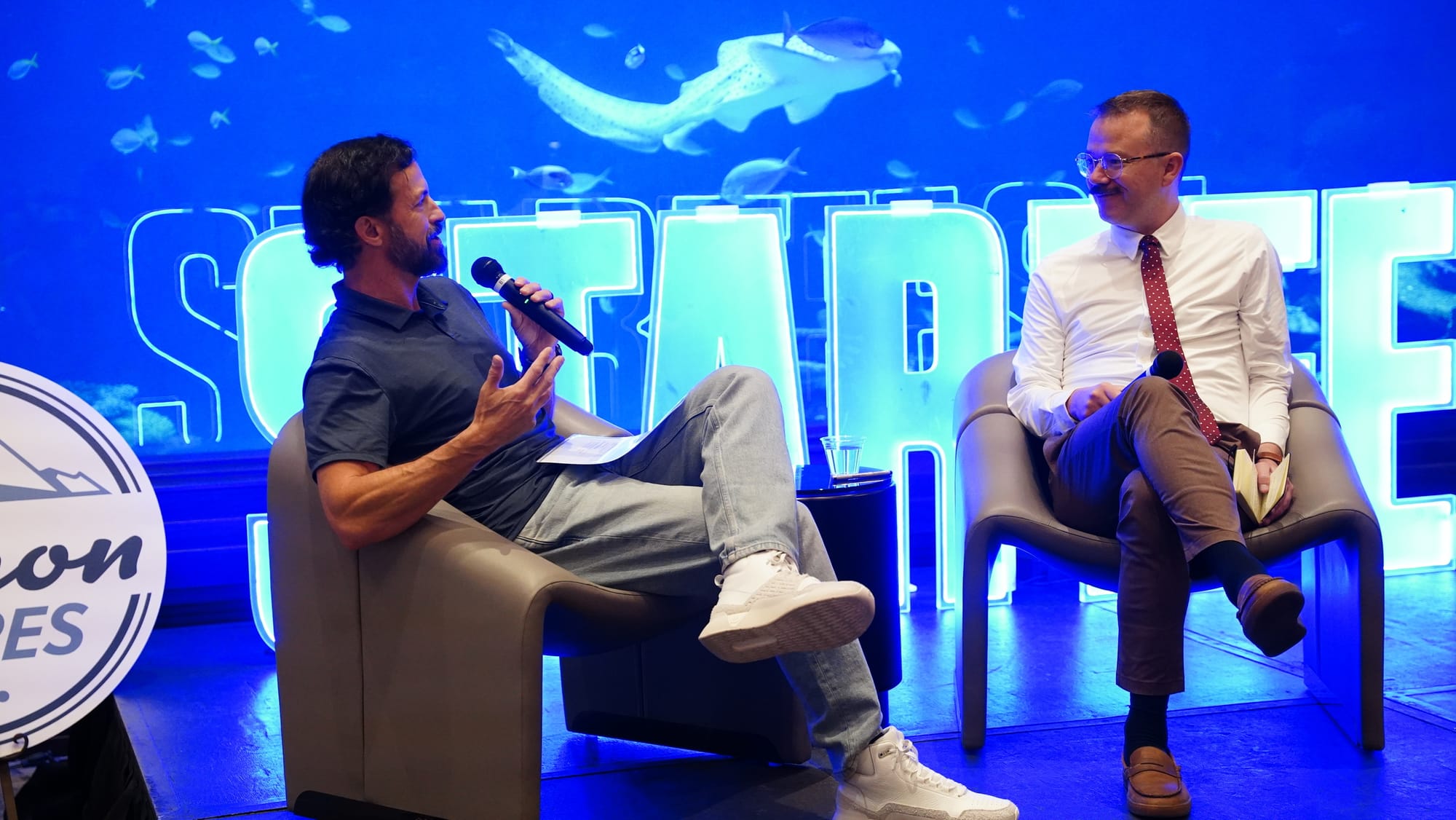
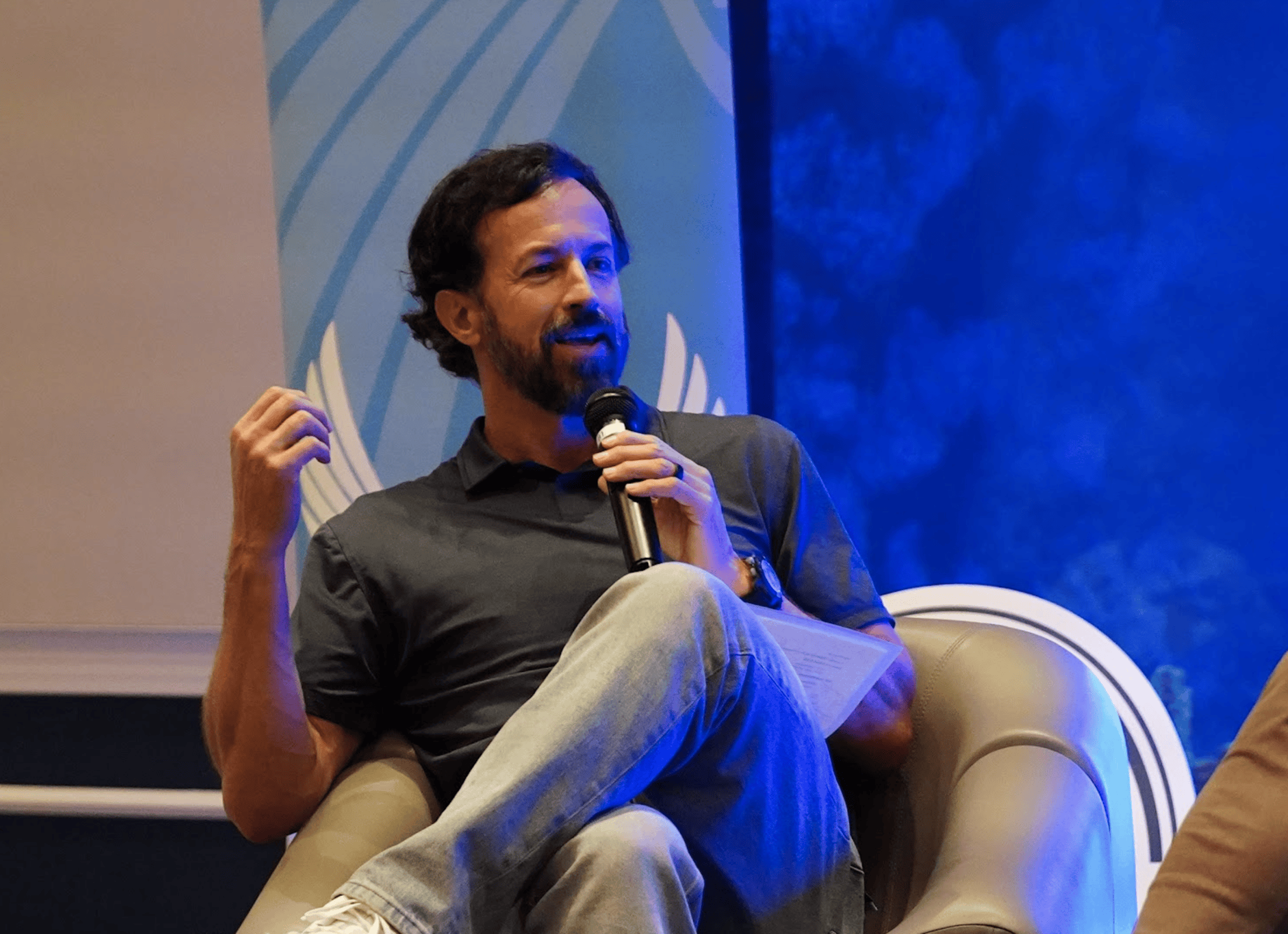
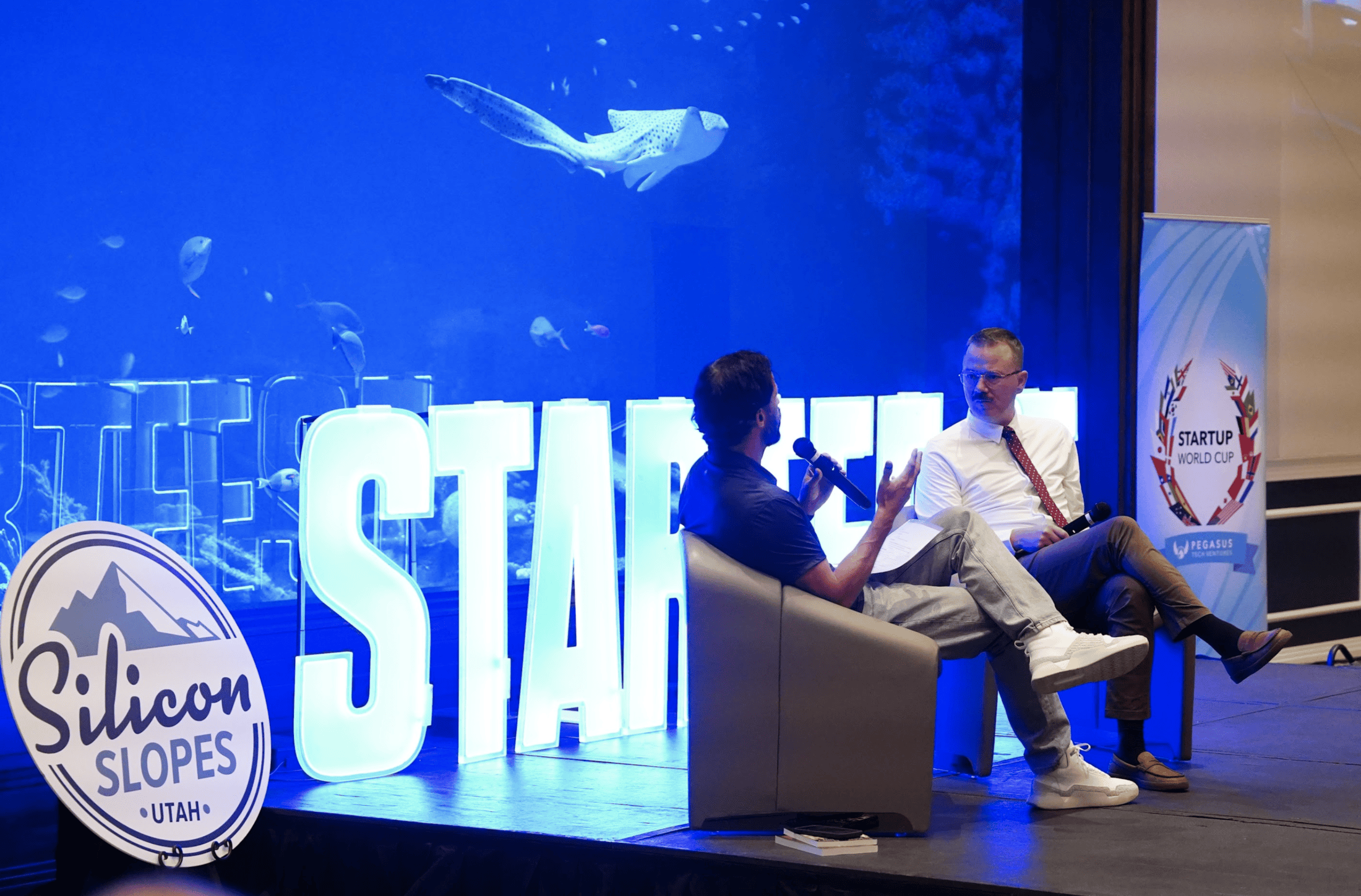
Traeger CEO Jeremy Andrus addresses founders at StartFest 2026 in Draper, Utah. "We've got this incredible underpinning of entrepreneurship," Andrus noted, "and an environment that's built around partnership with business, not antagonism with business. Relative to other states, this is where you want to be. Also appearing at centerstage, Mo the Zebra Shark. Photo: Mark Tullis/TechBuzz
Execution gets cheap. Leadership gets expensive.
Andrus opened with a framing that cut against the anxiety dominating most AI conversations. Yes, the technology is transformative. No, that does not make human leaders less necessary. It makes them more so.
"It makes execution cheap," he said of AI. "That's incredible. But what it also does is it makes leadership a real premium component of life, of organization, and of building a business."
His list of what AI cannot do ran long: validate strategy through judgment, read a room, observe body language, navigate personal adversity, carry skin in the game. The tools, he argued, will do the work. But they will not lead the people doing the work.
The argument maps directly onto data reported from last month's Women Tech Council Innovation Summit, where speakers drew the same jobs-versus-tasks distinction. The World Economic Forum's Future of Jobs Report 2025 puts numbers to it: roughly 92 million roles displaced by automation, offset by approximately 170 million new roles created, a net gain, but one that demands active navigation, not passive optimism.
Andrus cited the same range from the stage. The question he is asking is not whether the math works out. It is who leads the transition.
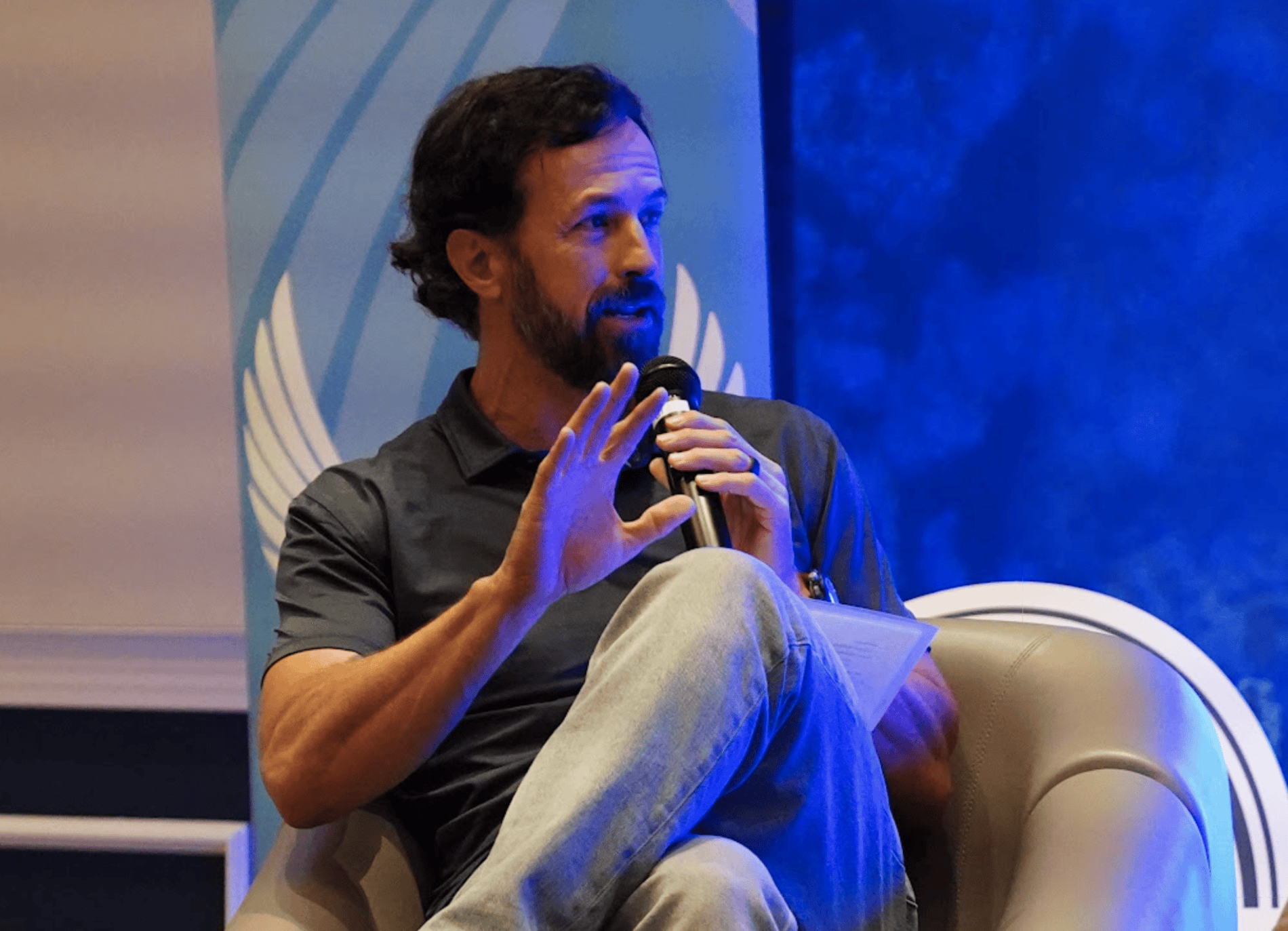
Traeger CEO Jeremy Andrus speaks at StartFest 2026 in Draper, Utah. "AI makes execution cheap," Andrus told founders. "But what it also does is make leadership a real premium component of life, of organization, and of building a business." Photo: Mark Tullis/TechBuzz
The 90 million and what comes next
When Andrus was appointed in November 2025 to the Governor's Office of Economic Opportunity (GOEO) board, and confirmed by the Utah Senate, his confirmation hearing veered quickly toward immigration enforcement.
He redirected it toward what he saw as the more urgent question.
"Let me step back," he told senators. "What I think about is what's coming with AI, what that's going to mean for dislocation of jobs, and what we as leaders in the community need to anticipate. How do we connect university and industry? How do we partner to make sure those 90 million jobs that are disappearing are becoming the 170 million jobs?"
It is a direct challenge to Utah's universities, its Legislature, and its business community to treat workforce retraining as an infrastructure problem, not an afterthought.
Traeger CEO Jeremy Andrus at StartFest 2026 in Draper, Utah. "The superpower is this foundation that's not going to get yanked out from under us," Andrus said of Utah's pioneer heritage in the age of AI. Photo: Mark Tullis/TechBuzz
Silicon Valley is hollow. Utah's foundation isn't.
Andrus arrived in Utah in the early 1990s to attend school, left, and returned more than two decades ago after a period in Silicon Valley. The contrast he drew between the two ecosystems was unsparing.
"Silicon Valley is transactional," he said. "It's this unbelievable wealth creation juggernaut. But my experience knowing a lot of people there is that it's a little hollow from a soul perspective."
Utah's edge, in his telling, is not the skiing or the work-life balance talking points. It runs deeper, to a pioneer heritage that rooted the state's ambition in family, faith, and community rather than pure extraction.
"These are the sorts of things we need to talk about more as Silicon Slopes, as an entrepreneurial community," he said. "Because we can do both. And I think the superpower is this foundation that's not going to get yanked out from under us."
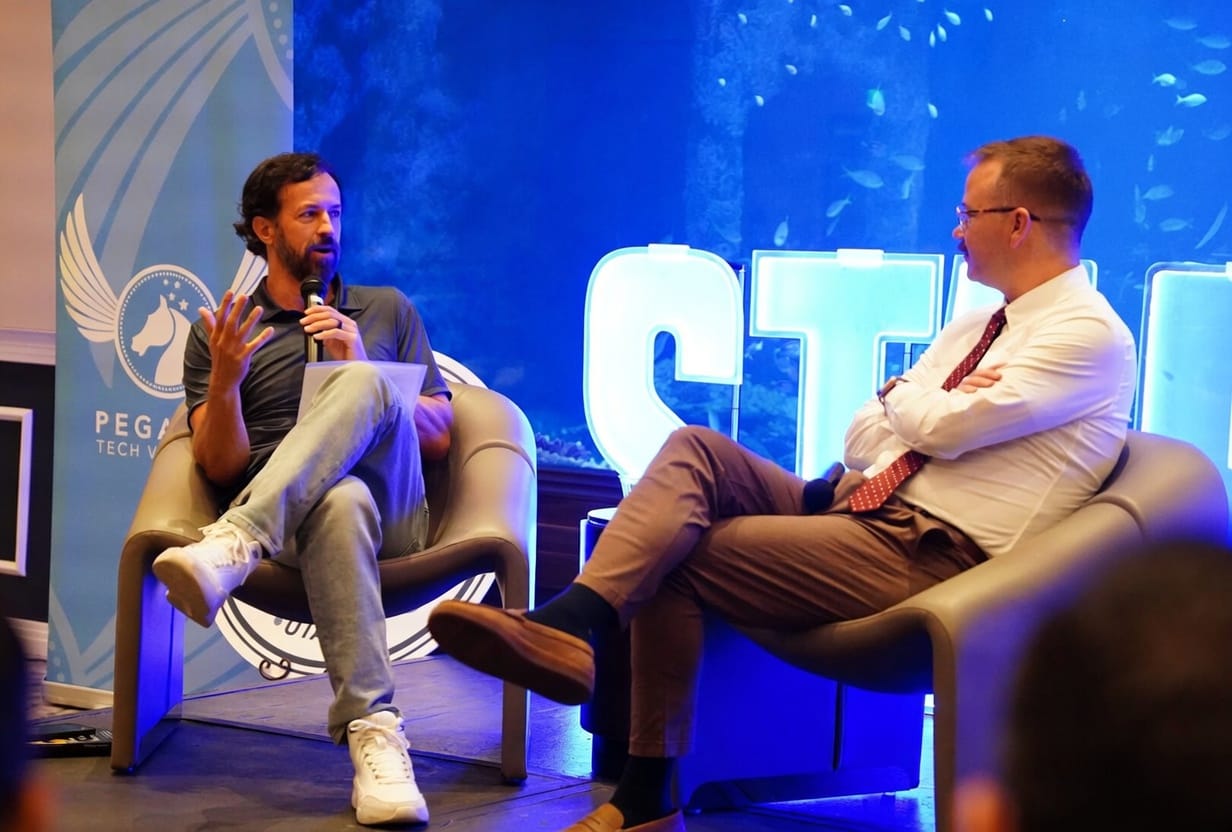
Traeger CEO Jeremy Andrus makes the case for Utah's competitive edge in the AI era at StartFest 2026, Draper, Utah. Photo: Mark Tullis/TechBuzz
From feast to famine: what the hard years actually built
Andrus did not linger on Traeger's financials, but he used the arc of the company. a market valuation that climbed steeply after its 2021 NYSE debut and then fell sharply. as the frame for everything else he said. Traeger was one of the pandemic's consumer-product success stories, debuting on the public markets in 2021 at a valuation exceeding $3, and some say $4, billion amid surging demand for backyard cooking. As that demand normalized and financial performance weakened, the company's shares lost more than 90% of their value over the following several years.
Before Traeger, Andrus helped grow Park City-based Skullcandy from a four-person startup into a publicly traded company with more than $300 million in annual sales. Two consumer brands, two full cycles of growth and reckoning. The pattern informed what he said next.
"I had gone from feast to famine," he said. "Something I had worked so hard to build was ripped out from under me. That's when you realize the foundation matters."
He returned to a moment roughly fifteen years earlier, when he sat in Burden Auditorium at a Harvard Business School alumni event and heard Clay Christensen speak about his then-new book, How Will You Measure Your Life?Christensen walked two thousand alumni through the same question Andrus was now putting to a room full of founders: not what are you building, but what is your life actually for.
"There was not a dry eye in the place," Andrus said. "Because people had realized — I still have work to do to ensure that I am true to myself and my core."
The practical lesson, for Andrus, was that he could not lead Traeger's team through a painful period if he had not first been honest with himself about who he was outside the company.
He drew the same thread through Senator Ben Sasse, whom he met at a Deer Valley event roughly a decade ago. Sasse announced a Stage 4 pancreatic cancer diagnosis in December 2025 and has spoken publicly about what it clarified for him. Andrus read a quote from Sasse directly:
I hate cancer. But I'm also grateful for it. I tell a lot more truth to myself than I used to do when I thought I was super omni-competent and interesting"
Andrus was not making a point about illness. He was making a point about what self-knowledge costs when you wait for a crisis to find it.
What Washington missed
One of the sharpest passages in the Andrus-Betts conversation had nothing to do with AI directly. It came from Andrus's account of spending significant time last year in Washington on tariff and trade strategy, meeting with senators, members of Congress, the Department of Commerce, and the White House.
"What was so fascinating to me was how disconnected so many people were to what Main Street businesses were actually experiencing," he said. He found exceptions. There are legislators who make regular trips back to their districts and listen to constituents, but they were not the majority.
"You can't live in DC and understand what people are going through," he said. "Utah is going to go through a period of time that matters a lot."
He argued that servant leadership, rooted in knowing what conversations are happening around people's dinner tables, not just what the data says, is precisely what the AI transition requires from political and business leaders alike. Authenticity, he added, is no longer optional. Leaders are visible in ways previous generations were not.
"Lack of authenticity in leadership is so easy to sniff out these days," he said. "We actually see how our leaders behave, we see what they say, we see them on video."
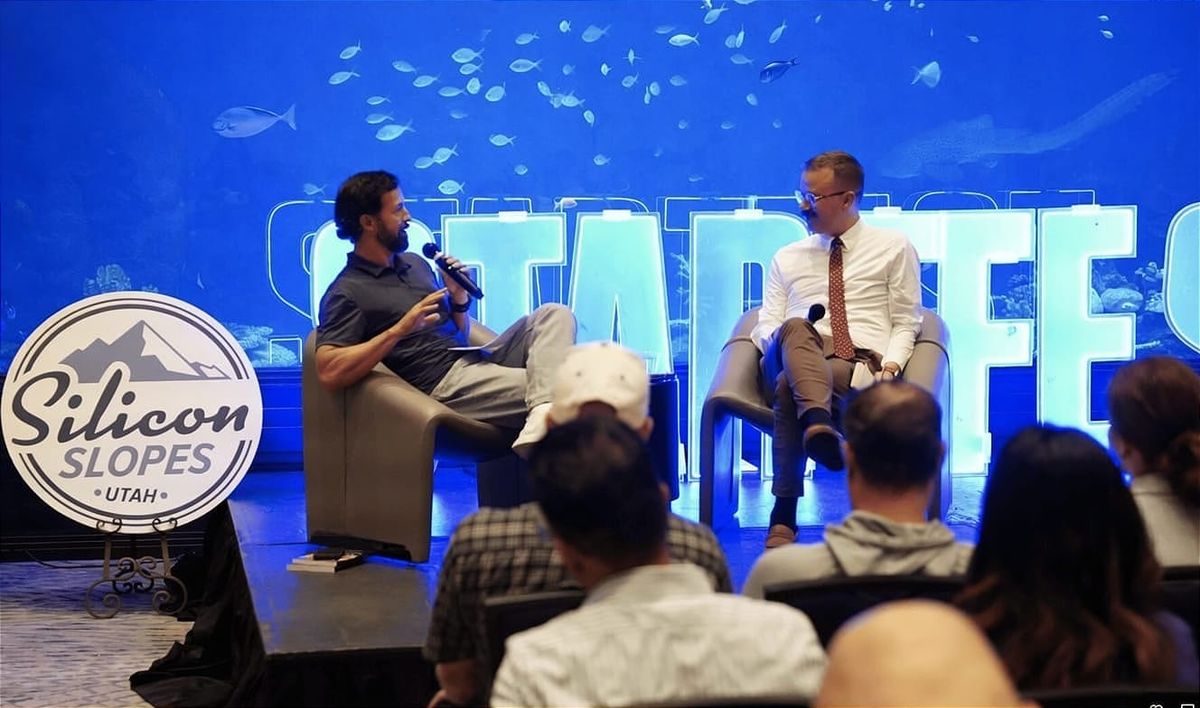
Jeremy Andrus and Clint Betts sitting down together for a direct conversation at StartFest 2026, Mountain America Event Center, Draper, Utah. June 24, 2026. Photo: Mark Tullis/TechBuzz
The thing Betts said out loud
Betts closed the session by noting, without quite asking, that Andrus has appeared on short lists for Utah's next gubernatorial race.
"I'm not going to ask you," Betts said. "You don't have to say anything to that."
Andrus did not.
StartFest attendees at the Loveland Living Planet Aquarium and Mountain America Event Center in Draper, Utah, June 24, 2026
StartFest 2026 was produced by Silicon Slopes at Mountain America Event Center in Draper. Jeremy Andrus is CEO of Traeger, headquartered in Salt Lake City. He also serves on the boards of Silicon Slopes and World Trade Center Utah. He was appointed in November 2025 to the Governor's Office of Economic Opportunity (GOEO) board by Governor Spencer J. Cox and confirmed by the Utah Senate. GOEO was restructured from its predecessor agency, GOED (Governor's Office of Economic Development), effective May 1, 2024, and is currently subject to further legislative reorganization under HB 475. Andrus has not announced a candidacy for governor. Utah’s next gubernatorial election is the general election on November 7, 2028. Clint Betts is CEO of Silicon Slopes.
The Loveland Living Planet Aquarium and Mountain America Event Center in Draper, Utah, provided the venue for StartFest June 23-24, 2026
Share this article
The link has been copied!
Your link has expired. Please request a new one.
Your link has expired. Please request a new one.
Your link has expired. Please request a new one.
Great! You've successfully signed up.
Great! You've successfully signed up.
Welcome back! You've successfully signed in.
Success! You now have access to additional content.