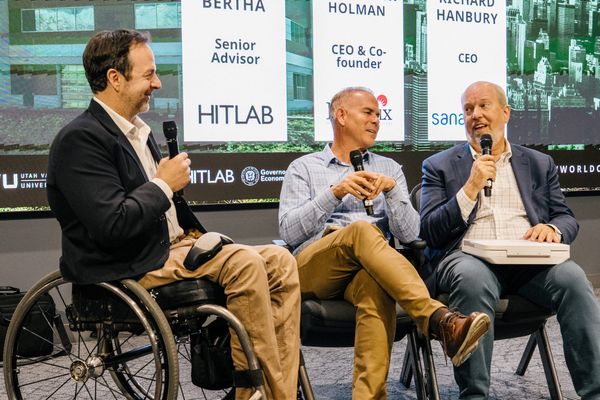
Two healthcare founders at a Utah hackathon discussed motivation, stress-focused medicine, and regulatory friction. They emphasized resilience, incremental validation, and contrasting views on innovation adoption in clinical systems.
by Mason Butler
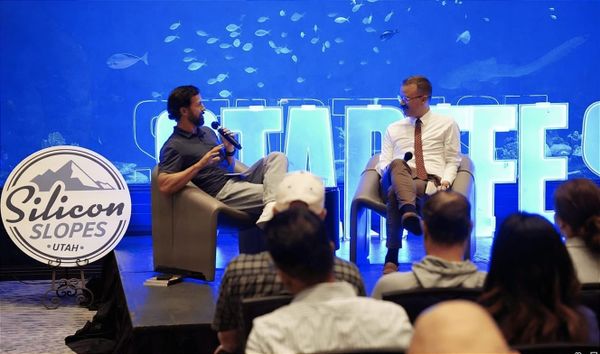
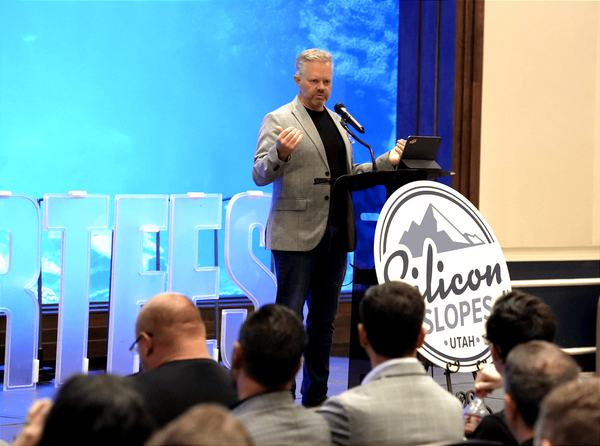
At StartFest 2026 in Draper, Utah, Traeger CEO Jeremy Andrus argued that AI makes execution cheap and leadership scarce — and that Utah's pioneer heritage, not Silicon Valley's transactional model, is the state's most durable competitive edge.
by Mark Tullis
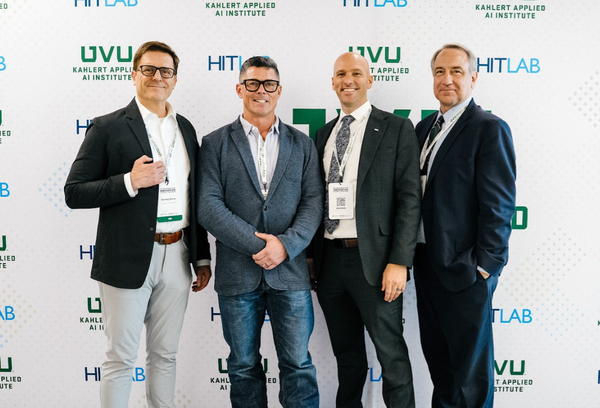
HITLAB's Innovation World Cup brought 1,277 applicants and a $96K prize pool to Utah Valley University. A retired Army officer's maternal health startup won the pitch competition. A team of builders took home the hackathon bounty.
by Mason Butler
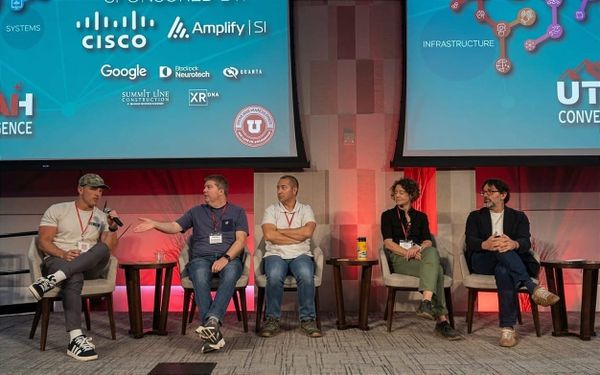
Utah AI Convergence's Industry Panel brought ChipNexus, Enzy, Lease End, Google, and Cisco's Outshift together to detail how calibrated, robust, human-centric multi-agent systems move from demos into high-stakes production deployment.
by Satwik Chavakula
Nick Thomas spent 25 years building infrastructure that connected the world. Then he had to reckon with what he'd neglected to build closer to home.
by Mark Tullis
Two healthcare founders at a Utah hackathon discussed motivation, stress-focused medicine, and regulatory friction. They emphasized resilience, incremental validation, and contrasting views on innovation adoption in clinical systems.
by Mason Butler
Nucleus Fund invests in Provo's Terraphene, a hemp-based materials startup with a nine-figure pallet supply deal, fire- and strength-tested building materials, and a pitch to help refill the Great Salt Lake by replacing thirsty alfalfa acreage with hemp.
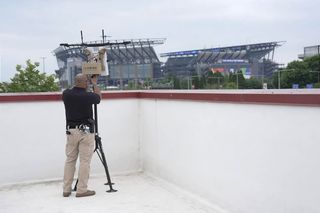
DHS named Fortem Technologies (Lindon, UT) the only small business among seven prime contractors on a five-year, $1B+ counter-drone IDIQ. CEO Jon Gruen discusses the win, subcontractors Lockheed Martin and Microsoft, and plans to scale Utah manufacturing.
South Jordan-based Obra emerges from stealth with two linked products, Obra Jobs and Obra Hire, betting that AI broke hiring's inbound signal and that a trust-first, outbound-focused platform can restore it.
Two healthcare founders at a Utah hackathon discussed motivation, stress-focused medicine, and regulatory friction. They emphasized resilience, incremental validation, and contrasting views on innovation adoption in clinical systems.
by Mason Butler

Redo (Draper, UT) raises $81 million in Series B funding at a $1.25 billion valuation, led by Los Smash Capital and joined by Pelion and Cervin, to expand its AI-powered commerce platform internationally and deepen its post-purchase technology suite for direct-to-consumer brands.
by Mark Tullis
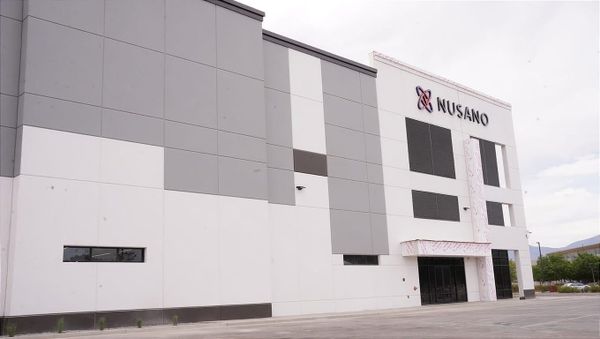
Nusano (West Valley City, UT) achieved its first accelerator commissioning milestone, validating core LINAC systems and advancing its West Valley City platform toward commercial radioisotope production by the end of 2026.
by Mark Tullis
Appli (Salt Lake City, UT) doubled its credit union partners to 20 and surpassed $2 billion in member calculations, reflecting accelerating adoption of AI-powered financial calculators that drive engagement, insights, and lending opportunities.
by Mark Tullis
At StartFest 2026 in Draper, Utah, Traeger CEO Jeremy Andrus argued that AI makes execution cheap and leadership scarce — and that Utah's pioneer heritage, not Silicon Valley's transactional model, is the state's most durable competitive edge.
by Mark Tullis
HITLAB's Innovation World Cup brought 1,277 applicants and a $96K prize pool to Utah Valley University. A retired Army officer's maternal health startup won the pitch competition. A team of builders took home the hackathon bounty.
by Mason Butler
Utah AI Convergence's Industry Panel brought ChipNexus, Enzy, Lease End, Google, and Cisco's Outshift together to detail how calibrated, robust, human-centric multi-agent systems move from demos into high-stakes production deployment.
by Satwik Chavakula
Nick Thomas spent 25 years building infrastructure that connected the world. Then he had to reckon with what he'd neglected to build closer to home.
by Mark Tullis