Utah’s 1972 Spaceport Vision Is Getting a Second Look
Utah is revisiting a spaceport concept first proposed at Dugway in 1972 as the state studies potential sites near Delta and Green River amid growing commercial demand for launch and reentry infrastructure.
On Friday, Aug. 21, 2026, the Utah Spaceport Exploration Committee held a public meeting to discuss the technical and economic feasibility of establishing a spaceport in Utah.
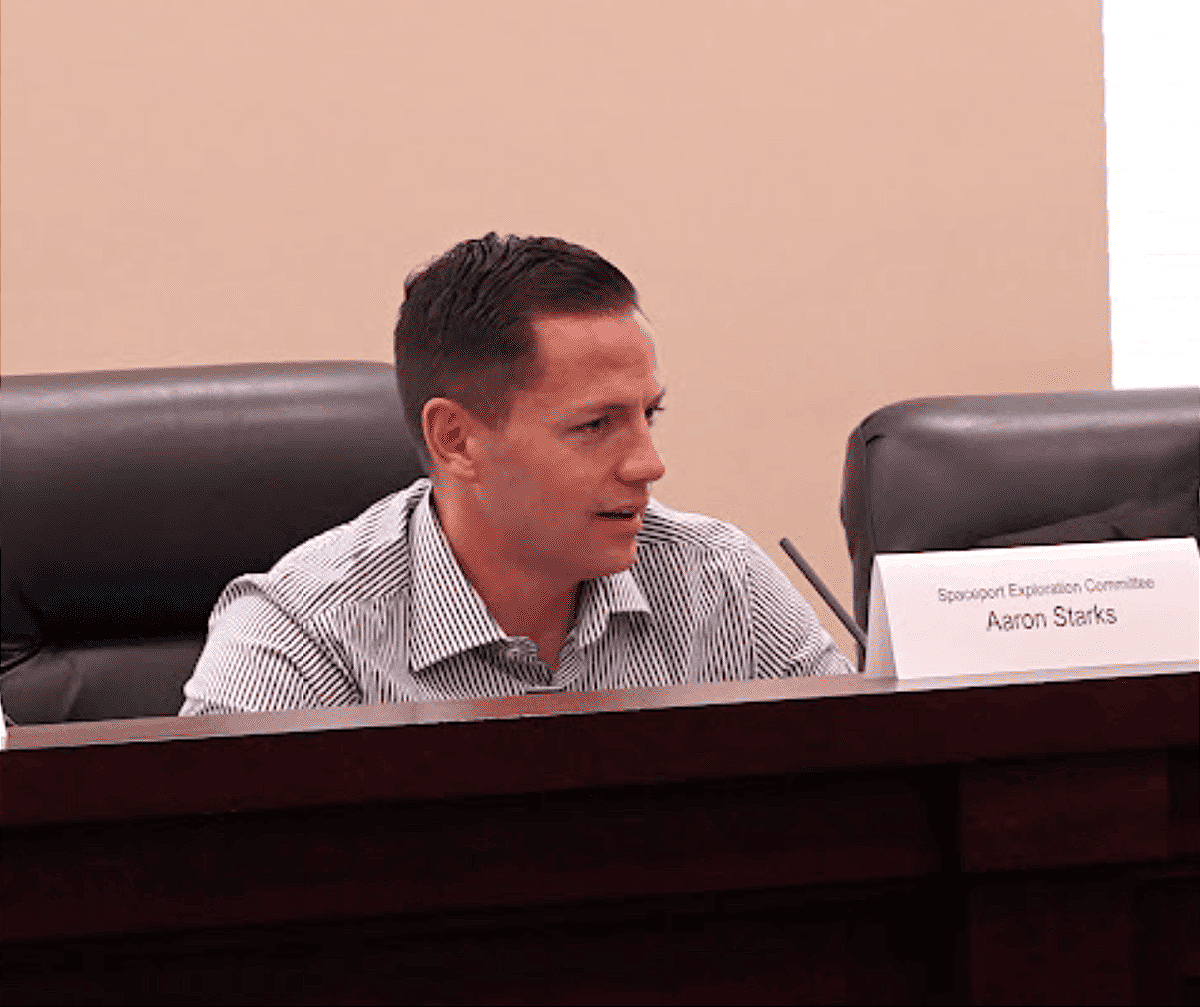
During the meeting, Aaron Starks, president and CEO of 47G, Utah’s aerospace, defense and hard-tech industry organization, called attention to the original 1972 proposal. Starks’ remarks drew attention to a proposal first made more than five decades ago.
In its 1972 report, the Utah Spaceport Committee identified three primary advantages of Dugway: its ability to accommodate a wider range of missions, its high elevation and potential to reduce launch costs, and its remote location, which offered safety and security advantages.
Starks suggested that a similar analysis today could demonstrate the advantages of an inland spaceport, although the current committee is evaluating sites near Delta and Green River rather than Dugway.
Aaron Starks, President and CEO, 47G
Starks also noted that Dugway, the site proposed in 1971-72, is now being considered for nuclear energy development. He said advances in nuclear propulsion could represent another potential frontier for space exploration. Dugway, however, is not among the sites currently being considered by the committee.
Utah is now once again using research and site analysis to determine whether the state can support commercial space activity, with the committee evaluating sites near Delta and Green River.
The Original Spaceport Proposal
In 1972, Utah proposed the development of an inland spaceport site at Dugway rather than at Kennedy Space Center in Florida, which was considered the most likely candidate for the NASA shuttle launch site. The Utah Spaceport Committee's 1972 proposal centered on three advantages: Dugway could accommodate a wider range of missions, its high elevation could reduce launch costs and its remote location offered safety and security advantages.
Although Dugway would initially cost more to build, the committee argued that the site's high elevation, at 5,300 feet, would make launches more efficient, allowing more payload to be carried into orbit. The committee estimated that a schedule of 615 launches from Dugway could deliver up to 3.4 million more pounds of payload into orbit than a comparable launch schedule from Kennedy Space Center. Over the 615 launches, Dugway's payload advantage was projected to generate between $961 million and $1.63 billion in savings, depending on vehicle design. The committee estimated those savings would offset Dugway's higher construction costs and could result in up to $1.3 billion in additional savings over the life of the shuttle program.
Based on its analysis, the committee also argued that a single launch and recovery base at Dugway could fulfill the full range of mission requirements while providing greater economic advantages than other proposed locations. Those requirements included the ability to launch in all necessary directions, avoid low-level flights over foreign territory and minimize disruptions caused by poor weather during launches or recoveries. Because Kennedy Space Center could not fulfill all of the operational requirements identified by the committee, the report argued that Dugway could serve as a cost-effective and operationally efficient complement to the Florida launch complex.
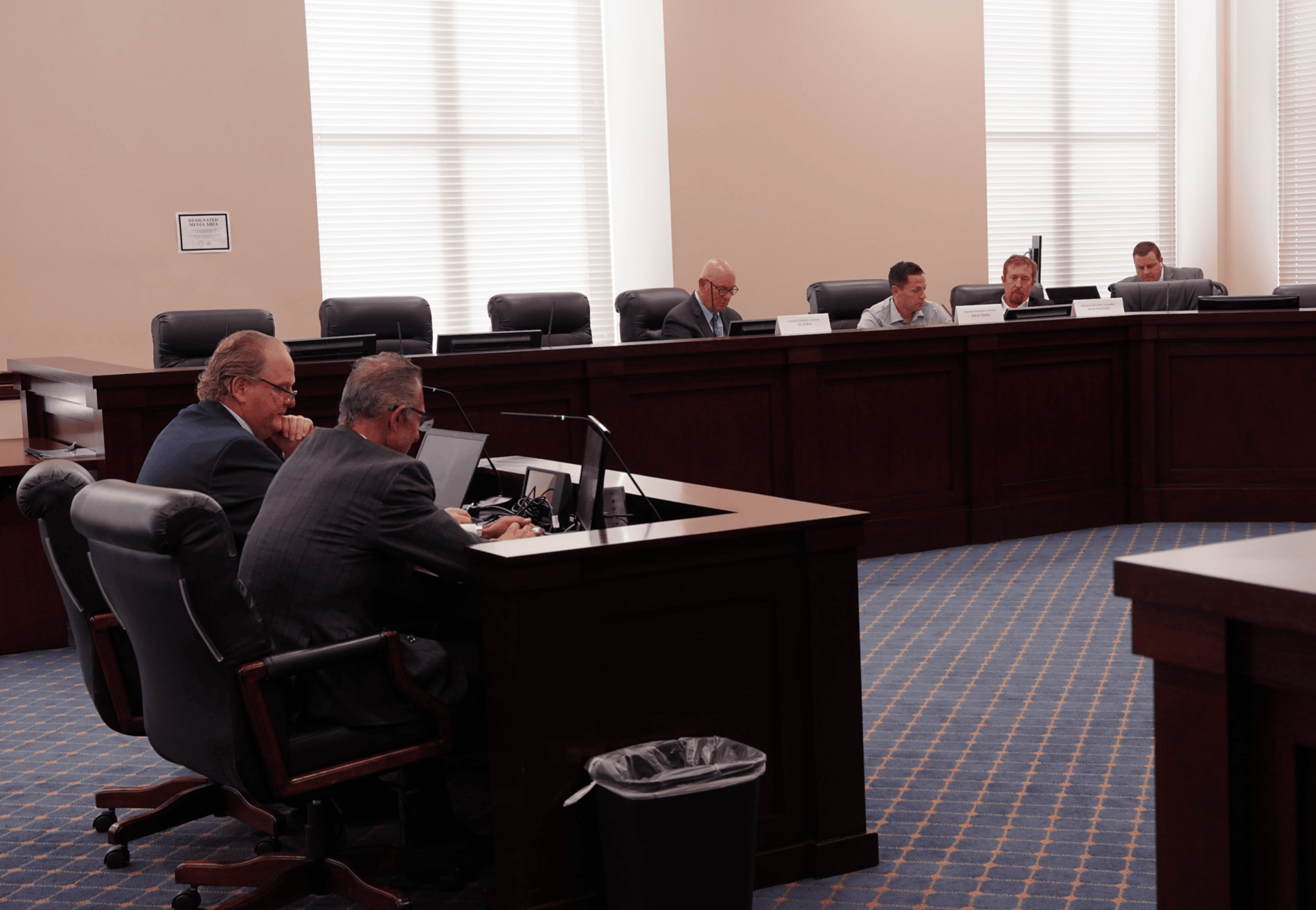
Andrew Nelson, RS&H Vice President and National Discipline Leader for Aerospace and Todd Lindner (right), RS&H Program Manager, speaking at the August 21 Utah Spaceport Exploration Committee August 21 meeting, Senate Building, Utah State Capitol
Historically, U.S. launch facilities were located near coastlines, allowing expendable rocket components to fall into the ocean. However, with the development of reusable shuttle technology, the Utah committee argued that a coastal location was no longer necessary. The committee also argued that Dugway's location, approximately 600 miles from the Pacific Coast, could better protect sensitive missions from electronic and aerial surveillance.
Ultimately, NASA's Space Shuttle launch facilities were established at Kennedy Space Center in Florida and Vandenberg Air Force Base in California. The decision came after NASA finalized the Shuttle’s architecture.
The shuttle's final design incorporated less expensive, recoverable solid rocket boosters, which favored coastal launch sites where the boosters could be recovered at sea. This presented a significant disadvantage for an inland launch site like Dugway, despite the operational advantages identified by Utah's committee.
Existing infrastructure was another consideration in the shuttle-site selection process. The Utah committee's 1972 report acknowledged that NASA's funding constraints favored candidate sites that already had facilities that could be converted for shuttle operations. Kennedy Space Center and Vandenberg Air Force Base had existing aerospace infrastructure, while Utah would have required additional development.
The Utah committee nevertheless continued to argue that Dugway's operational and economic advantages justified the investment. The report specifically addressed NASA's decision to use an expendable booster, arguing that the change did not eliminate the possibility of using an inland launch site.
NASA ultimately selected Kennedy Space Center as the primary shuttle launch site, with Vandenberg designated for polar-orbit missions before the Air Force's shuttle program was canceled.
Today, reusable launch technology and efforts to reduce the cost of reaching space have become central to the industry—some of the same considerations Utah's original committee anticipated.
As Starks suggested at the August meeting, Utah may be returning to a question it first asked 55 years ago—this time with an industry that looks considerably more like the one its original committee envisioned.
The Spaceport Proposal Now
During the August 21 meeting, committee members discussed an updated federal space transportation policy that emphasizes a transition from government-led space activity toward a private-sector-led industry supported by the federal government.
The policy also calls for space launches to become more routine, with infrastructure capable of supporting a higher frequency of launches and reentries—an environment Utah is now evaluating its ability to support.
During the meeting, Brian J. Bean compared that shift to treating spaceports more like airports rather than handling each launch as an individual event.
The policy directs the federal government to plan for a cadence of more than 1,000 launches and reentries annually by 2030, a target described during the meeting as particularly significant for Utah.
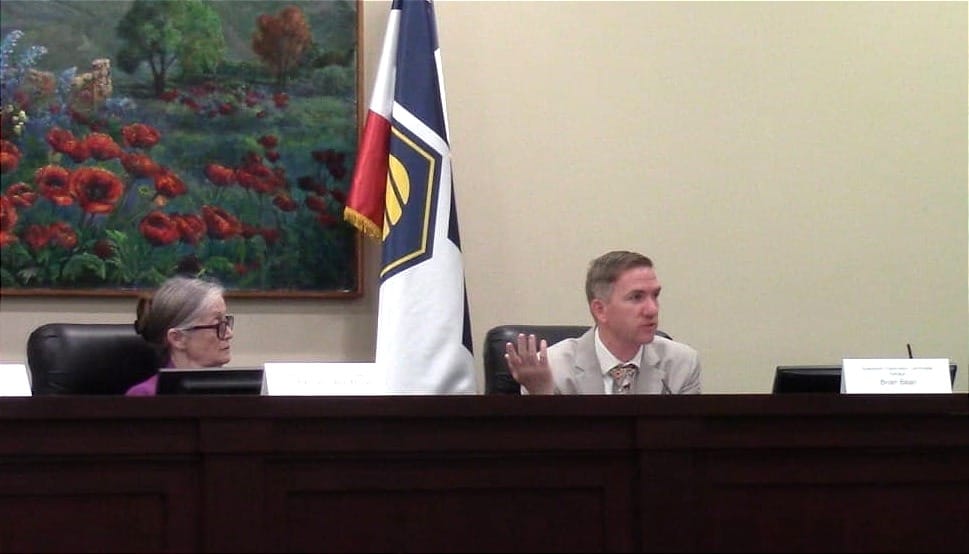
Brian J. Bean, Senior Policy Advisor to the Utah Senate, speaking at the August 21 Utah Spaceport Exploration Committee August 21 meeting, Senate Building, Utah State Capitol, with Co-Chair of the Utah Spaceport Exploration Committee, Senator Ann Millner.
“This is really forward thinking and really exciting because it shows where the federal government thinks the industry is going and it really shows where the opportunity is and where Utah might fit into that kind of economy and ecosystem,” Brian J. Bean said.
As the commercial space industry expands, Utah's Spaceport Exploration Committee is evaluating whether the state has the infrastructure, geography and market demand necessary to participate in that growth. The committee is currently studying potential locations near Delta and Green River, which offer some of the same structural advantages Dugway had in 1972.
The committee is currently studying potential locations near Delta and Green River, which offer some of the geographic advantages that Utah's original committee identified in 1972. RS&H, a national architecture, engineering and consulting firm, found that both sites offer favorable flight safety profiles, abundant open airspace and public land and manageable environmental footprints.
Carlos Braceras, executive director of the Utah Department of Transportation, discussed his visits to the Delta and Green River sites, framing the possibility of a Utah spaceport as “not if, but when.”
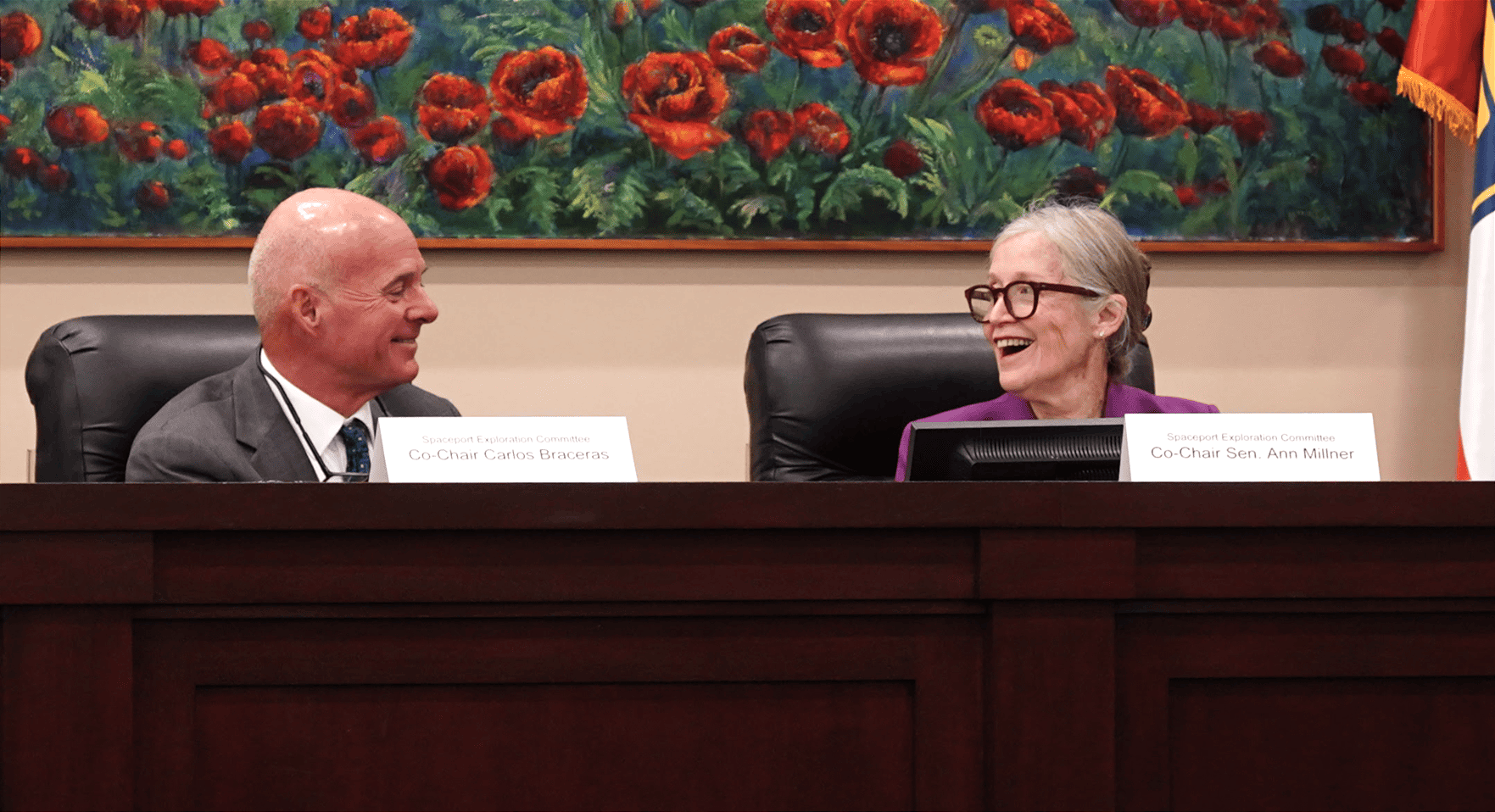
UDOT Director Carlos Braceras and Sen. Ann Millner, are the Co-Chairs of the Utah Spaceport Exploration Committee
Braceras said that after seeing the sites, the viability of Utah participating in commercial space activity became more real.
“I think it became almost a sense of we can do this,” Braceras said after describing the hospitality of local communities and the potential he saw in the sites.
“Utah does have advantages and strengths,” Braceras said, including the state's land, topography and ability to provide more open skies with fewer commercial and military operational restrictions.
More than five decades after Utah first proposed an inland spaceport, many of the ideas identified by the 1971 committee are resurfacing in a dramatically different space industry. Reusable launch technology, lower launch costs and the need for infrastructure capable of supporting more frequent space activity have become increasingly central to the nation's commercial space economy.
Utah's original proposal ultimately did not align with the Space Shuttle technology NASA adopted at the time. Fifty-five years later, however, the industry is moving toward many of the same considerations the committee anticipated. As Utah once again evaluates its western desert for a potential spaceport, the question raised by Starks at the August 21 meeting brings the state's history full circle: Utah may not be considering an entirely new idea, but one whose time has finally arrived.