Fortem Technologies Expands European Defense Partnership With MBDA
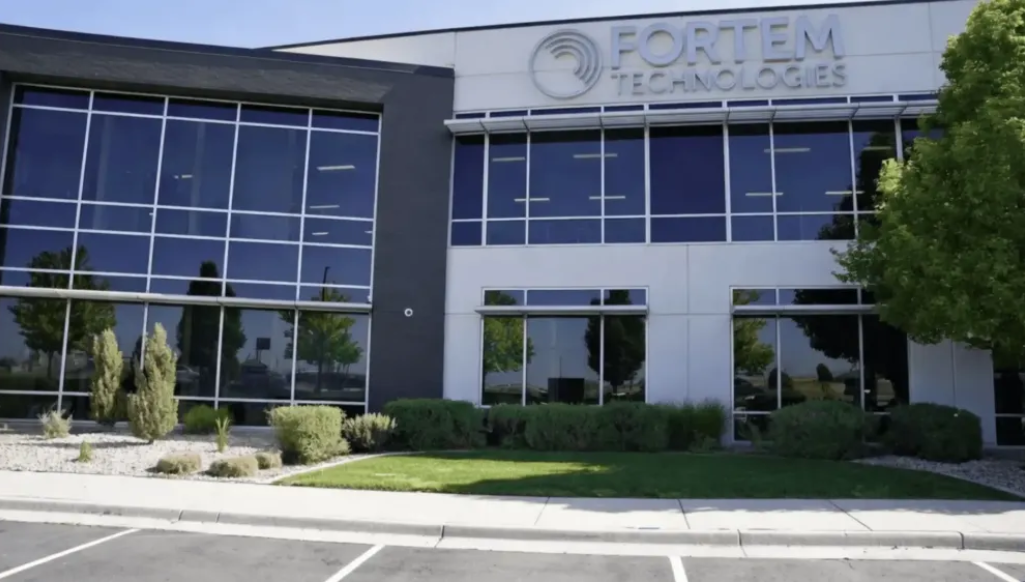
Fortem Technologies (Lindon, UT) is expanding its partnership with European defense company MBDA to integrate DroneHunter and FireThorn autonomous interceptors into allied air-defense networks, extending the Lindon company’s defense business beyond recent U.S. government contract wins.
Fortem Technologies is expanding its international defense business through a strategic partnership with MBDA, a European developer of complex weapons systems, to integrate Fortem’s autonomous counter-drone technology into air-defense architectures serving European and allied defense and government customers.
The agreement expands a technical collaboration established in 2024, when the companies integrated Fortem’s DroneHunter® autonomous interceptor into MBDA’s Sky Warden® counter-uncrewed aircraft systems (C-UAS) architecture. Under the expanded partnership, MBDA will offer DroneHunter as an integrated layer within existing air-defense networks, alongside a jointly developed kinetic interceptor called FireThorn®. Sales are subject to applicable export authorizations.
The announcement comes as Fortem, headquartered in Lindon, Utah, continues to expand its role in government and military counter-drone programs. In August, TechBuzz reported that the U.S. Department of Homeland Security had selected Fortem as the only small business among seven prime contractors on a five-year counter-drone contract with a starting ceiling of $1.011 billion. The contract gives DHS components a vehicle to order Fortem’s DroneHunter interceptors, TrueView® radars and SkyDome® command-and-control software.
The MBDA partnership extends that business into European and allied air-defense networks, where military and government operators face increasingly complex threats from uncrewed aircraft.
Two interceptors, different missions
The expanded partnership combines two interception approaches designed for different operational requirements.
DroneHunter uses an autonomous aircraft to capture hostile drones with a net, bringing them down intact rather than destroying them through a kinetic strike. That approach can be useful in populated areas or other sensitive environments where minimizing collateral damage and preserving evidence are priorities.
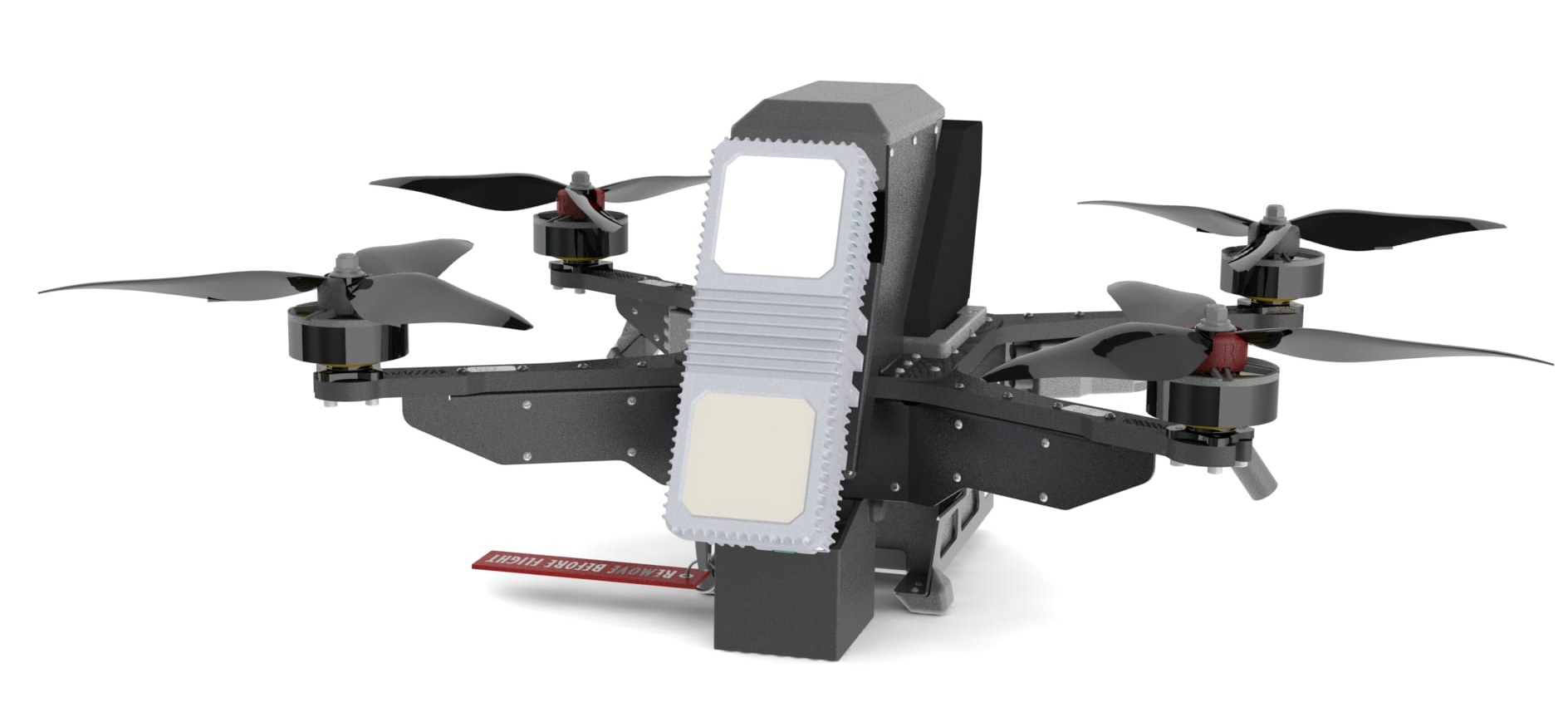
FireThorn®, a fully autonomous interceptor co-developed by Fortem Technologies and MBDA, combines MBDA’s NATO-approved warhead with Fortem’s Ground-Launched Air-to-Air Munitions (G-LAAM) airframe, shown here. Designed to defeat one-way attack drones and other hostile uncrewed aircraft, including Shaheds/Gerans and Orlans, FireThorn pairs high-speed, radar-guided autonomous flight with kinetic defeat capability. The system is part of an expanded strategic partnership to integrate Fortem’s autonomous counter-drone technology into air-defense systems operated by MBDA’s defense and government customers across Europe and worldwide.
FireThorn takes a different approach. Co-developed by Fortem and MBDA, the fully autonomous interceptor pairs Fortem’s high-speed, radar-guided airframe with an MBDA NATO-approved warhead to destroy hostile uncrewed aircraft, including Shahed/Geran one-way attack drones and Orlan reconnaissance drones.
The system reflects lessons from operational experience in Ukraine, where drone warfare has become a central feature of the conflict. FireThorn is designed to provide a kinetic defeat option against threats that require a different response from net capture.
Together, the systems give MBDA and its customers options for incorporating autonomous interception into layered air defenses rather than relying on a standalone counter-drone system.
“Drones have changed how wars are fought, and air defense must change with them,” said Jon Gruen, CEO of Fortem Technologies. “Militaries don’t need another standalone gadget. They need autonomous interceptors that plug into the architecture they already trust. Working with MBDA puts Fortem’s systems inside one of Europe’s most established air defense ecosystems, and gives allied forces a faster route to protecting troops, bases, and critical infrastructure.”
Building on Fortem’s defense business
The MBDA agreement adds to a series of developments that have expanded Fortem’s position in the defense market.
The company was selected for the Pentagon’s Replicator-2 initiative and secured an $18 million, three-year U.S. Army contract. In April, Lockheed Martin announced a $25 million investment in Fortem tied to a broader relationship integrating Fortem’s sensors and interceptors with Lockheed Martin’s Sanctum counter-drone mission-management software.
The DHS contract reported by TechBuzz in August added another significant opportunity. Its $1.011 billion starting ceiling represents the maximum potential value of the overall contract vehicle, not a guaranteed purchase commitment or revenue for Fortem. CEO Jon Gruen told TechBuzz that the company’s own preliminary estimate of potential demand for its products under the contract was approaching $100 million over the following few years, while emphasizing that actual demand remained uncertain.
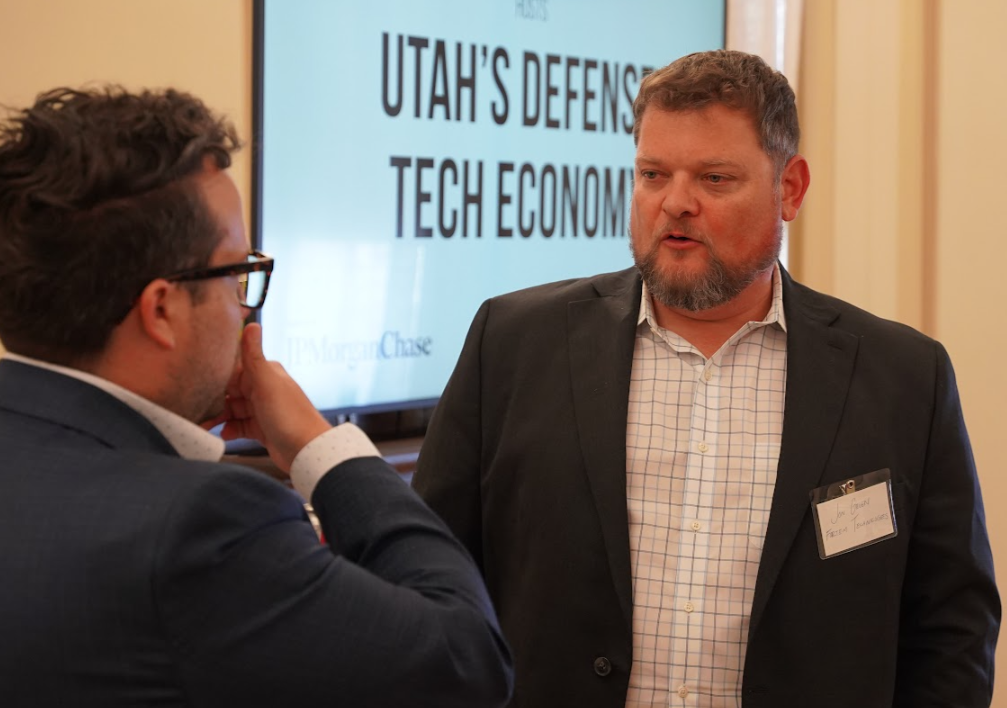
Fortem CEO, Jon Gruen speaking with an attendee at the JP Morgan/Salt Lake Tribune Utah Defense Tech Economy briefing, July 2026, Thomas Monson Center, Salt Lake City, Utah. Photo: Mark Tullis, TechBuzz
Fortem has also been expanding production capacity at its Lindon headquarters as demand for its systems grows.
The company’s broader approach centers on integrating radar detection, command-and-control software and autonomous interception into coordinated airspace security systems. Its partnerships with larger defense companies provide pathways for incorporating those capabilities into established defense architectures and customer relationships.
The MBDA agreement follows that strategy, allowing Fortem’s technology to be offered through an established European weapons and air-defense supplier rather than requiring customers to deploy an entirely separate system.
FireThorn will be displayed at MBDA’s booth, No. 453, during the Association of the United States Army’s annual convention, AUSA 2026, October 12–14 in Washington, D.C.
Fortem Technologies develops autonomous airspace security and counter-drone systems for military, government and commercial applications. Its SkyDome® family of systems combines TrueView® radar sensors, command-and-control software and DroneHunter® autonomous interceptors to detect, track and mitigate unauthorized or hostile drones. Headquartered in Lindon, Utah, Fortem is privately held and backed by investors including Lockheed Martin, DCVC, Toshiba, AE Industrial Partners, AIM13 and Signia Venture Partners.